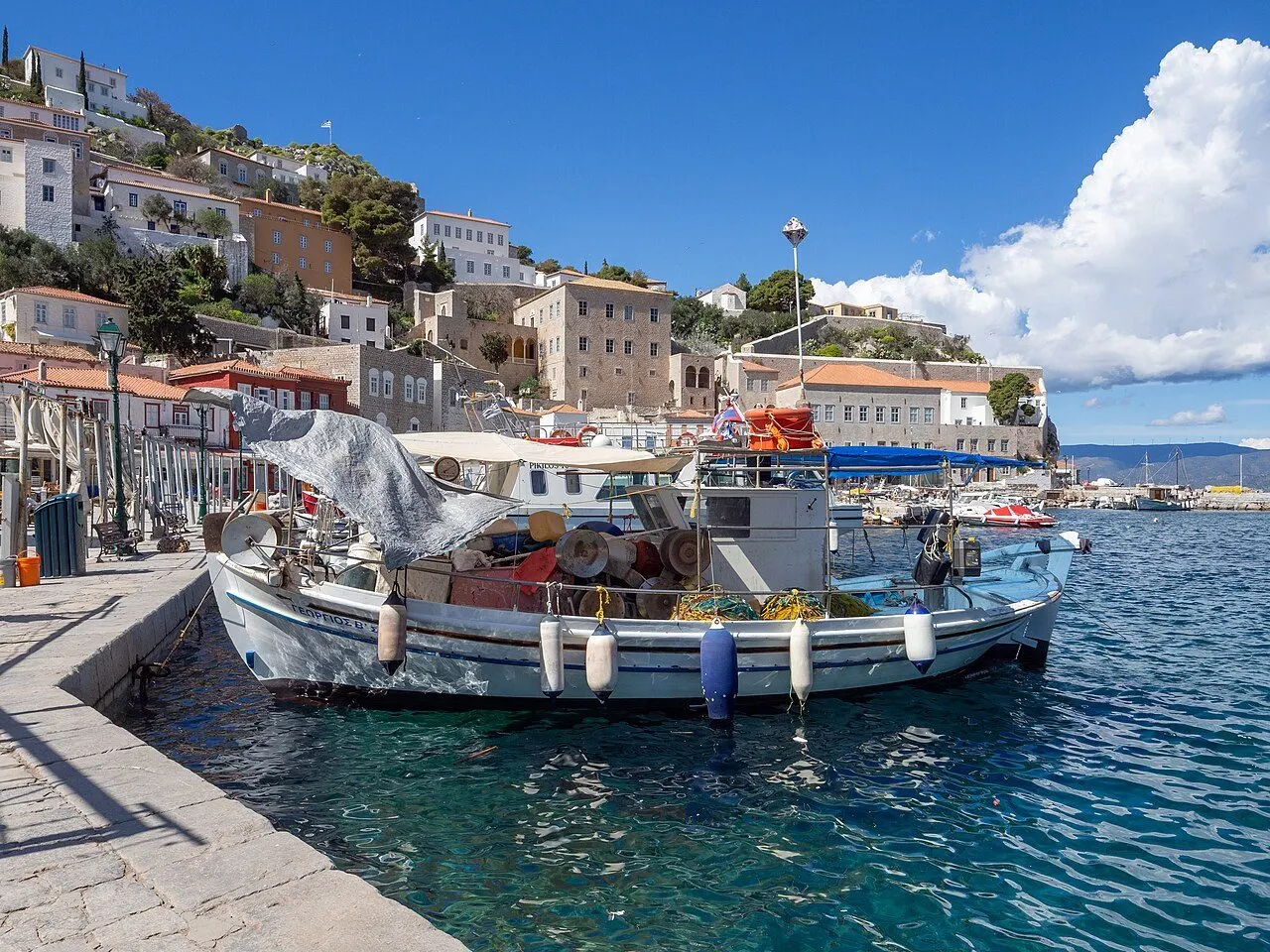
Hydra Town rising in an amphitheatre of stone houses around its yacht-filled harbour in warm morning light

Ύδρα · The best island for art and bohemians: no cars, captains' mansions and an artists' colony that drew Leonard Cohen

Hydra, the island of artists

Arrive in a stone amphitheatre of a harbour where mules carry the luggage, climb to the mansions of the admirals of 1821, walk the coast path to Kamini's fishing boats, swim off the rocks below town and spend the evening at a summer art show in the old slaughterhouse on the cliff.

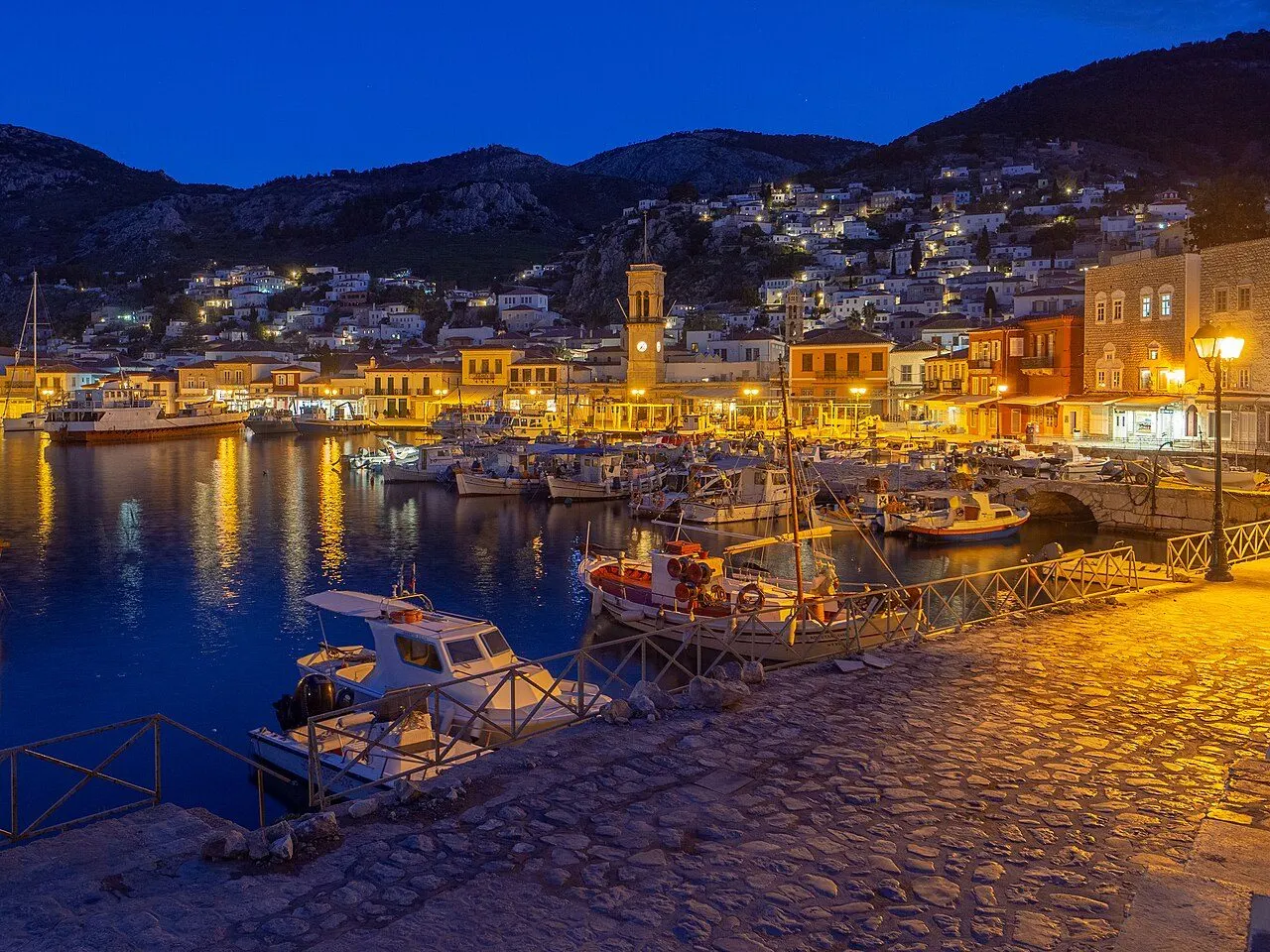
Hydra harbour at blue hour, cafés and the clock tower lit up and boats moored along the quay

Greetings from Hydra

Hydra

There is no engine louder than a boat here. We came in on the catamaran to a harbour like a stone theatre, and a mule with a red saddle cloth carried our bags up the steps. In the morning we stood in the cool rooms of an admiral's mansion; at noon we jumped off the rocks into water as clear as glass. Tonight there was an opening at the old slaughterhouse on the cliff, all wine glasses and sunburnt collectors, and afterwards we sat on the quay until late, the way people say Leonard Cohen used to, watching the water taxis come and go.

Wish you were here. x

Hour by hour

A perfect day on Hydra

A mountain at dawn, an admiral's house, a cove reached by boat and an art opening at dusk, without once getting into a car.

  1. 07:30

    Up to the monastery

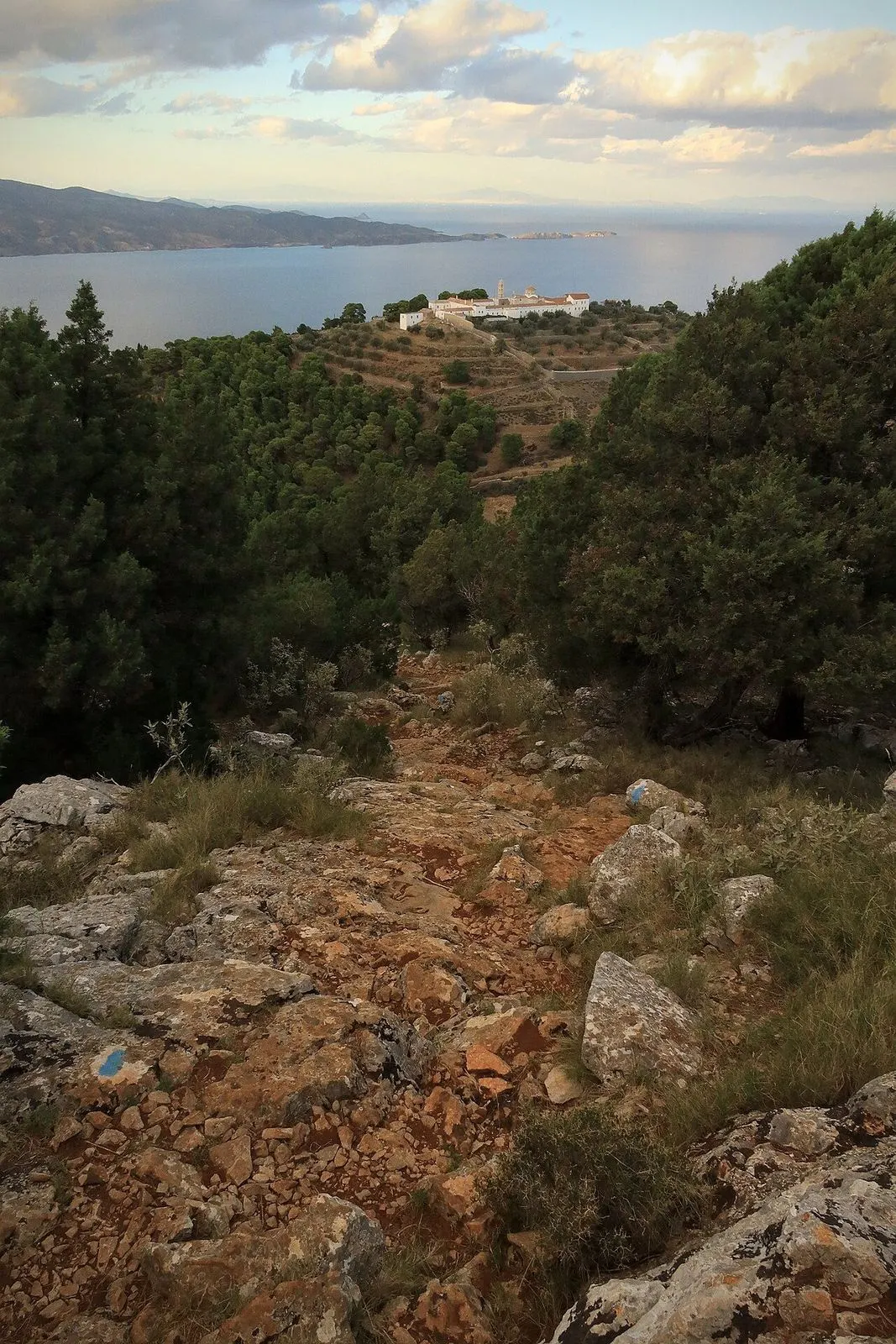
    Leave the harbour before the heat and climb the stepped path through the pines to Profitis Ilias, with the whole town spread out below you.

    A rocky path among pines on the mountain slope, the sea far below
  2. 10:30

    The captains' house

    Back in town, walk through the rooms of the Lazaros Kountouriotis mansion, the finest of the houses built with the island's shipping fortune.

    The ochre Lazaros Kountouriotis mansion on the hillside above white houses
  3. 12:30

    A boat to Bisti

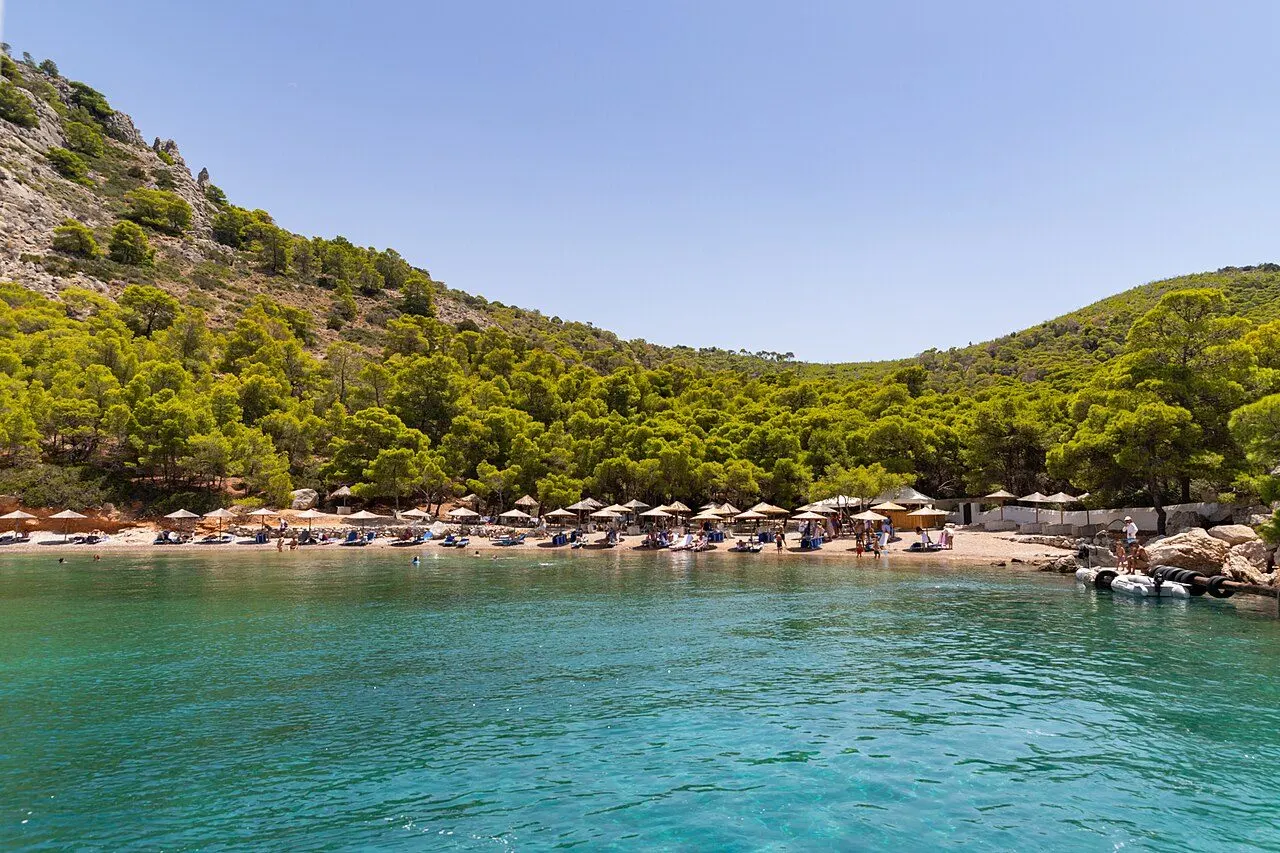
    Take the beach boat from the harbour round to the south-west tip and swim in the turquoise cove of Bisti under the pines.

    Turquoise water and a pine-covered shore at Bisti cove
  4. 17:00

    Art on the cliff

    Walk out to the old slaughterhouse west of the harbour for the DESTE Foundation's summer show, then on along the coast path past Spilia.

    The stone slaughterhouse building on the cliff edge above the sea
  5. 19:30

    Sunset at Kamini

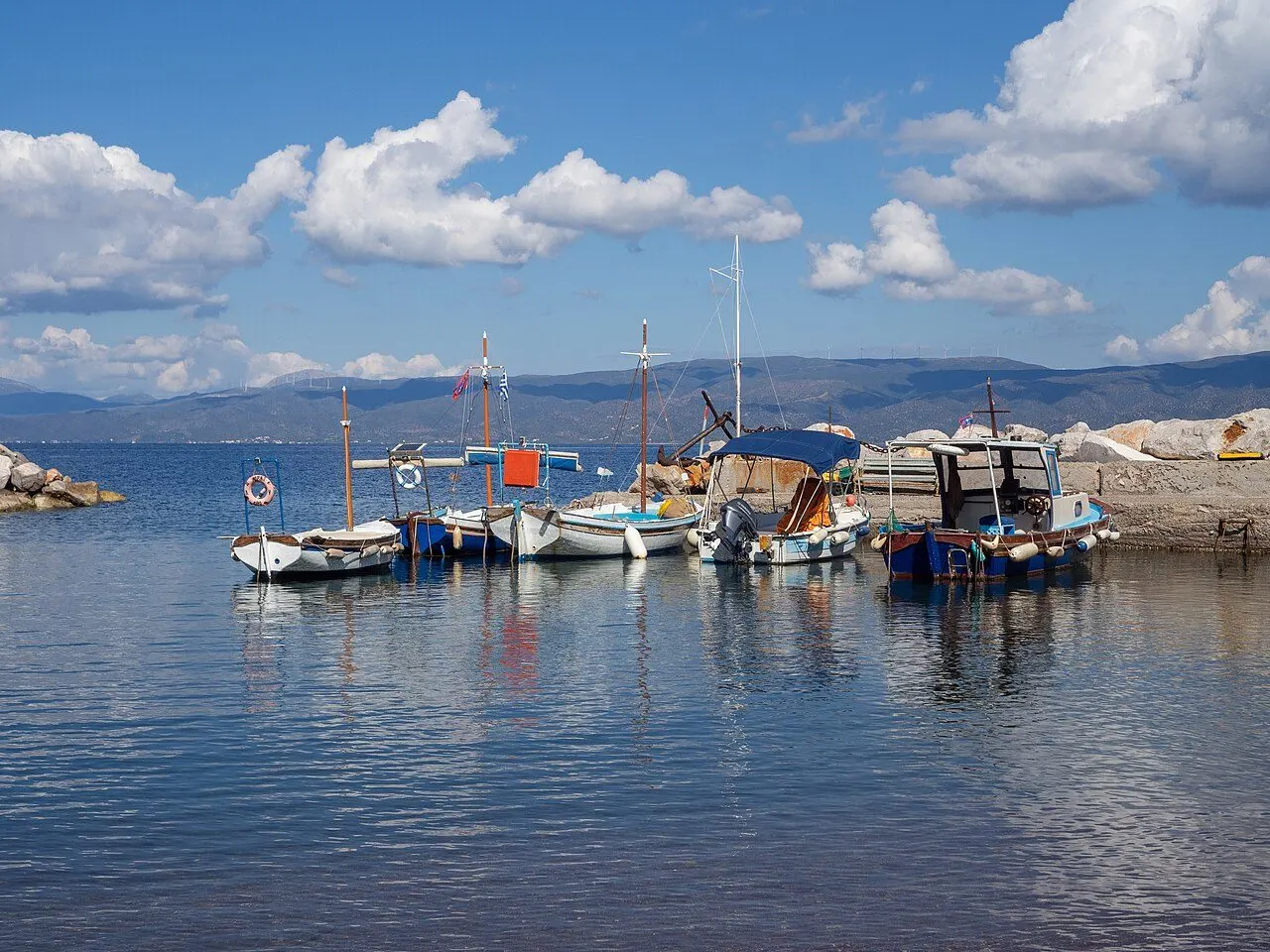
    Carry on to the fishing harbour of Kamini for dinner on a terrace, as the sun drops behind the Peloponnese.

    Small boats in the little harbour of Kamini
  6. 22:30

    The harbour at night

    Walk back to town on the lit coast path and end the day with a drink on the quay among the moored yachts.

    Hydra harbour at blue hour with the cafés lit

Where to stay

Where you'll wake up on Hydra

All stays

Only on Hydra

The things you'll tell everyone about

What makes Hydra unlike any other Greek island.

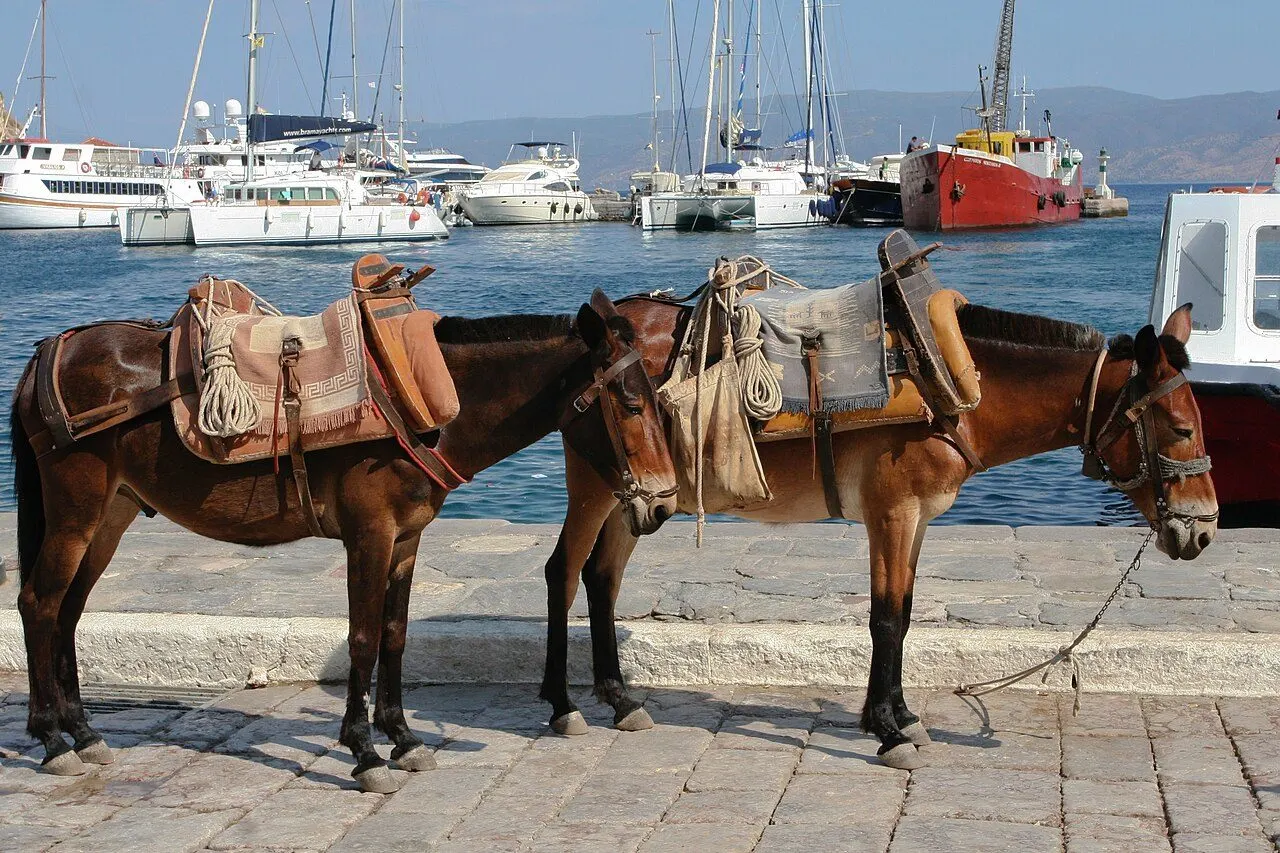
Two saddled pack mules on the quay of Hydra harbour, with boats behind

An island without cars

No private cars, scooters or motorbikes are allowed on Hydra; only a few service vehicles move on the island. Bags, groceries and building stone still go up the steps by mule and donkey, and to get to the beaches you walk the coast paths or flag down a water taxi in the harbour.
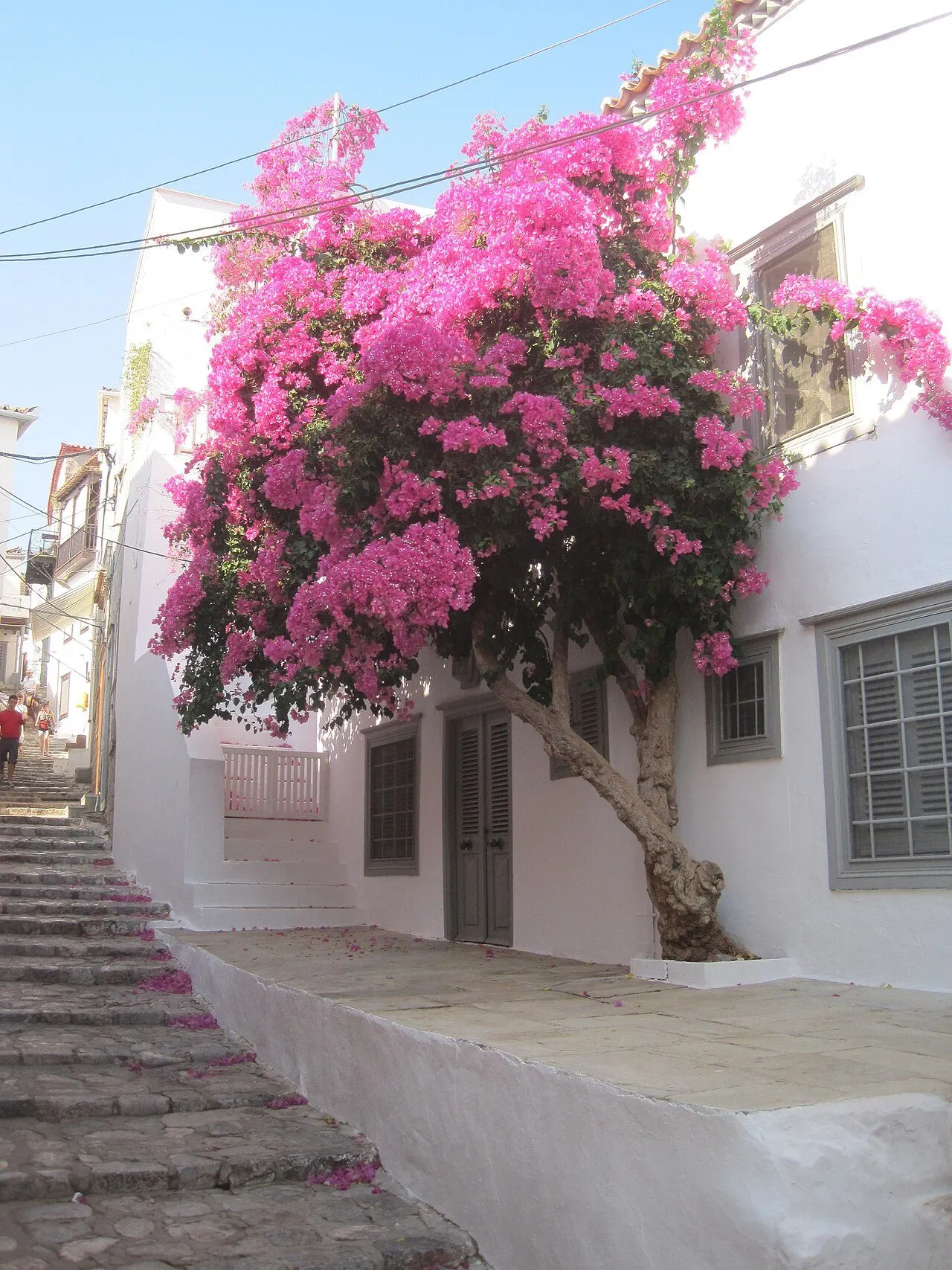
A whitewashed stepped lane with pink bougainvillea in the upper town

A bohemian colony in the 1960s

In the early 1960s a few dozen foreign writers, painters and musicians lived on Hydra on next to nothing: the Australian novelists George Johnston and Charmian Clift, the Norwegian Marianne Ihlen and the young Leonard Cohen, who bought a house in the upper town in 1960 and wrote some of his first songs there.
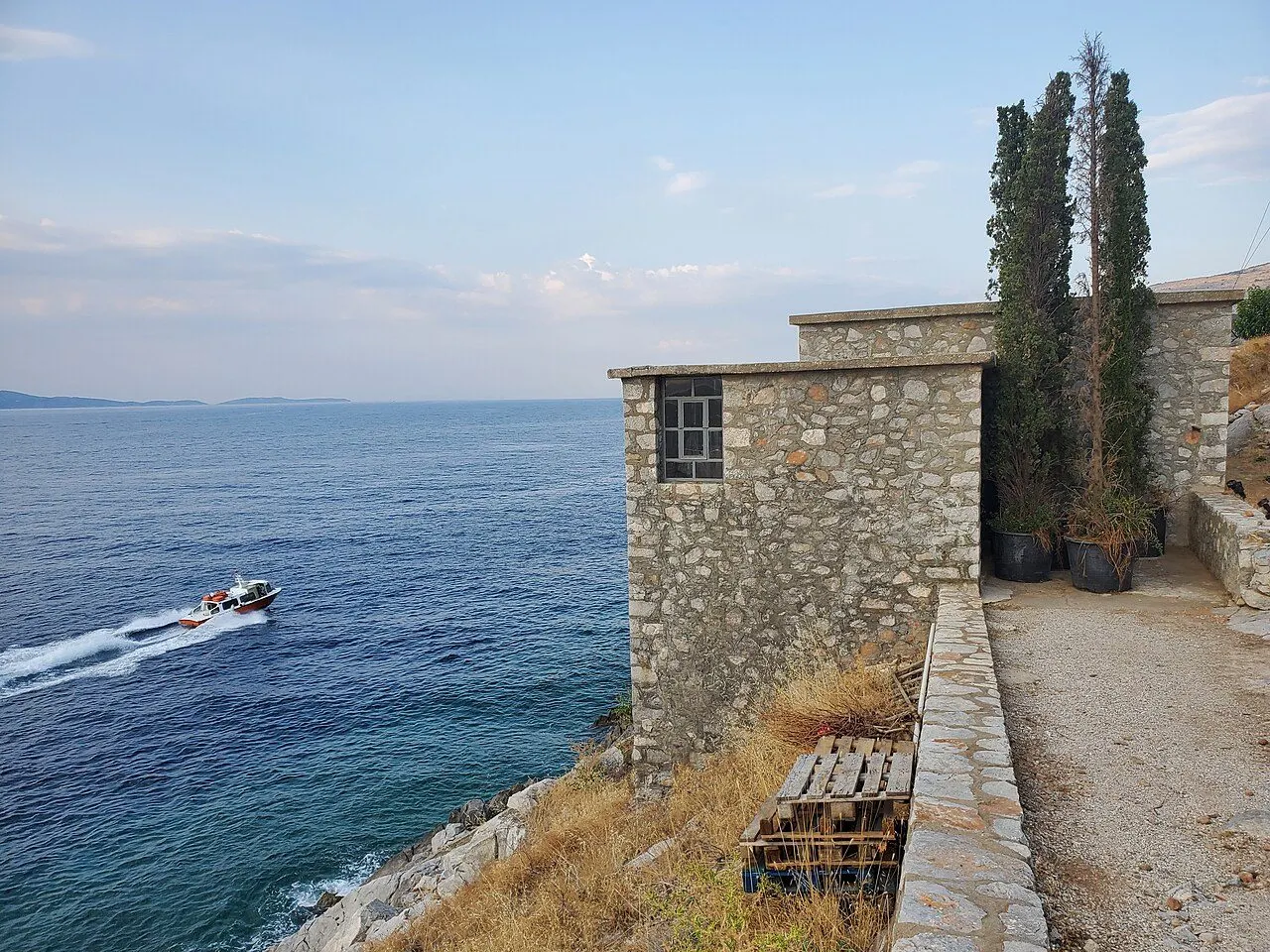
The stone slaughterhouse building on the cliff edge, now the DESTE project space

Contemporary art in a slaughterhouse

Since 2009 the collector Dakis Joannou's DESTE Foundation has turned the island's former municipal slaughterhouse, a small stone building on the cliff west of the harbour, into a project space where one artist makes a new work each summer.
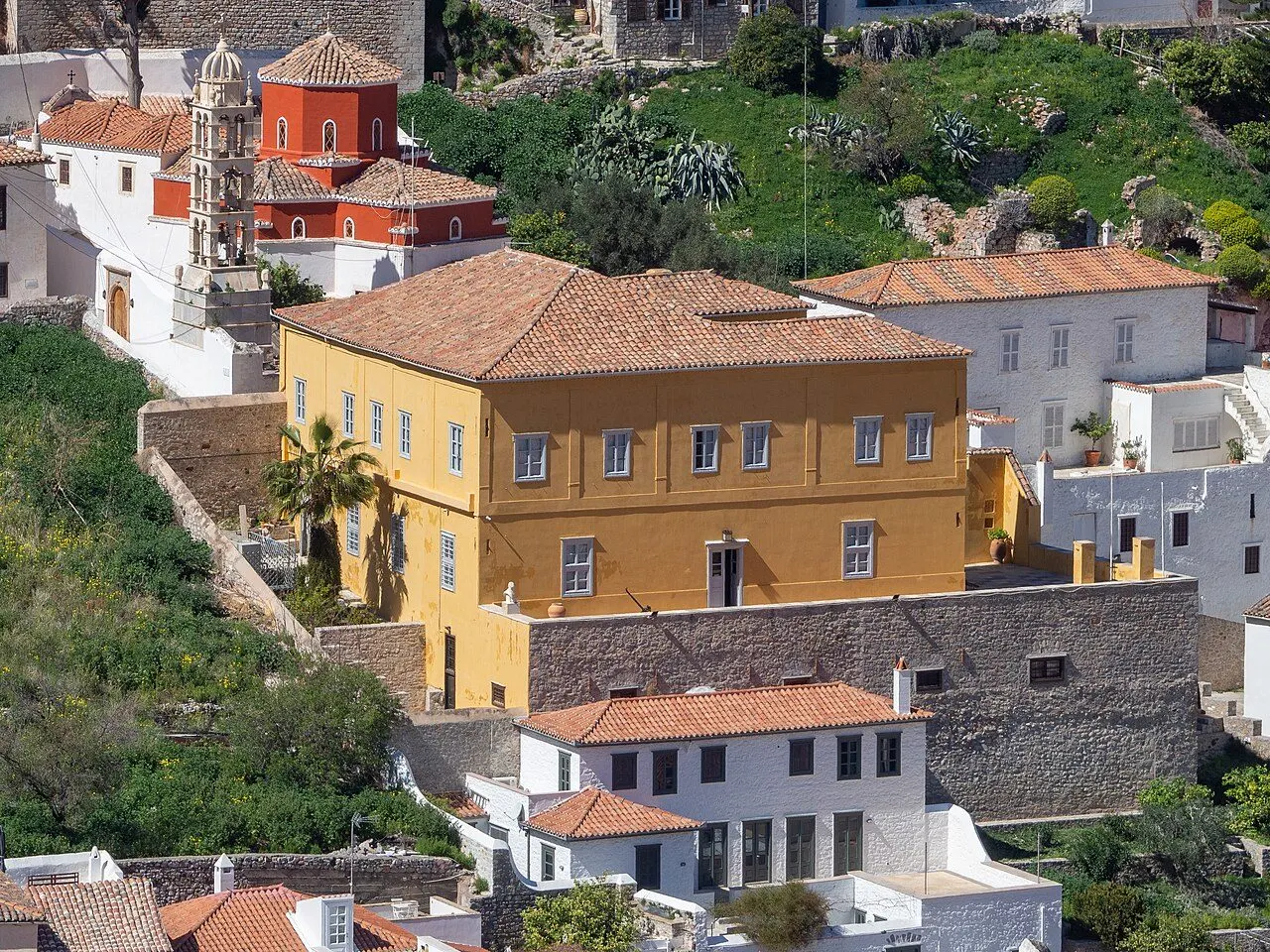
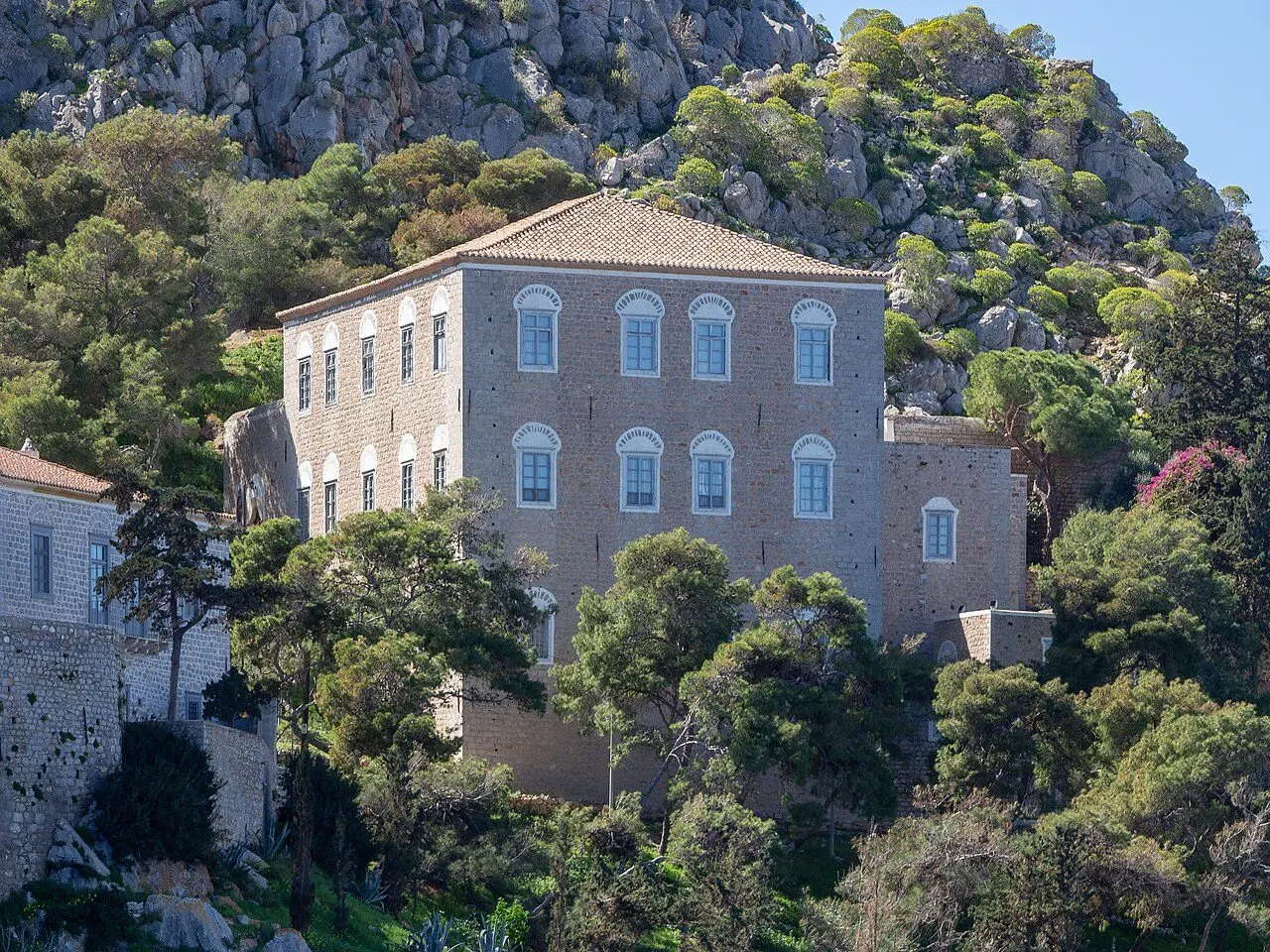
The ochre Lazaros Kountouriotis mansion on the hillside above the town

The admirals' mansions

The grey stone houses on the slopes above the harbour were built in the decades before 1821 by the ship-owning families who then financed and led the revolutionary fleet: the Kountouriotis brothers, Miaoulis, Tombazis. Several survive almost intact, and one, that of Lazaros Kountouriotis, is a museum.
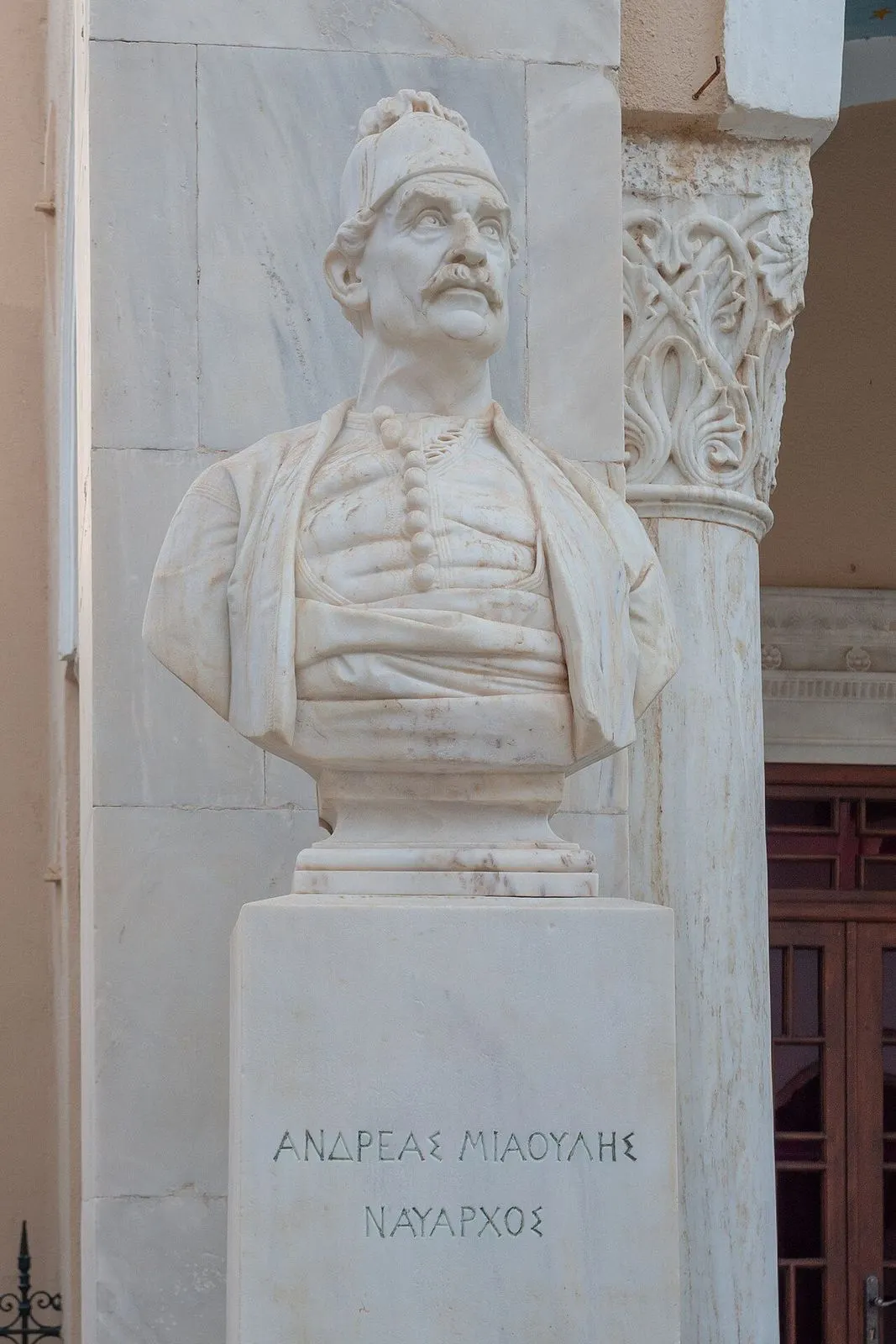
The nineteenth-century marble bust of Admiral Andreas Miaoulis at the cathedral of Hydra

A fireship burns in the harbour

Every June the Miaoulia festival honours Admiral Andreas Miaoulis and the fireships of the War of Independence. Its climax is a night-time re-enactment in the harbour, when a model of an Ottoman flagship is set alight on the water before the whole town.
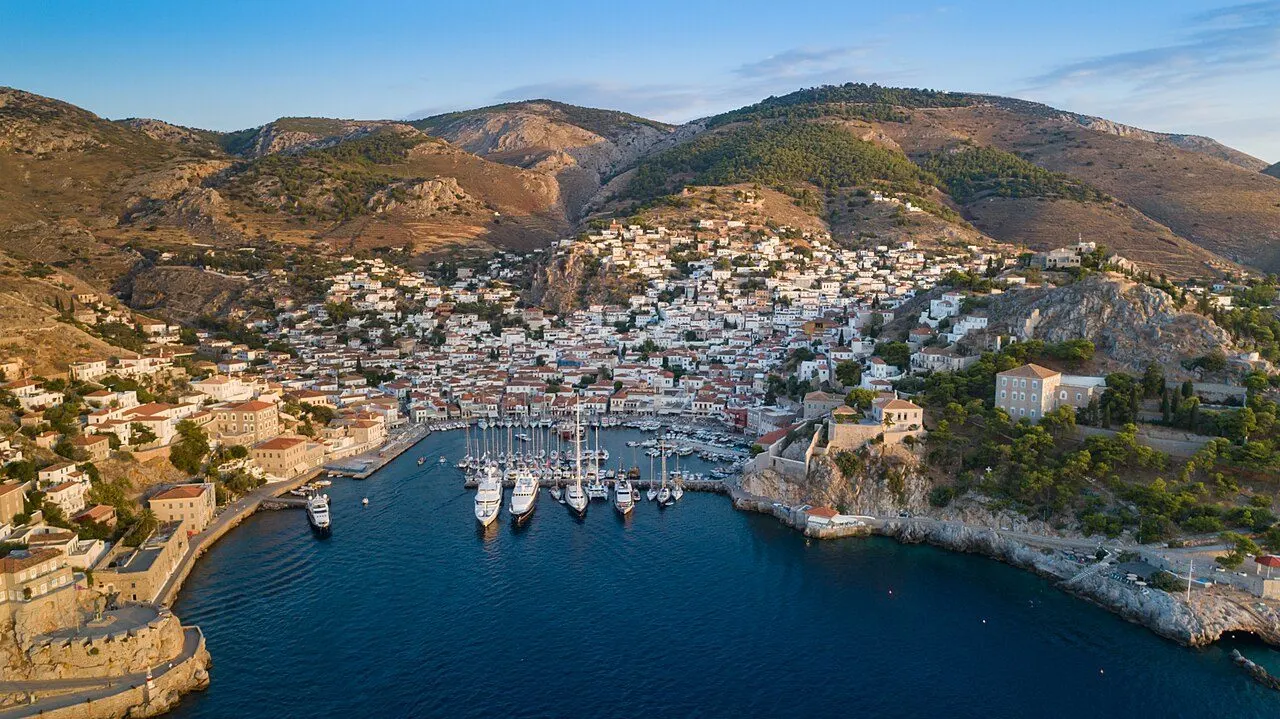
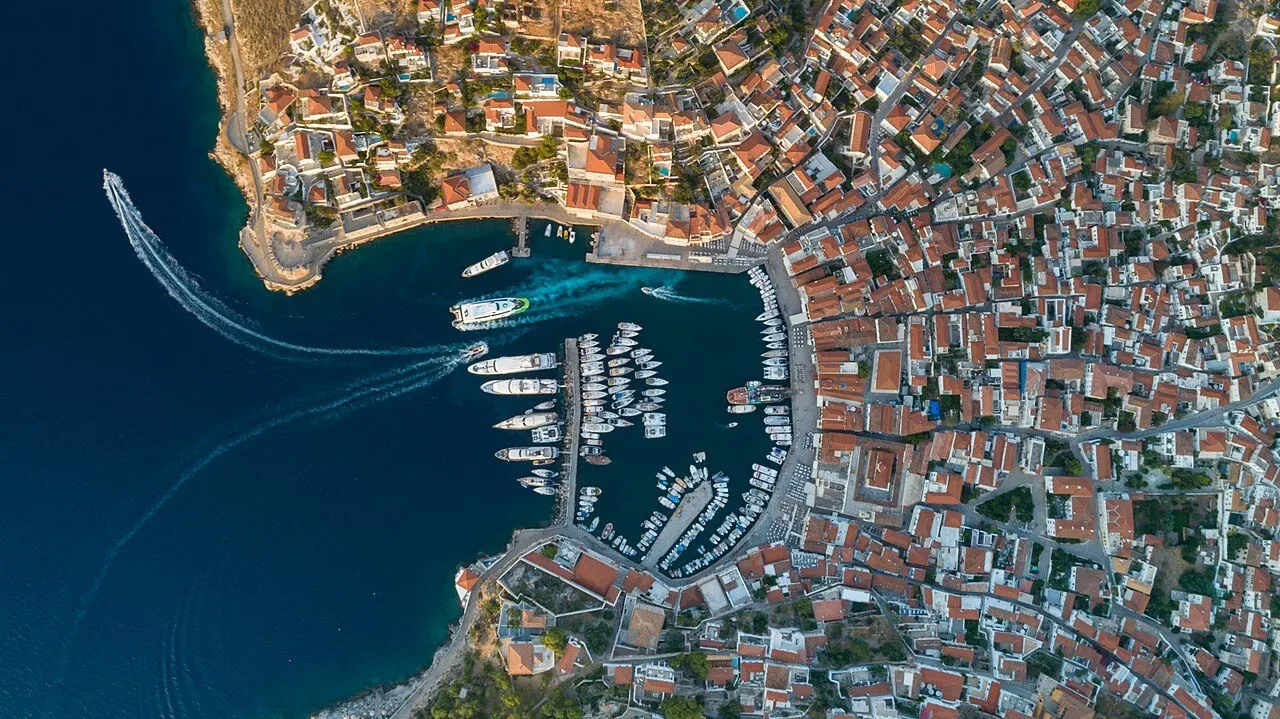
The horseshoe harbour of Hydra seen straight down from above, with terracotta roofs and moored yachts

“Hydra is a rock which rises out of the sea like a huge loaf of petrified bread.”

Henry Miller, The Colossus of Maroussi (1941)

Towns & villages

Where you'll fall for Hydra

All towns & villages
View of Hydra Town, Hydra Town & the harbour, Hydra
01
Hydra Town & the harbour

Hydra Town

A horseshoe harbour climbing in grey stone and white to the hills, with no cars, a few hundred mules and two centuries of painters

Hydra Town is the island's only real town and nearly all of its people live here, in a steep bowl of houses wrapped round a small, deep harbour on the north coast. The captains' mansions of grey stone sit on the slopes on either side, the whitewashed houses fill the gaps, and every street is a staircase. No car, scooter or motorbike is allowed in, so the sounds are of boats, bells, cats and the hooves of mules on the stone. Since the 1930s the town has drawn painters, writers and musicians, and its summer is still crowded with galleries and openings.

  • The harbour with its clock tower and bronze cannons
  • The Lazaros Kountouriotis mansion above the town
  • The Historical Archives-Museum on the quay
  • The DESTE Slaughterhouse on the cliff in summer
  • Swimming off the rocks at Spilia
Discover Hydra Town
View of Kala Pigadia, Hydra Town & the harbour, Hydra
02
Hydra Town & the harbour

Kala Pigadia

The 'good wells' of the upper town, where Leonard Cohen and the expat colony of the 1960s lived among the island families

Kala Pigadia, 'the good wells', is a quarter in the upper part of Hydra Town, a steep walk up from the harbour, named after the old public wells where people once drew their water. In the early 1960s it was at the heart of a small colony of foreign writers, painters and musicians who had found that a house here cost almost nothing. Leonard Cohen bought one in 1960 and kept it for the rest of his life. The lanes are still residential, white and quiet, and the house is a private home, not a museum: come for the walk and the atmosphere, not for a sight.

  • The old wells that give the quarter its name
  • The lanes of the 1960s expat colony
  • Views down over the roofs to the harbour
  • A quiet walk away from the waterfront crowds
Discover Kala Pigadia

Things to do

Moments to collect

The stone slaughterhouse building on the cliff edge above the sea

Culture

See the summer show at the Slaughterhouse

Walk out along the cliff to the DESTE Foundation's project space for this year's commission, then go gallery-hopping in the lanes on the way back to town.

West of the harbour

A whitewashed stepped lane with pink bougainvillea in the upper town

Culture

Follow the bohemians

Climb to Kala Pigadia in the upper town, where Leonard Cohen lived, wander the quiet lanes of the 1960s colony, and end at a harbour café at the hour the writers used to gather.

Kala Pigadia and the harbour

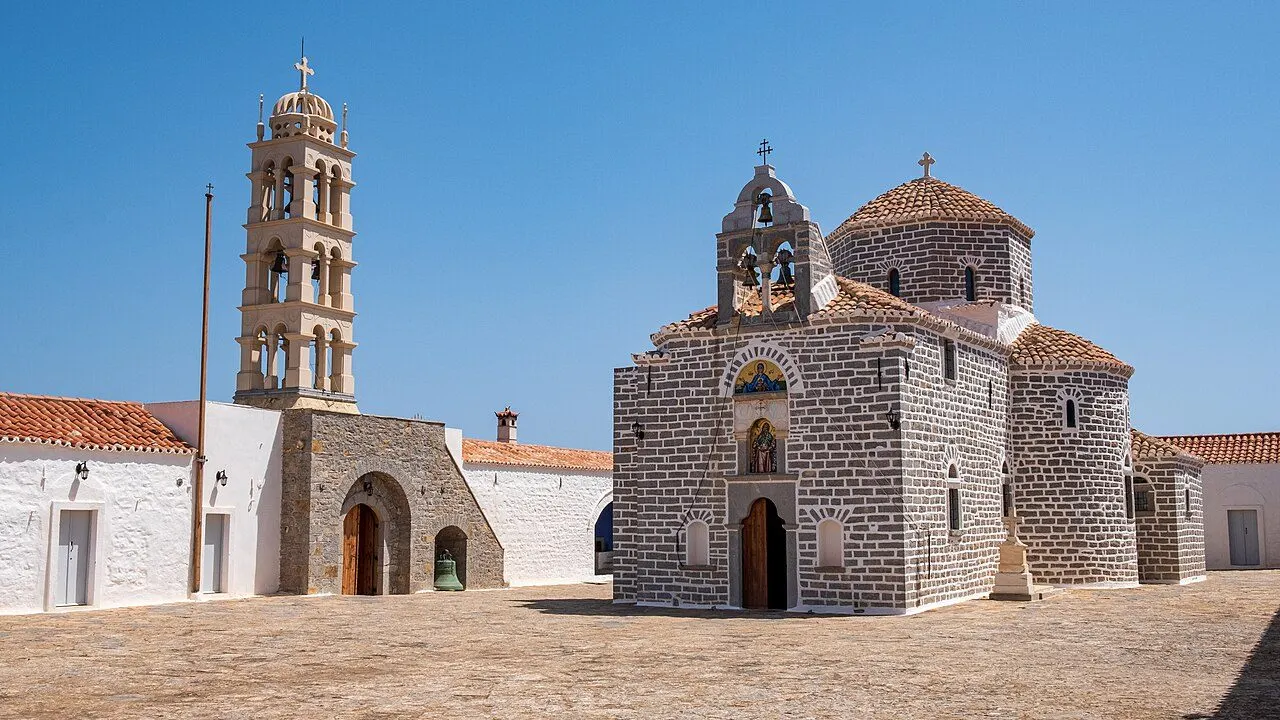
The stone church and bell tower of the Profitis Ilias monastery

Hike

Hike to Profitis Ilias

Climb the stepped mule path through the pines to the mountain monastery for the best view of Hydra, and carry on to the summit if you have the legs.

Mount Eros, above the town

Good to know

Before you fall for Hydra

Hydra is a long, almost treeless ridge of limestone off the coast of the Peloponnese, with one town, a handful of hamlets and not a single car. Its harbour town is among the most beautiful in Greece: a horseshoe of grey stone mansions and white houses climbing steeply from the water, built by the ship-owners who made the island rich in the late eighteenth century and then put their fleet at the service of the Greek War of Independence. The same light, silence and stone have drawn artists ever since. The painter Nikos Hadjikyriakos-Ghika hosted Henry Miller and Patrick Leigh Fermor at his family home; in the 1960s Leonard Cohen, Marianne Ihlen and a circle of writers and painters lived here on very little; and today the island fills each summer with exhibitions, led by the DESTE Foundation's shows in the old municipal slaughterhouse. Because there are no roads to speak of, you walk, ride a mule or take a water taxi to the coves, and the pace of the island becomes yours within a day.

Area
≈ 50 km²
Population
≈ 2,000
Highest point
Mount Eros, ≈ 590 m
Cars
None: mules, boats and feet
  • Art & bohemians
  • Car-free walking
  • Naval history
  • Swimming off the rocks
  • When to go

    May, June and September are best: warm sea, open hotels and fewer day-trippers. July and August are hot, chic and crowded, especially at weekends, and the art openings cluster then. In winter the island is very quiet and many places close.

  • Pack for steps

    Bring light luggage and shoes with grip. The town is steep and paved with polished stone, and the mules and porters who carry bags charge per trip.

  • Getting around

    There are no cars or buses. Walk the coast paths, ride a mule, or take the water taxis and summer beach boats from the harbour; water taxis charge per boat, so they are cheaper shared.

  • How long

    A day trip from Athens gives you the harbour and a swim. Stay three or four nights to add the museums, the coast walk, a boat to Bisti and the hike to Profitis Ilias, or a week to slow right down.

  • Getting there

    No airport and no cars: fast boats from Piraeus take about 1 h 30 to 2 h, or cross in a few minutes from Metochi on the Peloponnese coast opposite.

    Flights & ferries

From a watery rock to the navy of 1821 and the island of painters

A barren island named for its long-lost springs, settled by refugees, enriched by the sea, emptied by the age of steam and rediscovered by artists.

Walk through the story

Last updated