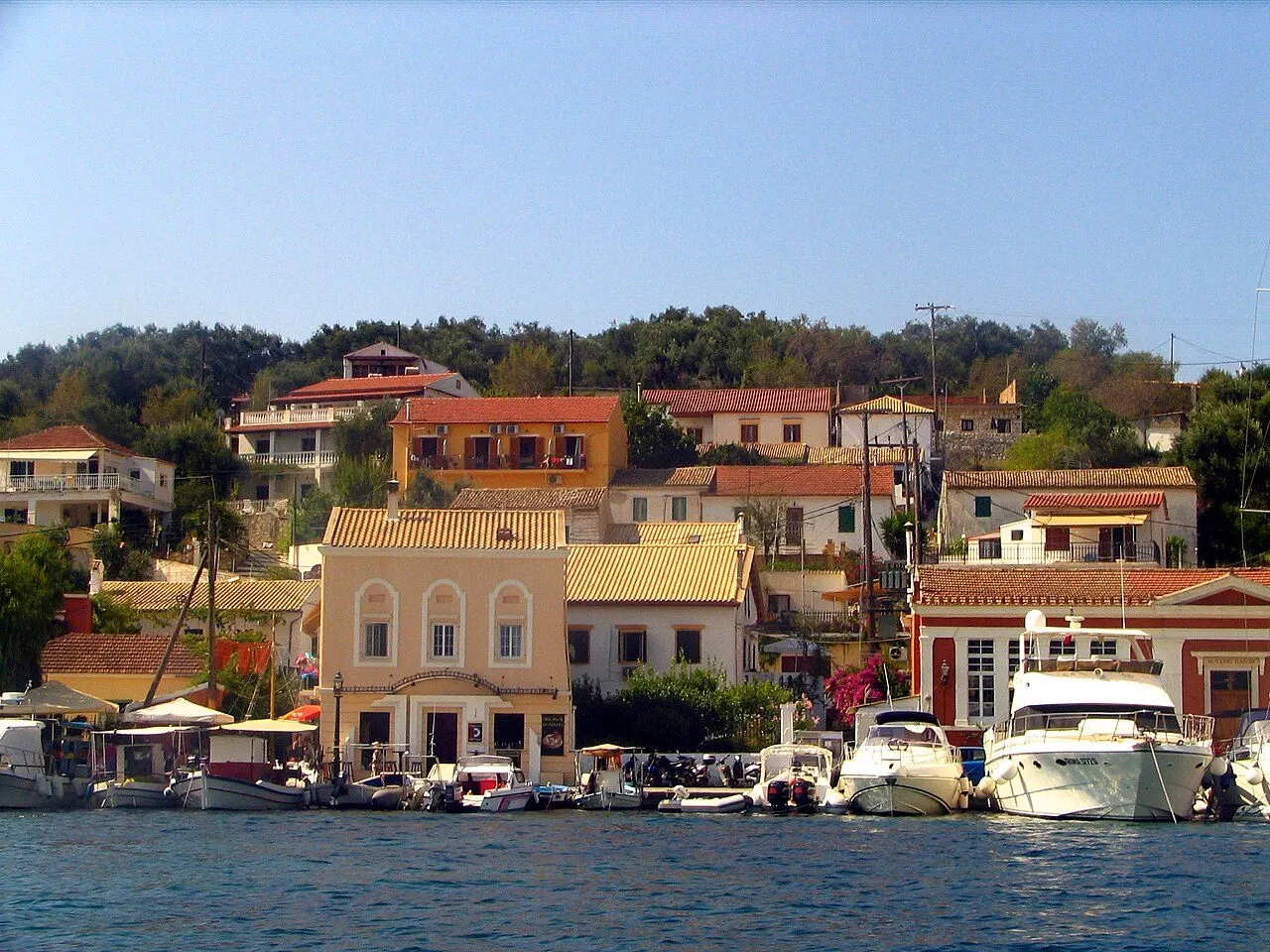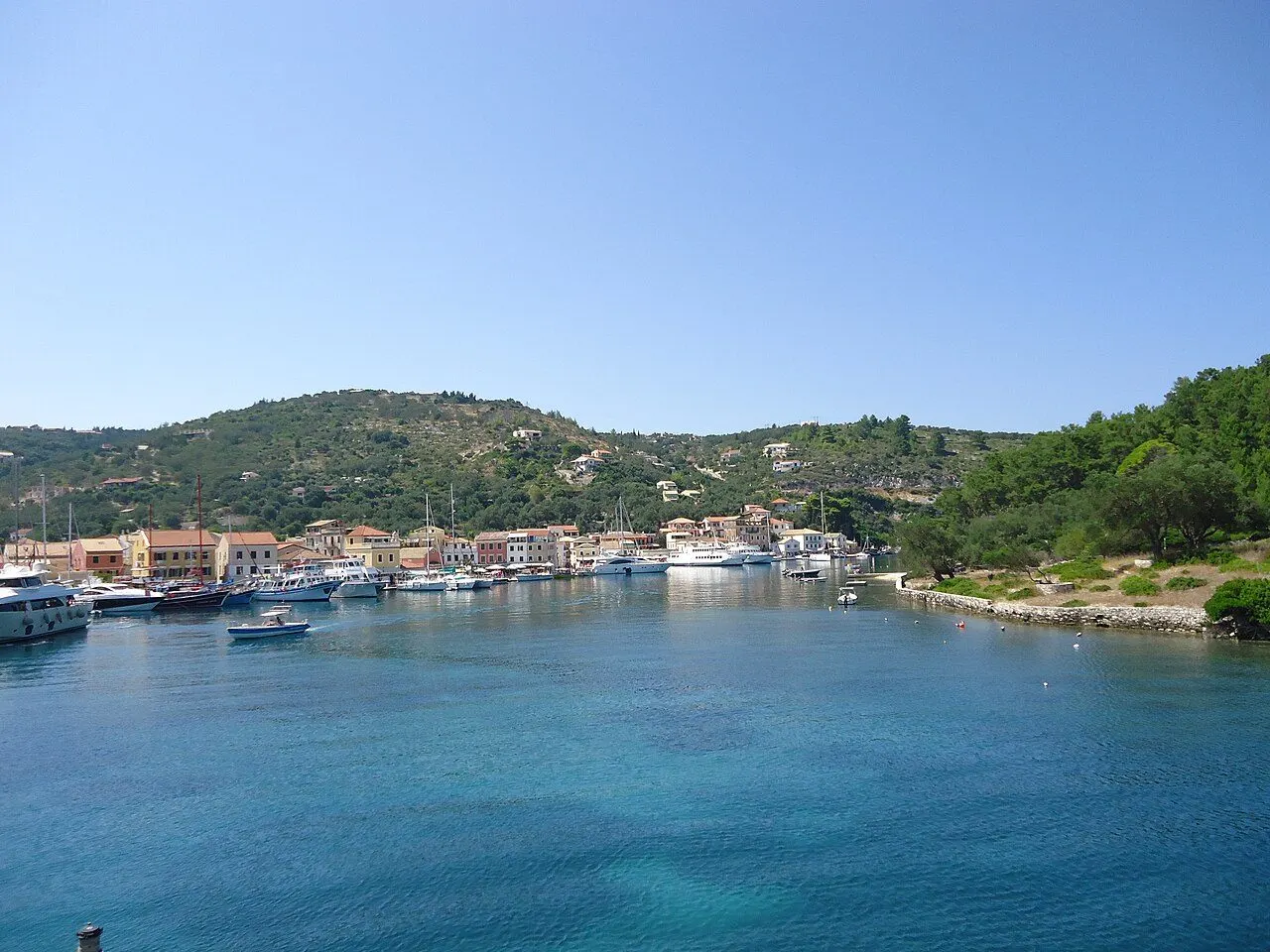
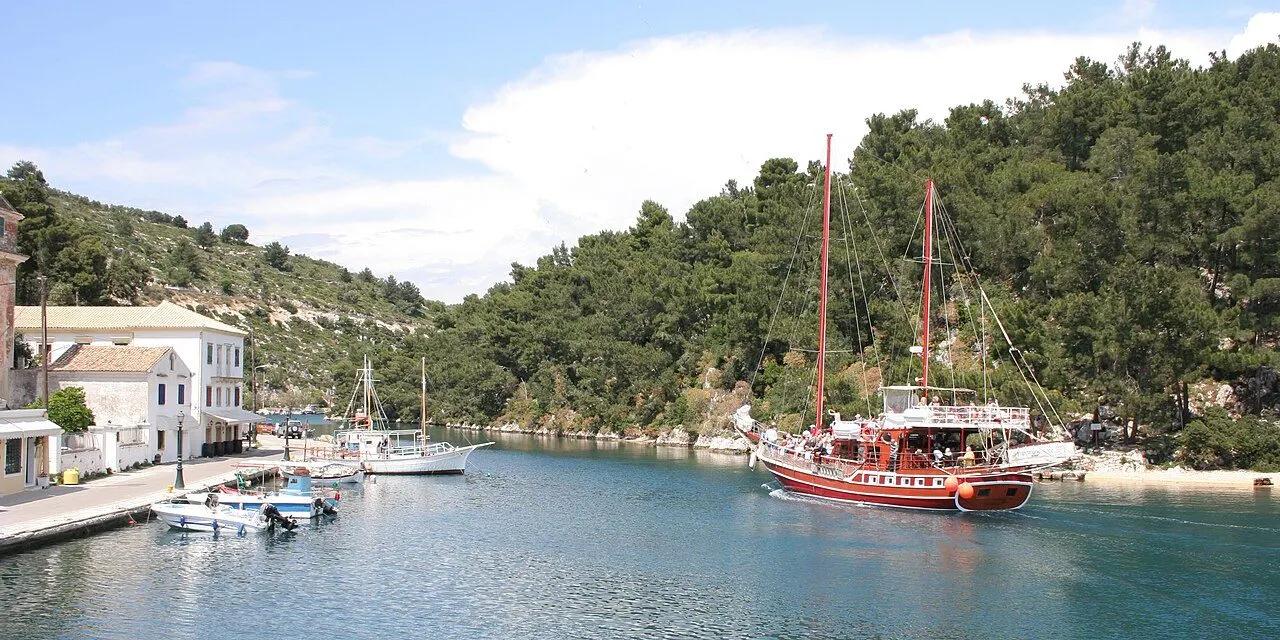
The harbour channel of Gaios on Paxos, its waterfront houses under a clear blue sky

Παξοί · The island of peace and quiet: no airport, olive groves to the sea and the turquoise bays of Antipaxos

Paxos, the island of peace and quiet

Arrive by boat in a harbour as narrow as a river, walk old lanes between dry-stone walls under ancient olive trees, take a little boat into the blue caves of the west coast, swim in the turquoise bays of Antipaxos and watch the sun go down from the white cliffs of Erimitis.

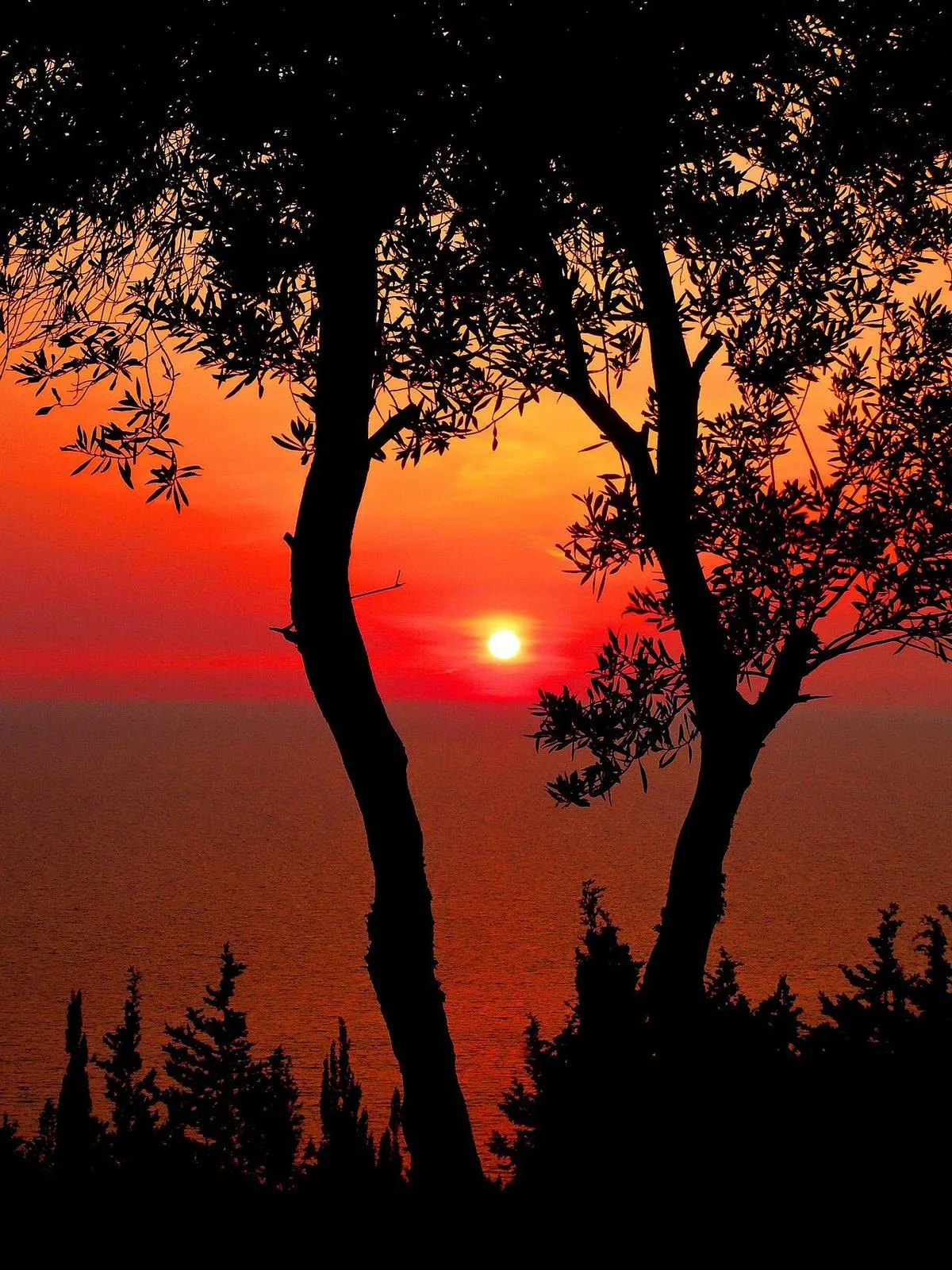
The red sun setting behind silhouetted trees at Erimitis on the west coast of Paxos

Greetings from Paxos

Paxos

No planes overhead, no traffic, barely a sound but the cicadas. We came over from Corfu by boat and slipped into Gaios between two green islets. This morning we walked for an hour along a lane between stone walls and saw nobody but an old man resting under an olive tree that must have been centuries old. In the afternoon a little hired boat took us into a cave where the water glowed blue, and tonight we stood on the cliffs at Erimitis while the sun went down into the open sea and the whole crowd went quiet.

Wish you were here. x

Hour by hour

A perfect day on Paxos

Olive lanes in the cool of the morning, sea caves at noon, a harbour lunch and the sunset from the cliffs.

  1. 08:00

    A walk under the olives

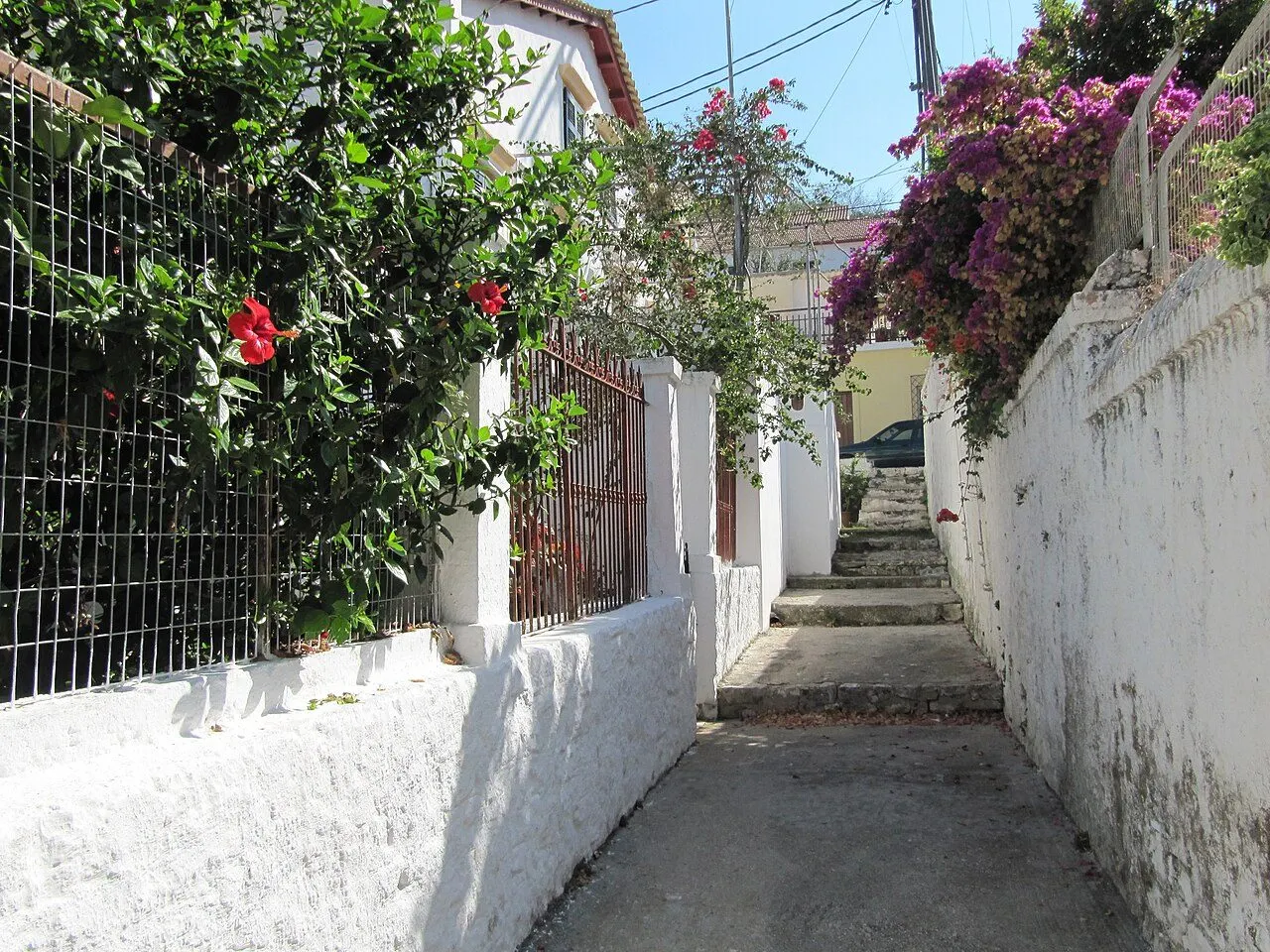
    Set off on foot from the hamlets around Magazia along the old lanes between dry-stone walls, past chapels, cisterns and trees older than any house on the island.

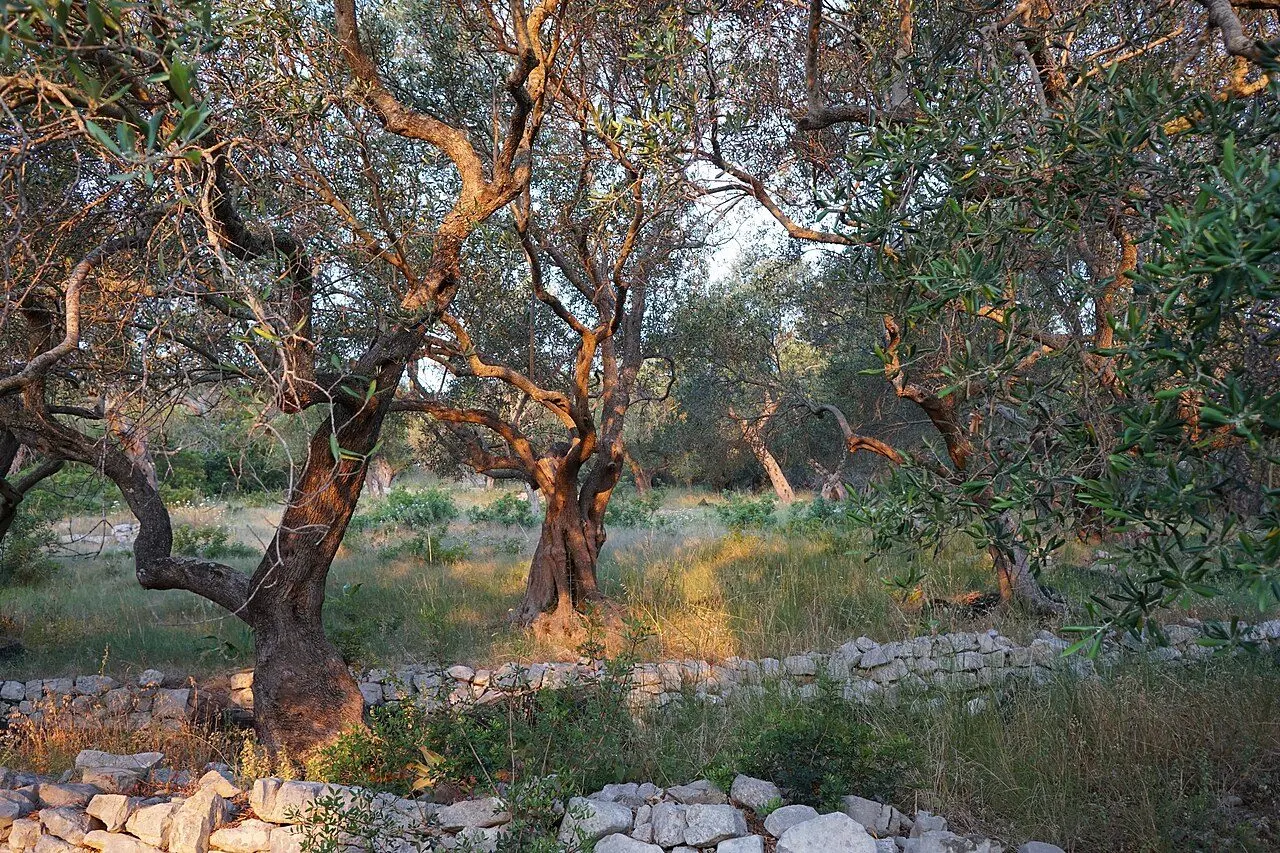
    Ancient, gnarled olive trees in a grove at sunrise
  2. 10:30

    Into the blue caves

    Take a small boat out of Gaios round to the west coast, into the sea caves and past the stone needle of Ortholithos.

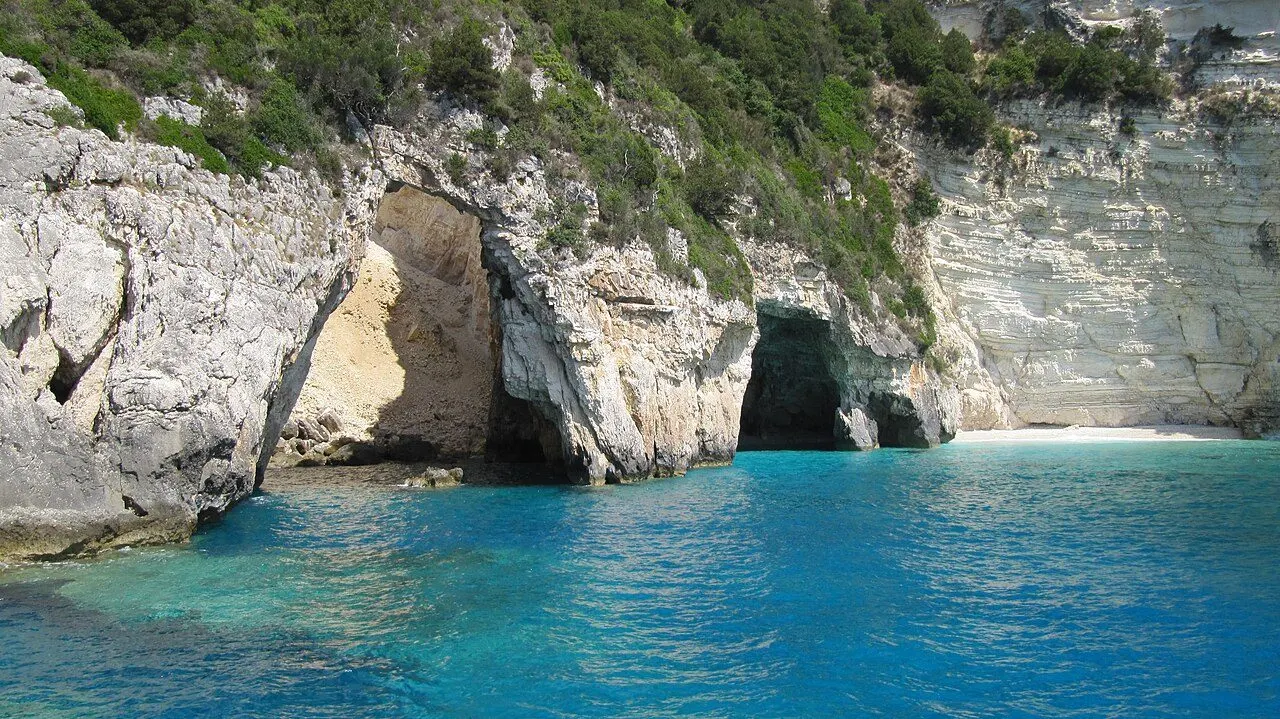
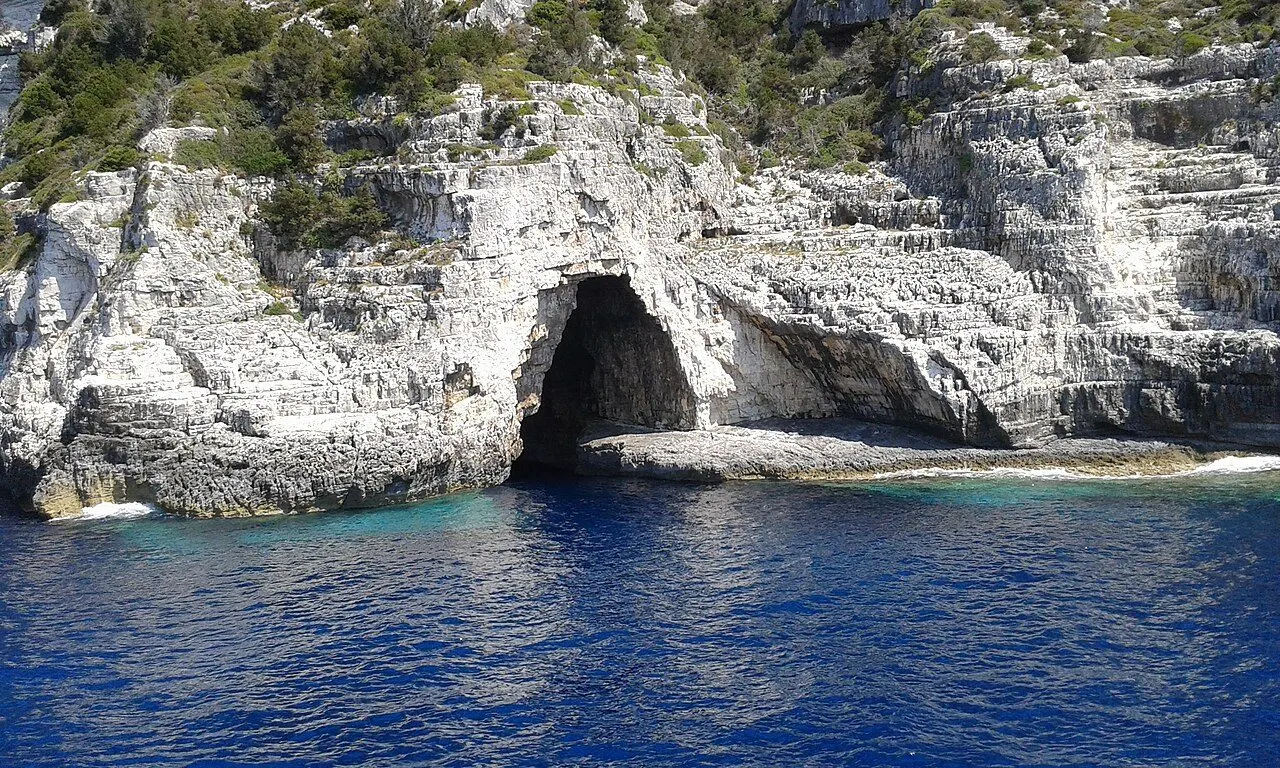
    A blue sea-cave mouth in the white cliffs of Paxos, seen from the water
  3. 12:30

    A swim on Antipaxos

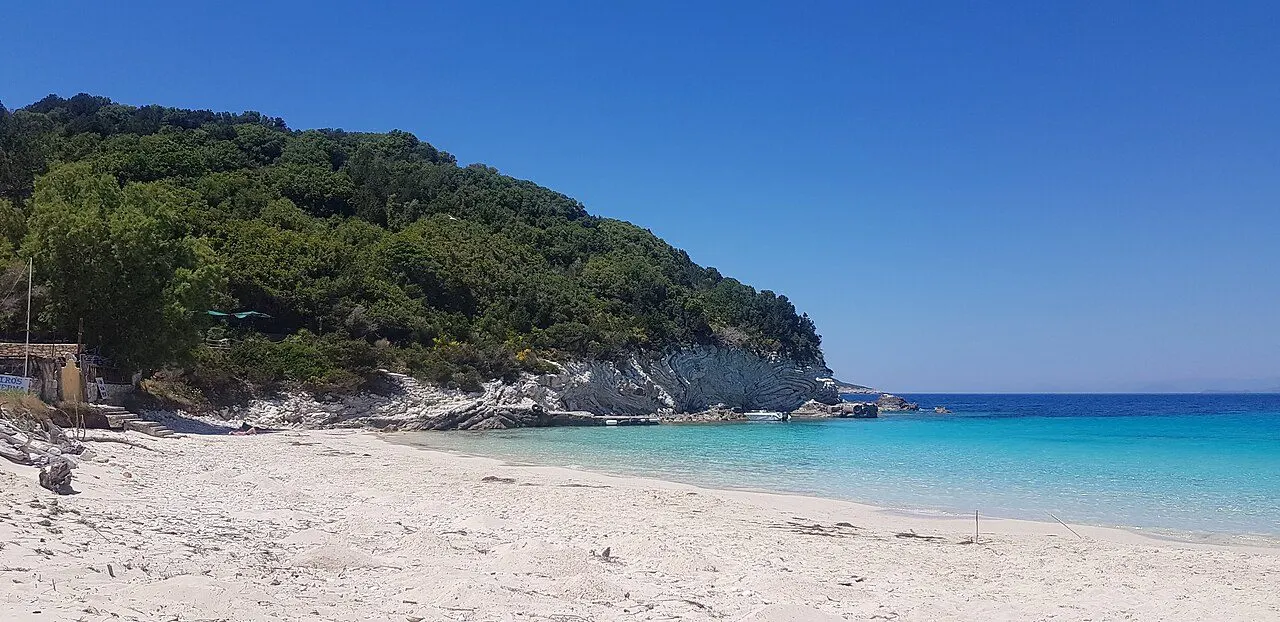
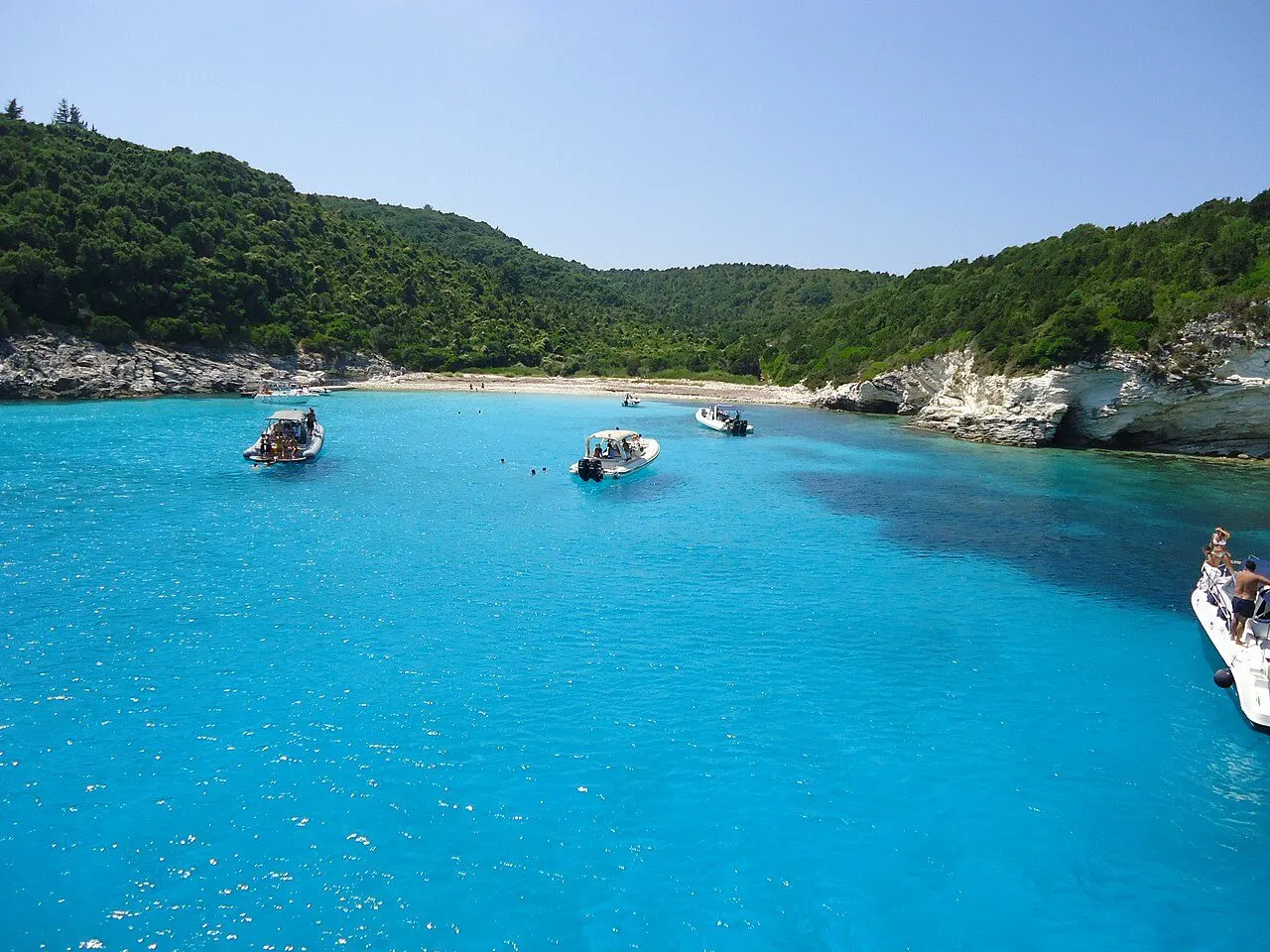
    Carry on south across the strait and drop anchor off Voutoumi for a swim in turquoise water.

    Boats anchored in the turquoise bay of Voutoumi on Antipaxos
  4. 16:00

    Loggos in the shade

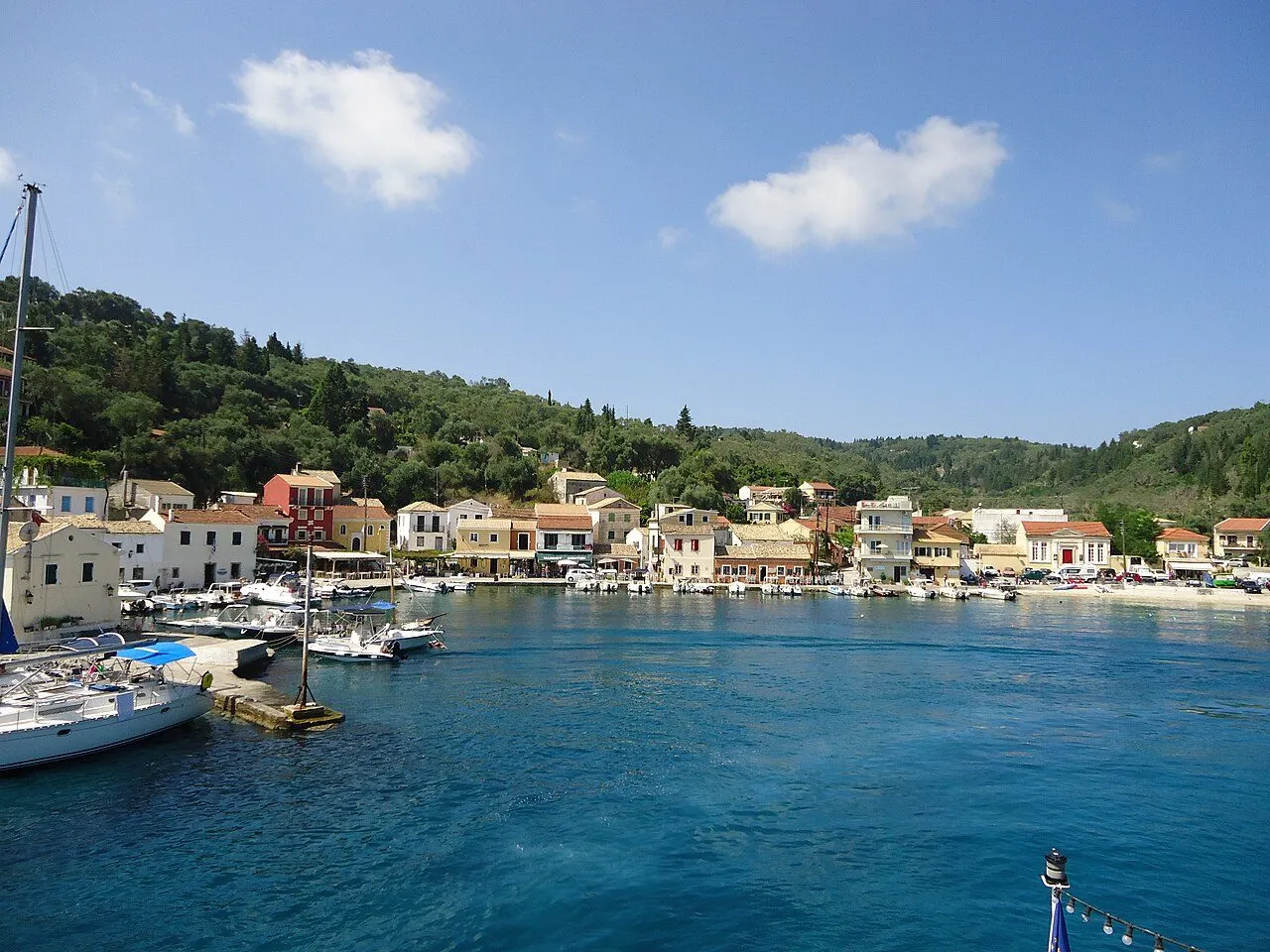
    Back on Paxos, drive up to Loggos and sit on the harbour with a cold drink under the old factory chimney.

    Houses on the harbour front of Loggos with boats at the quay
  5. 19:30

    Sunset at Erimitis

    Be on the clifftop at Erimitis an hour before sunset, as the white cliffs turn gold above the open sea.

    The sun going down behind the trees at Erimitis
  6. 22:00

    Night on the bay

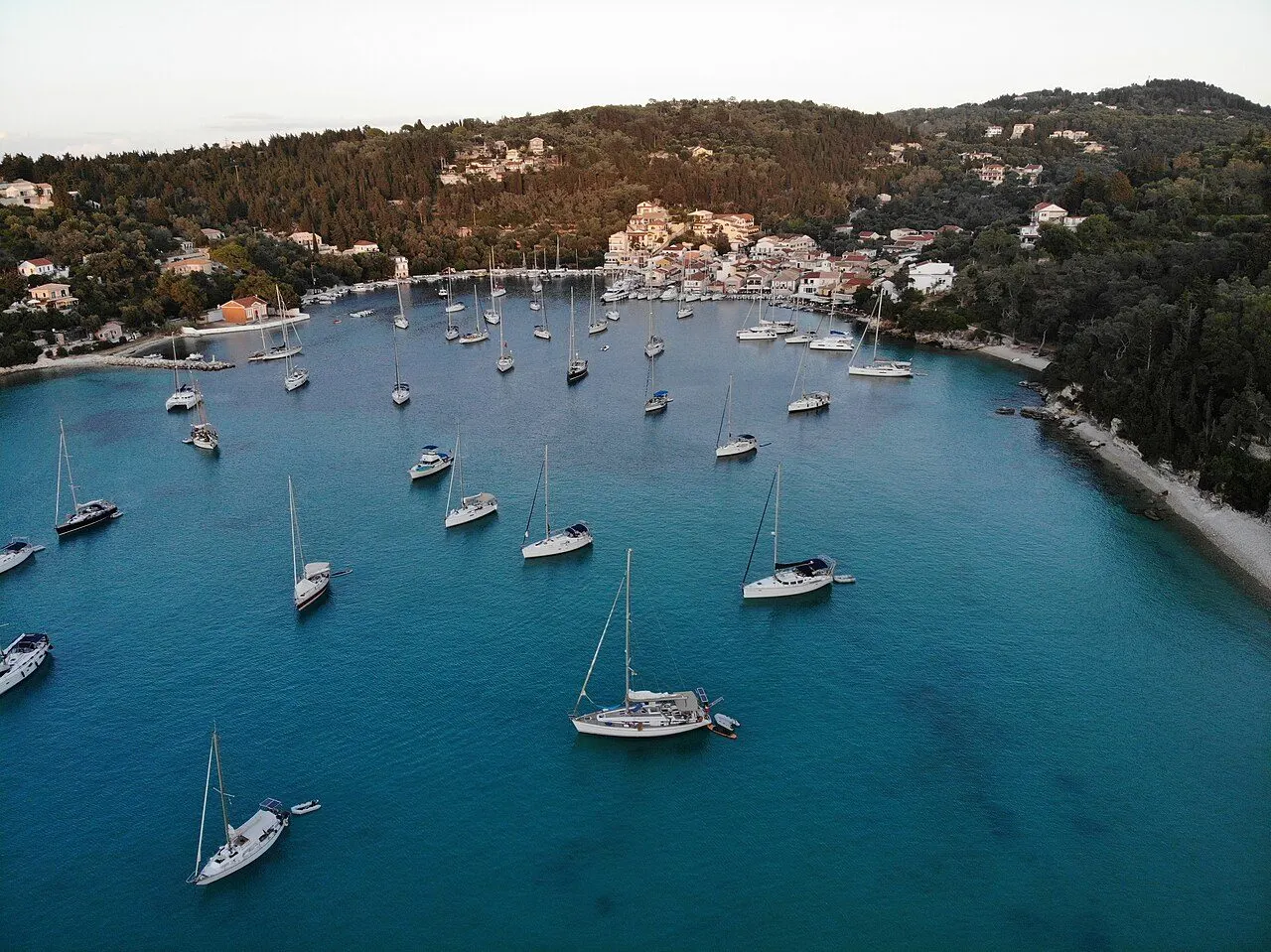
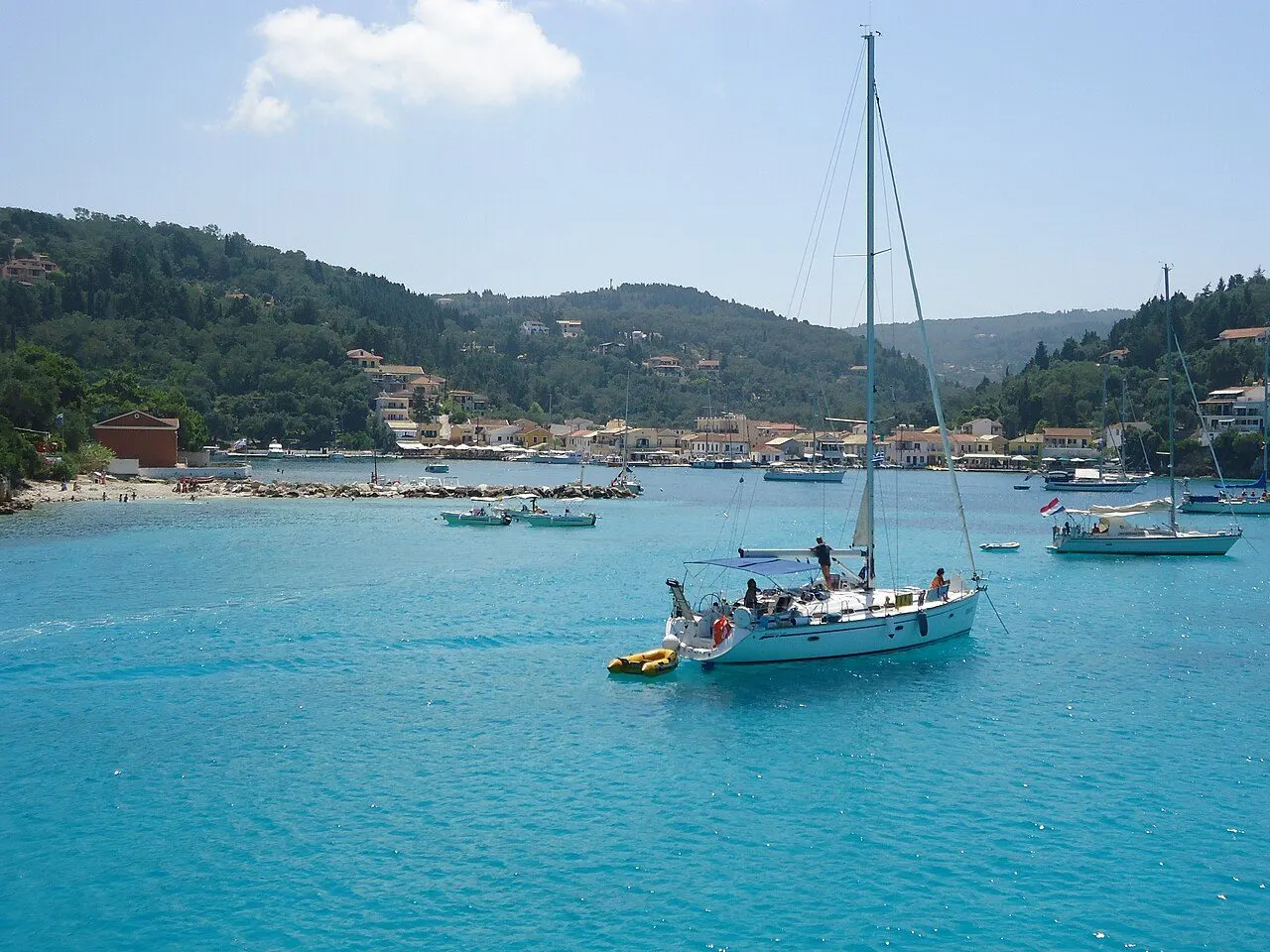
    End the day in Lakka, where the lights of the anchored yachts ring the bay and the tavernas stay open late.

    Sailing boats at anchor in front of Lakka village

Where to stay

Where you'll wake up on Paxos

All stays

Only on Paxos

The things you'll tell everyone about

What makes Paxos one of the most peaceful islands in Greece.

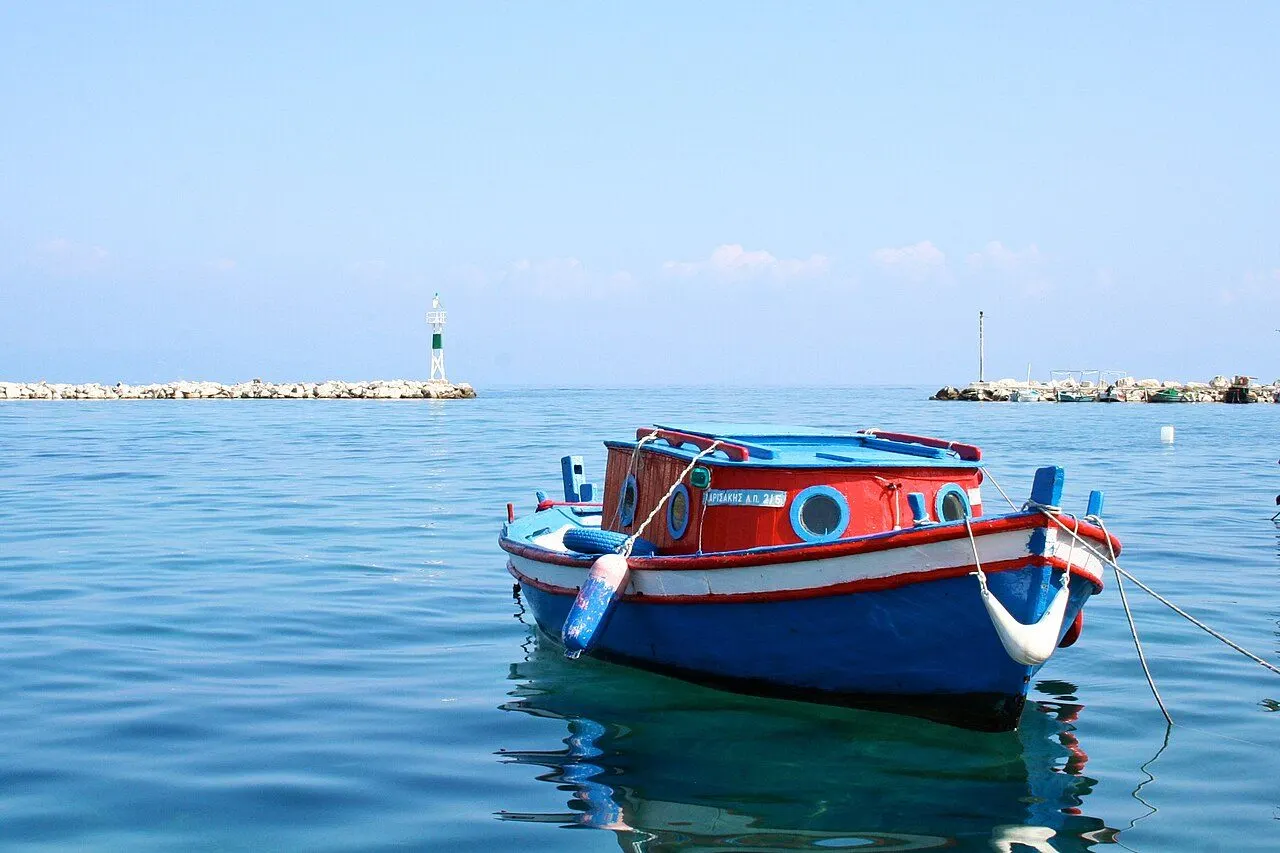
A red and blue wooden fishing boat on clear water in Gaios harbour

An island without an airport

Every visitor to Paxos comes by sea, on a boat from Corfu or Igoumenitsa or on a yacht. That one fact keeps the island small-scale: no package-holiday resorts, no big hotels, and day-trippers who leave again in the afternoon.
Ancient, gnarled olive trees in a grove at sunrise

A forest of olive trees

Almost the whole island is an olive grove, planted over centuries and encouraged under Venetian rule, when olive oil was the Ionian islands' great export. Many of the trees are hundreds of years old, with trunks twisted into strange shapes, and the oil of Paxos is still pressed every winter.

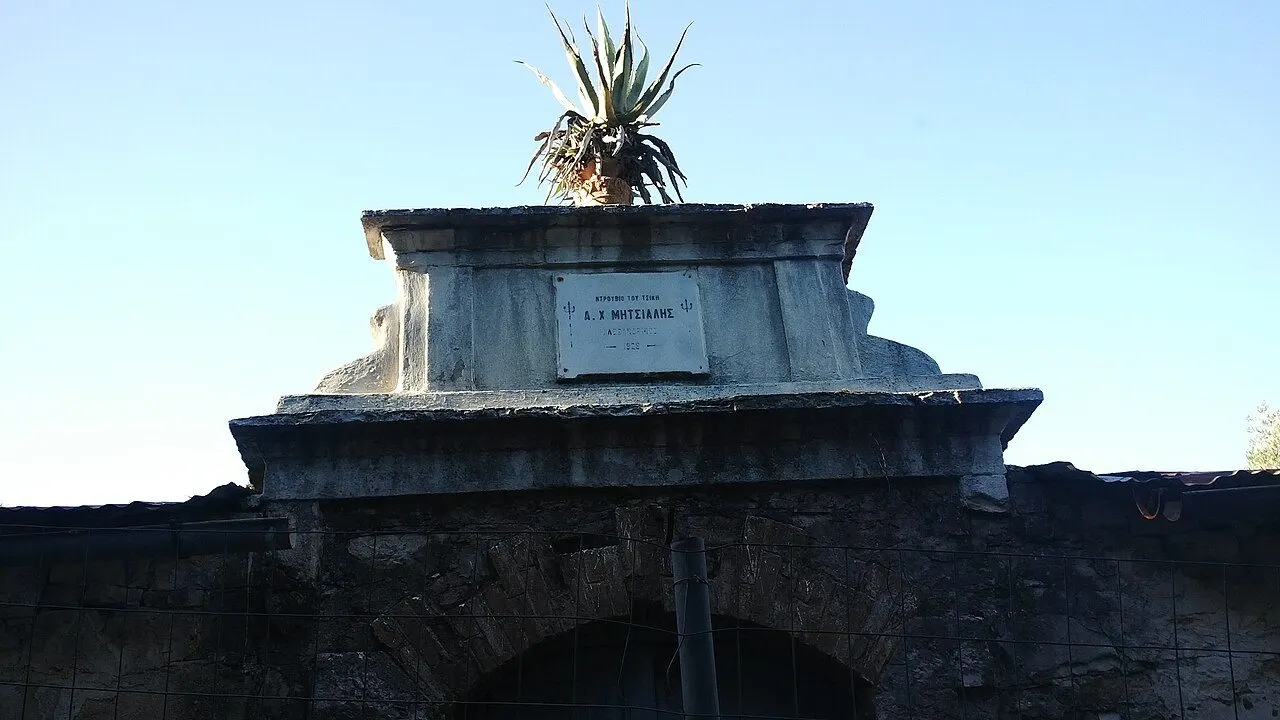
The front of the old Tsikis olive mill on Paxos

Dry-stone walls and old presses

Under the olives, the hillsides are terraced with walls of stone fitted without mortar, and the old paths between them still link the hamlets. Scattered through the groves stand the stone buildings of old olive presses, where the oil was once crushed by animal power, then by machine.

The wooded islet of Agios Nikolaos across the harbour channel of Gaios, with a caique

A harbour behind two islets

Gaios lies on a narrow channel sheltered by the islet of Agios Nikolaos, with the walls of a Venetian fort among its pines, and by Panagia islet with its monastery of the Virgin. Few Greek harbours are so enclosed or so still.

Sea caves and rock arches over turquoise water on the west coast of Paxos

Caves on the west coast

The west coast is a long wall of white limestone hollowed into sea caves, where sunlight bouncing off the sandy floor makes the water glow blue. Offshore stands Ortholithos, a solitary needle of rock, and further south the Tripitos arch.

Towns & villages

Where you'll fall for Paxos

All towns & villages
View of Gaios, Gaios & the south-east, Paxos
01
Gaios & the south-east

Gaios

A pastel harbour town on a channel of green water, guarded by two wooded islets

Gaios is the island's small capital and its main port, a cluster of pastel-washed houses with green shutters lining a narrow, sheltered channel. Opposite the quay, so close it feels like a river bank, lies the pine-covered islet of Agios Nikolaos with the walls of a Venetian fort; beyond it the low islet of Panagia carries a white monastery. Caiques, water taxis and yachts tie up along the waterfront, the main square opens straight onto the water, and the whole town can be walked end to end in ten minutes.

  • The waterfront and its square, opening onto the channel
  • The Venetian fort on Agios Nikolaos islet
  • The monastery on Panagia islet
  • The Paxos Museum in the old school
  • Boats to Antipaxos from the quay
Discover Gaios
View of Lakka, Lakka & the north, Paxos
02
Lakka & the north

Lakka

A horseshoe bay at the north end, where sailing boats swing at anchor over pale sand

Lakka sits at the head of an almost round bay at the northern tip of Paxos, so well sheltered that it fills with anchored sailing boats every summer evening. The village behind the quay is a small grid of lanes, little squares and tavernas, with olive groves rising on every side. Two beaches lie inside the bay itself, and footpaths lead out from the village to the lighthouse headland and along the cliffs of the north-west coast.

  • Evening on the quay among the anchored boats
  • Swimming at Harami and the other beaches inside the bay
  • The walk out to the lighthouse headland
  • Boat trips to the west-coast caves
Discover Lakka

Things to do

Moments to collect

Ancient, gnarled olive trees in a grove at sunrise

Hike

Walk the old olive lanes

Follow the old paths between dry-stone walls from hamlet to hamlet through the groves, past chapels, wells and olive presses, with hardly a car in sight.

The interior, from Magazia or Gaios

A blue sea-cave mouth in the white cliffs of Paxos

Nature

Hire a little boat for the caves

Rent a small motorboat that needs no licence and explore the west coast at your own pace: the blue caves, the sea stack of Ortholithos, empty coves and a swim wherever you like.

From Gaios, Lakka or Loggos

White sand and clear water at Vrika on Antipaxos

Beach

A day on Antipaxos

Take the morning boat from Gaios, swim at Vrika, walk over the headland to Voutoumi and stay for lunch above the bay.

Vrika and Voutoumi

Good to know

Before you fall for Paxos

Paxos is a small, green island of olive trees off the south-east tip of Corfu, about ten kilometres long and a few wide, and it has stayed calm largely because it is hard to reach. There is no airport; everyone comes by sea. The island has no big resorts, only three small harbour villages, Gaios, Loggos and Lakka, joined by a single main road, and an interior of hamlets, chapels and old olive presses half hidden in the groves. Dry-stone walls divide the land into terraces, and old paths run between them from one side of the island to the other. On the east coast pebble coves lie under the olives in water of startling clarity; the west coast is a wall of white cliffs and sea caves, seen best from a boat, and at its high point, Erimitis, the island gathers to watch the sun set. Across a short strait lies tiny Antipaxos, with vineyards and two of the most turquoise bays in Greece. Days here are slow, and the evenings slower.

Area
≈ 25 km² (Antipaxos ≈ 3 km² more)
Population
≈ 2,300
Airport
None: boats from Corfu and Igoumenitsa
Main crop
Olives, on terraces of dry-stone walls
  • Peace & quiet
  • Walking in olive groves
  • Sea caves by boat
  • Turquoise swims on Antipaxos
  • When to go

    May, June and September are ideal: warm sea, green groves and quiet lanes. In July and August the harbours fill with yachts and day boats, though the interior stays calm. From November the island is very quiet, many places close, and the olive harvest begins.

  • Getting around

    The island is small but hilly. Hire a small car or scooter for a few days, take the local bus between the harbours, or walk the old paths. A little motorboat is the best way to see the coast.

  • Book the sunset

    Erimitis is the island's sunset spot and the clifftop restaurant fills weeks ahead in summer. Book, and take a taxi rather than driving the narrow lane.

  • How long

    A day trip from Corfu shows you Gaios and a boat round the caves. Stay at least four or five nights to walk the olive lanes, spend a day on Antipaxos and slow down to the island's pace.

  • Getting there

    No airport: fly to Corfu and take a boat south to Gaios, about 1 to 2 hours depending on the vessel, or cross from Igoumenitsa on the mainland by car ferry.

    Flights & ferries

From Poseidon's hideaway to the olive island of Venice

A small island on the sea route between Italy and Greece, shaped by a myth, four centuries of Venetian rule and the slow work of olive farmers.

Walk through the story

Last updated