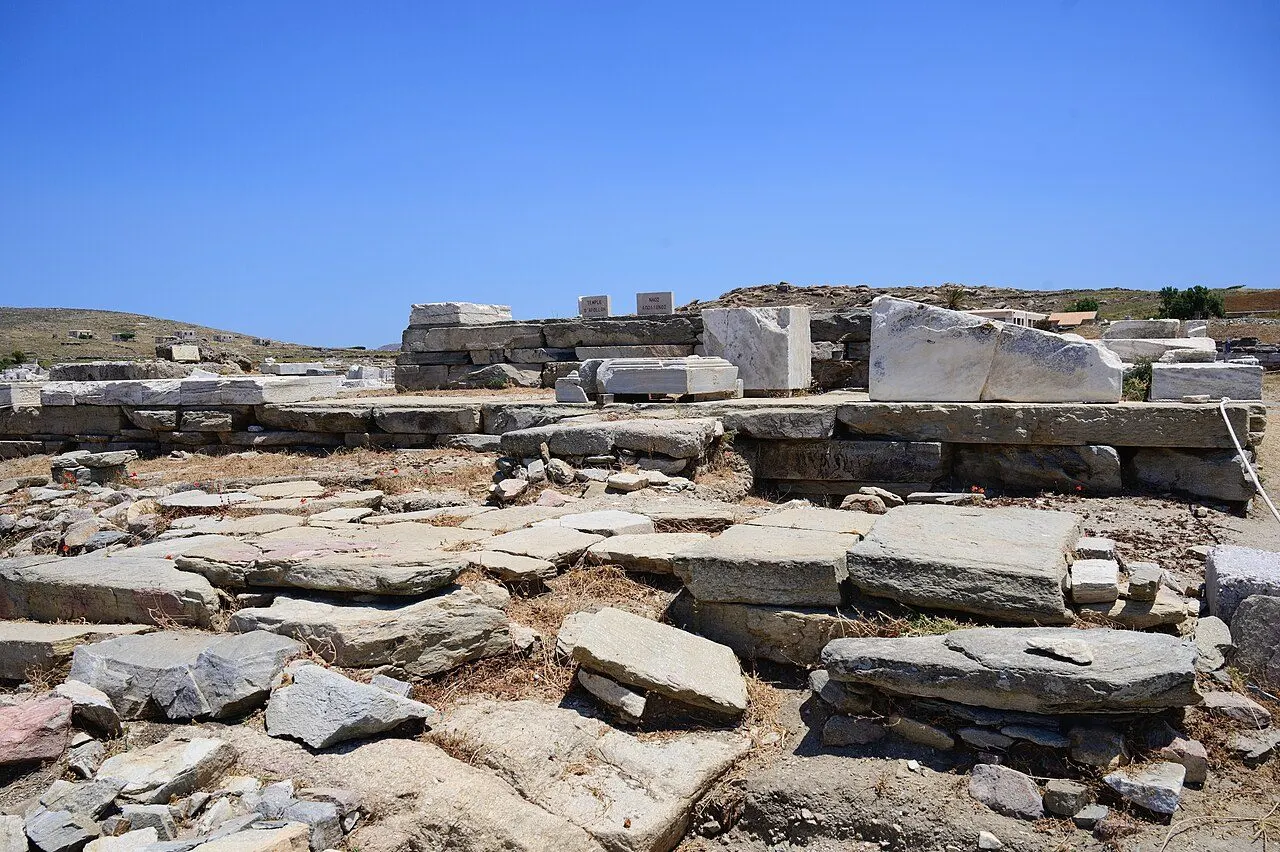
The Sanctuary of Apollo
The walled precinct with the three temples of Apollo, the oikos and colossus of the Naxians, the treasuries, the Keraton altar and the Stoa of Philip V.
Delos · History
A hilltop village of the 3rd millennium BC, Mycenaean treasures under a temple, a Naxian age of lions and giants, an Athenian century of treasure and purity, independence under kings, a Roman free port, two sacks and a long emptiness, until the French spades arrived.
Timeline
3rd–2nd millennium BC
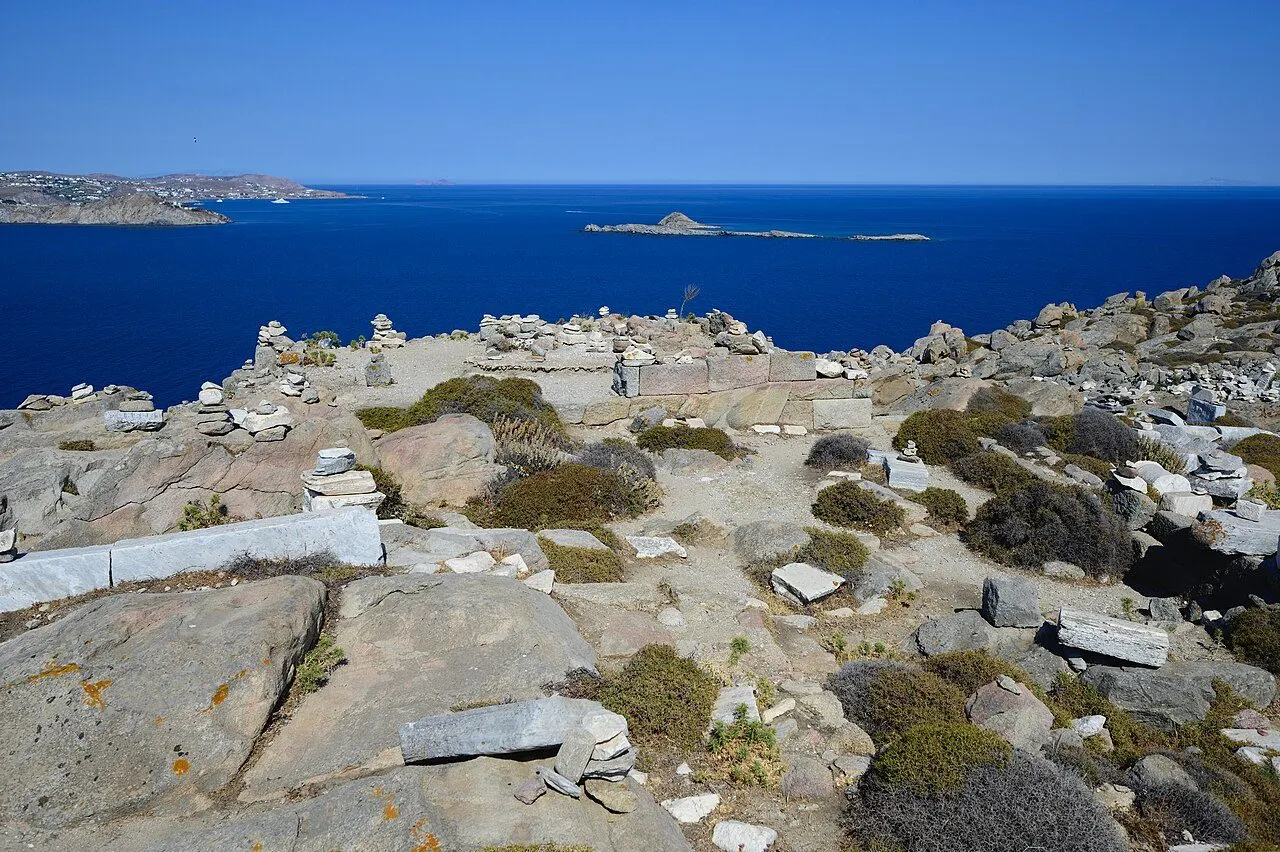
The first people on Delos lived on the summit of Kynthos in the 3rd millennium BC, in a small Early Cycladic settlement abandoned in the 2nd. Later, in the Mycenaean age, offerings of gold, bronze and ivory were laid in a sacred deposit where the Artemision would rise, among them an ivory plaque of 1400–1200 BC showing a warrior in a boar's-tusk helmet. The ancients gave the island other names, Ortygia, the island of quails, and Asteria, the star; 'Delos' was explained as 'the visible one', the floating rock that came to rest when Apollo was born.
7th–6th century BC
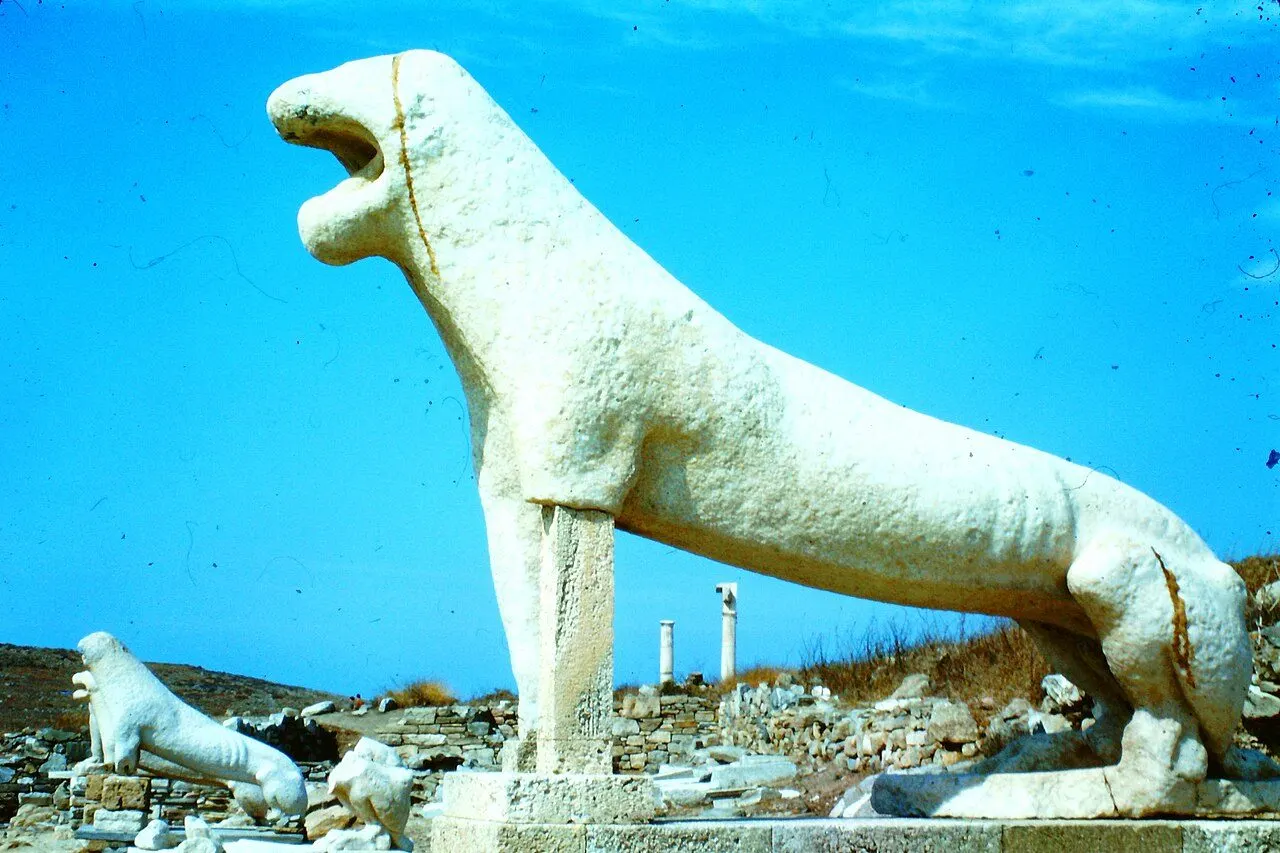
As Apollo's cult drew the Ionian Greeks, Naxos, the great power of the central Cyclades, left the grandest gifts: a kouros some 9 m tall towards the end of the 7th century BC, the row of marble lions above the Sacred Lake, and an oikos with a marble roof. In the 6th century BC Athens moved in: Pisistratus had the graves within sight of the temple dug up and moved, the first purification, and Polycrates of Samos gave neighbouring Rhenia to the god.
478–314 BC
After the Persian Wars Delos became the seat of the Delian League and its treasury, and the great temple was begun. In 454 BC Athens took the money home, and the building stopped. In 426 BC, during the Peloponnesian War, Athens purified the whole island, ruled that no one should be born or die there and revived the Delia festival with horse races. Four years later it went further and expelled the Delians themselves, who found refuge at Adramyttion in Asia Minor; the oracle of Delphi had them brought back a year later.
314–166 BC
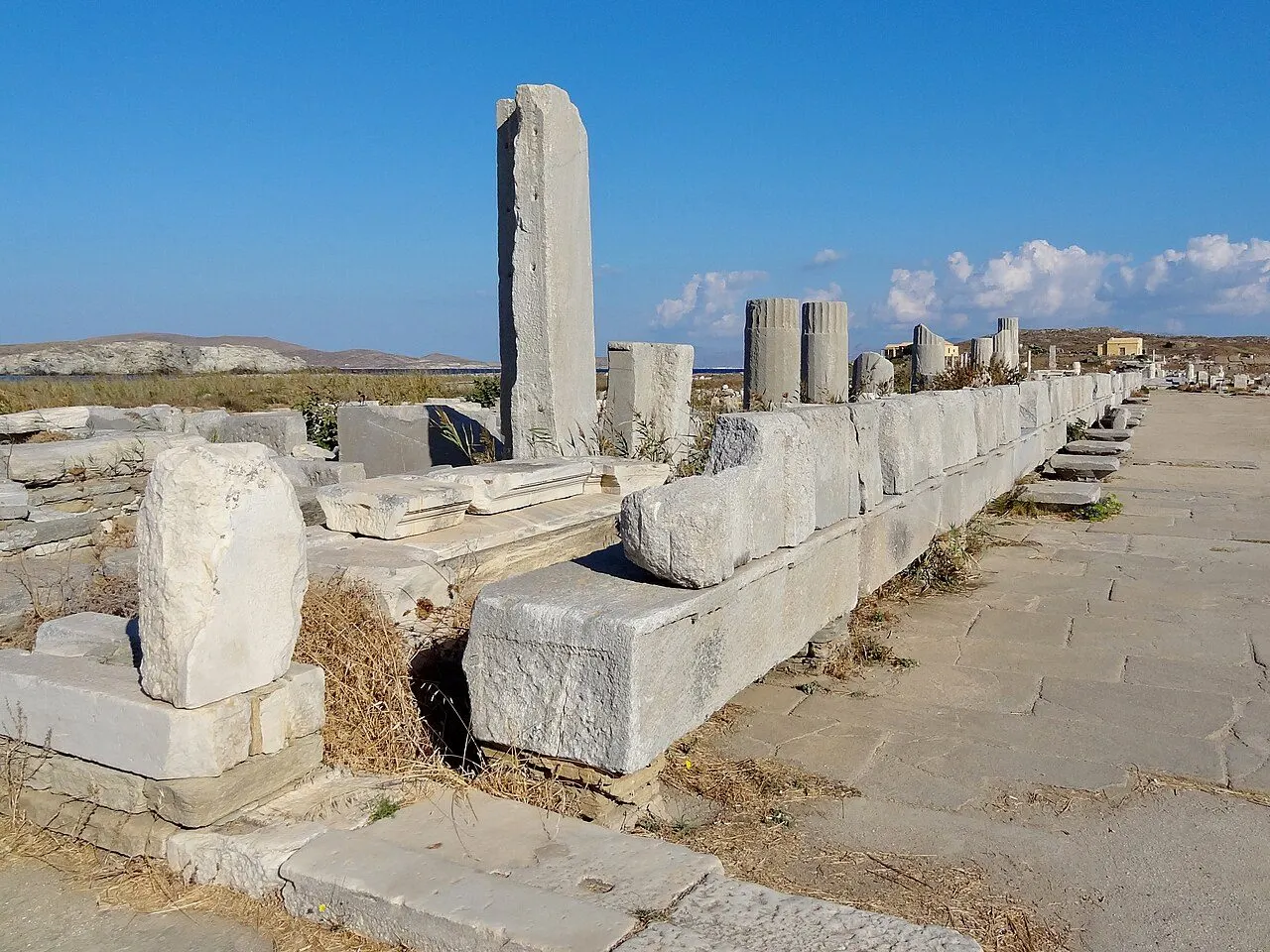
Free of Athens in 314 BC, Delos became the centre of the League of the Islanders under the protection of Hellenistic kings, who competed in marble: Philip V of Macedon gave the stoa that bears his name around 210 BC. The great temple was taken up again, the theatre rebuilt in marble, and the island's bankers and traders grew rich.
166–69 BC
In 166 BC Rome gave Delos back to Athens as a free port, partly to ruin the trade of Rhodes. Merchants poured in from Italy, Syria and Egypt and built houses with mosaic floors and temples to their own gods. The geographer Strabo wrote that the slave market could take in and send off ten thousand people in a single day. In 88 BC, in the war of Mithridates of Pontus against Rome, his general Menophanes is said to have killed some 20,000 people on the island, most of them Italians, and carried off the sacred treasure; in 69 BC pirates allied to Mithridates sacked it again.
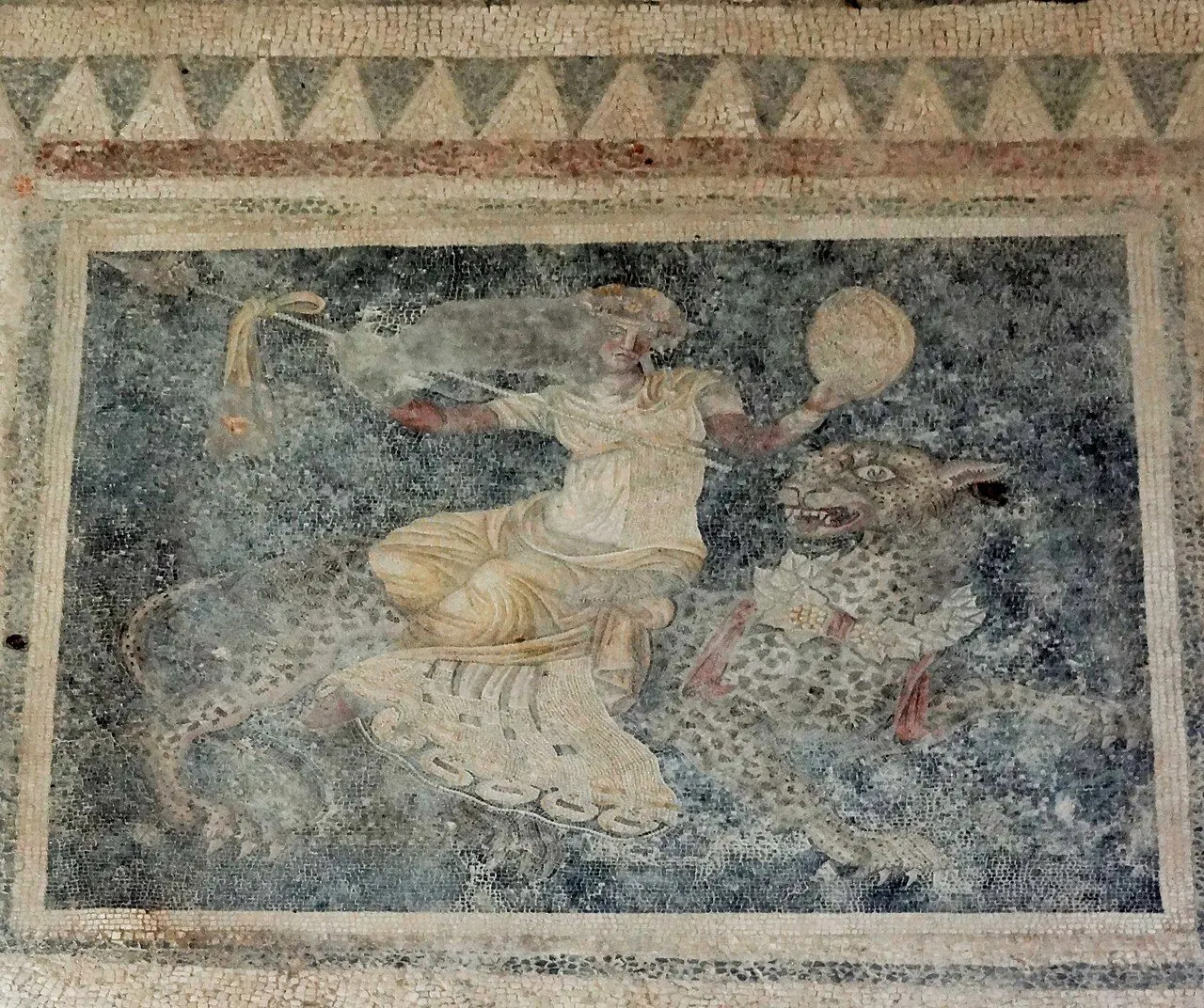
1st century BC to today
Delos never recovered. By the 2nd century AD the traveller Pausanias found only the temple guards living there, and by the 8th century it was abandoned, its marble carried off for lime and building stone across the Aegean. In the 15th century Cyriacus of Ancona copied the inscription on the base of the Naxian Colossus; in 1716 a lion left for Venice. The French School at Athens began digging in 1872 and has never really stopped. In 1990 the whole island was inscribed as a UNESCO World Heritage Site.
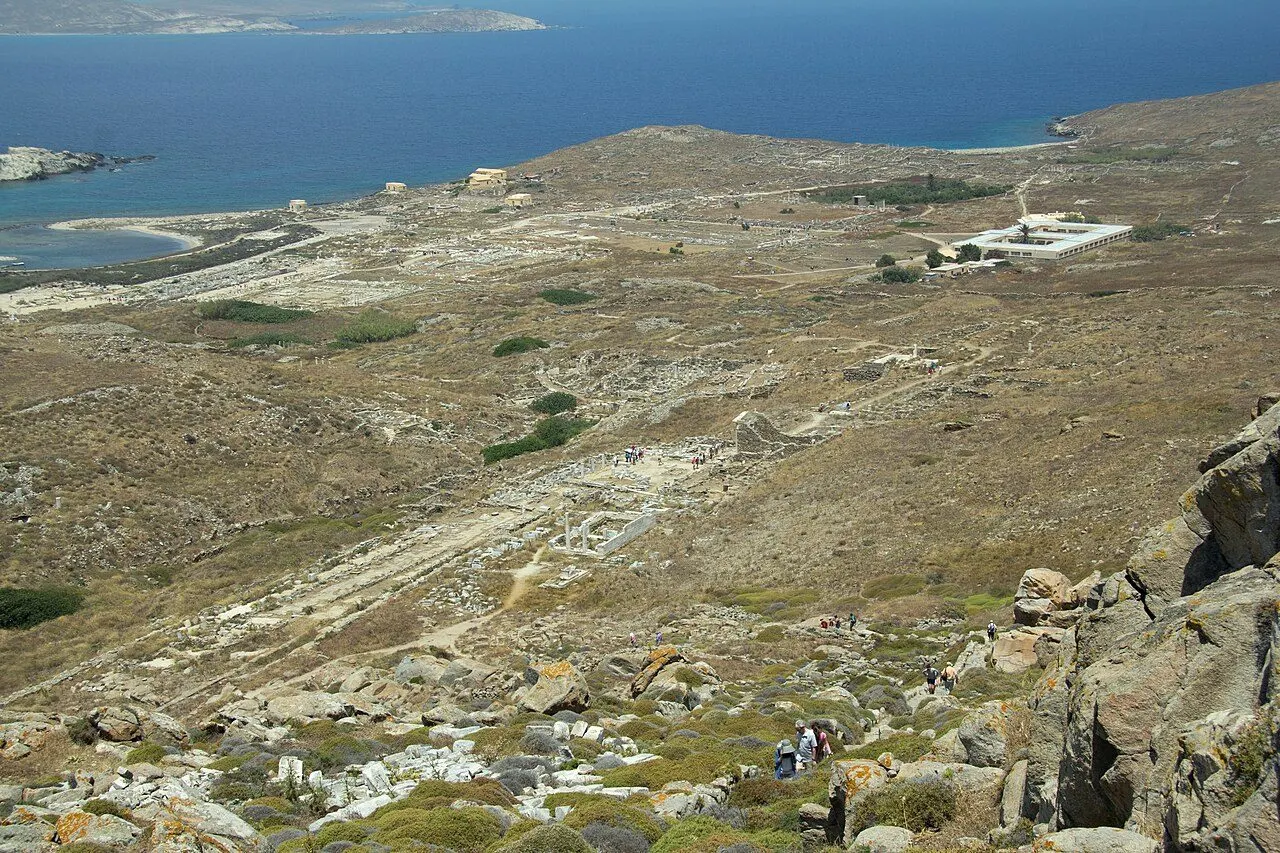
Visit
The walled precinct with the three temples of Apollo, the oikos and colossus of the Naxians, the treasuries, the Keraton altar and the Stoa of Philip V.
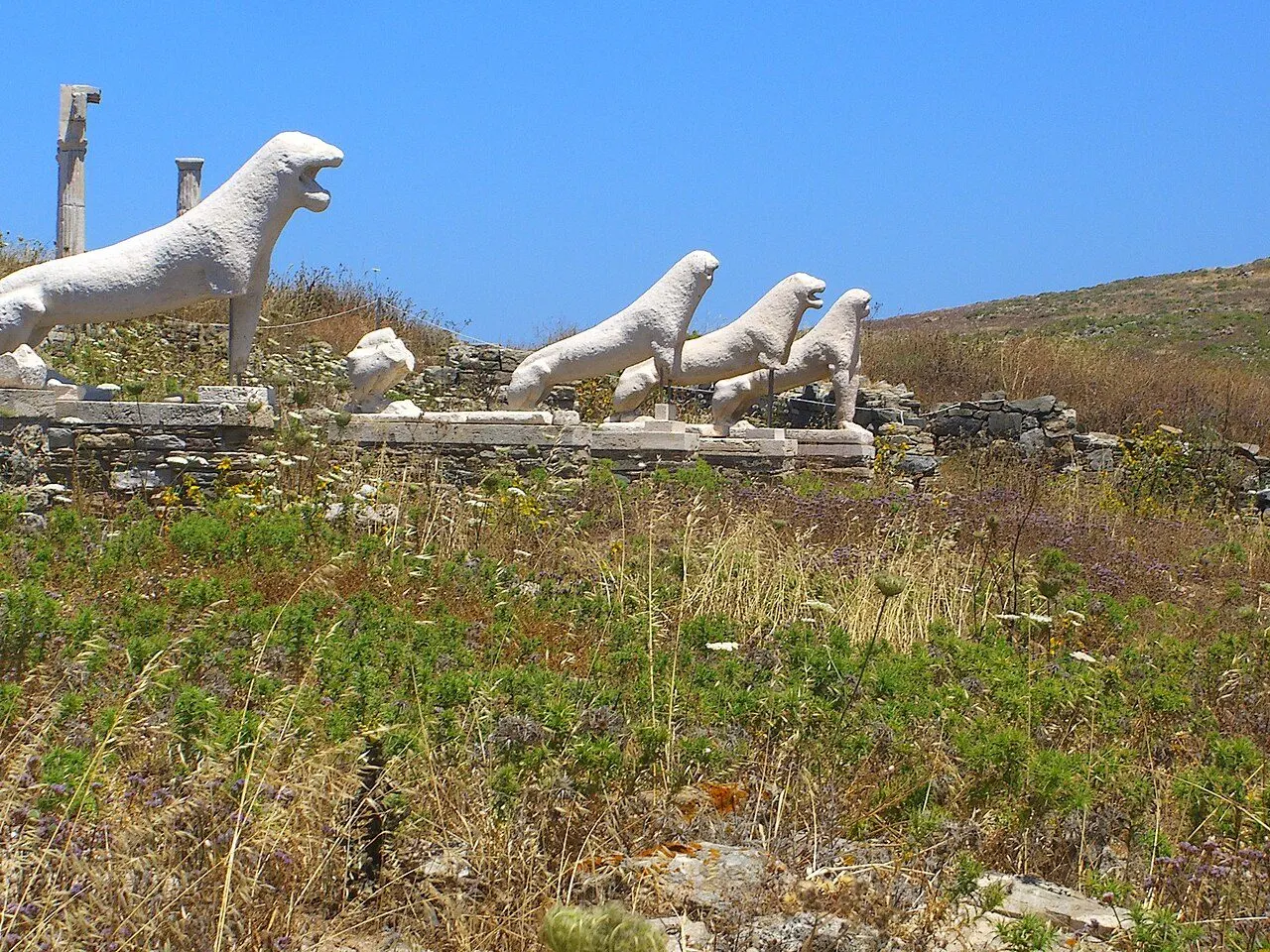
The Naxian lions of the late 7th century BC above the dry Sacred Lake; copies outside, the originals in the museum.
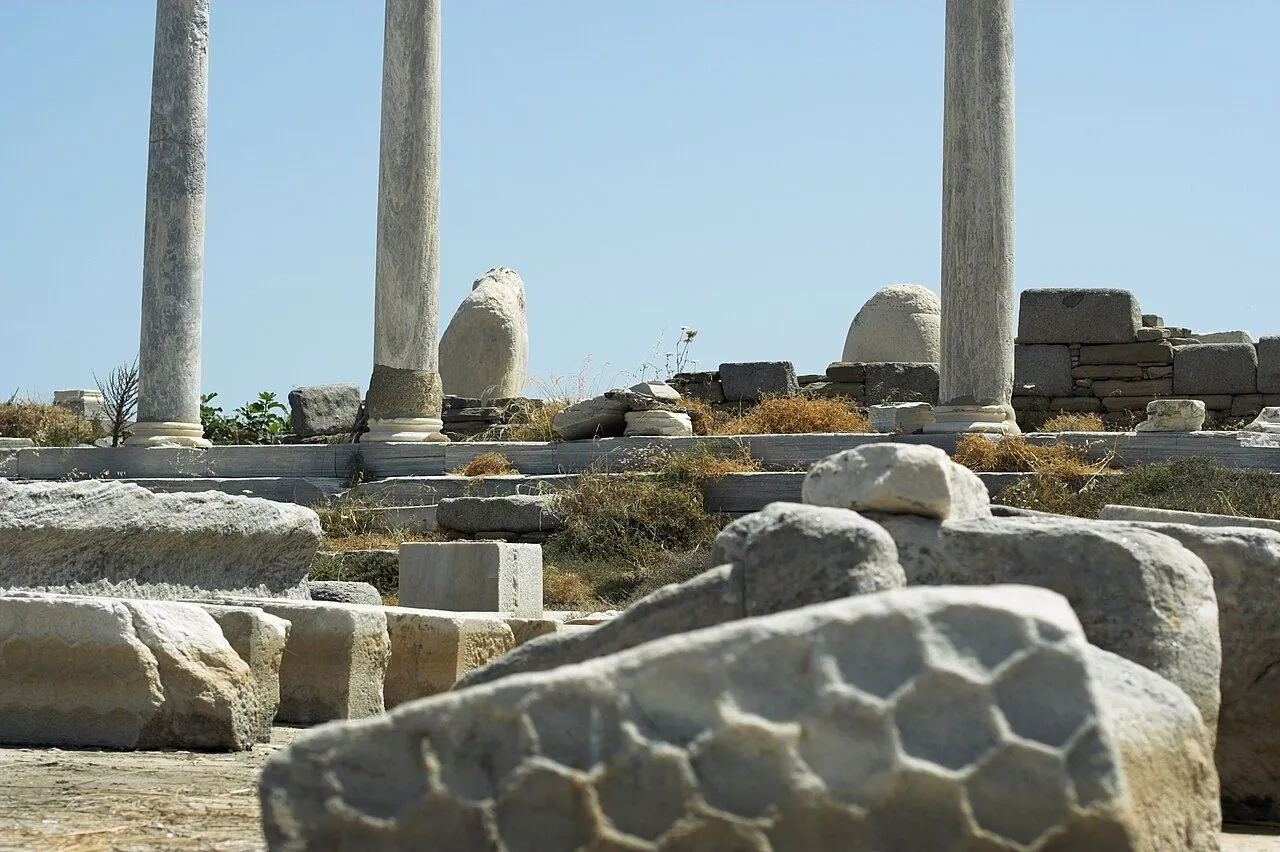
The sanctuary of Artemis, rebuilt three times on a Mycenaean deposit, with the torso of the Naxian Colossus lying beside it.
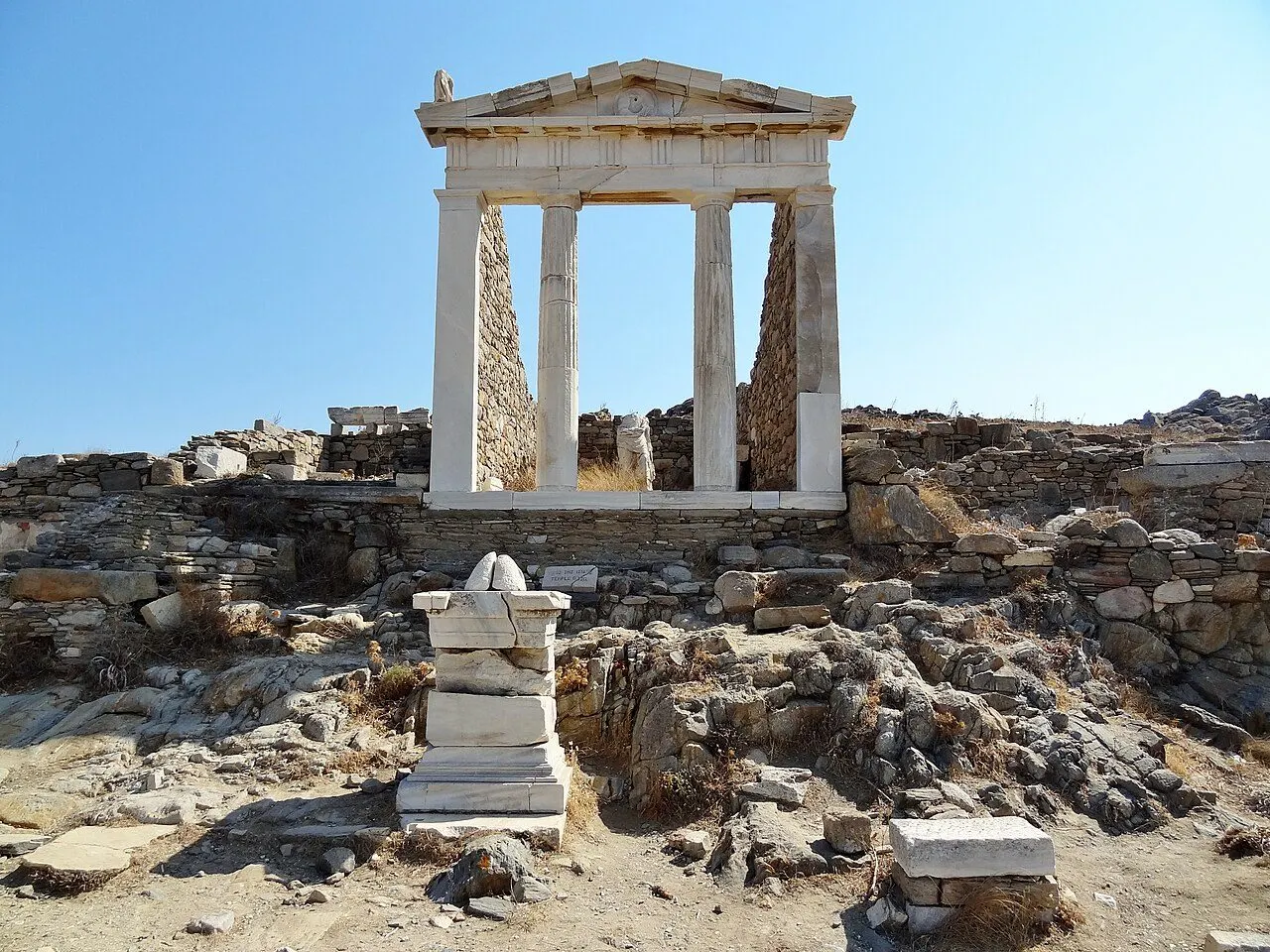
Dedicated by the Athenians around 130 BC on the slope of Kynthos, with its front set up again and the goddess still in her cella.
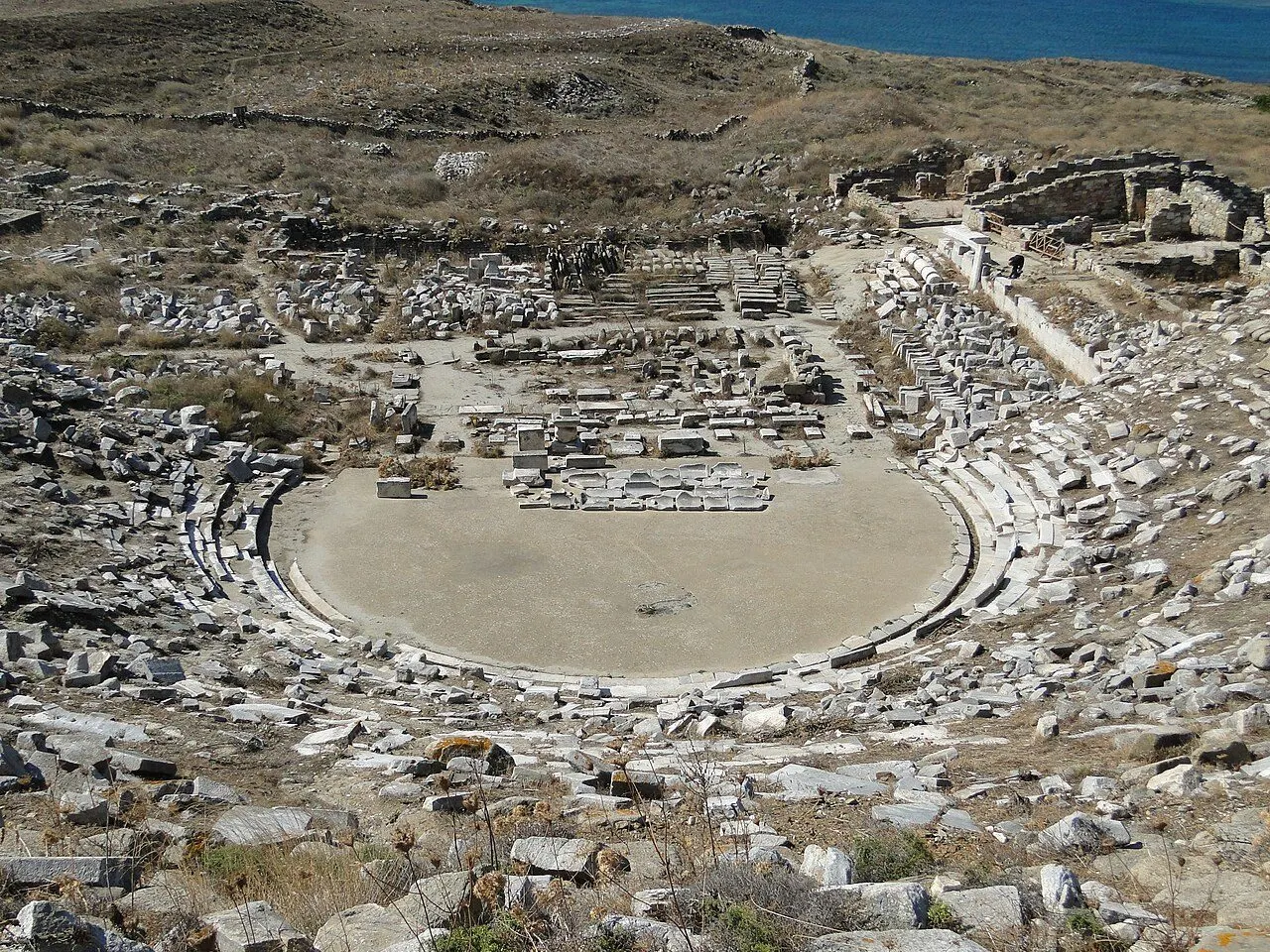
The marble theatre of the 3rd century BC above the Theatre Quarter, with the arched rainwater cistern beside it.
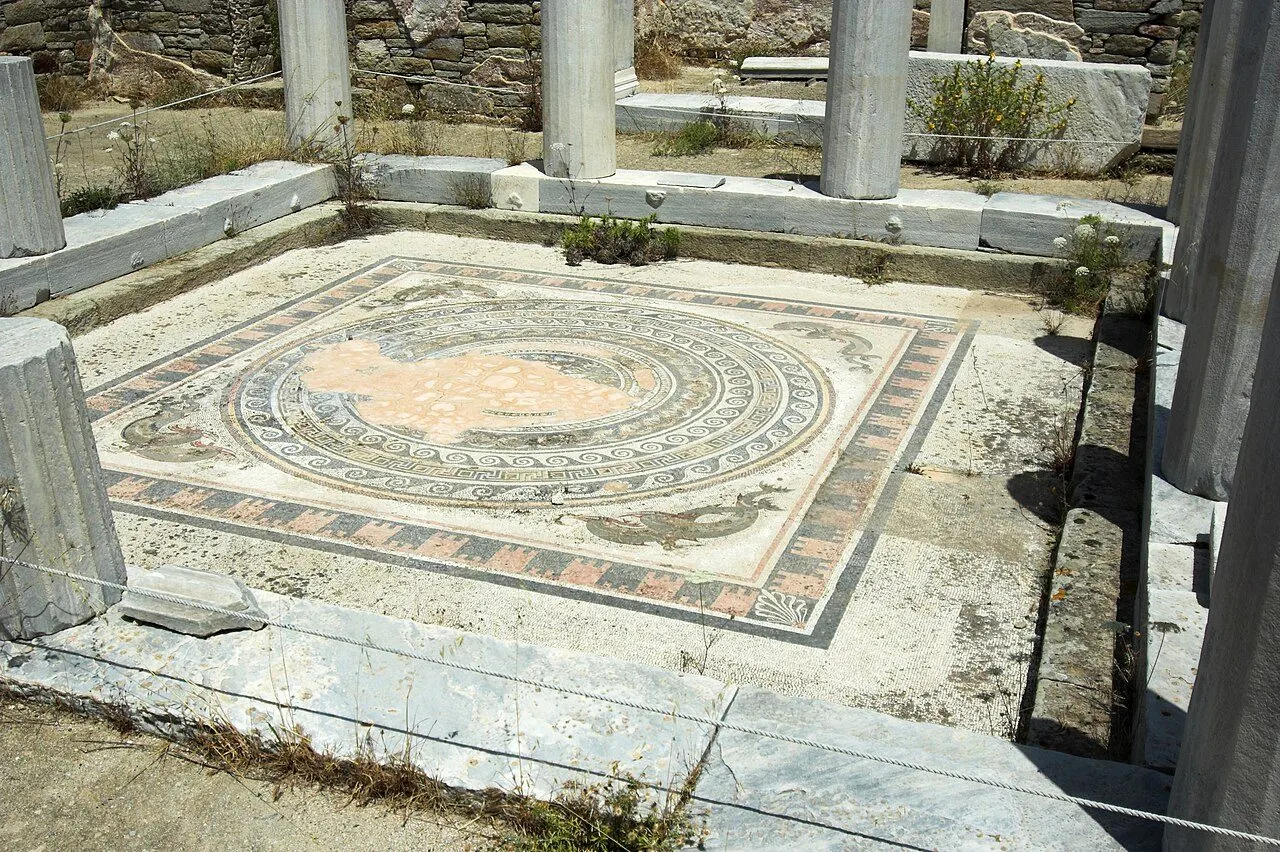
A merchant's house with a courtyard mosaic of dolphins and their riders, signed by Asclepiades of Arados, and a sign of the goddess Tanit at its door.
Last updated