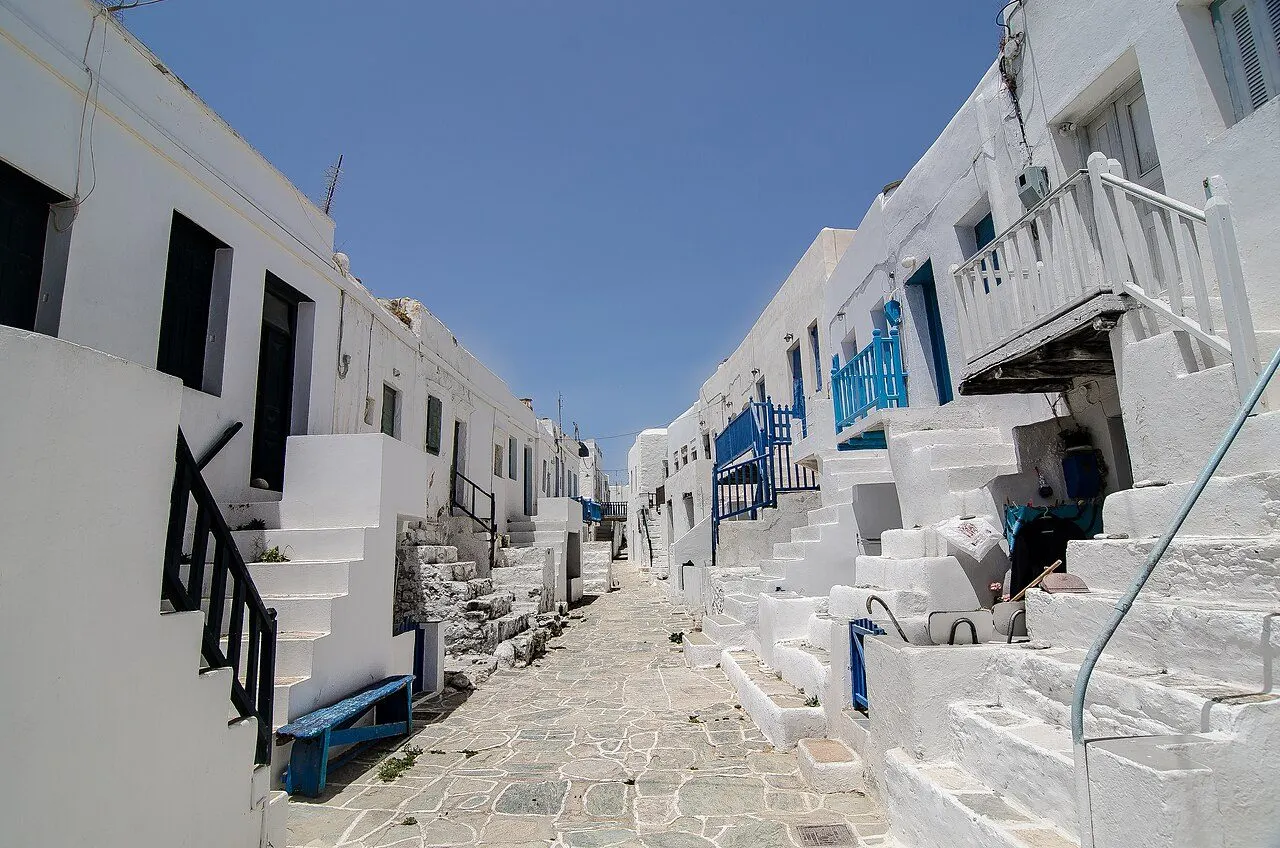
The Kastro
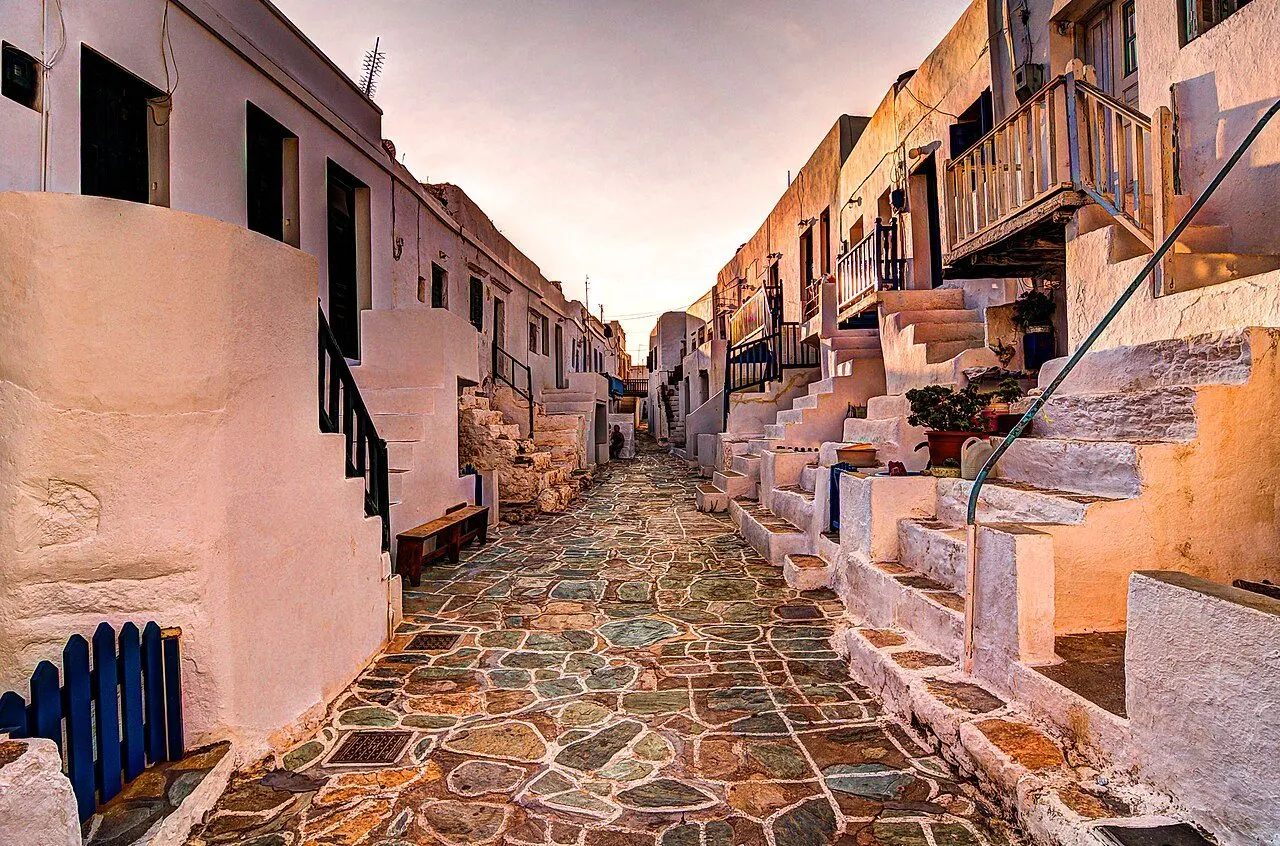
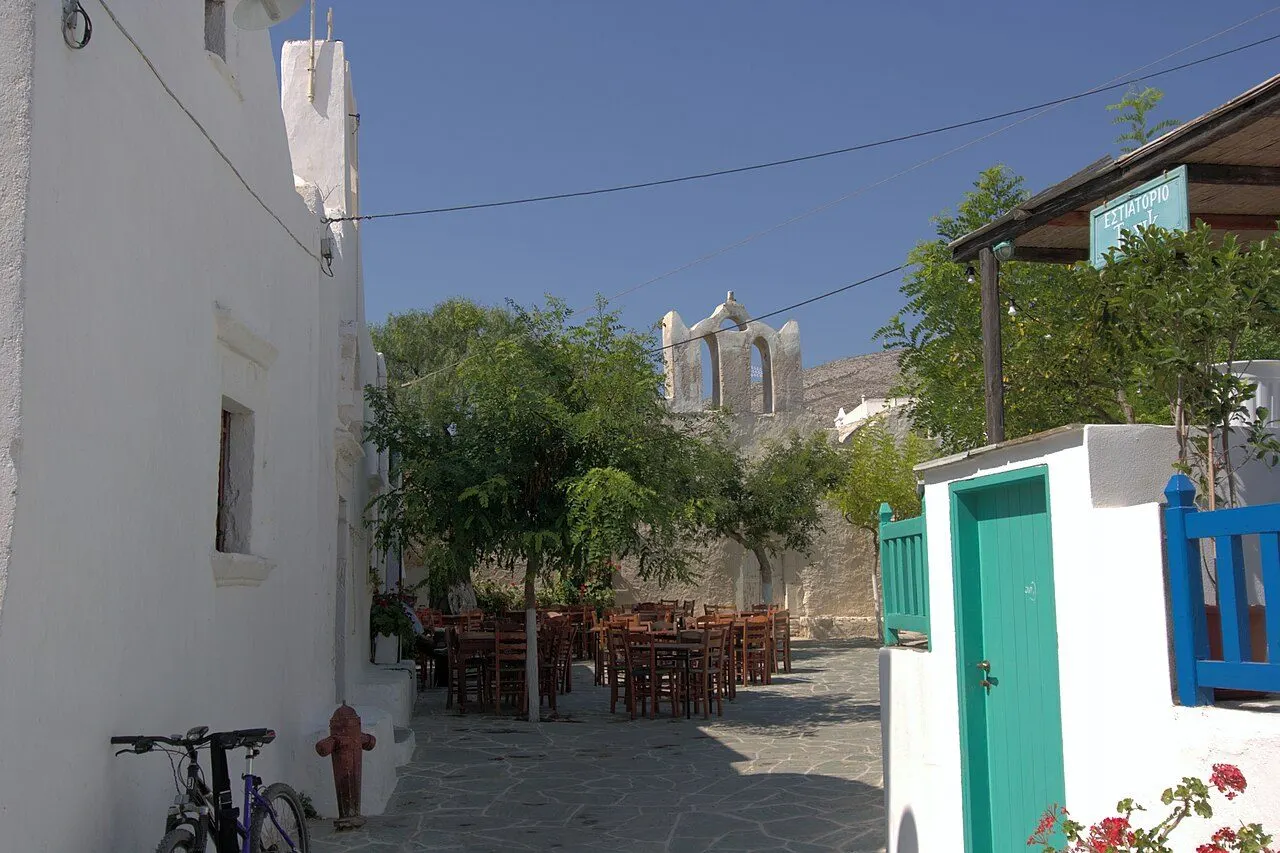
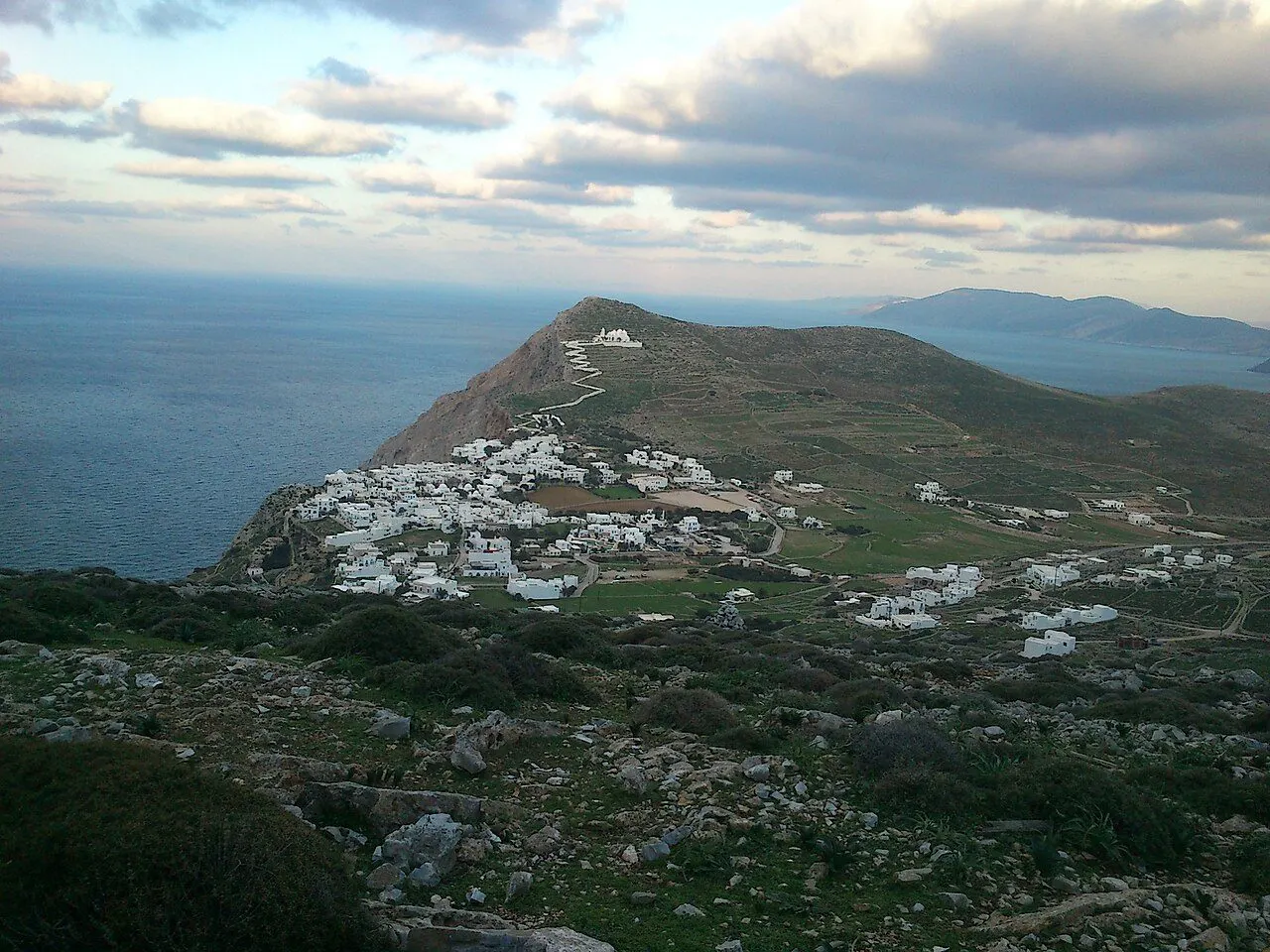
The walled medieval village at the heart of Chora, on the cliff edge, lived in ever since it was built, with its two lanes, its two gates and the church of the Pantanassa.
Folegandros · History
A village of 2500 BC on a northern cape, a Dorian city on the cliff that paid tribute to Athens, the Venetian Kastro, pirate raids and a sack in 1715, emigrants who built the new Chora and, in the 1930s, political exiles.
Timeline
3rd–2nd millennium BC
The island was first settled around the middle of the 3rd millennium BC: on the little rocky peninsula of Kastelos in the north, excavations have uncovered a small village of the Early Cycladic II period. Myth says the island took its name from Pholegandros, a son of the Cretan king Minos; another explanation traces it to a Phoenician word for 'rocky land'. Sailors long called it Polykandros, and the finds and the name both point to Minoan influence in the 2nd millennium BC.
Classical & Hellenistic
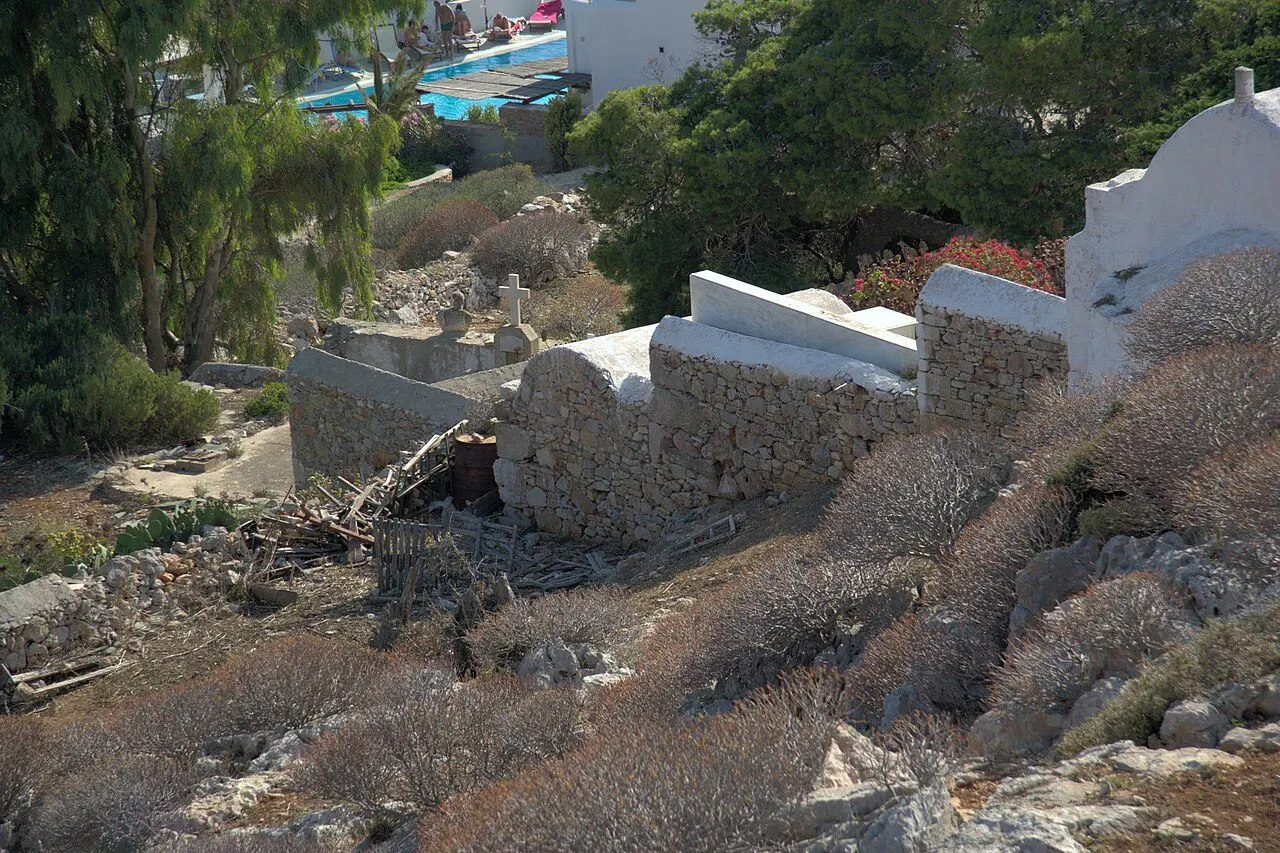
In historical times the islanders were Dorians, and their city, Pholegandros, stood where Chora is now, with its acropolis on the height above the Panagia; part of its 4th-century BC wall survives in the cemetery. It appears on the Athenian tribute lists between 425/424 and 416/415 BC, as a member of the Delian League. The poet Aratus called it 'iron Pholegandros' for its harsh rock. In the 4th century BC young men from all over Greece left their names on the walls of the cave of Chrysospilia. The island later passed under the Macedonians, the Ptolemies and Rome, which used it as a place of exile.
13th–16th century
After the Fourth Crusade, the Venetian Marco Sanudo took Folegandros in the early 13th century with the rest of the Cyclades for his Duchy of the Archipelago, centred on Naxos, and the Kastro was built on the highest point of the old city to hold out against pirates. The island stayed under Latin rule for more than three centuries, until the 1560s.
1566–1821
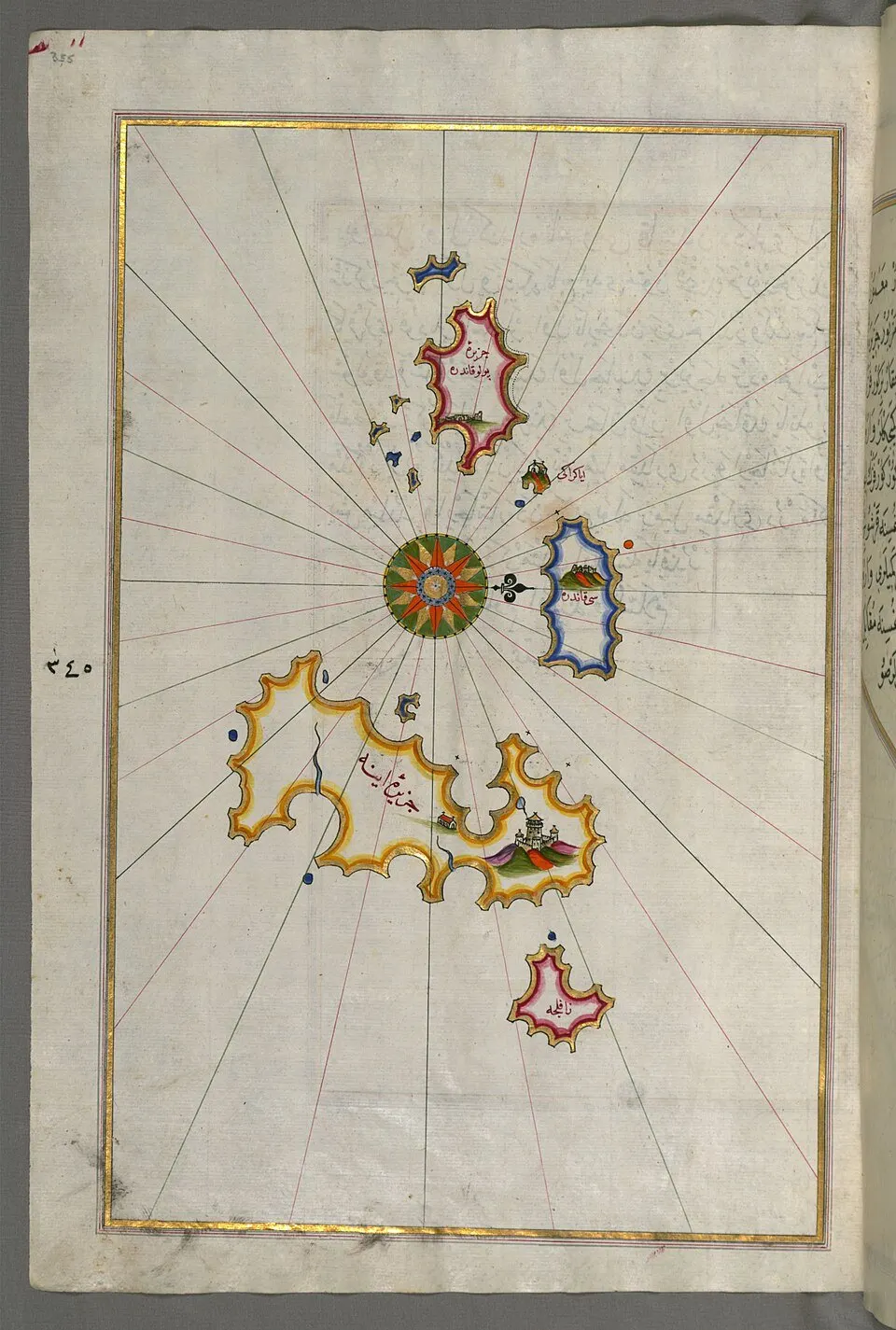
In 1566 the island passed to the Ottomans, and pirate raids left it all but deserted; Ottoman control was firmly established in the early 17th century. In 1715 an Ottoman pasha, Canım Hoca, sacked Folegandros and carried its people off into slavery. Piri Reis drew it in his book of sea charts, and Venetian isolarii mapped it as 'Policandro'. With the War of Independence of 1821 the islanders threw off foreign rule after more than six centuries.
1830–1930s
Folegandros became part of the new Greek state with the rest of the Cyclades, and in 1835 Chora became the seat of its own municipality. Many islanders went to work in Egypt, Constantinople and Athens, some of them making names in the arts and letters, and sent money and goods home; only now did families begin to build outside the Kastro, and the modern Chora of squares took shape. In 1884 the British explorers Theodore and Mabel Bent came to the island.
1937 to today
In 1937 the dictatorship of the 4th of August made Folegandros one of the islands of exile for political prisoners. Among those sent here were Foula Chatzidaki and the future Trotskyist leader Michel Raptis, 'Pablo', who, shunned by the orthodox communists in exile, kept company with the cattle and horse thieves who were exiled too, and met his future wife on the island. Since the late 20th century Folegandros has lived from a gentle tourism that has kept its character, its farms and its paths.
Visit
The walled medieval village at the heart of Chora, on the cliff edge, lived in ever since it was built, with its two lanes, its two gates and the church of the Pantanassa.
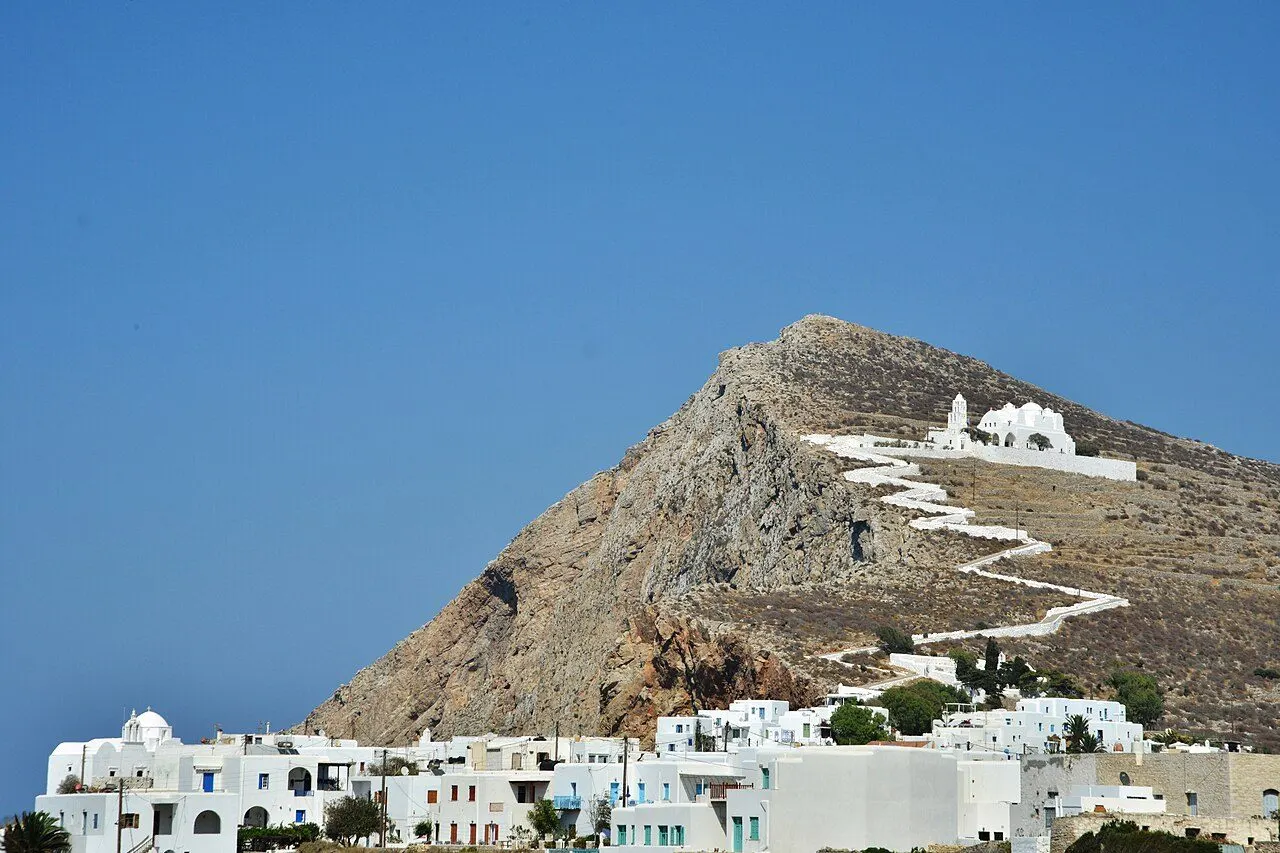
The island's largest church, rebuilt in 1816–1821 on the site of an ancient temple, with ancient inscriptions, statue bases and a Byzantine relief in its walls and courtyard.
The acropolis of ancient Pholegandros on the height above the Panagia, and a stretch of its 4th-century BC city wall in the cemetery of Chora.
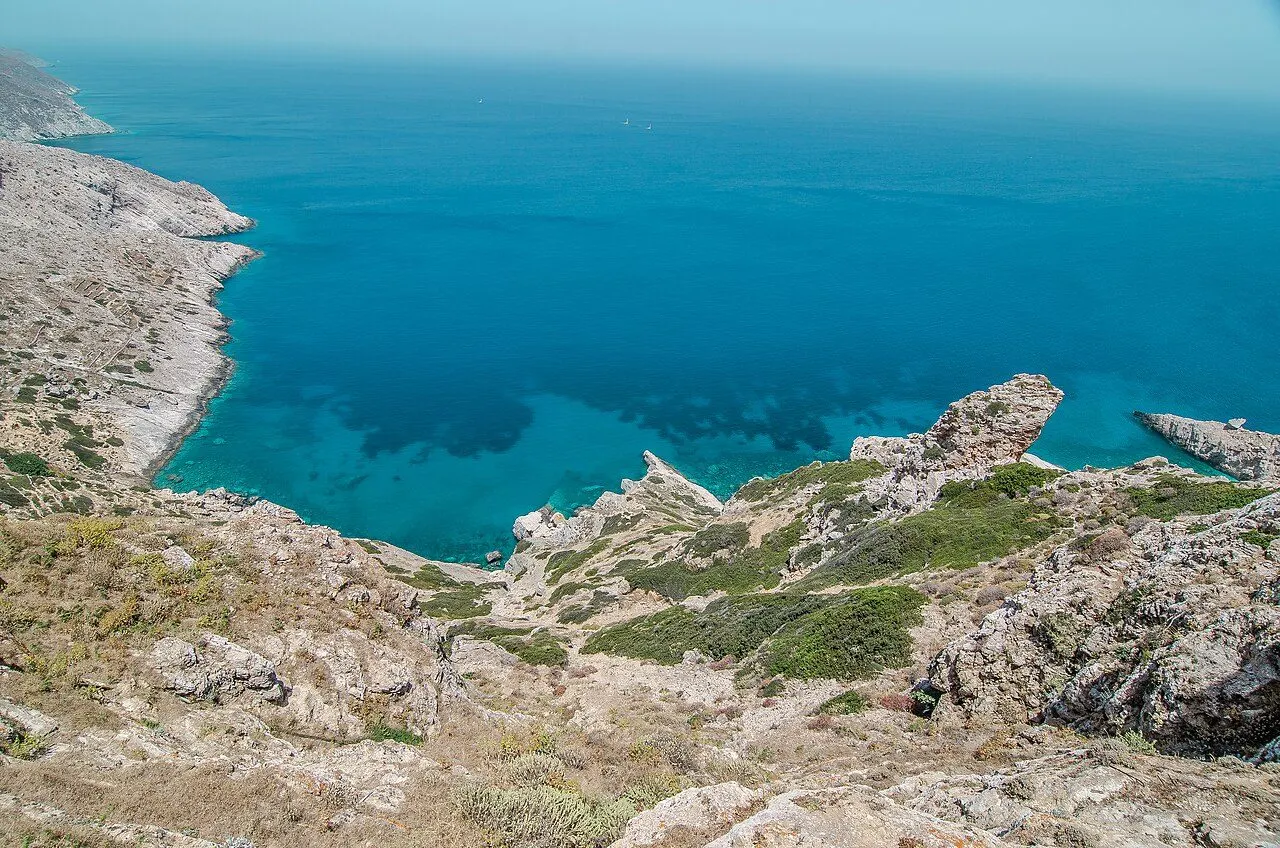
The cave in the north cliffs whose walls carry some 400 names of the 4th century BC, with Roman cisterns and ancient steps. Closed to visitors.
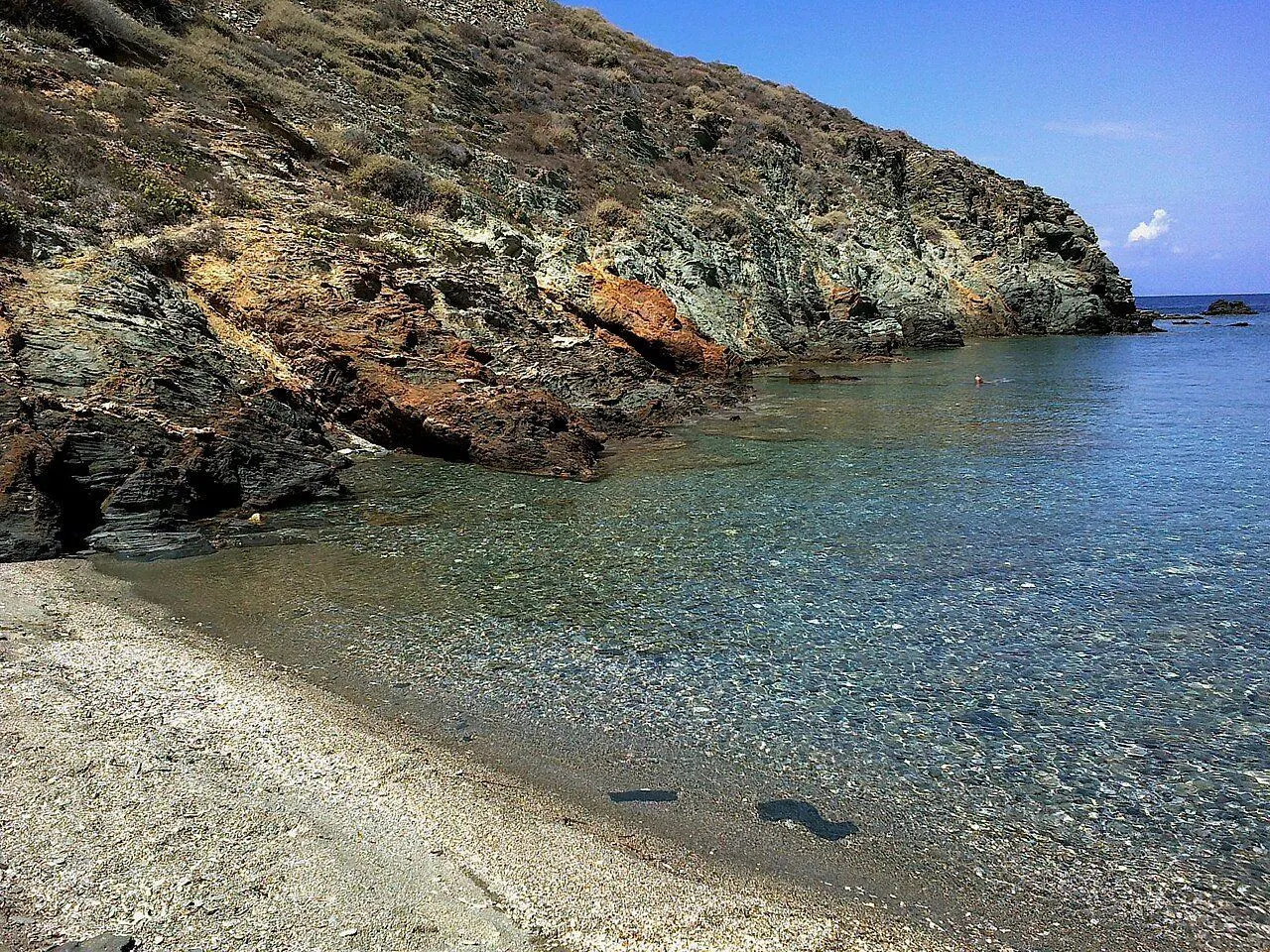
The rocky peninsula at the northern end of the island with the ruins of an Early Cycladic village of the mid-3rd millennium BC.
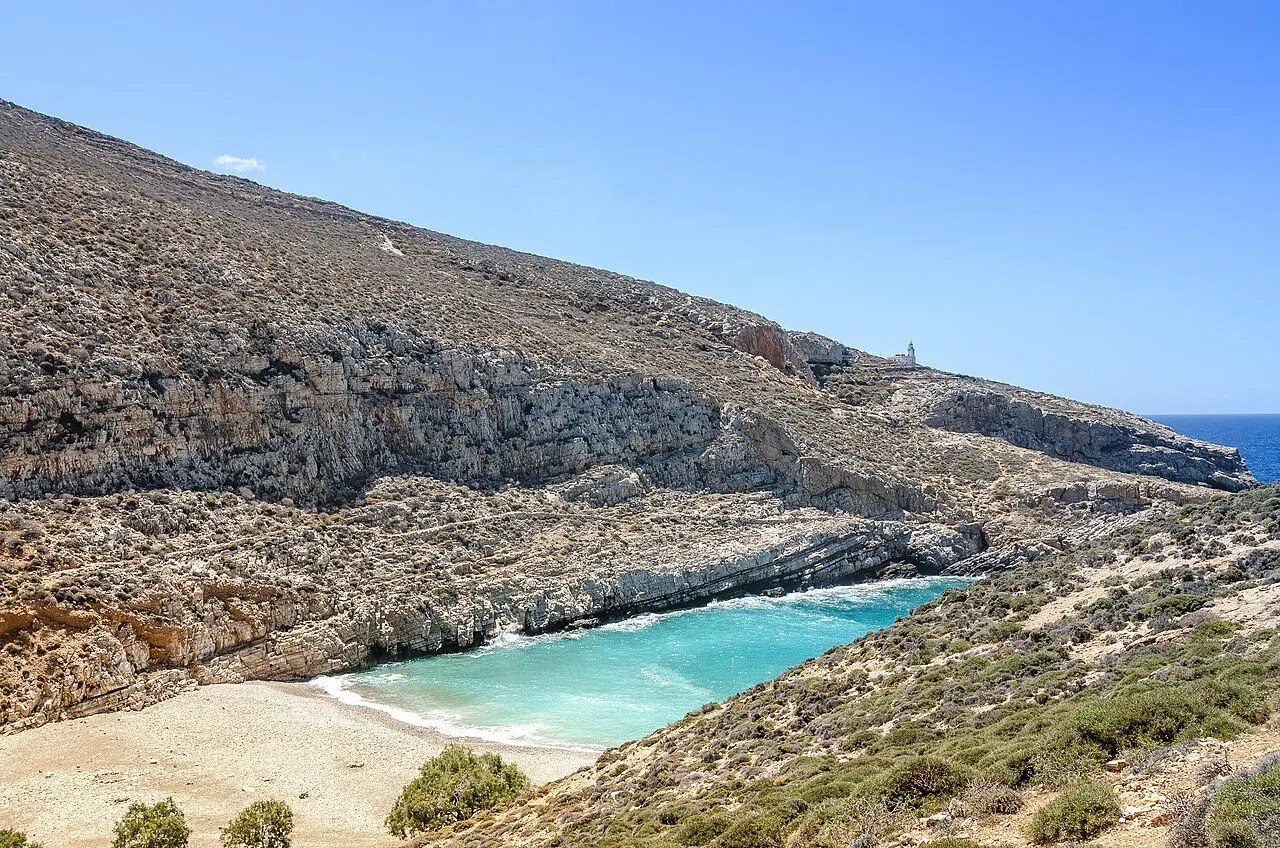
One of the largest lighthouses in the Aegean, built in 1919 on the white cape above Livadaki, 58 m above the sea.
Last updated