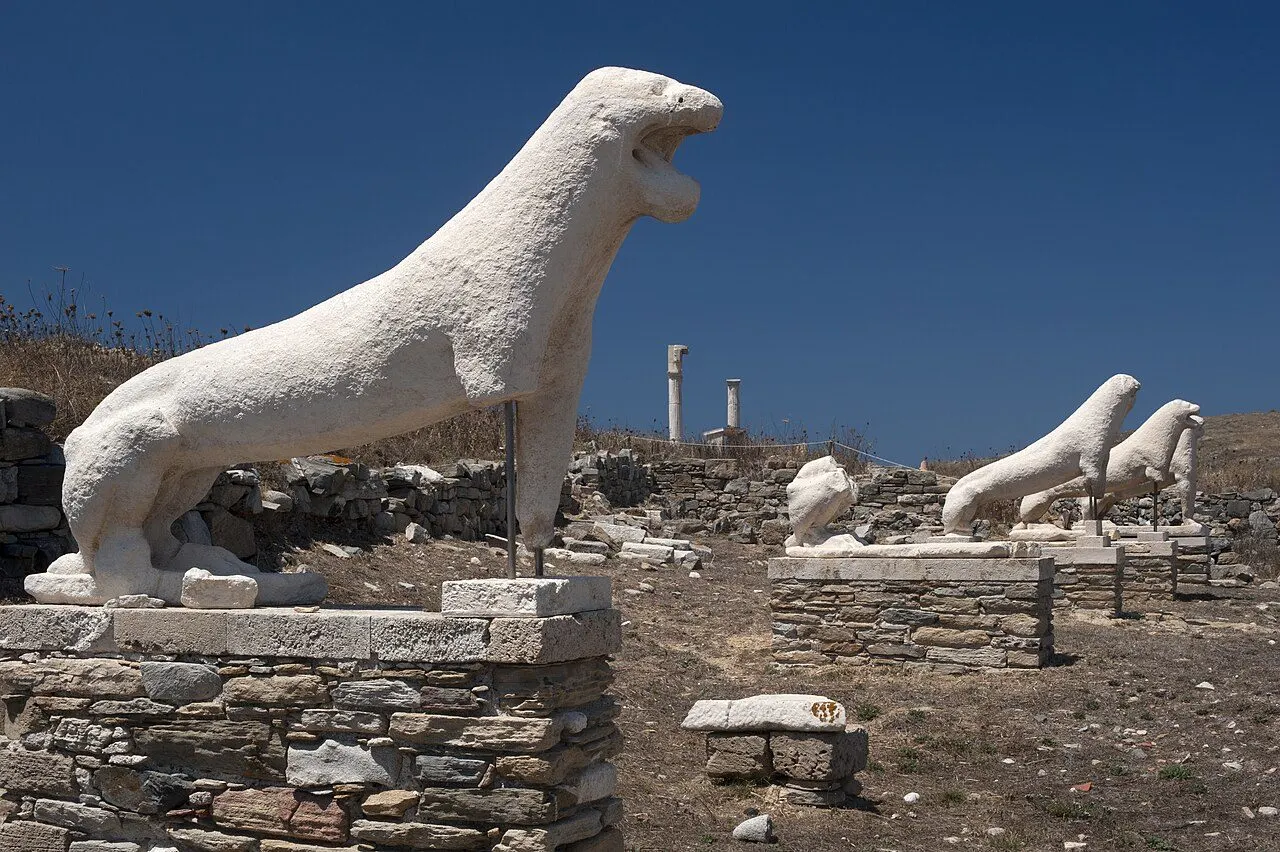
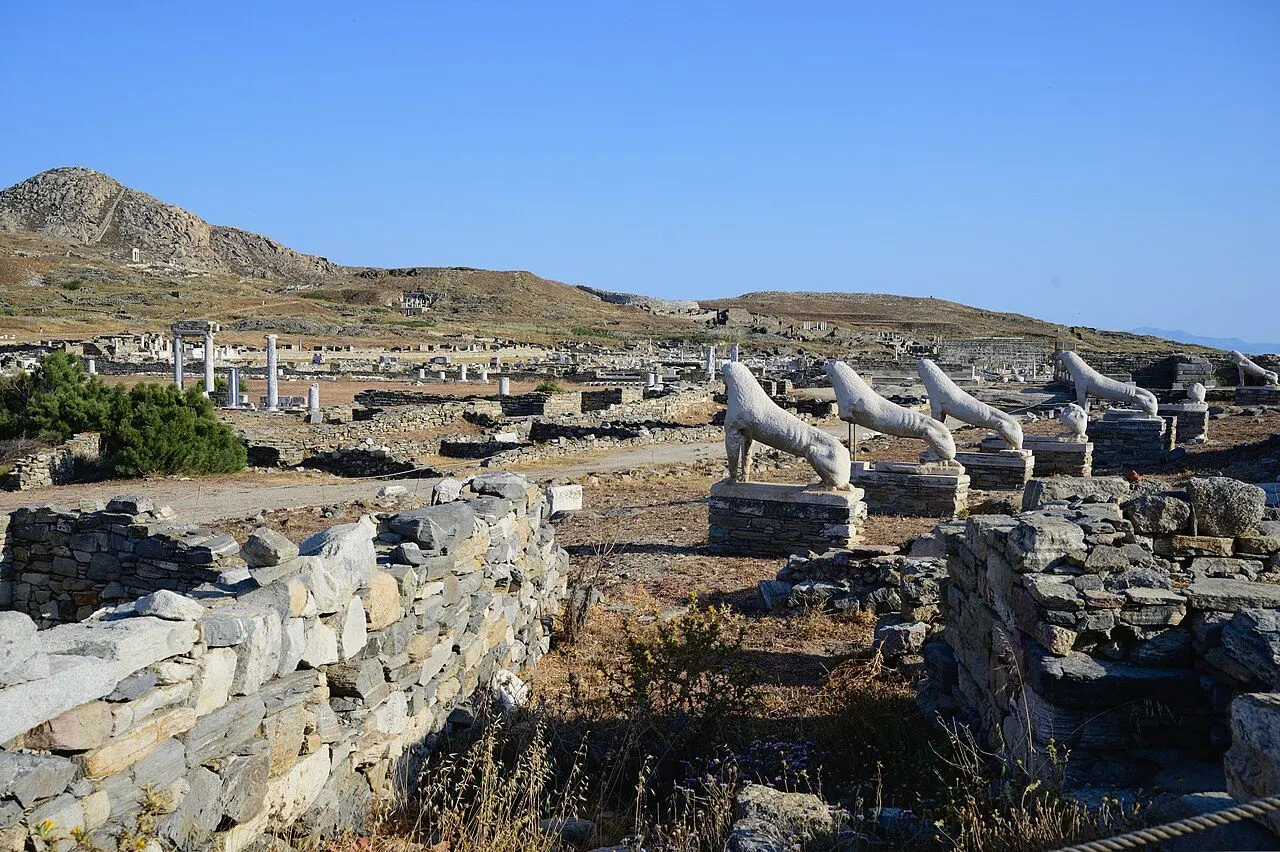
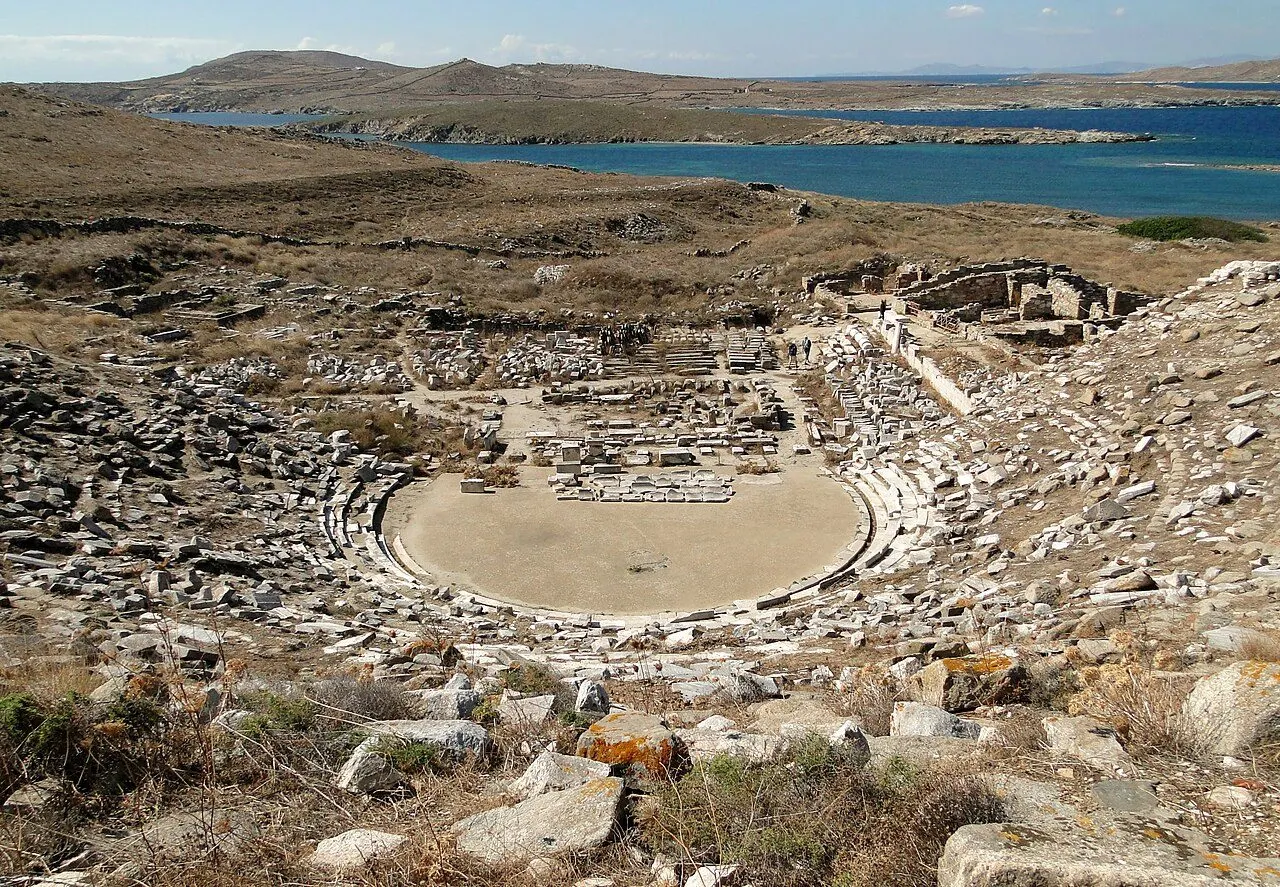
Delos
The birthplace of Apollo and Artemis, the treasury of the Delian League and a Roman free port, a UNESCO World Heritage Site since 1990 and one of the largest archaeological sites in Greece.
Mykonos · History
A poor island that supplied the sanctuary next door, Venetian lords and Ottoman sultans, pirates and a sea battle in the harbour, a heroine of 1821, emigrants and, from the 1960s, the world's most famous party.
Timeline
Myth & antiquity
Herodotus names the Carians as the first islanders; Ionians from Athens followed in the early 11th century BC. The name may come from a word for a pile of stones, or from the hero Mykonos, grandson of Apollo. For most of antiquity Mykonos was a poor, rocky island living off its sacred neighbour, 2 km away: a stop for supplies and transit for the pilgrims and traders of Delos.
1207–1537
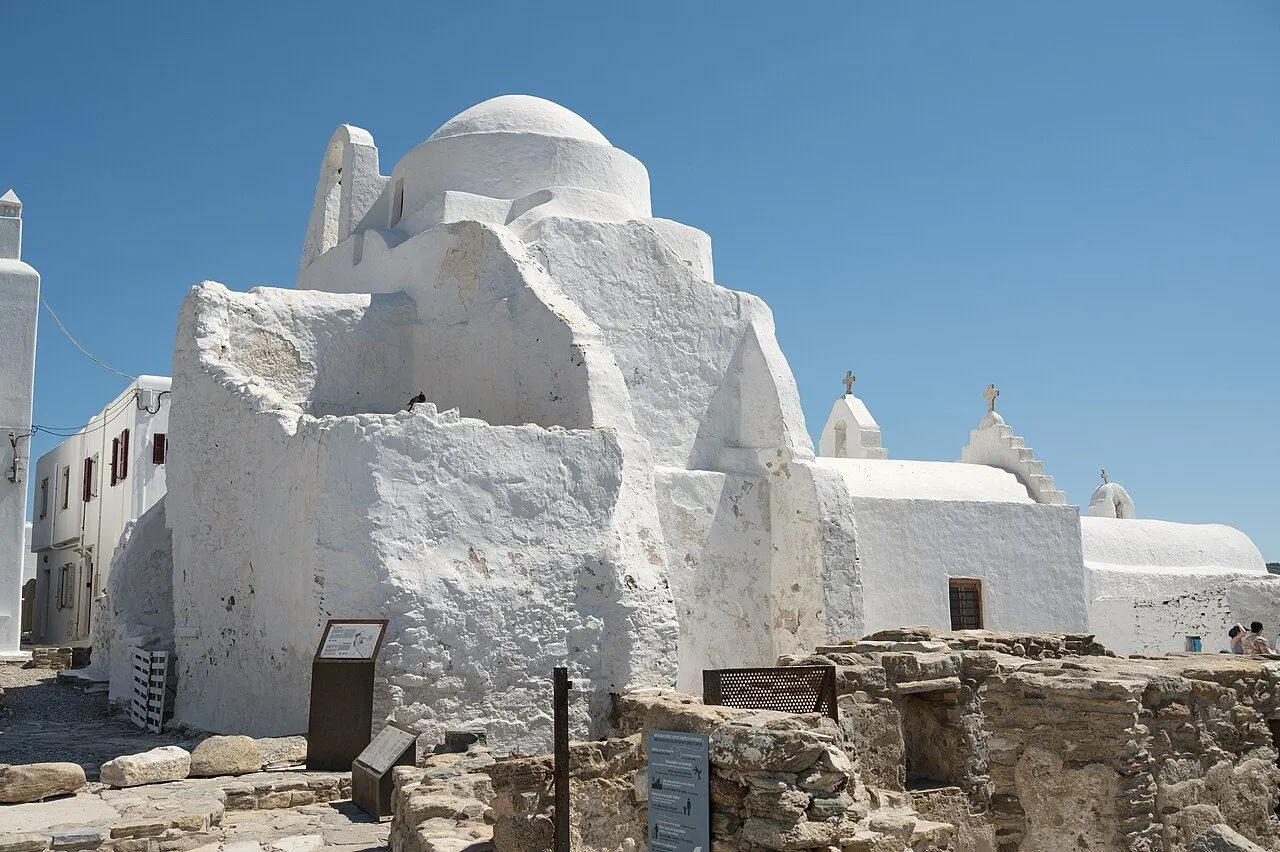
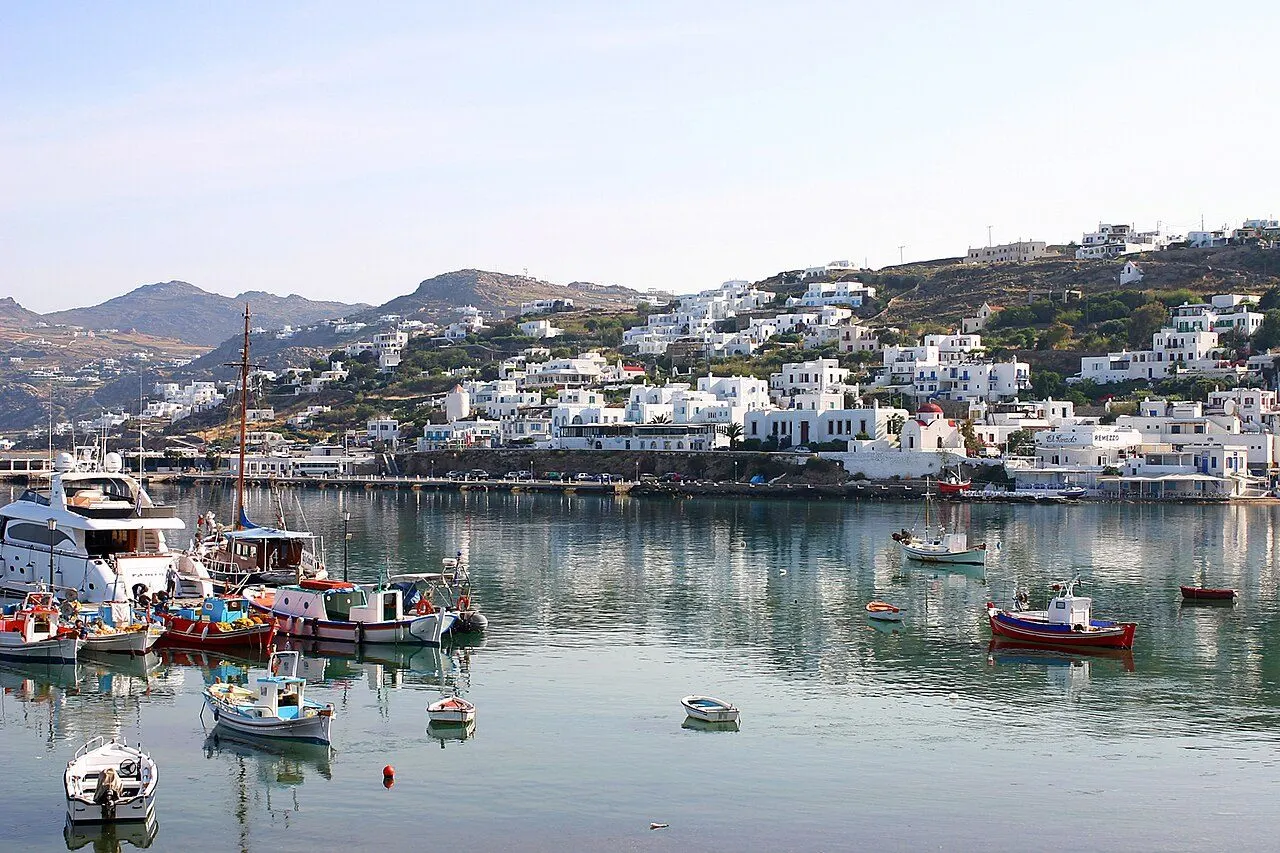
After the Fourth Crusade the island was taken by the Venetian Andrea Ghisi, whose family built the Kastro above the harbour. The Catalans ravaged it at the end of the 13th century, and from 1390 Venice ruled it directly. In 1425 work began on Panagia Paraportiani by the castle's side gate.
1537–1821
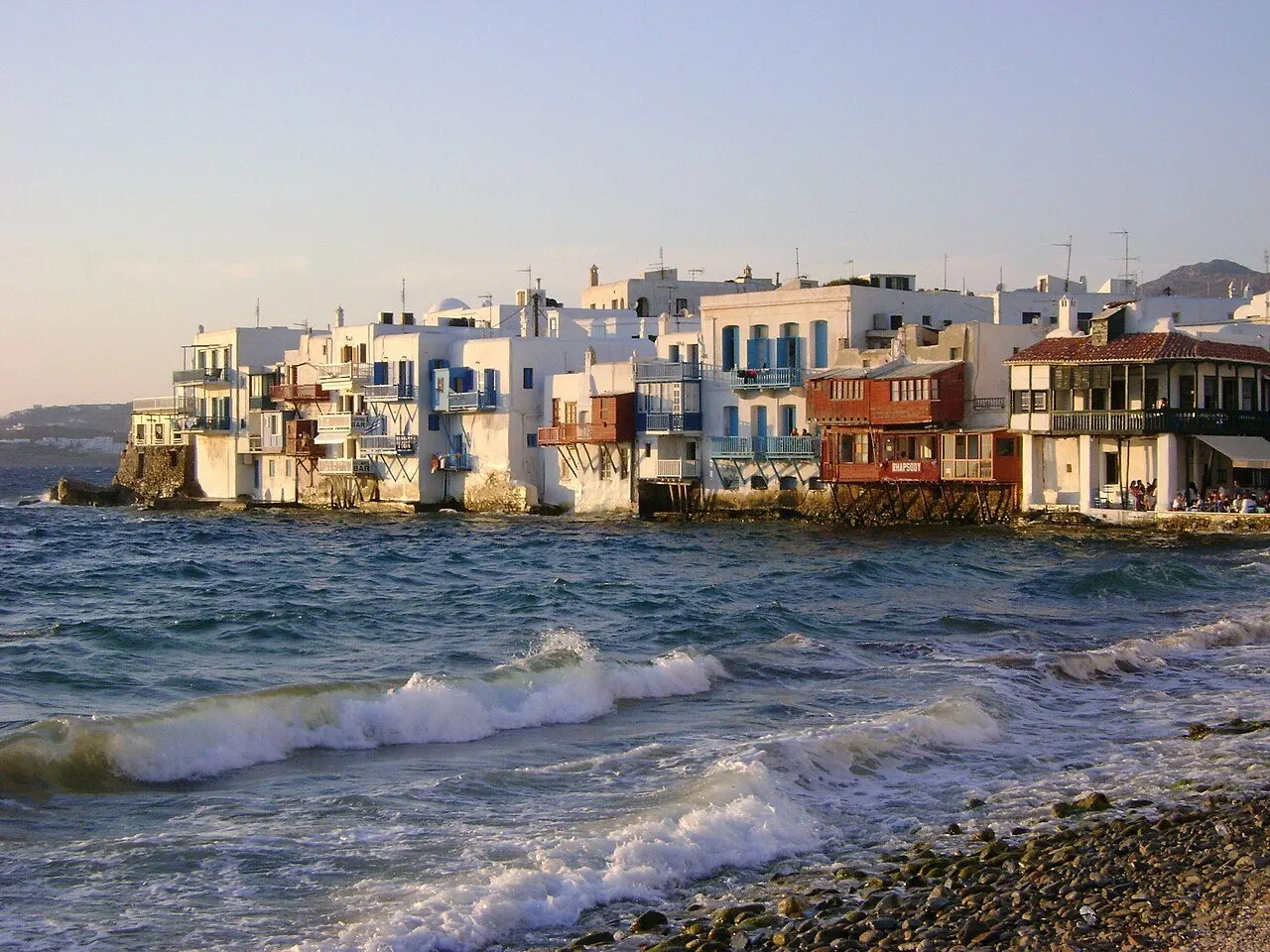
In 1537 the Ottoman admiral Hayreddin Barbarossa took the island, which the Turks called Mukene and ruled for almost three centuries through a local council. In the 18th century Mykonos prospered as a trading port, built the captains' houses of Little Venice, and lived with regular pirate raids. In June 1794 British and French warships fought the Battle of Mykonos in its harbour.
1821–1944
When the Greek War of Independence broke out in 1821, the island's aristocratic heroine, Manto Mavrogenous, spent her family's fortune on the cause; her statue stands on her square in Chora. Greece became independent in 1830. Shipping kept Mykonos afloat until the late 19th century, then islanders emigrated in numbers, many to the United States. In September 1944 the Greek Sacred Squadron raided the German garrison, which surrendered; the island was liberated on 30 September.
1960s to today
Tourism, helped along by the French excavations on Delos that began in 1873, took off in the 1960s with the international jet set. In the 1970s the beaches were known for nude bathing, in the 1980s Mykonos became one of the world's great gay destinations, and by the 2000s it was among the most expensive islands in Greece. The final scene of The Bourne Identity (2002) is set here, and its star, Matt Damon, has kept coming back.
Visit
The birthplace of Apollo and Artemis, the treasury of the Delian League and a Roman free port, a UNESCO World Heritage Site since 1990 and one of the largest archaeological sites in Greece.
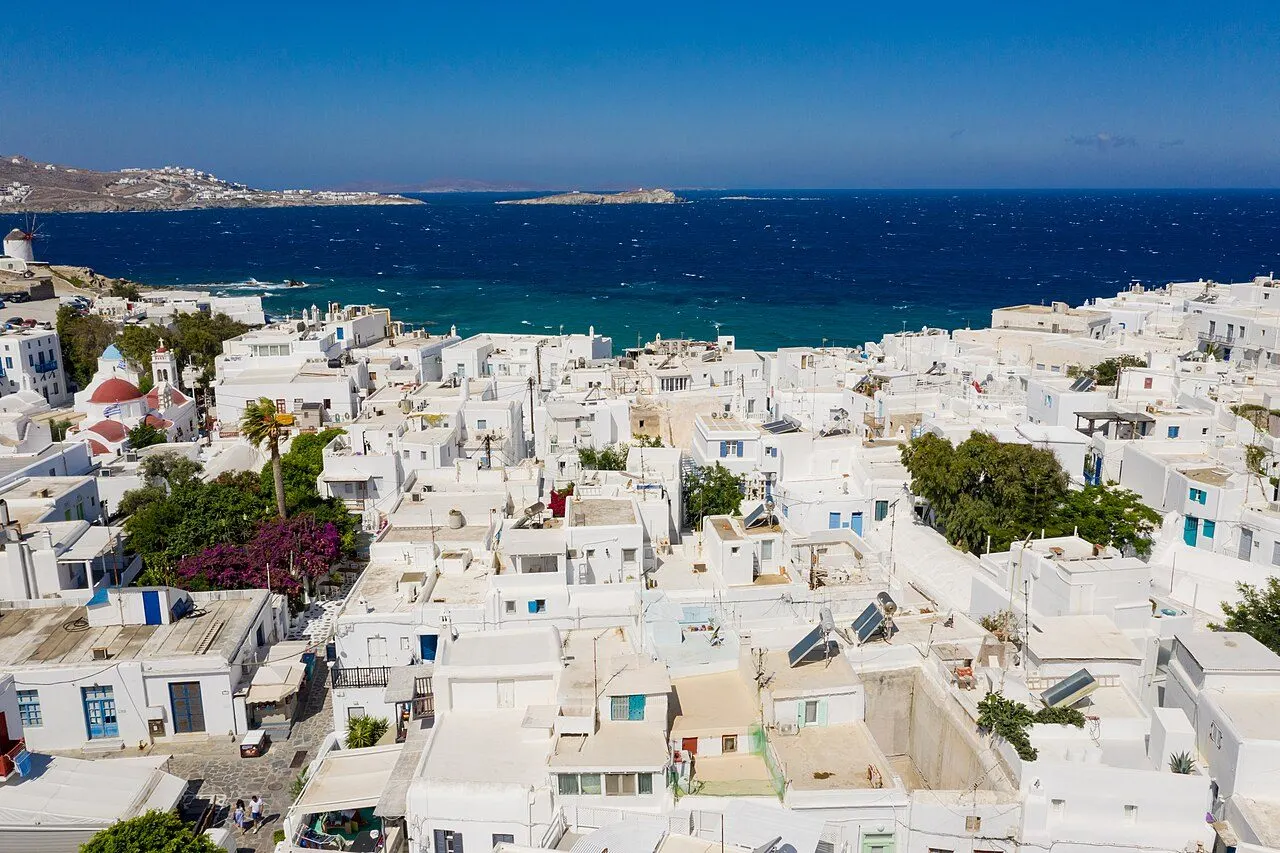
Five churches in one in the old Kastro of Chora, begun in 1425 and finished in the 17th century.
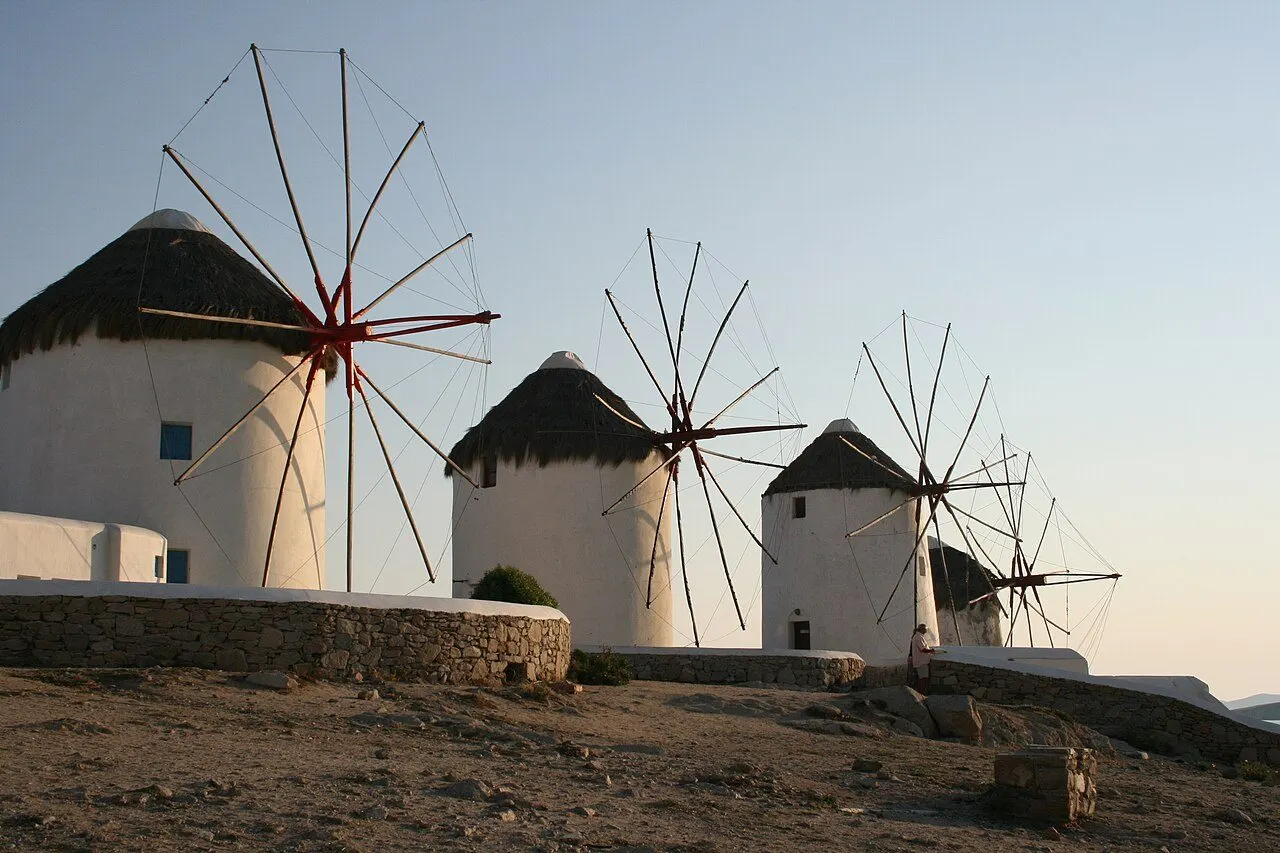
Mostly 16th-century Venetian windmills that ground the island's wheat until the middle of the 20th century; seven stand on the hill of Chora.
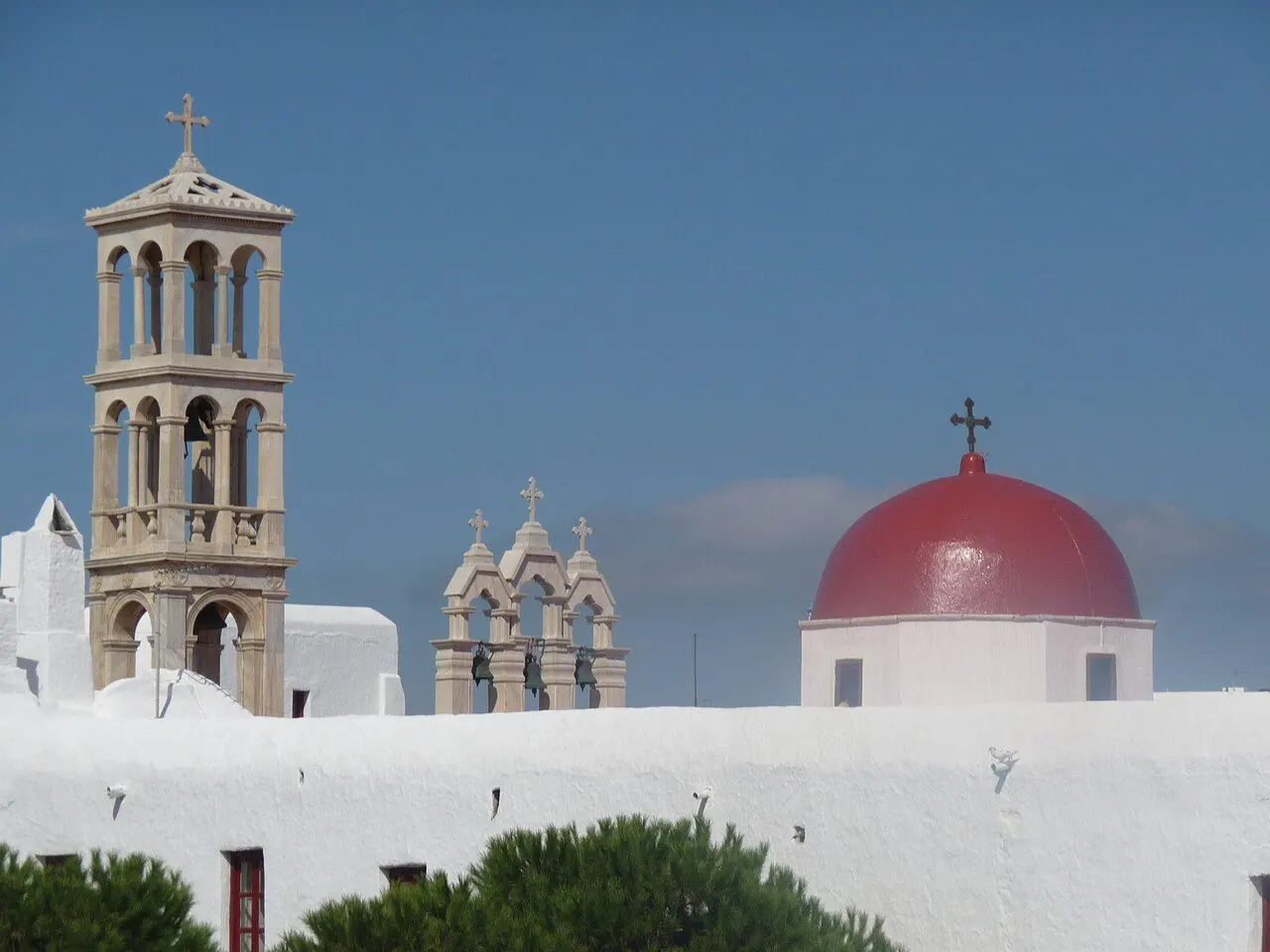
The island's patron monastery in Ano Mera, founded in 1542, with a gilded Florentine iconostasis of 1775 and a tall marble bell tower.
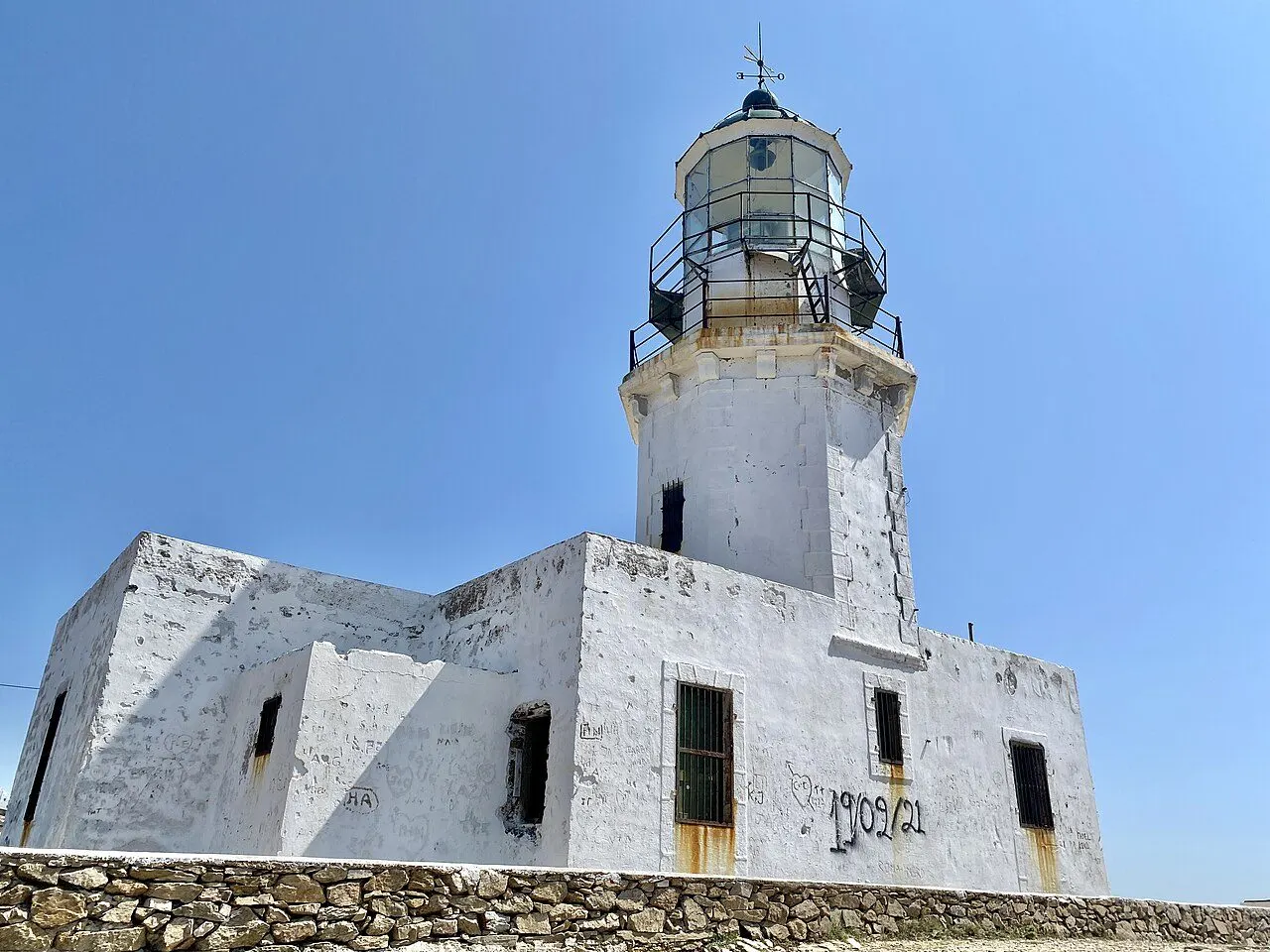
Built in 1891 by the French lighthouse company after the wreck of the steamship Volta, 136 m above the sea on the north-west cape.
Last updated