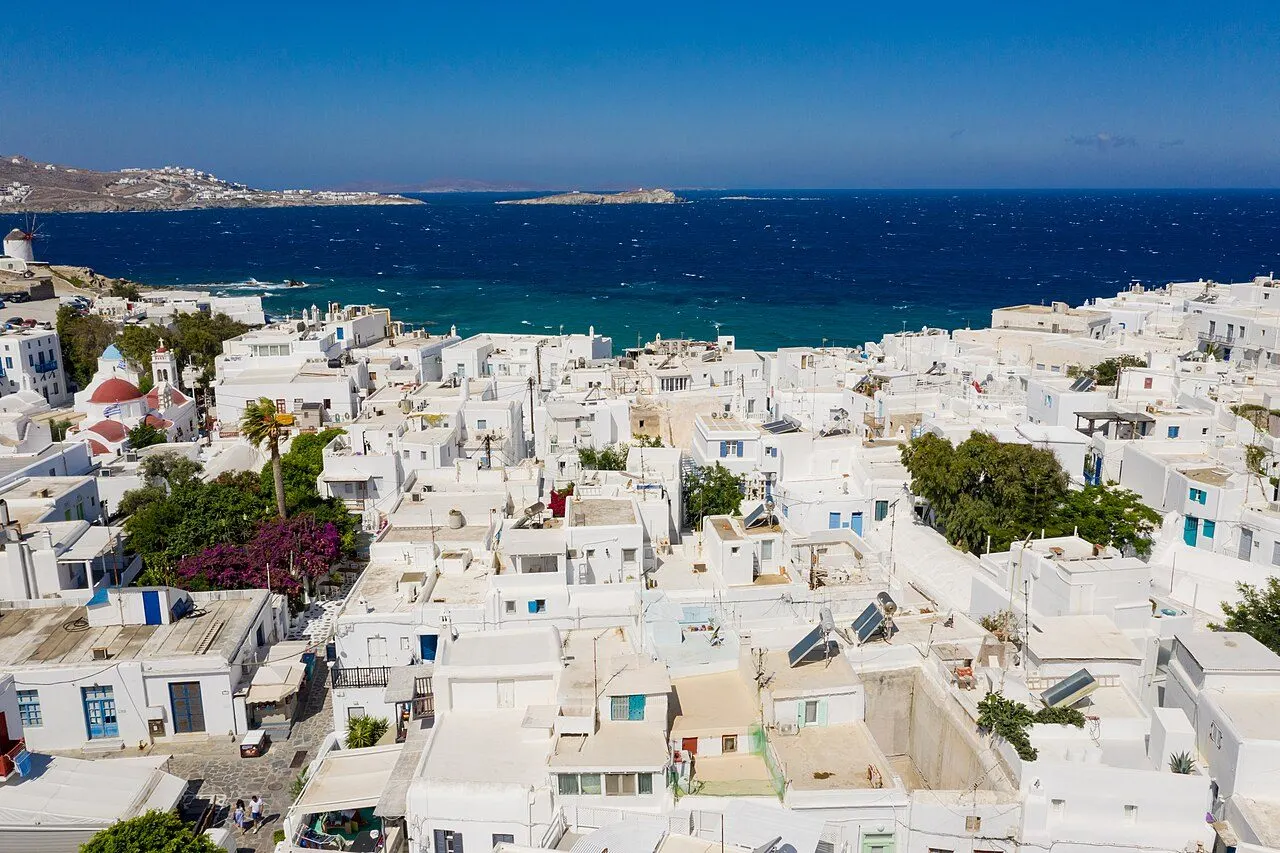
Little Venice and Chora of Mykonos from the air

Mykonos · Towns & villages

Towns & villages of Mykonos

Harbour towns, mountain hamlets and the places where island life still follows its own rhythm.

View of Chora (Mykonos Town), Chora & the west coast, Mykonos
01
Chora & the west coast

Chora (Mykonos Town)

A white maze said to have been built to confuse pirates, now confusing everyone after midnight

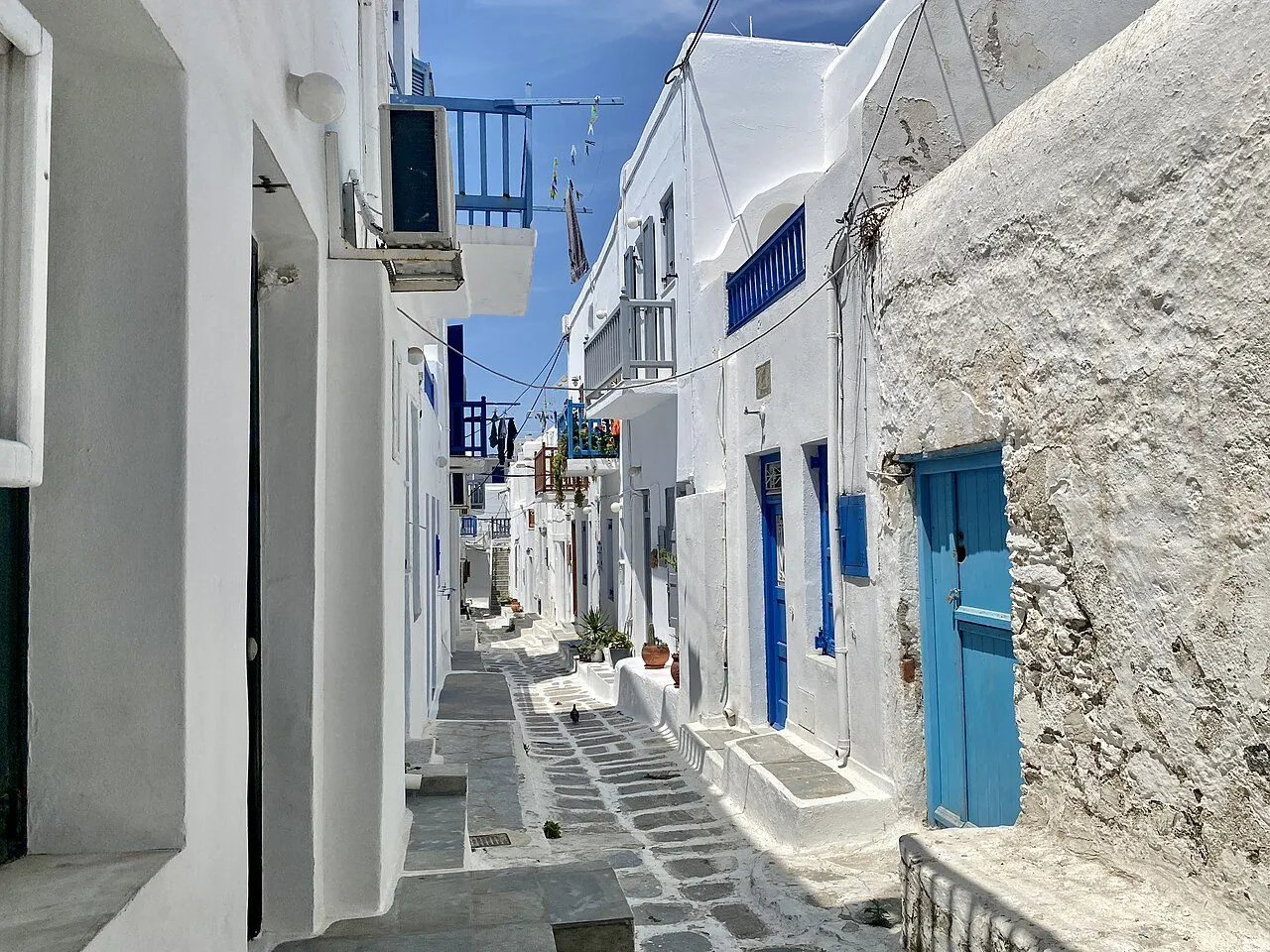
The island's capital wraps round the old port on the west coast: a tangle of whitewashed lanes paved with stone and outlined in white, little churches on every corner, balconies dripping with bougainvillea, and shops, bars and galleries in every doorway. Matoyianni is the main lane of shops and the spine of the evening walk; Little Venice and the windmills of Kato Mili are its sunset end. By day it is a pretty village; after dark, in July and August, it is the busiest party street in the Aegean.

  • The evening crawl along Matoyianni
  • Panagia Paraportiani in the old Kastro
  • Petros the pelican on the waterfront
  • Tria Pigadia, the three wells of 1722
  • The museums: archaeology, the sea, folklore and Lena's House
Discover Chora (Mykonos Town)
View of Little Venice, Chora & the west coast, Mykonos
02
Chora & the west coast

Little Venice

Captains' houses built straight onto the sea, and the island's sunset ritual

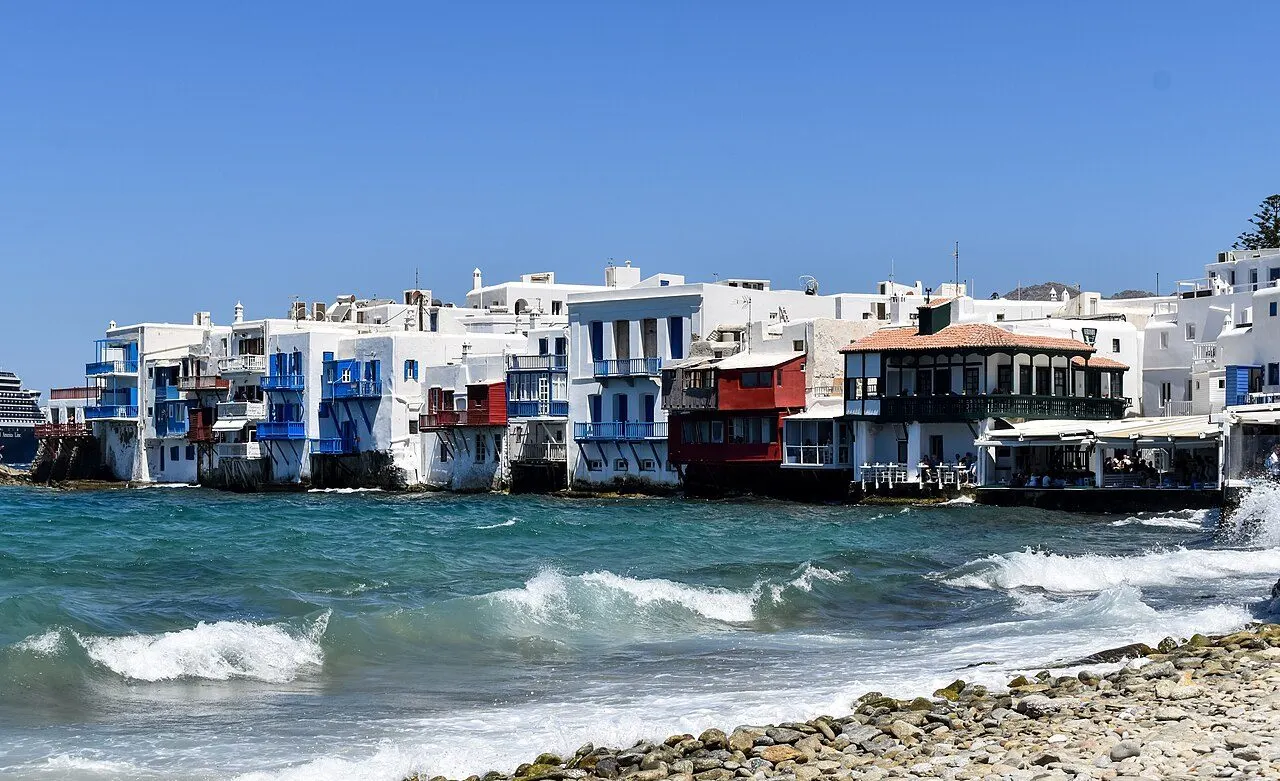
At the south-western edge of Chora a row of tall old houses stands with its feet in the water, wooden balconies painted red, blue and green hanging over the waves. They went up from the middle of the 18th century for captains and merchants. Today their ground floors are bars and cafés, and every evening the whole island seems to squeeze onto their terraces to watch the sun drop behind the windmills' hill and the sea, cocktail in hand and spray on the ankles when the wind is up.

  • A sunset drink on a terrace over the waves
  • The view of the Kato Mili windmills from the water's edge
  • The painted wooden balconies after dark
  • Dinner with your table almost in the sea
Discover Little Venice
View of Kato Mili, the windmills, Chora & the west coast, Mykonos
03
Chora & the west coast

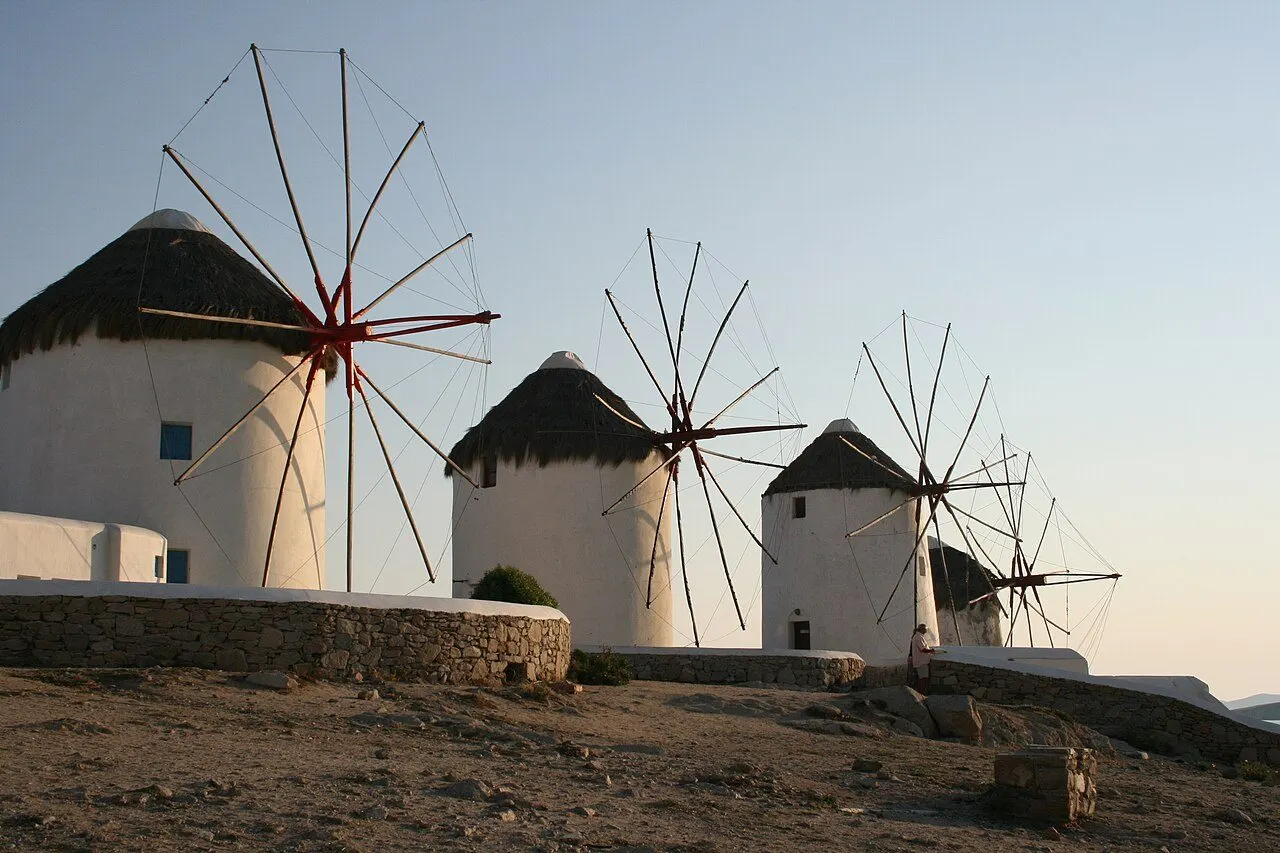
Kato Mili, the windmills

Venetian windmills on the 'Island of the Winds', the first thing you see from the boat

On a low ridge above Little Venice stands the row of round, white, pointed-roofed windmills that has become the emblem of Mykonos. Most of the island's mills were built by the Venetians in the 16th century, though building went on into the early 20th, and they ground wheat, a real source of income for an island whose wind never seems to stop. They fell silent in the middle of the 20th century; today they are the most photographed silhouette in the Cyclades.

  • Sunset over the sea from the windmill ridge
  • The view down onto Little Venice
  • The Boni windmill at Ano Mili, now an agricultural museum
Discover Kato Mili, the windmills
View of Delos, Delos & Rhenia, Mykonos
04
Delos & Rhenia

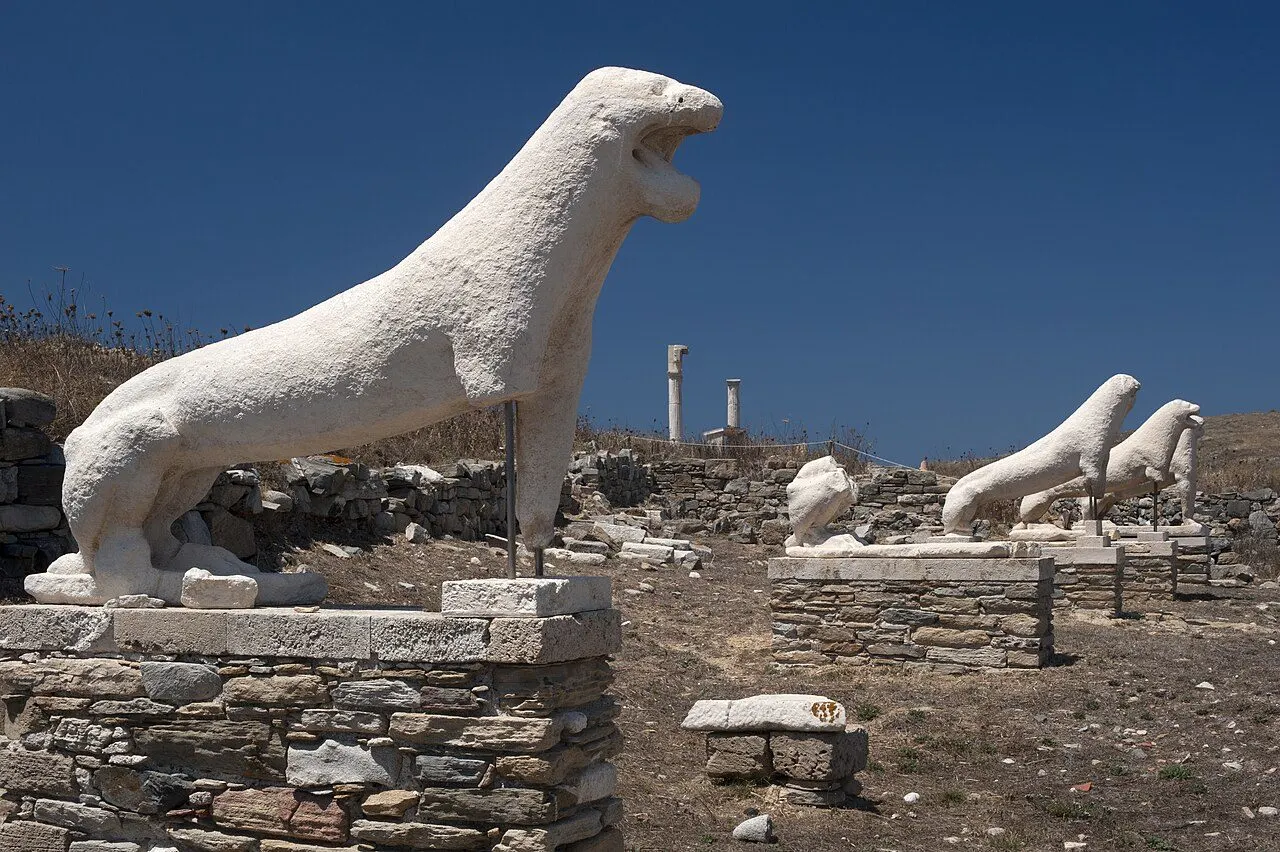
Delos

The birthplace of Apollo, where nobody was allowed to be born or to die

Half an hour by boat from the old port lies the real reason to come to Mykonos if you care about history: Delos, a small, bare island of 3.43 km² that was one of the holiest places in the Greek world and, later, one of the busiest ports in the Mediterranean. The whole island is an archaeological site, a UNESCO World Heritage Site since 1990, with the Terrace of the Lions, the marble theatre, houses with their mosaic floors still in place, and the climb to the top of Mount Kynthos.

  • The marble lions of the Naxians
  • The mosaic of Dionysus riding a panther
  • The theatre of about 300 BC
  • The climb up Mount Kynthos for the view over the Cyclades
  • The site museum
Discover Delos
View of Ano Mera, Ano Mera & the east, Mykonos
05
Ano Mera & the east

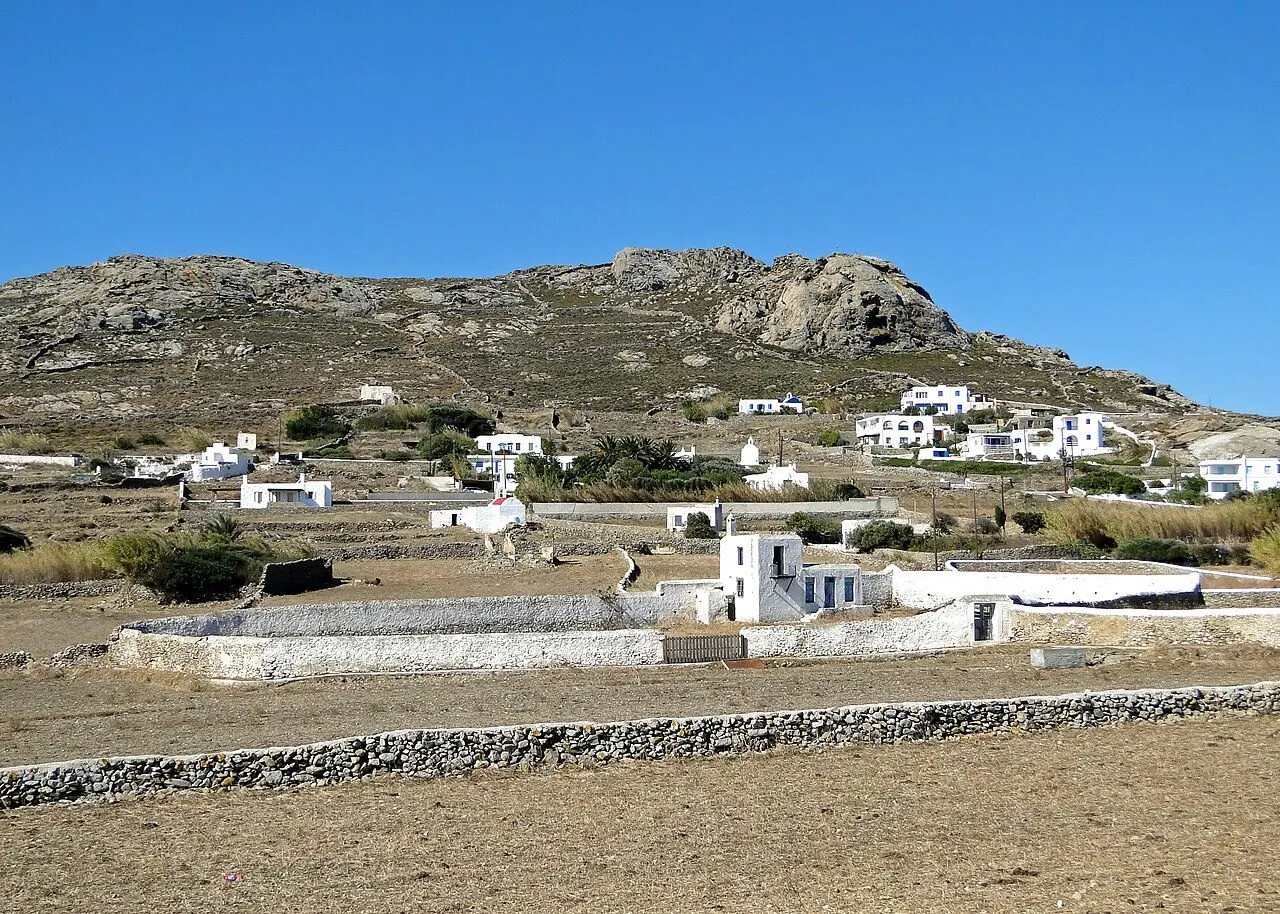
Ano Mera

The island's only other village, a monastery with a Florentine iconostasis and a square of tavernas

About 8 km east of Chora, at roughly 100 m above the sea, Ano Mera is the Mykonos the party crowd never sees: a farming village of white houses and stone walls around a big square shaded by tavernas, protected as a traditional settlement since 1988. At its heart stands the Monastery of Panagia Tourliani, the island's patron, founded in 1542. It is also where the island's spicy kopanisti cheese is made, and the base for the quiet beaches of the east and the north-east.

  • The monastery of Panagia Tourliani and its gilded iconostasis
  • Lunch on the village square
  • Kopanisti, the island's peppery PDO cheese
  • The road on to Fokos and the beaches of the east
Discover Ano Mera
View of Paraga, Paradise & Super Paradise, The south-coast beaches, Mykonos
06
The south-coast beaches

Paraga, Paradise & Super Paradise

The party coast: beach clubs by day, Cavo Paradiso until breakfast

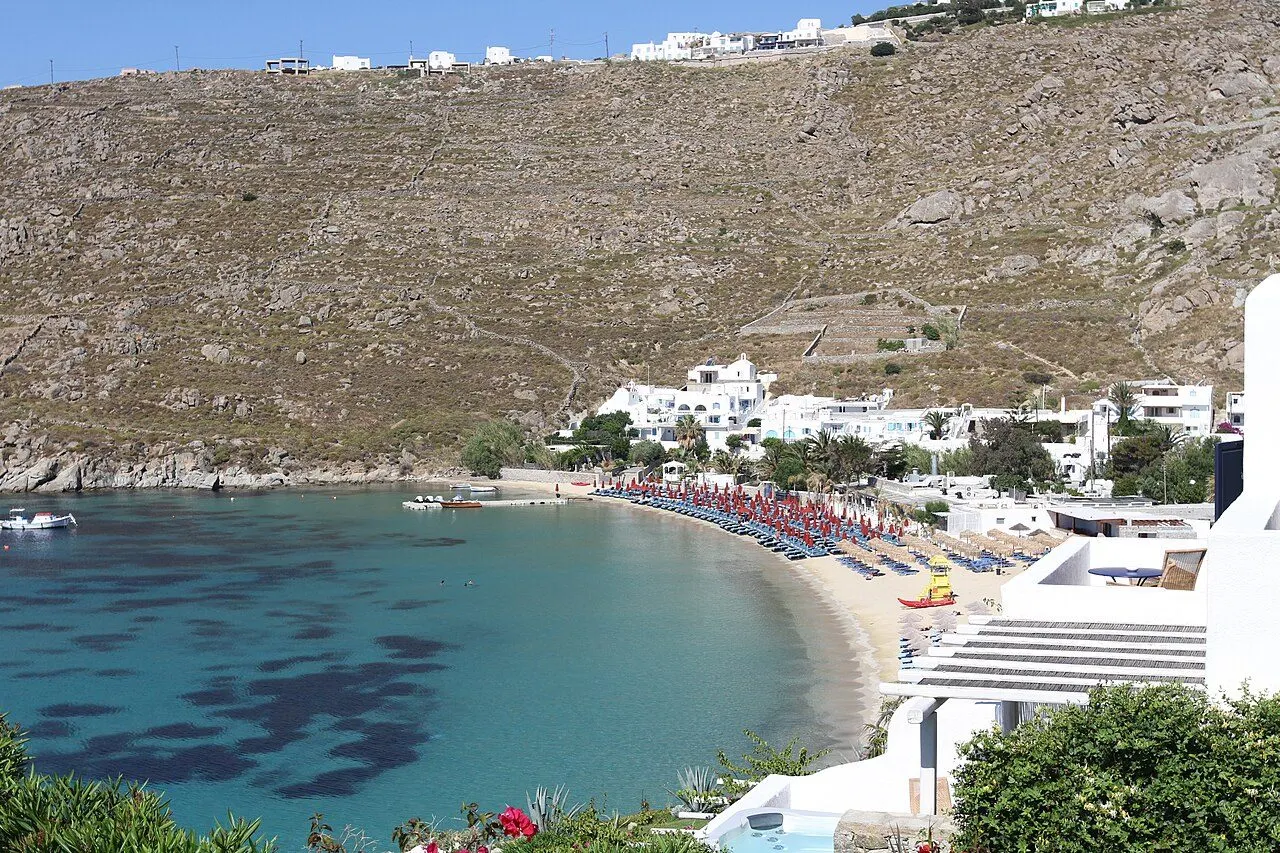
East of Platis Gialos the coast turns into the reason many people come to Mykonos at all. At Paraga, Scorpios hosts its long sunset gatherings over the sea. Paradise has partied since 1969, when the Paradise Beach club opened, with dancing on the sand from late afternoon; on the cliff at its western end, Cavo Paradiso, open since 1993, is the island's open-air superclub, with world-famous DJs who come on around 01:45 and play until the sun is up. Over the hill lies Super Paradise, with the JackieO' beach club.

  • Sunset at Scorpios, Paraga
  • Dancing on the sand at Paradise from late afternoon
  • Sunrise at Cavo Paradiso
  • JackieO' at Super Paradise
Discover Paraga, Paradise & Super Paradise
View of Platis Gialos, Psarou & Ornos, The south-coast beaches, Mykonos
07
The south-coast beaches

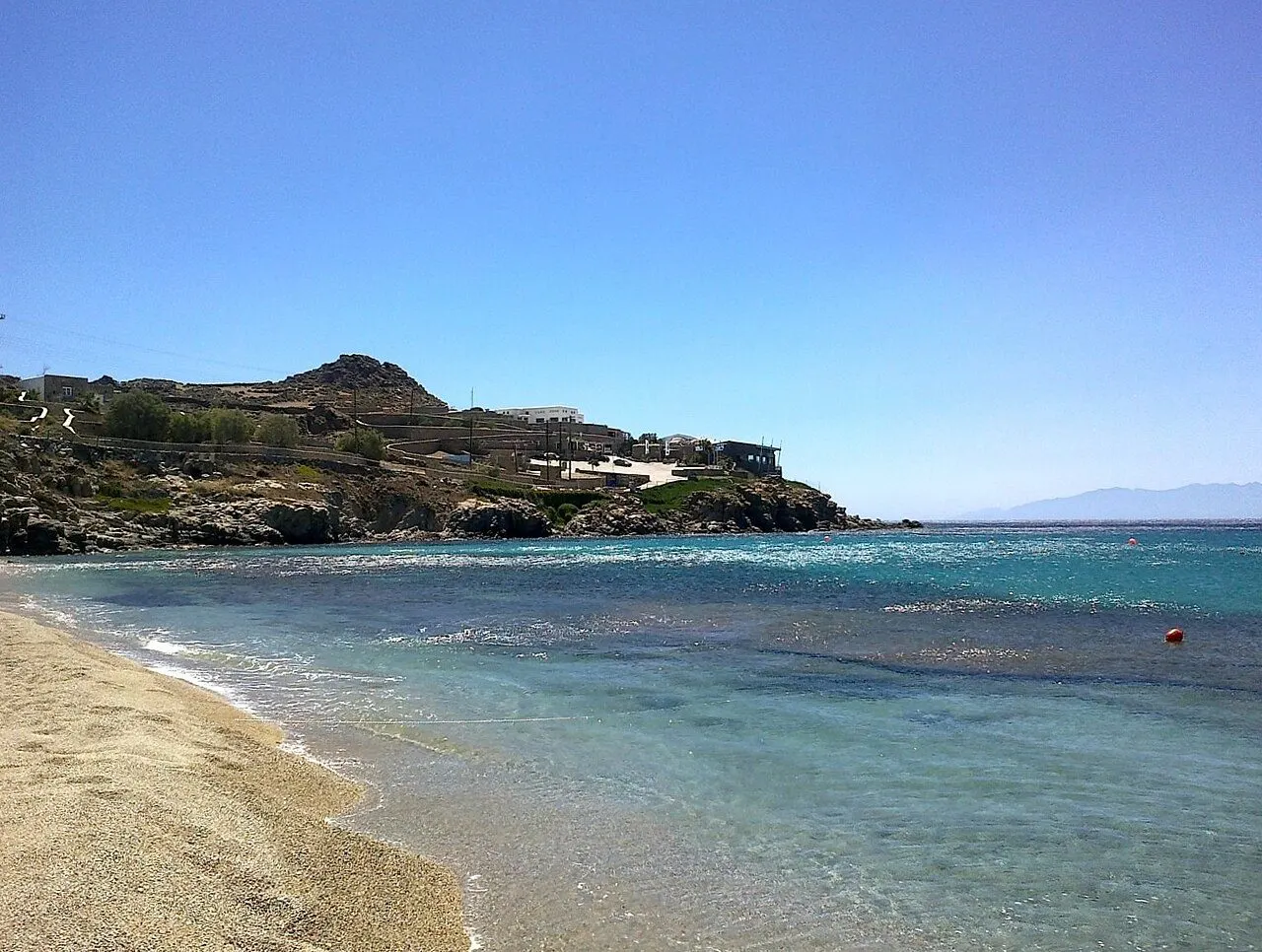
Platis Gialos, Psarou & Ornos

Sheltered southern bays of sunbeds, where the beach boats leave for Paradise

Just south of Chora the coast folds into three sheltered bays that most visitors call home. Ornos is the family beach, a calm, sandy bay a short bus ride from town. Platis Gialos is a long sweep of sand lined with hotels and rows of sunbeds, and the harbour of the little boats that run east along the coast to Paraga, Paradise, Super Paradise, Agrari and Elia. In between, small Psarou is the island's most glamorous cove, home of Nammos and of yachts moored off the beach.

  • The caique from Platis Gialos along the party coast
  • People-watching at Psarou
  • Calm, shallow water at Ornos for children
Discover Platis Gialos, Psarou & Ornos
View of Agios Sostis & the north coast, The wild north, Mykonos
08
The wild north

Agios Sostis & the north coast

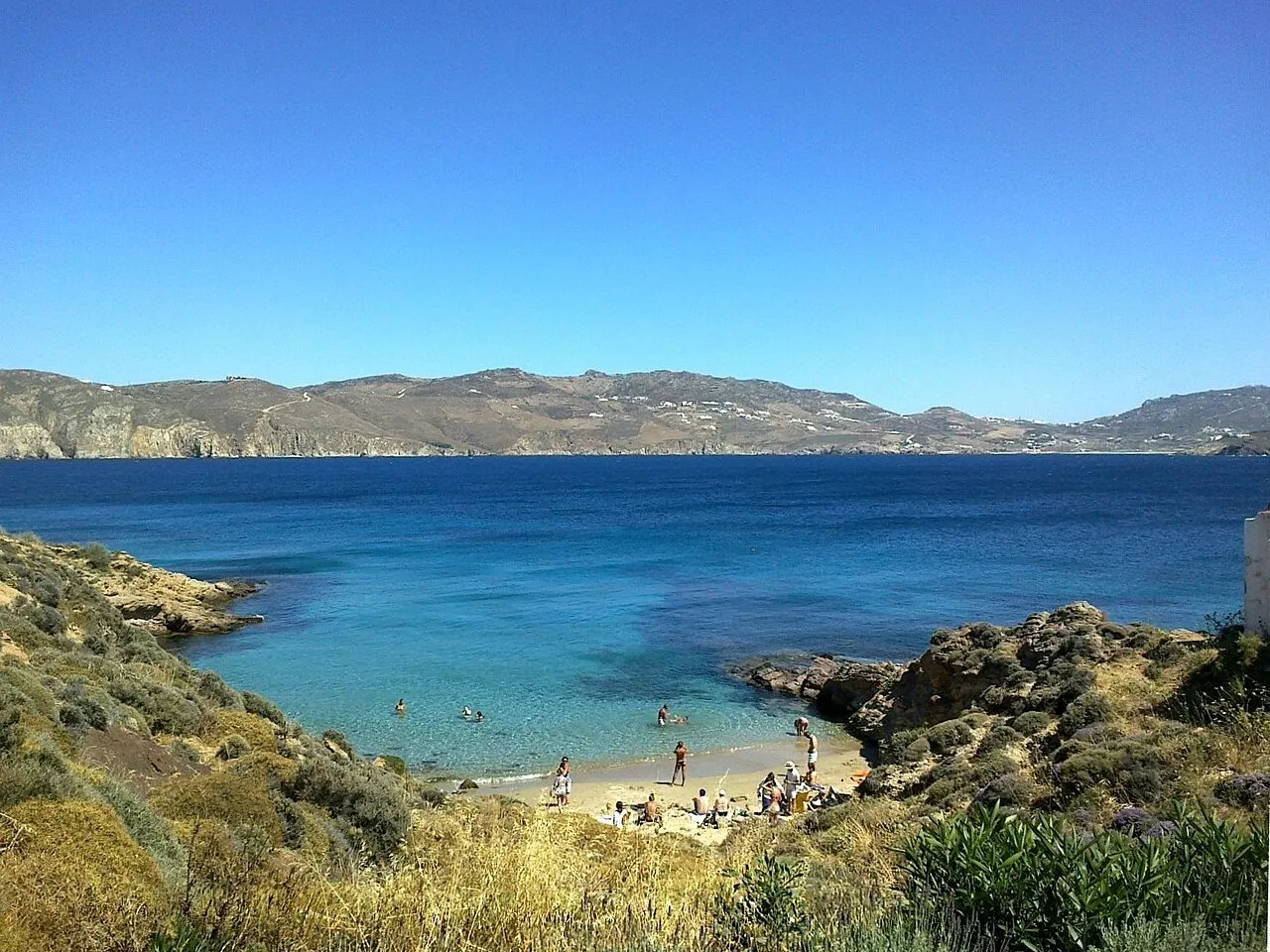
No sunbeds, no music, just sand, a chapel and a famous little taverna

On the north coast, beyond Panormos bay, Agios Sostis is what Mykonos looked like before the beach clubs: a sandy bay with a white chapel on the hill, no sunbeds and no DJ. On a calm day it is one of the loveliest beaches on the island; when the meltemi blows it is wild and the sea is rough. Above it, kiki's tavern grills meat and fish under the trees. Neighbouring Panormos is livelier, with the Principote beach club.

  • A free beach without sunbeds
  • Lunch at kiki's tavern above the sand
  • Panormos bay and Principote next door
Discover Agios Sostis & the north coast
View of Armenistis lighthouse, The wild north, Mykonos
09
The wild north

Armenistis lighthouse

A lighthouse of 1891 on the windy north-west cape, with Tinos across the strait

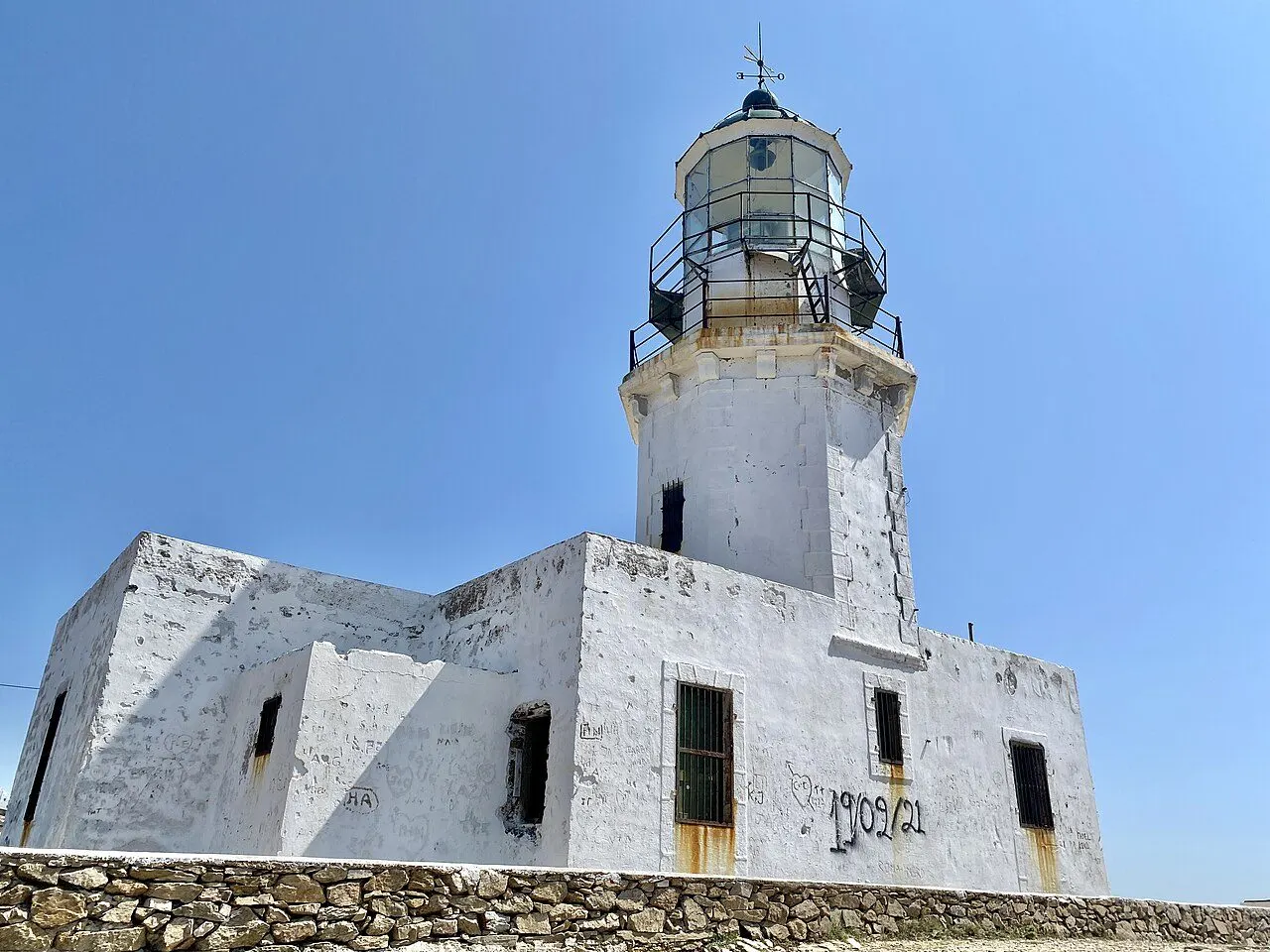
About 7 km north of Chora, past the new port and Agios Stefanos, a road climbs to Cape Armenistis and its lighthouse, 136 m above the sea. It was built in 1891 by the French lighthouse company after the steamship Volta was wrecked off the cape in 1887. There is nothing to buy and usually more wind than you expected, but the view over the strait to Tinos and the open sea at sunset is one of the best on the island, and free.

  • Sunset over the strait to Tinos
  • The walk around the cape
  • The lighthouse's old mechanism, now in the garden of the Aegean Maritime Museum in Chora
Discover Armenistis lighthouse

Regions

Where to base yourself in Mykonos

01

Chora & the west coast

The white town round the old port, with Little Venice, the windmills of Kato Mili, the Kastro and the museums, plus Tourlos, the new port, and the beach of Agios Stefanos to the north.

02

The south-coast beaches

The sheltered sandy bays from Ornos and Psarou to Platis Gialos, Paraga, Paradise and Super Paradise: the beach clubs, the beach boats and Cavo Paradiso.

03

Ano Mera & the east

The island's inland village with the monastery of Tourliani, and the long beaches of Elia and Kalafatis on the south-east coast.

04

The wild north

The windswept coast of Agios Sostis, Panormos and Fokos, with the lighthouse of Armenistis on the north-west cape.

05

Delos & Rhenia

The sacred island of Apollo, a UNESCO site, and Rhenia beyond it, where the dead of Delos were reburied.

Find a place to stay

Browse hotels and guesthouses across Mykonos, filtered by region and price.

Browse hotels

Last updated