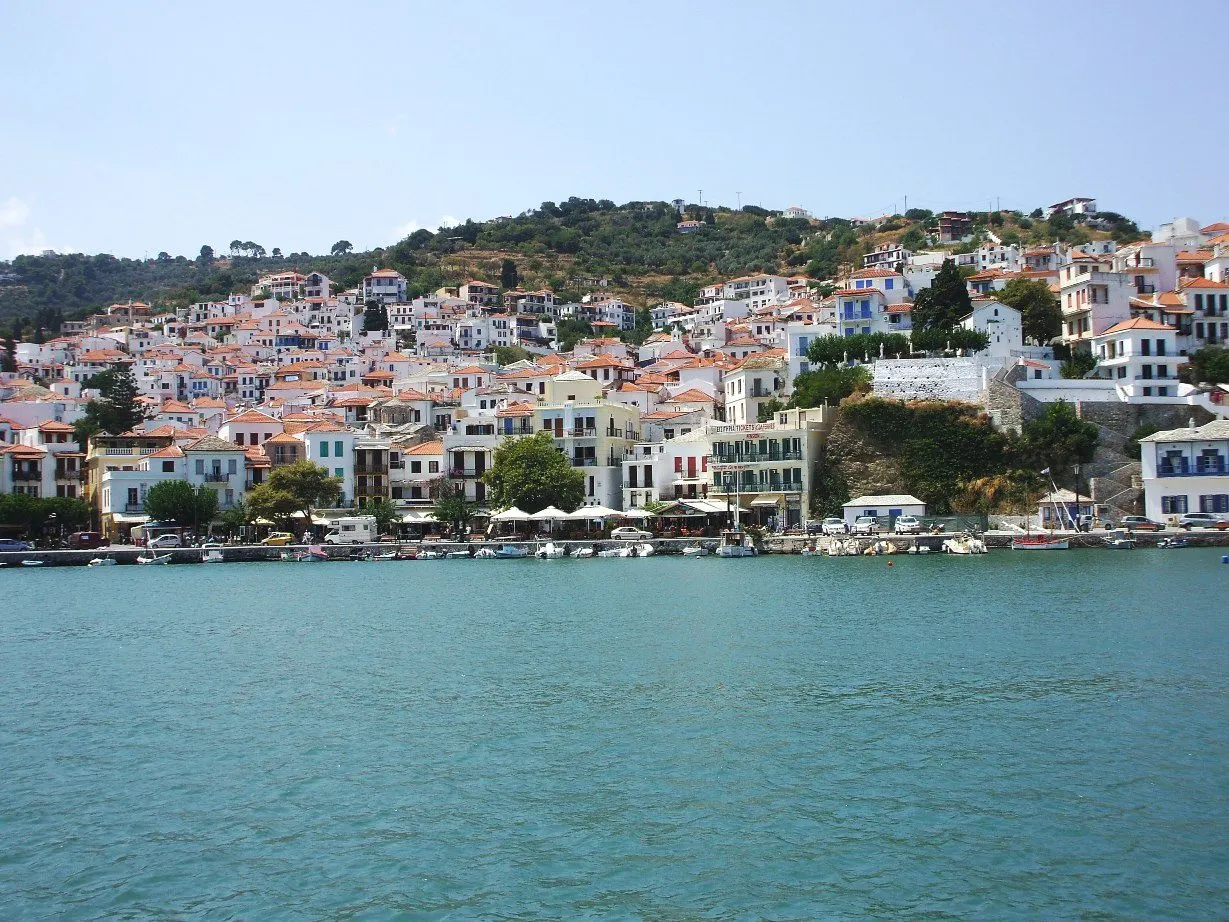
The Kastro
The 13th-century Venetian castle of the Ghisi family at the top of the town, built on the walls of ancient Peparethos, with the 11th-century basilica of Agios Athanasios inside.
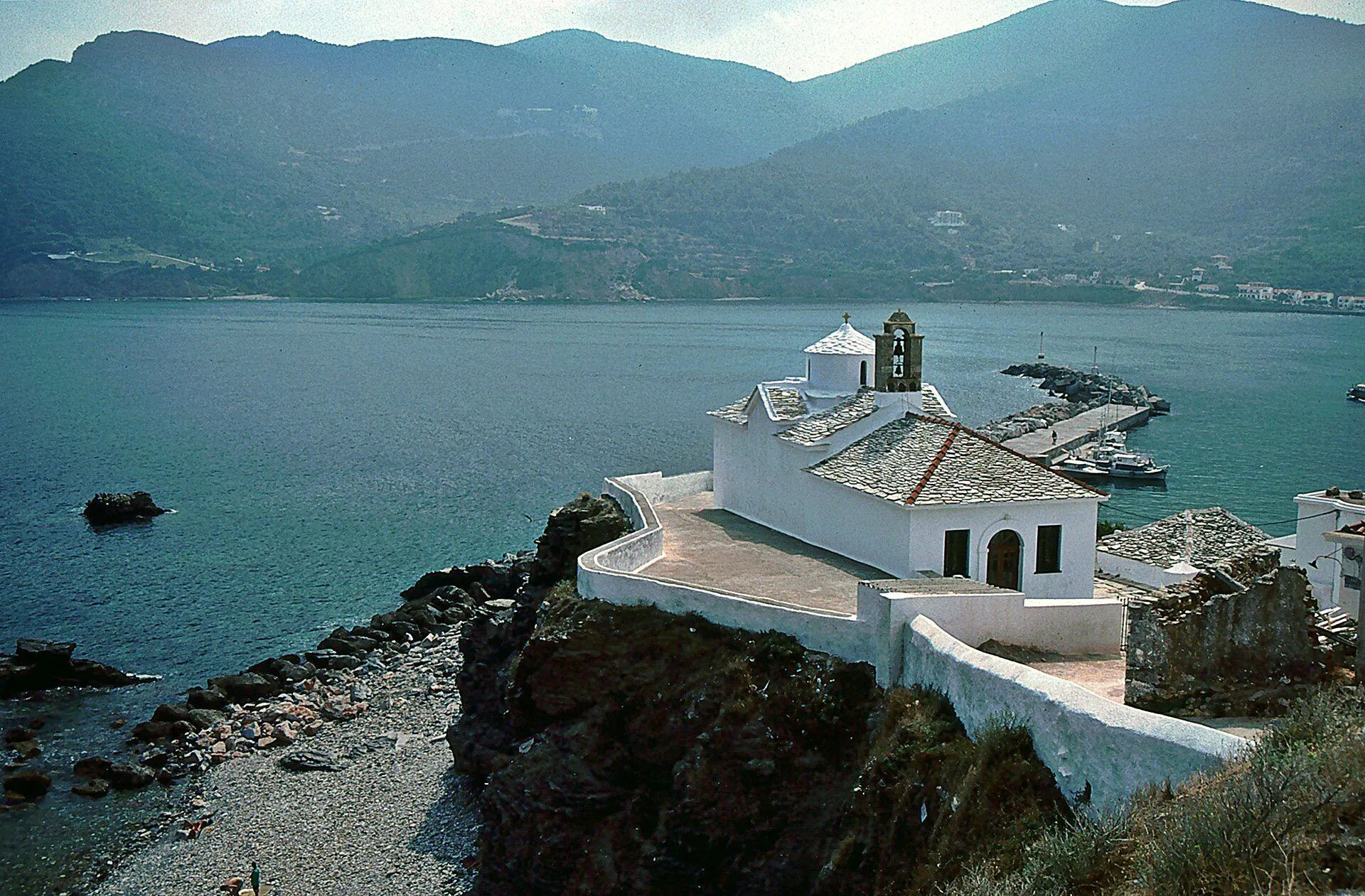
Skopelos · History
A Cretan prince who brought the vine, an ancient wine praised by Sophocles, a Venetian castle, Barbarossa's raid of 1538, the ships of 1821, union with Greece in 1830, the earthquake of 1965 and, in 2007, a film crew.
Timeline
Bronze Age
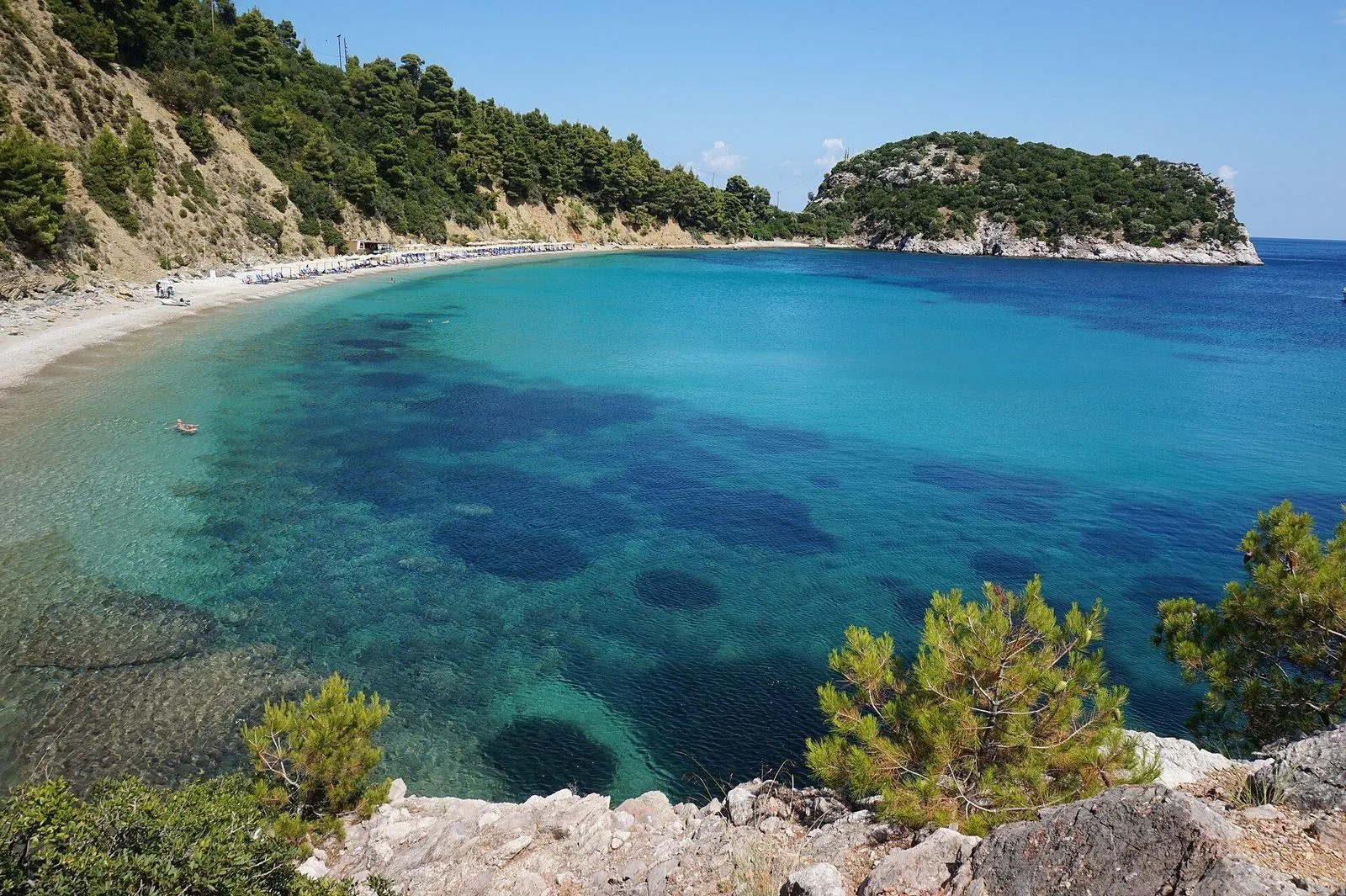
Legend says the island was founded by Staphylos, 'bunch of grapes', the son of Dionysus and the Cretan princess Ariadne, who came from Crete and planted the first vines. In the Late Bronze Age, settlers from the Minoan world did come to the island, then called Peparethos. In 1936 the archaeologist Nikolaos Platon found a royal tomb on the headland of Stafylos, with a sword whose hilt was covered in gold, now in the National Archaeological Museum in Athens.
Antiquity
In the 6th century BC Peparethos was a rich island city with three towns, struck its own silver coins and sent wine and olive oil around the Aegean. Its runner Agnon won the stadion race at Olympia, and gave his name to the bay of Agnontas. Sophocles calls it 'rich in grapes and wine', and later writers ranked its wine among the best in Greece, though it had to be kept six years. Thucydides records an earthquake and a great wave that struck the island during the Peloponnesian War. It joined the Athenian alliance, then fell under Macedon and, in 146 BC, Rome. The name Skopelos first appears in Roman times, perhaps from the reefs, skopeloi, around its coast.
4th–15th century
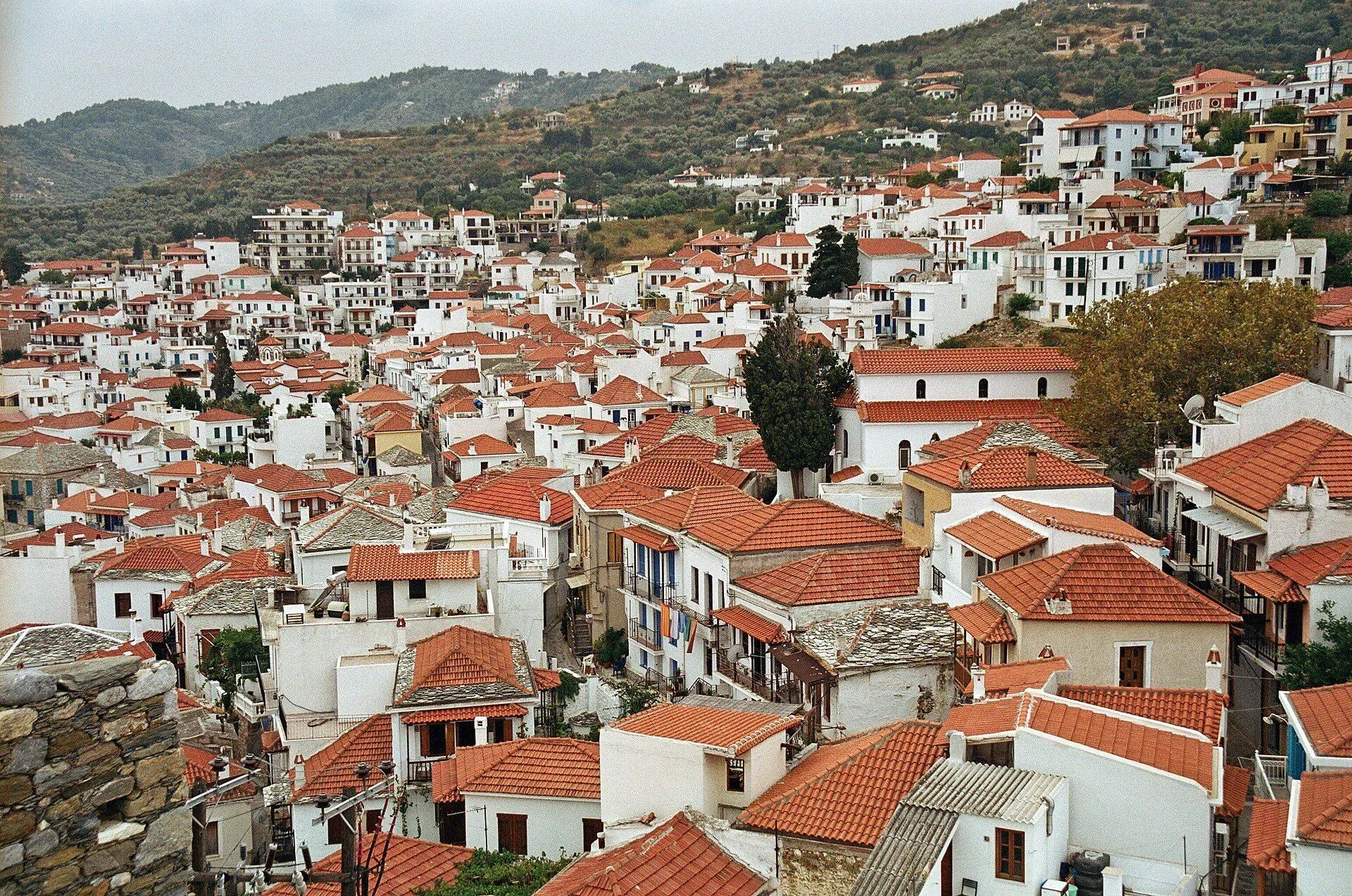
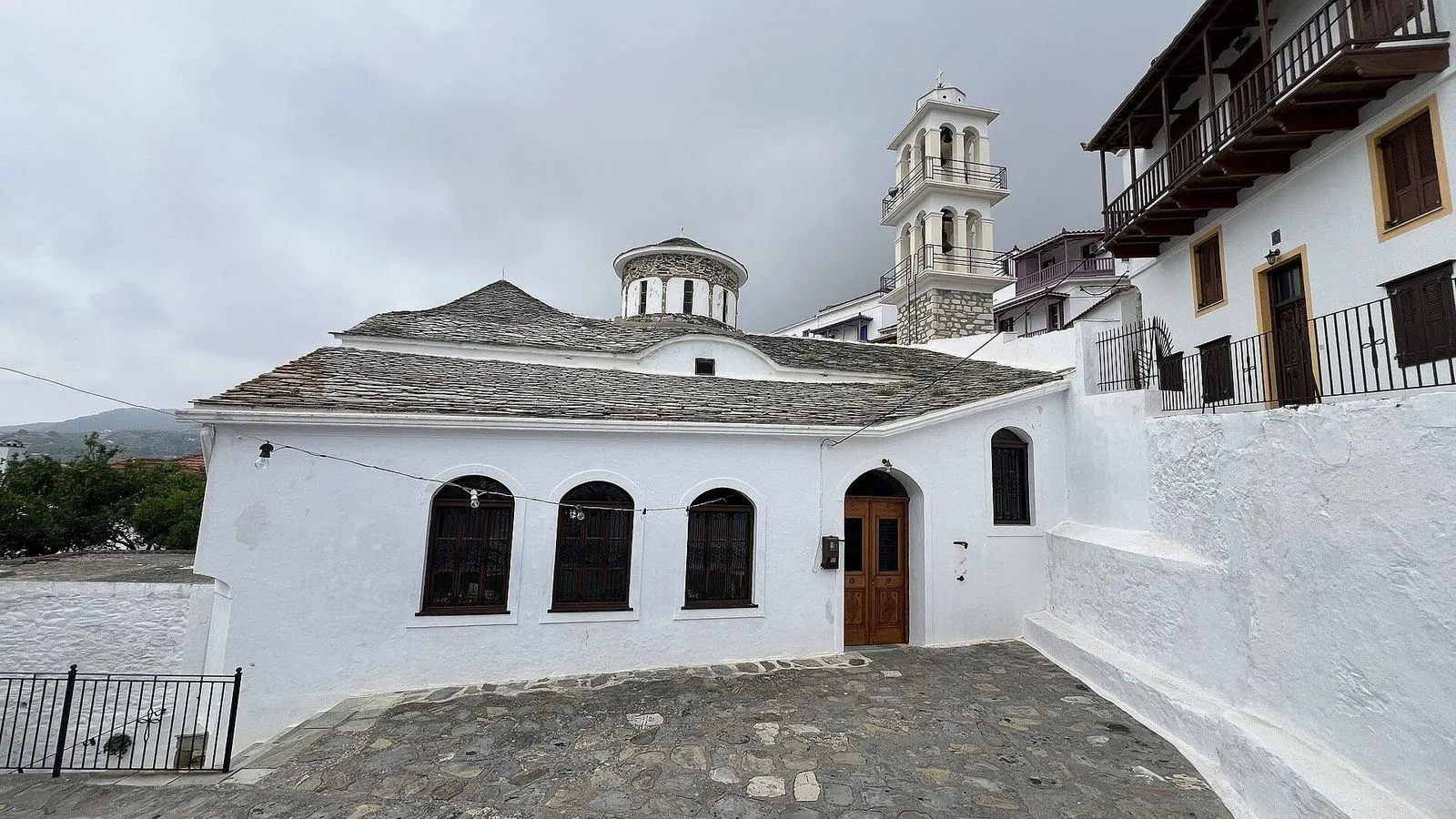
Christianity came early: the island's bishop, Riginos, was beheaded in 362 under the emperor Julian and became its patron saint. After the Fourth Crusade of 1204, the Venetian Ghisi family took Skopelos with Skiathos and Skyros and built a castle on the ancient walls at the top of the town. The island went back and forth between Byzantium and the Latins, and came under Venice again in the 1450s.
1538–1821
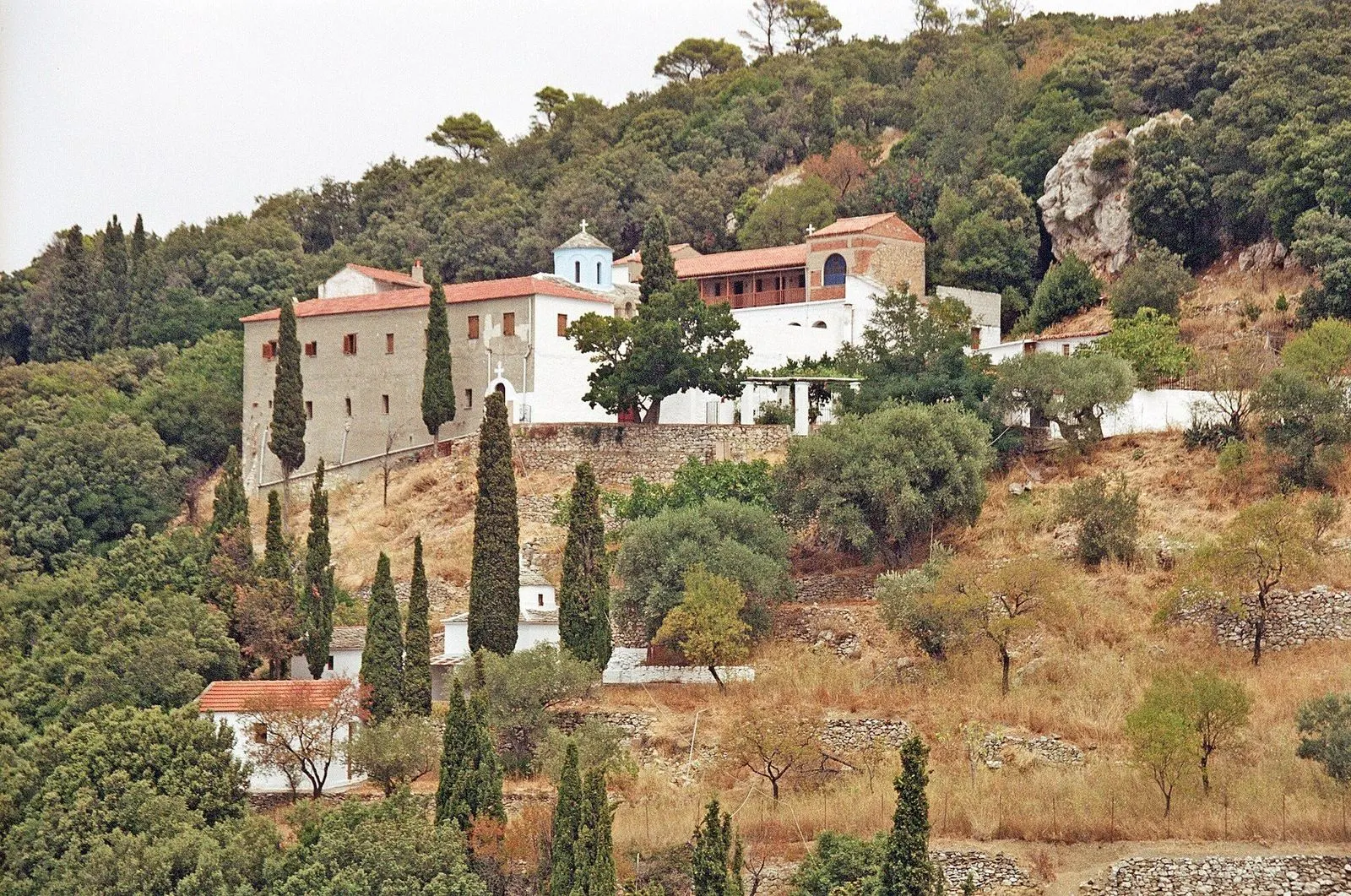
In 1538 the Ottoman admiral Hayreddin Barbarossa took Skopelos and destroyed the town, killing or carrying off much of its people. The island slowly recovered. No Turks settled here, so it governed much of its own life, and new churches and monasteries went up, among them Evangelistria, founded around 1712. By the 18th century travellers found a busy town of merchants, shipbuilders and sailors.
1821–1830
When the War of Independence broke out in 1821, the shipyards of Skopelos sent thirty-five ships to the Greek fleet, and monks from Mount Athos took refuge in its monasteries with their relics. Under the London Protocol of 3 February 1830 it became part of the new Greek state.
1830 to today
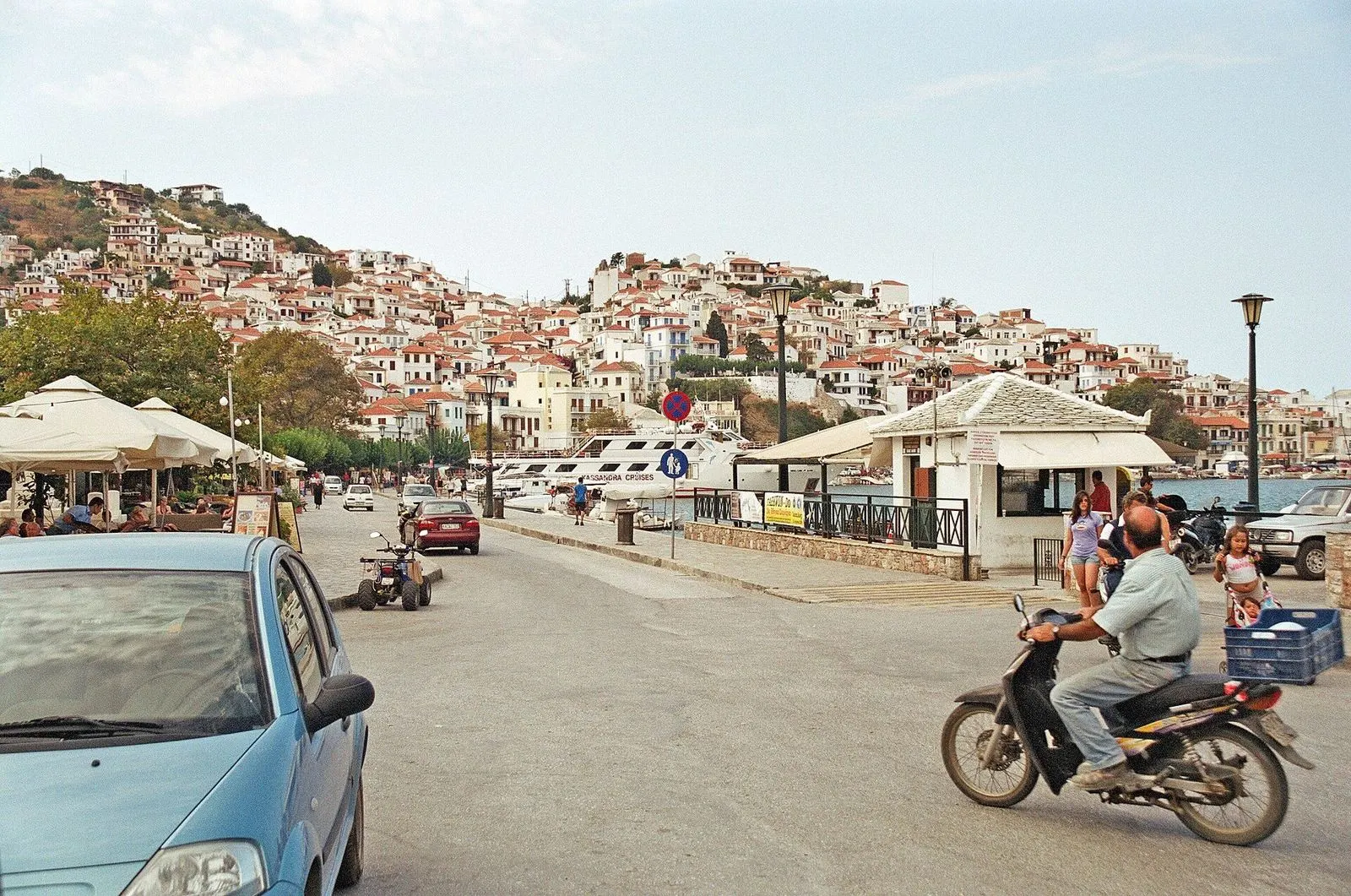
In the Second World War the island was occupied by Italy and then Germany until October 1944. On 9 March 1965 a strong earthquake centred off Alonissos damaged or destroyed some 1,500 houses on Skopelos, and the people of Klima built a new village by the sea, Neo Klima. The town was protected as a traditional settlement in 1978. In 2007 the crew of Mamma Mia! filmed at Kastani beach and the chapel of Agios Ioannis, and the film made the island famous around the world in 2008.
Visit
The 13th-century Venetian castle of the Ghisi family at the top of the town, built on the walls of ancient Peparethos, with the 11th-century basilica of Agios Athanasios inside.
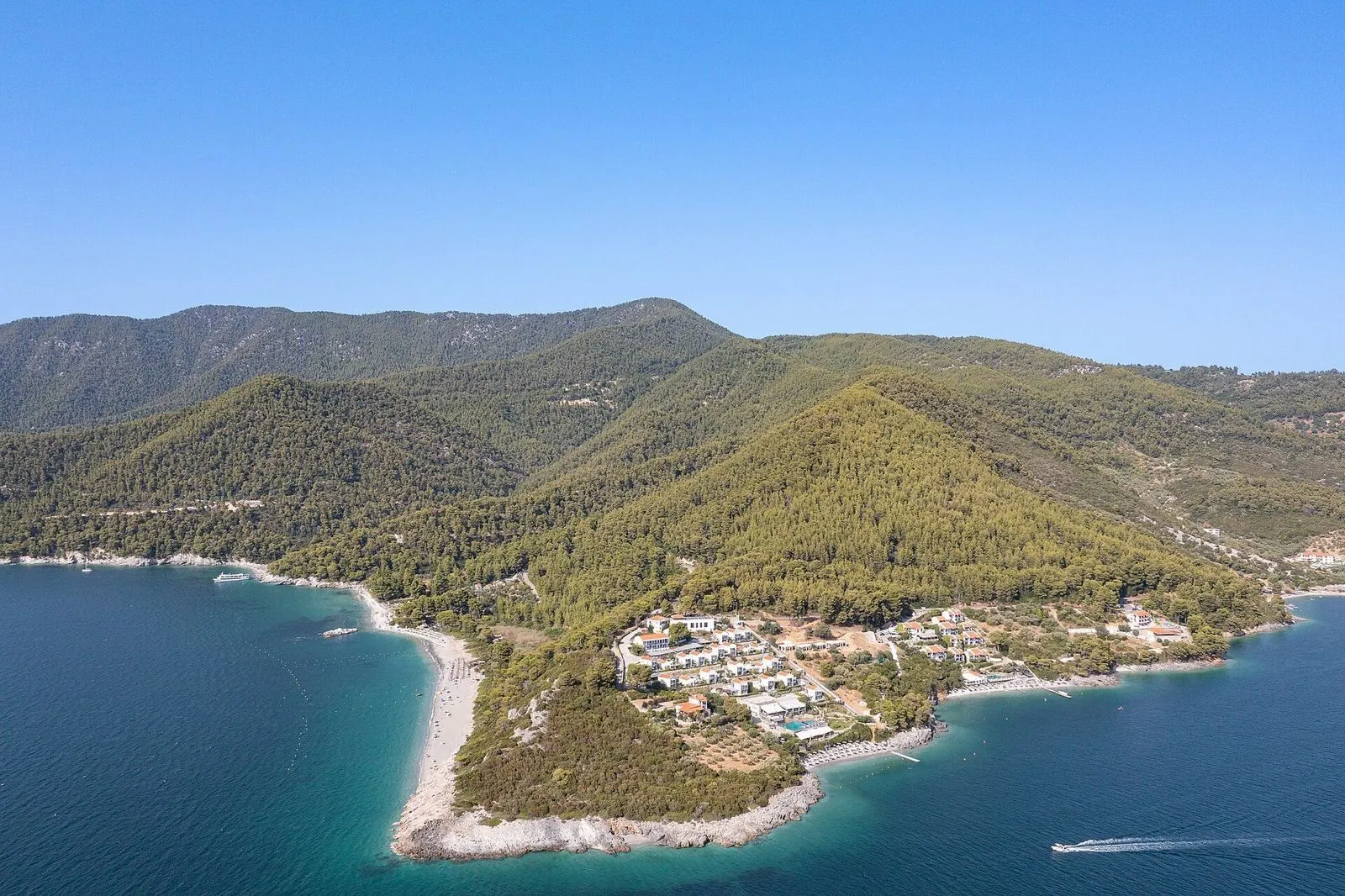
The headland between Stafylos and Velanio where Nikolaos Platon found the Bronze Age royal tomb with the gold-hilted sword in 1936.
The white domed church on its rock at the harbour mouth, with a carved 17th-century iconostasis of flowers and birds.
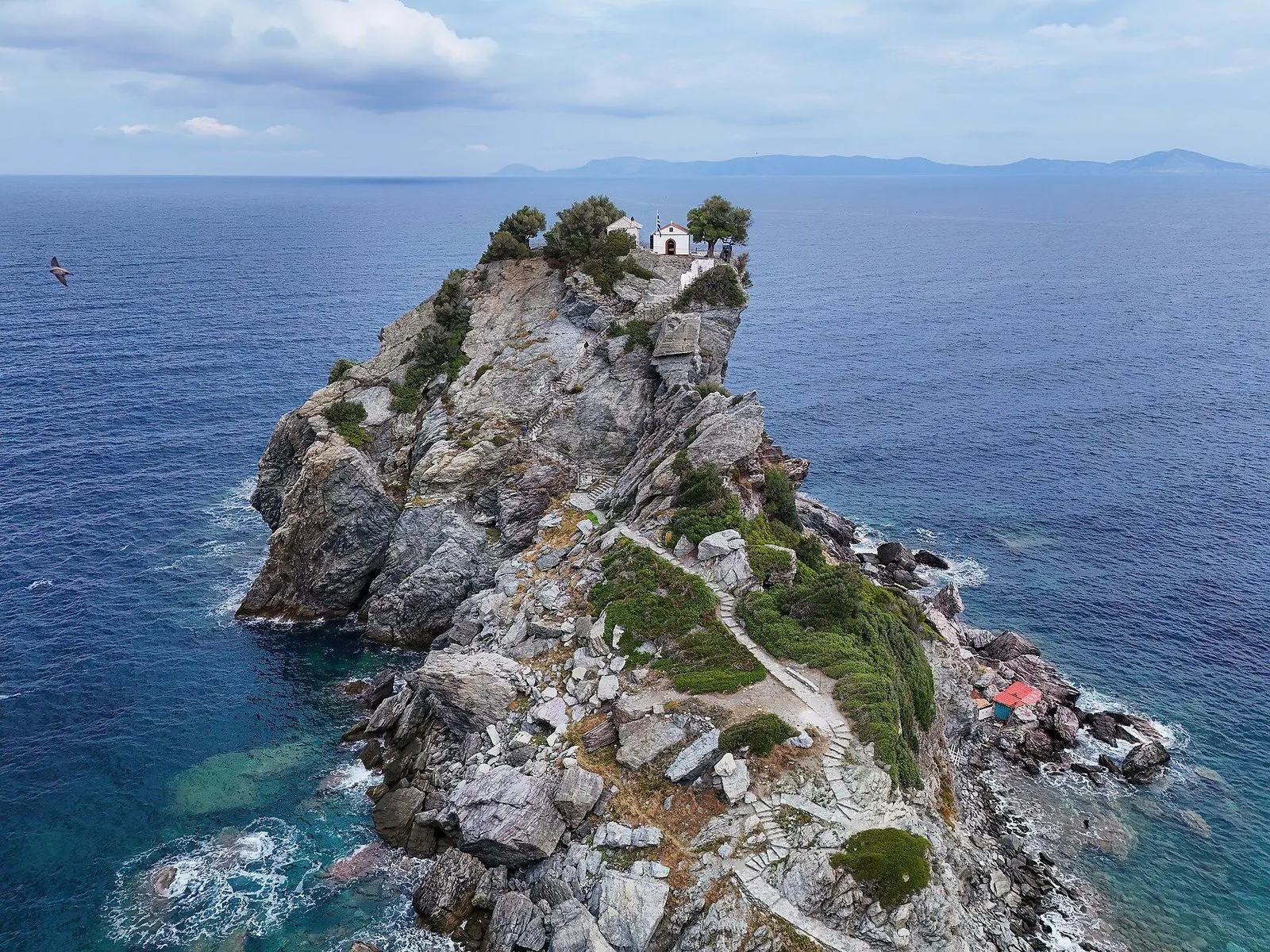
The chapel of Saint John the Baptist on its rock on the north coast, the wedding chapel of Mamma Mia!.
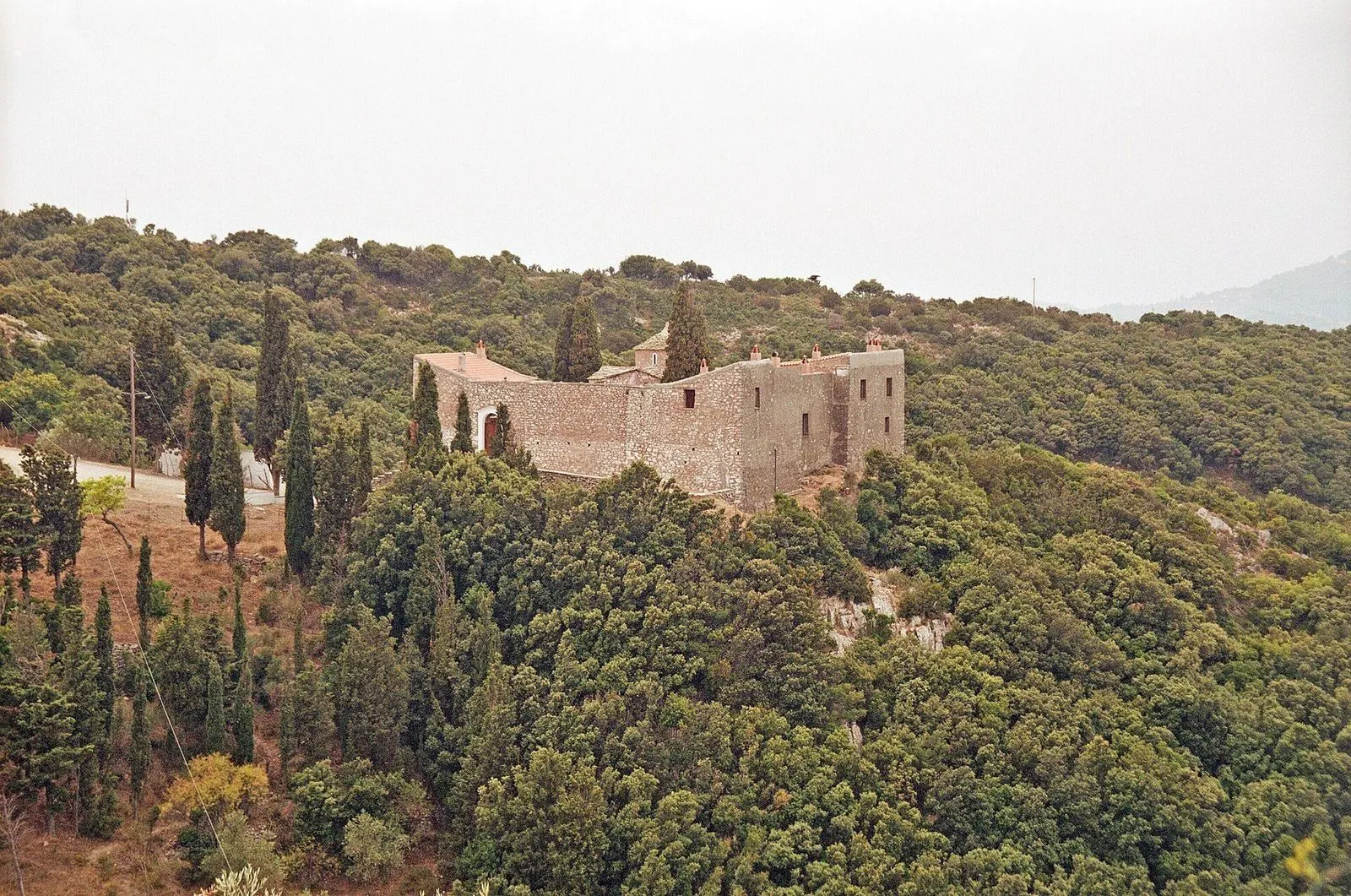
Evangelistria, Metamorfosi, Prodromos and Agia Varvara on the mountain across the bay from town, with iconostases of the 16th to 18th centuries.
Ancient graves cut into the rock in the hills, which the islanders call the sentoukia, 'the chests'.
Last updated