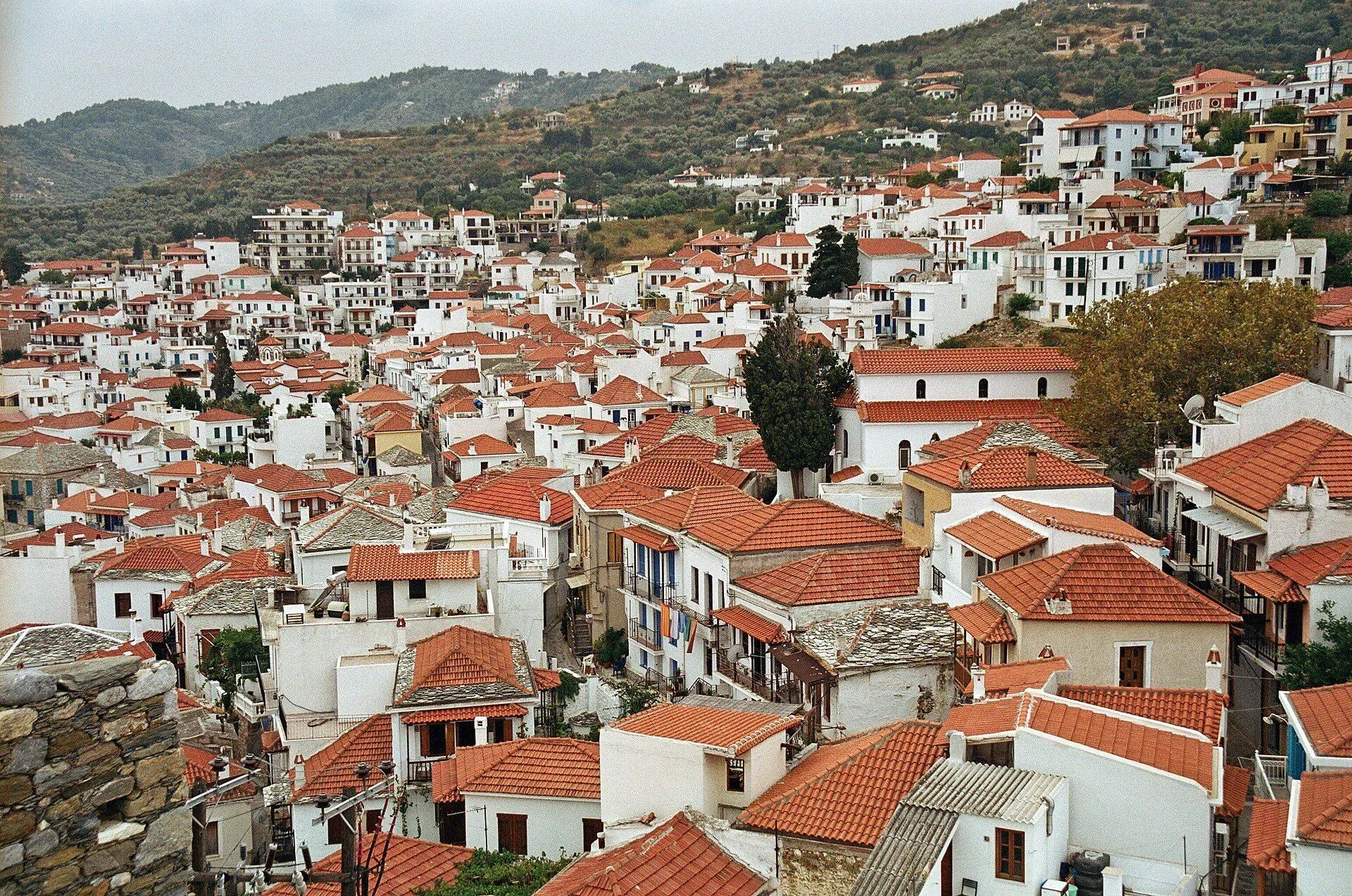
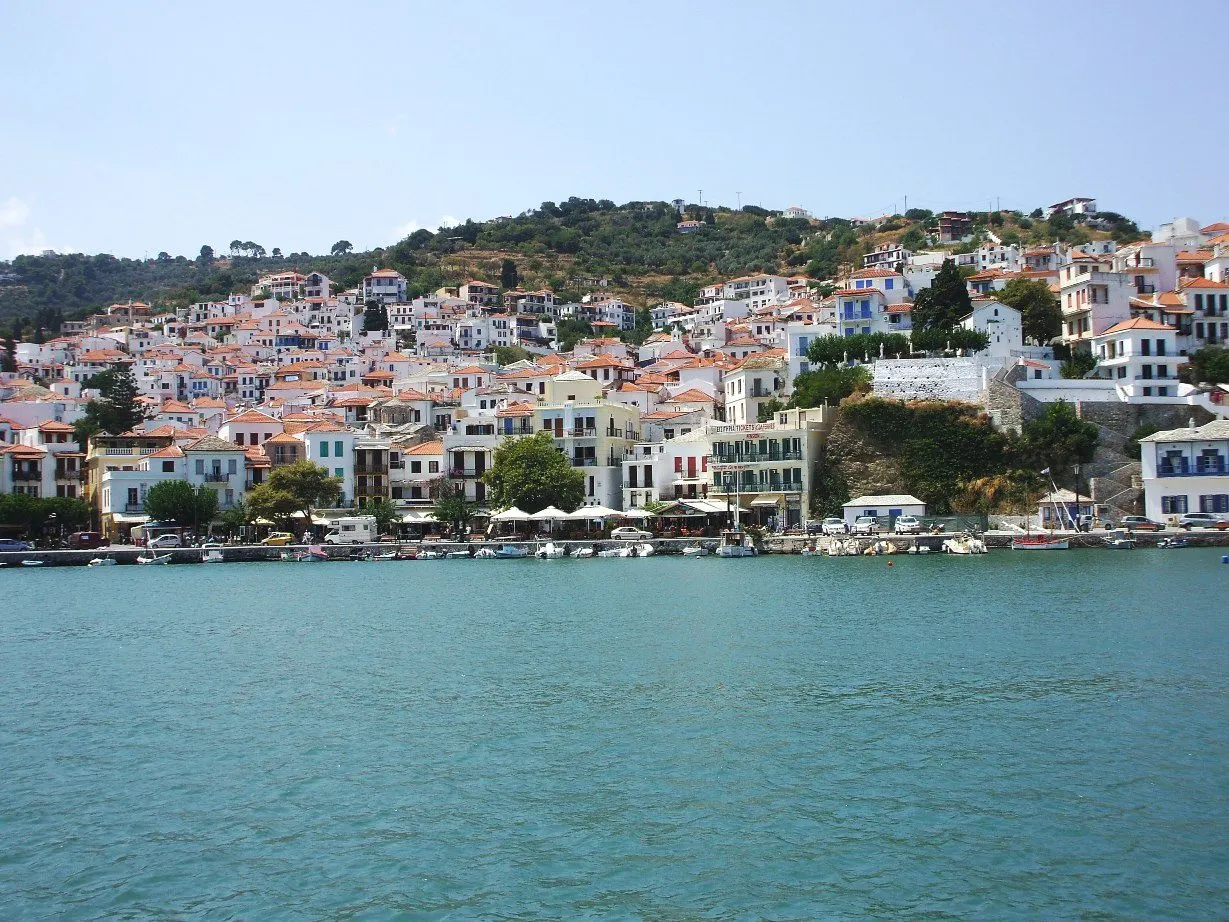
The tiled roofs of Skopelos town

Skopelos · Towns & villages

Towns & villages of Skopelos

Harbour towns, mountain hamlets and the places where island life still follows its own rhythm.

View of Skopelos town, Skopelos town & Palouki, Skopelos
01
Skopelos town & Palouki

Skopelos town

White houses and slate roofs climbing a bay to a Venetian castle, with a church at every turn

Skopelos town, the Chora, is one of the most beautiful island towns in Greece. It climbs the hillside at the back of a wide bay on the north-east coast, an amphitheatre of white houses with grey slate and red tiled roofs, wooden balconies and painted doors, up to the walls of a Venetian castle at the top. Dozens of churches are scattered through the lanes, from the little Panagitsa tou Pyrgou on its rock at the harbour mouth to the 11th-century basilica of Agios Athanasios inside the Kastro. Below, the long waterfront is lined with cafes, tavernas and the boats. Protected as a traditional settlement since 1978, it is the island's port, capital and the best base for a first visit.

  • The climb through the lanes to the Kastro
  • Panagitsa tou Pyrgou at the harbour mouth
  • The Folklore Museum and the Vakratsa mansion
  • A Skopelos cheese pie, rolled while you wait
  • The monasteries on Palouki above the bay
Discover Skopelos town
View of Glossa, Glossa & the north-west, Skopelos
02
Glossa & the north-west

Glossa

The island's second village, high on the 'tongue' of the north-west, looking across to Skiathos

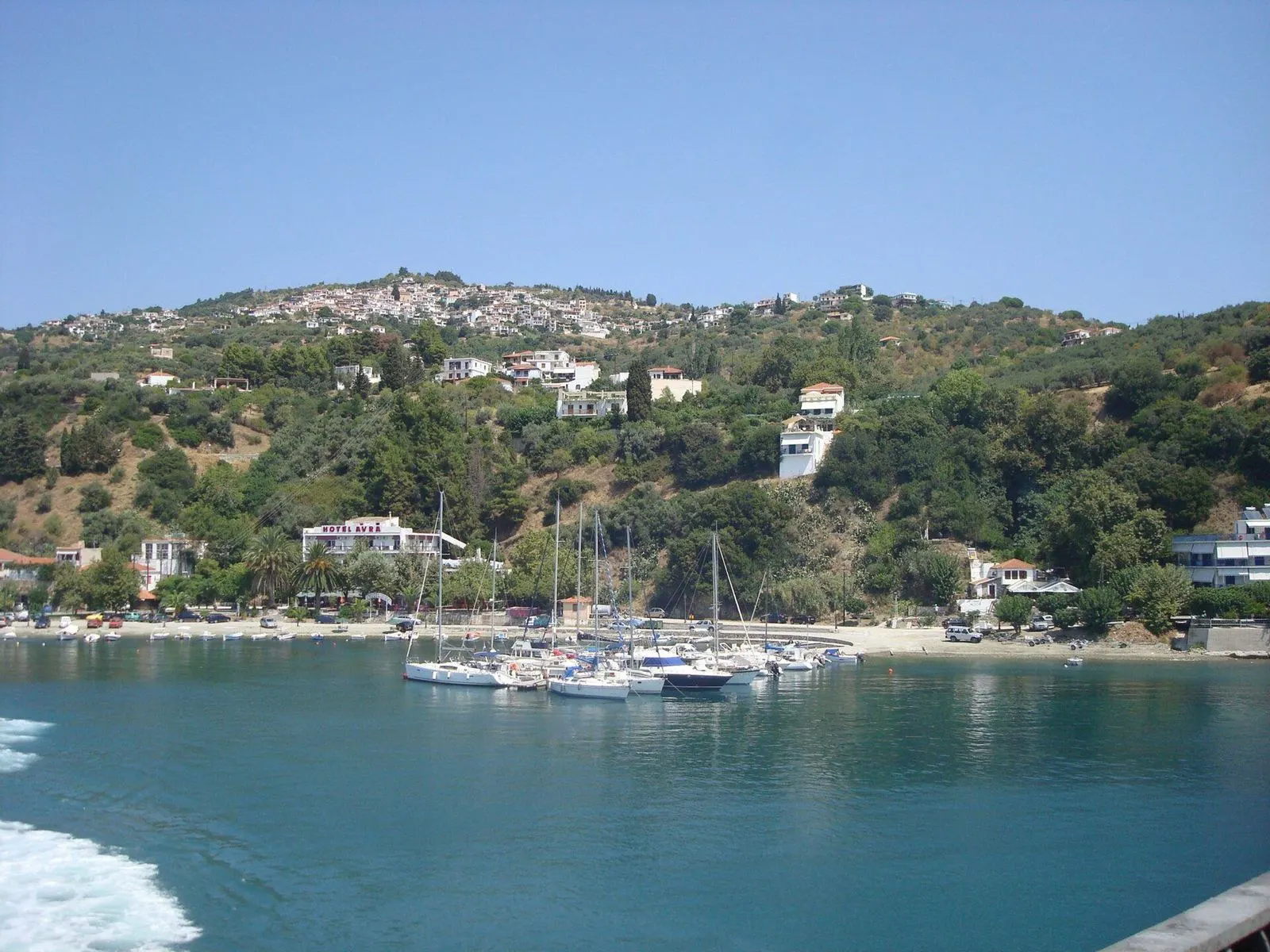
Glossa, 'the tongue', is the second village of Skopelos, spread over a green hillside at 200–300 m on the north-western tip of the island, about 25 km from Skopelos town by road. It is quieter and more lived-in than the Chora: stone and white houses with tiled roofs, steep lanes, a square with plane trees and cafes, and views over the pines and olive groves to Skiathos and the mainland. Below it lies its harbour, Loutraki. Glossa is the village of the Mamma Mia! chapel of Agios Ioannis sto Kastri, a short drive away on the north coast, and of the painter Alexandros Sideris, whose gallery is here.

  • Coffee on the square under the plane trees
  • The Folklore Museum of Glossa
  • The Sideris art gallery
  • Sunset over Skiathos
  • The drive to Agios Ioannis sto Kastri
Discover Glossa
View of Agios Ioannis sto Kastri, Glossa & the north-west, Skopelos
03
Glossa & the north-west

Agios Ioannis sto Kastri

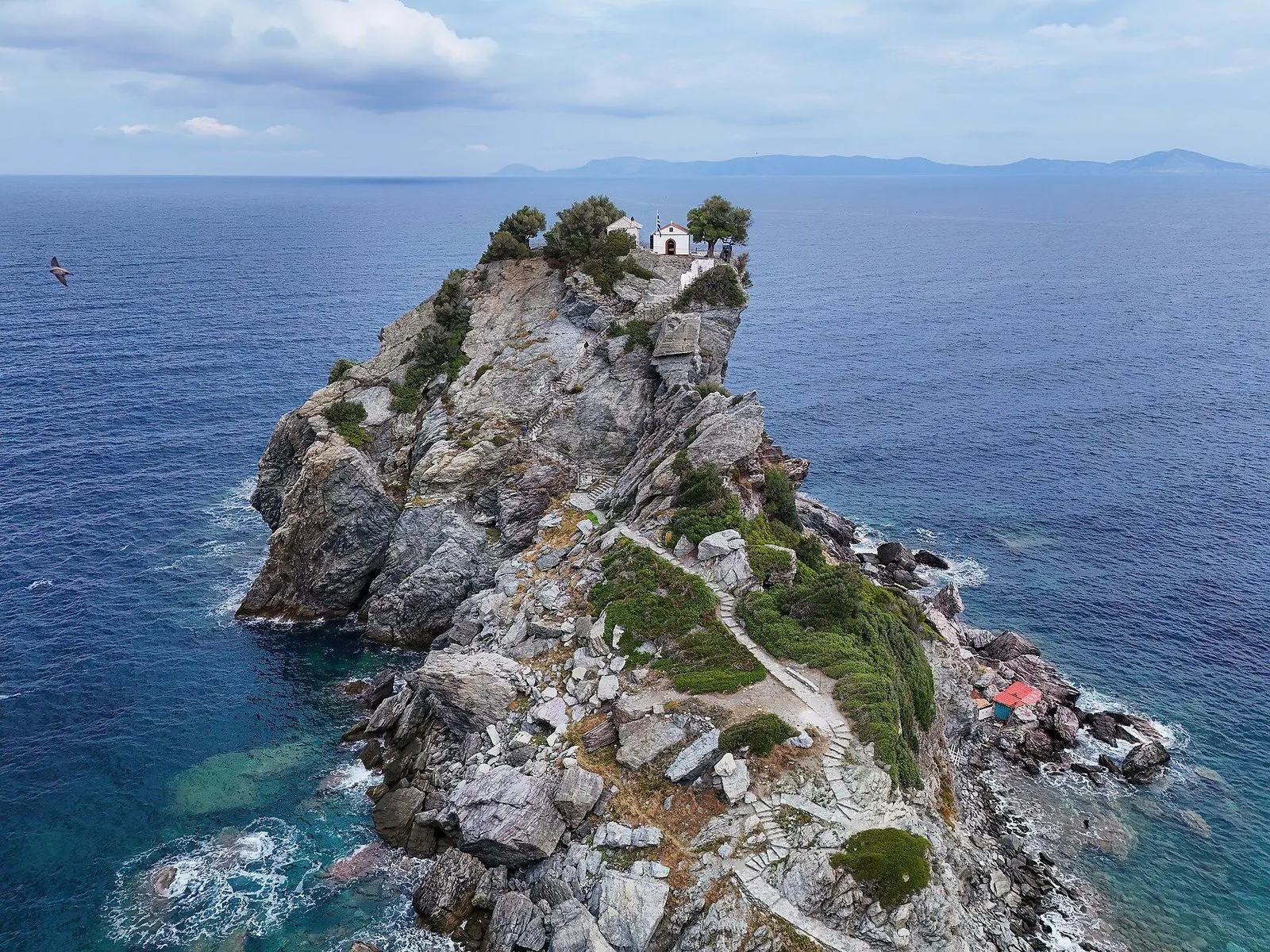
The white chapel on a rock above the sea, the wedding chapel of Mamma Mia!

On the wild north coast east of Glossa, a white chapel of Saint John the Baptist stands on top of a steep rock about 100 m above the sea, reached by some 106 steps cut into the rock. It became world-famous in 2008 as the chapel of the wedding in Mamma Mia!, but its story is older: a fisherman, the island tells, saw a light on the rock night after night, climbed up and found an icon of Saint John there. Each time it was carried away it came back, so the chapel was built on the rock. Below are small coves for a swim.

  • The climb up the steps cut into the rock
  • The view along the north coast
  • A swim in the coves below
  • The feast of the saint on 29 August
Discover Agios Ioannis sto Kastri
View of The monasteries of Palouki, Skopelos town & Palouki, Skopelos
04
Skopelos town & Palouki

The monasteries of Palouki

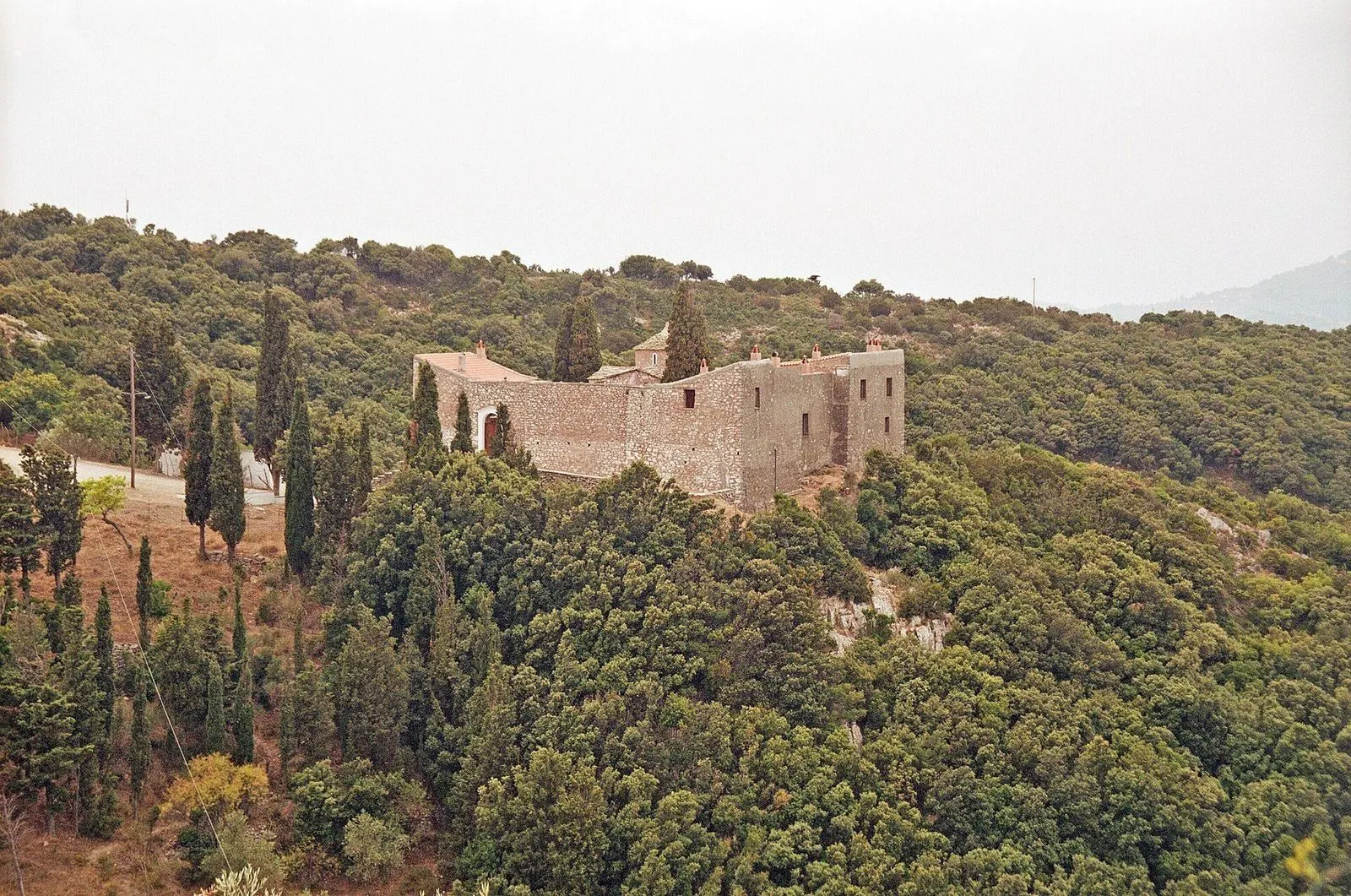
Evangelistria, Metamorfosi, Prodromos and Agia Varvara on the green mountain across the bay

Across the bay from Skopelos town rises Palouki, a mountain of pines and old olive terraces, and on its slopes stand some of the island's finest monasteries, linked by a road and old stone paths. Evangelistria, the Annunciation, looks like a fortress and has a gilded iconostasis made in Constantinople. Metamorfosi, the Transfiguration, one of the oldest, has a carved wooden iconostasis of the 16th century. Timios Prodromos, Saint John the Baptist, and Agia Varvara are further up the mountain. Most are open to visitors in the morning and late afternoon; dress modestly.

  • The gilded iconostasis of Evangelistria
  • The 16th-century icons of Metamorfosi
  • The walk between the monasteries
  • The view down over Skopelos town
Discover The monasteries of Palouki
View of Stafylos & Velanio, Stafylos & the south coast, Skopelos
05
Stafylos & the south coast

Stafylos & Velanio

The bay where a son of Dionysus is said to have landed, and the gold-hilted sword in his tomb

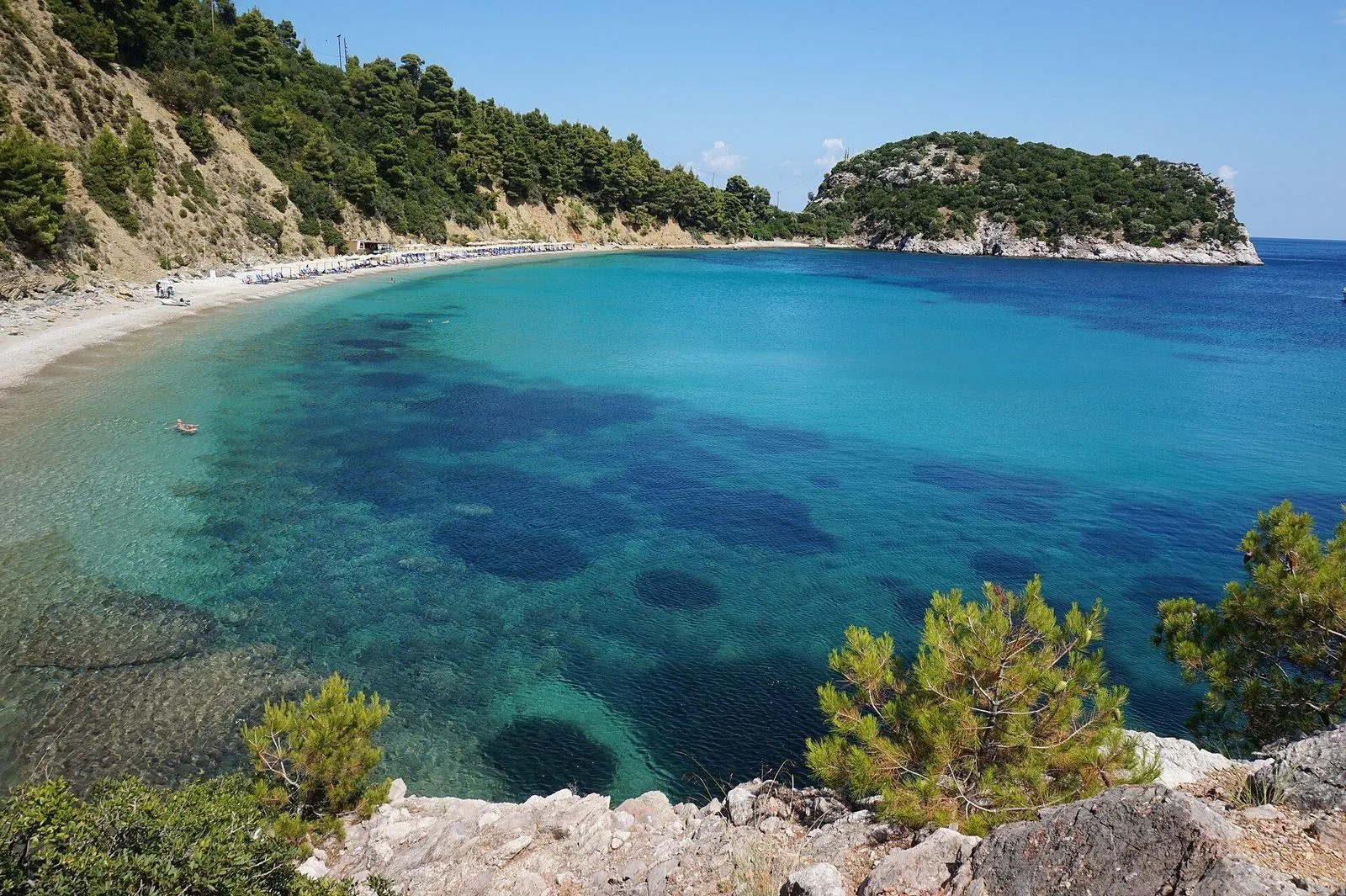
Stafylos is a small bay among pines about 4 km south of Skopelos town, with a sandy beach, a taverna on the hill and, just over the headland, the long wild beach of Velanio. It carries the name of Staphylos, the Cretan prince, son of Dionysus and Ariadne, who in legend brought the vine to the island. On the rocky headland between the two beaches, in 1936, the archaeologist Nikolaos Platon found a royal tomb of the Late Bronze Age, with a sword whose hilt was covered in gold.

  • The headland of the tomb of Staphylos
  • A swim at Stafylos beach
  • The path to wild Velanio
  • Dinner above the bay
Discover Stafylos & Velanio
View of Agnontas, Stafylos & the south coast, Skopelos
06
Stafylos & the south coast

Agnontas

A fishing bay named after an Olympic runner, with tavernas at the water's edge

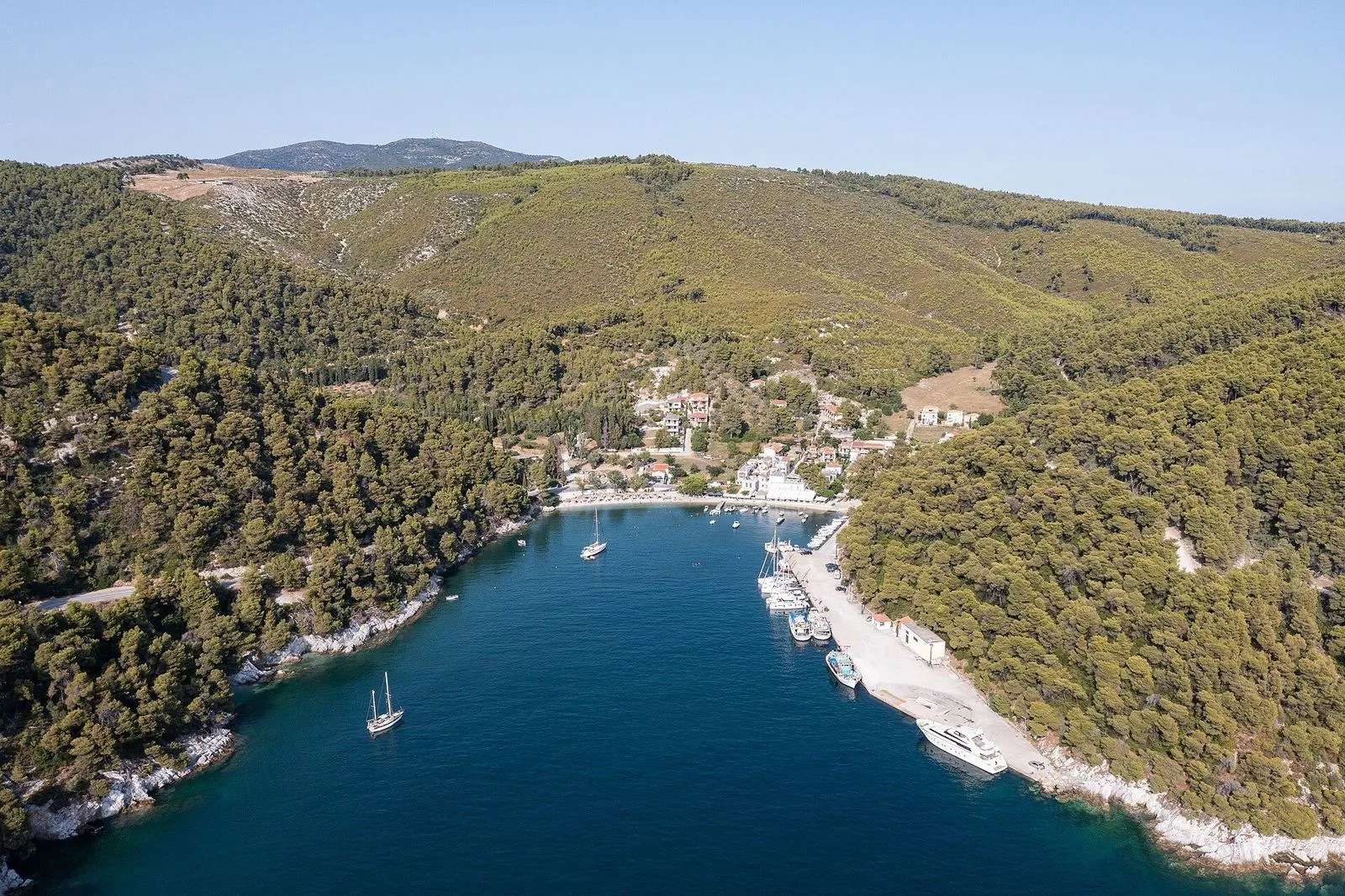
Agnontas is a small, deep bay on the south coast, about 8 km from Skopelos town, with a pebble beach, fishing boats and a few fish tavernas whose tables stand almost in the sea, under pines that grow down to the water. It is named after Agnon of Peparethos, who won the stadion race at Olympia in the 6th century BC. For decades it was the island's main port for the boats from Volos, and the fast boats still come here when a northerly closes the harbour in town. A road and a path lead on to the sandy cove of Limnonari.

  • Fresh fish at a table on the water
  • A swim from the pebble beach
  • The walk or drive to Limnonari
  • The monastery of Agios Riginos above the bay
Discover Agnontas
View of Panormos, Panormos & the west coast, Skopelos
07
Panormos & the west coast

Panormos

A wide, sheltered bay of pines and pebbles, with Milia and Kastani just up the coast

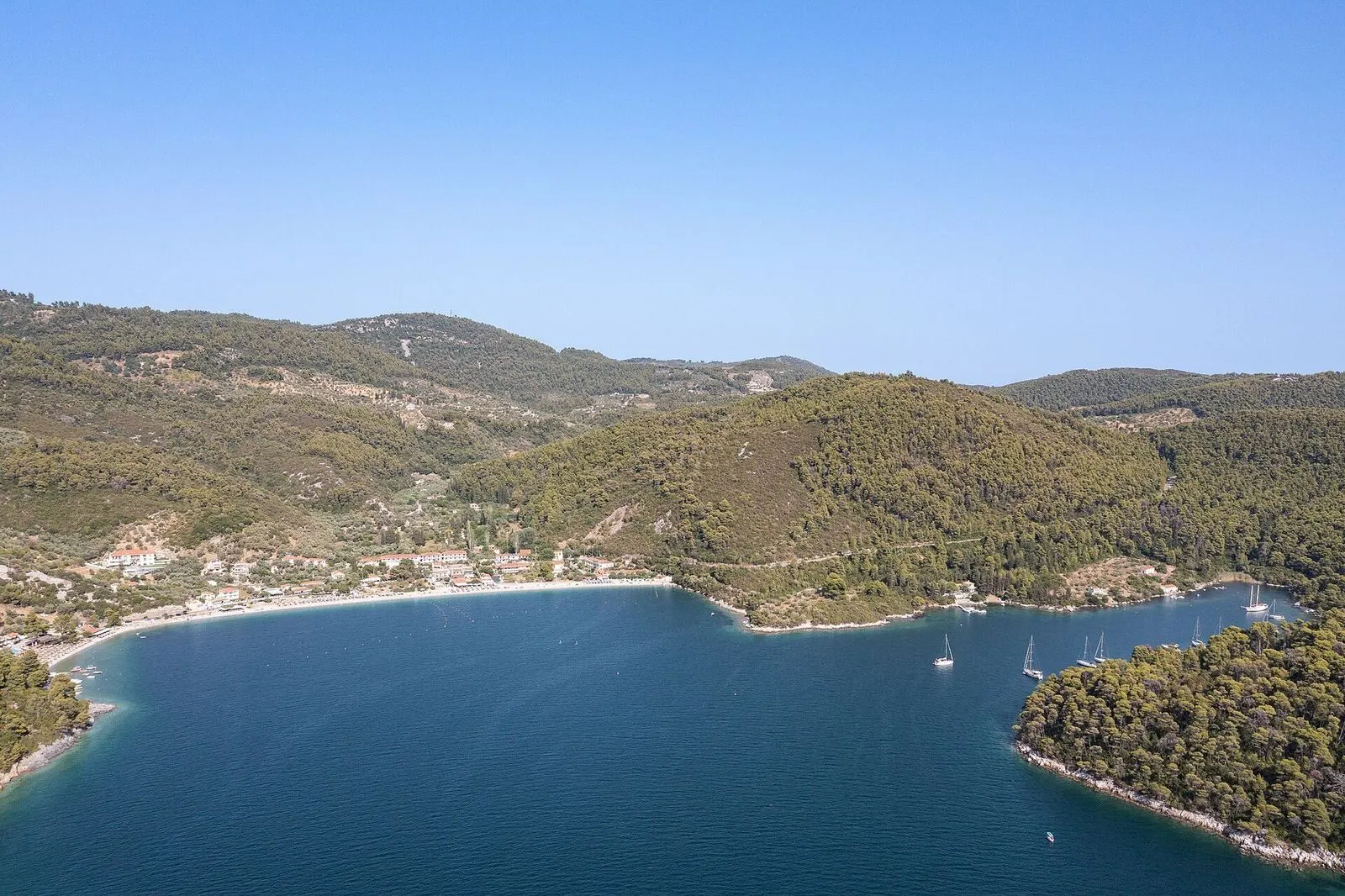
Panormos is a wide bay on the west coast, about 15 km from Skopelos town, sheltered from the north wind, with a long pebble beach, a little harbour for yachts, pine-covered islets offshore and a scatter of tavernas, rooms and hotels. Above the bay stand the walls of an ancient citadel. It is the island's biggest beach resort and still small, and the best base for the beaches of the west coast: Milia and Kastani, the Mamma Mia! beach, are a few minutes away.

  • The long pebble beach and the islets
  • The ancient walls above the bay
  • Milia and Kastani a short drive north
  • Sunset over Skiathos
Discover Panormos
View of Neo Klima (Elios), Neo Klima & Hovolo, Skopelos
08
Neo Klima & Hovolo

Neo Klima (Elios)

The village built by the sea after the earthquake of 1965, with Hovolo below it

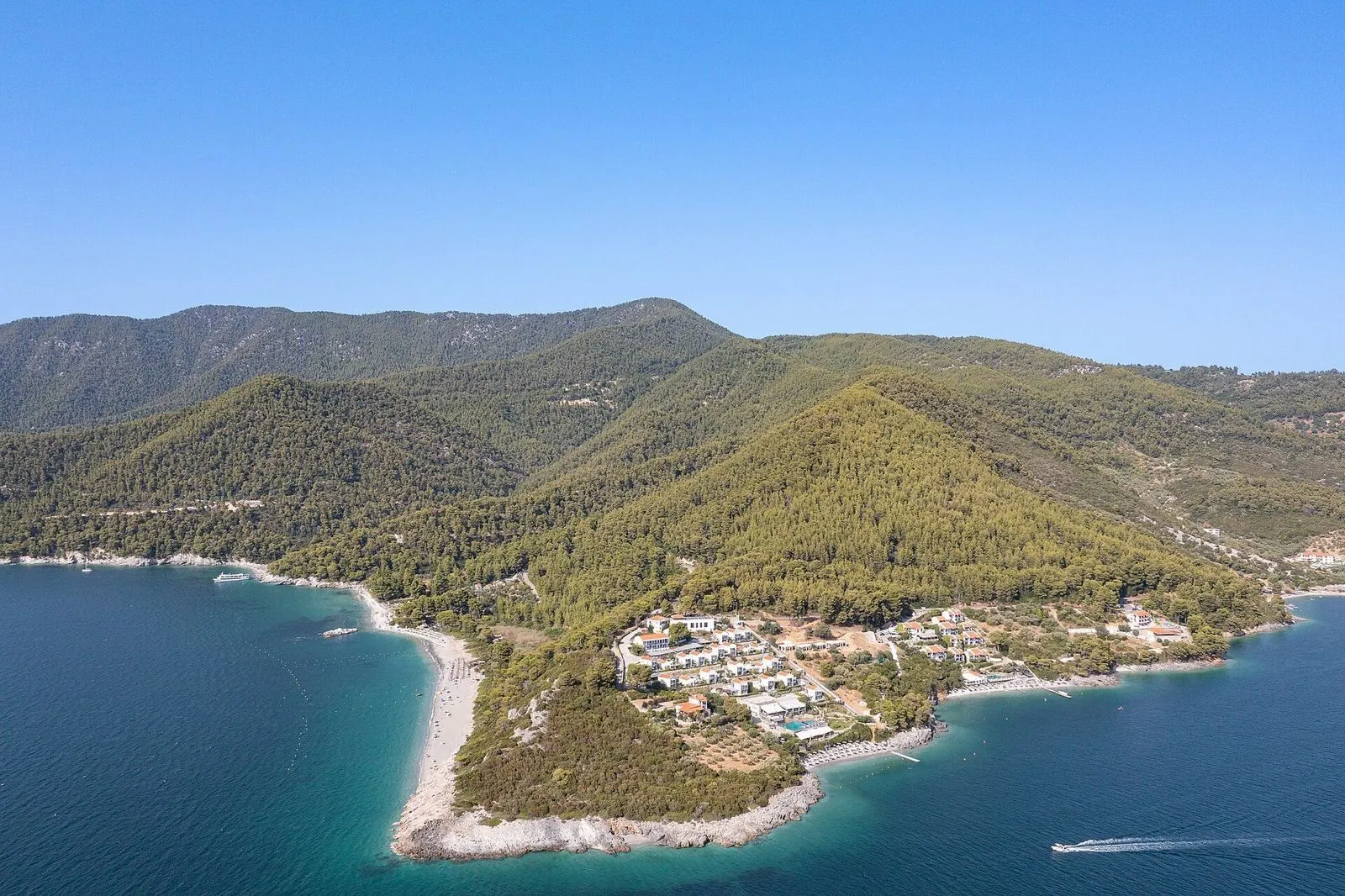
Neo Klima, which everyone calls Elios, is a seaside village on the west coast, about 19 km from Skopelos town and 6 km from Glossa. It was built after the earthquake of 9 March 1965 for the people of the old mountain village of Klima, whose houses were badly damaged. Today it has a small harbour for yachts and fishing boats, a beach, tavernas, rooms and a bakery, and the beaches of Hovolo and Armenopetra are a short walk or drive away. Old Klima, its stone houses half empty and half restored, still stands on the hill above.

  • A swim at Hovolo below the white cliffs
  • Fish by the little harbour
  • A walk up to Old Klima
  • Armenopetra and its sail-shaped rock
Discover Neo Klima (Elios)
View of Loutraki, Glossa & the north-west, Skopelos
09
Glossa & the north-west

Loutraki

The little second port below Glossa, on the ruins of ancient Selinous

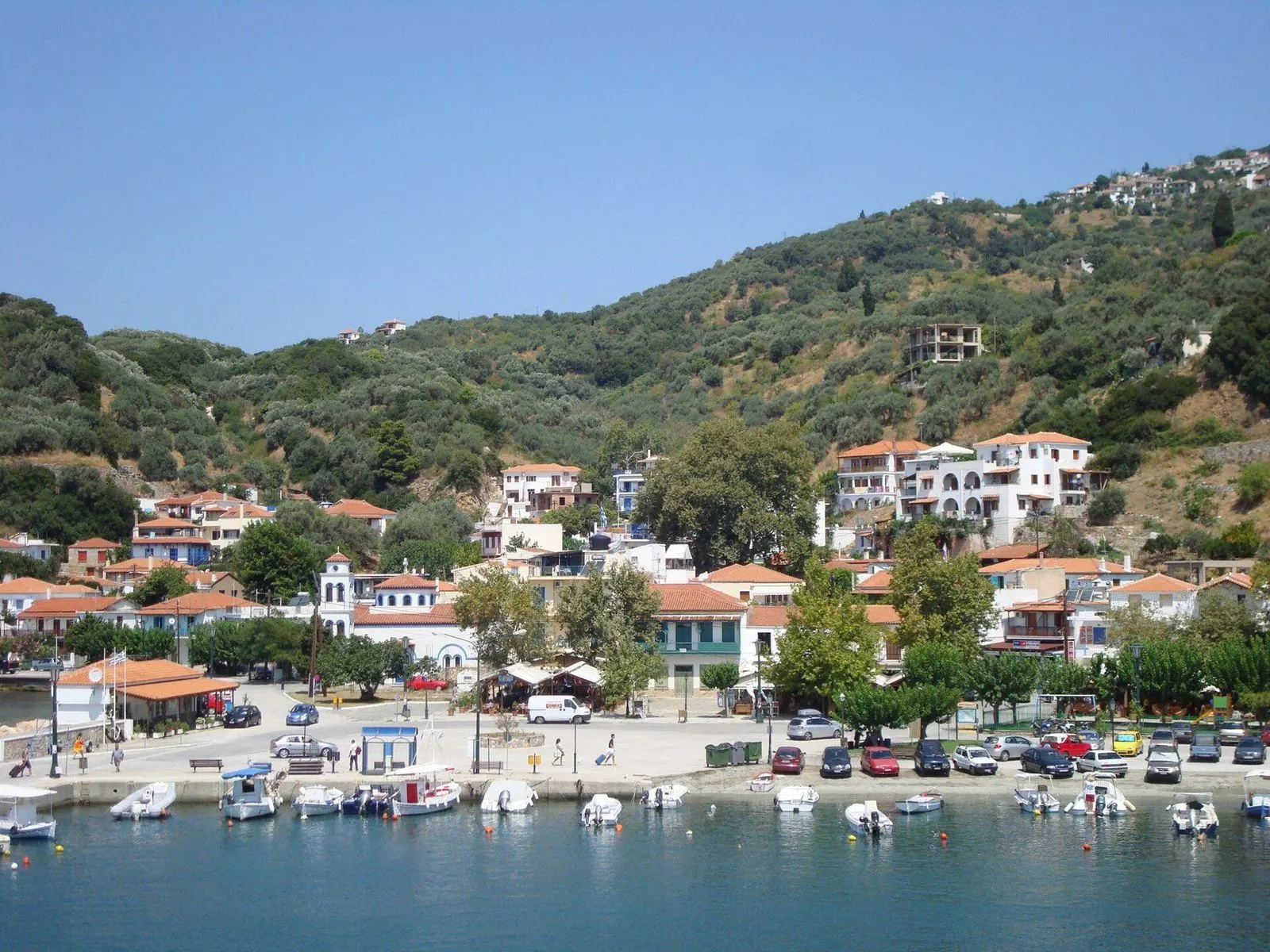
Loutraki is the small harbour at the foot of the hill below Glossa, where the boats from Skiathos and Volos call at 'Glossa' in the timetables. It is a handful of houses, cafes and tavernas along a short quay, with fishing boats, a pebble beach and the lights of Skiathos across the strait. Its name, 'little baths', comes from the Roman baths of ancient Selinous, whose ruins lie by the shore.

  • The ruins of the Roman baths of Selinous
  • A coffee on the quay while the boat comes in
  • The old footpath up to Glossa
  • Fish by the water
Discover Loutraki

Regions

Where to base yourself in Skopelos

01

Skopelos town & Palouki

The Chora on its bay, with the Kastro, the museums and dozens of churches, the town beach, Glysteri, and the monasteries on the green mountain of Palouki across the bay.

02

Stafylos & the south coast

The bay of the Cretan prince Staphylos and wild Velanio, the fishing bay of Agnontas with its tavernas on the water, and the sandy cove of Limnonari.

03

Panormos & the west coast

The wide sheltered bay of Panormos with its islets and ancient walls, the white pebbles of Milia and Kastani, the beach of Mamma Mia!.

04

Neo Klima & Hovolo

The seaside village built after the 1965 earthquake, the turquoise water of Hovolo and Armenopetra, and old Klima on its hill.

05

Glossa & the north-west

The hill village of Glossa looking across to Skiathos, its little port of Loutraki, and the chapel of Agios Ioannis on its rock on the north coast.

Find a place to stay

Browse hotels and guesthouses across Skopelos, filtered by region and price.

Browse hotels

Last updated