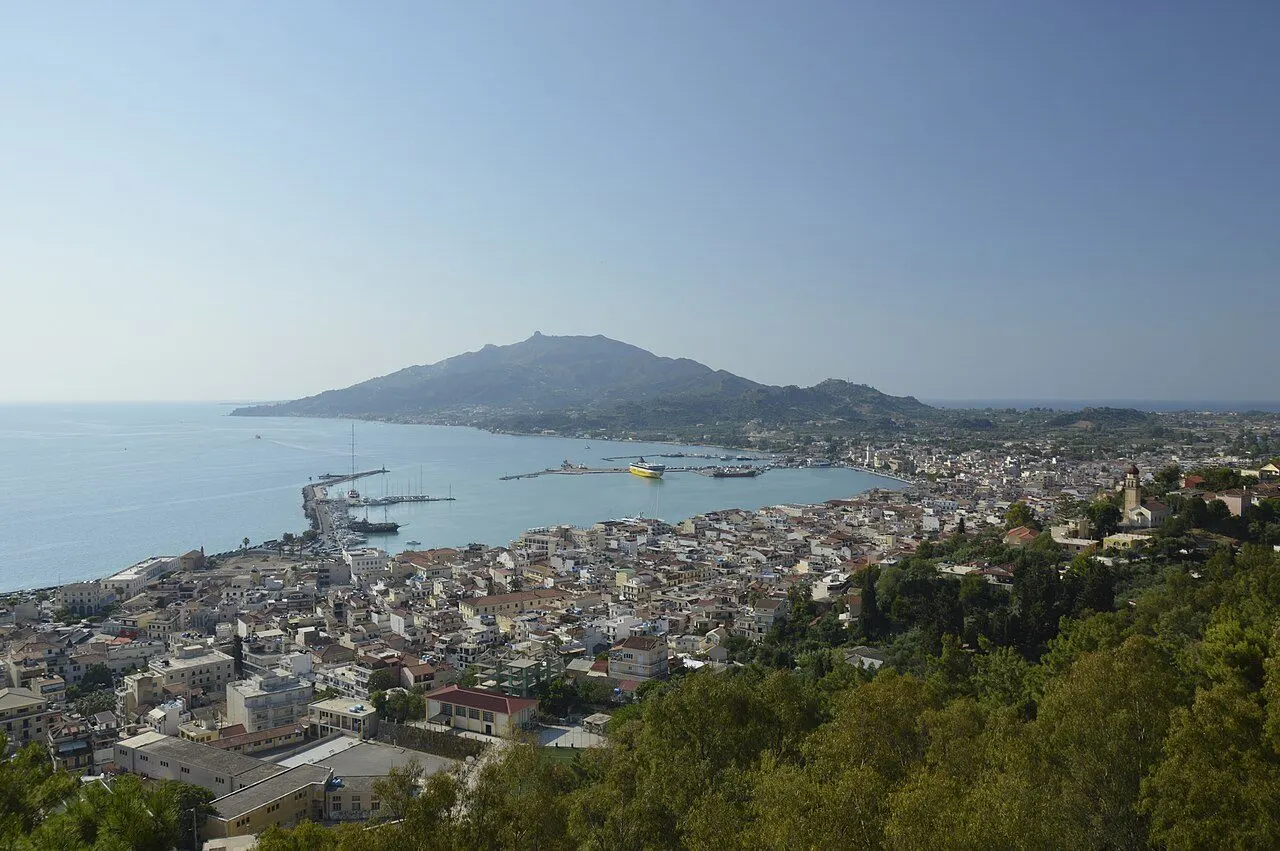
The castle of Bochali
The walls of the Venetian castle on the hill above the town, with a view over the harbour and the bay.
Zakynthos · History
An island named in Homer, four centuries of Venice, a British protectorate, union with Greece in 1864, and a town rebuilt after the earthquake of 1953.
Timeline
Antiquity
Homer counts Zakynthos among the islands of Odysseus's kingdom and calls it wooded. In the classical age it was allied with Athens, and Herodotus wrote about the pitch drawn from its lake near Keri. Rome took the island in 191 BC.
Byzantine era
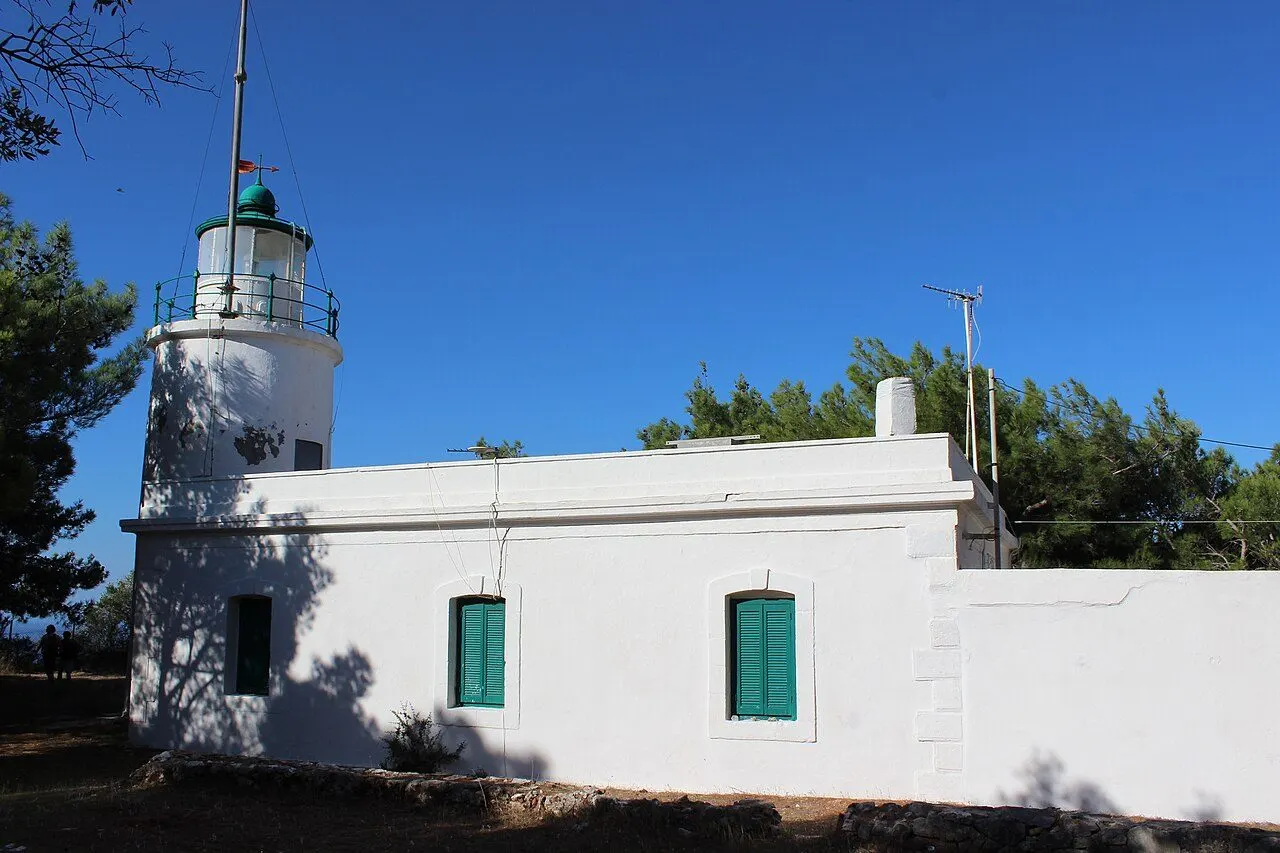
Under Byzantium the island was raided again and again, by the Vandals in the 5th century, by Arab fleets and later by Norman adventurers. Its people built their villages inland and on the hills, as Keri and Volimes still are today.
1484–1797
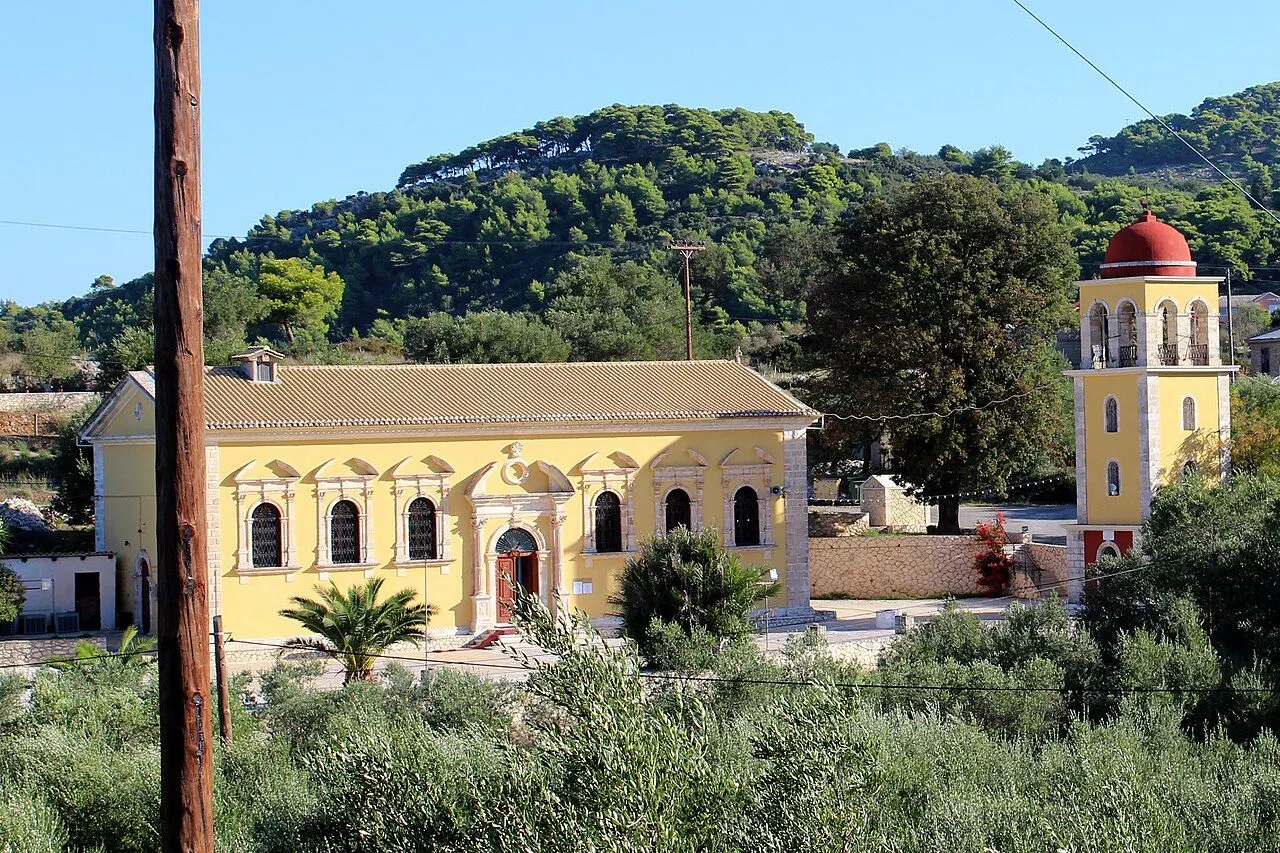
Venice took the island in the 1480s and held it until 1797. It called Zakynthos the flower of the East, fortified the hill of Bochali, and the town grew rich on currants and olive oil. The island's painters, the Ionian School, mixed Byzantine icons with Italian art.
1797–1864
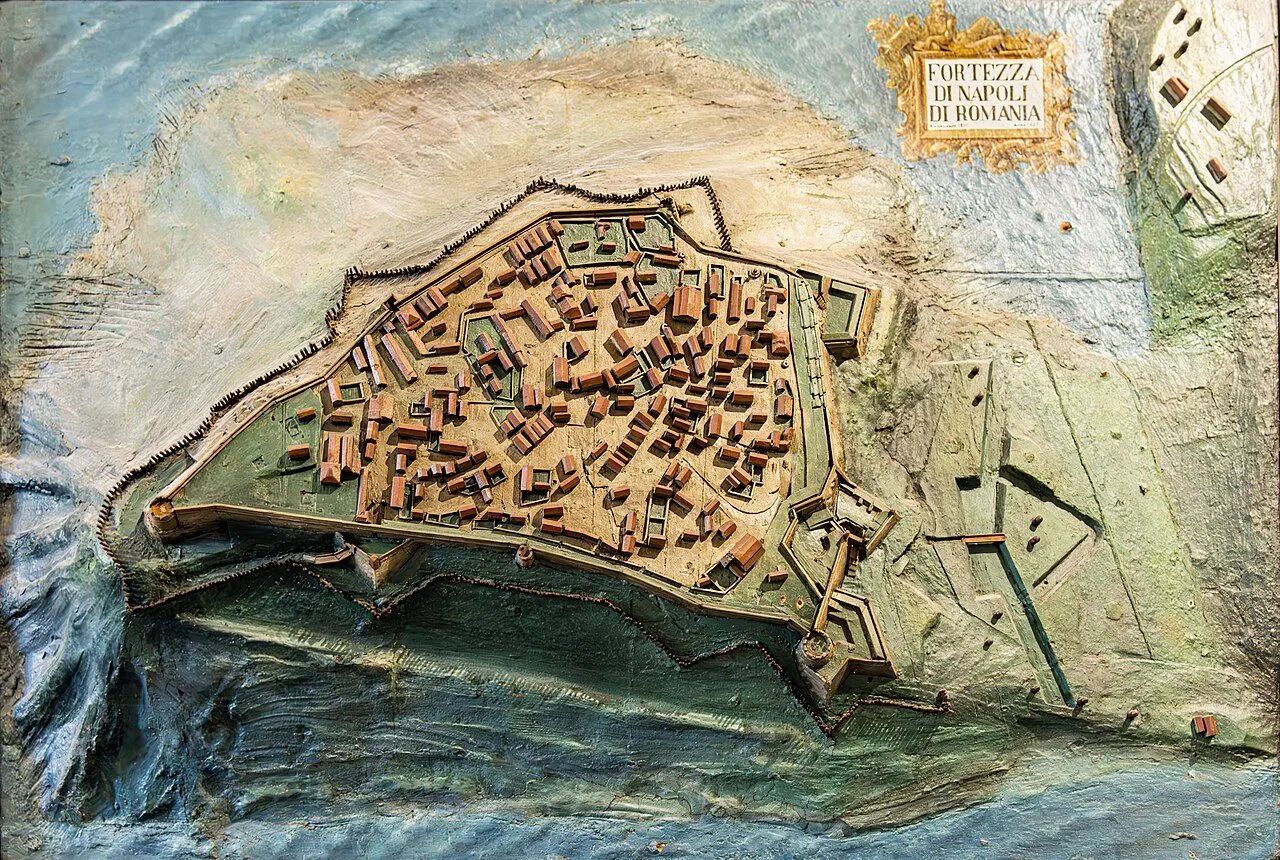
After the fall of Venice came the French, then the Septinsular Republic under Russian and Ottoman protection, then the French again. The British took the island in 1809, and from 1815 the Ionian Islands were a British protectorate. Zakynthos joined Greece with the other Ionian Islands in 1864.
1943–1953
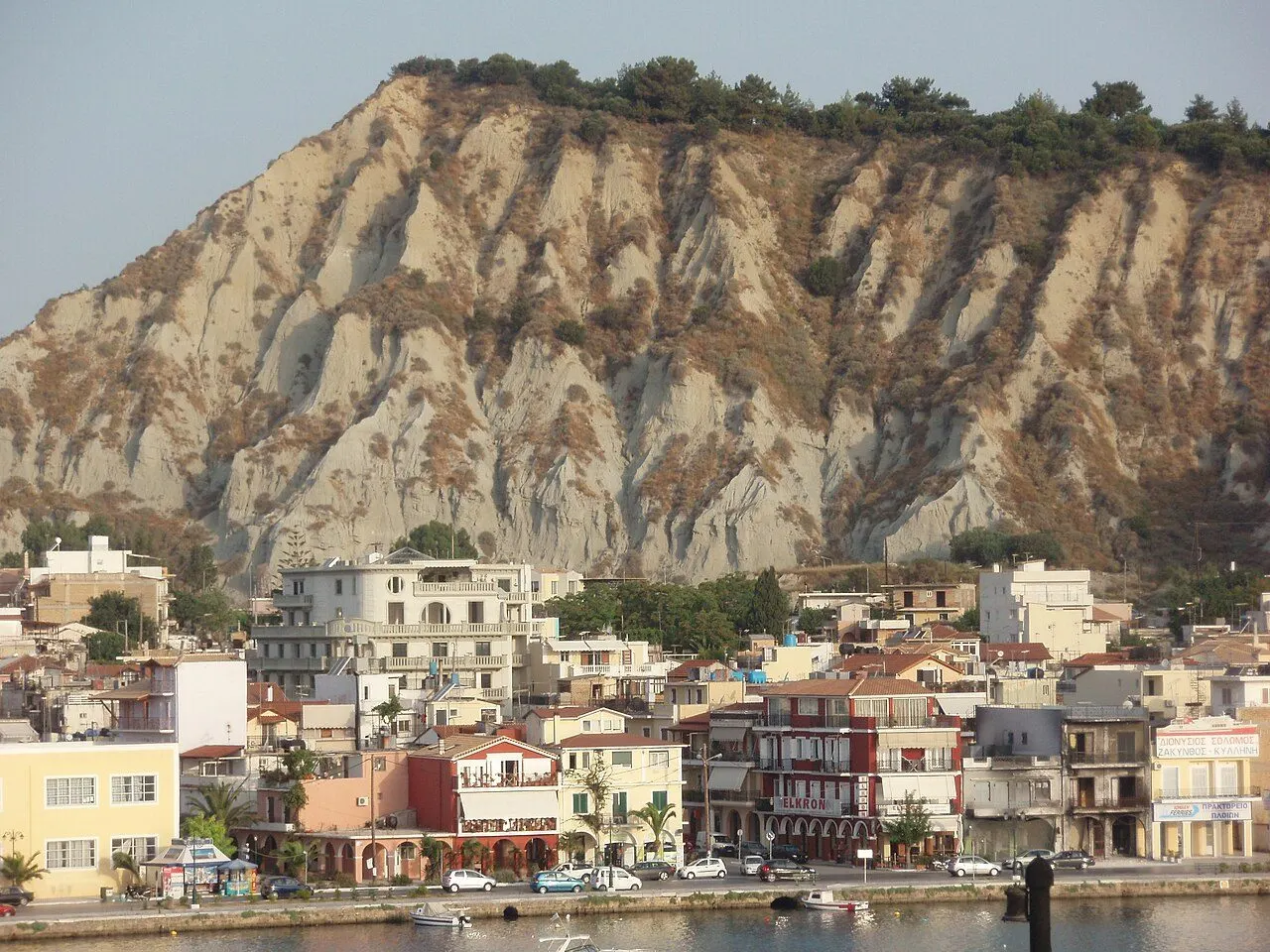
In 1943 the mayor, Loukas Karrer, and Bishop Chrysostomos refused to give the occupiers a list of the island's Jews, and by many accounts all 275 survived. Ten years later, on 12 August 1953, an earthquake and fire destroyed almost all of the town.
1953 to today
The town was rebuilt in the old style, with arcades and bell towers. From the 1980s tourism grew fast, Laganas became a party resort, and in 1999 the National Marine Park of Zakynthos was founded to protect the turtles of the same bay.
Visit
The walls of the Venetian castle on the hill above the town, with a view over the harbour and the bay.
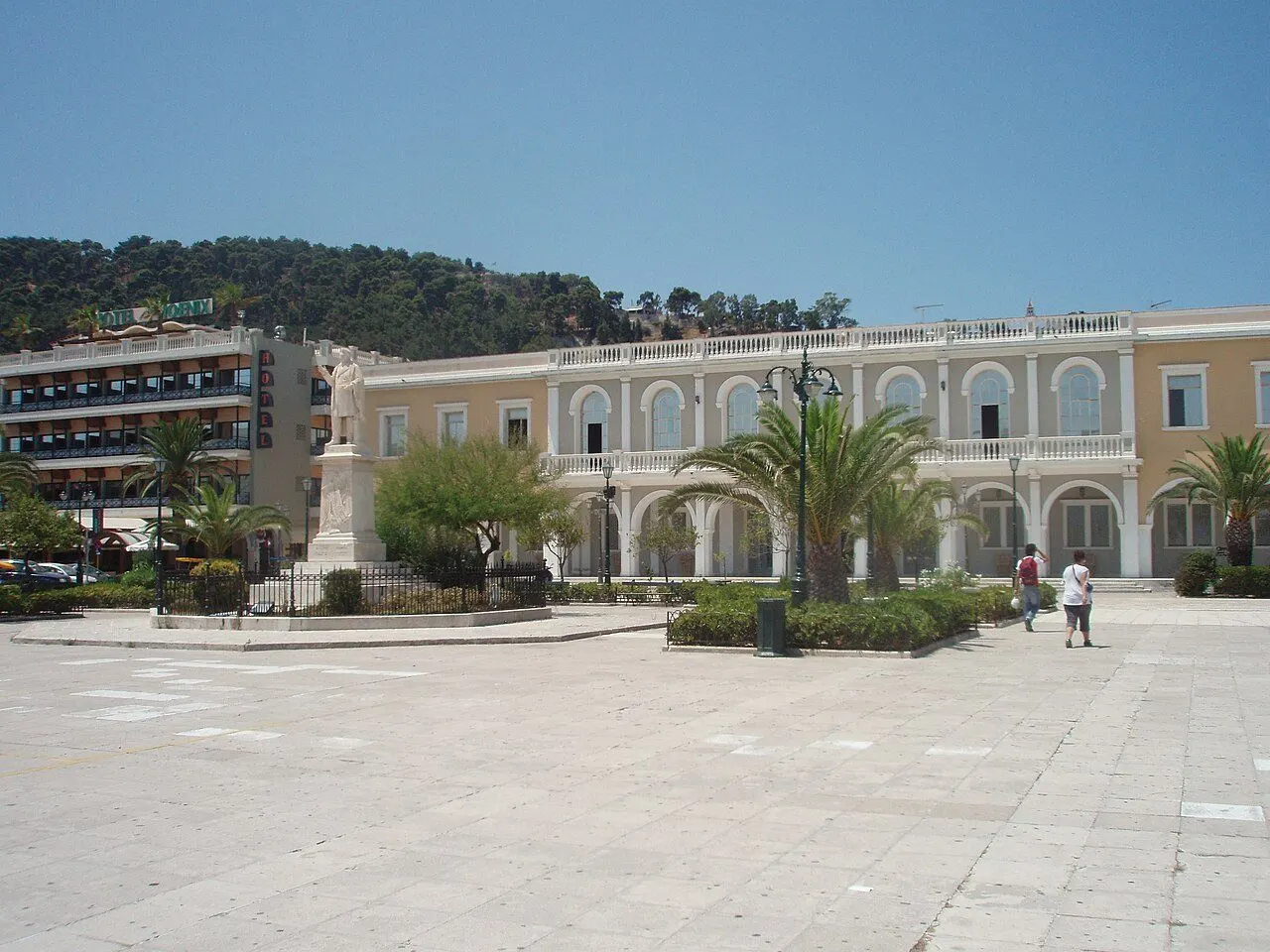
The grand square of the rebuilt town, with the poet's statue, the Byzantine Museum and the church of Agios Nikolaos tou Molou.
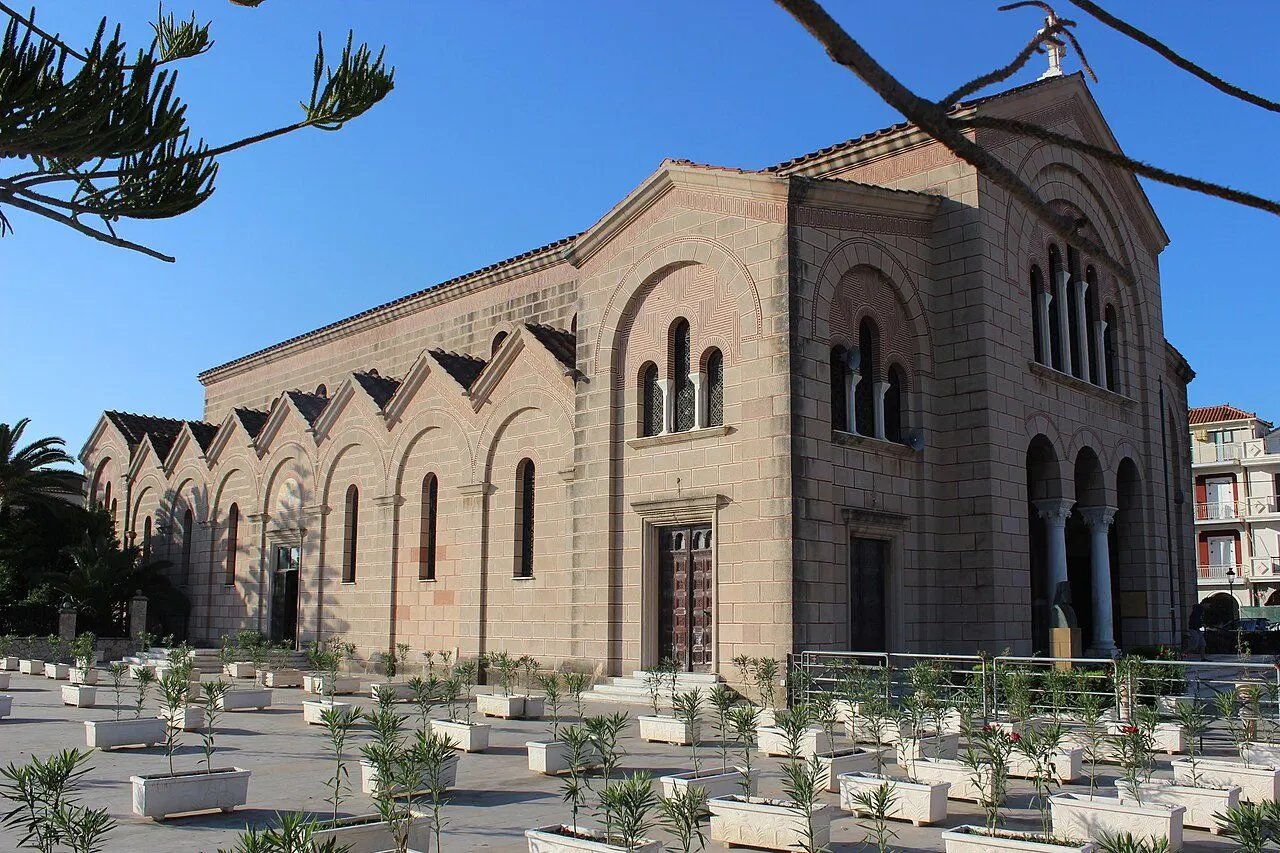
The church of the island's patron saint at the south end of the harbour, with his relics in a silver casket.
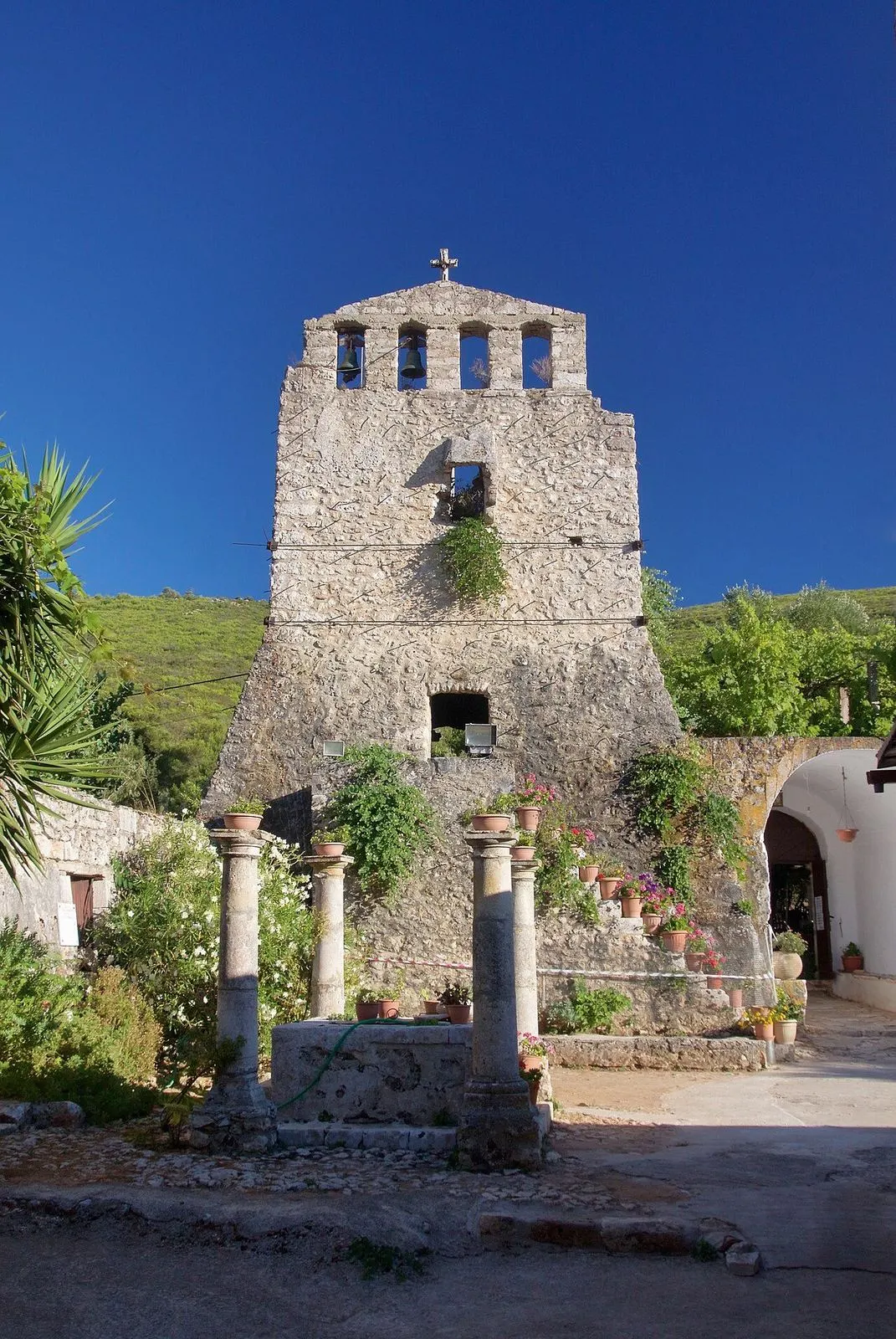
A 15th-century monastery in the north, with a stone tower, where Saint Dionysios served as abbot.
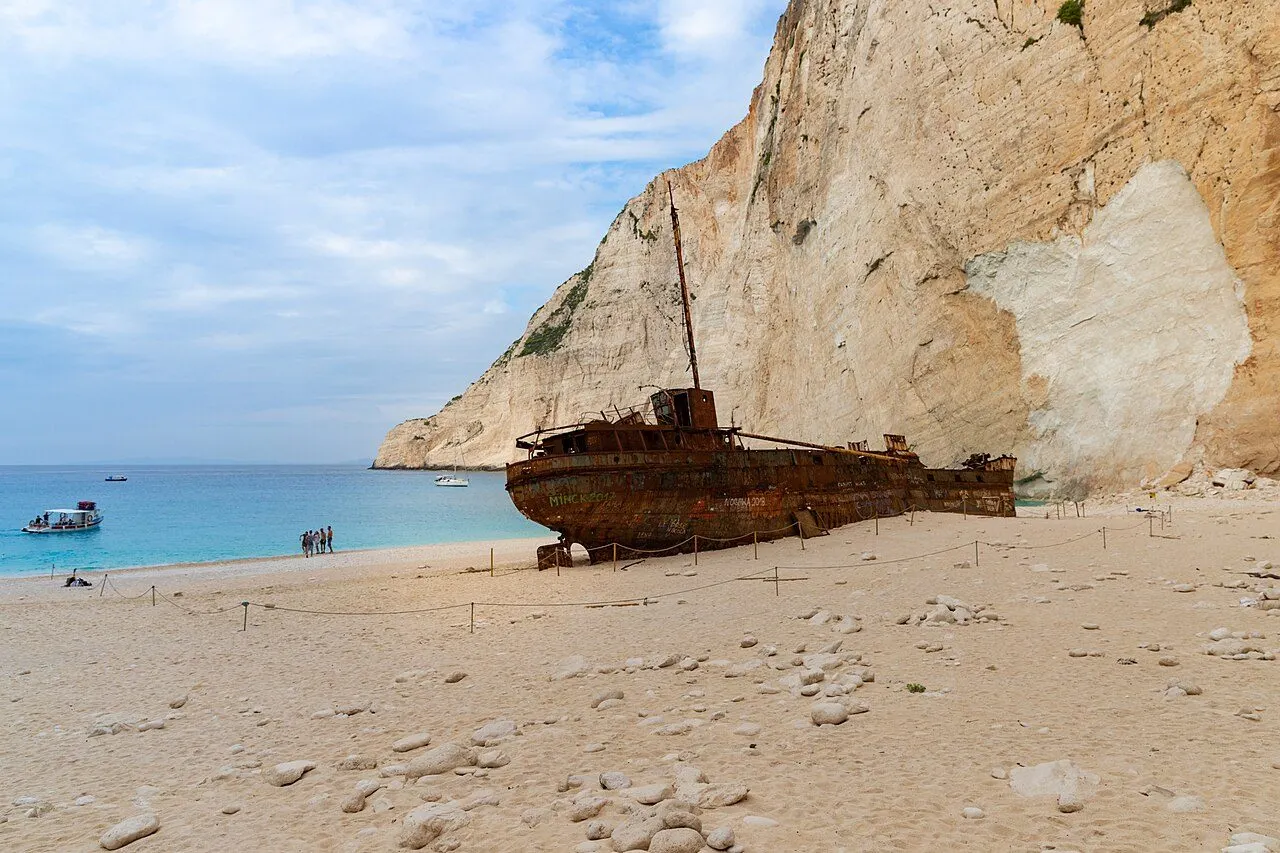
The wreck of the Panagiotis, aground since 1980 in a cove under white cliffs, now seen from a boat or the viewpoint above.
Last updated