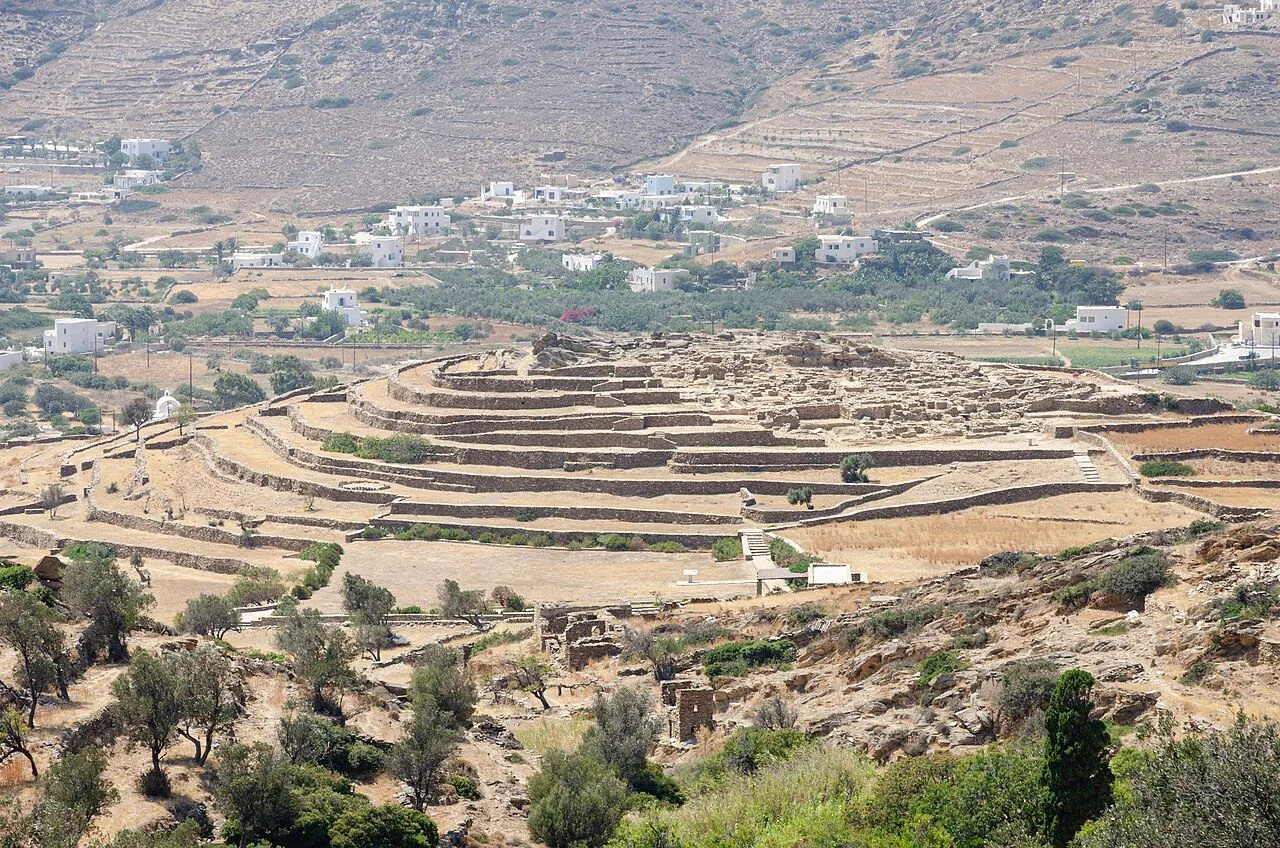
Skarkos
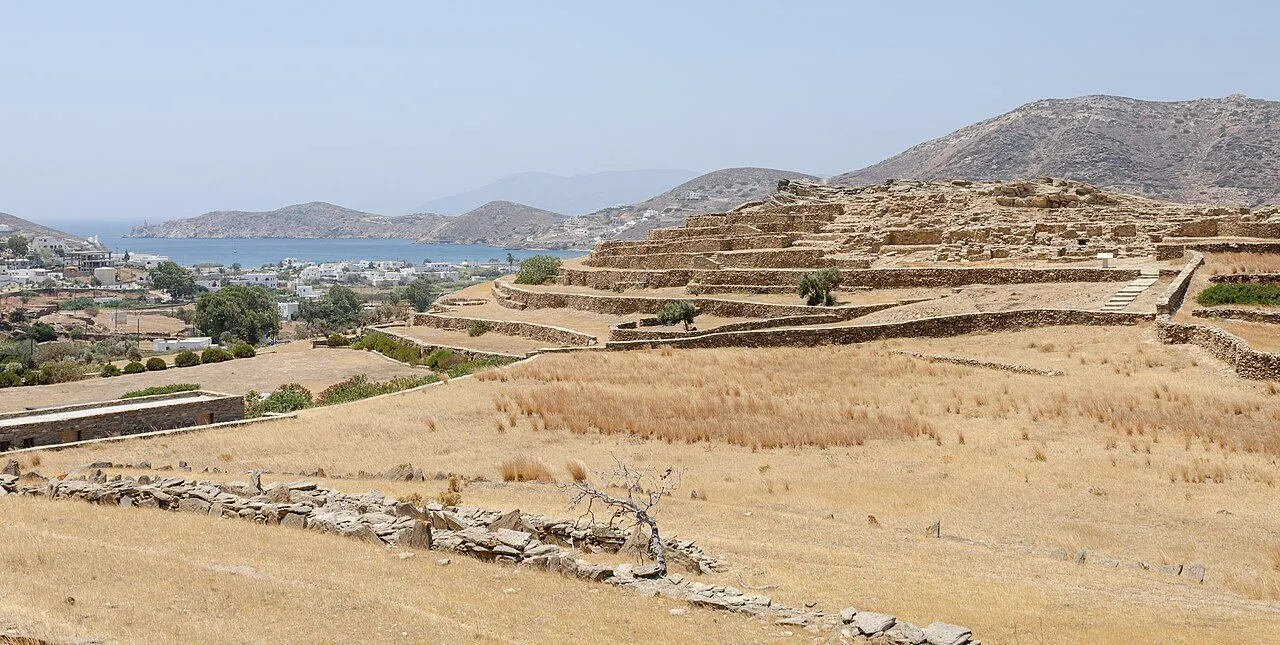
One of the best-preserved Early Cycladic settlements in the Aegean, about 2800 BC, with two-storey houses and walls nearly 3 m high, on a hill between the port and Chora.
Ios · History
A Bronze Age town above the bay, an ancient city that claimed the greatest of poets, Venetian lords, pirates and a resettled island, and, from the 1970s, the young travellers who made Ios famous.
Timeline
≈ 3200–2000 BC
On a hill above the bay of the port, a town of stone houses with upper floors, streets and drains flourished around 2800 BC, in the age of the marble figurines.
Archaic to Roman
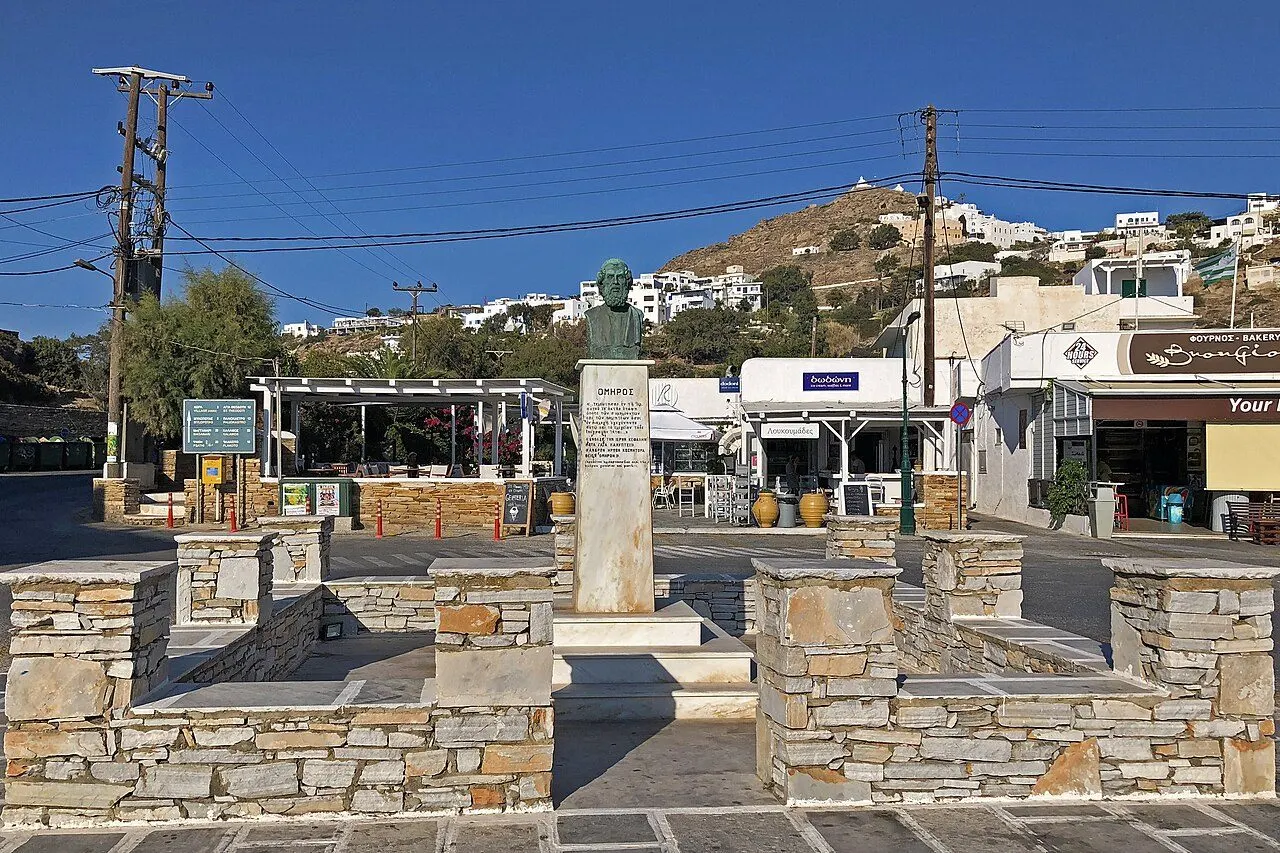
The ancient city stood on the hill of today's Chora, with a sanctuary of Demeter on its western edge and a temple of Pythian Apollo where the church of Agia Aikaterini now stands. The island, earlier called Phoenice, was a member of the Delian League and, under the Ptolemies in the 3rd century BC, briefly renamed Arsinoe. It was famous for one thing above all: the claim that Homer was buried there.
1207–1537
After the Fourth Crusade Ios became part of the Duchy of Naxos, and from the late 14th century it was held by the Crispo family. The Kastro crowned the summit of Chora, and in the 15th century a second castle, Paleokastro, rose on a ridge above the east coast.
16th–18th century
In 1558 pirates raided the island and sold its people as slaves; in 1579 it was resettled with families from Albania. The Ottomans took over, but the sheltered bays made Ios a base for corsairs, and the island was nicknamed 'Little Malta'.
1821–1960s
The flag of the Greek Revolution was raised on Ios on 1 March 1821, and the island became part of the new Greek state in 1830. For more than a century it lived from goats, cheese, barley and the sea, and many islanders emigrated.

1970s–today
Young travellers from northern Europe began arriving in the late 1960s and 1970s, sleeping on the beaches and staying for weeks. Bars, clubs and campsites followed, and Ios became the island where a generation of backpackers had their first Greek summer.
Visit
One of the best-preserved Early Cycladic settlements in the Aegean, about 2800 BC, with two-storey houses and walls nearly 3 m high, on a hill between the port and Chora.
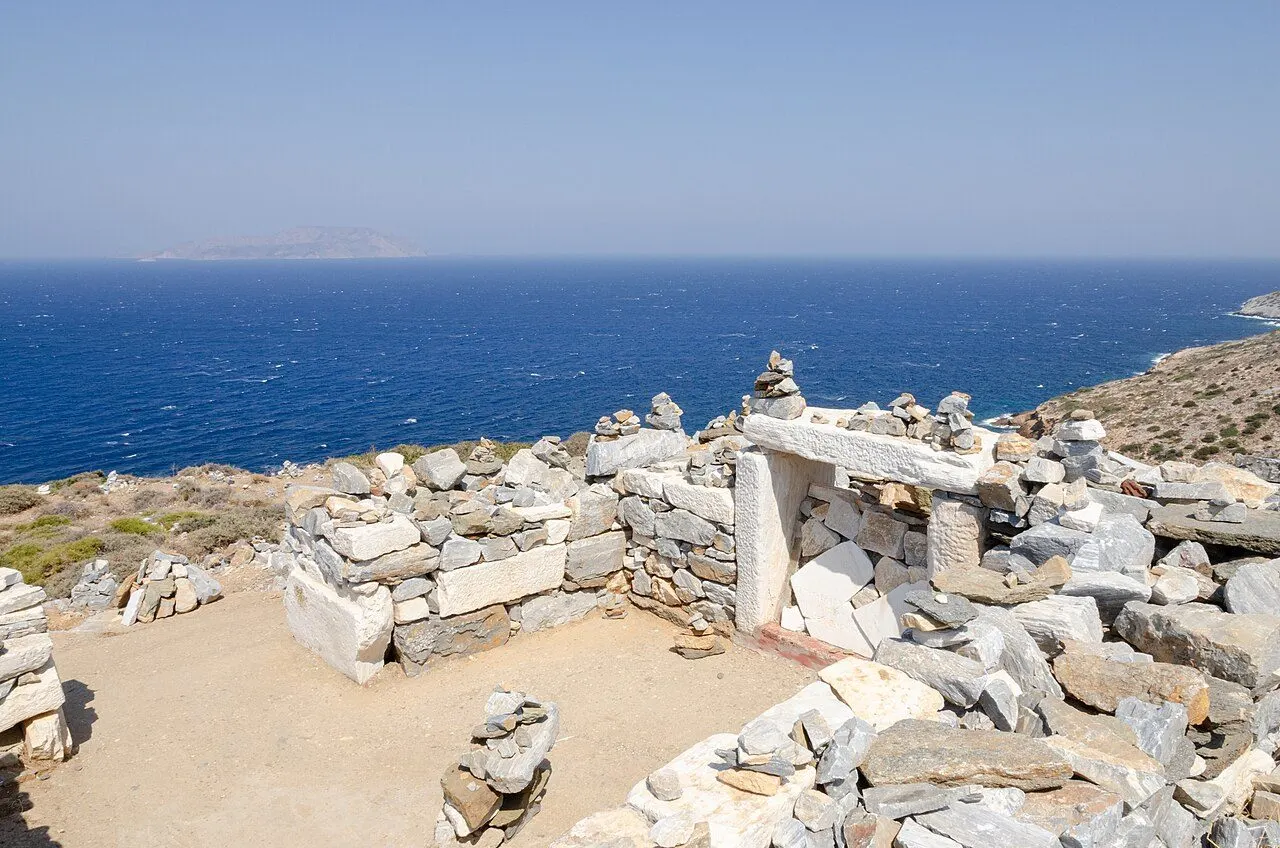
A stone doorway and walls on the hill of Psathopyrgos above Plakotos, at the northern tip, which tradition calls the grave of Homer.
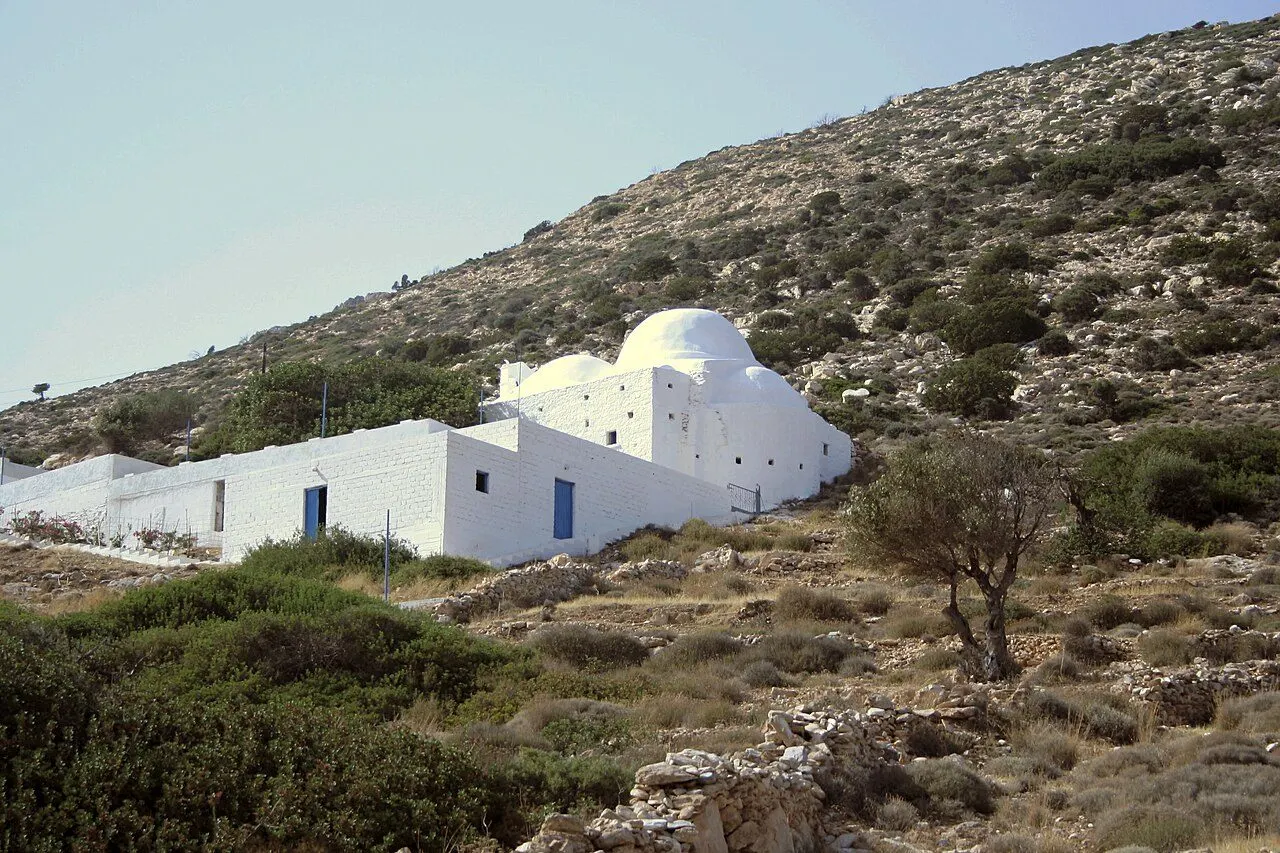
The ruins of a Venetian castle on a ridge above the east coast, reached by a cobbled path, with the church of the Panagia Palaiokastritissa inside its walls and views to Naxos, Paros and Amorgos.
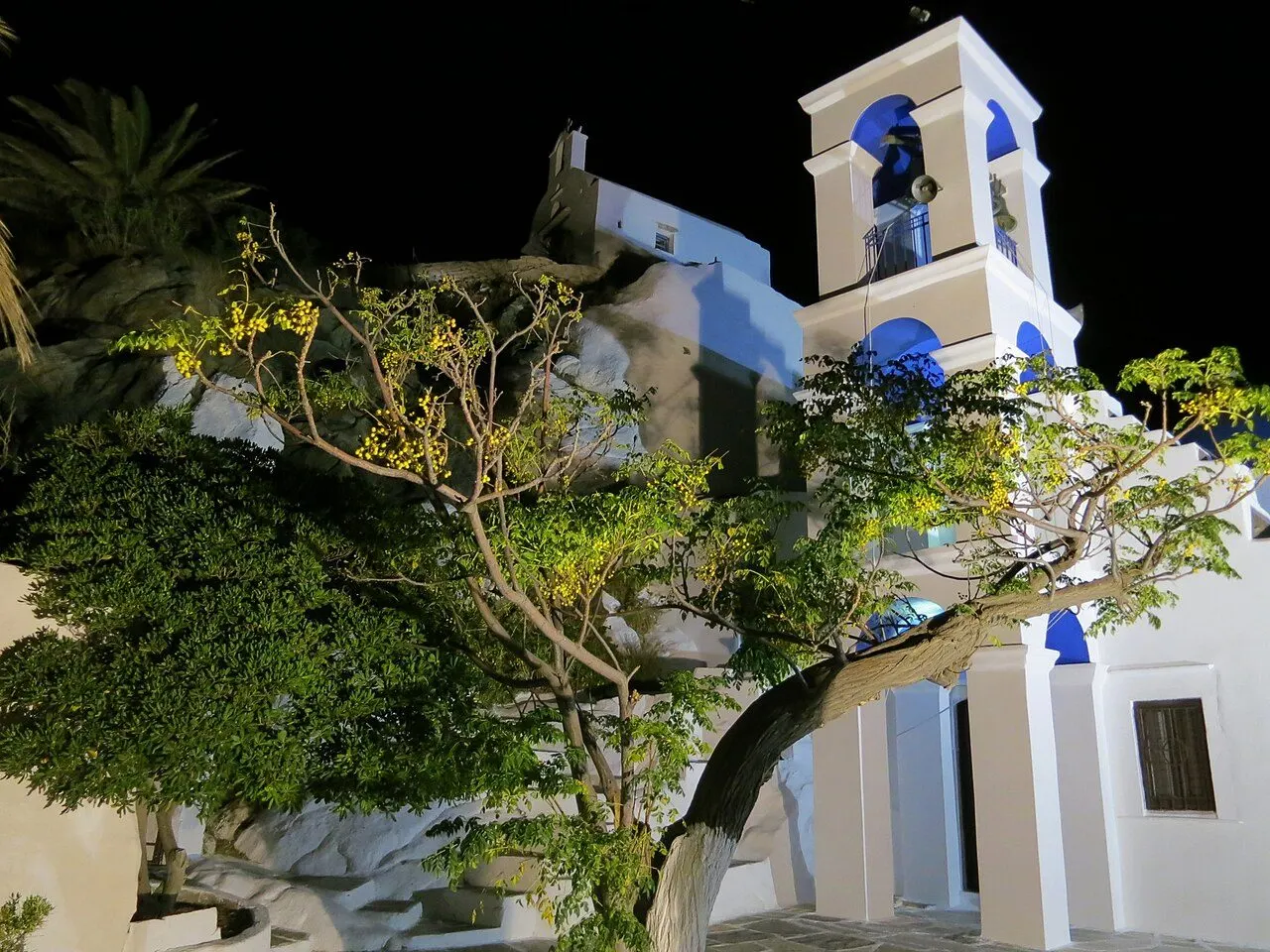
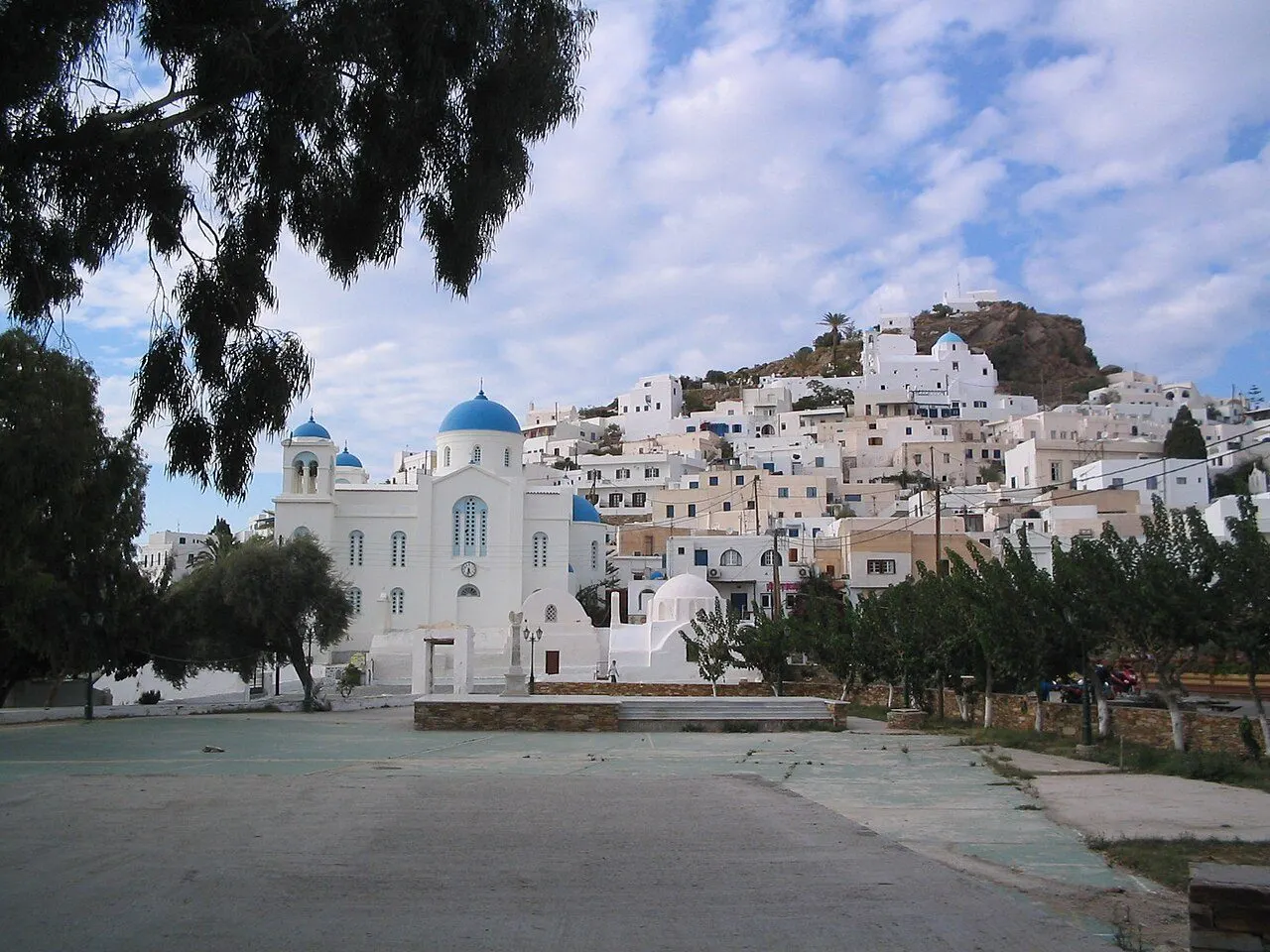
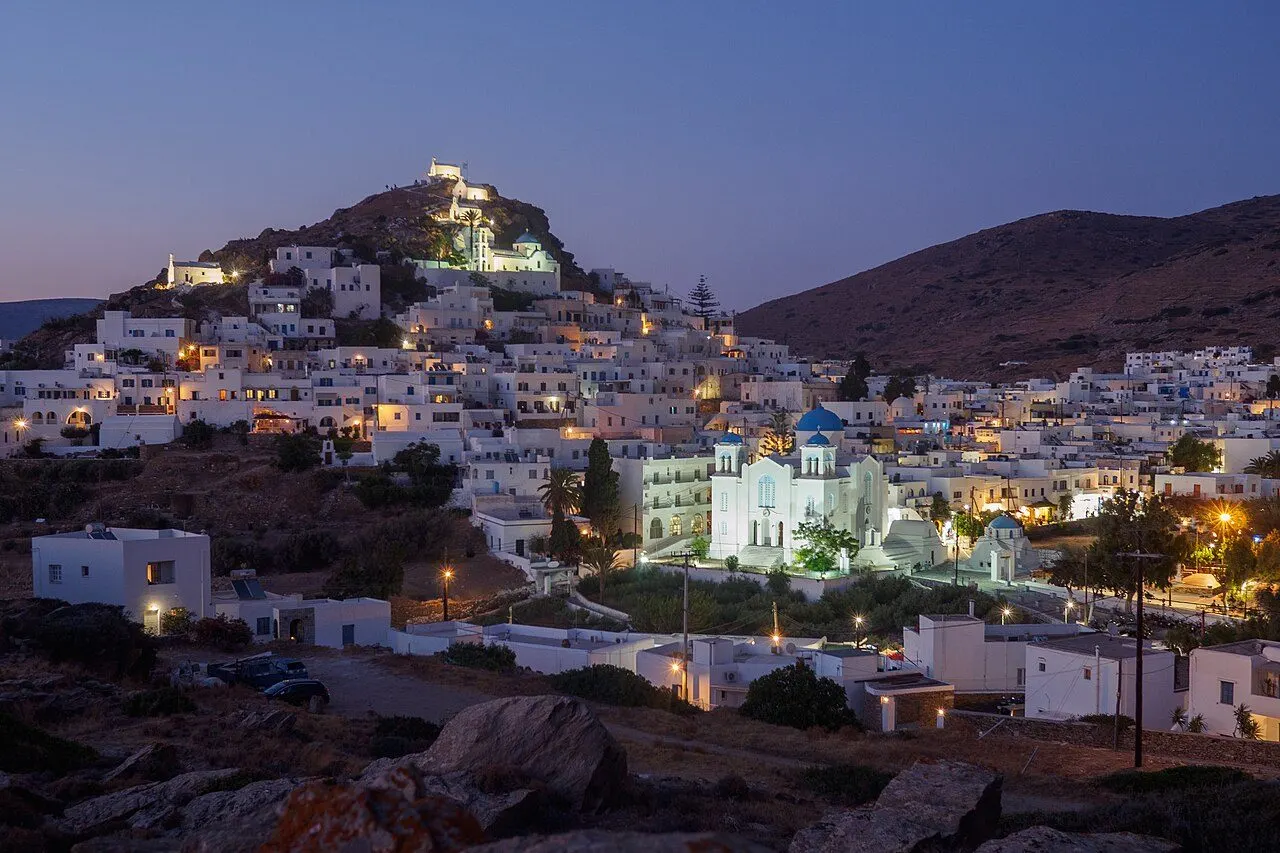
The white church at the top of Chora, on the rock of the Venetian Kastro, whose icon, the story goes, floated across from Crete on a raft.
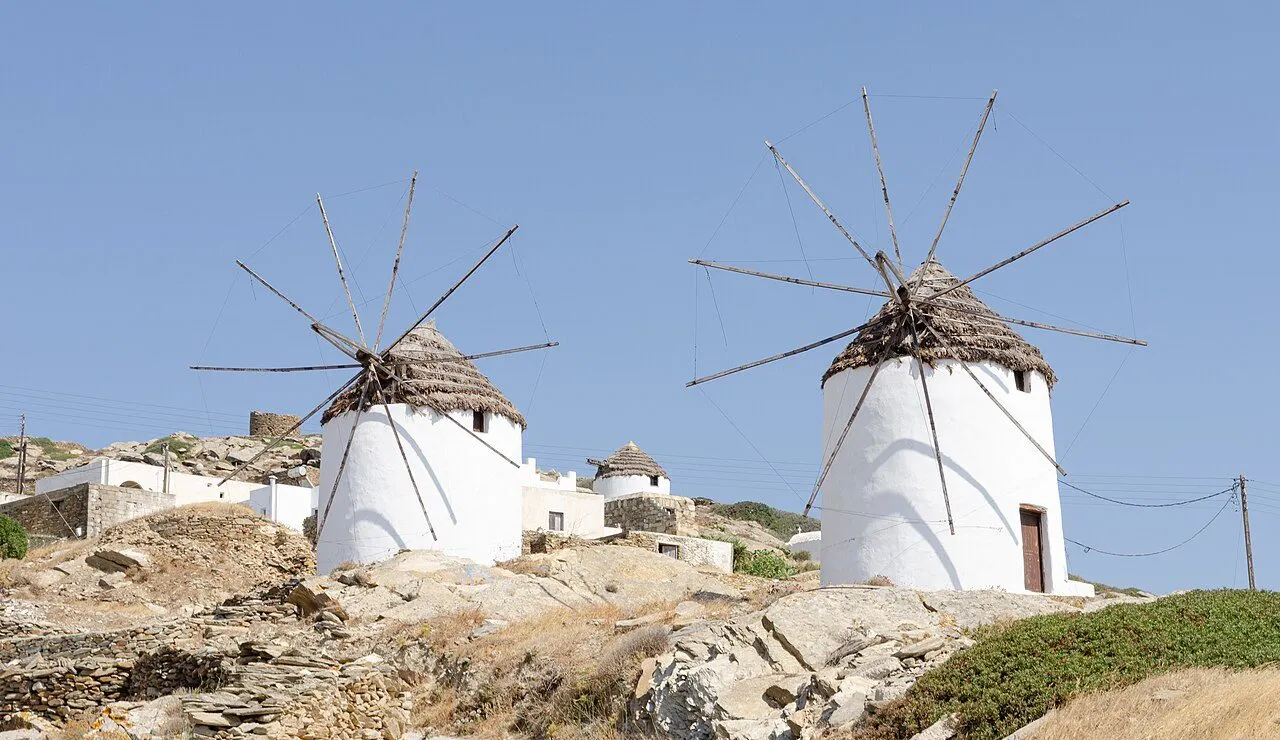
A row of stone windmills on the ridge above Chora, which once ground the island's barley.
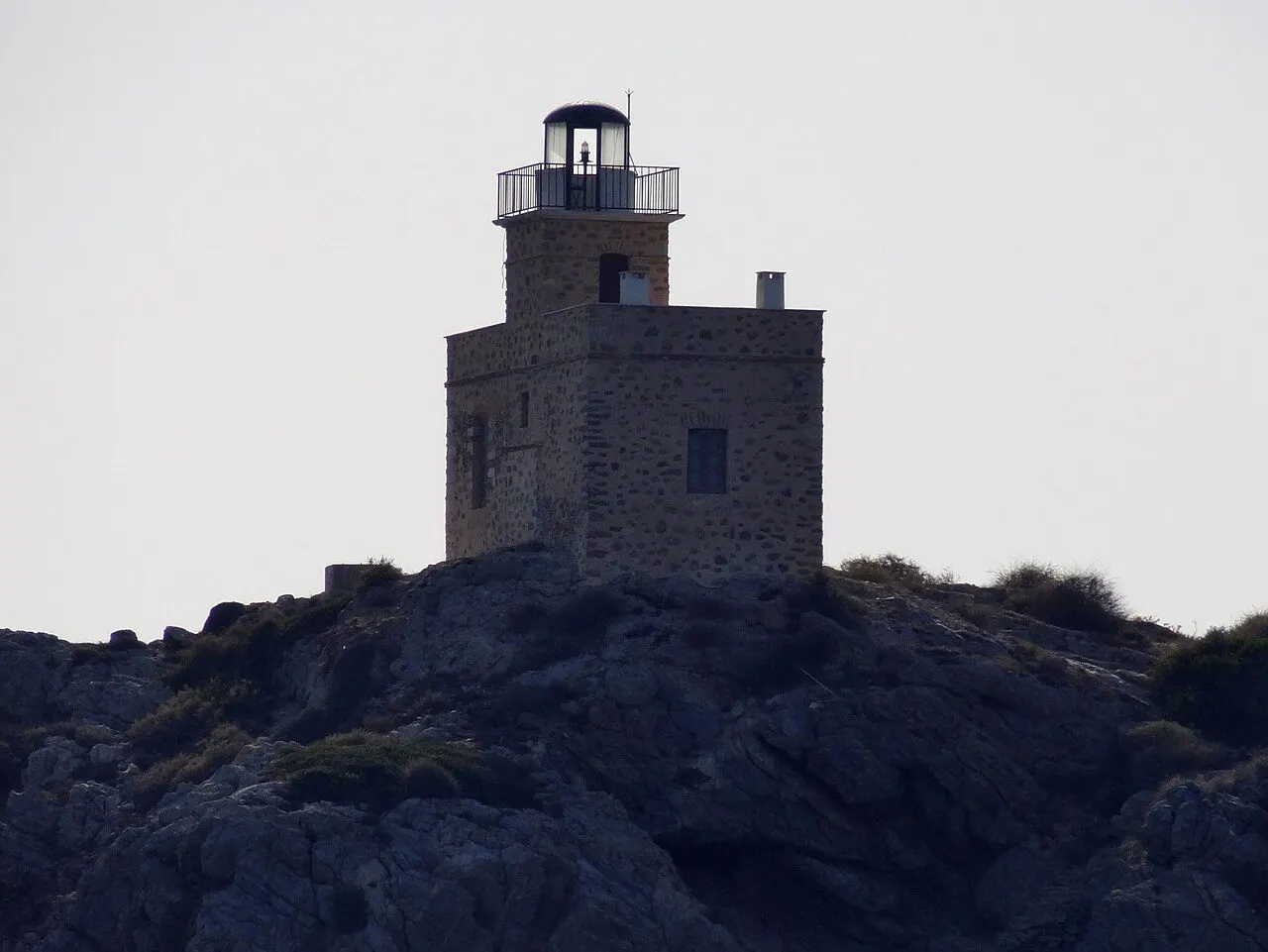
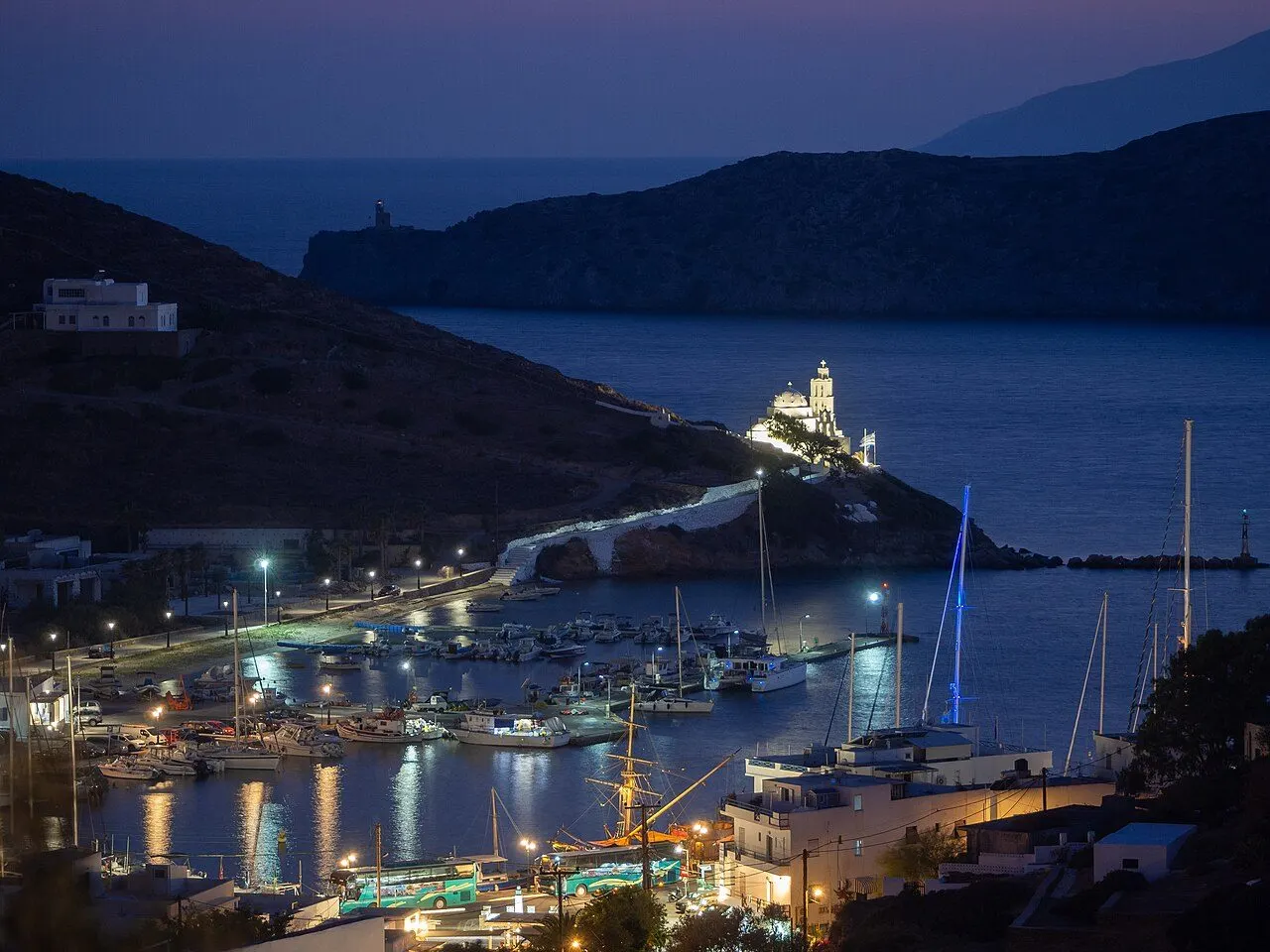
The 17th-century church at the harbour mouth, the island's 'natural lighthouse', and the real lighthouse of 1881 on the point below.
Last updated