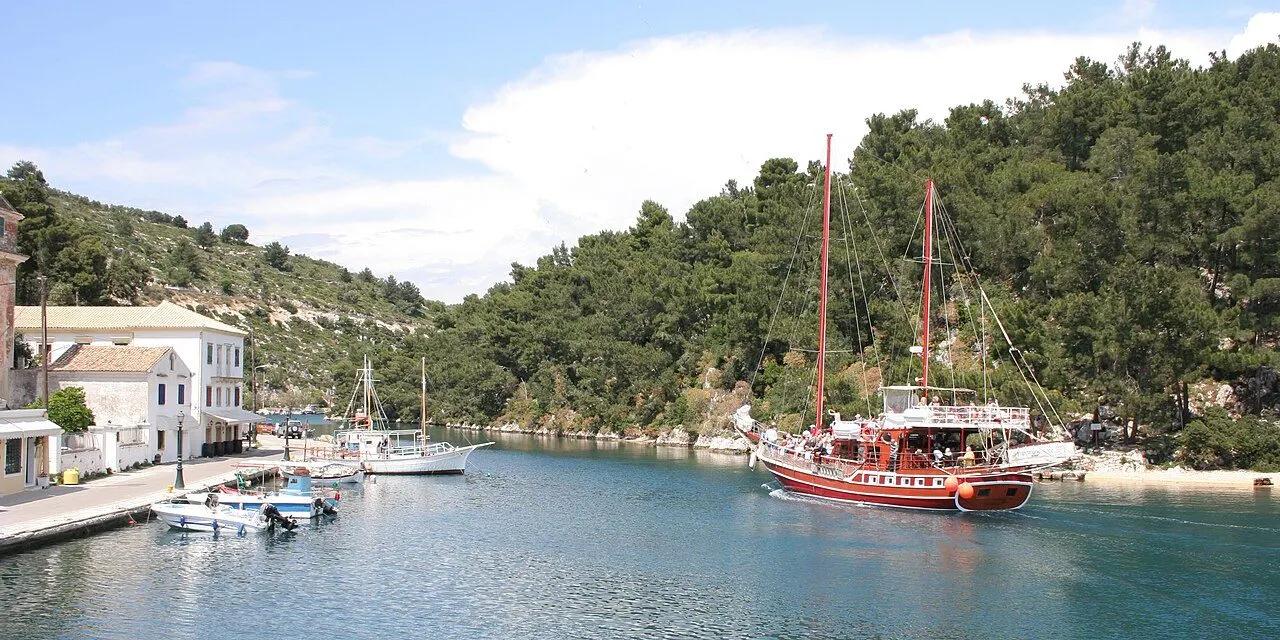
Agios Nikolaos islet
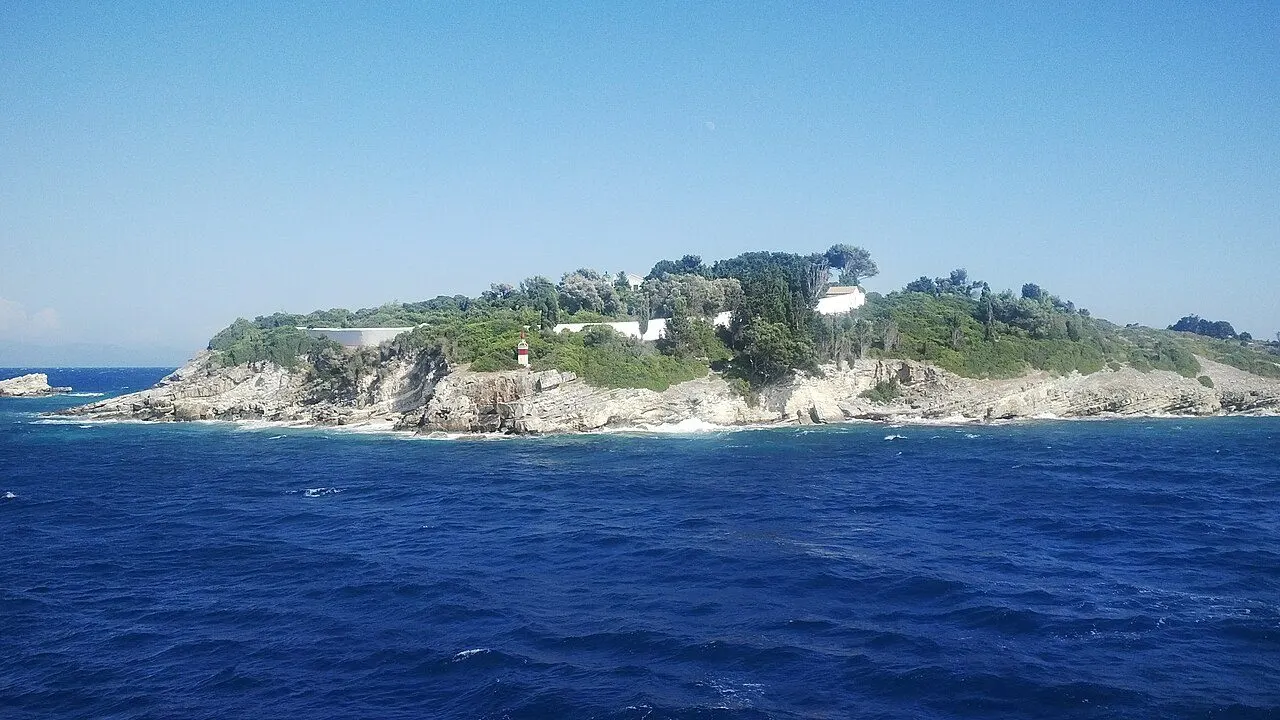
The pine-covered islet across the channel, with a Venetian fort, a windmill and a chapel, a minute away by boat.
Paxos · Gaios & the south-east · Γάιος
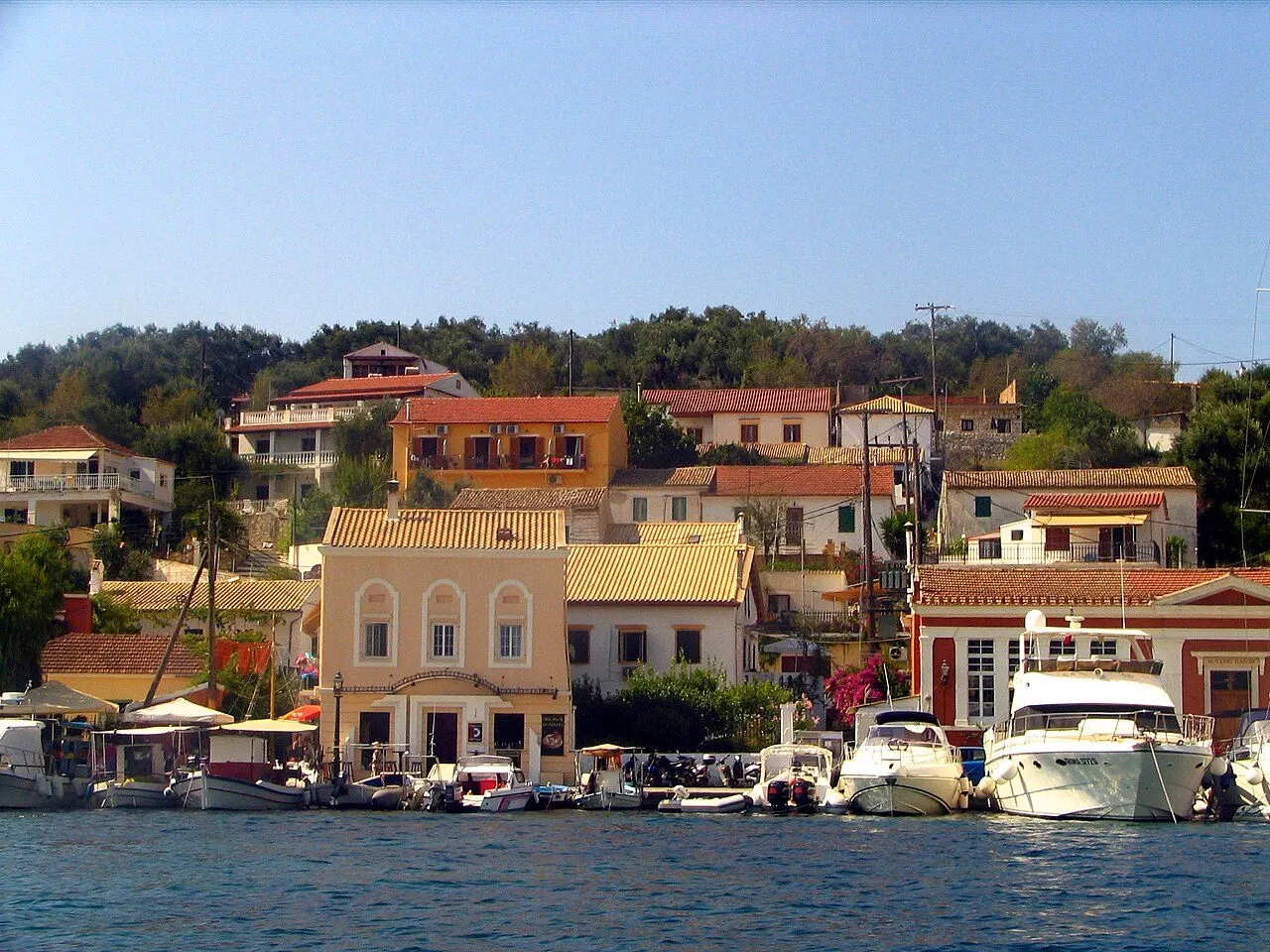
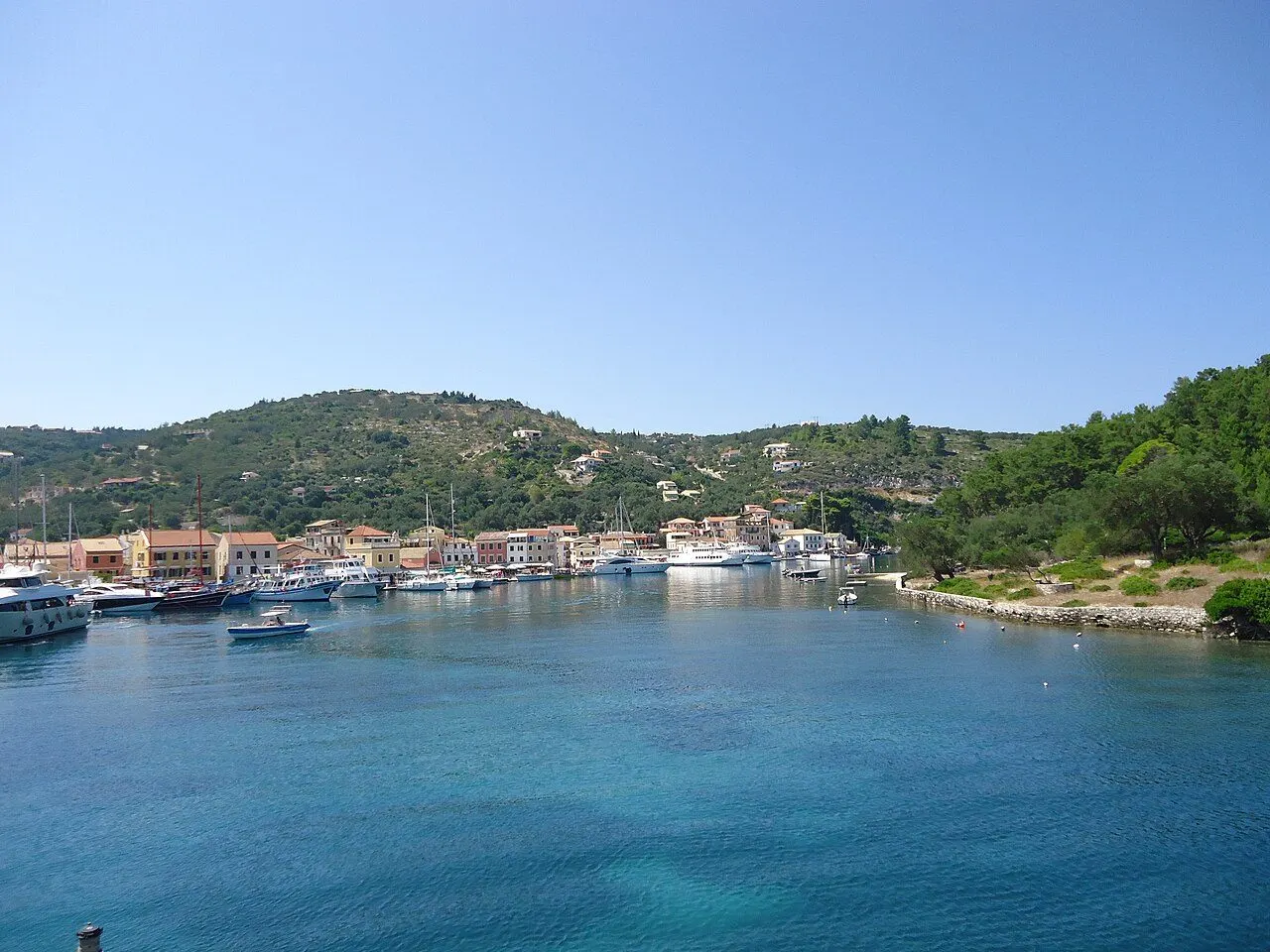
Gaios is the island's small capital and its main port, a cluster of pastel-washed houses with green shutters lining a narrow, sheltered channel. Opposite the quay, so close it feels like a river bank, lies the pine-covered islet of Agios Nikolaos with the walls of a Venetian fort; beyond it the low islet of Panagia carries a white monastery. Caiques, water taxis and yachts tie up along the waterfront, the main square opens straight onto the water, and the whole town can be walked end to end in ten minutes.
Greetings from Gaios
Gaios
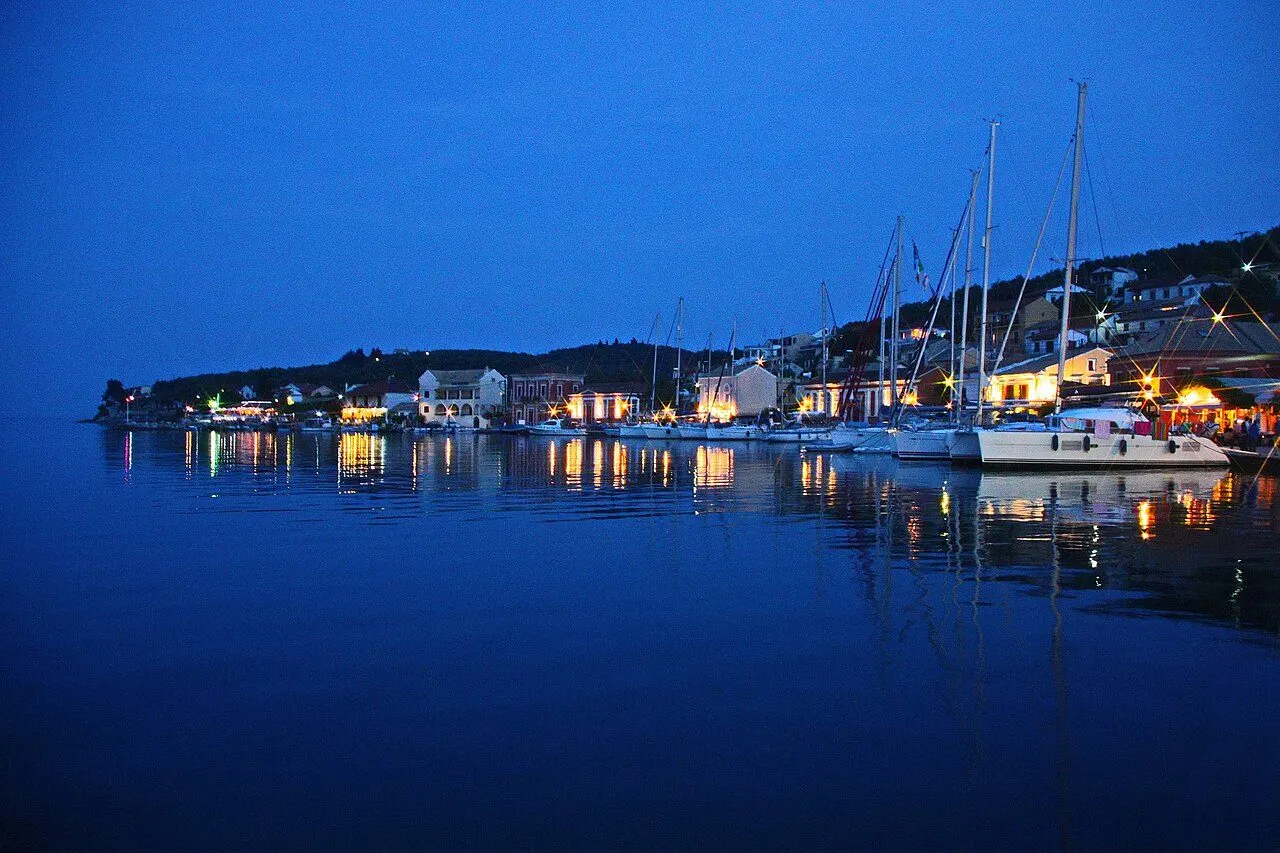
The boat came in through a gap between two green islets and suddenly we were in a harbour as narrow as a river, with a fort in the pines on one bank and painted houses on the other. We drank our first coffee so close to the water that a fishing boat bumped the quay beside our table. This afternoon we took a caique round to Panagia islet and back, and tonight the whole channel is lit like a stage, quiet except for the clink of glasses and a dinghy motor somewhere in the dark.
A pastel harbour town on a channel of green water, guarded by two wooded islets
Most harbours face the sea. Gaios faces an island. The town grew up along a strip of water only a few dozen metres wide, between the main island and the islet of Agios Nikolaos, and the result is a port that feels more like a canal town than a Greek fishing village. The water in the channel is still and bottle green, the houses come right down to it, and the bow of a yacht can almost touch the café tables.
The pine-covered islet across the water is named for the patron saint of sailors and carries the remains of a fort built under Venetian rule, together with an old windmill and a small church. The Venetians held Paxos for some four centuries, until 1797, and their hand is still in the shape of the town, in its tall, shuttered houses and in the olive groves they encouraged all over the island. Behind it, Panagia islet holds the monastery of the Virgin, the goal of the island's biggest festival on 15 August, when boats ferry the faithful across and the celebration carries on late into the night back in the square.
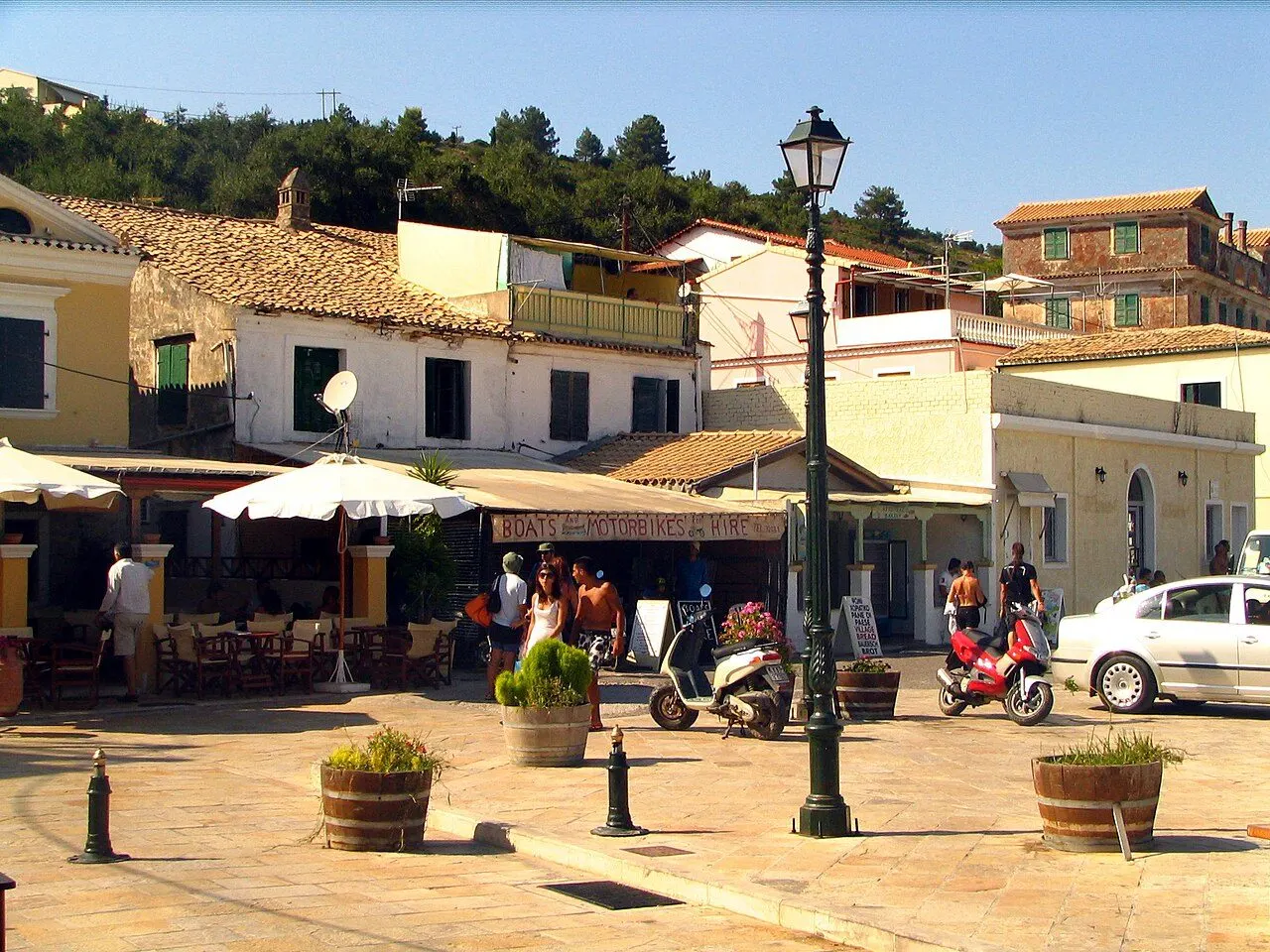
The quayside square is the island's living room. In the morning it smells of coffee and diesel as the caiques load up for Antipaxos and the west-coast caves; at midday it falls almost silent; in the evening the tables fill and the lights of the houses lie in long lines on the water. A short walk south along the front brings you to the old school building, now home to the Paxos Museum, and to the lanes that climb gently into the olive groves behind the town.
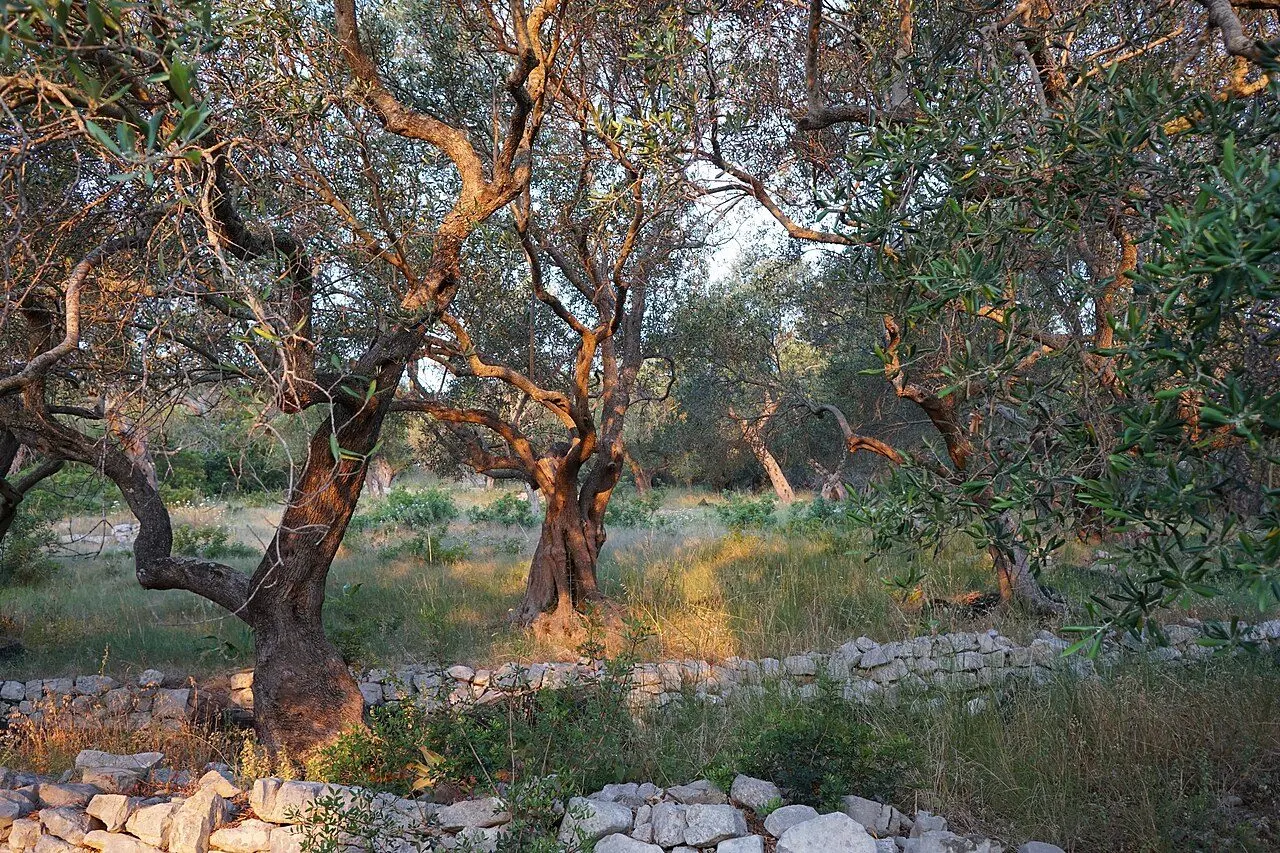
For all that, Gaios stays small. There are no high-rise hotels and few large ones; most visitors stay in restored houses, rooms and villas scattered among the olives. When the last day boats from Corfu and Parga leave in the late afternoon, the town gives itself back to the people who sleep here.
Hour by hour
A harbour, two islets, a museum and an evening on the water, all within a few hundred metres.
Take a table on the square while the caiques line up for the day and the water is still flat as glass.
Ask one of the boatmen on the quay to run you across to Agios Nikolaos islet and walk up through the pines to the old Venetian walls.
Spend an hour in the Paxos Museum at the southern end of the waterfront, among the tools, costumes and household things of island life.
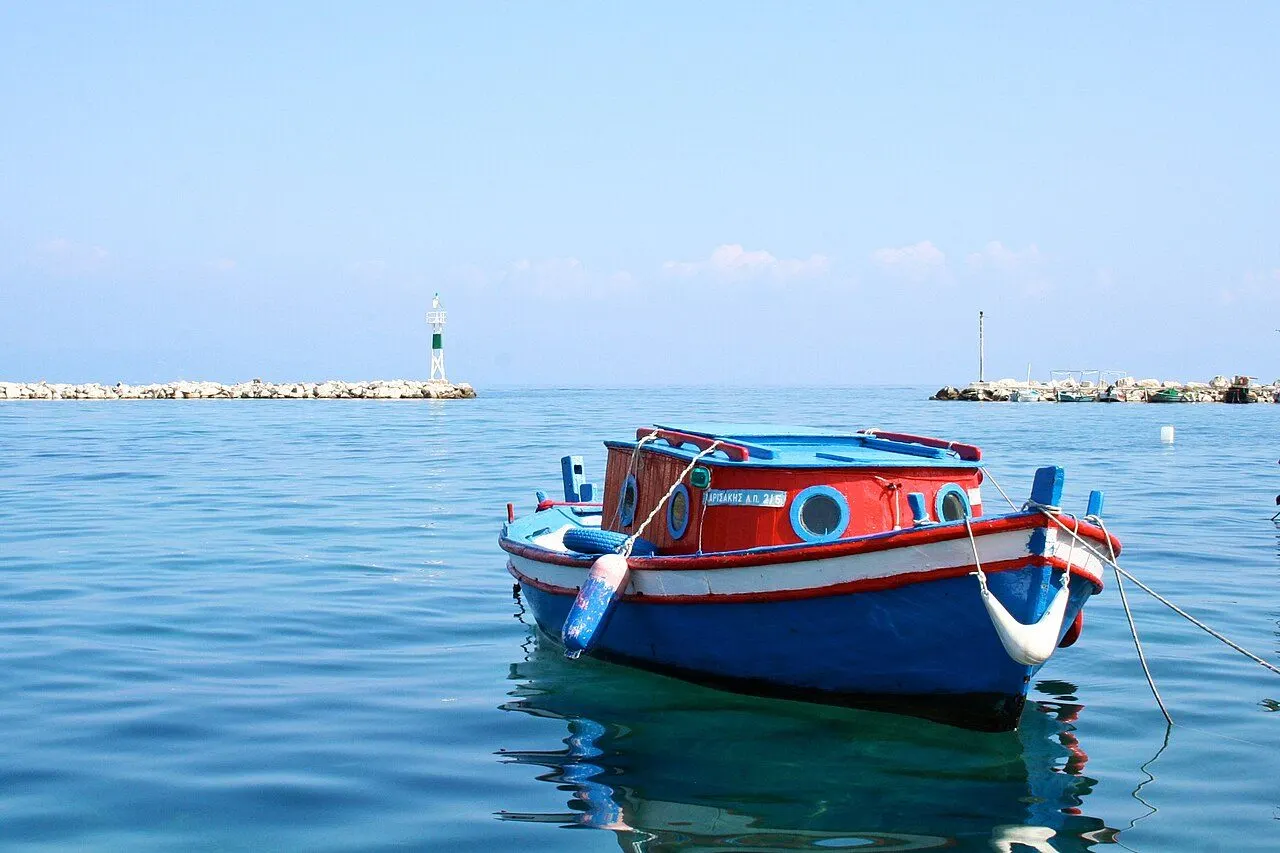
Eat slowly on the waterfront, then retreat into the shade like everyone else.
Take a water taxi out past the monastery of Panagia as the light softens, and look back at the town from the open sea.
Walk the length of the quay after dinner, when the reflections of the houses run across the channel.
Where to stay
Gaios
Agali Hotel Paxos · Boutique beach hotel · €€€€
Gaios
Paxos Club Resort & Spa · Resort hotel · €€€
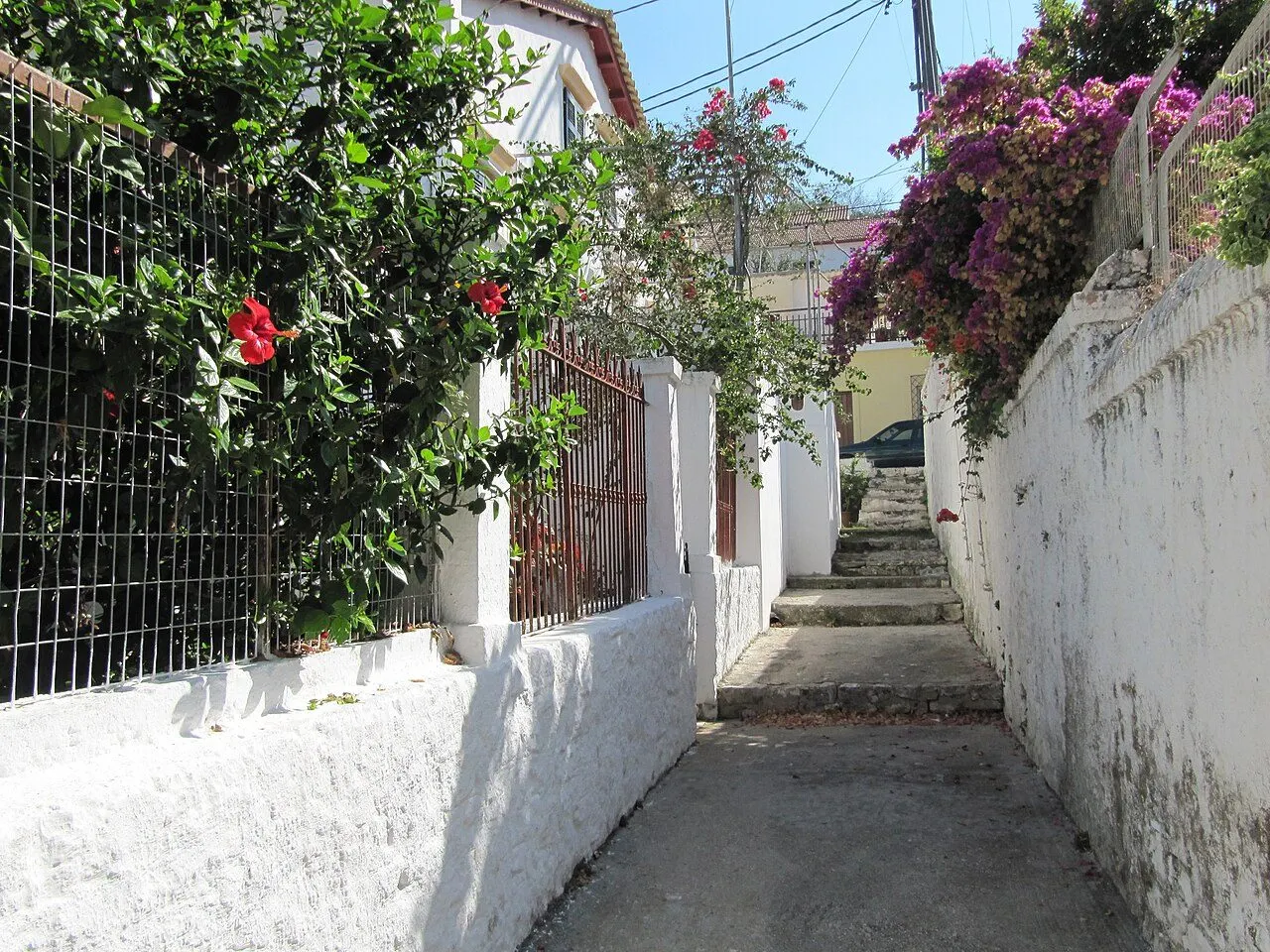
Gaios
Nio's Nest · Townhouse · €€€
Gaios · Gaios & the south-east
Where to eat
Gaios · Gaios & the south-east
Gaios · Gaios & the south-east
Within an easy drive
The pine-covered islet across the channel, with a Venetian fort, a windmill and a chapel, a minute away by boat.
The monastery islet at the mouth of the harbour, crowded with pilgrims on 15 August and silent the rest of the year.
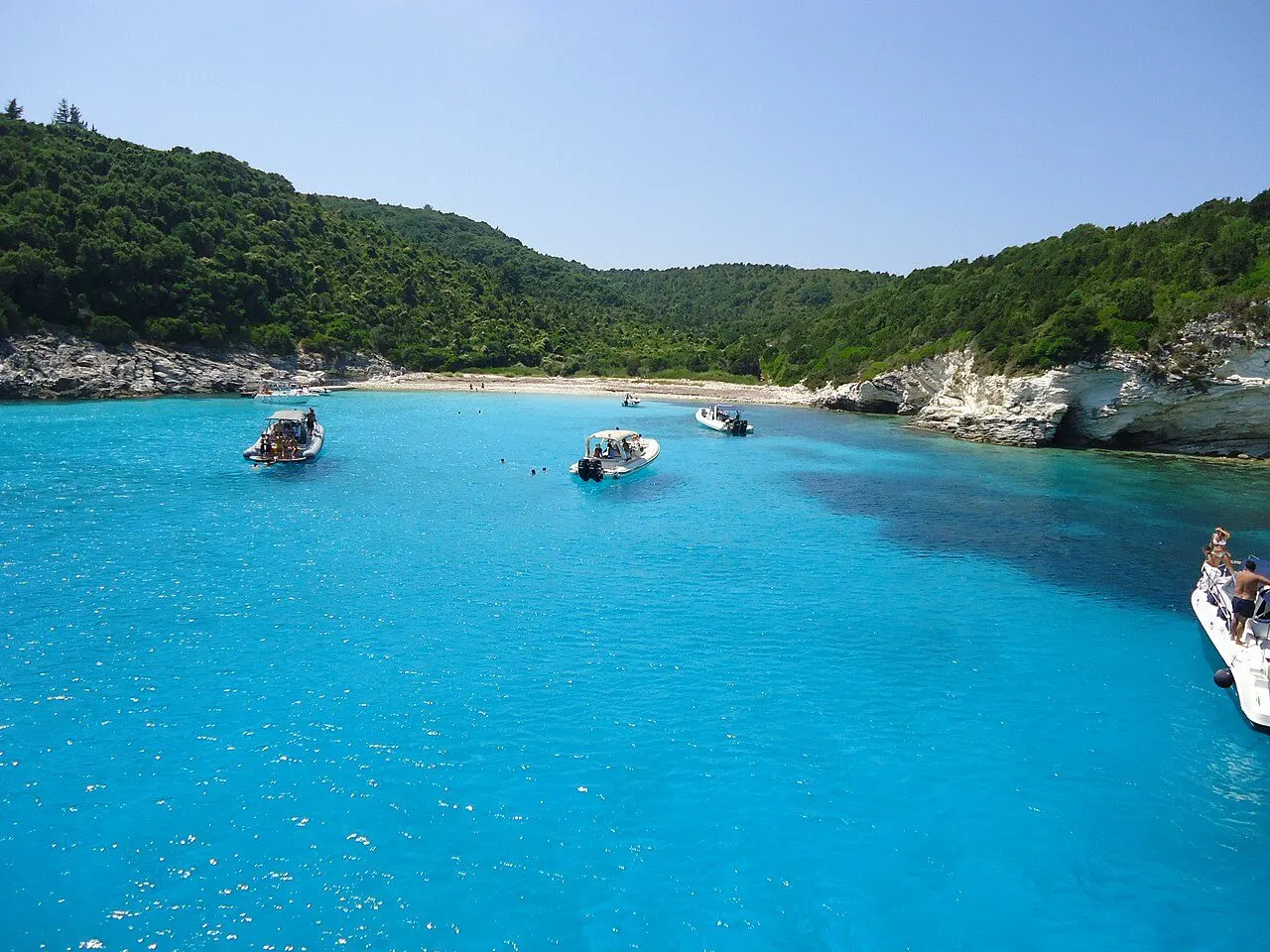
The little island to the south, with its turquoise bays at Voutoumi and Vrika, reached by daily boats from the quay in summer.
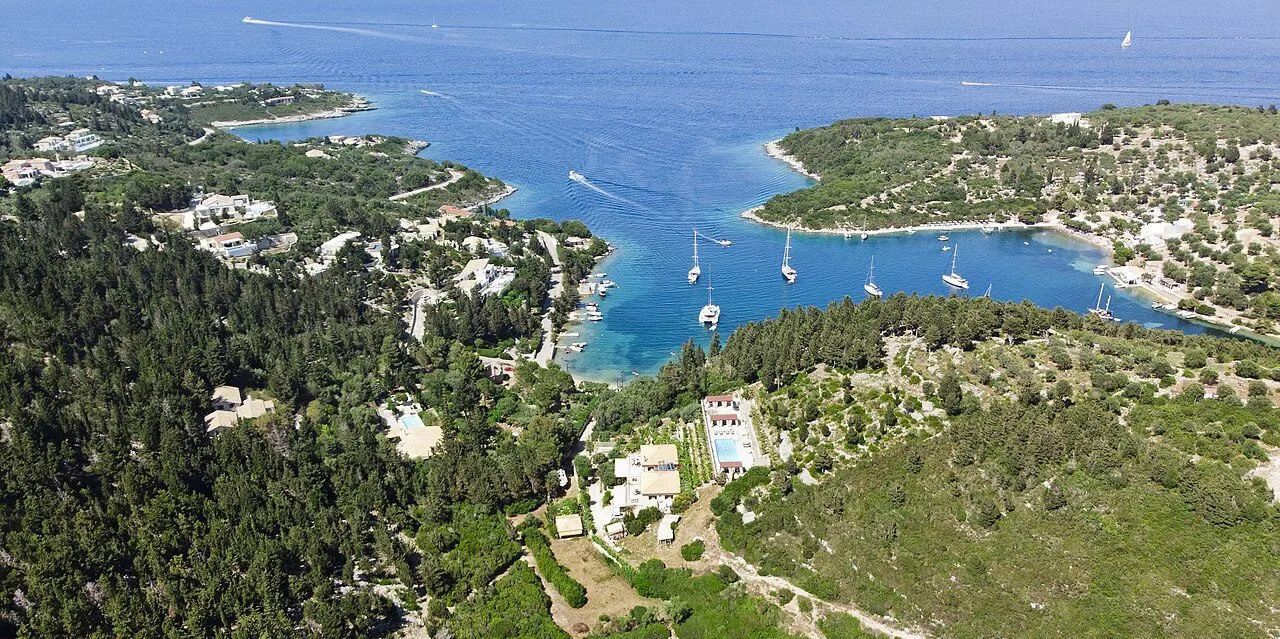
The quiet inlets at the island's southern tip, a short drive or a long walk through the olives from town.
Good to know
Ferries and fast boats from Corfu and Igoumenitsa dock at the new port just north of town, a few minutes' walk from the square. Excursion boats from Parga and Corfu tie up along the old waterfront.
May, June and September for a calm town and warm water. In July and August the quay is busy with yachts and day boats until late afternoon, and 15 August is the liveliest night of the year.
More of Paxos
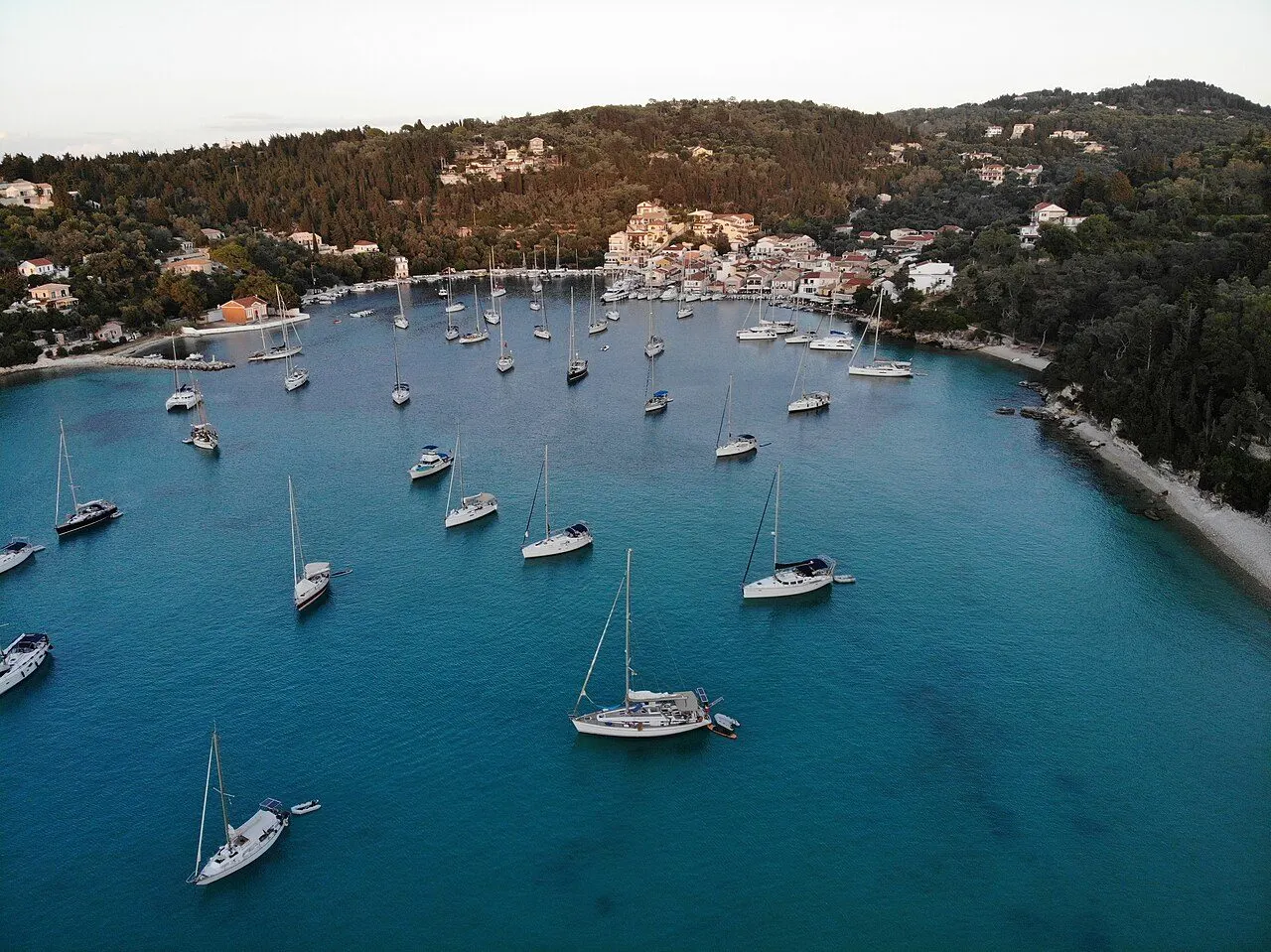
Lakka & the north
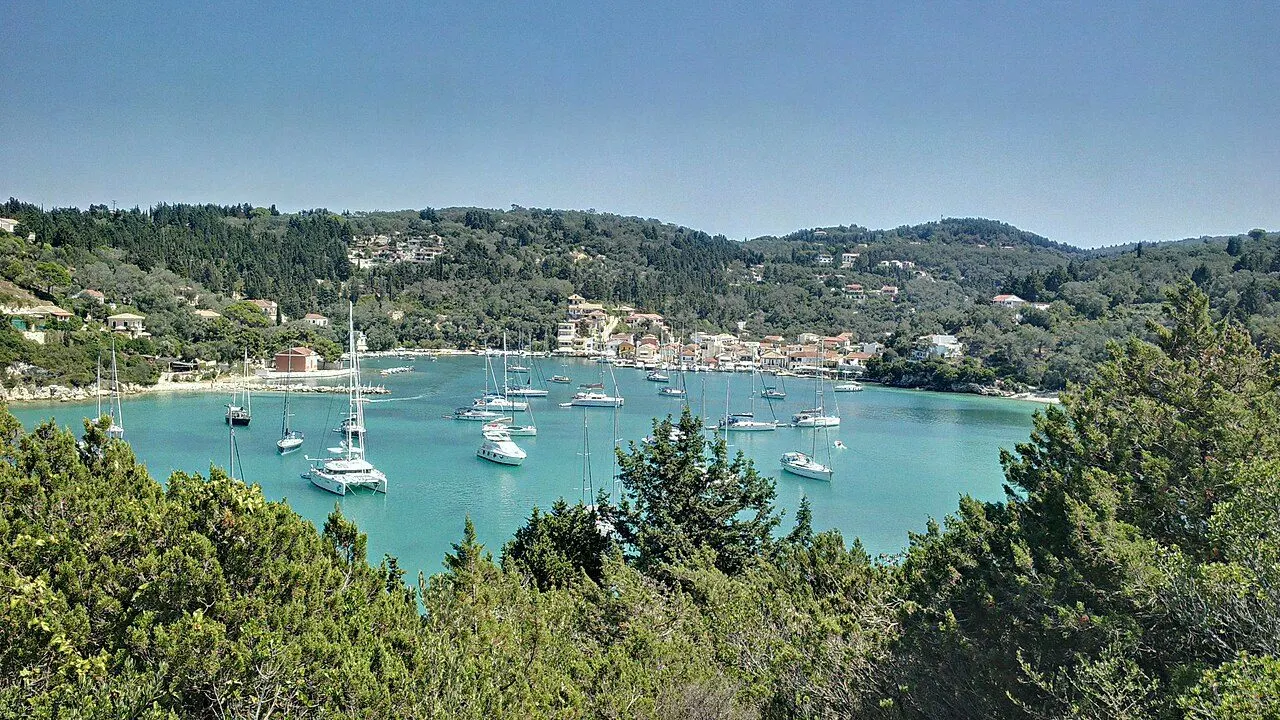
A horseshoe bay at the north end, where sailing boats swing at anchor over pale sand
Loggos & the east coast
The smallest of the three harbour villages: a little cove of tavernas, an old factory chimney and pebble beaches either side
The interior & the west cliffs
The island's green heart: hamlets of stone houses, chapels and old olive presses under the trees
Every stay we recommend across Paxos, from village guesthouses to rooms on the sea.
See all staysLast updated