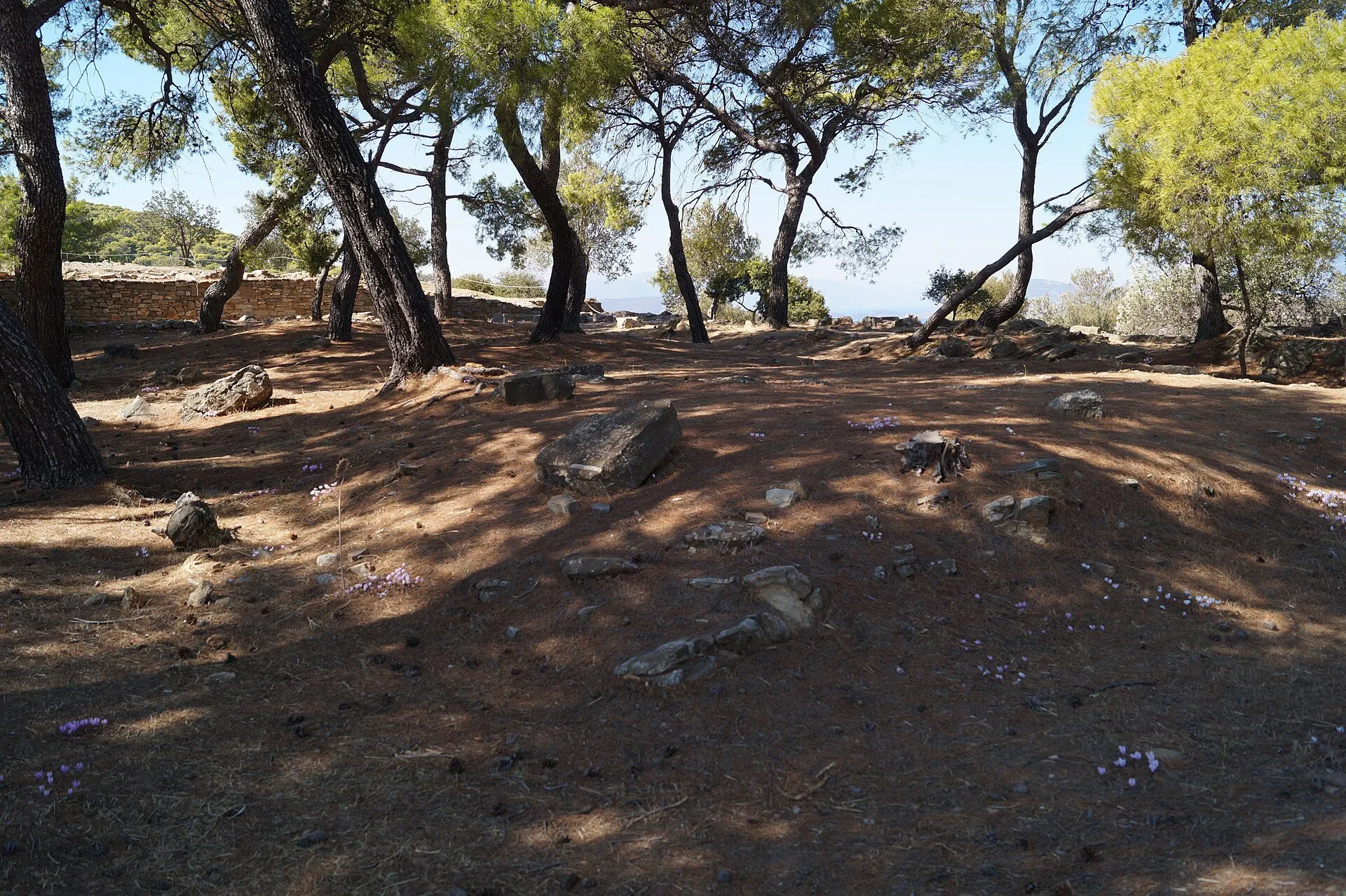
Sanctuary of Poseidon
The foundations of the temple, stoas and other buildings of the ancient sanctuary in the pines of Kalavria, with views across the gulf to Aegina.
Poros · History
An ancient sanctuary and the last refuge of Demosthenes, the town of Theseus across the water, the first naval base of the new Greek state, a fleet burned in the strait in 1831, and a century of writers who fell for the view.
Timeline
Antiquity
The larger island was called Kalaureia in antiquity, and its sanctuary of Poseidon, in the hills at its centre, was one of the most important in the Saronic Gulf. A Doric temple was built there around 520 BC. The geographer Strabo wrote that seven cities, among them Athens, Aegina, Epidaurus and Hermione, shared in its sacrifices as the Kalaurian Amphictyony. Archaeologists still debate when that league really met, since the excavations have found no trace of it.
322 BC
After Athens lost its revolt against Macedon, the orator Demosthenes was condemned to death and fled to the sanctuary of Poseidon at Kalaureia, where he sought refuge as a suppliant. When the men of the Macedonian general Antipater came for him, he took poison, which he was said to carry hidden in a pen, and died there in October 322 BC.
Myth and the mainland
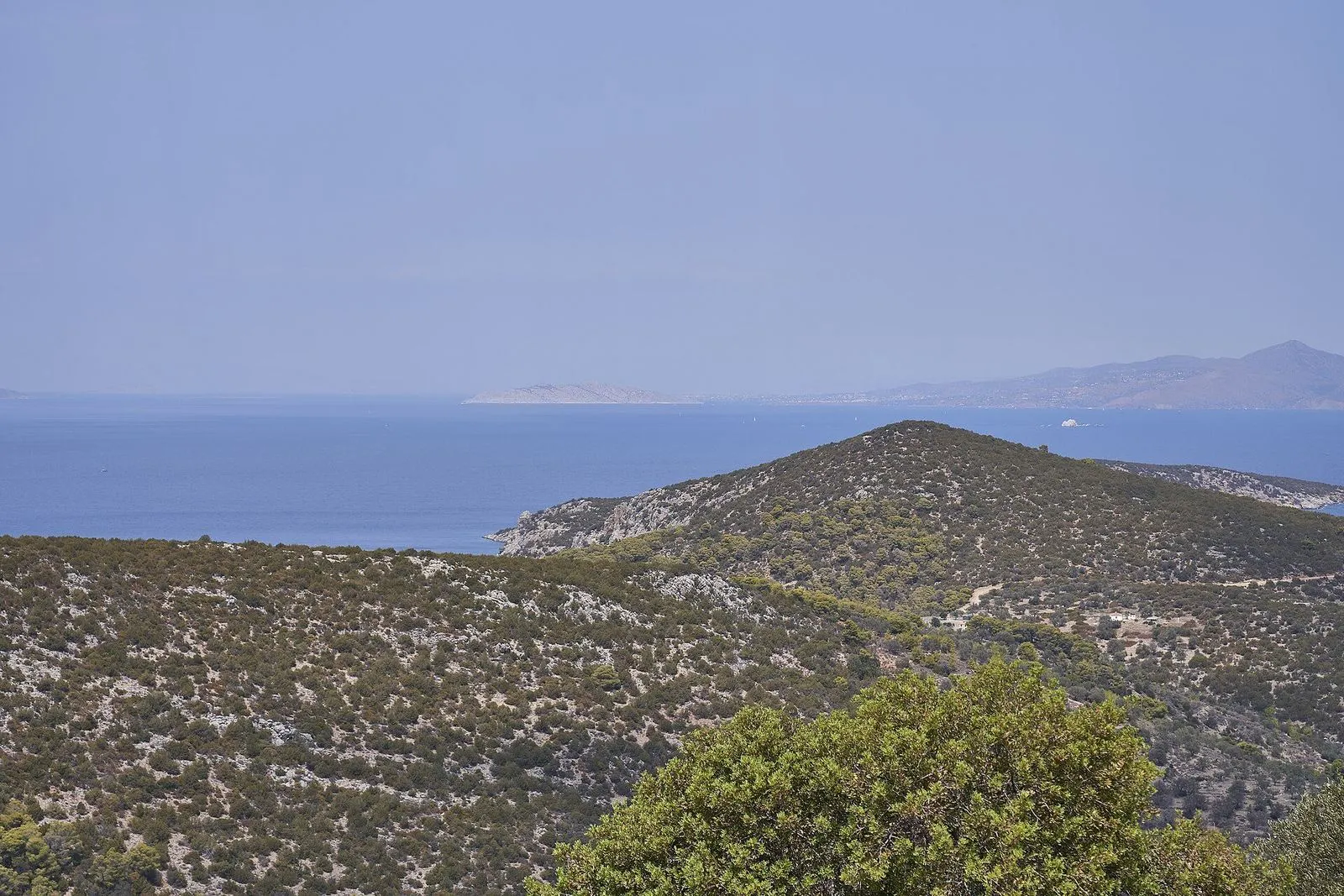
Across the strait stood Troizen, the city the islands looked to in antiquity. In myth it was the home of Aithra and the birthplace of the hero Theseus, who lifted a great rock to find the sword and sandals of his father Aegeus before setting off for Athens. Its ruins, the sanctuary of Asklepios, towers and Byzantine churches, lie in the olive groves above the modern village of Trizina.
1828–1830s
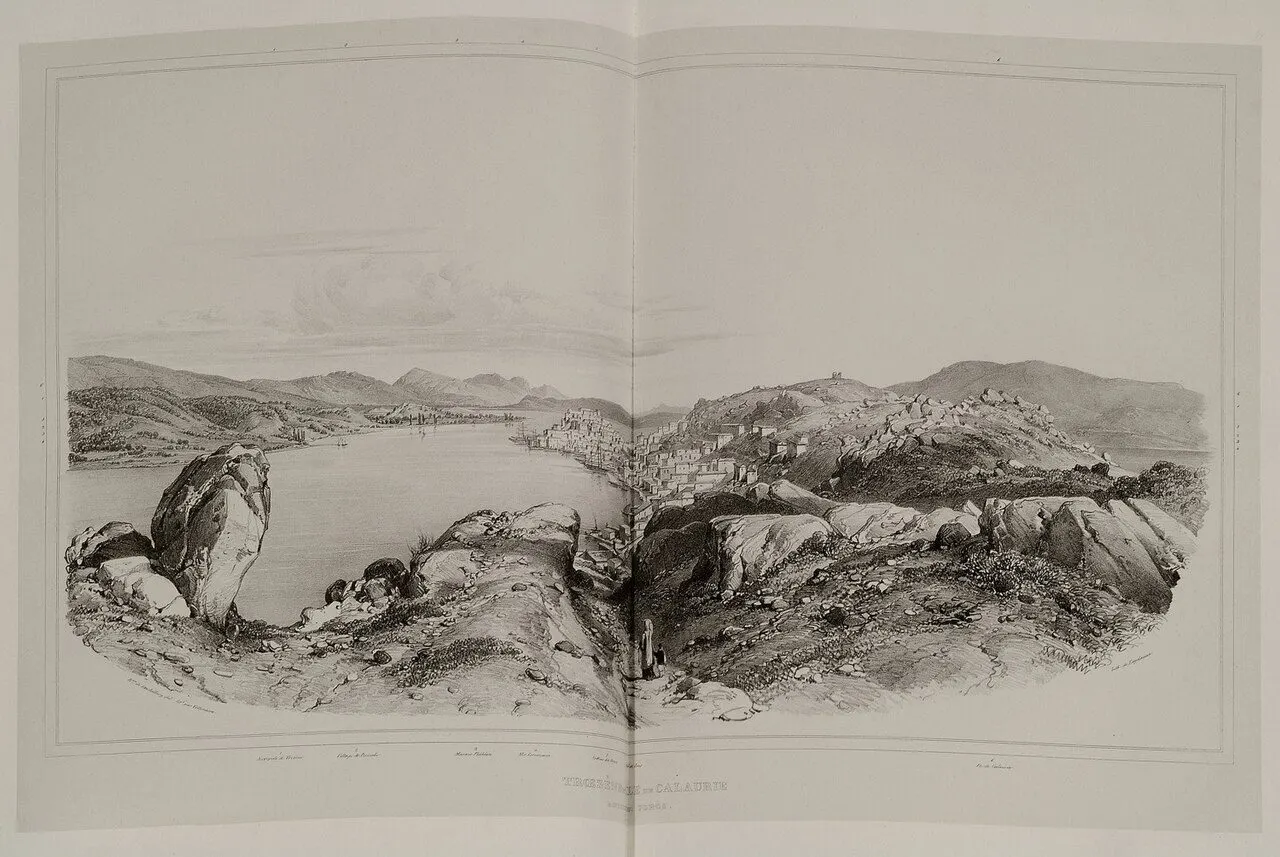
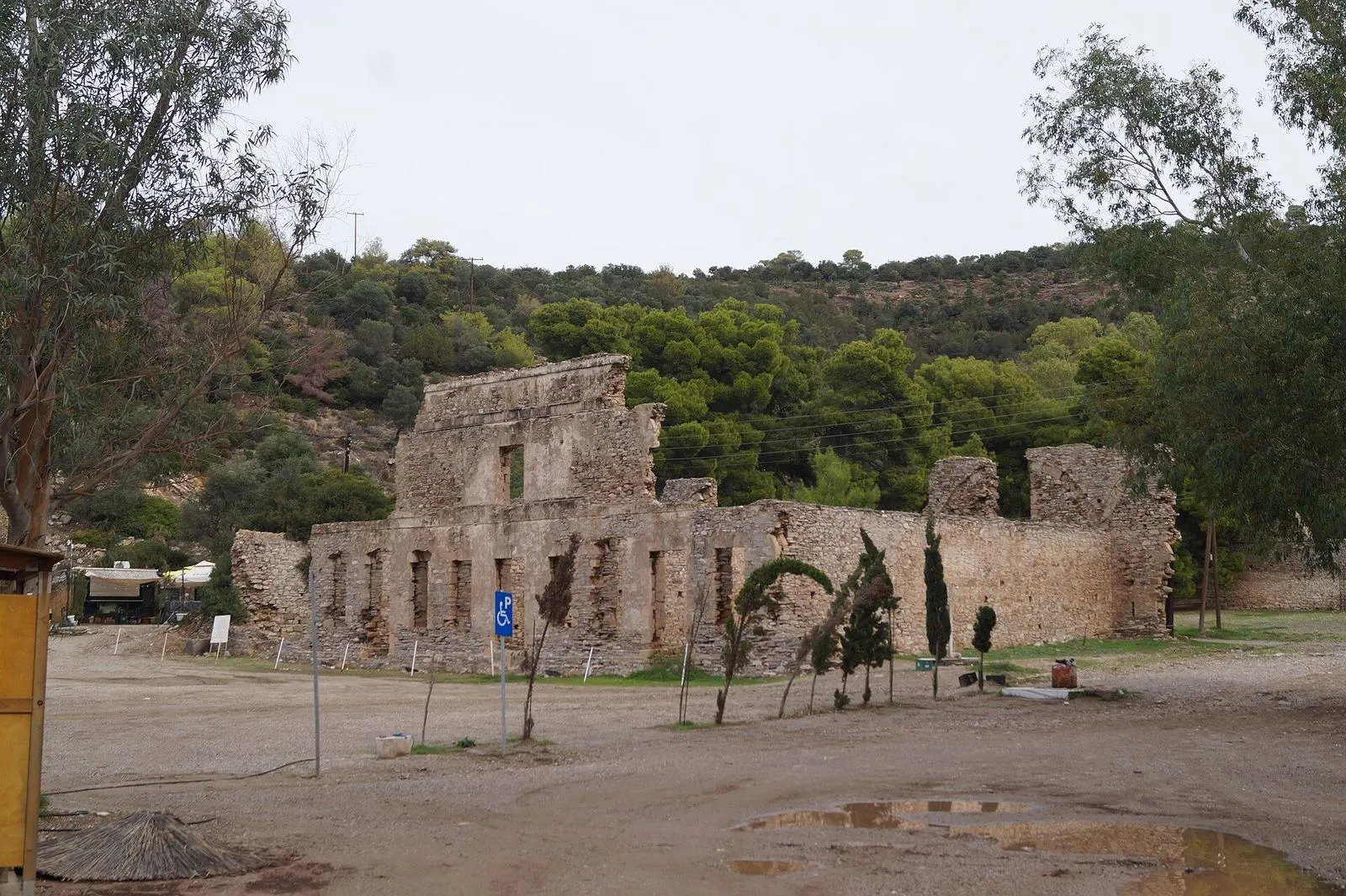
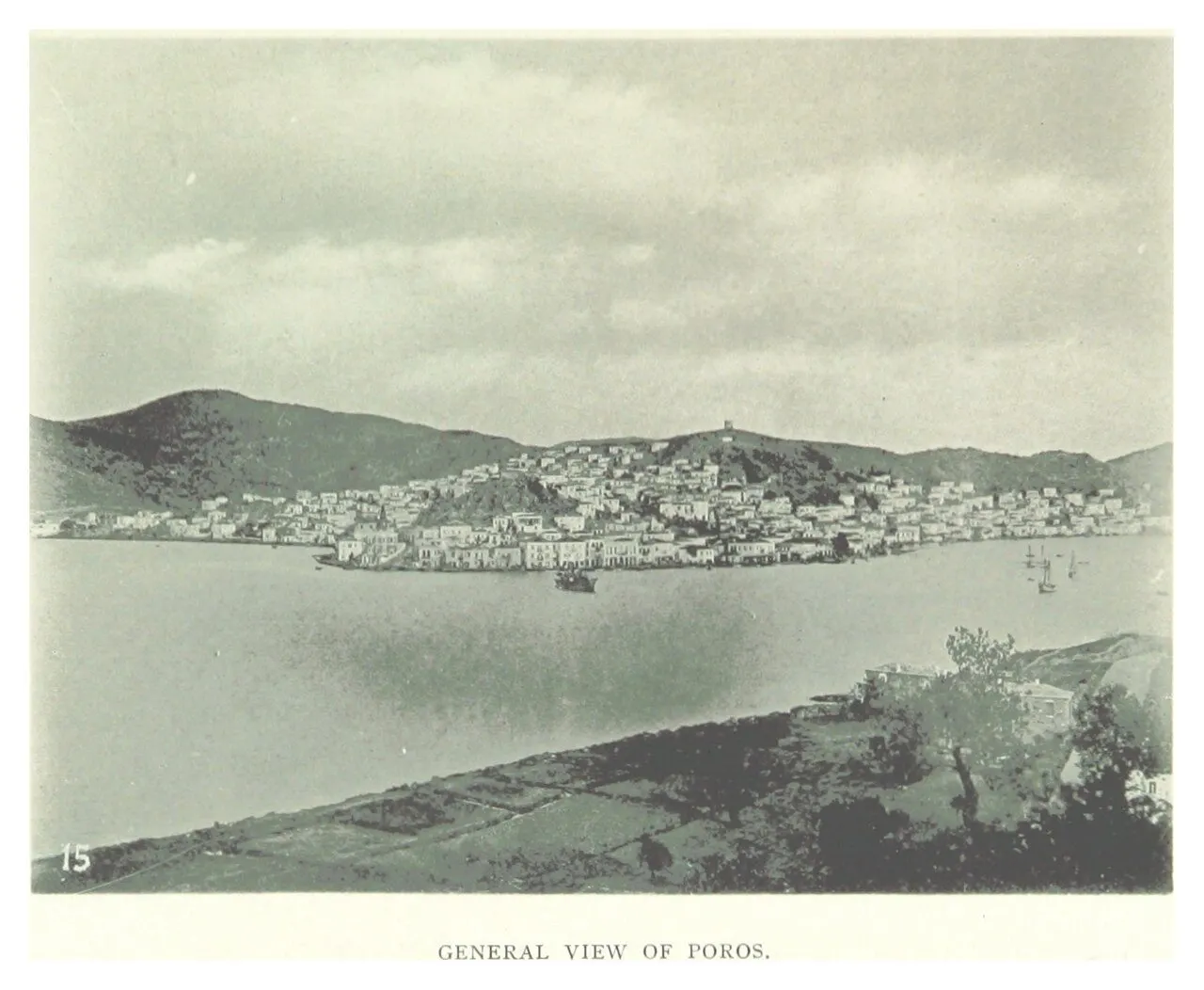
Poros was at the centre of the new state. In 1828 Ioannis Kapodistrias, the first governor of Greece, set up the country's first naval base in the sheltered water west of town, and in September of that year the ambassadors of Britain, France and Russia met him on Poros to discuss the borders of the future kingdom. Russia, whose fleet had fought for Greece at Navarino in 1827, kept a naval station in the next bay, now Russian Bay, where its stone storehouses still stand.
1831
In the summer of 1831, as opposition to Kapodistrias grew, the Hydriot admiral Andreas Miaoulis seized the fleet at Poros. The government ordered it handed over to the Russian admiral Ricord, and when the Russians moved against him in August, Miaoulis set fire to the ships rather than give them up. The frigate Hellas, the flagship of the Greek navy, burned in the strait together with two corvettes.
1881 to today
Most of the naval base moved to Salamis in 1881, but the Hellenic Navy still trains its recruits at Poros. Writers fell for the island: Henry Miller sailed through the strait in 1939 and wrote about it in The Colossus of Maroussi, and George Seferis, who later won the Nobel Prize, spent time on Poros in the 1940s, when he was writing his poem The Thrush. Today it is a favourite escape for Athenians, a short boat ride from Piraeus.
Visit
The foundations of the temple, stoas and other buildings of the ancient sanctuary in the pines of Kalavria, with views across the gulf to Aegina.
The roofless stone storehouses of the 19th-century Russian naval station on the shore of Russian Bay, listed as a protected monument.
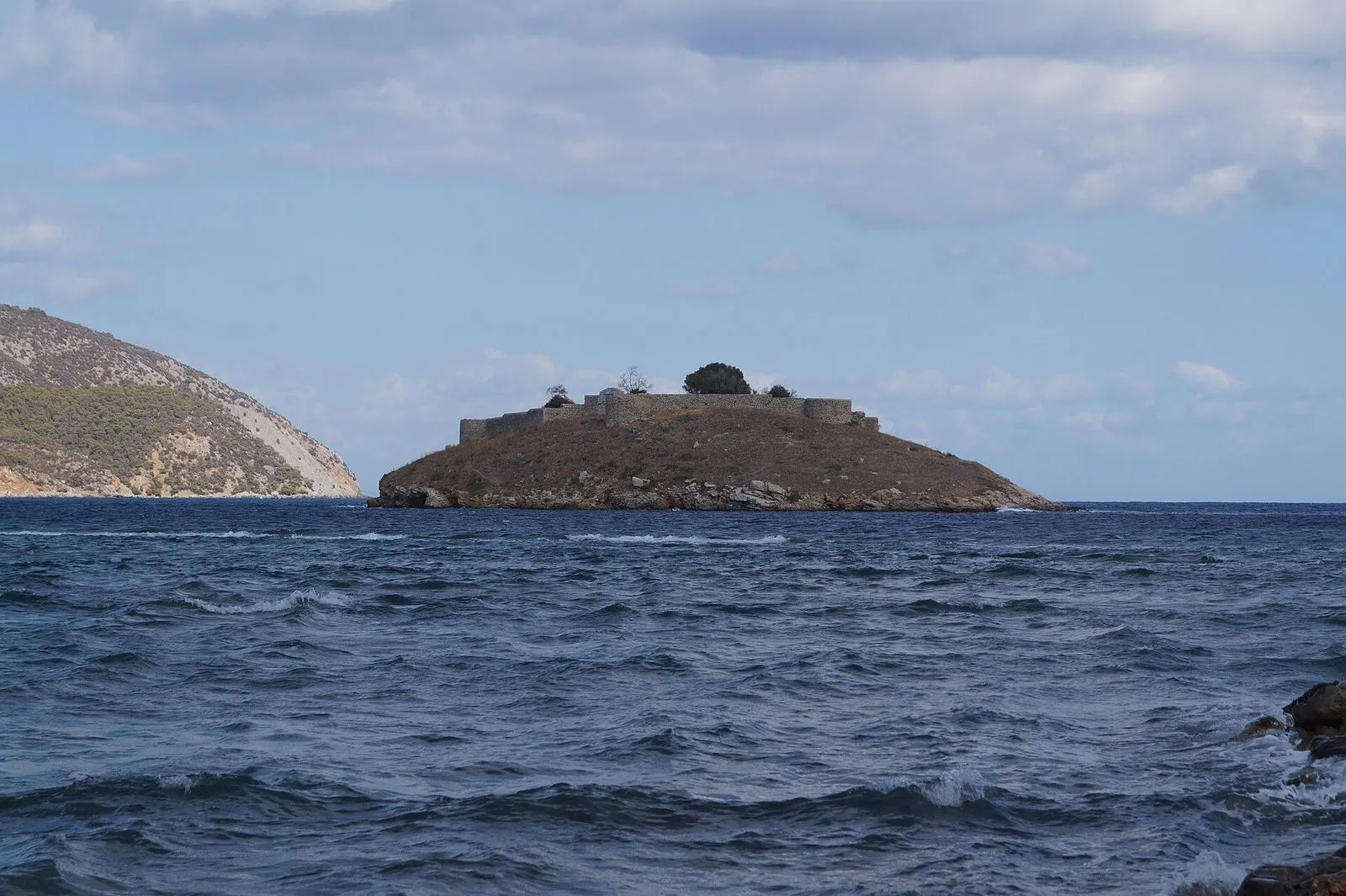
A small fort on a rocky islet at the eastern entrance to the strait, which saw fighting in the troubles of 1831.
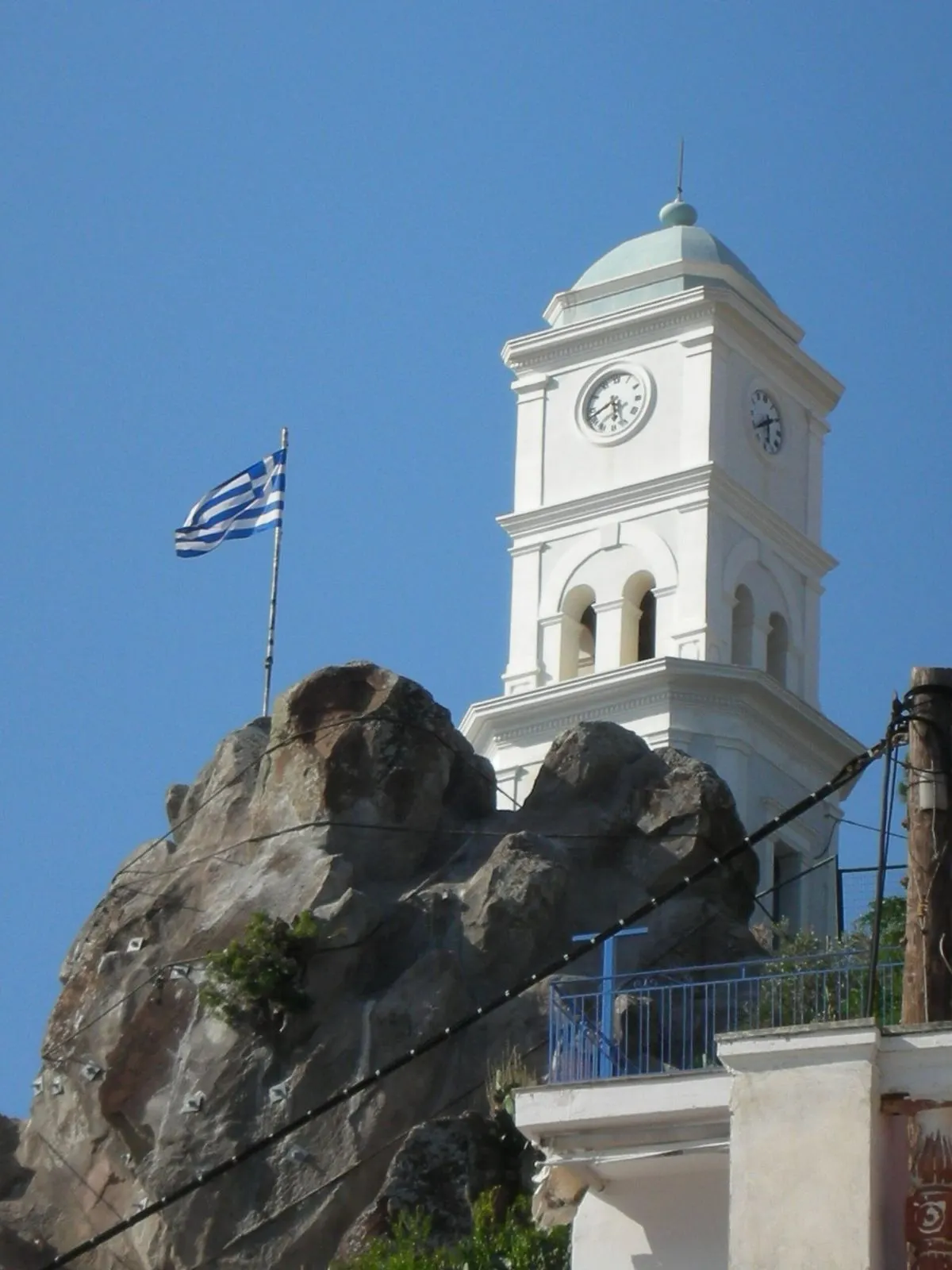
The white-and-blue clock tower on the highest rock of the town, the landmark of Poros and its best viewpoint.
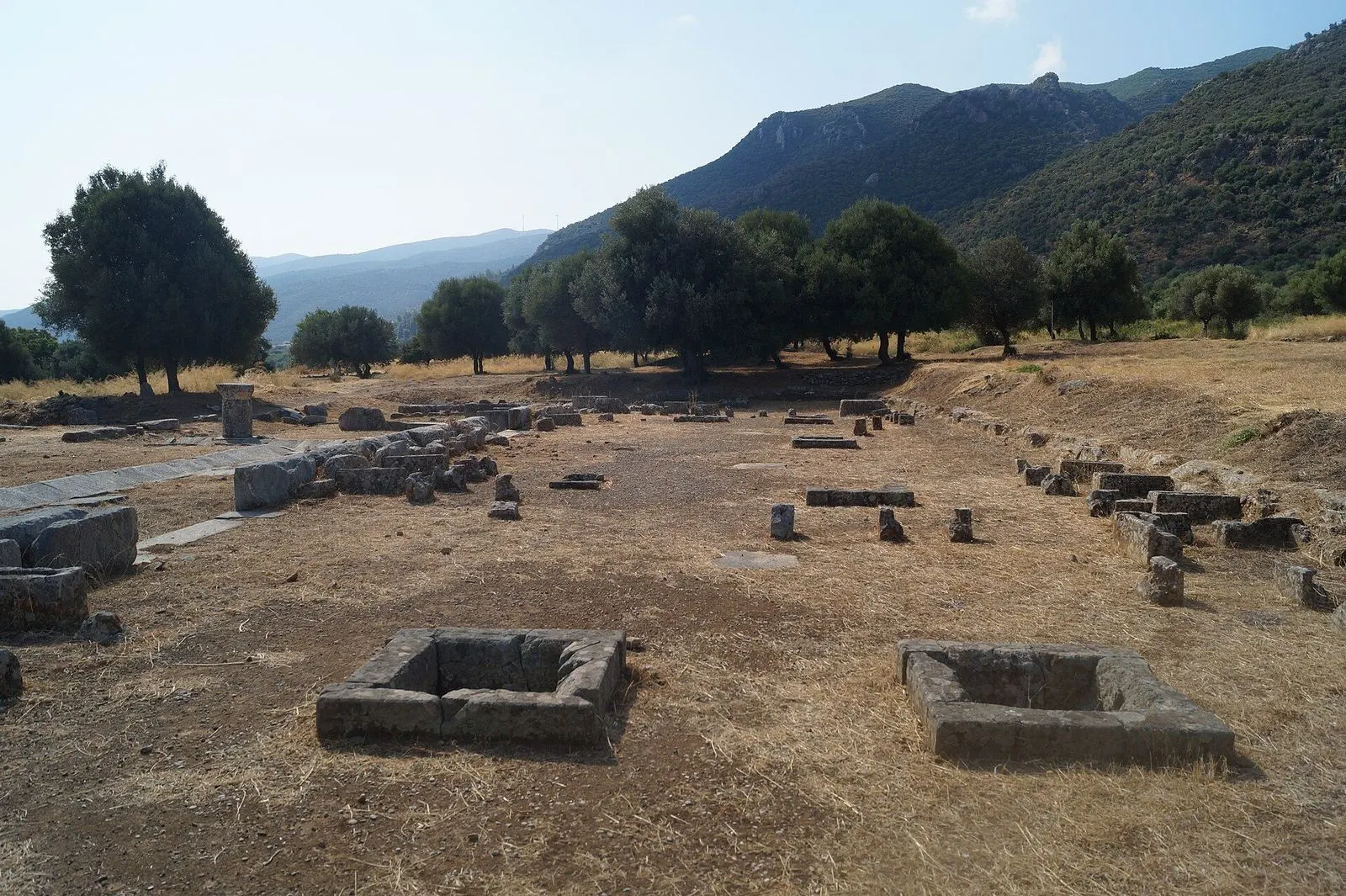
On the mainland, the ruins of the city of Theseus among olive groves, with the sanctuary of Asklepios, towers and Byzantine churches.
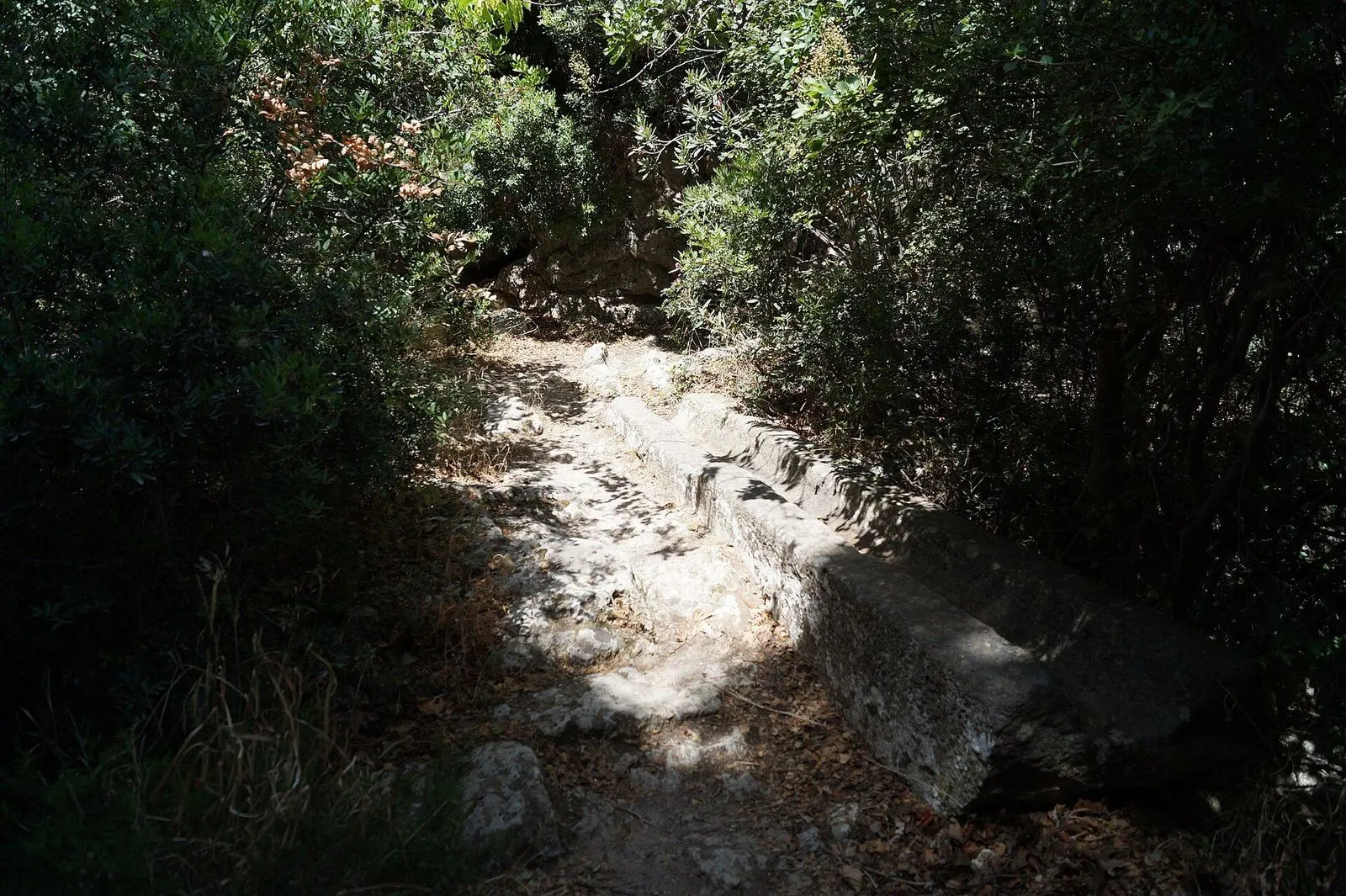
A natural rock arch over the stream in the gorge above Troizen, reached by a path along the water.
Last updated