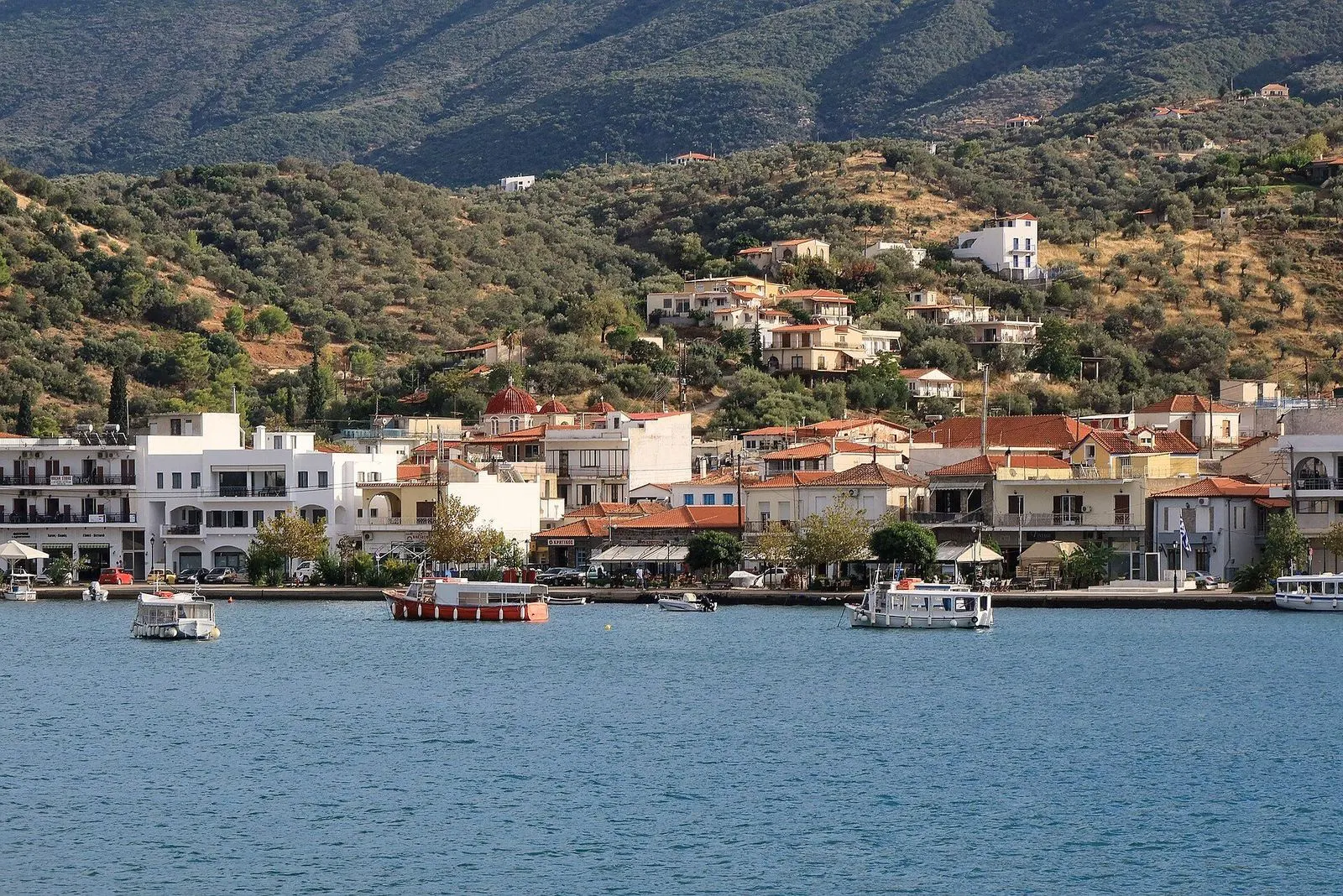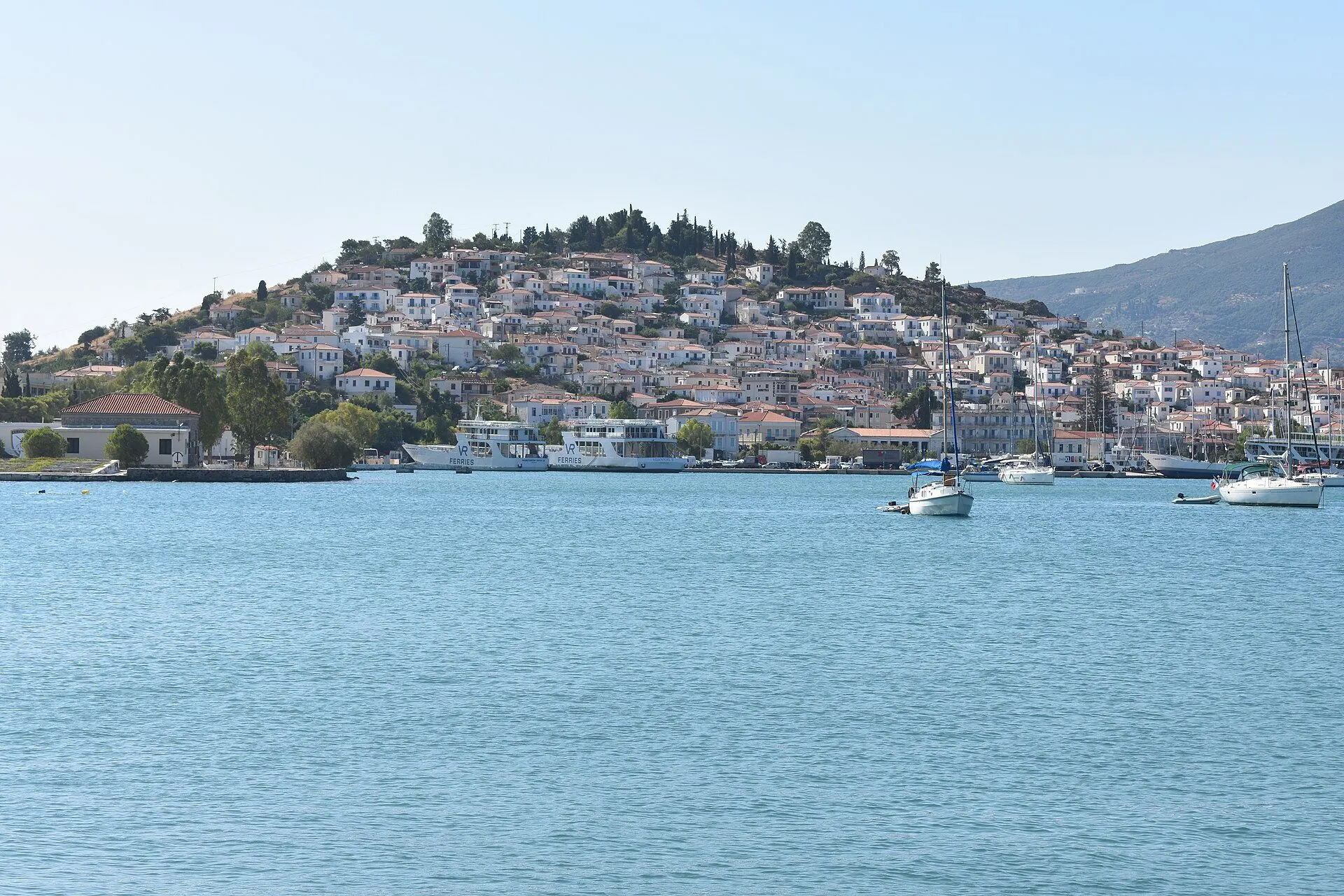
Poros town on its hill above the strait

Poros · Towns & villages

Towns & villages of Poros

Harbour towns, mountain hamlets and the places where island life still follows its own rhythm.

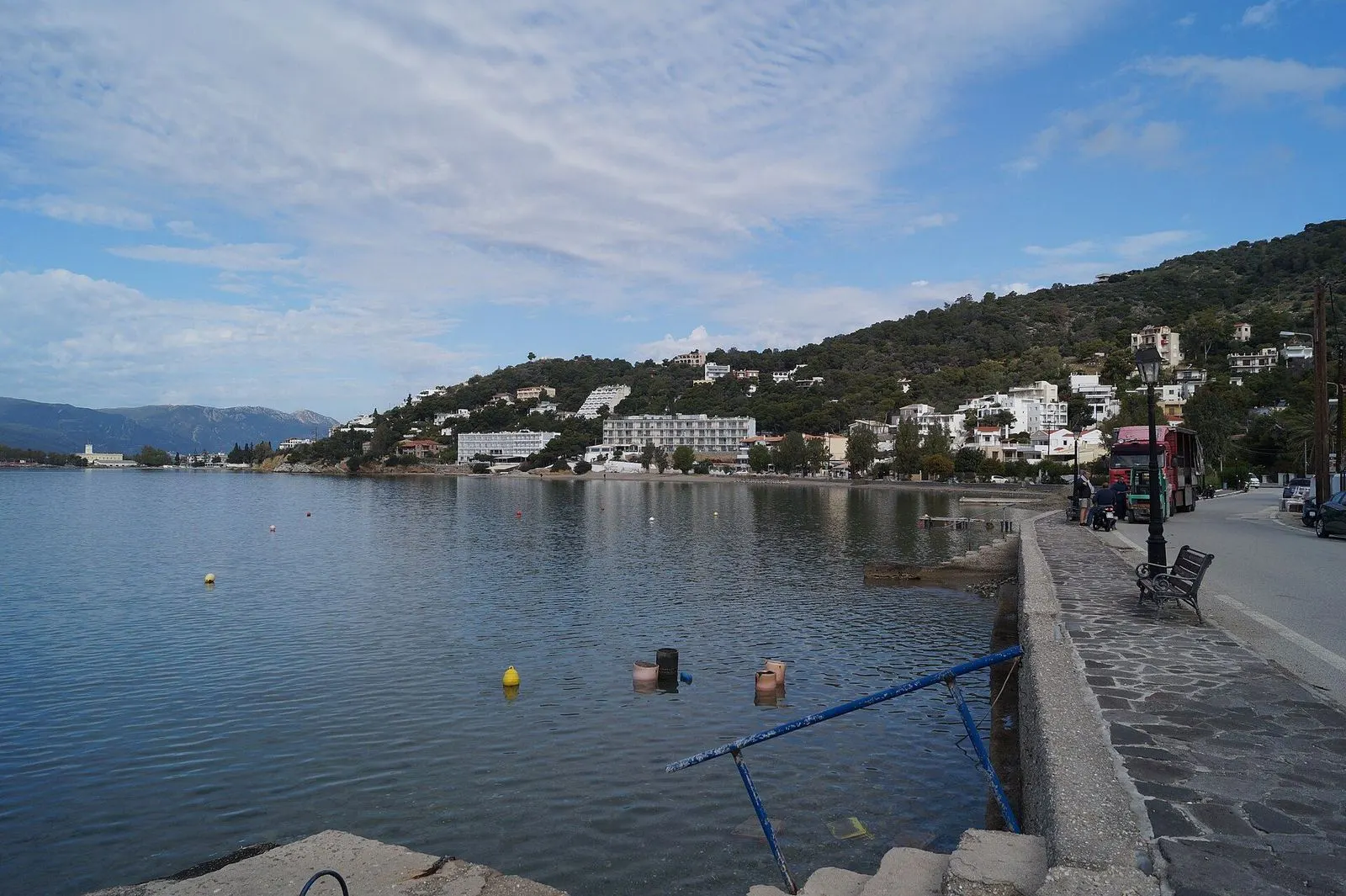
View of Poros town, Poros town & Sphairia, Poros
01
Poros town & Sphairia

Poros town

A town of tiled roofs on a volcanic rock, facing the Peloponnese across a strait you could almost swim

Poros town covers almost the whole of Sphairia, the small volcanic half of the island, climbing in tiers of white and ochre houses with red-tiled roofs from the waterfront to the blue-and-white clock tower on the hill. In front of it runs the strait that gave the island its name: poros means 'passage', and here the water between the island and the mainland village of Galatas is only a few hundred metres wide, so ferries, yachts, fishing boats and the little water taxis seem to sail down the main street. Behind the cafes of the harbour, steep lanes and stairways lead up through the old quarter to the clock tower and the view.

  • Sunset from the clock tower hill
  • The strait at dusk from a waterfront cafe
  • The archaeological museum on Korizis square
  • A water taxi across to Galatas for dinner
  • The Sleeping Woman on the skyline
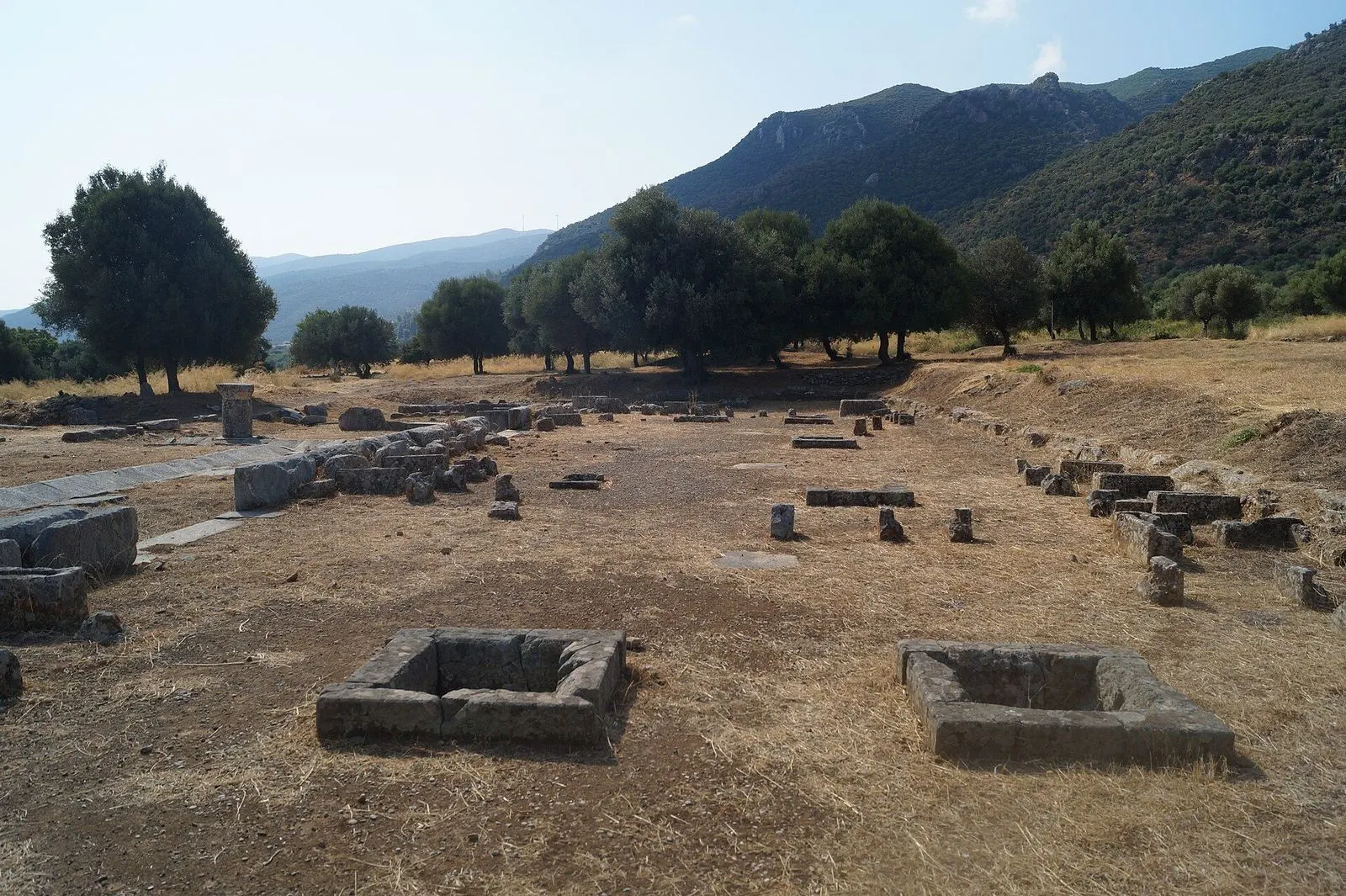
Discover Poros town
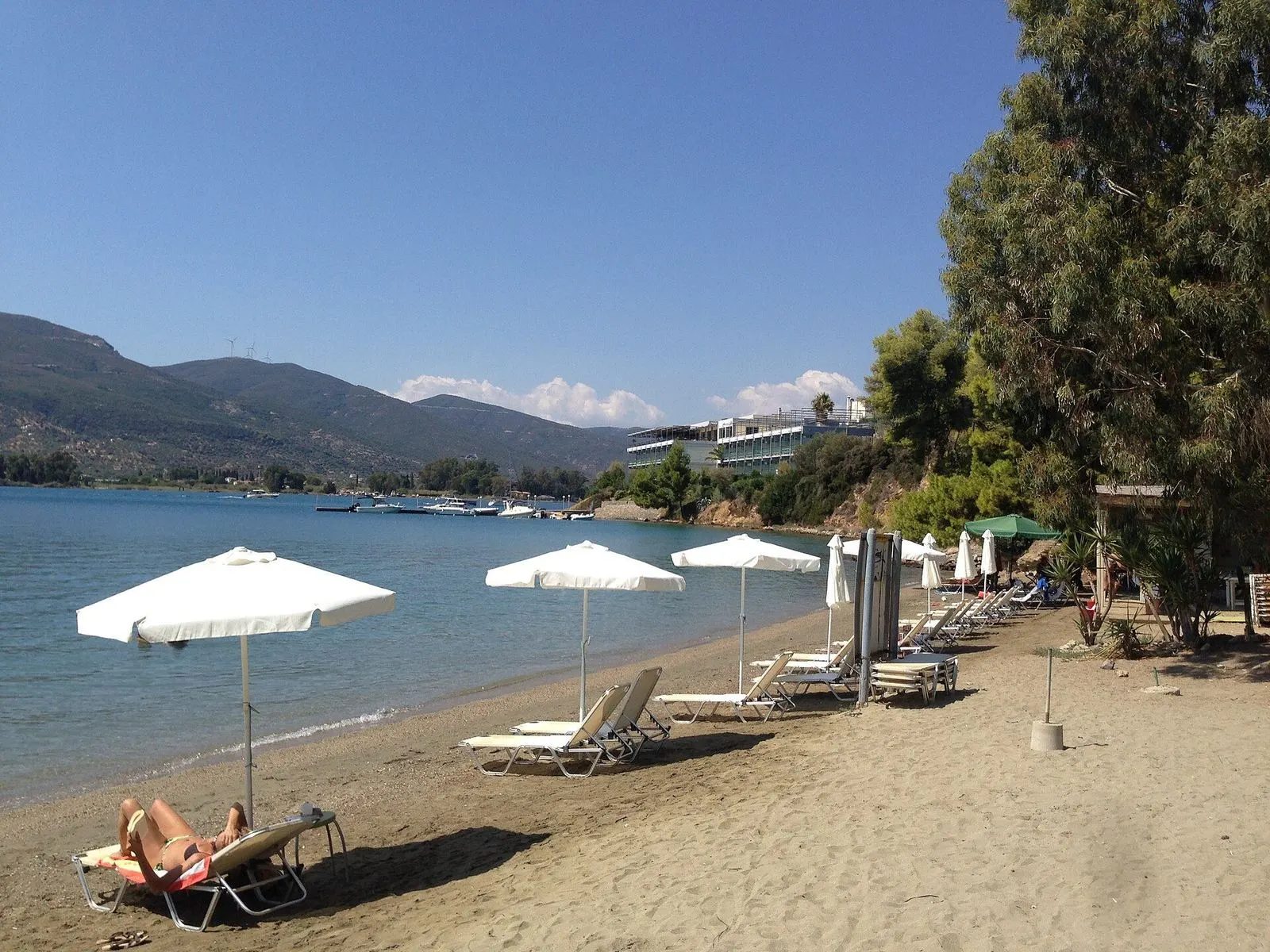
View of Askeli, Askeli & the south coast, Poros
02
Askeli & the south coast

Askeli

The island's main beach, under the pines, looking across the water to the Peloponnese

Askeli is the beach resort of Poros, a long bay of sand and fine pebbles on the south coast of Kalavria, about ten minutes from town. Pine woods come down the slopes behind it, the hotels, apartments and tavernas sit along the beach road, and across the calm water rise the mountains of the Peloponnese. It is where most families stay, with shallow water, water sports and everything within a short walk.

  • Calm, shallow water for children
  • Water sports on the beach
  • Dinner on the beach road at dusk
  • The walk or ride on to the monastery
Discover Askeli
View of Neorio, Love Bay & Russian Bay, Neorio & the west, Poros
03
Neorio & the west

Neorio, Love Bay & Russian Bay

Coves in the pines on the strait west of town, and the ruins of a Russian naval station

West of town the coast road follows the strait past the Naval Training Centre to Neorio, a bay of tavernas, small hotels and sunbeds facing the green mainland. Beyond it, the road runs on through the pines to Love Bay, a tiny cove of green water with trees to the shore, and ends at Russian Bay, where the stone storehouses of a 19th-century Russian naval station stand roofless by the sea. The name Neorio means a dockyard, a memory of the naval base Kapodistrias set up in this bay in the 1820s.

  • A swim in Love Bay before the crowds
  • The ruins of the Russian dockyard
  • Lunch on the sand at Megalo Neorio
  • The view across the strait to Troizinia
Discover Neorio, Love Bay & Russian Bay
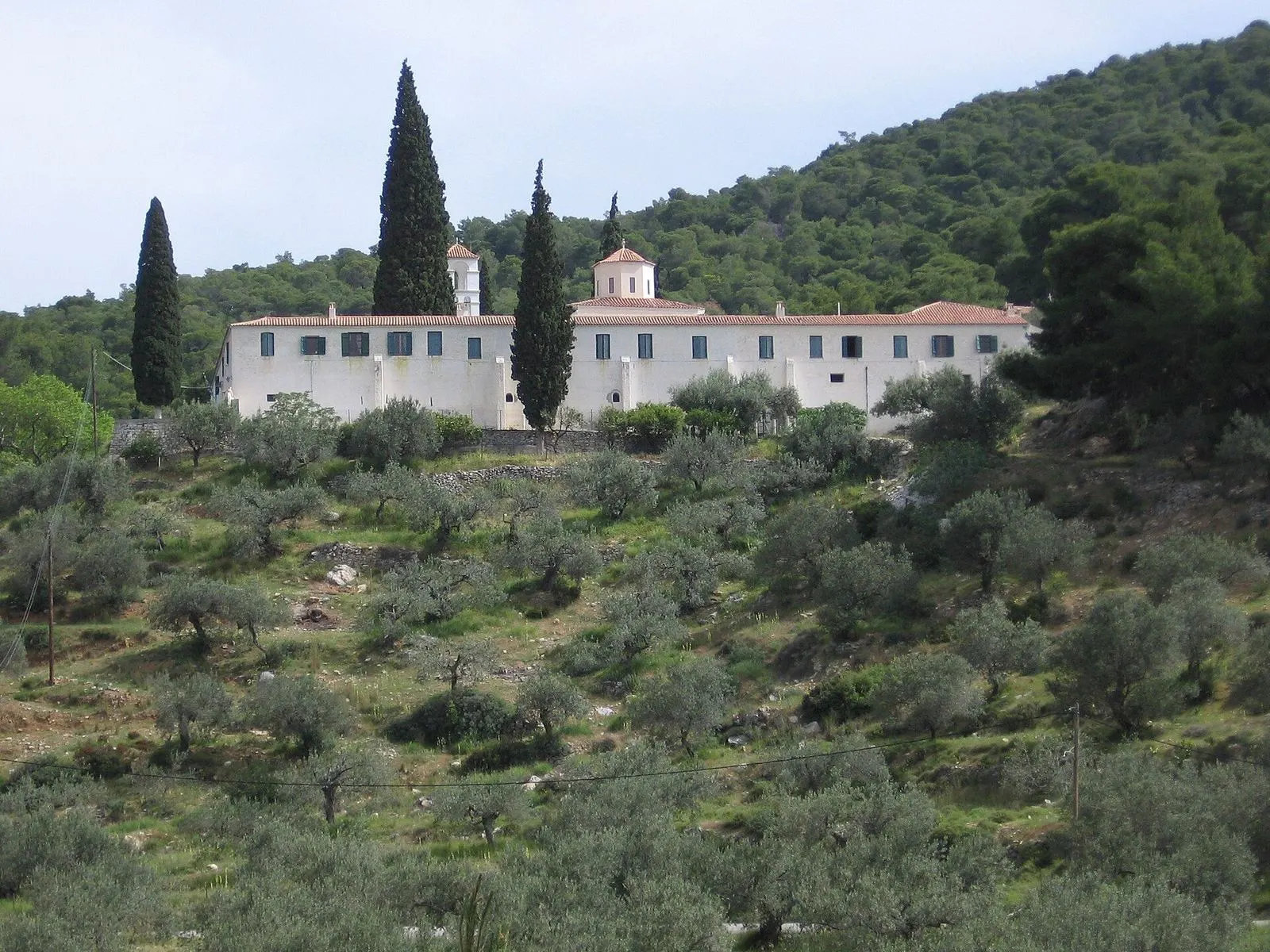
View of Monastery of Zoodochos Pigi, Askeli & the south coast, Poros
04
Askeli & the south coast

Monastery of Zoodochos Pigi

The island's monastery of the life-giving spring, in a green fold of the pine forest

The monastery of Zoodochos Pigi, the Life-giving Spring, stands in a green ravine at the eastern end of the south coast, about 4 km from town, where a spring rises among plane and pine trees. It was founded in the 18th century, and tradition says its founder, a bishop, came here because the water of the spring cured him. Its church is known for a finely carved wooden iconostasis. Below it the road ends at the bay of Monastiri, and above it a road climbs through the pines to the Temple of Poseidon.

  • Cool water from the spring under the trees
  • The carved wooden iconostasis
  • A swim in the bay below
  • The road on through the pines to the Temple of Poseidon
Discover Monastery of Zoodochos Pigi
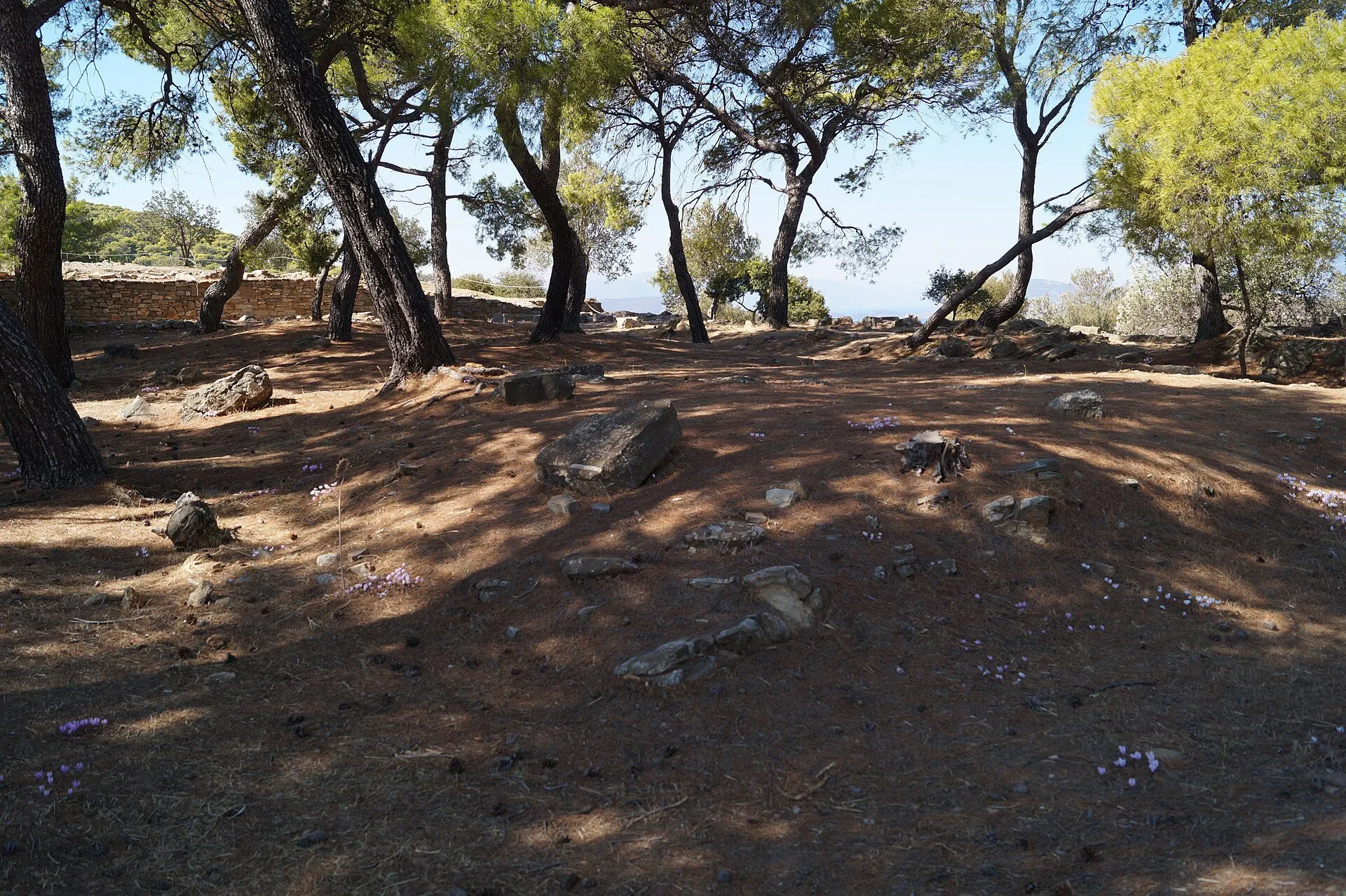
View of Temple of Poseidon, Kalavria & the north, Poros
05
Kalavria & the north

Temple of Poseidon

The scattered stones of an ancient sanctuary in the pines, where Demosthenes died

On a saddle of the hills in the middle of Kalavria, among the pines, lie the foundations of the Sanctuary of Poseidon, once one of the most important in the Saronic Gulf. In the Archaic period it was the meeting place of the Kalaurian League, an alliance of seven cities around the gulf, Athens among them, and in 322 BC the orator Demosthenes, fleeing the Macedonians, took poison here rather than be captured. Little stands above knee height, but the setting is lovely: pine woods, stone walls, the sea on both sides and the view across the Saronic Gulf to Aegina. Swedish archaeologists have excavated the site since the 1890s.

  • The view across the gulf to Aegina
  • Where Demosthenes took poison
  • A quiet walk through the ruins and pines
  • The road down to the bay of Vagionia
Discover Temple of Poseidon
View of Galatas & Lemonodasos, Galatas & Troizinia (mainland), Poros
06
Galatas & Troizinia (mainland)

Galatas & Lemonodasos

Across the strait on the mainland: a waterfront village and a forest of lemon trees

Galatas is not on Poros but on the Peloponnese, directly across the strait, five minutes away on the little boats that cross all day and half the night. It is a working mainland village with a long waterfront of cafes and ouzeries looking back at the whole of Poros town. Behind it, on the slopes towards the mountains, lies Lemonodasos, the Lemon Forest: tens of thousands of lemon and orange trees on terraces watered by mountain streams, with a path up through them that smells of blossom in spring.

  • The view back to Poros town from the waterfront
  • A walk through the lemon groves of Lemonodasos
  • Ouzo on the waterfront at dusk
  • The sandy spit of Aliki
Discover Galatas & Lemonodasos
View of Ancient Troizen, Galatas & Troizinia (mainland), Poros
07
Galatas & Troizinia (mainland)

Ancient Troizen

On the mainland: the birthplace of Theseus, and a stone bridge over a gorge

Troizen lies on the mainland about 8 km from Galatas, at the foot of the mountains, among olive and citrus groves. In myth it was the home of Aithra and the birthplace of Theseus, who lifted a rock here to find his father's sword and sandals before setting out for Athens. Its ruins are scattered and quiet: towers, walls, the sanctuary of Asklepios, Byzantine churches built from ancient stones. Above them a path follows the gorge to the Devil's Bridge, a natural rock arch over the stream. In 1827, during the War of Independence, the Greek national assembly met here and elected Ioannis Kapodistrias the first governor of Greece.

  • The Devil's Bridge over the gorge
  • The ruins in the olive groves
  • The rock of Theseus
  • Where Kapodistrias was elected in 1827
Discover Ancient Troizen

Regions

Where to base yourself in Poros

01

Poros town & Sphairia

The town on its small volcanic rock, with the waterfront, the clock tower, the archaeological museum, the lanes of the old quarter and the little beach of Kanali by the bridge to Kalavria.

02

Askeli & the south coast

The long, sheltered beach of Askeli with its hotels and tavernas, and further east the monastery of Zoodochos Pigi in its green ravine above the bay of Monastiri.

03

Neorio & the west

The coast road past the Naval Training Centre to the bays of Mikro and Megalo Neorio, Love Bay in the pines and Russian Bay with the ruins of the Russian naval station.

04

Kalavria & the north

The pine-covered heart of the island, with the Sanctuary of Poseidon on a saddle of the hills and the quiet bay of Vagionia below it.

05

Galatas & Troizinia (mainland)

Across the strait on the Peloponnese: the village of Galatas, the lemon groves of Lemonodasos, and the ruins of ancient Troizen with the Devil's Bridge in its gorge.

Find a place to stay

Browse hotels and guesthouses across Poros, filtered by region and price.

Browse hotels

Last updated