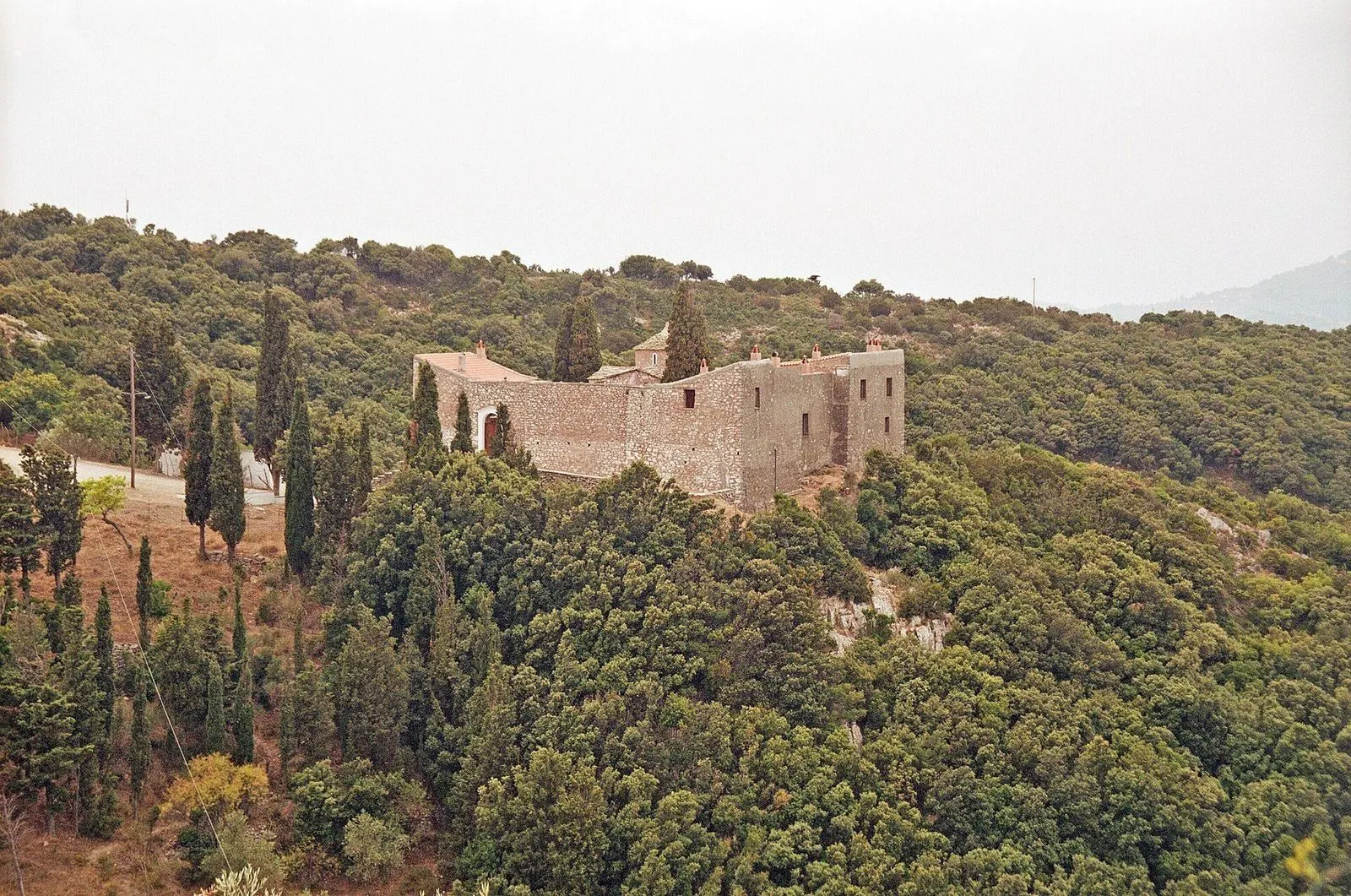
The monasteries of Palouki
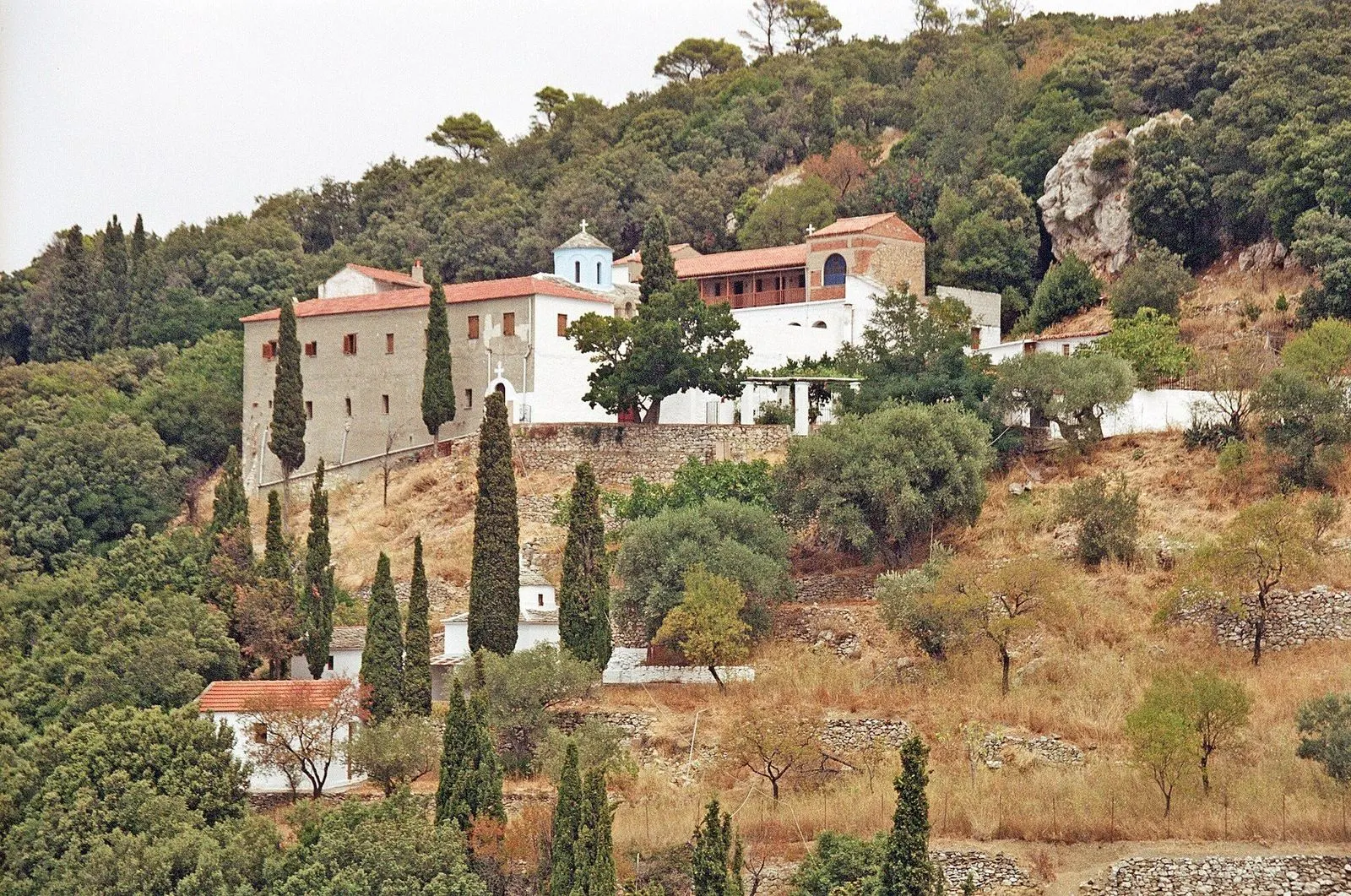
Evangelistria, Metamorfosi, Prodromos and Agia Varvara on the green mountain across the bay, linked by a road and old paths.
Skopelos · Skopelos town & Palouki · Χώρα Σκοπέλου
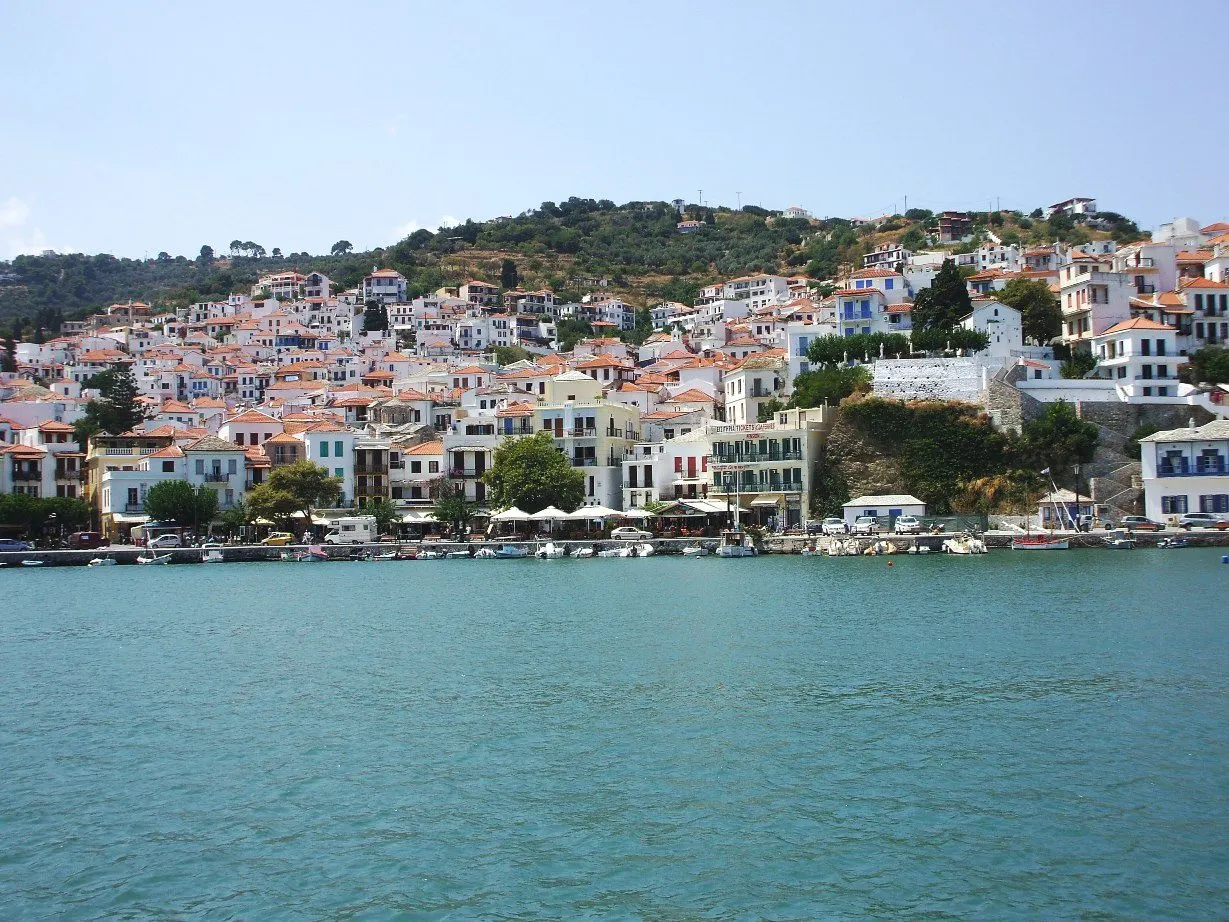
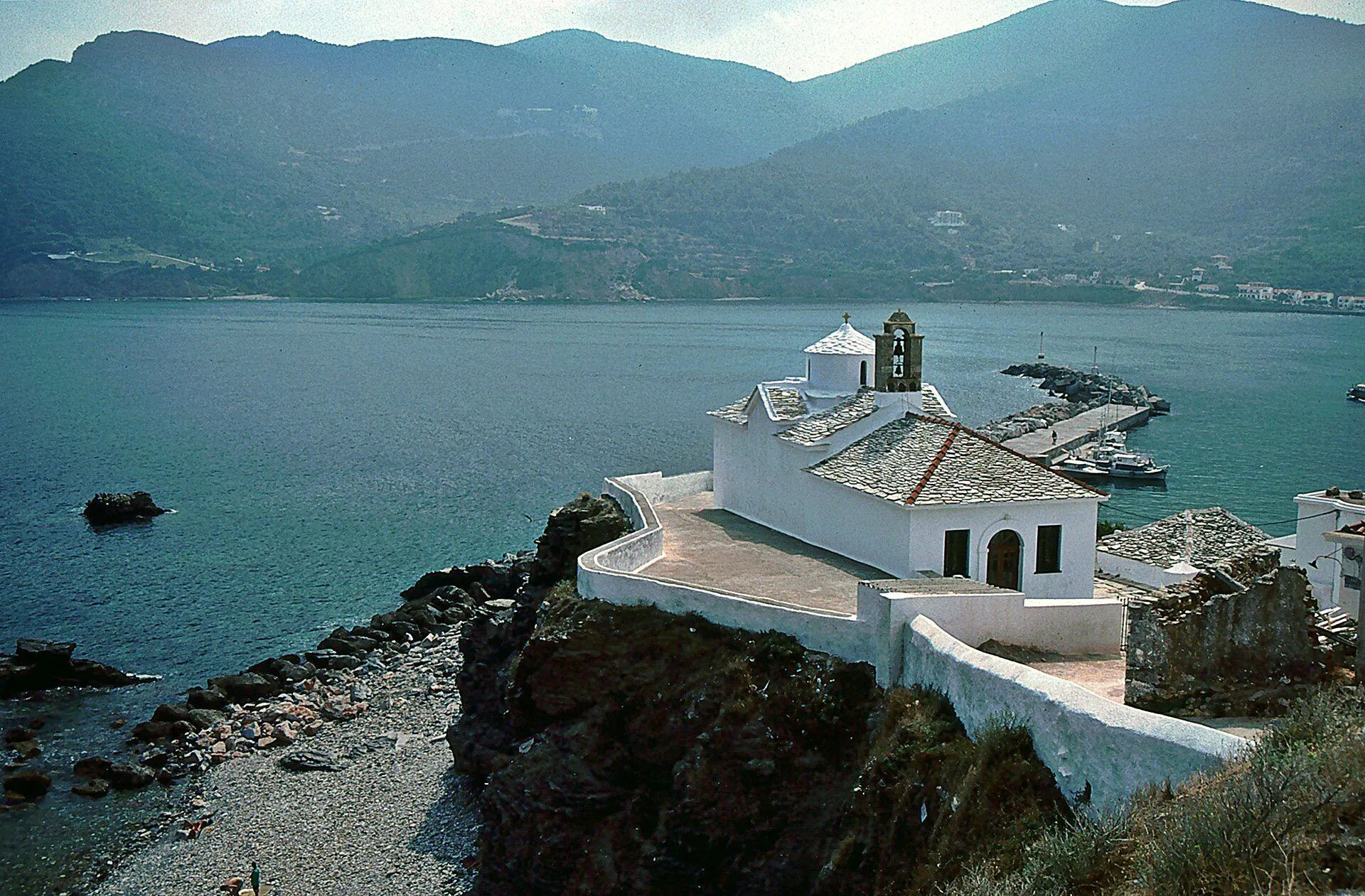
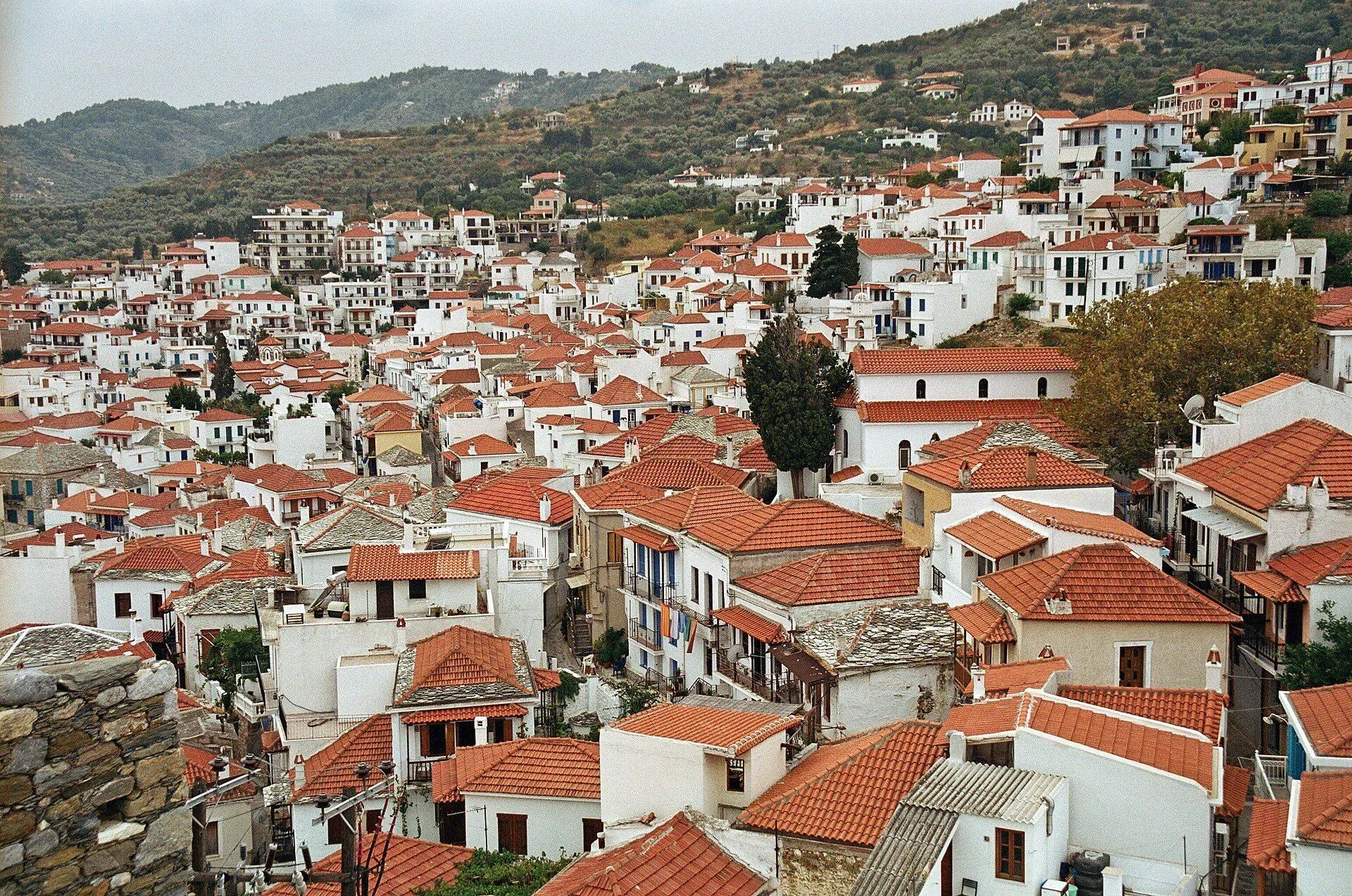
Skopelos town, the Chora, is one of the most beautiful island towns in Greece. It climbs the hillside at the back of a wide bay on the north-east coast, an amphitheatre of white houses with grey slate and red tiled roofs, wooden balconies and painted doors, up to the walls of a Venetian castle at the top. Dozens of churches are scattered through the lanes, from the little Panagitsa tou Pyrgou on its rock at the harbour mouth to the 11th-century basilica of Agios Athanasios inside the Kastro. Below, the long waterfront is lined with cafes, tavernas and the boats. Protected as a traditional settlement since 1978, it is the island's port, capital and the best base for a first visit.
Greetings from Skopelos town
Skopelos town
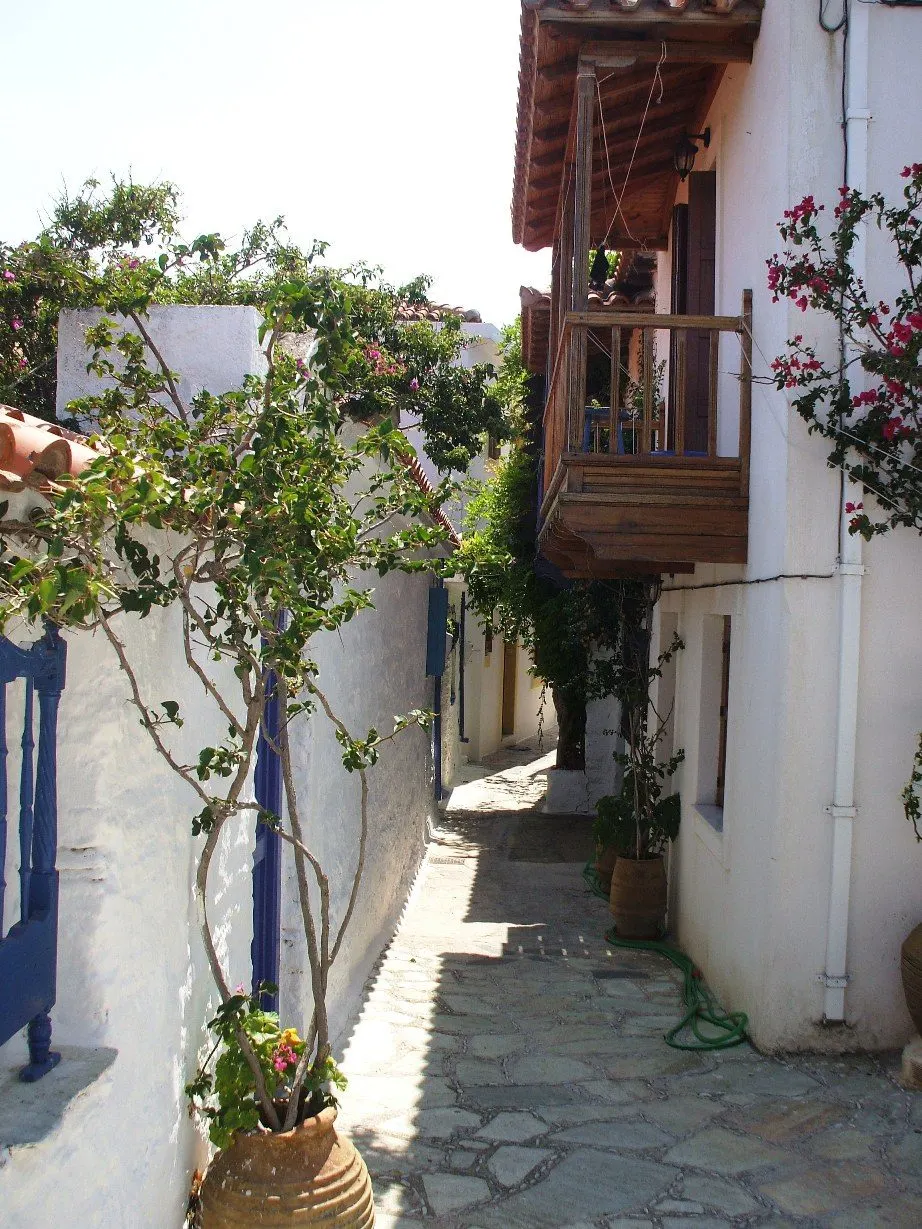
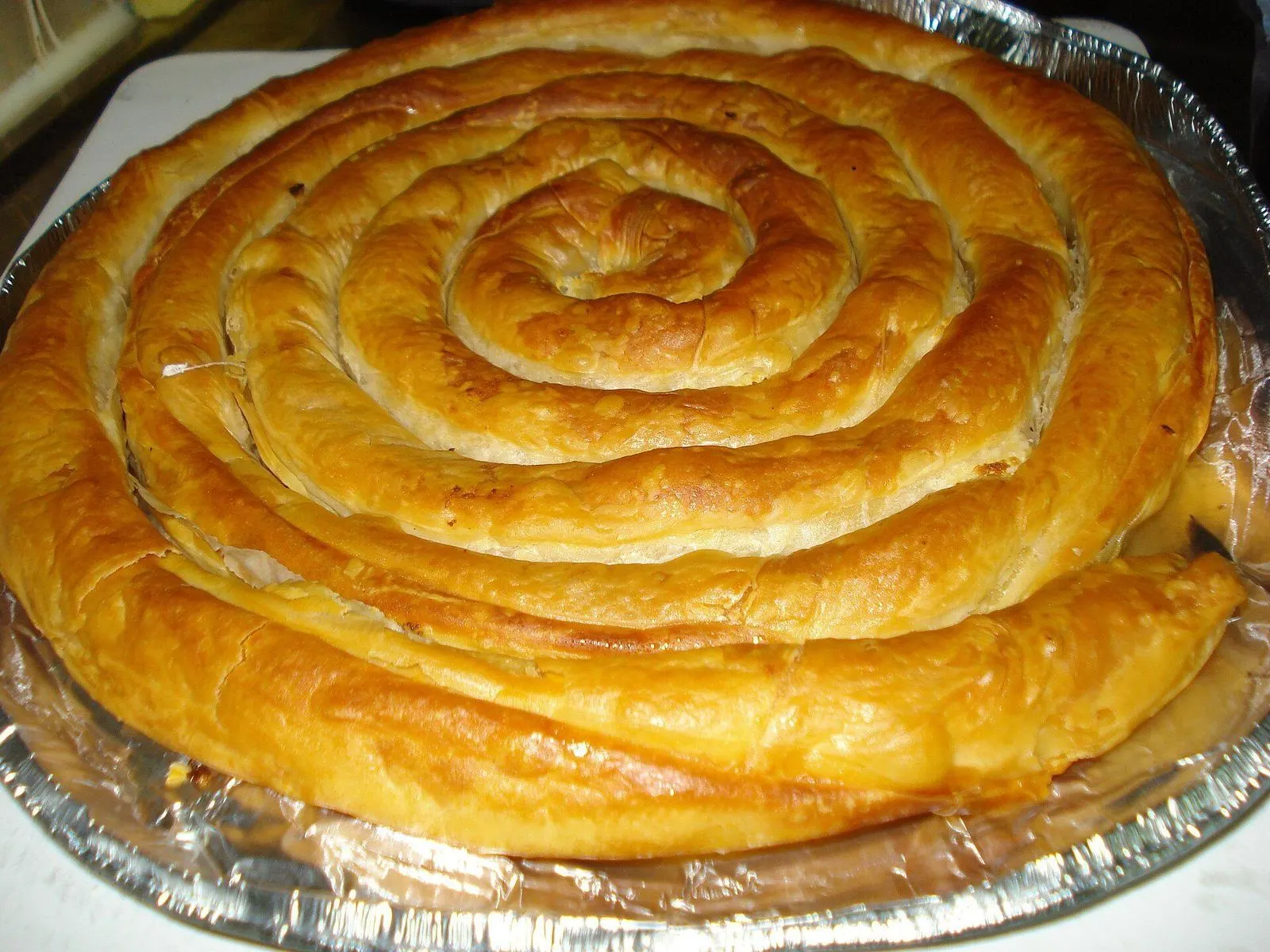
We climbed the lanes this morning from the harbour to the castle, past whitewashed steps, cats on wooden balconies and a church at every corner, and stood at the top with the whole bay below us. Lunch was a cheese pie, rolled and fried while we waited, eaten on the quay. This evening the light turned the slate roofs silver, and we are at a table by the water under the little white church on its rock.
White houses and slate roofs climbing a bay to a Venetian castle, with a church at every turn
The town stands on the site of ancient Peparethos, the city that gave the island its old name. Its wine was famous across the Greek world, and the islanders struck their own silver coins. Stretches of the city wall of the 5th century BC can still be seen at the top of the town, built into the castle. Down by the sea, at Ampeliki, the ruins of a sanctuary of Asklepios of the 4th century BC have been half eaten away by the waves.
After the Fourth Crusade, the Venetian Ghisi family took the island and built a castle on the ancient walls, at the highest point of the town, in the 13th century. Skopelos passed back and forth between Byzantium and the Latins, and was Venetian again from the 1450s until 1538, when the Ottoman admiral Hayreddin Barbarossa took it and sacked the town. The islanders slowly came back, and because no Turkish population ever settled here, the town kept much of its own life and its old privileges.
What you see today is mostly 18th and 19th century, the age when Skopelos lived from the sea. Its shipyards built sailing ships that traded across the Mediterranean, and sent thirty-five of them to fight in the War of Independence of 1821. The captains' houses have two storeys, wooden balconies and windows, and roofs of slate or tile, never flat. The building rules that came with the 1978 protection still keep it that way.
Count the churches as you climb: there are well over a hundred in the town alone, most of them built by families and opened only on their saint's day. The oldest is Agios Athanasios in the Kastro, a single-aisled basilica of the 11th century with 17th-century frescoes, said to stand on a temple of Athena. Panagitsa tou Pyrgou, white on its rock at the end of the harbour, has a carved 17th-century iconostasis of flowers and birds. The island's patron, Saint Riginos, its bishop martyred in 362, is remembered with a holiday every 25 February.
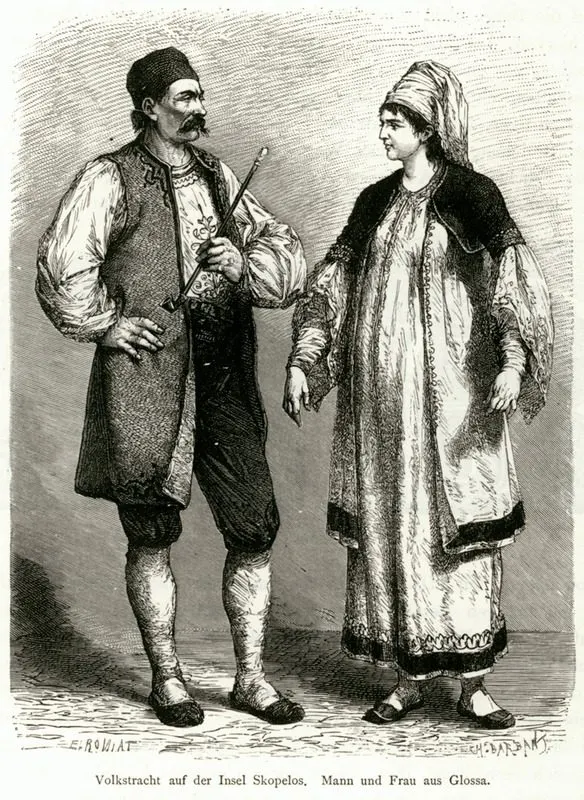
Skopelos is a place of women's houses. By old custom a bride's parents give the new couple a house, which stays in her name, so the town has grown street by street through its daughters. The writer Pavlos Nirvanas, whose family came from the island, left his house to the town, and it is now the island's history museum, beside the church of the Three Hierarchs. The Folklore Museum in the Nikolaides family house shows the embroidery, the carved furniture and the silk costumes that brides once wore.
Hour by hour
The lanes before the heat, the castle, a pie on the quay, a monastery on the mountain and dinner by the old harbour.
Start on a terrace on the hill, with the boats coming in below you and the whole Chora spread around the bay.
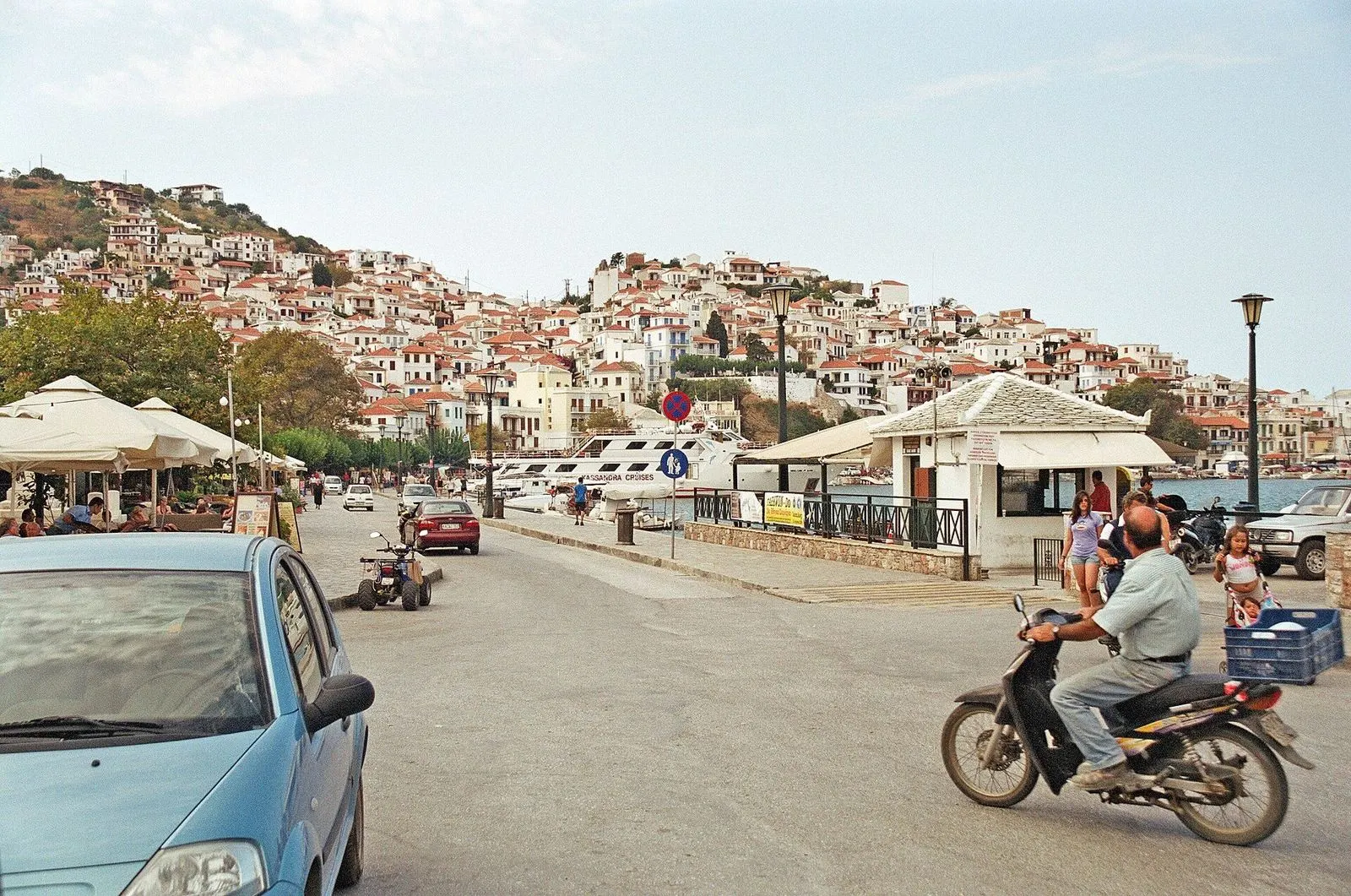
Climb the lanes and steps to the Venetian castle before the sun is high, and look into the old basilica of Agios Athanasios on the way.
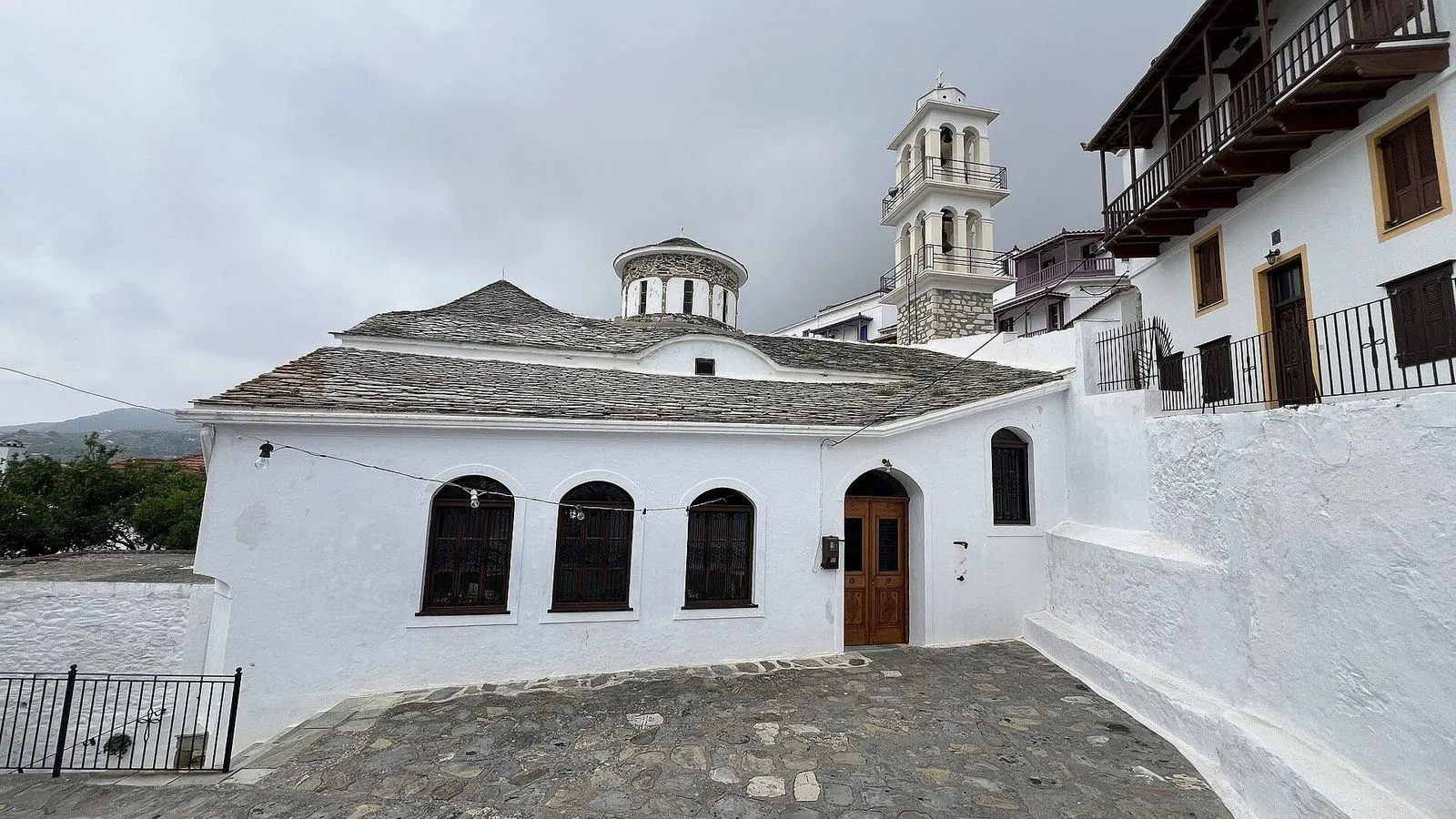
Walk down through the town to the Folklore Museum and the Vakratsa mansion, to see the silk costumes and how a captain's family lived.
Order a Skopelos cheese pie, twisted into a spiral and fried while you wait, and eat it in the shade of the lanes.
Drive or walk up the slope of Palouki to the monastery of Evangelistria, with its gilded iconostasis and a view of the town from above.
End with fish or lamb with plums at a taverna that has been cooking since 1896, under the little white church on its rock.
Where to stay
Skopelos town
Thea Home Hotel · Boutique hotel · €€
Skopelos town
Fasolaki Eco Residences · Eco apartments · €€
Skopelos town · Skopelos town & Palouki
Skopelos town · Skopelos town & Palouki
Skopelos town · Skopelos town & Palouki
Skopelos town · Skopelos town & Palouki
Skopelos town · Skopelos town & Palouki
Where to eat
Skopelos town · Skopelos town & Palouki
Skopelos town · Skopelos town & Palouki
Skopelos town · Skopelos town & Palouki
Skopelos town · Skopelos town & Palouki
Within an easy drive
Evangelistria, Metamorfosi, Prodromos and Agia Varvara on the green mountain across the bay, linked by a road and old paths.
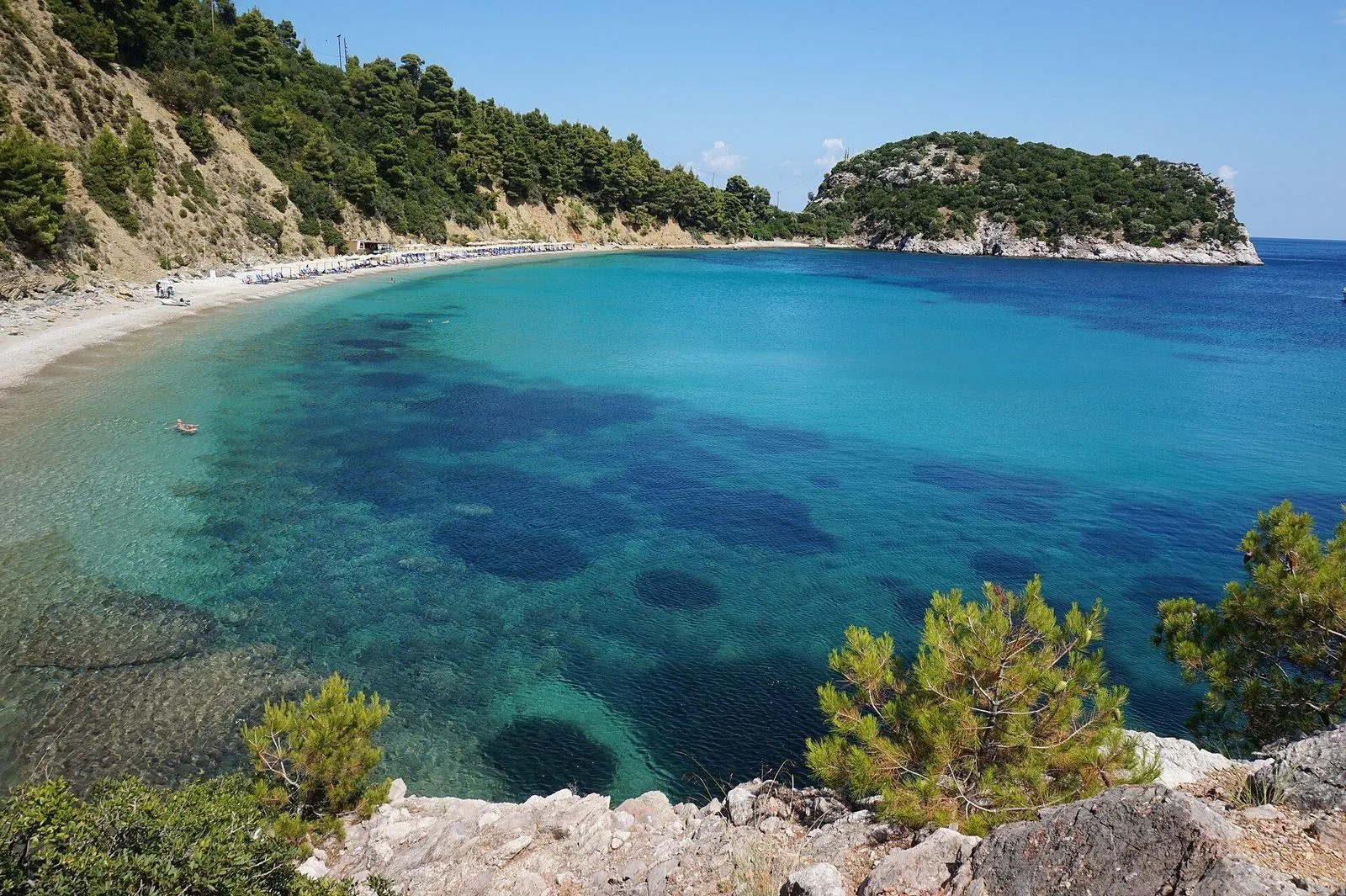
The nearest beaches, 4 km south, with the tomb of the Cretan prince Staphylos on the headland.
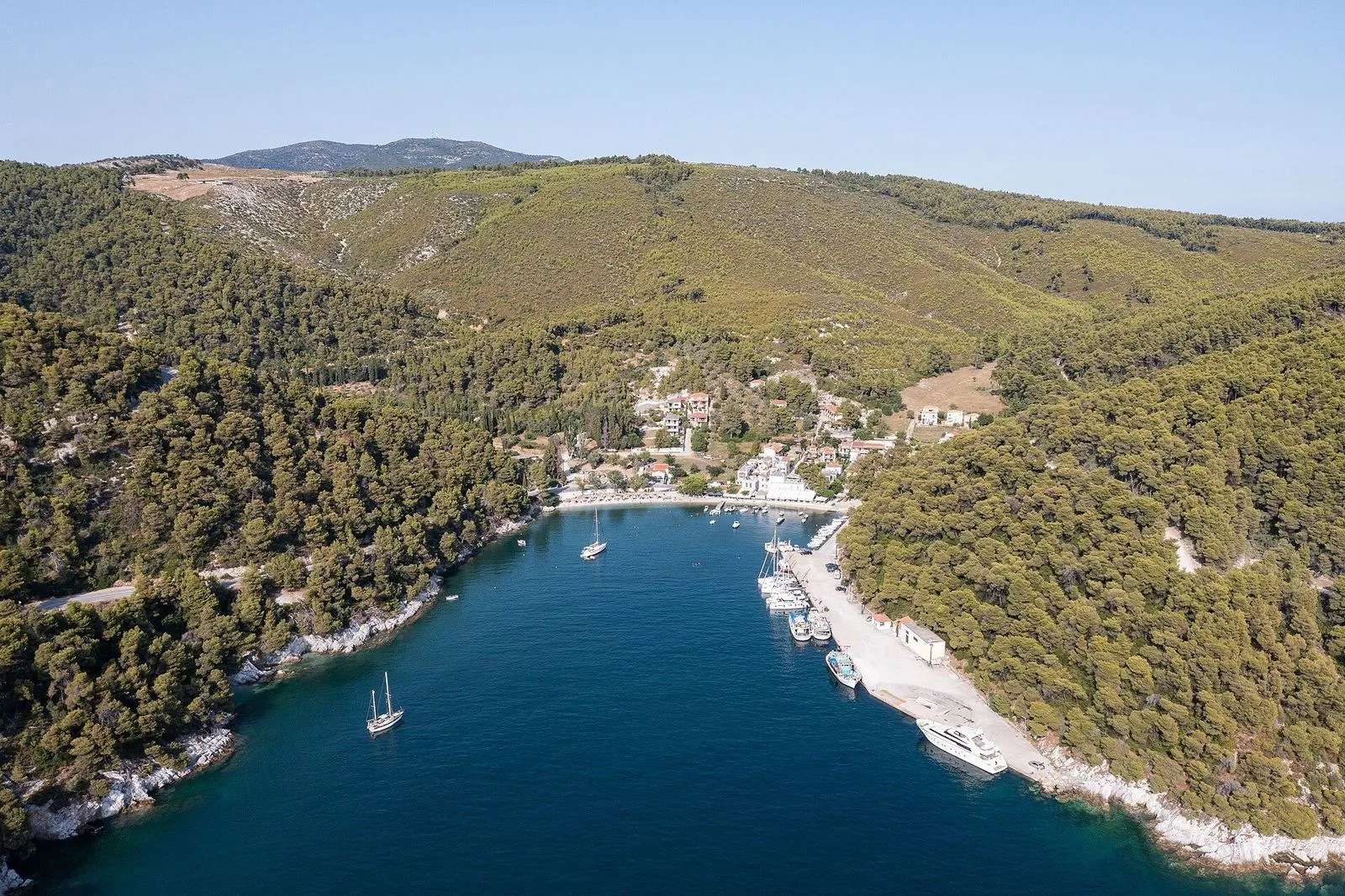
The fishing bay of the Olympic runner Agnon, with tavernas on the water, and the sandy cove beyond it.
A pebble cove under the pines on the north-east coast, a short drive from the town.
Good to know
Most boats from Volos, Skiathos and Alonissos dock right on the waterfront. The bus station and taxi rank are by the harbour, with buses along the coast road to Stafylos, Agnontas, Panormos, Elios and Glossa. Park on the edge of town: the lanes are for walking.
May, June and September, when the lanes are cool enough to climb and the pine forest smells of resin. The town stays alive into October, and 25 February, the feast of Saint Riginos, is the island's own holiday.
More of Skopelos
Glossa & the north-west
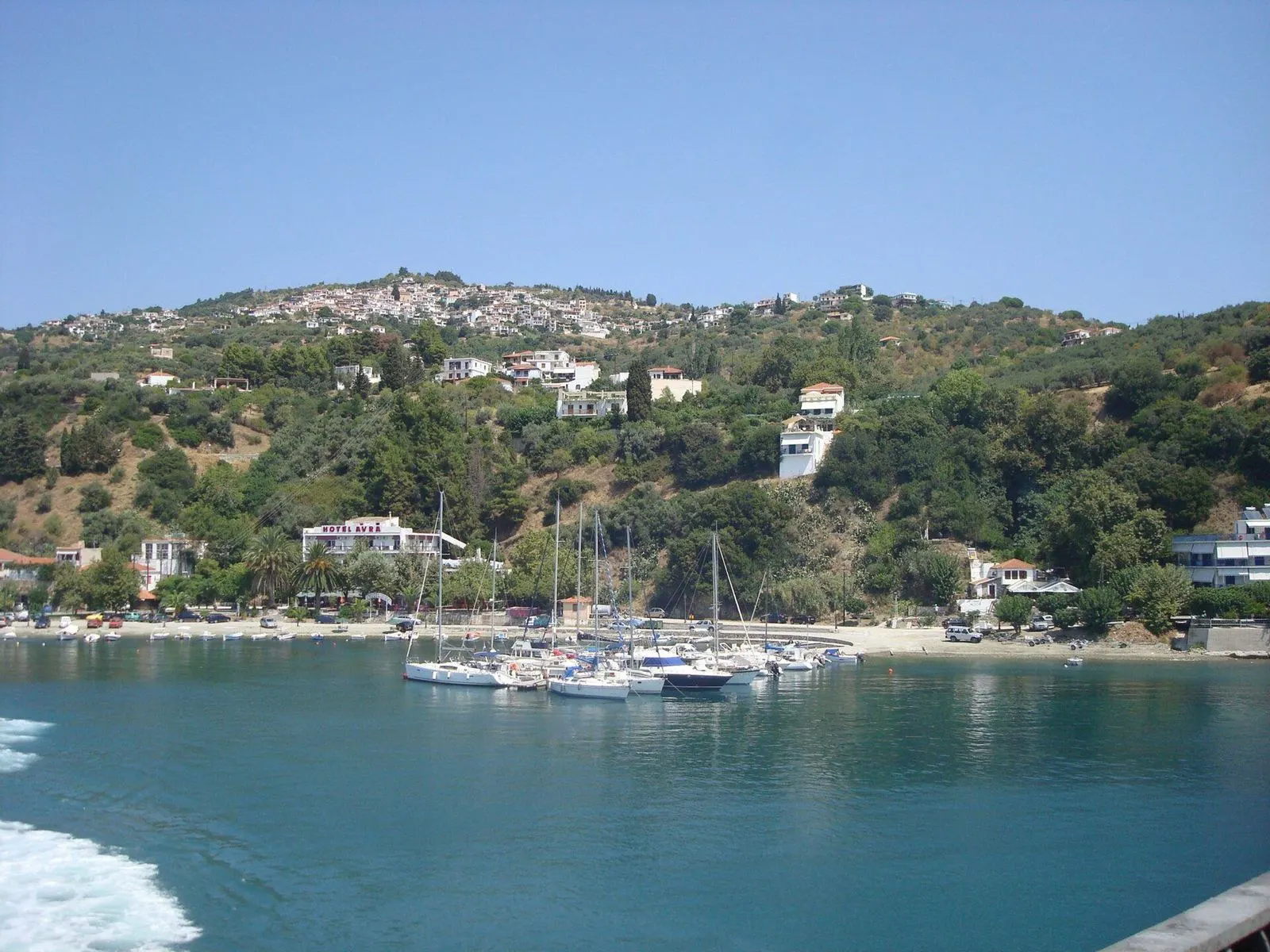
The island's second village, high on the 'tongue' of the north-west, looking across to Skiathos
Glossa & the north-west
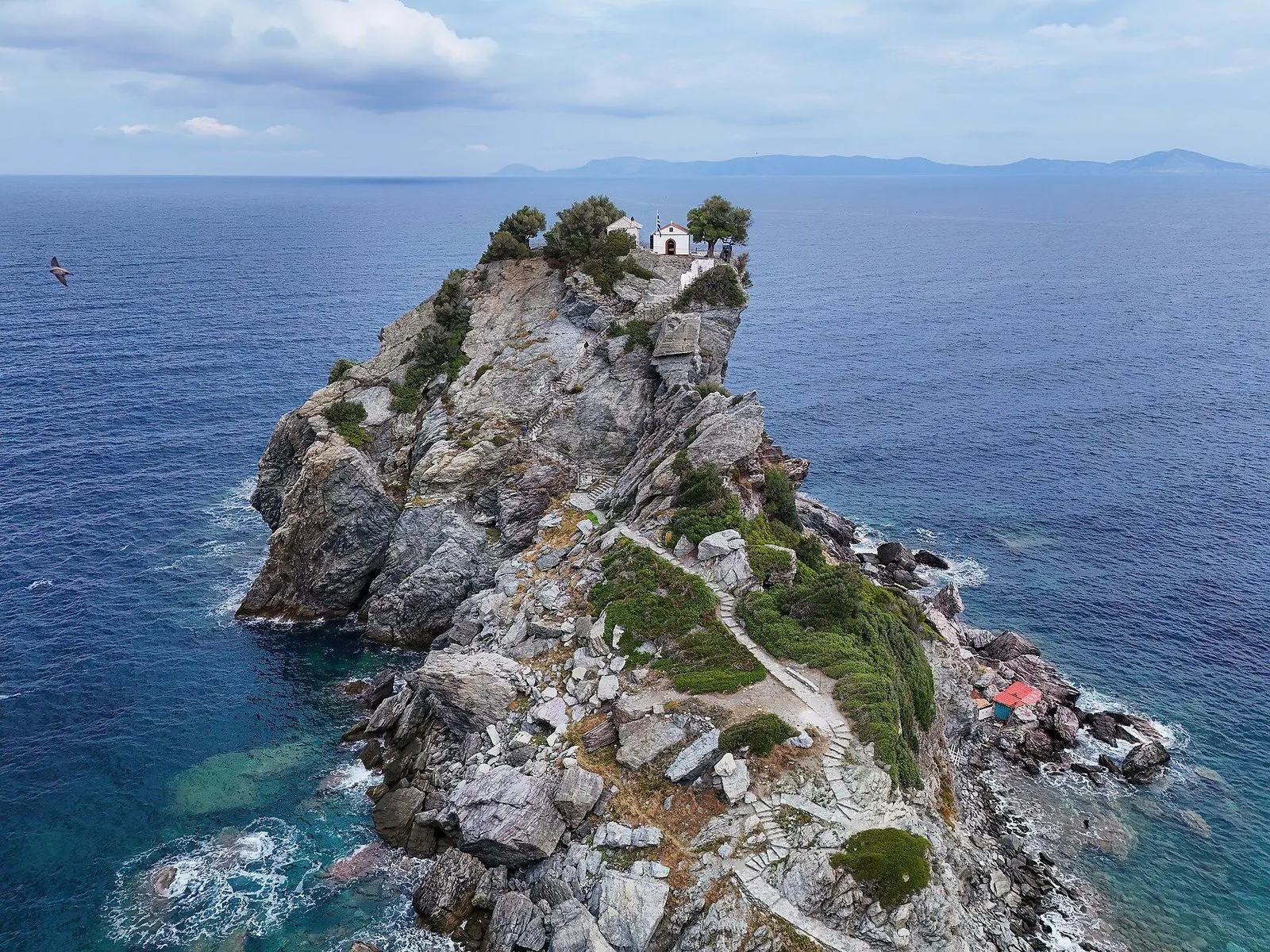
The white chapel on a rock above the sea, the wedding chapel of Mamma Mia!
Skopelos town & Palouki
Evangelistria, Metamorfosi, Prodromos and Agia Varvara on the green mountain across the bay
Every stay we recommend across Skopelos, from village guesthouses to rooms on the sea.
See all staysLast updated