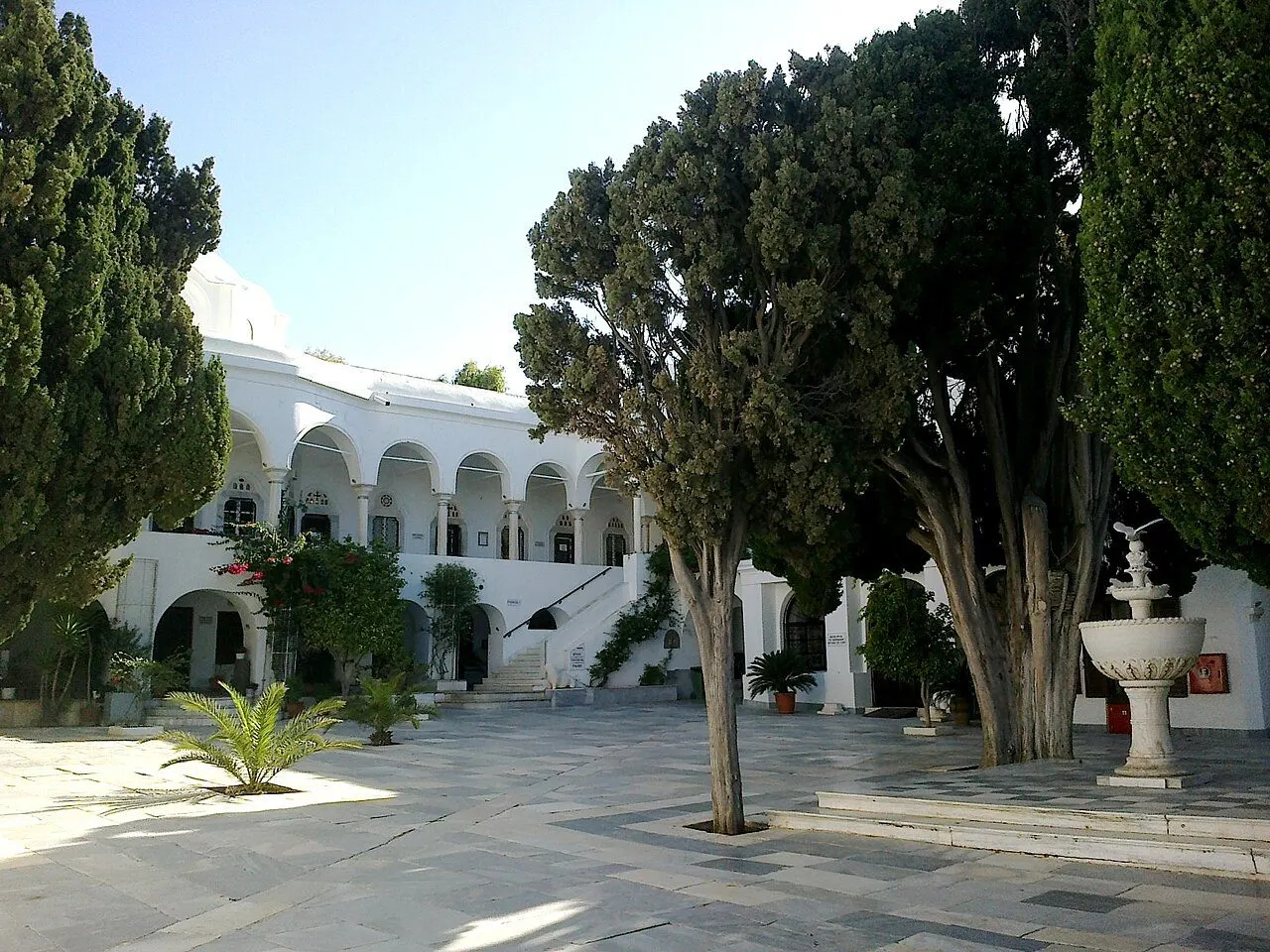
Panagia Evangelistria
The marble church above the port, with the icon found in 1823, its silver votives and its courtyard of pebble mosaic. Modest dress is expected inside.
Tinos · History
An island of snakes and springs in the ancient sources, a hilltop city on a granite rock, five Venetian centuries, and a discovery in 1823 that made a farming island the holy island of modern Greece.
Timeline
8th–7th century BC
The early Tinians lived on and around Exomvourgo, the granite hill in the middle of the island, where archaeologists have found walls, houses and a sanctuary of the Geometric and Archaic periods. From this time come the great relief pithoi of Tinos, storage jars as tall as a person, decorated with scenes in clay, now in the Archaeological Museum.
4th century BC – Roman times
Ancient writers called the island Ophiousa, full of snakes, and Hydroussa, full of water, and told how Poseidon sent storks to rid it of the snakes. On the shore at Kionia the Tinians built a sanctuary to the sea god and his wife Amphitrite, with temple, altar, fountain and dining halls, and in Hellenistic times it drew pilgrims from all over the Cyclades. The pilgrim island, in other words, is much older than its church.
1207–1715
After the Fourth Crusade Tinos went to the Venetian Ghisi family, and later to the Republic of Venice itself. The capital was the fortified town of Santa Elena on Exomvourgo, and the island survived pirate raids and Ottoman sieges for centuries after the rest of the Aegean had fallen. It was finally surrendered to the Ottomans in 1715, and the castle was blown up. The Catholic villages and the dovecotes are this period's legacy.
1823
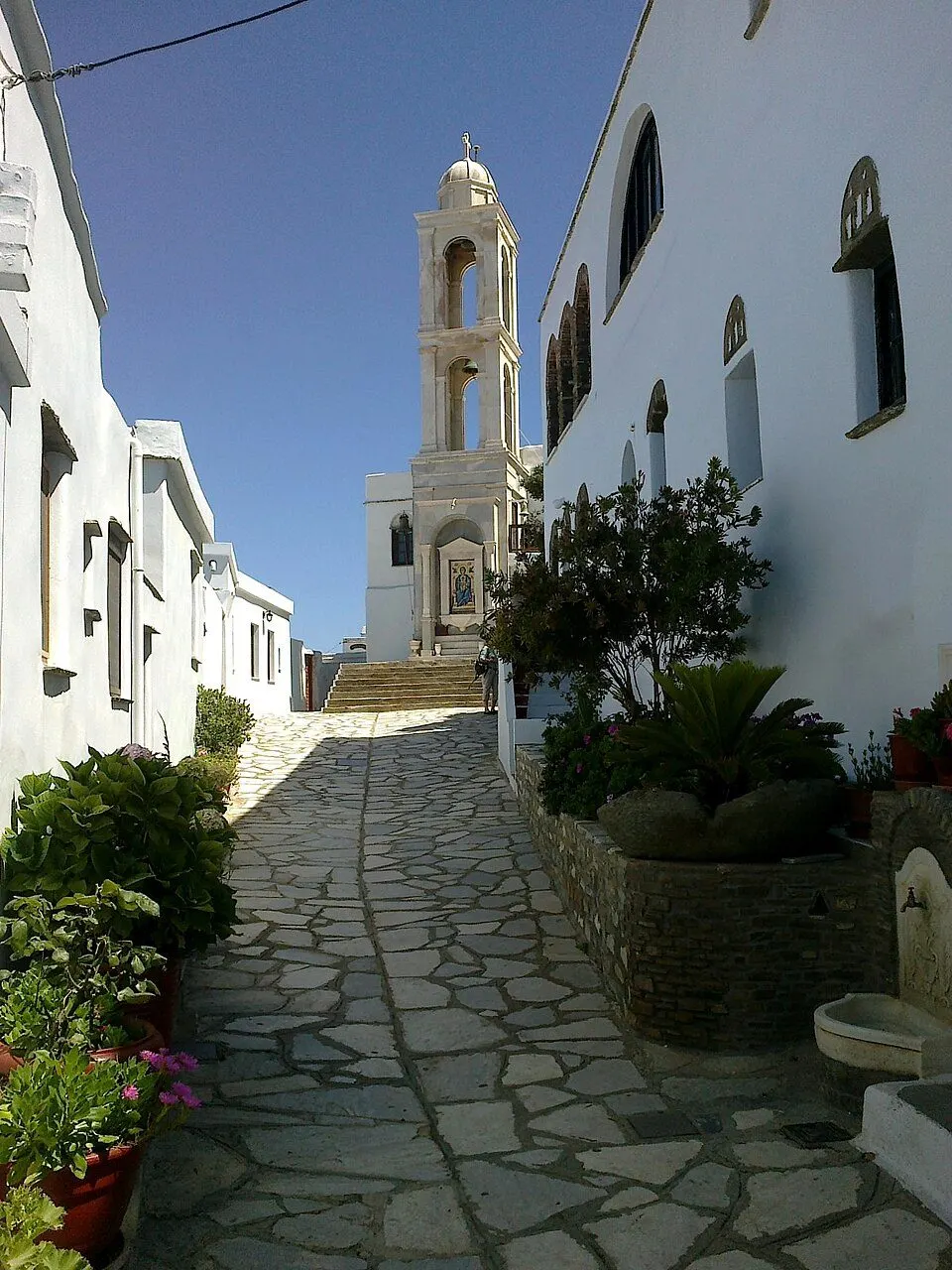
On 30 January 1823 villagers digging where the nun Pelagia had said found a damaged icon of the Annunciation. For a country fighting for its independence it was read as a sign, and the building of the church began at once, using marble from the island and, by tradition, from the ruins of ancient Delos. The date of the finding is still a feast on Tinos, and Pelagia was later made a saint.
19th century
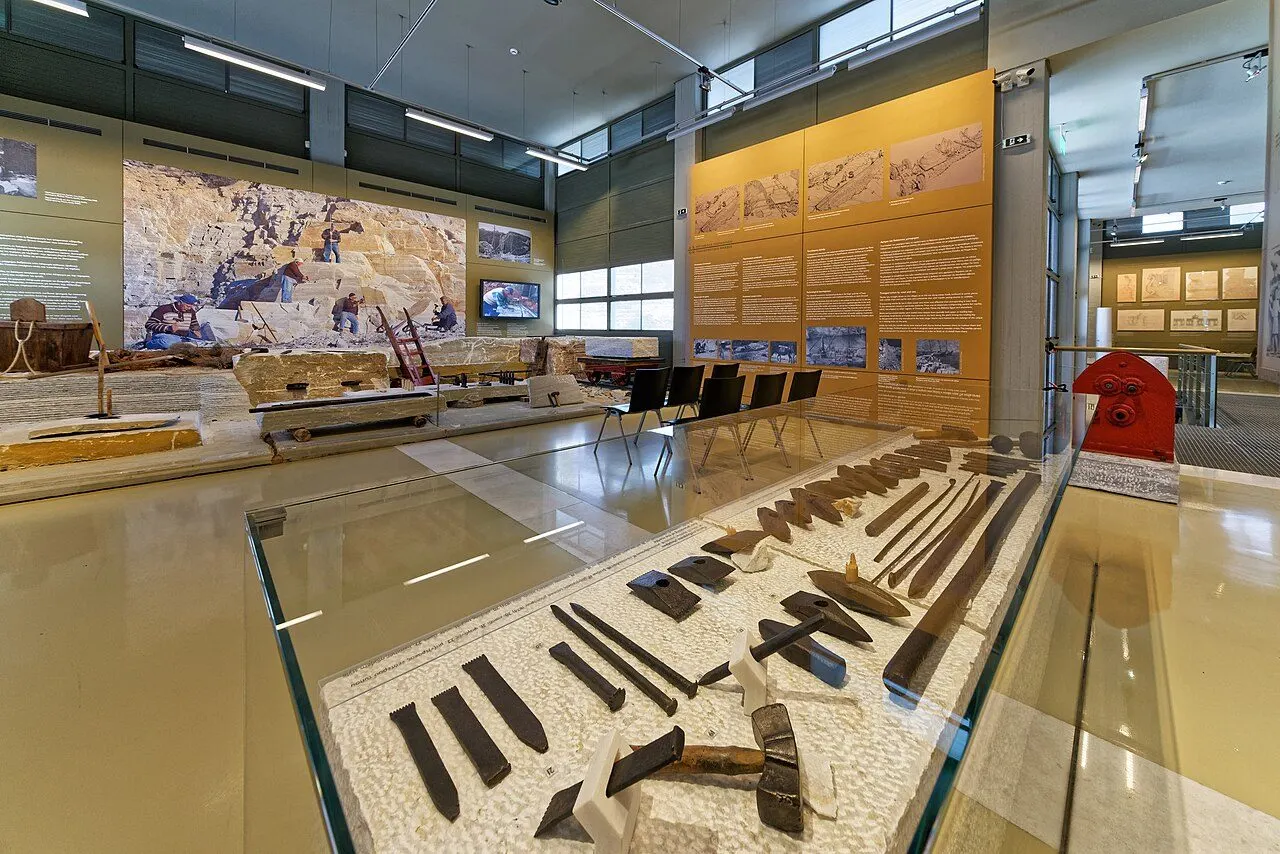
As the new Greek state built its churches, squares and cemeteries, the marble masons of Pyrgos and Exomeria were in demand from Athens to Smyrna and Alexandria. The island also produced artists, among them the painter Nikiforos Lytras and the sculptor Yannoulis Chalepas, both from Pyrgos.
15 August 1940
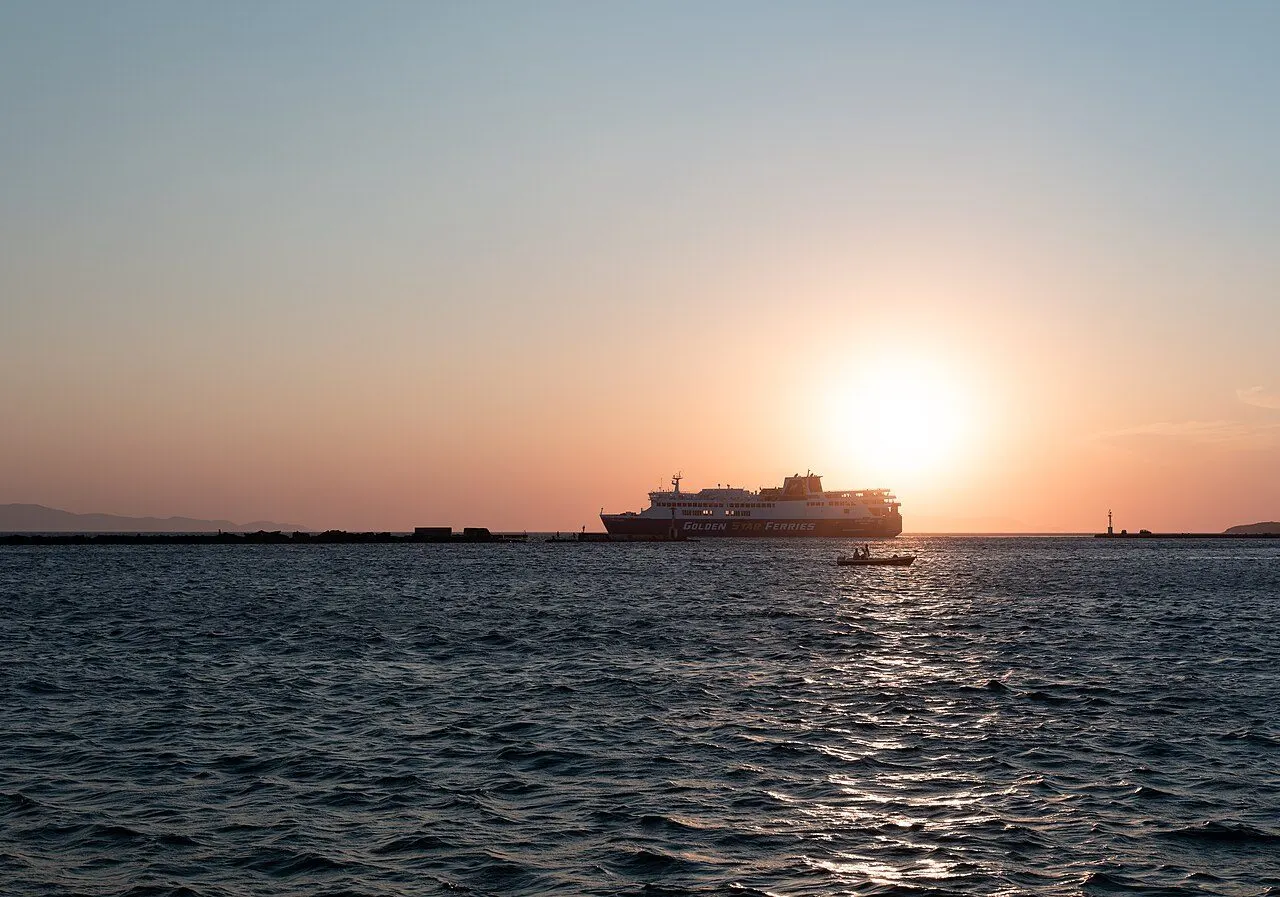
On the morning of the feast of the Dormition, with Greece not yet at war, an Italian submarine torpedoed the Greek cruiser Elli as she lay off Tinos Town for the celebrations. Nine of her crew were killed. The attack hardened the country against Italy, which invaded two months later, and the dead are remembered at the Evangelistria.
Visit
The marble church above the port, with the icon found in 1823, its silver votives and its courtyard of pebble mosaic. Modest dress is expected inside.
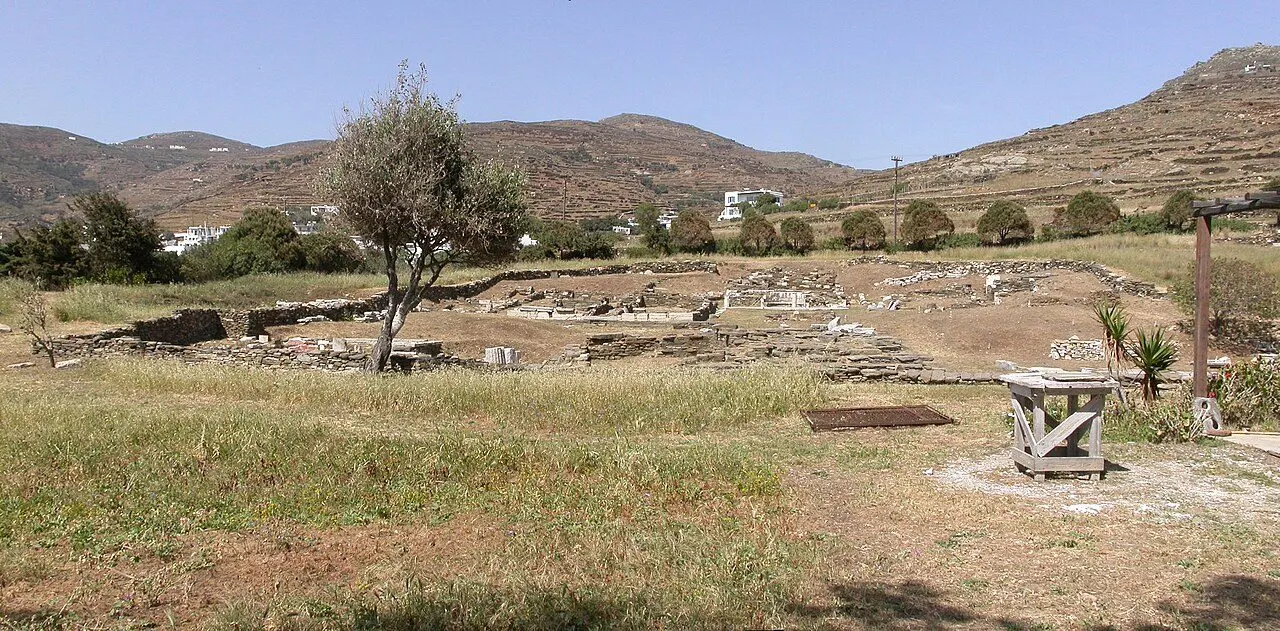
The foundations of the ancient pilgrim sanctuary by the beach at Kionia, a short drive west of town.
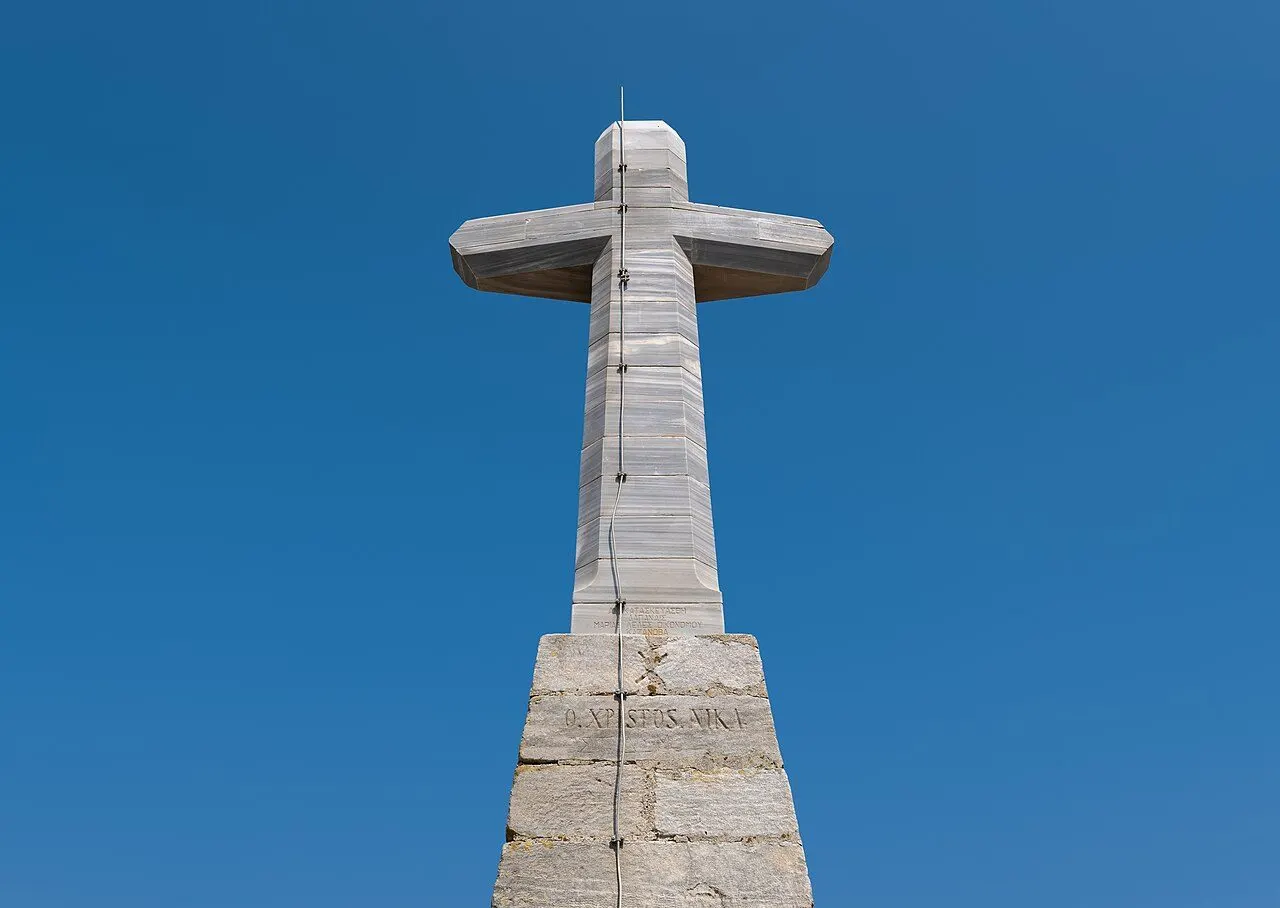
The granite hill of the ancient city and of Venetian Santa Elena, with scattered ruins and a view over half the Cyclades. A steep path leads up from the villages below.
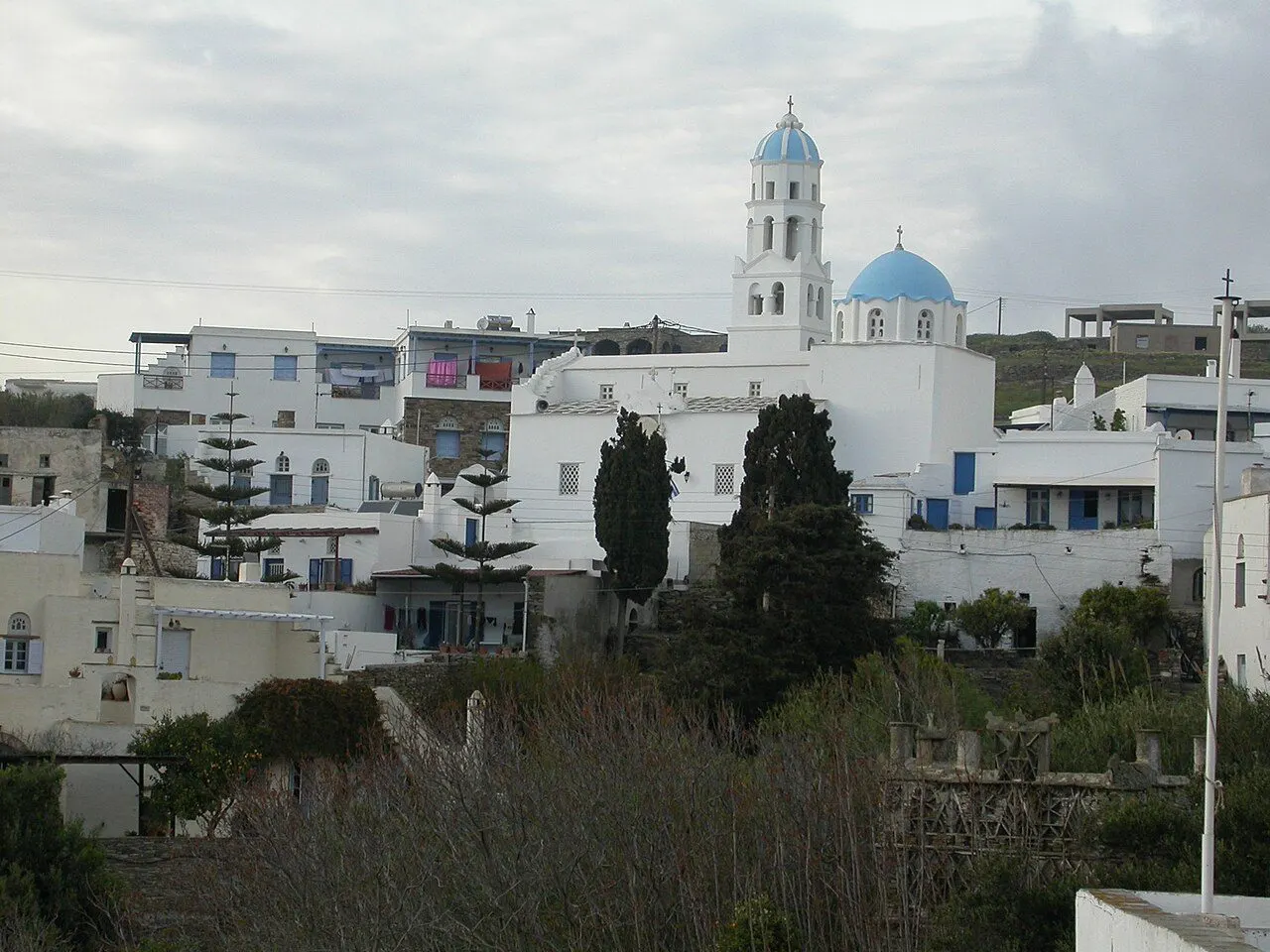
A walled convent in the hills above Arnados, a village in itself, where you can visit the cell of Saint Pelagia.
Last updated