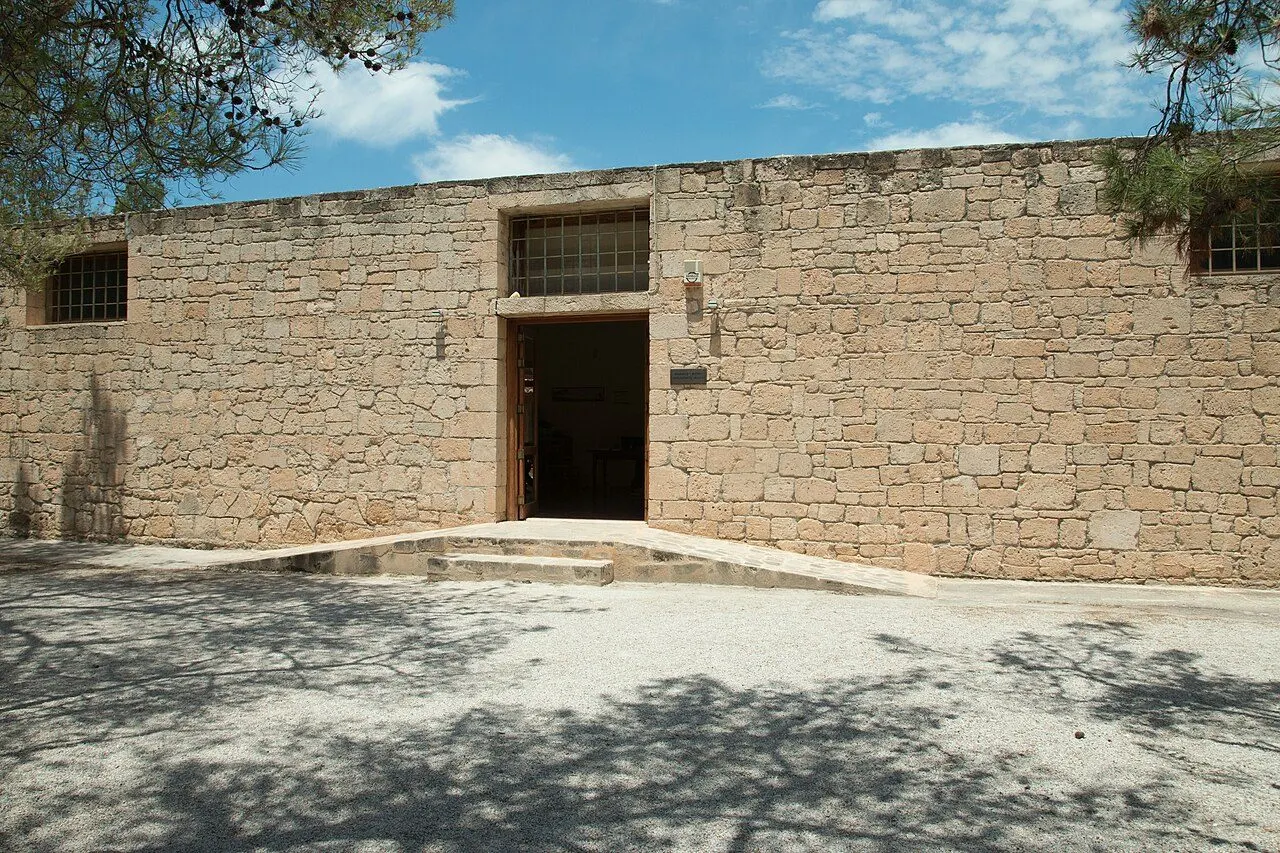
The Archaeological Museum of Aegina

Aegina · Museums

Aegina's museums

Where the island keeps its treasures, from ancient sculpture to the objects of everyday village life.

Essential

Start with these two

The stone entrance of the Archaeological Museum of Aegina

Kolona, Aegina Town

Archaeological Museum of Aegina

Founded by Kapodistrias in October 1828 as the first national museum of the new Greek state, the museum now stands on the site of Kolona. In three rooms around a courtyard it tells the island's story from the Early Bronze Age onwards: painted pottery, figurines, coins, weapons, a torso of Heracles from the older Temple of Apollo and an etched carnelian bead of a type made in the Indus valley.

Must see: The marble sphinx from the Temple of Apollo, around 460 BC
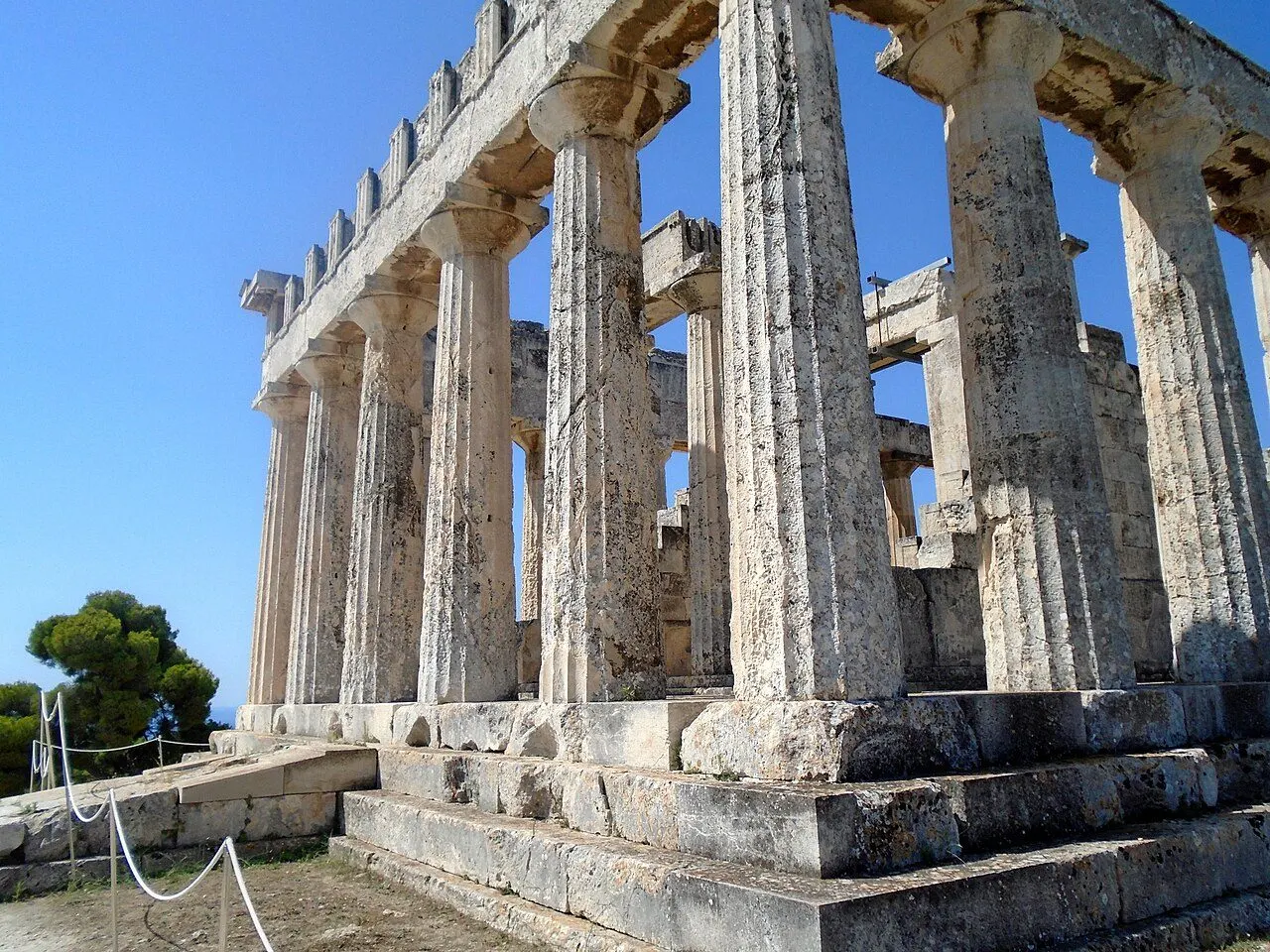
The limestone columns of the Temple of Aphaia

Temple of Aphaia

Aphaia site museum

A small museum beside the temple, with a reconstruction of the entablature and pediment of the older, painted temple of about 570 BC, whose pieces were found buried under the terrace in 1969, and copies set into restored sections of the later pediments.

Must see: The bright colours on the reconstructed older temple

More to explore

Across the island

Glyptothek

Munich, Germany

Not on the island, but the home of the originals: the marble warriors of Aphaia's east and west pediments, restored by Thorvaldsen and shown in a gallery of their own since the museum opened in the 1830s.

Must see: The dying warrior of the east pediment

Christos Kapralos Museum

North of Aegina Town

The summer workshops of the sculptor Christos Kapralos, who worked on Aegina every summer from 1963 until his death in 1993, now a museum of the work he made and showed here each summer. He also carved in Aegina the limestone frieze of the Battle of Pindus that now lines the Greek Parliament.

Must see: The six workshops, kept as a museum of his summers

Agios Nektarios convent

Inland, ≈ 6 km from town

Not a museum, but the island's most visited holy place: the convent where Saint Nektarios lived, with his simple cell and his tomb, beside the huge new church built in his honour.

Must see: The saint's cell, kept as he left it

Opening hours change seasonally. Check with each museum before visiting.

Walk where history happened

Read the story of Aegina, era by era.

Read the history

Last updated