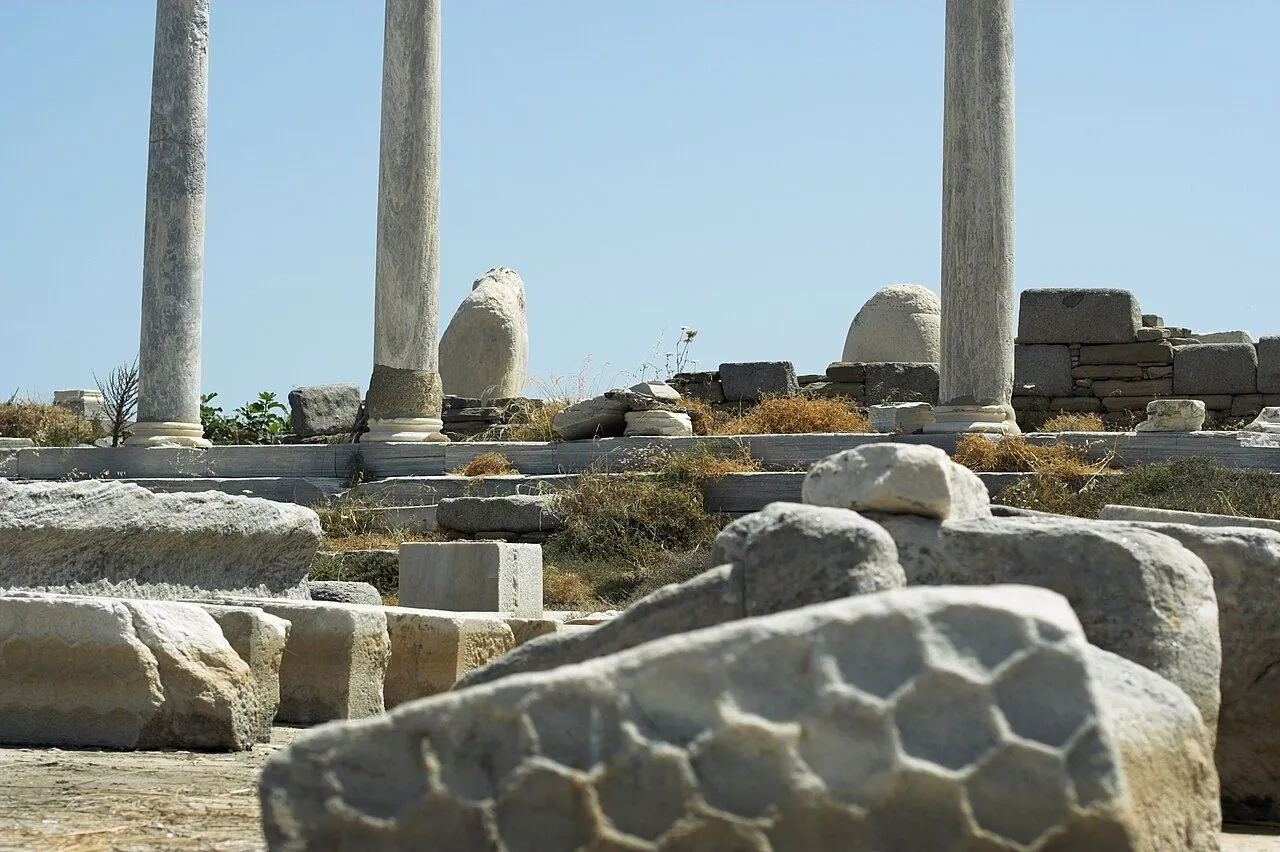
The Artemision
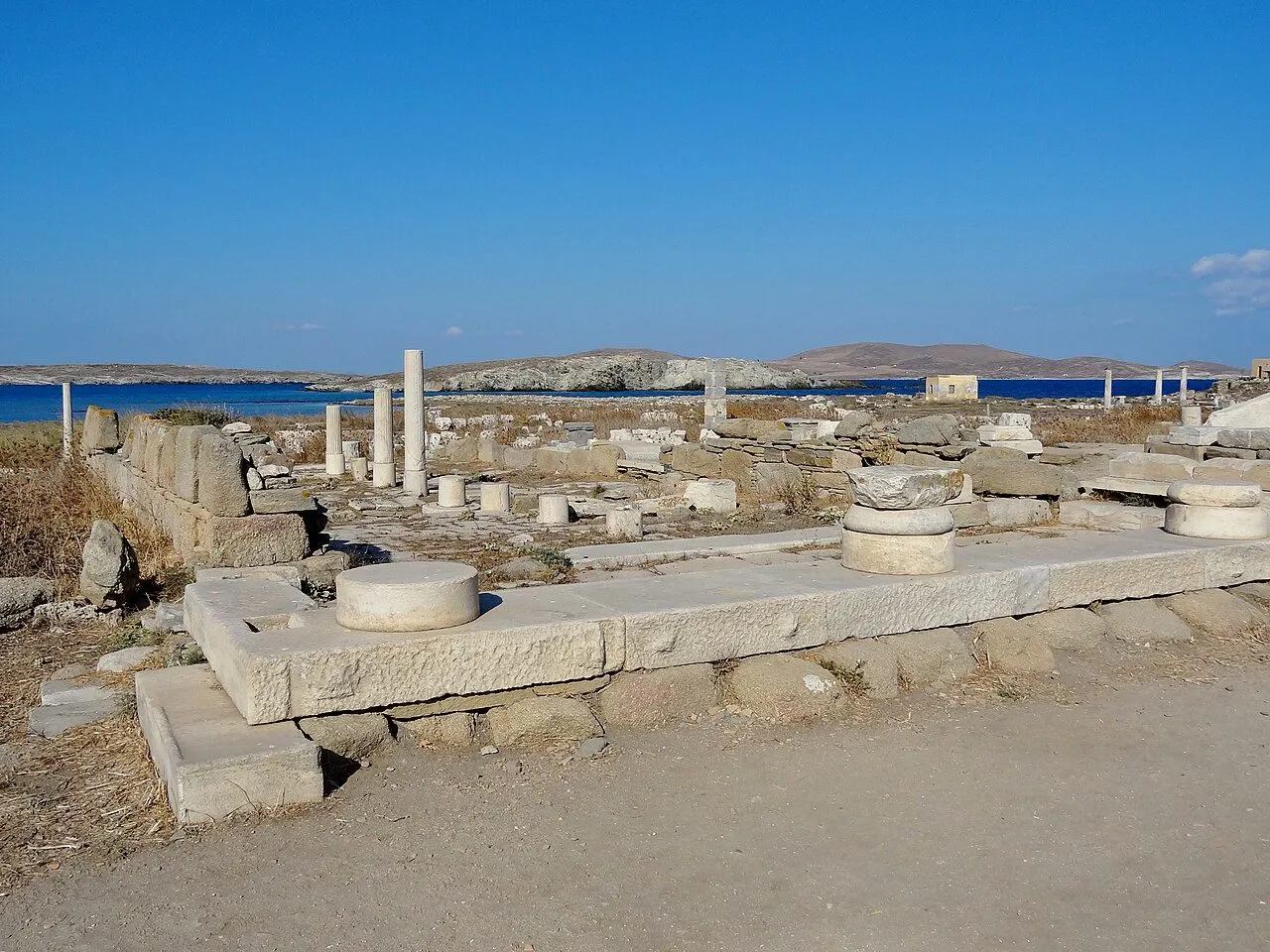
The temple of Artemis on the north side of the precinct, three times rebuilt.
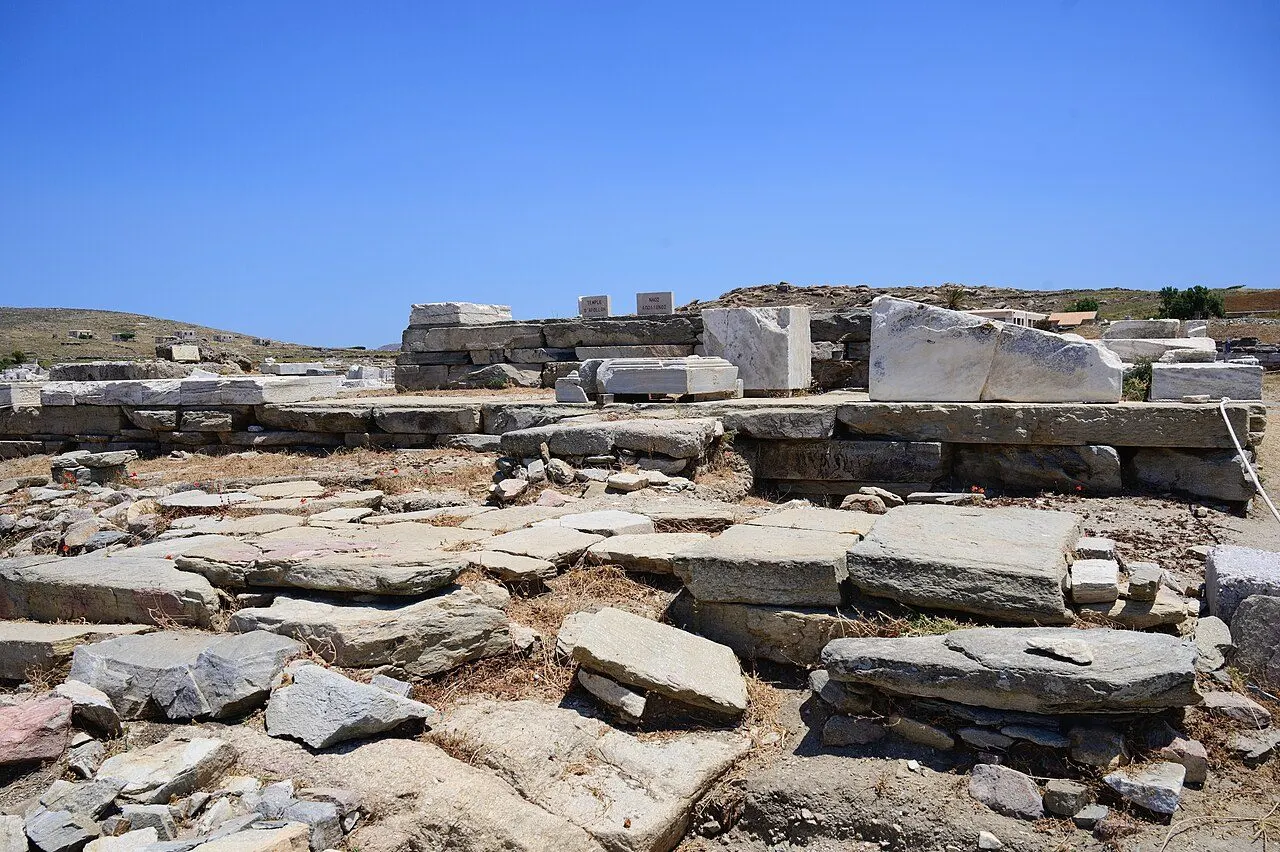
Delos · Sacred Harbour & the sanctuary · Ιερό του Απόλλωνα
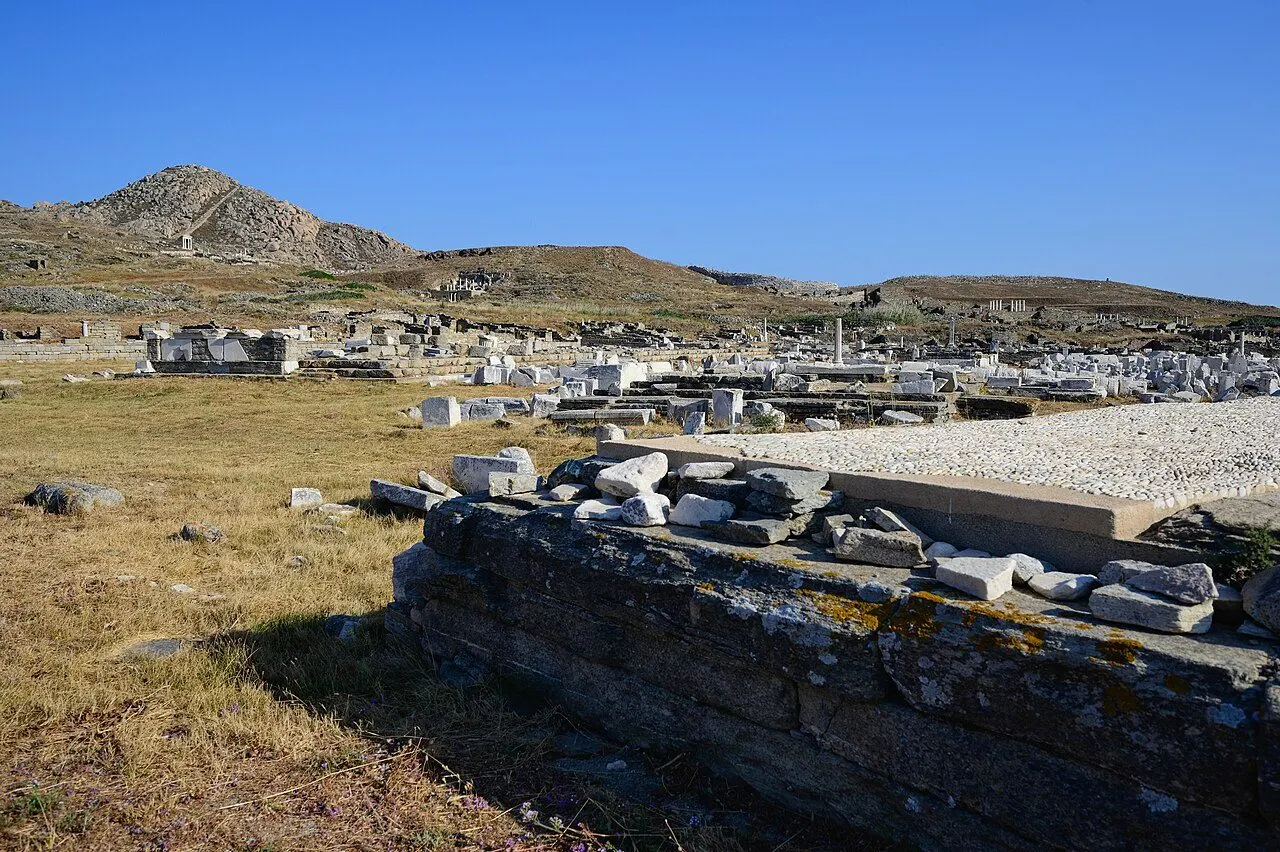
The heart of Delos is a walled precinct a short way up the Sacred Way from the harbour, crowded with more than a thousand years of offerings to Apollo. Its centre is unique in Greece: three temples to the same god standing in a row, a small one of poros stone, the marble Temple of the Athenians and the big Doric Temple of the Delians. Around them lie the oikos of the Naxians, the base and broken limbs of their colossal statue, a row of treasuries, long stoas given by Hellenistic kings and the altar Apollo was said to have built with his own hands.
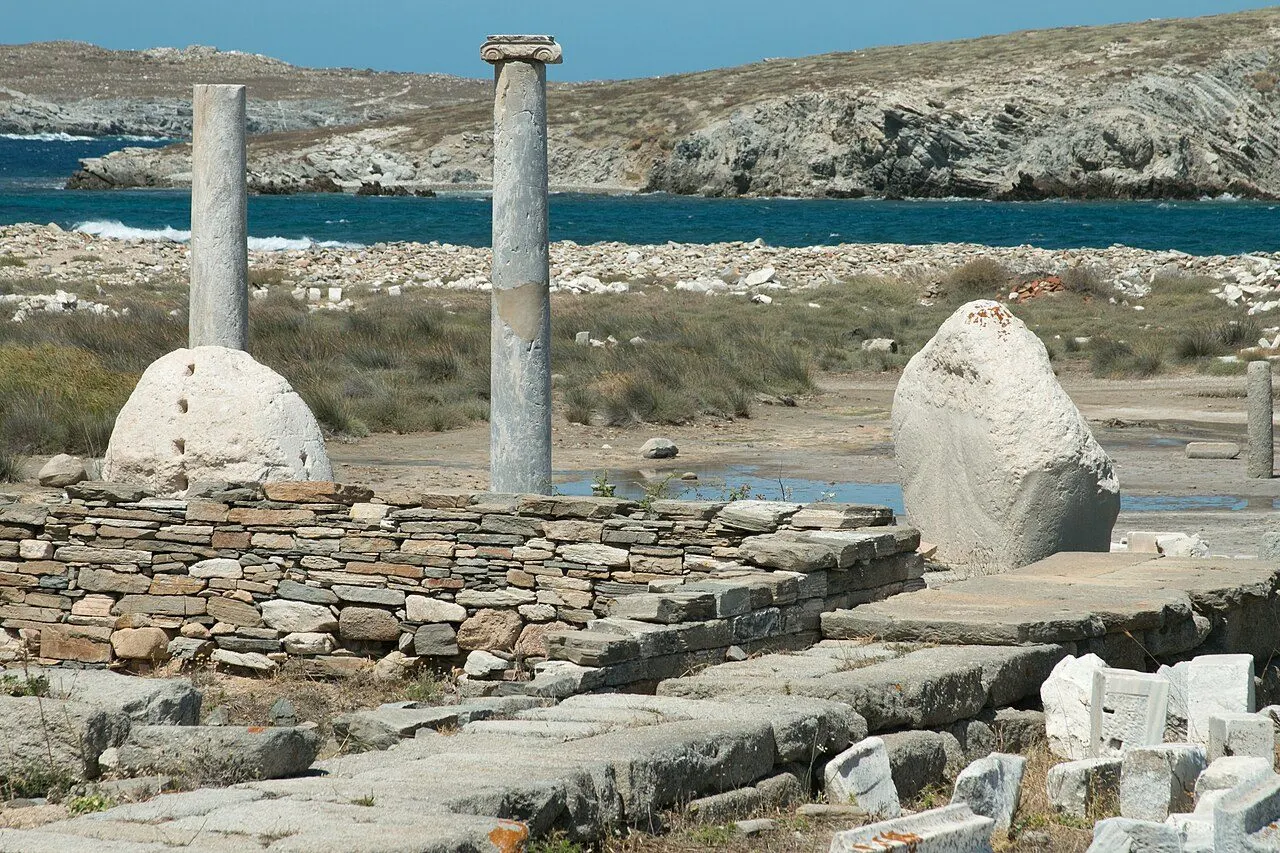
Greetings from The Sanctuary of Apollo
The Sanctuary of Apollo
Five minutes from the boat and we were walking a marble street past the gift of a Macedonian king. Then three temples to Apollo, side by side, as if the god had kept being given more. The big one never got finished: you can see where the masons only started the fluting. We found the base of a statue that once stood nine metres tall, and the bit of it that's left, lying on its back by the temple of his sister, felled, they say, by a bronze palm tree in a storm.
Three temples to one god side by side, a colossus felled by a bronze palm, and a temple that took two centuries and was never finished
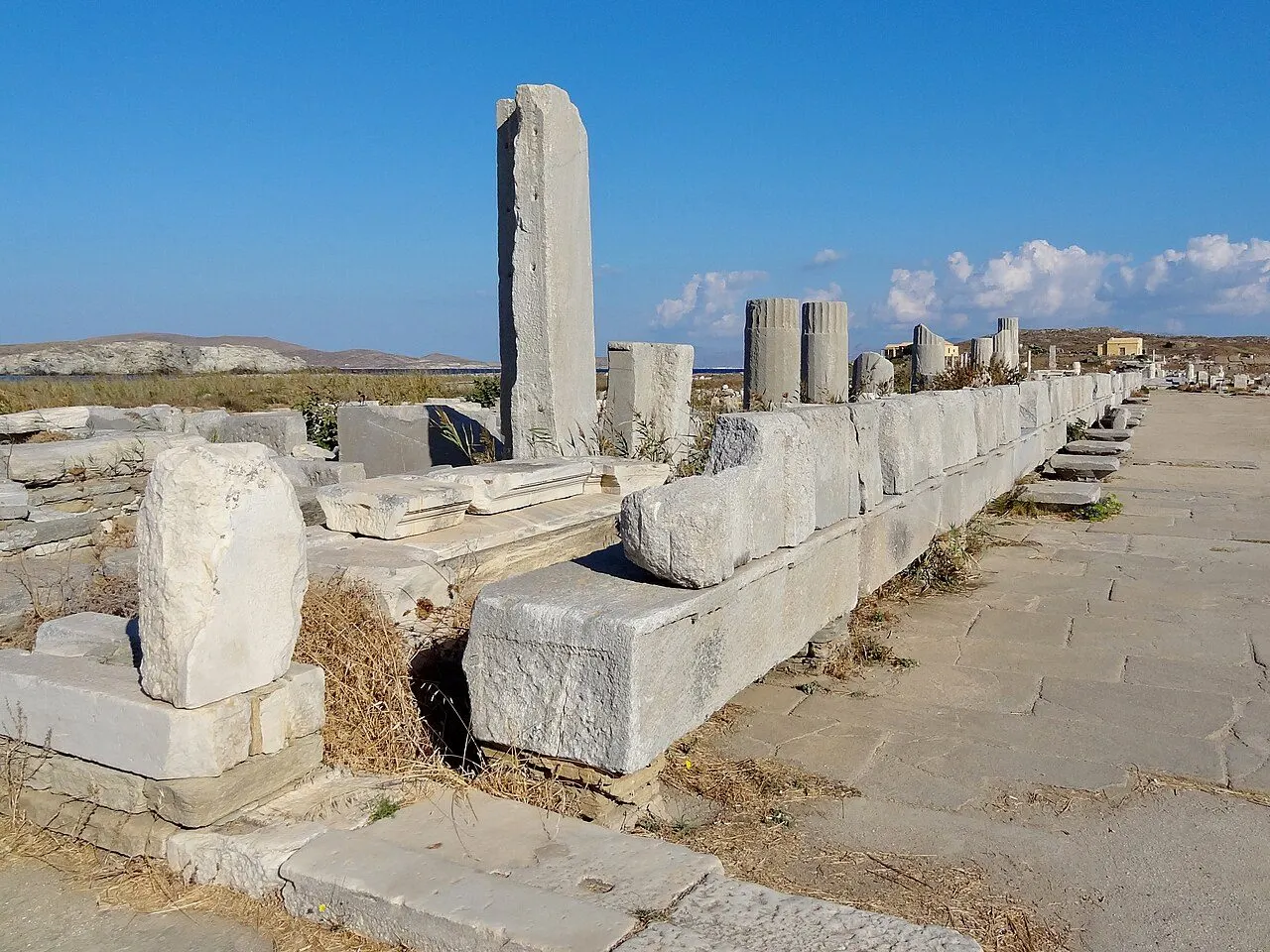
Walk in along the Sacred Way between the South Stoa and the Stoa of Philip V. The second was given around 210 BC by Philip V of Macedon, and the dedication on its architrave says so plainly: an offering of Philip, king of the Macedonians, son of King Demetrios, to Apollo. Kings paid for marble here because every sailor in the Aegean would see it.
Then come the three temples. The oldest and smallest, the Porinos Naos of poros stone, is usually credited to the Athenians of the late 6th century BC, when the family of Pisistratus was tightening its grip on the island. The largest, the Temple of the Delians, was begun around 476 BC with the money of the Delian League. When Athens moved the League's treasure home in 454 BC, work stopped; the half-built temple sat under a makeshift roof for about 150 years and was taken up again only after 314 BC, when Delos was independent. It was never truly finished: its columns were fluted only at the top and bottom, as a guide for masons who never came back. Between the two, the Temple of the Athenians of about 425–420 BC was built in the Attic manner of the Parthenon and held seven statues on a semicircular base, hence its other name, the Temple of the Seven Statues.
To the west, the Naxians left their mark early. Around 600–575 BC they built their oikos, a long hall whose frame and roof were of marble, and towards the end of the 7th century BC they set up a kouros of Apollo some 9 m tall, cut from about 30 tonnes of marble from Melanes on Naxos. Its base is still in place, and on its back an inscription boasts that statue and base are 'the same stone'. Plutarch tells how it fell: the bronze palm tree that Nicias dedicated in the 5th century BC was torn loose by the wind, crashed into the colossus and overturned it. Its torso and hips now lie by the Artemision, a hand is in the Delos museum, and a foot ended up in the British Museum.
Near the temples stood the Keraton, the altar of horns, which Apollo was said to have built himself. Plutarch records that it was made only of horns taken from the left side of the head, and that Theseus, on his way home from Crete, danced the geranos, the 'crane dance', round it with the young Athenians he had saved from the Minotaur; the Delians were still dancing it centuries later. On the north side of the precinct, the Artemision of Apollo's twin sister was rebuilt three times on the same spot, and under it archaeologists found a deposit of Mycenaean treasures of gold, bronze and ivory, among them the plaque of a warrior in a boar's-tusk helmet that is now in the museum.
Hour by hour
Two hours among the temples, read in the order the pilgrims saw them.
Walk up the Sacred Way between the South Stoa and the Stoa of Philip V and look for the king's name on the architrave blocks.
Stand on the steps of the Temple of the Delians and pick out the unfinished fluting, then find the Temple of the Athenians and the little poros temple beside it.
Read the inscription on the base of the colossus beside the oikos of the Naxians, then walk to the Artemision to see what is left of the statue.
Follow the row of small treasury buildings on the edge of the precinct, where cities stored the gifts they sent to Apollo.
Within an easy drive
The temple of Artemis on the north side of the precinct, three times rebuilt.
A few minutes north, past the Agora of the Italians.
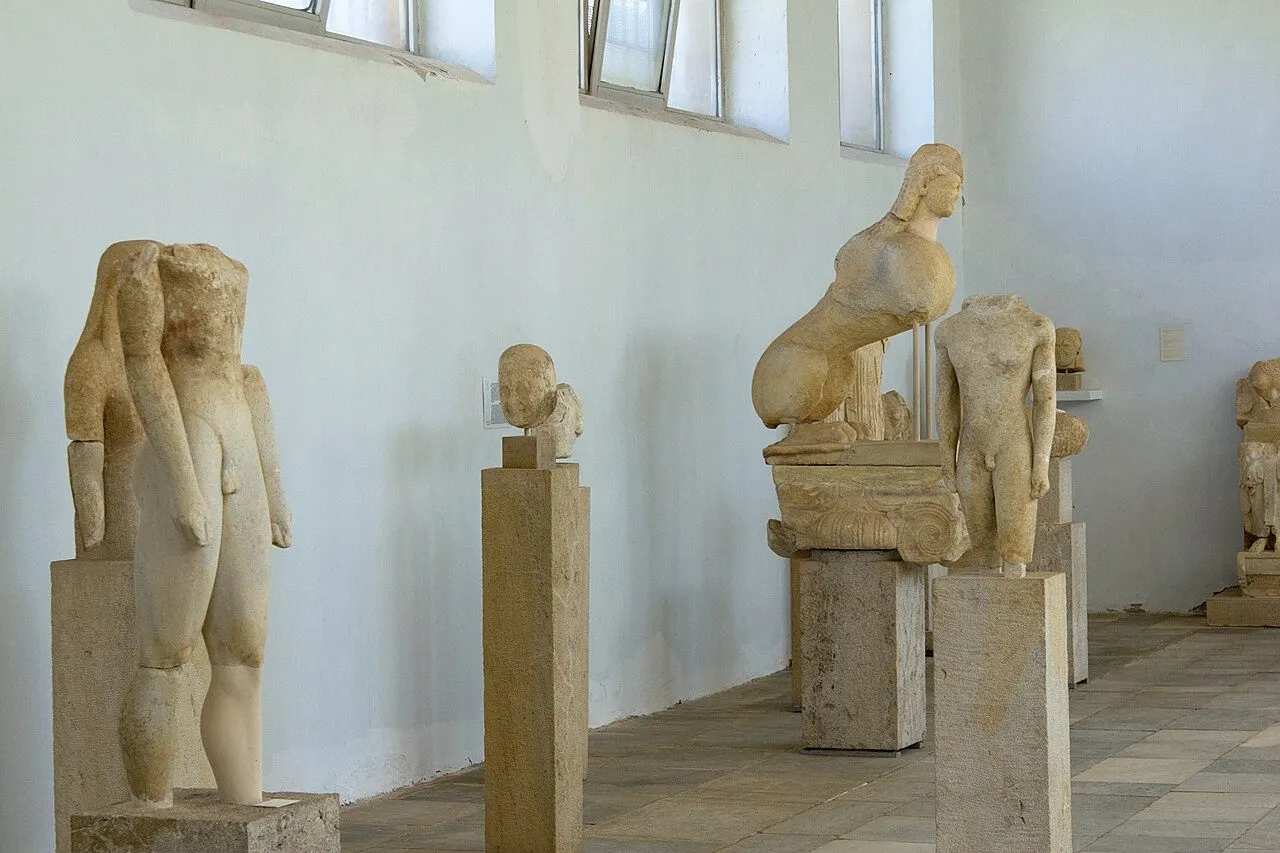
Where the Colossus' hand and the Mycenaean ivories from the Artemision are kept.
Good to know
From the jetty, follow the paved Sacred Way north for about five minutes.
Straight off the first boat, before the groups arrive and while the marble is still cool.
More of Delos
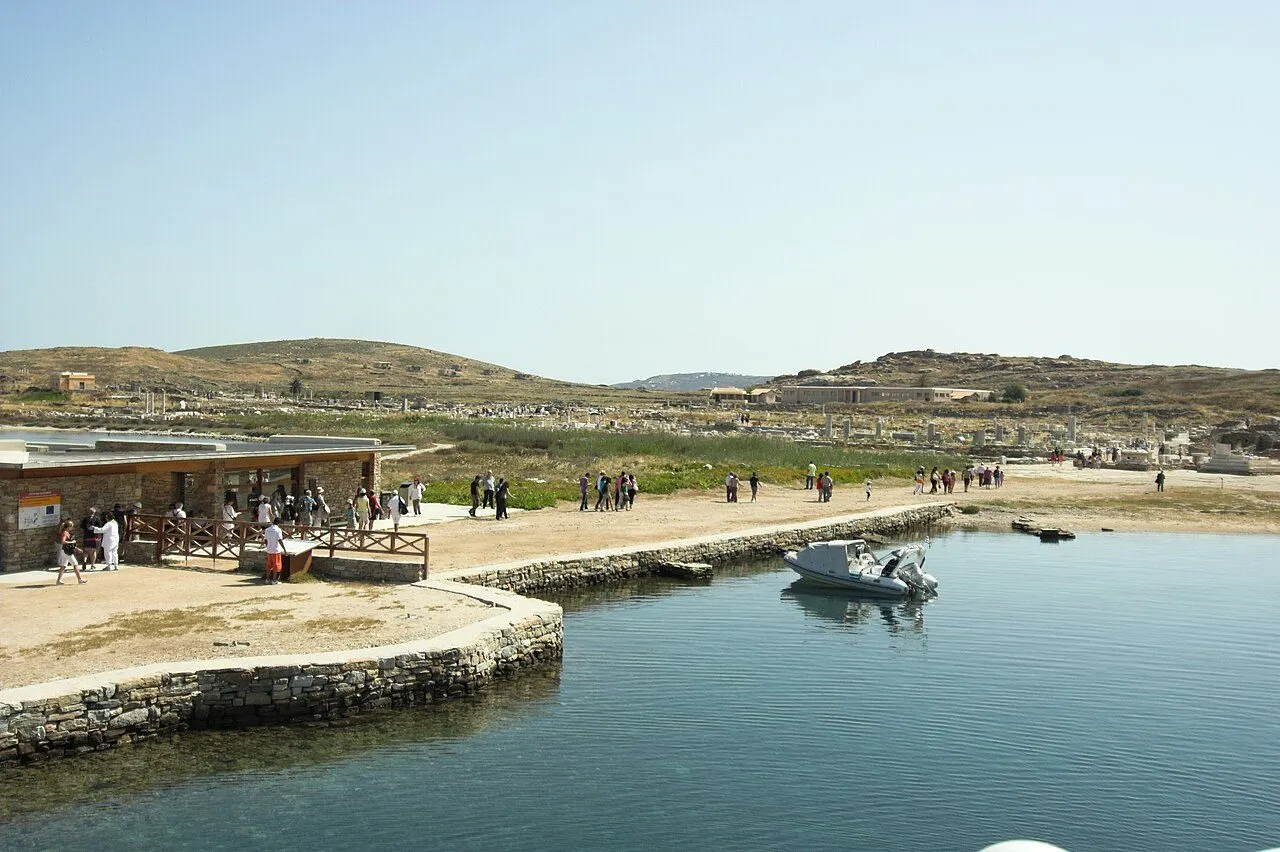
Sacred Harbour & the sanctuary
Where pilgrims, merchants and today's day-trippers all stepped ashore
Lions & Sacred Lake
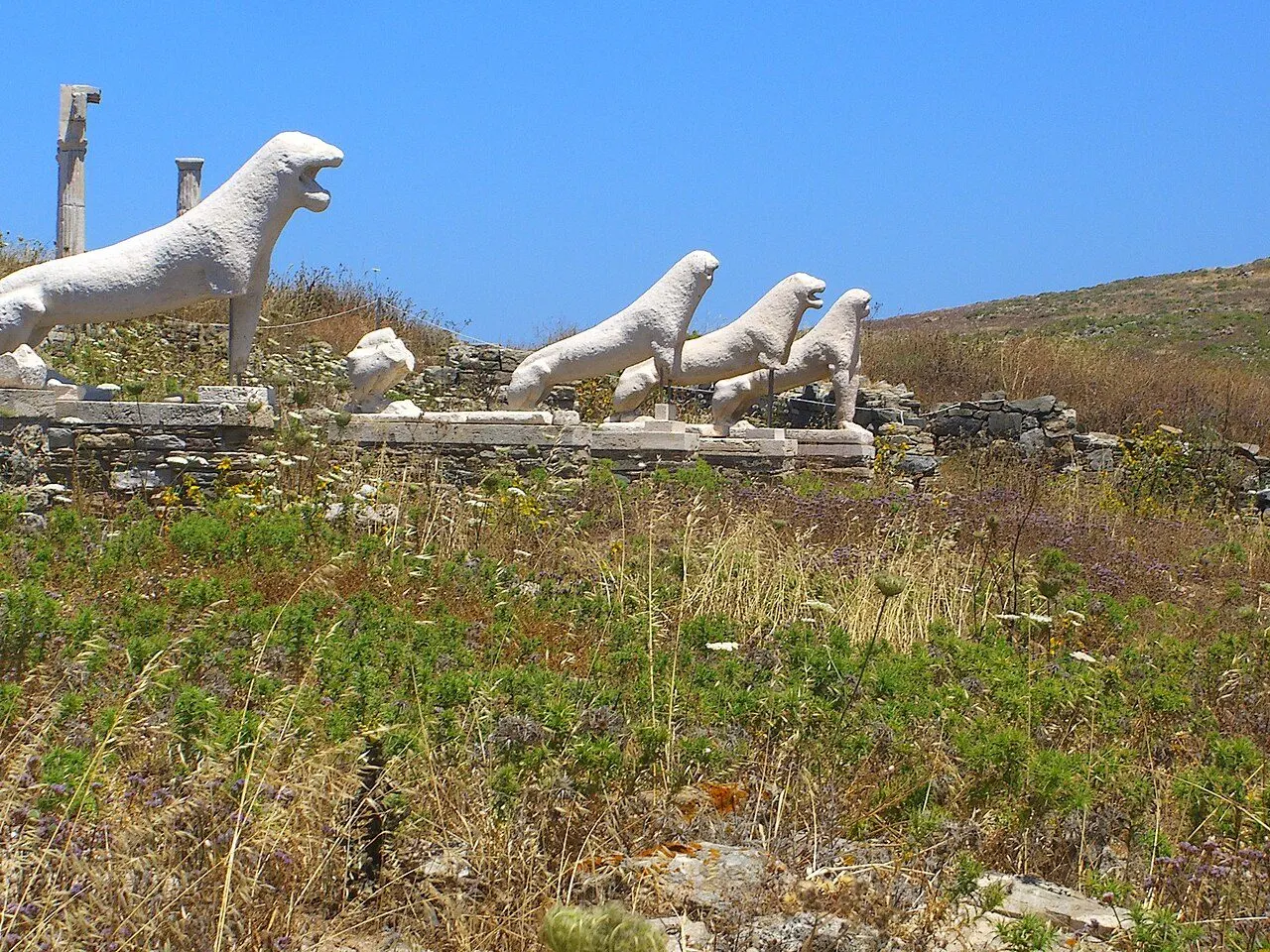
Lean marble beasts guarding a lake that is no longer there, where Leto clung to a palm tree to give birth
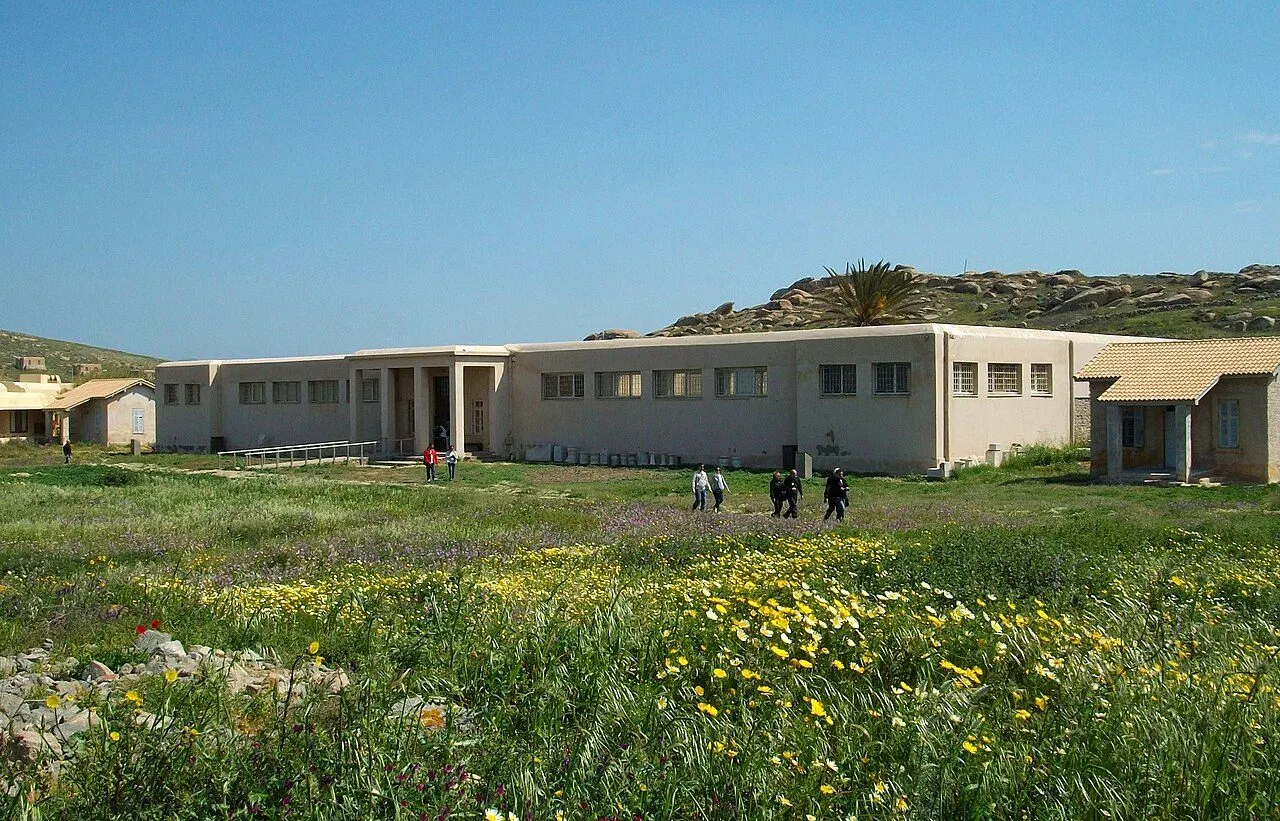
Lions & Sacred Lake
The real lions, a Mycenaean warrior in ivory and the signature of a 7th-century BC sculptor, in the only shade on the island
Every stay we recommend across Delos, from village guesthouses to rooms on the sea.
See all staysLast updated