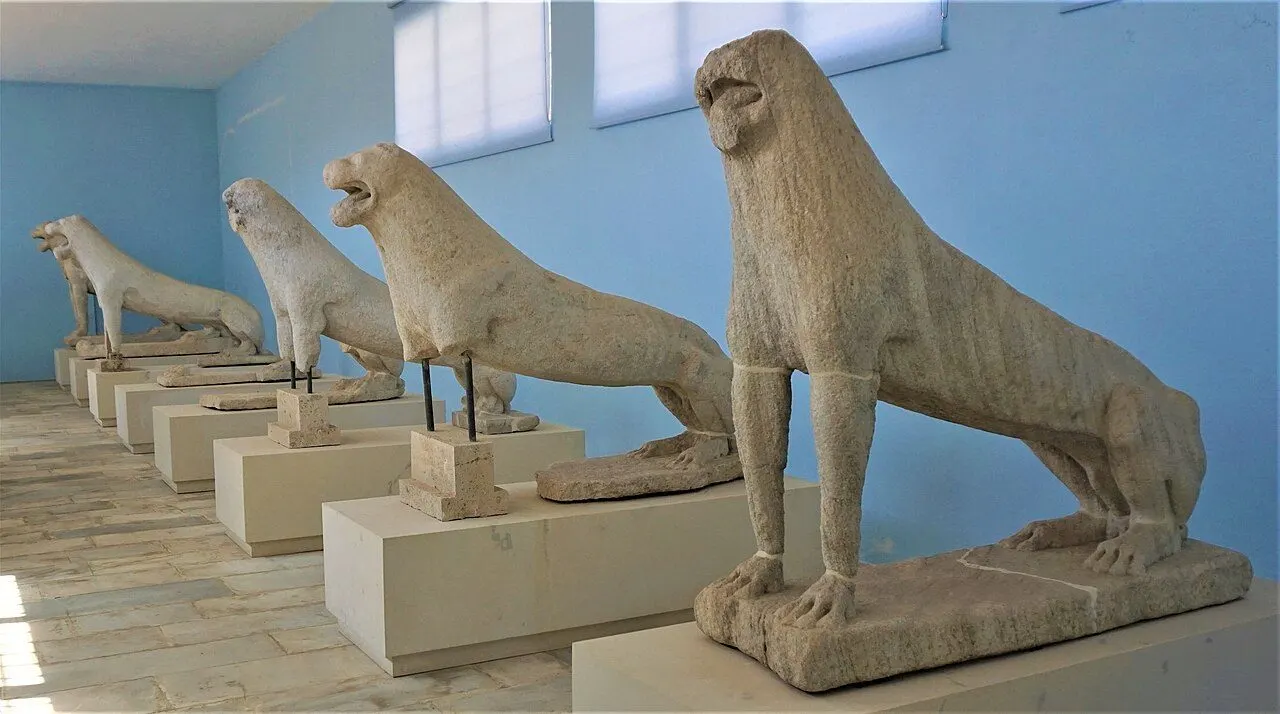
The museum
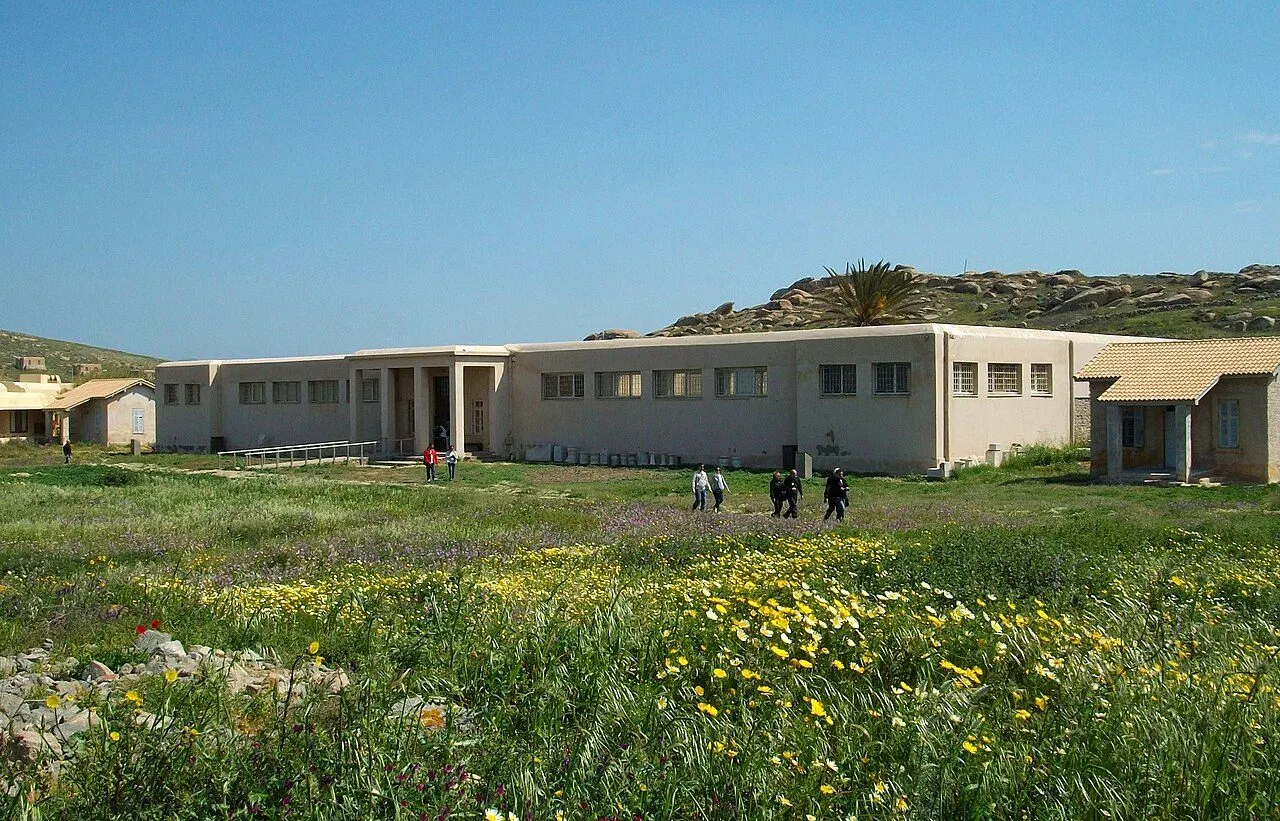
Where the original lions now stand in a row indoors.
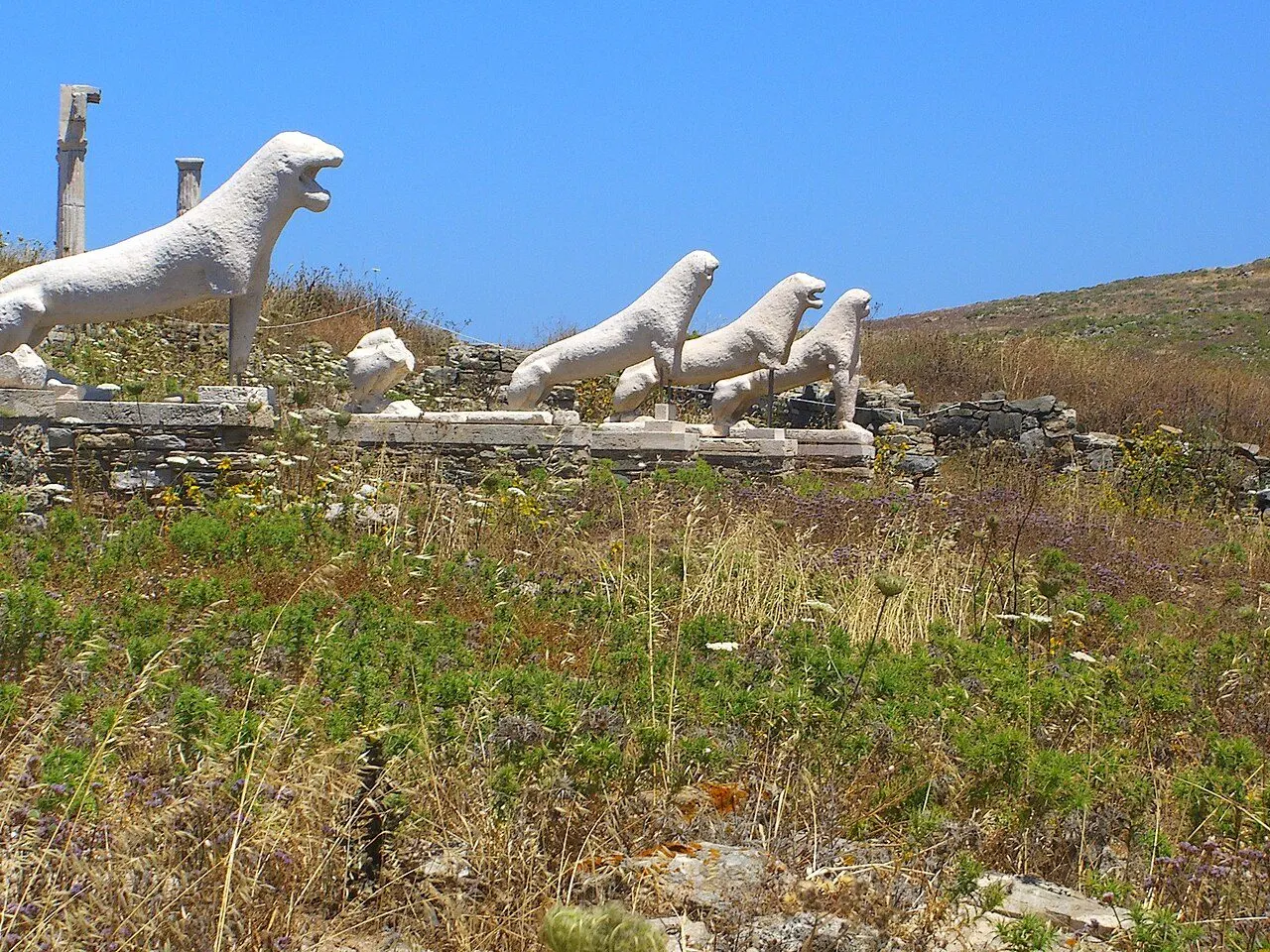
Delos · Lions & Sacred Lake · Άνδηρο των Λεόντων
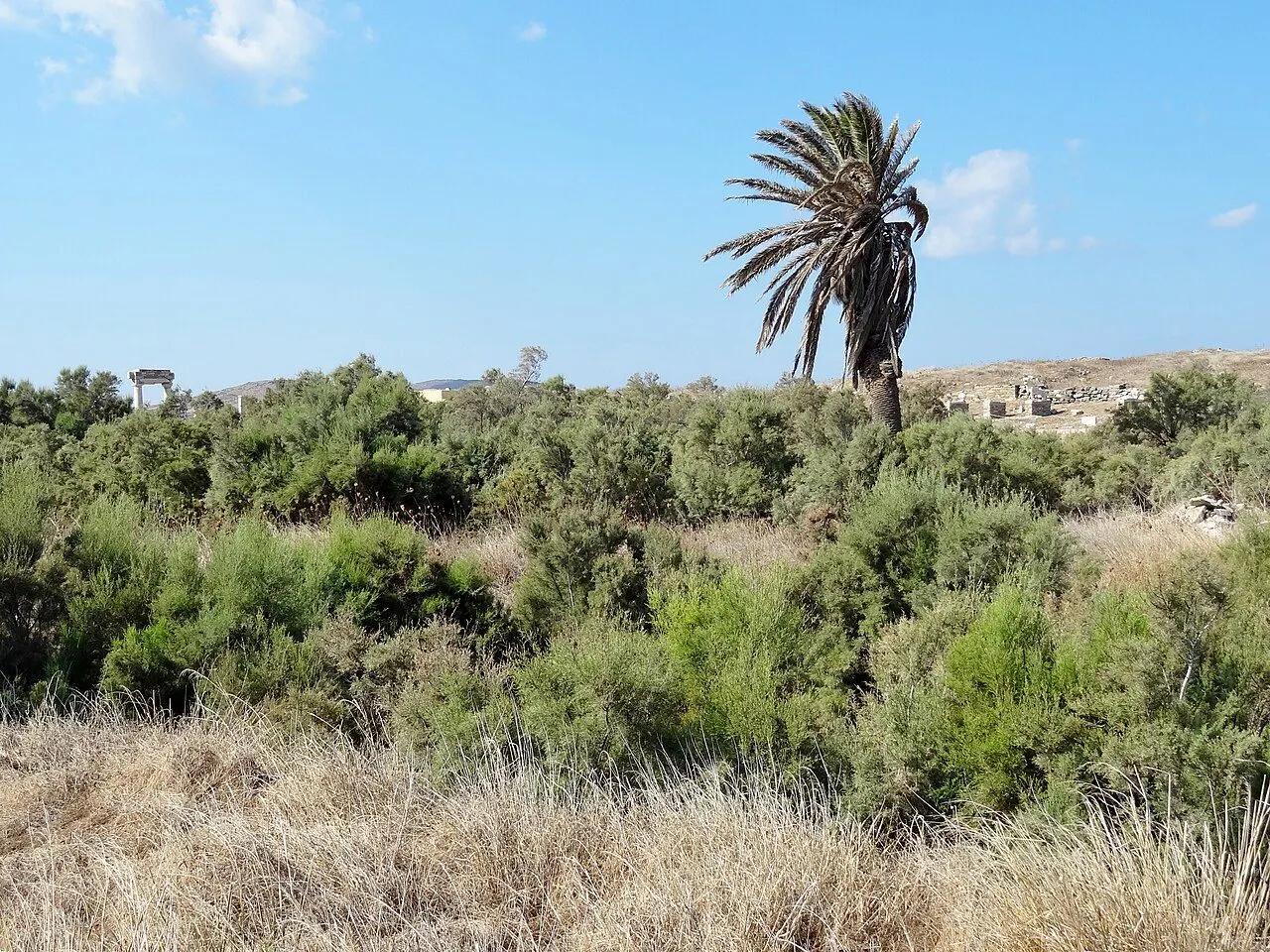
North of the sanctuary a row of marble animals sits on its haunches facing east, over the hollow where the Sacred Lake used to be. The Naxians set them up at the end of the 7th century BC along the processional route, and they are some of the oldest monumental animal sculpture in Greece. Look closely: with their lean bodies, ribs showing and small heads, many scholars see them as lionesses rather than lions. The ones on the terrace today are casts; the originals stand indoors in the museum, out of the salt wind. Below them, the lake that the sacred swans of Apollo swam on is a dry, oval basin with a single palm tree.
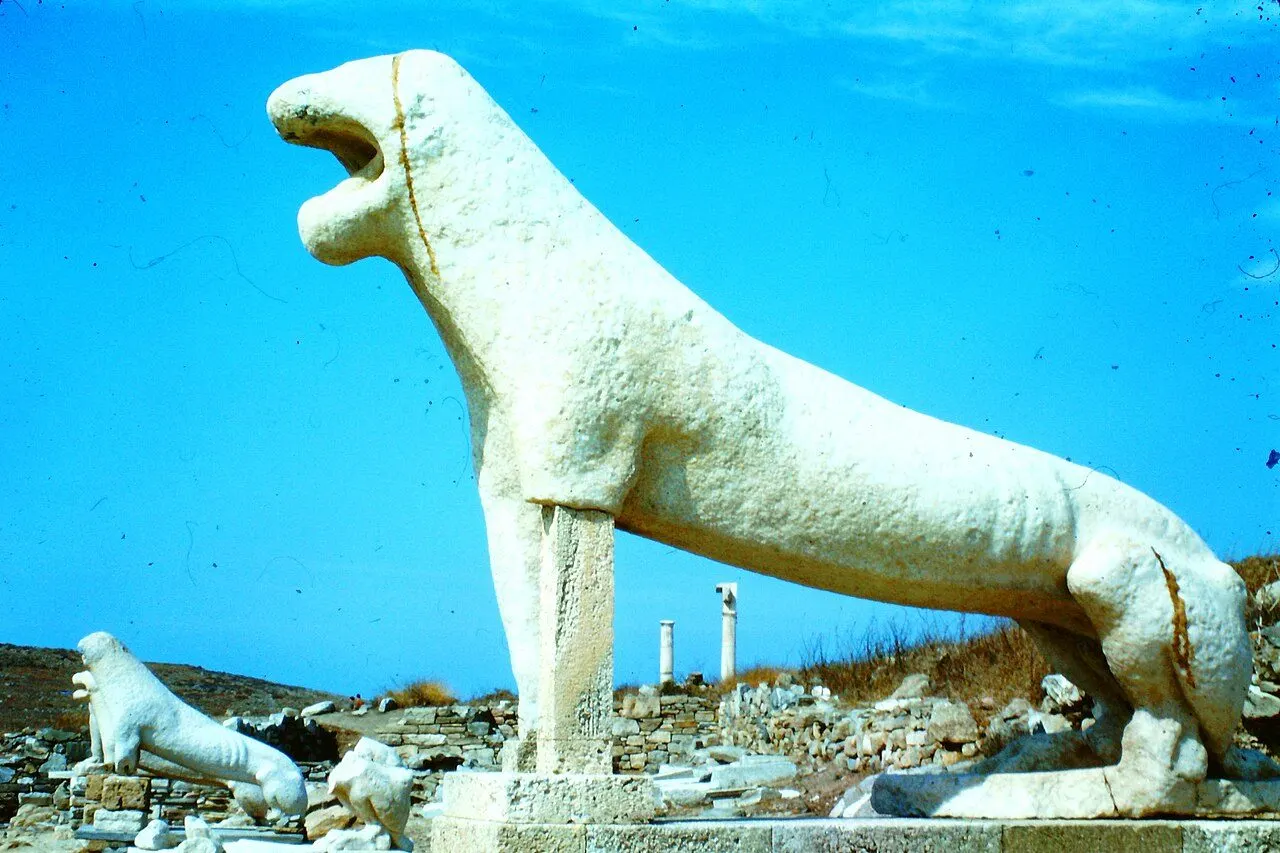
Greetings from The Terrace of the Lions & the Sacred Lake
The Terrace of the Lions
They're thinner than lions have any right to be, all ribs and long backs, sitting up straight as if someone had called their name. The guide said they may be lionesses, and that one of their sisters has been standing outside the Venice Arsenal for three hundred years with someone else's head. In front of them is a lake with no water and one palm tree, where Leto is supposed to have given birth to Apollo, holding on to a palm tree just like it.
Lean marble beasts guarding a lake that is no longer there, where Leto clung to a palm tree to give birth
The lions were a Naxian statement. In the late 7th century BC Naxos was the great power of the central Cyclades, and it lined the way to Apollo's lake with a pride of marble beasts, perhaps nine or more of them, carved from island marble. Time scattered them. One is in Venice: carried off in 1716, it has guarded the land gate of the Arsenale ever since, with a new head carved for it there. The survivors were moved into the museum for protection, and in their place on the terrace stand copies that keep the line unbroken for the photographs.
They look out over the Sacred Lake, where, in the Homeric Hymn to Apollo, Leto finally gave birth after Hera had forbidden every land to receive her: only drifting Delos dared, and the goddess threw her arms round a palm tree and knelt on the soft meadow. The lake was a marshy, oval pool, the home of Apollo's swans and geese. In the modern era it was a breeding ground for malaria-carrying mosquitoes, so it was drained and is now kept dry; the palm tree in it today was planted to recall the story.
Beside the lions is the Letoon, a small temple of about 540 BC to Leto herself, and behind it the vast Agora of the Italians, a colonnaded court of about 200 by 80 m paid for in the late 2nd century BC by Italian merchants and bankers, among them Philostratos of Ascalon. It was wrecked in the sack of 88 BC, a reminder of how the money of the free port ended.
Within an easy drive
Where the original lions now stand in a row indoors.
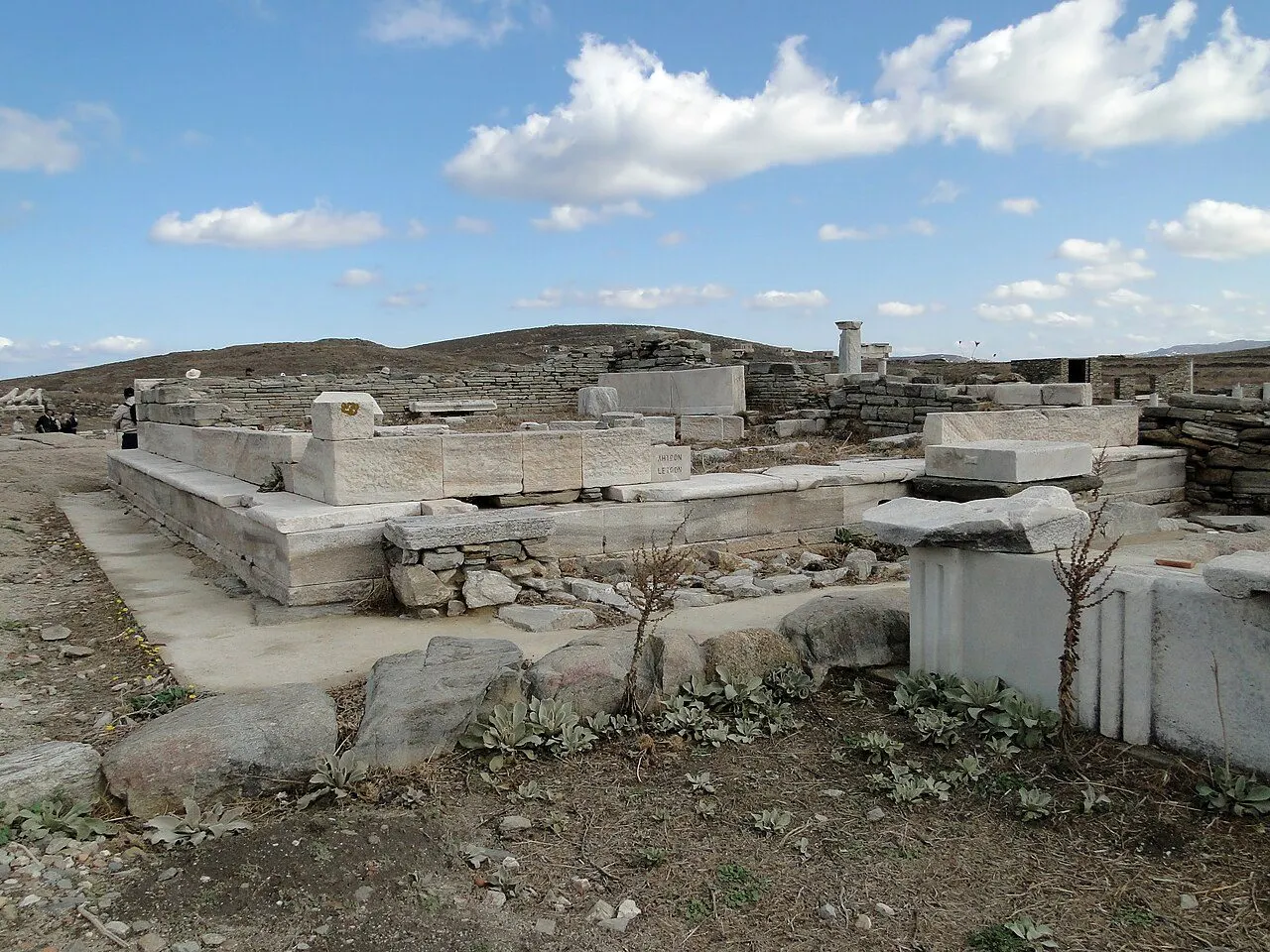
The temple of Leto, mother of Apollo and Artemis, beside the lake.
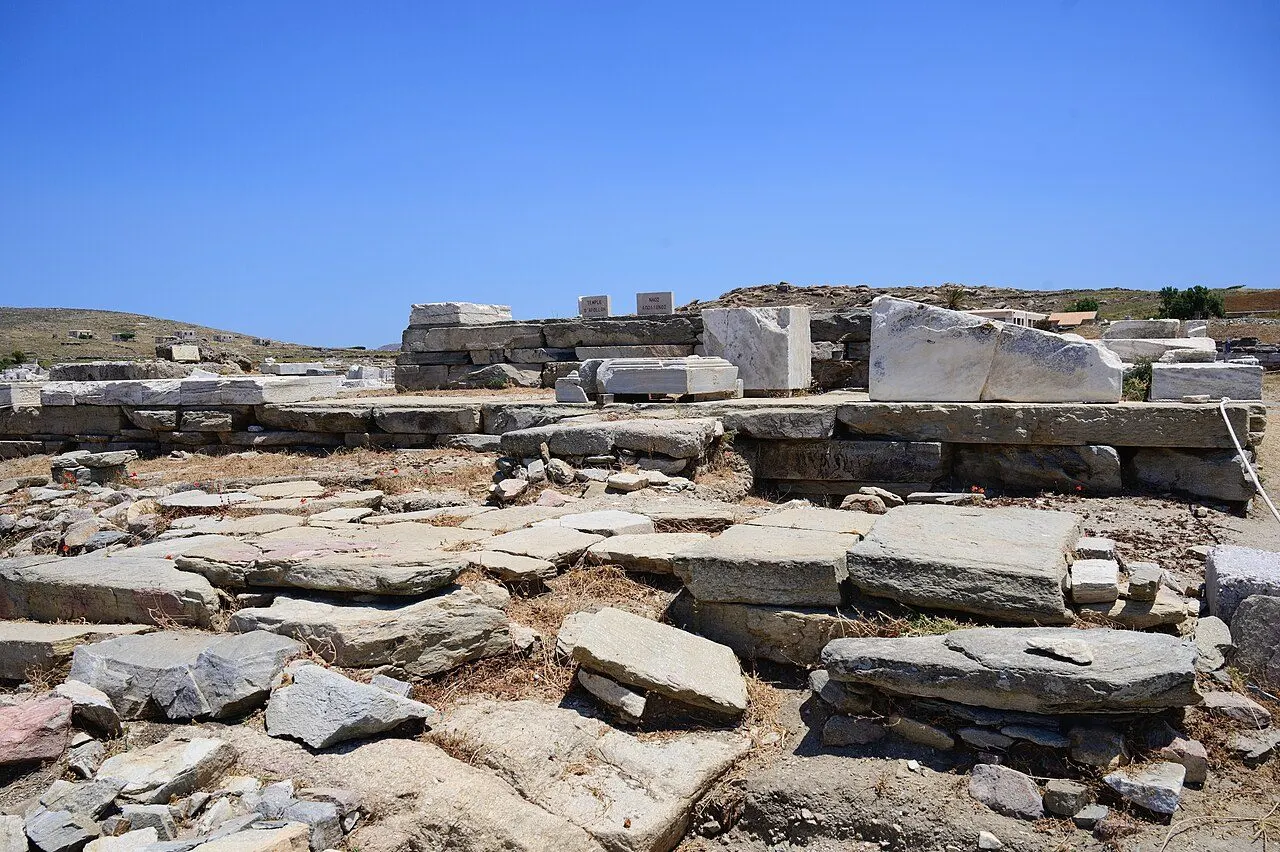
A few minutes south along the processional way.
Good to know
About 10 minutes' walk north from the jetty, past the Sanctuary of Apollo and the Agora of the Italians.
Early in the morning, when the sun is behind the lions, or late on the afternoon boat, when it lights their faces.
More of Delos
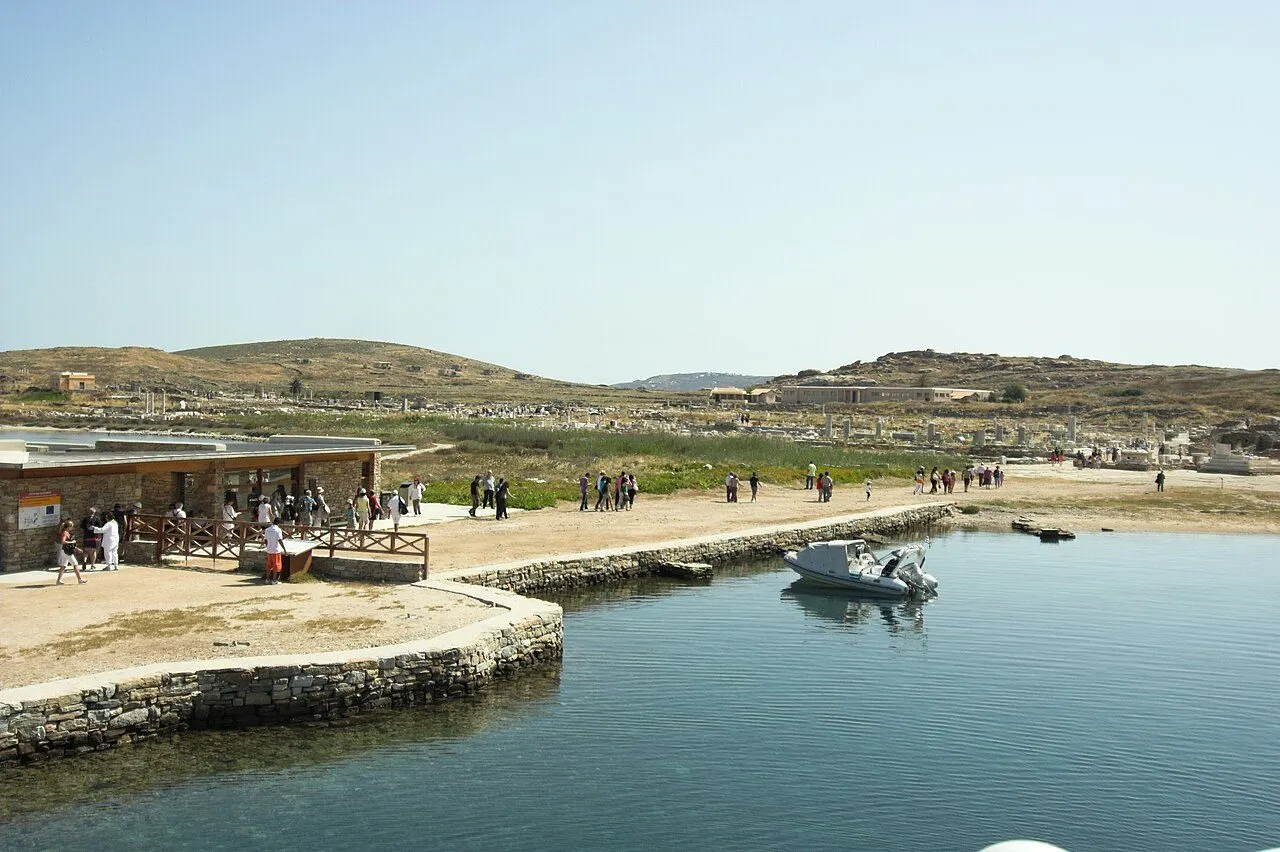
Sacred Harbour & the sanctuary
Where pilgrims, merchants and today's day-trippers all stepped ashore
Sacred Harbour & the sanctuary
Three temples to one god side by side, a colossus felled by a bronze palm, and a temple that took two centuries and was never finished
Lions & Sacred Lake
The real lions, a Mycenaean warrior in ivory and the signature of a 7th-century BC sculptor, in the only shade on the island
Every stay we recommend across Delos, from village guesthouses to rooms on the sea.
See all staysLast updated