Kanali
The channel and short bridge where Sphairia meets Kalavria, with a beach and a beach restaurant, a 15–20 minute walk from the harbour.
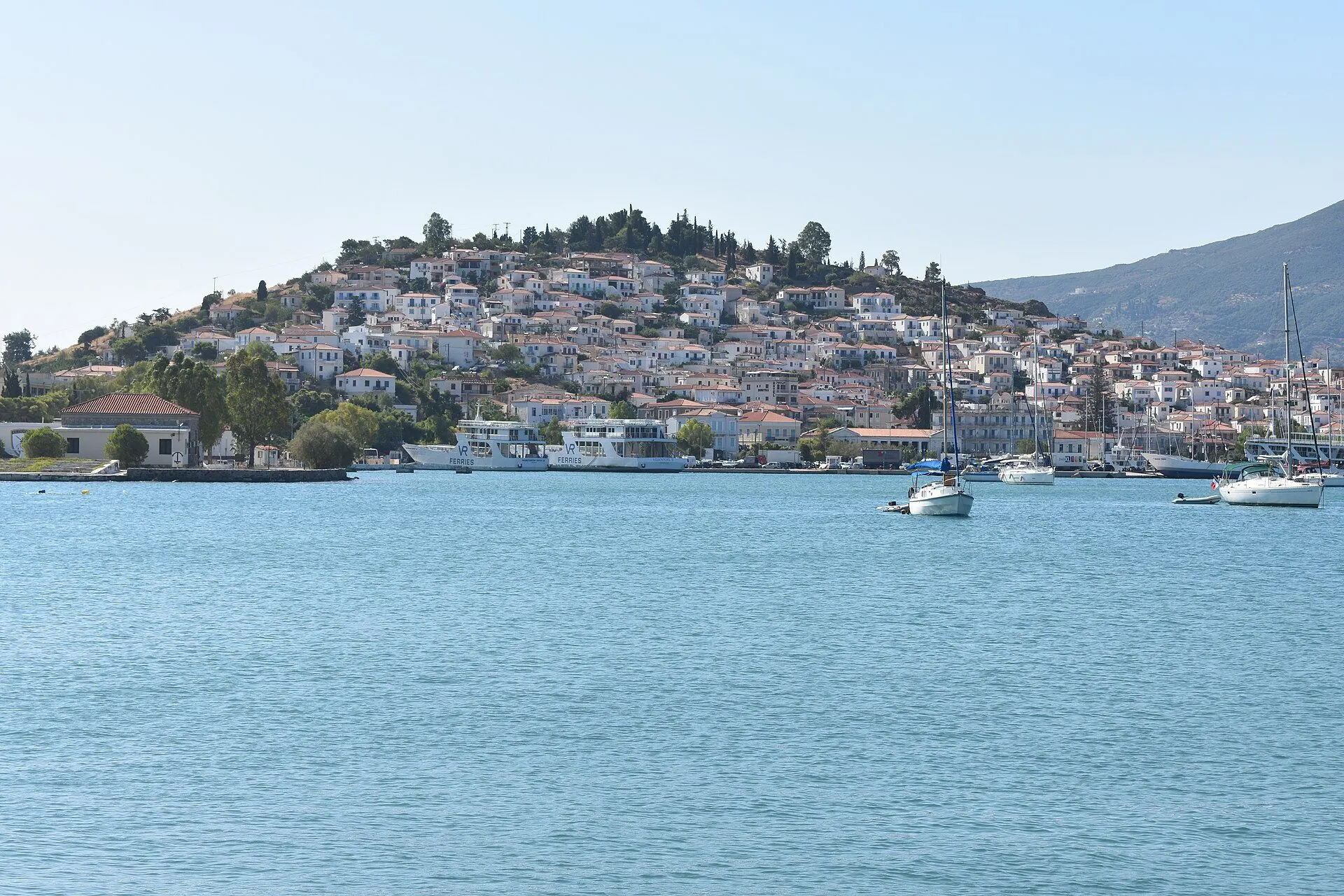
Poros · Poros town & Sphairia · Πόρος
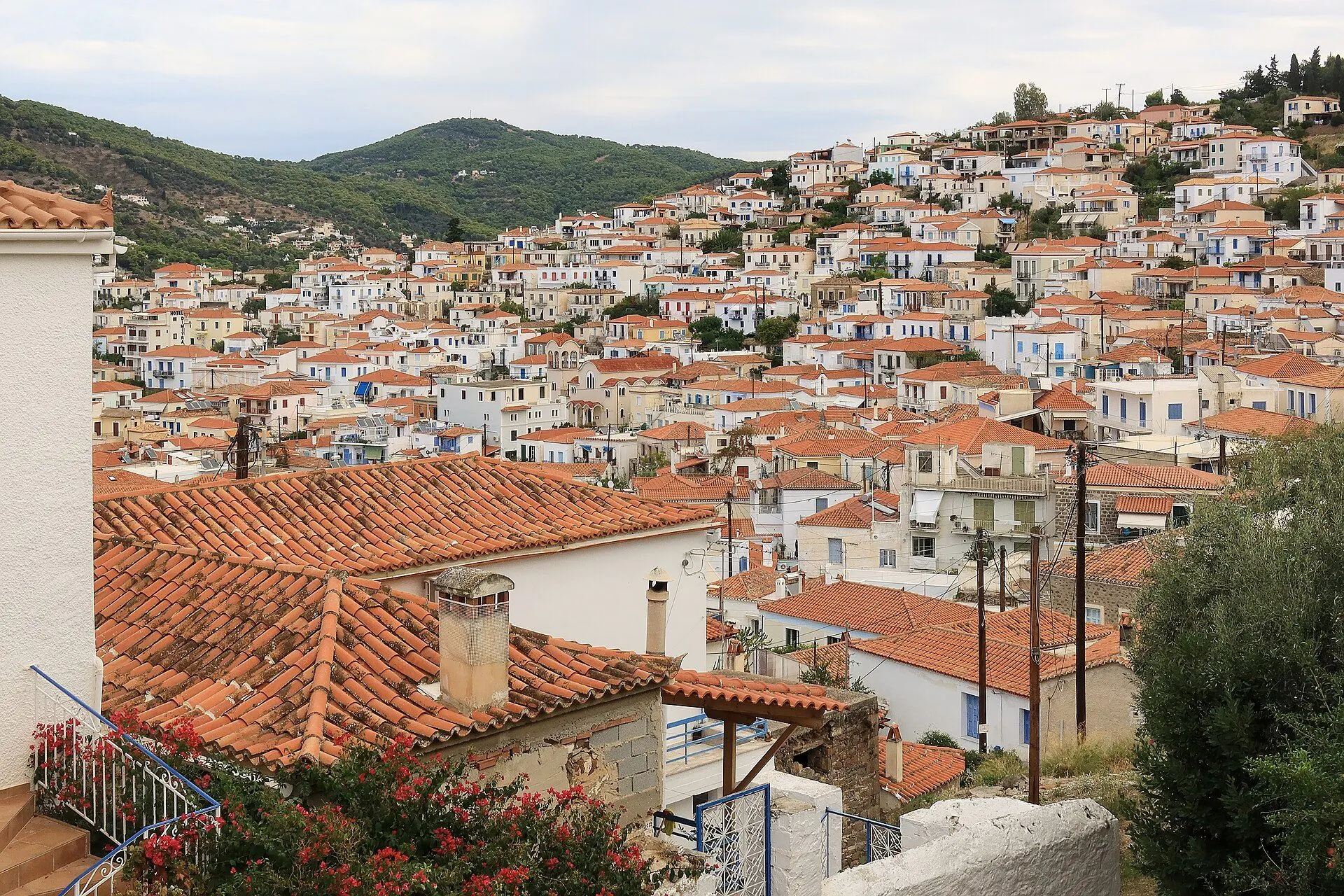
Poros town covers almost the whole of Sphairia, the small volcanic half of the island, climbing in tiers of white and ochre houses with red-tiled roofs from the waterfront to the blue-and-white clock tower on the hill. In front of it runs the strait that gave the island its name: poros means 'passage', and here the water between the island and the mainland village of Galatas is only a few hundred metres wide, so ferries, yachts, fishing boats and the little water taxis seem to sail down the main street. Behind the cafes of the harbour, steep lanes and stairways lead up through the old quarter to the clock tower and the view.
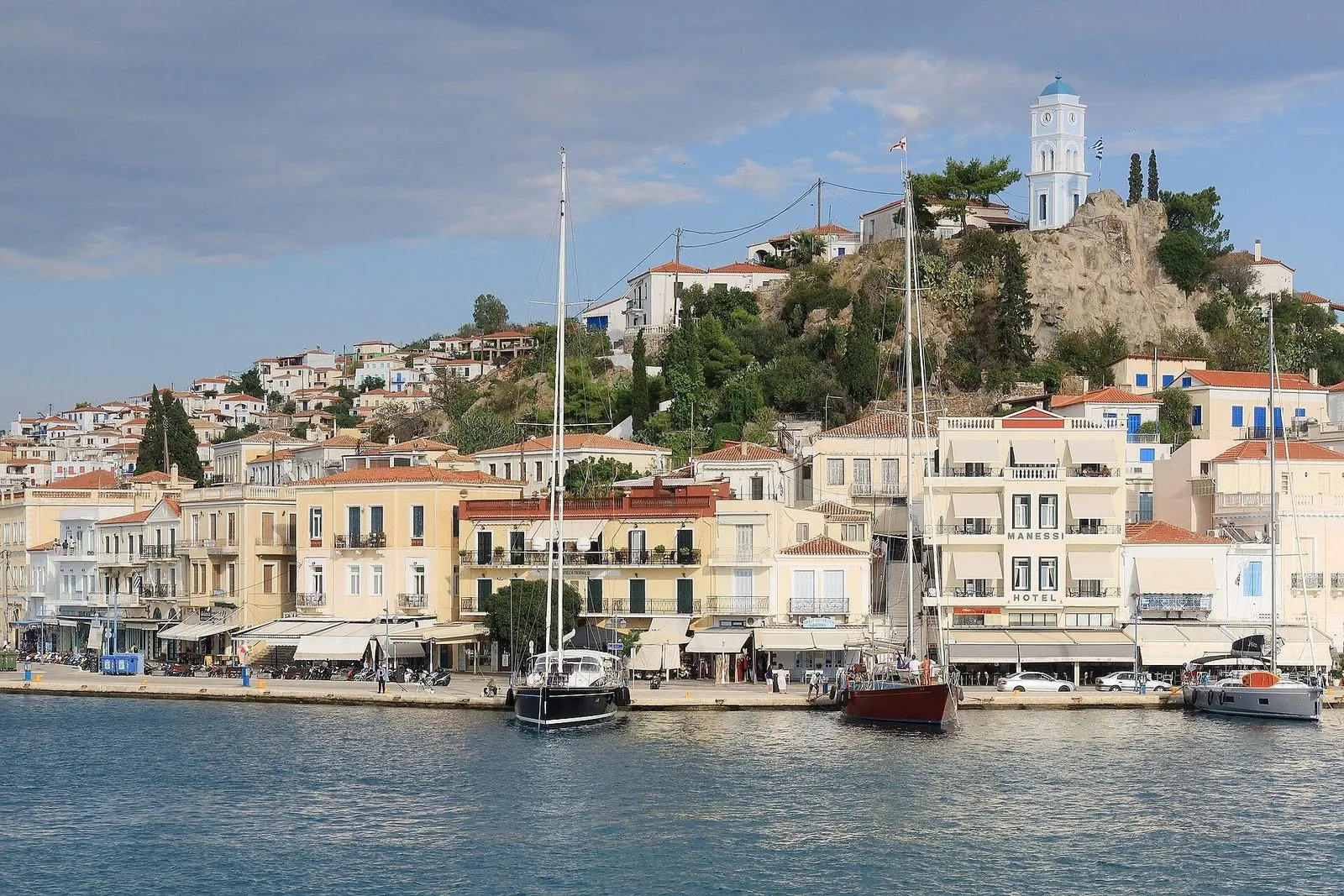
Greetings from Poros town
Poros town
We came in on the Flying Dolphin from Piraeus and the boat turned into what looked like a river: houses on one side, lemon groves and a village on the other, close enough to see people at their tables. Tonight we climbed the steps behind the harbour to the clock tower and watched the sun go down behind the Sleeping Woman, the mountain that looks like a woman lying on her back. Now we are on the waterfront with grilled octopus and ouzo, and the little boats to Galatas keep crossing in front of us, their lights on the black water.
A town of tiled roofs on a volcanic rock, facing the Peloponnese across a strait you could almost swim
Poros is really two islands. The town stands on Sphairia, a small, steep cone of volcanic rock, and the rest of the island, Kalavria, is a much larger hump of limestone and pine forest to the north and east. The two are joined at Kanali by a channel so narrow that a short bridge crosses it. Sphairia is so small that the town fills it, and almost every house has a view of the water.
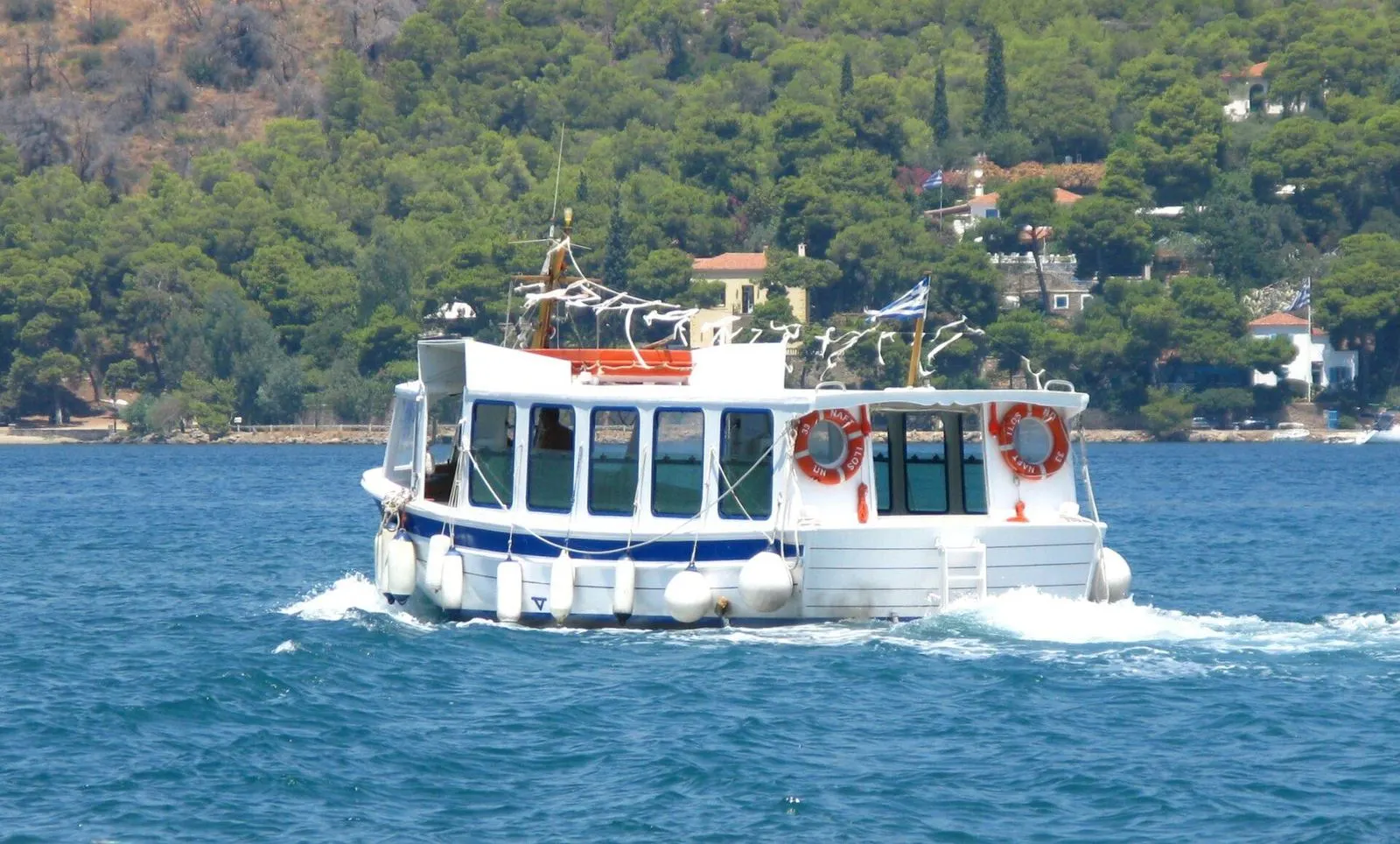
That water is the strait. Between Poros town and Galatas on the Peloponnese the channel narrows to a few hundred metres, and everything passes through it: ferries from Piraeus, yachts heading for Hydra and Spetses, fishing caiques, the car ferry and the small boats that cross to Galatas every few minutes, late into the night. Henry Miller, sailing in on his way to Hydra in 1939, wrote that coming into Poros felt like sailing down the streets of a town. It still does.
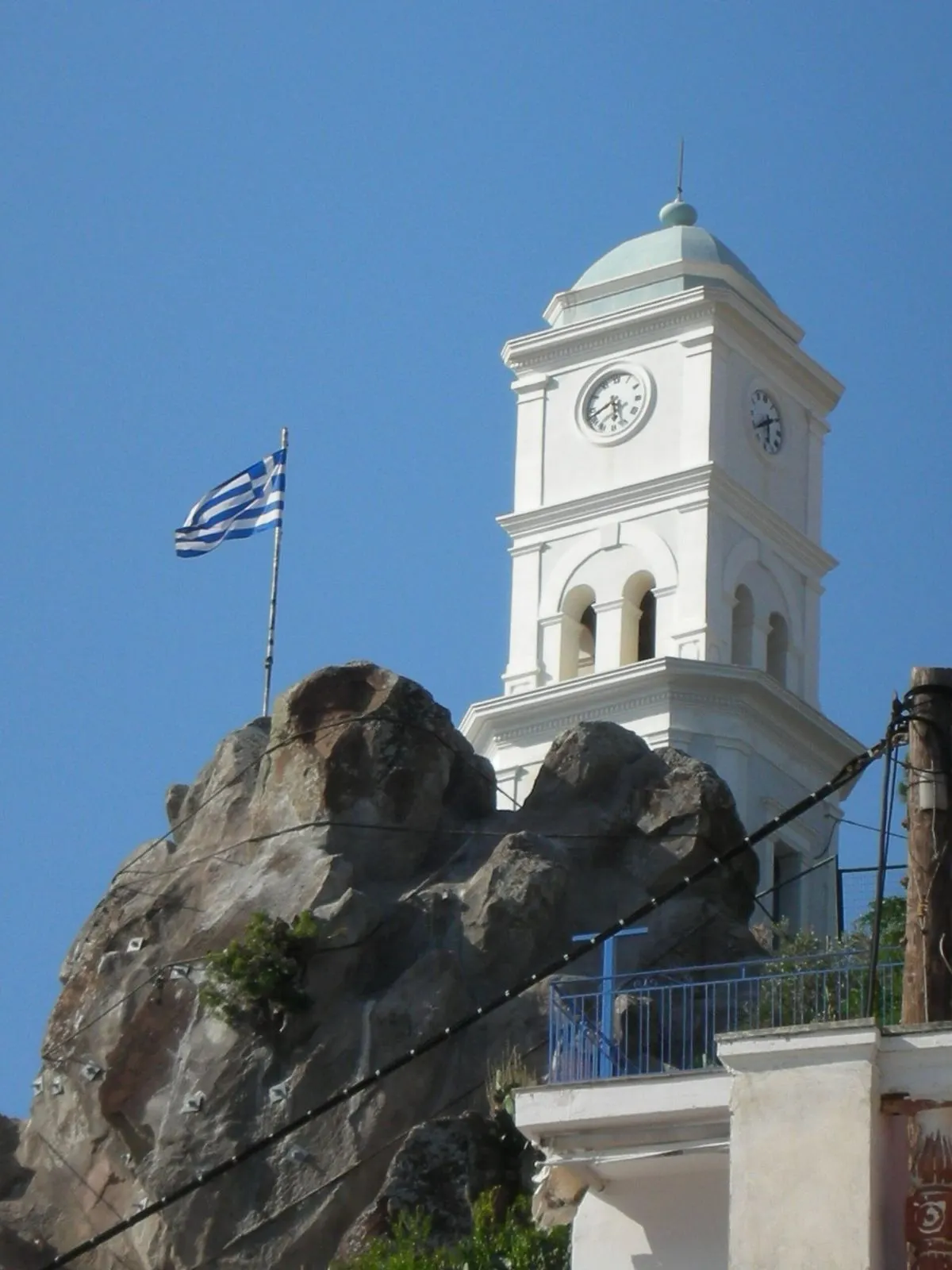
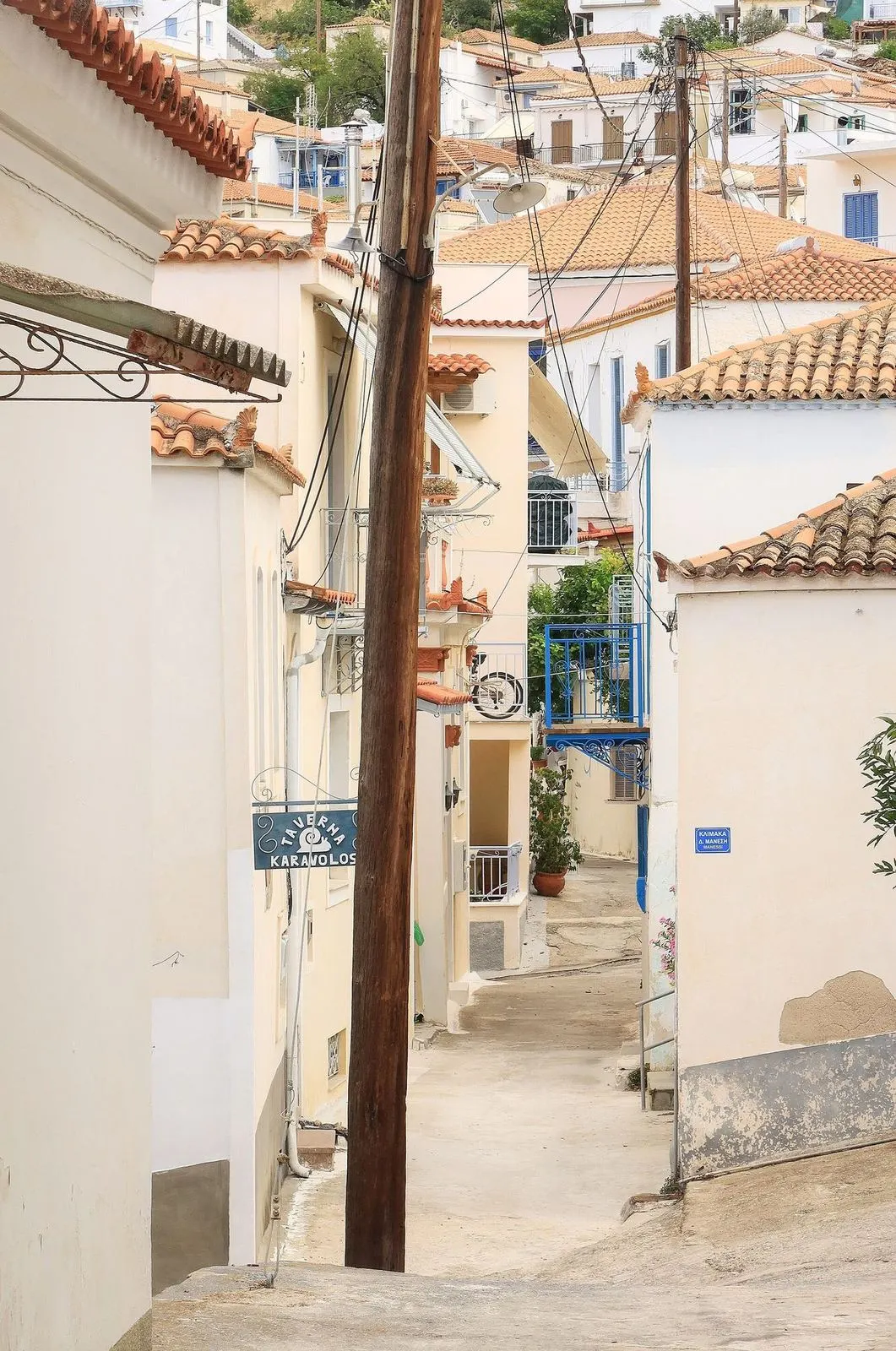
The waterfront is the town's living room: a long row of cafes, tavernas and shops under the awnings, the boats moored stern-to in front, and the mainland so close across the water that you can hear its church bells. In the evening the whole town walks it. Behind it the old quarter rises in stepped lanes of whitewashed walls, blue doors and bougainvillea, with cats on every step, up to the clock tower, built in 1927, on the highest point of the rock.
From the clock tower, look west across the strait at the mountains of the mainland. Their outline traces a woman lying on her back, her face, breasts and knees against the sky, and the people of Poros call her the Koimomeni, the Sleeping Woman. On summer evenings the sun goes down behind her.
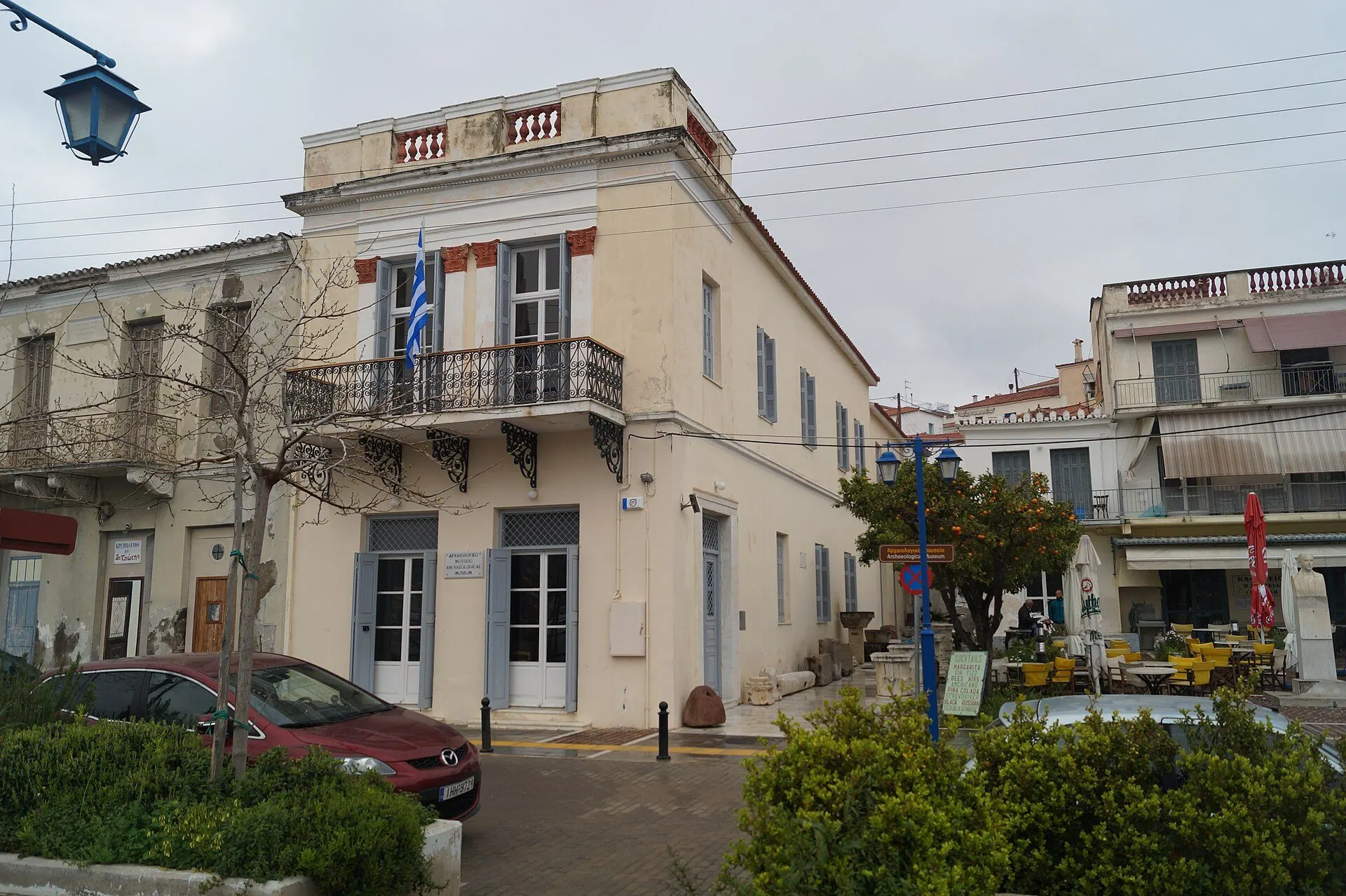
The town has a longer past than it shows. In the 1820s, during the War of Independence, Poros was where the first government of free Greece kept its fleet, and Ioannis Kapodistrias, the country's first governor, set up its first naval base in the bay to the west, where the Hellenic Navy still trains its recruits. His statue stands on the waterfront. The small archaeological museum on Korizis square, named after Alexandros Korizis, the prime minister in 1941, who was born here, holds finds from the Temple of Poseidon and from ancient Troizen across the water.
Hour by hour
The clock tower before the heat, a swim at Kanali, the museum, a boat across the strait and dinner on the water. Here is how we would spend a day here.
Climb the stepped lanes behind the harbour to the clock tower while the town is still in shade, and look down over the roofs to the strait and the mainland.
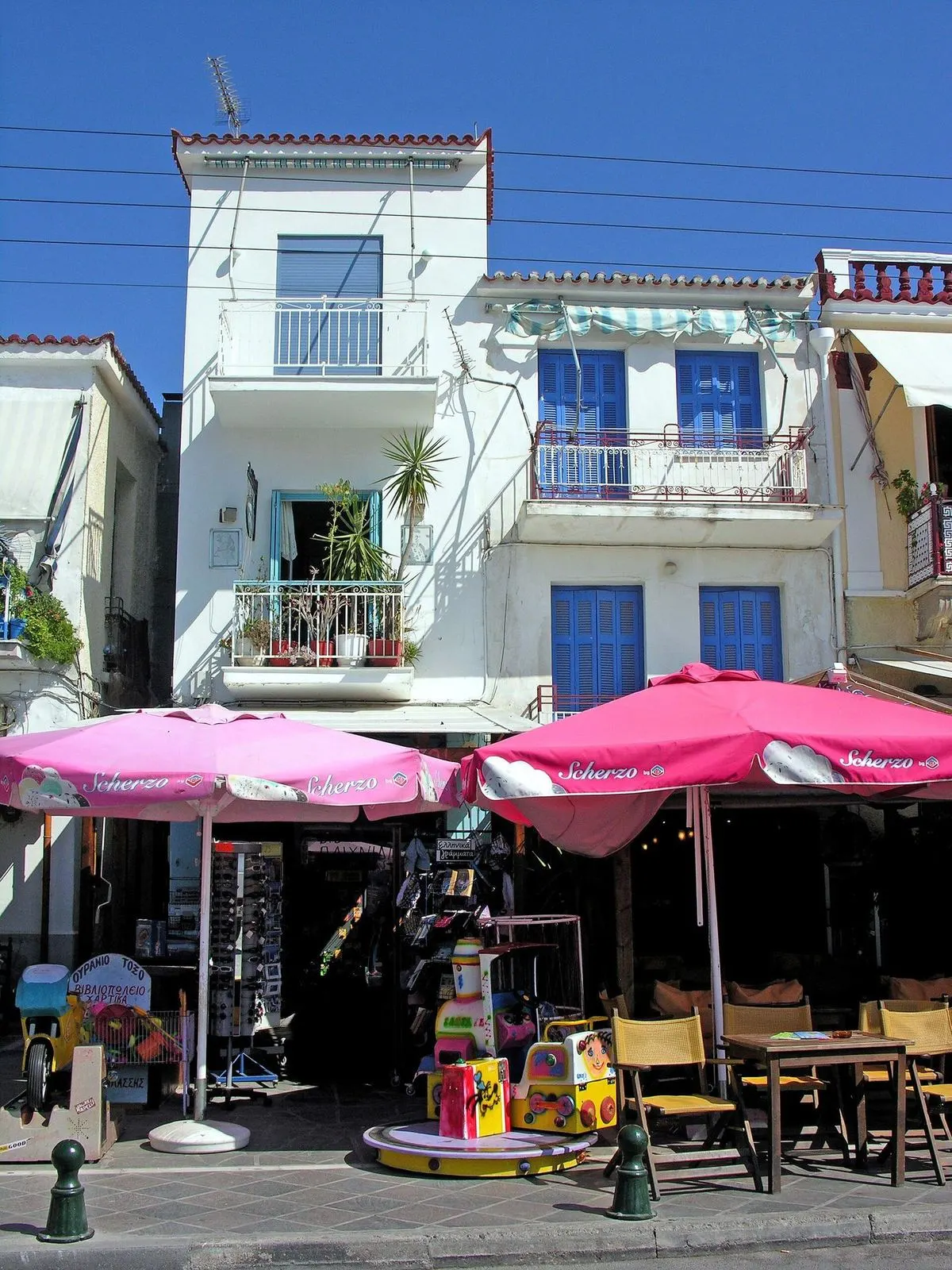
Back down on the harbour, a coffee and a koulouri at a cafe on the water, watching the first boats of the day come in from Piraeus.
An hour in the little museum on Korizis square, with the finds from the Temple of Poseidon and from Troizen, birthplace of Theseus, across the water.
Walk out along the shore to the bridge at Kanali, where the two halves of Poros meet, swim from the beach and stay for lunch on the sand.
Take one of the small boats over to Galatas, five minutes for a euro or two, and look back at the whole of Poros town rising from the water.
Back on the island, climb a few streets back from the harbour for dinner at a family taverna, then walk the waterfront with the rest of the town.
Where to stay
Poros town
Manessi Boutique Hotel · Boutique hotel · €€
Poros town
Sto Roloi · Island houses · €€€
Where to eat
Poros town · Poros town & Sphairia
Poros town · Poros town & Sphairia
Poros town · Poros town & Sphairia
Poros town · Poros town & Sphairia
Poros town · Poros town & Sphairia
Poros town · Poros town & Sphairia
Poros town · Poros town & Sphairia
Poros town · Poros town & Sphairia
Within an easy drive
The channel and short bridge where Sphairia meets Kalavria, with a beach and a beach restaurant, a 15–20 minute walk from the harbour.
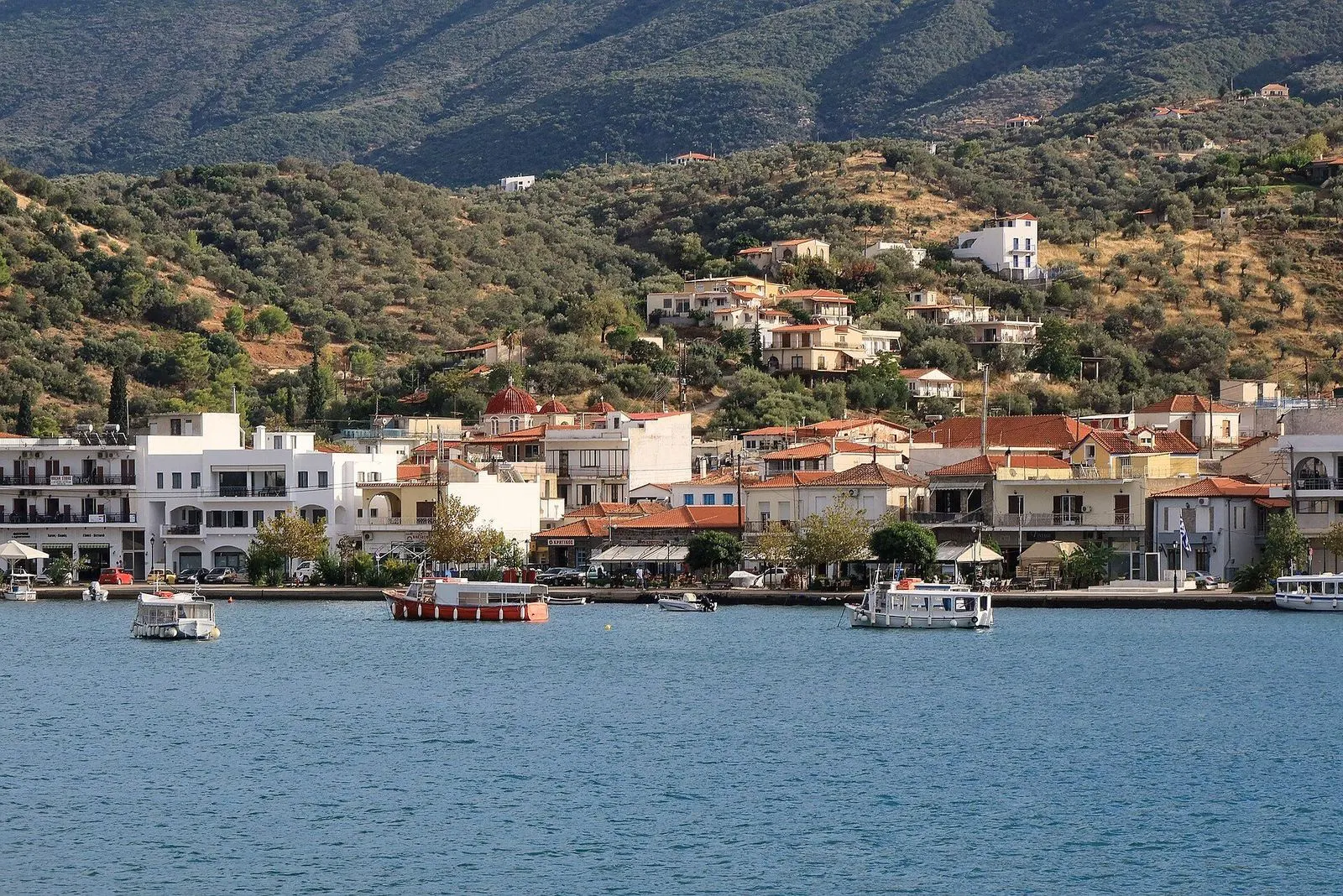
The mainland village across the strait, five minutes by boat, and beyond it the lemon groves of Lemonodasos.
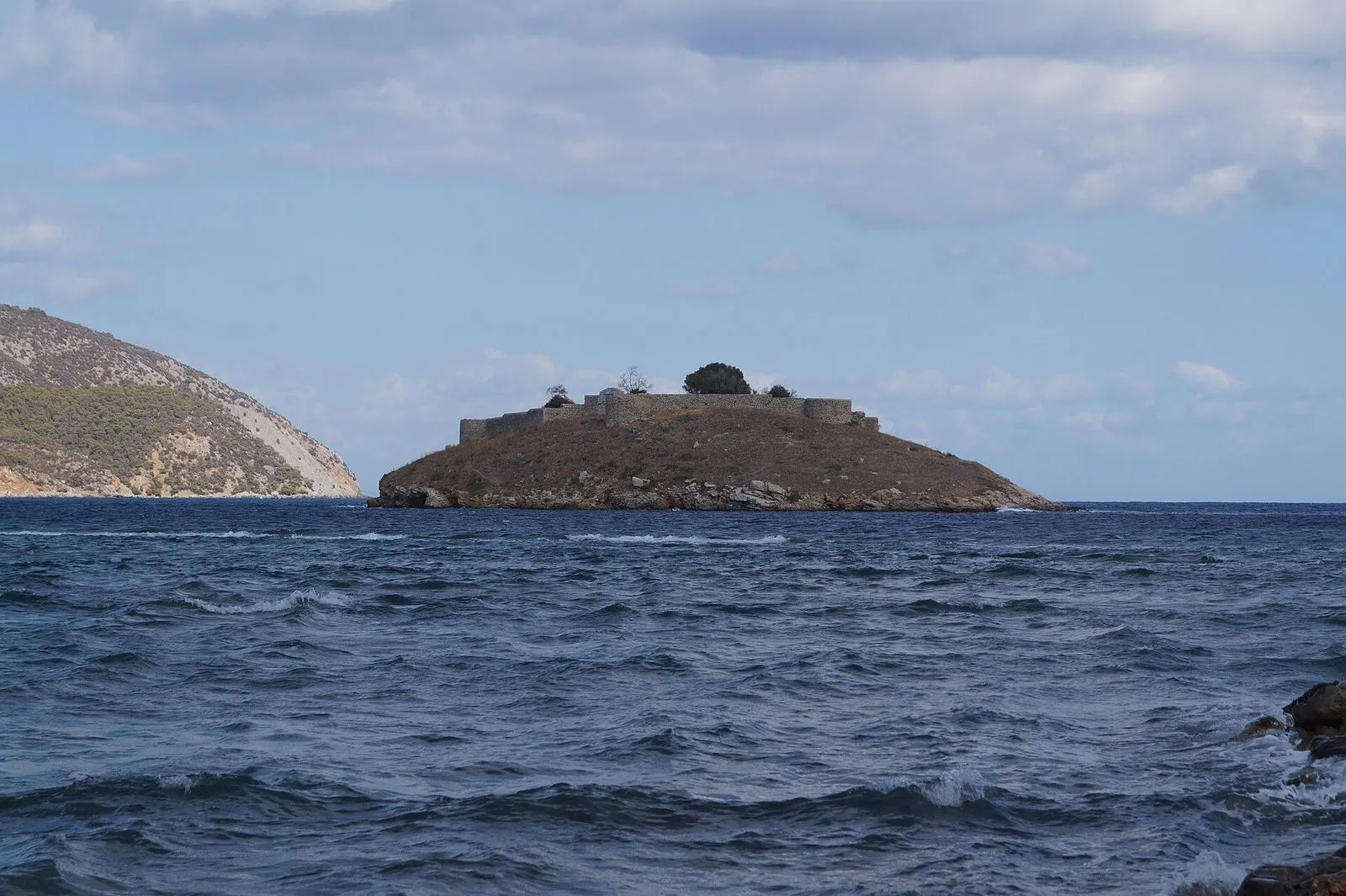
A small fort on an islet at the eastern entrance of the bay, seen from the boats as they come in from the open sea.
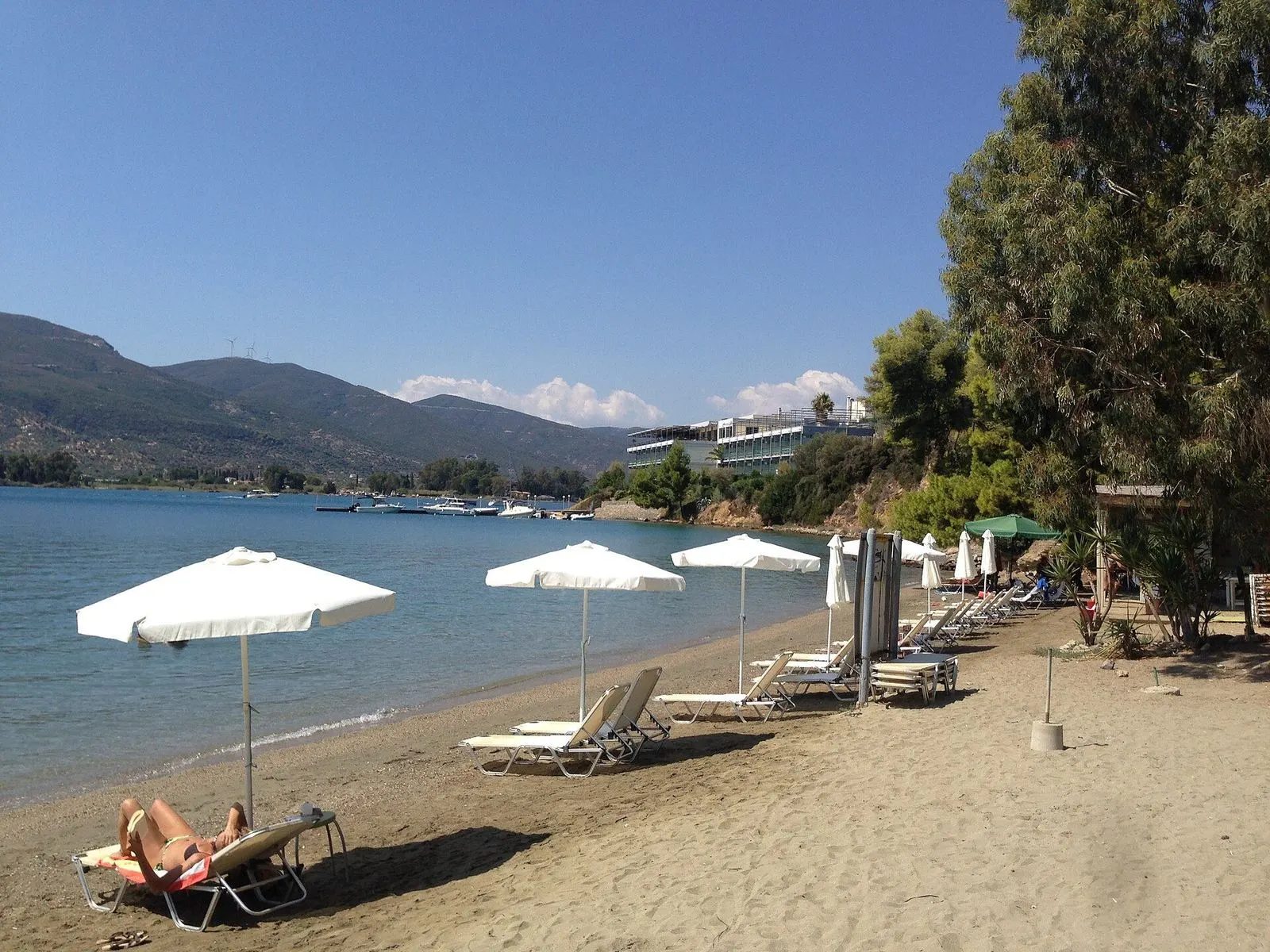
The coves west of town, past the Naval Training Centre, a few minutes away by car, bus or water taxi.
Good to know
Every boat from Piraeus, Hydra and Spetses ties up on the waterfront of the town, and the small boats and car ferry from Galatas land a few minutes' walk along the shore. The old town is for walking: its lanes are stepped and too narrow for cars.
May, June and September, when the evenings on the waterfront are warm and the lanes are quiet. July and August are lively, and weekends busy with Athenians all summer. Unlike many islands, Poros town stays open and lived-in all winter.
More of Poros
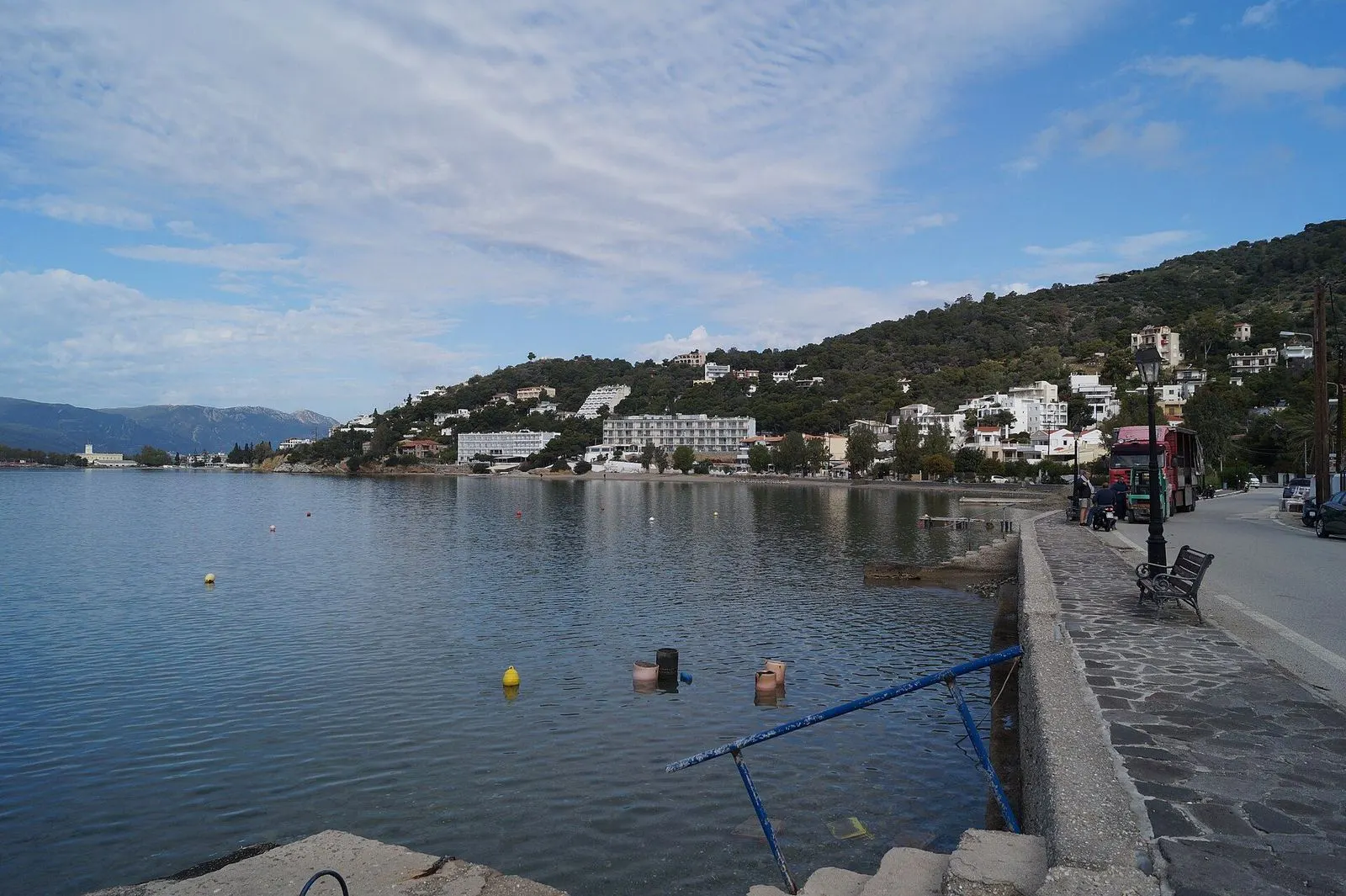
Askeli & the south coast
The island's main beach, under the pines, looking across the water to the Peloponnese
Neorio & the west
Coves in the pines on the strait west of town, and the ruins of a Russian naval station
Askeli & the south coast
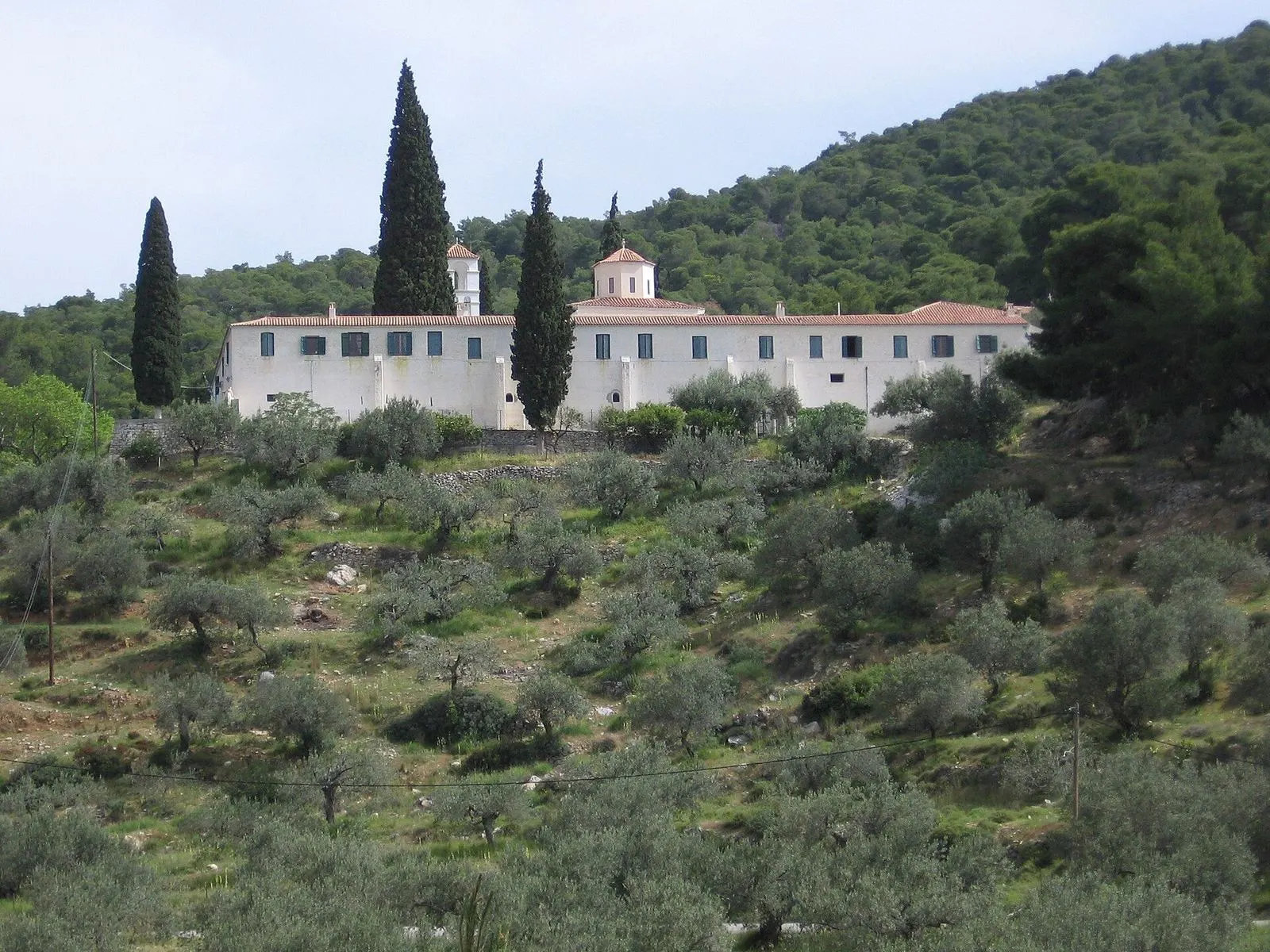
The island's monastery of the life-giving spring, in a green fold of the pine forest
Every stay we recommend across Poros, from village guesthouses to rooms on the sea.
See all staysLast updated