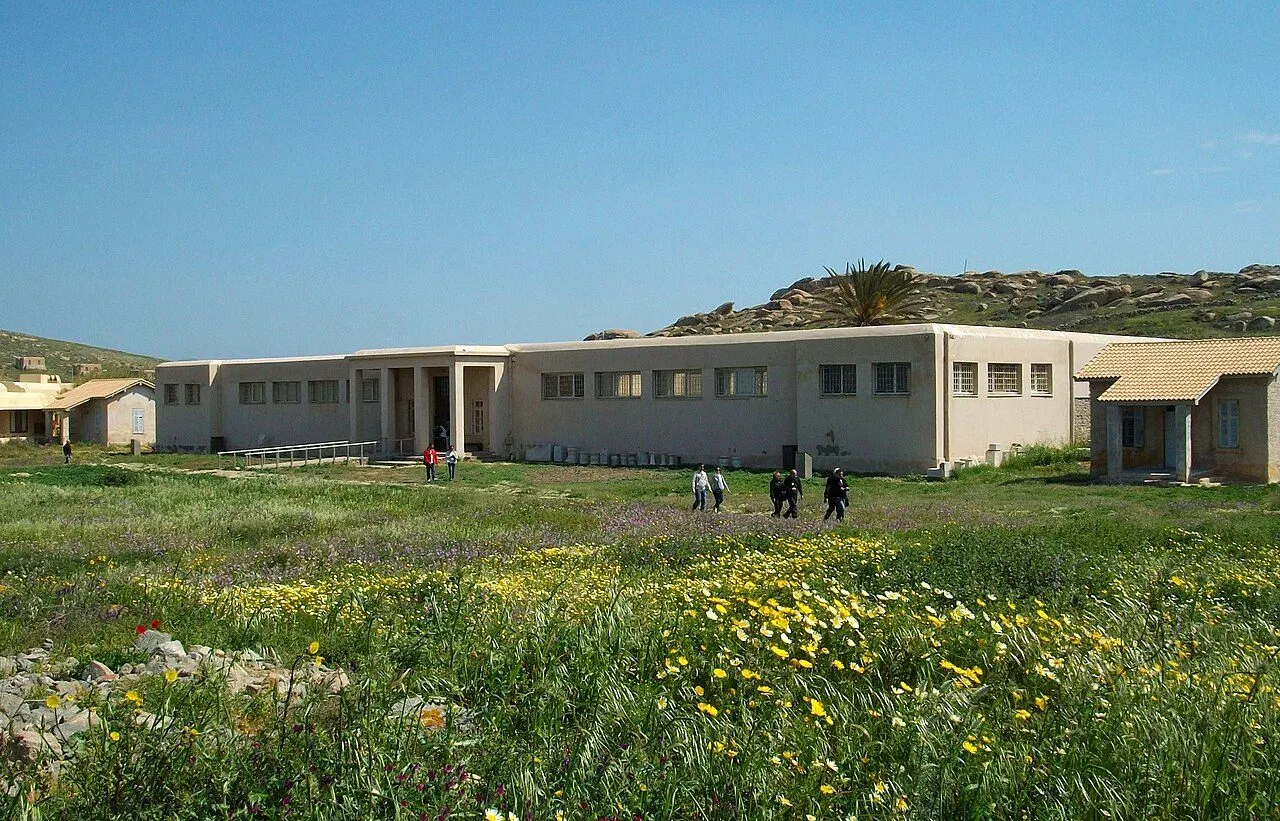
The museum
At the foot of the hill, for shade and the originals of the lions.
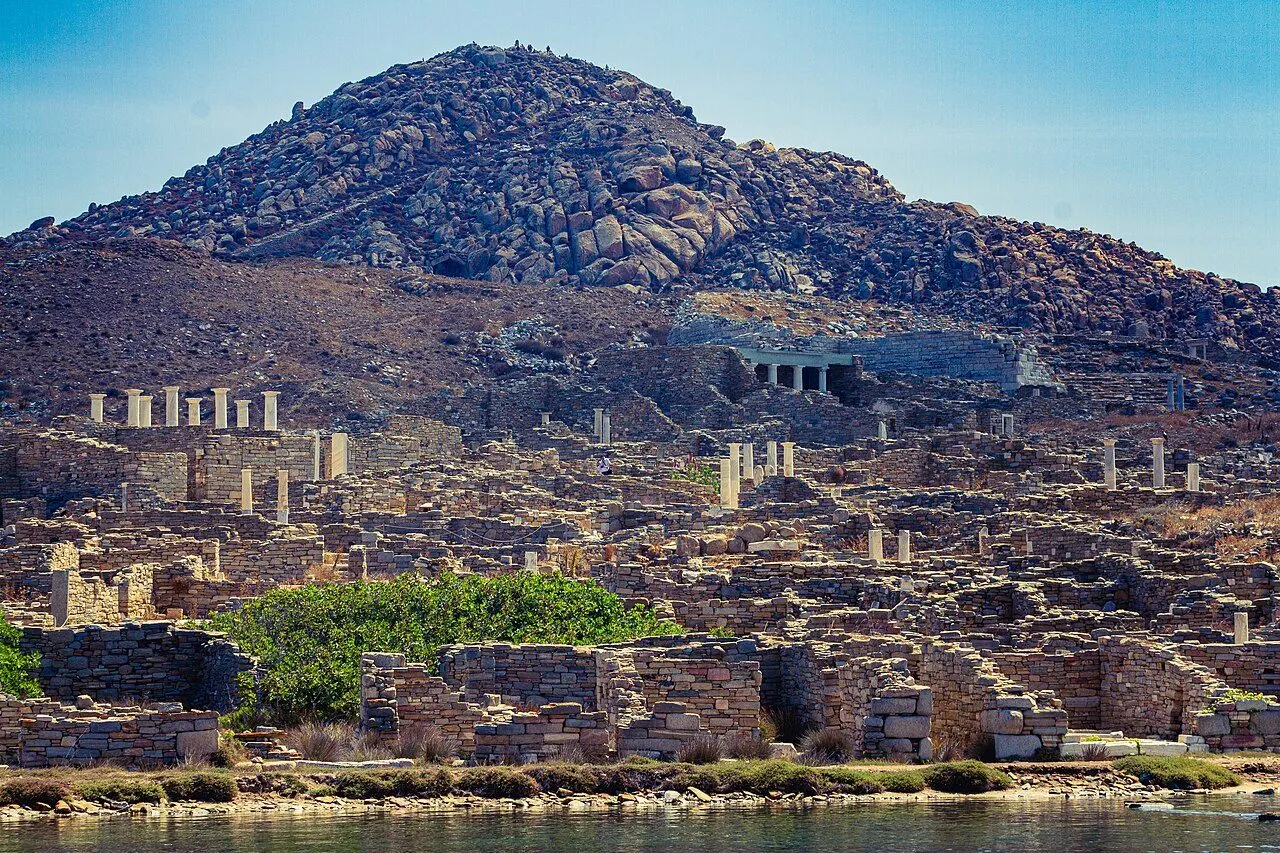
Delos · Mount Kynthos & the foreign gods · Κύνθος
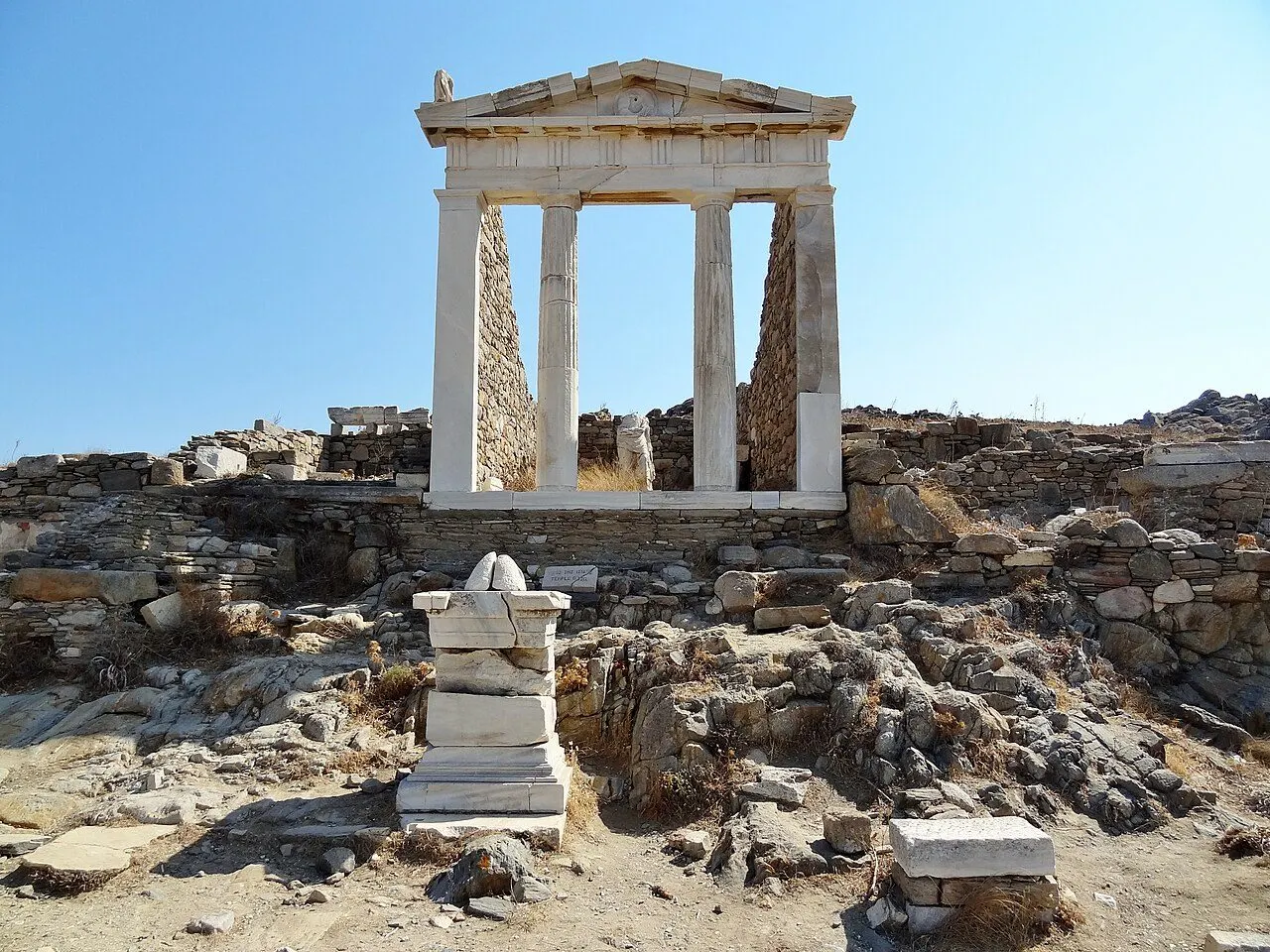
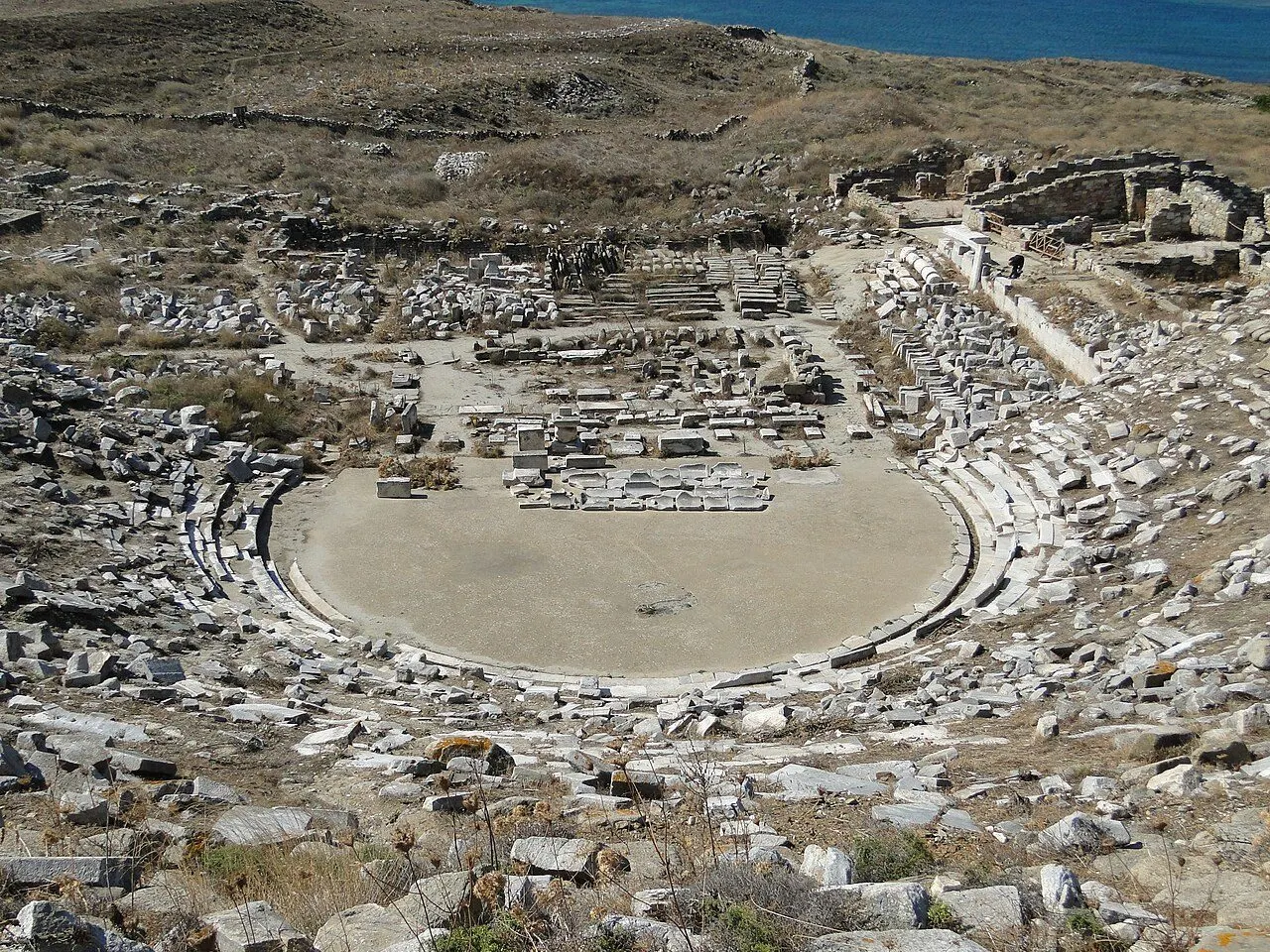
Mount Kynthos is the island's only real hill, a granite cone of 113 m east of the town. On its lower slopes, terraces held the sanctuaries of the gods the traders brought with them: three Serapeia for the Egyptian Serapis, the Temple of Isis with its restored front, and the sanctuary of the Syrian gods Hadad and Atargatis with its own small theatre. A stepped ancient path climbs on past a cave roofed with granite slabs to the summit sanctuary of Zeus Kynthios and Athena Kynthia, where the first Delians lived some 4,500 years ago.
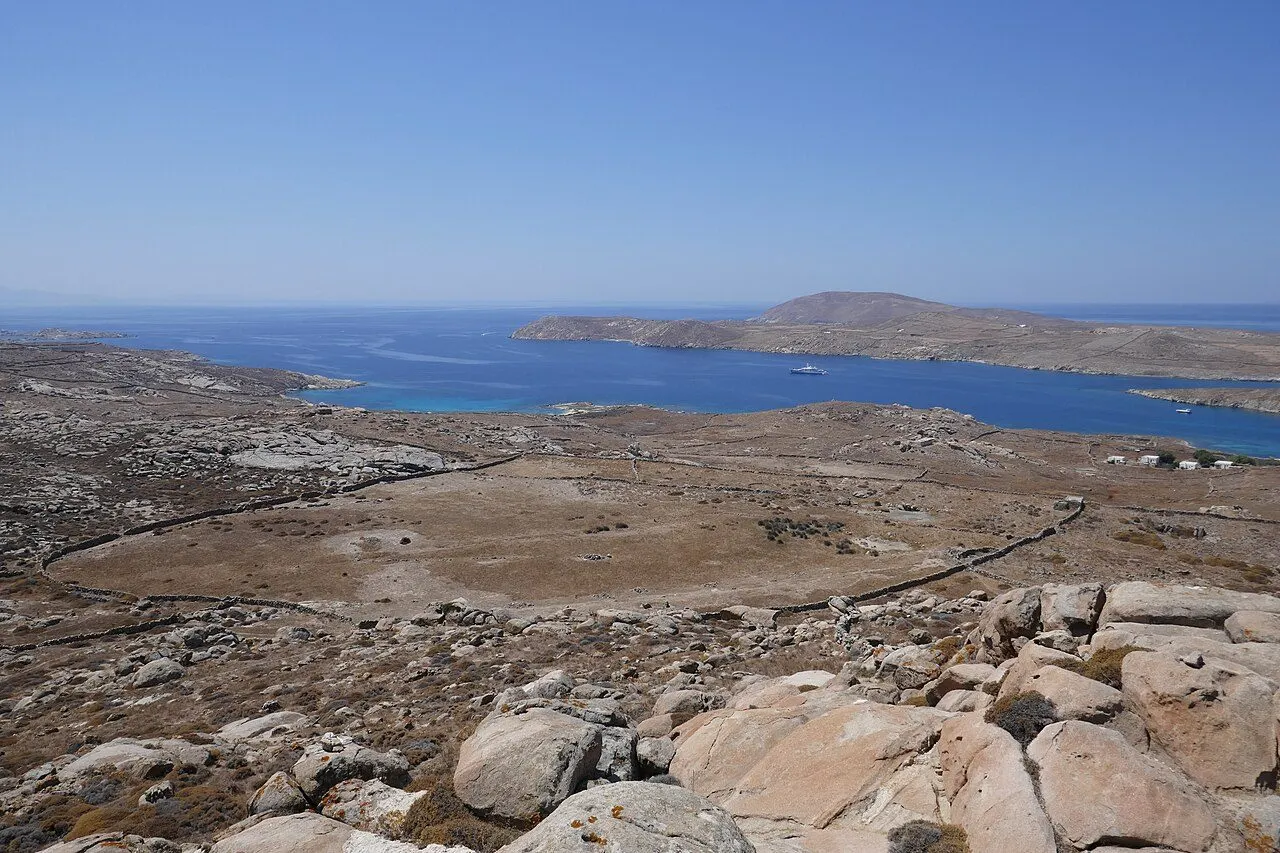
Greetings from Mount Kynthos & the foreign gods
Mount Kynthos
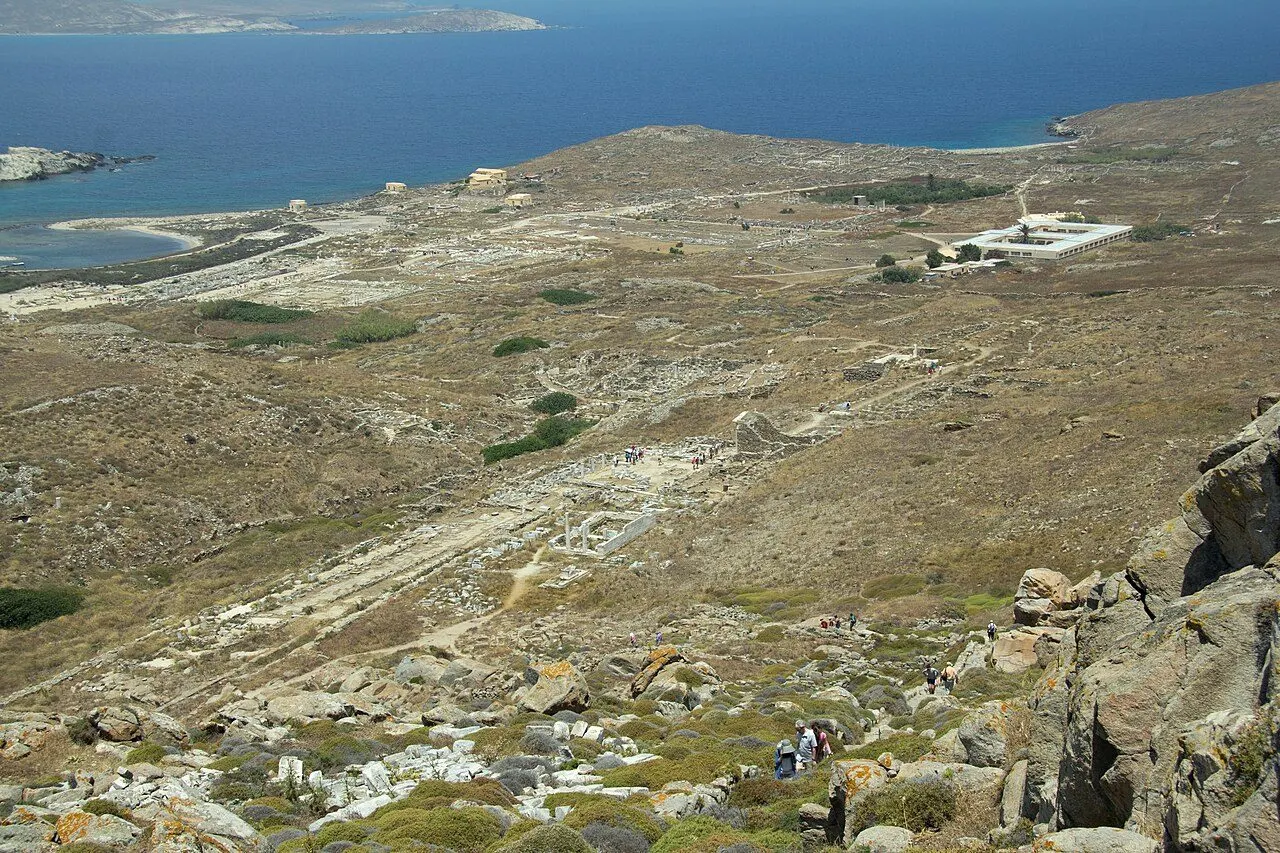
Everyone told us to skip it in the heat. We went anyway, early, past a temple of Isis with its columns back on their feet, and up the old steps, loose and steep, to a hilltop where Zeus and Athena once had their temple. Below us the whole sanctuary was laid out like a map, and round the horizon, one after another, were the islands that gave the Cyclades their name: they circle this one.
A 113 m climb past the temples of Isis, Serapis and the Syrian gods to Zeus on the summit and the whole Cyclades at your feet
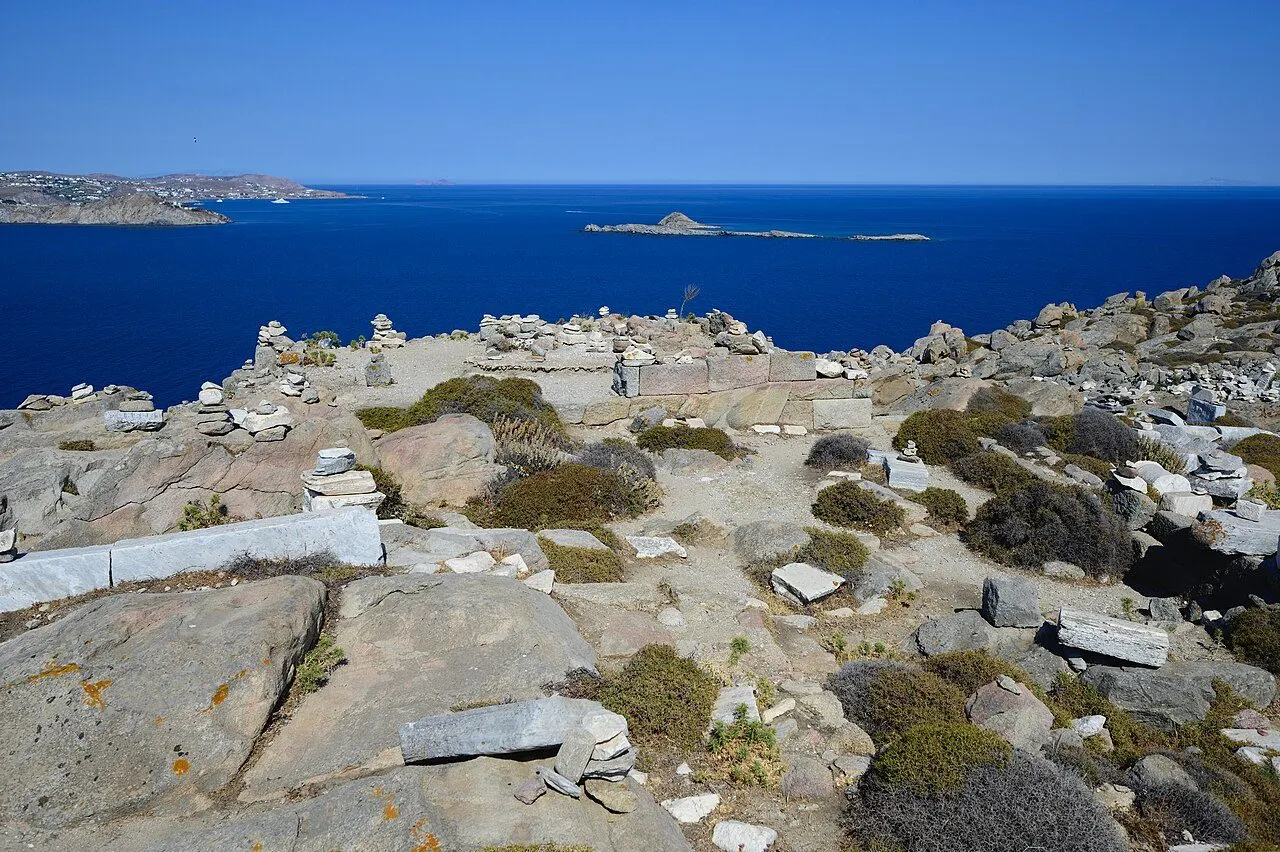
The Cyclades take their name from the circle (kyklos) they make round Delos, and from the top of Kynthos you can see why: on a clear day Mykonos, Tinos, Syros, Paros and Naxos stand round the horizon. The summit was lived on before the sanctuary existed, by a small Early Cycladic community of the 3rd millennium BC, abandoned in the 2nd. In the 6th century BC Zeus and Athena took over the top, and the foundations of their sanctuary are still there among small cairns left by visitors.
Halfway up, the Antron, a cleft in the rock roofed over with ten great granite slabs leaning together like a gable, was taken by its first excavators for the oldest temple of Apollo. Finds inside, the base of a statue with feet, a tree trunk and a lion skin, point instead to Herakles.
The terraces lower down tell the story of the free port. Merchants from Egypt built Serapeion A as a private sanctuary; two more Serapeia followed, and around 130 BC the Athenians themselves dedicated a Temple of Isis, whose façade has been raised again and in whose cella a large statue of the goddess still stands. Next door, worshippers of Hadad and Atargatis, the gods of Syria, built a sanctuary with their oldest known dedication in 128/127 BC and a little theatre of about a dozen rows for some 400–500 people, with no stage building at all.
Hour by hour
Allow an hour up and down, with stops at the foreign gods on the way.
Start at the terrace of the Serapeia, where marble pillars stand against the sea.
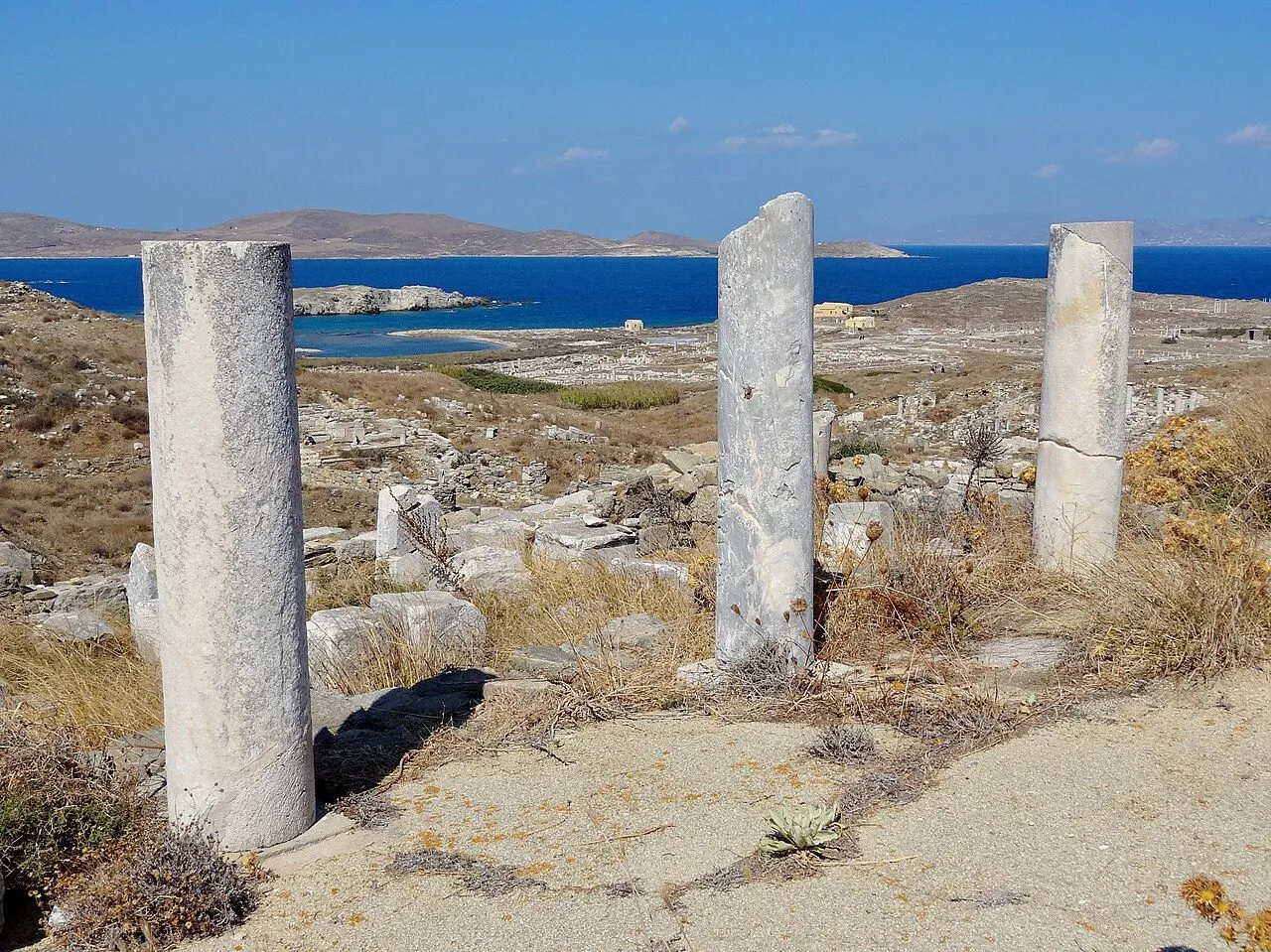
Stop at the Temple of Isis and look into the cella, where the goddess still stands.
Climb the stepped path to the top and find the foundations of the sanctuary of Zeus and Athena.
Look down over the whole site, the harbour and Rhenia before you head back to the museum.
Within an easy drive
At the foot of the hill, for shade and the originals of the lions.
The houses and their mosaics on the slope to the west.
Good to know
About 20 minutes' walk from the jetty to the foot of the hill, then 15–20 minutes up a stepped path of loose stones. Wear shoes with a grip.
As early as your boat allows; there is no shade at all, and the top is very windy.
More of Delos
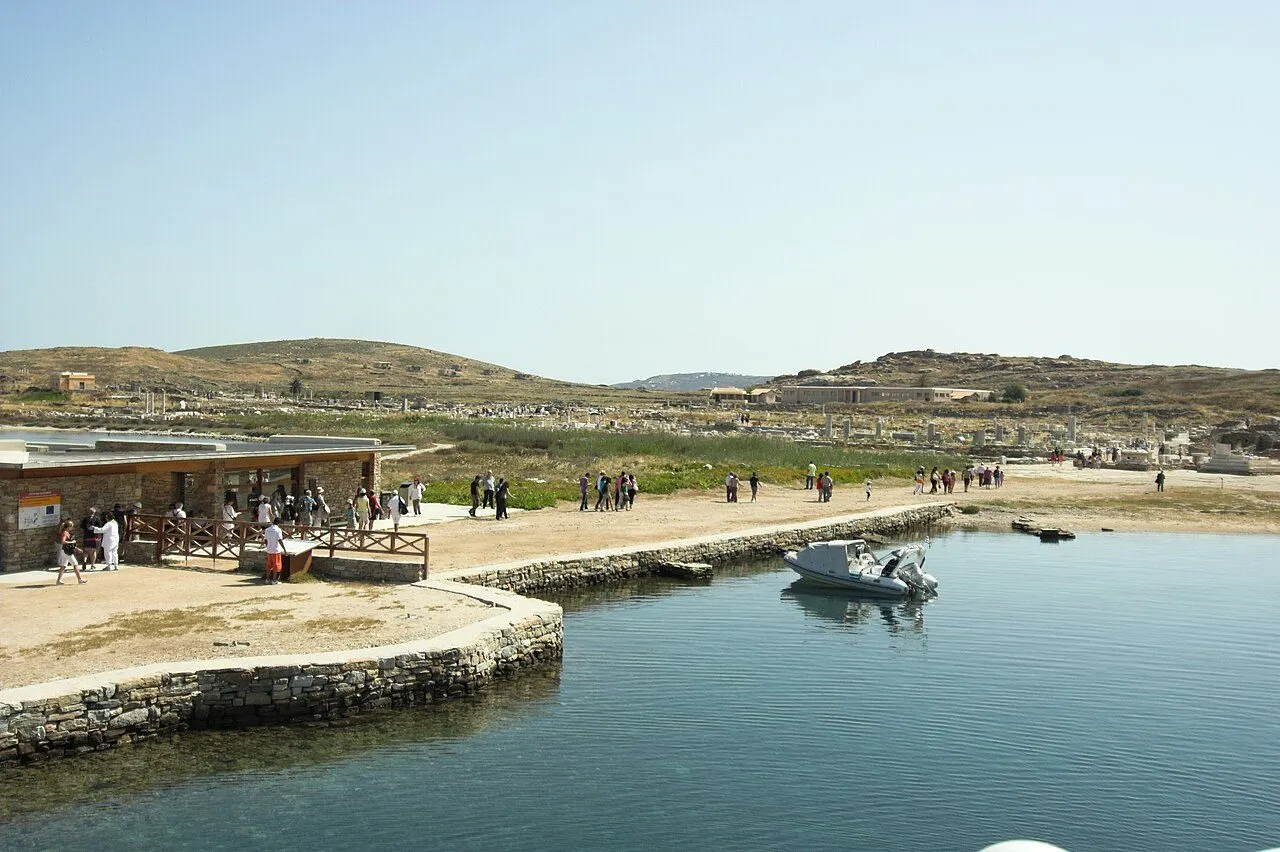
Sacred Harbour & the sanctuary
Where pilgrims, merchants and today's day-trippers all stepped ashore
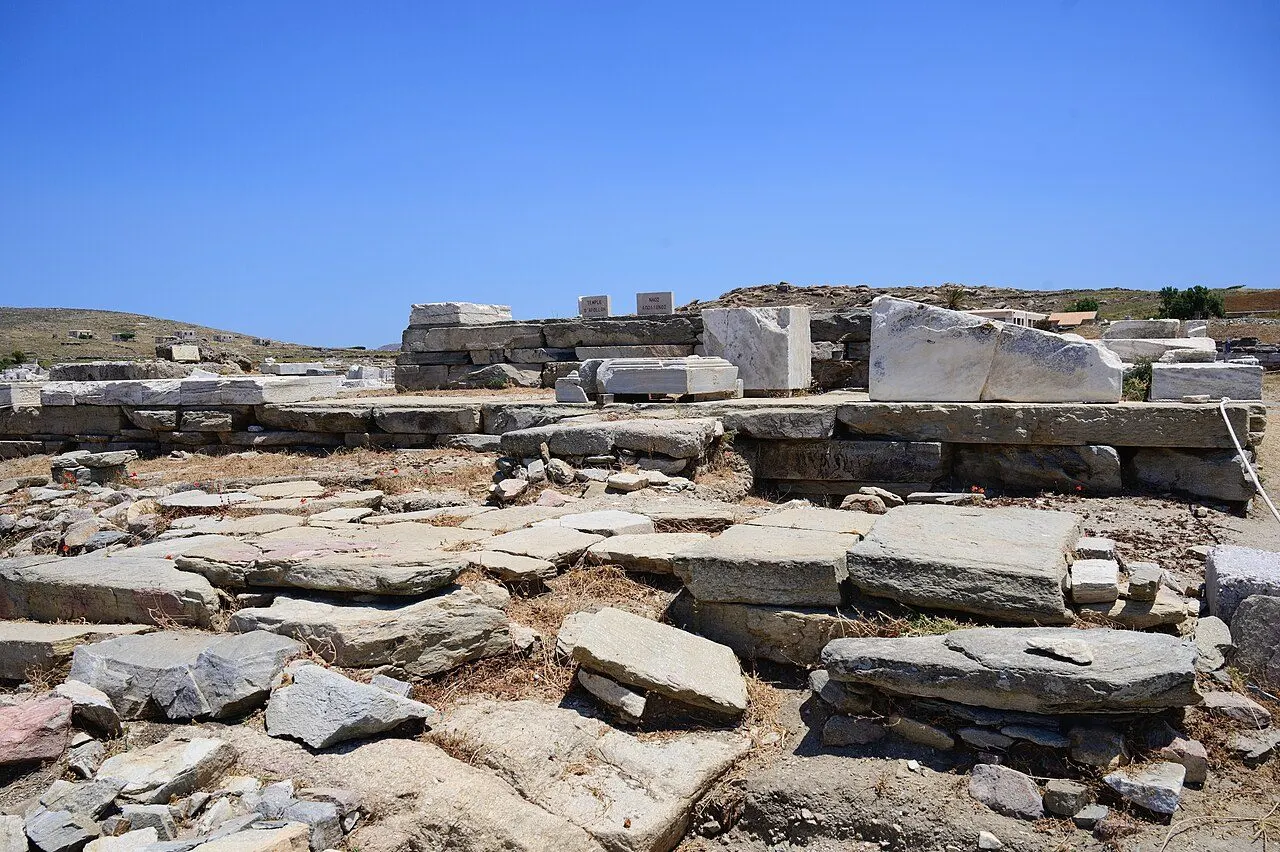
Sacred Harbour & the sanctuary
Three temples to one god side by side, a colossus felled by a bronze palm, and a temple that took two centuries and was never finished
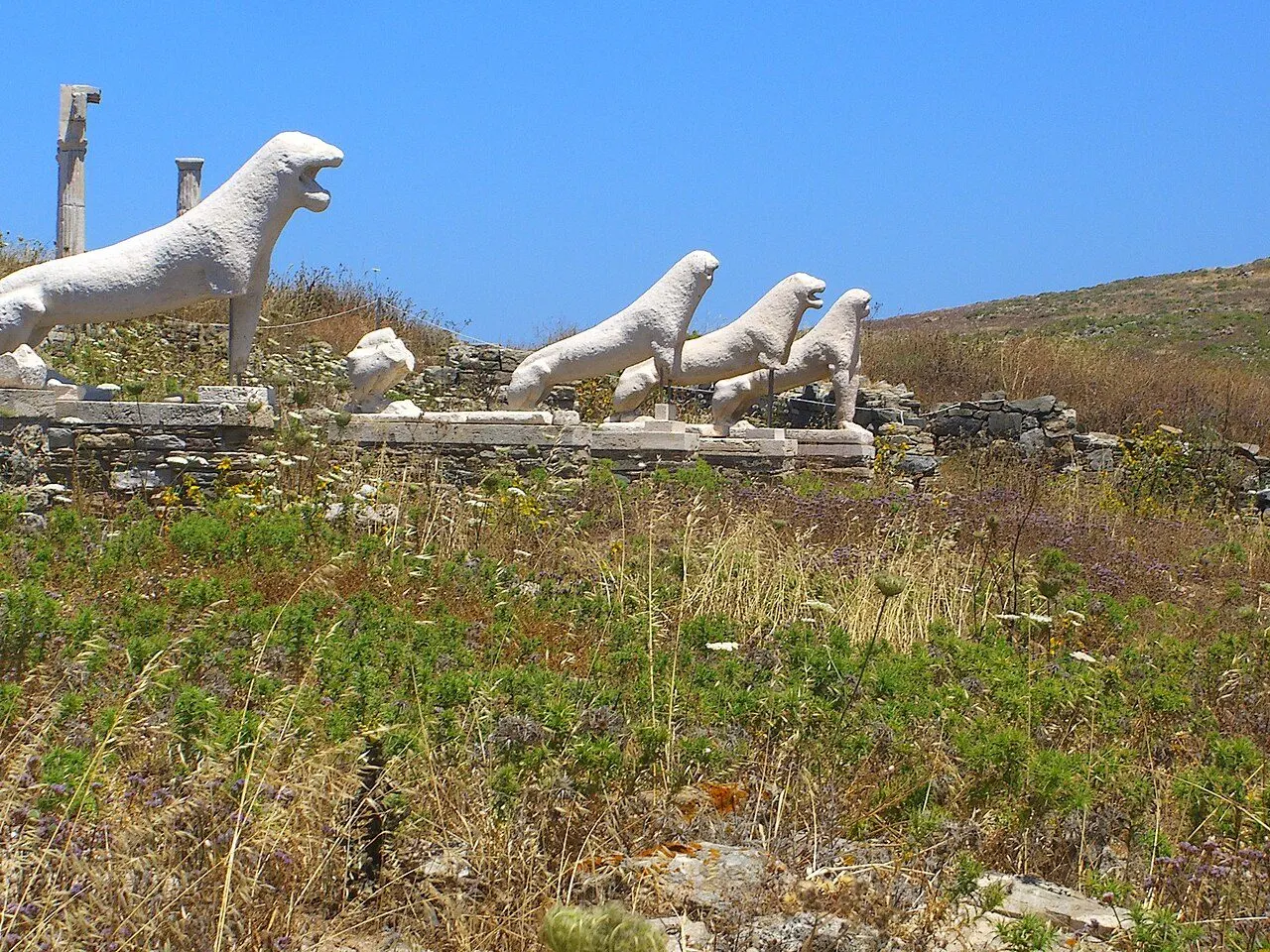
Lions & Sacred Lake
Lean marble beasts guarding a lake that is no longer there, where Leto clung to a palm tree to give birth
Every stay we recommend across Delos, from village guesthouses to rooms on the sea.
See all staysLast updated