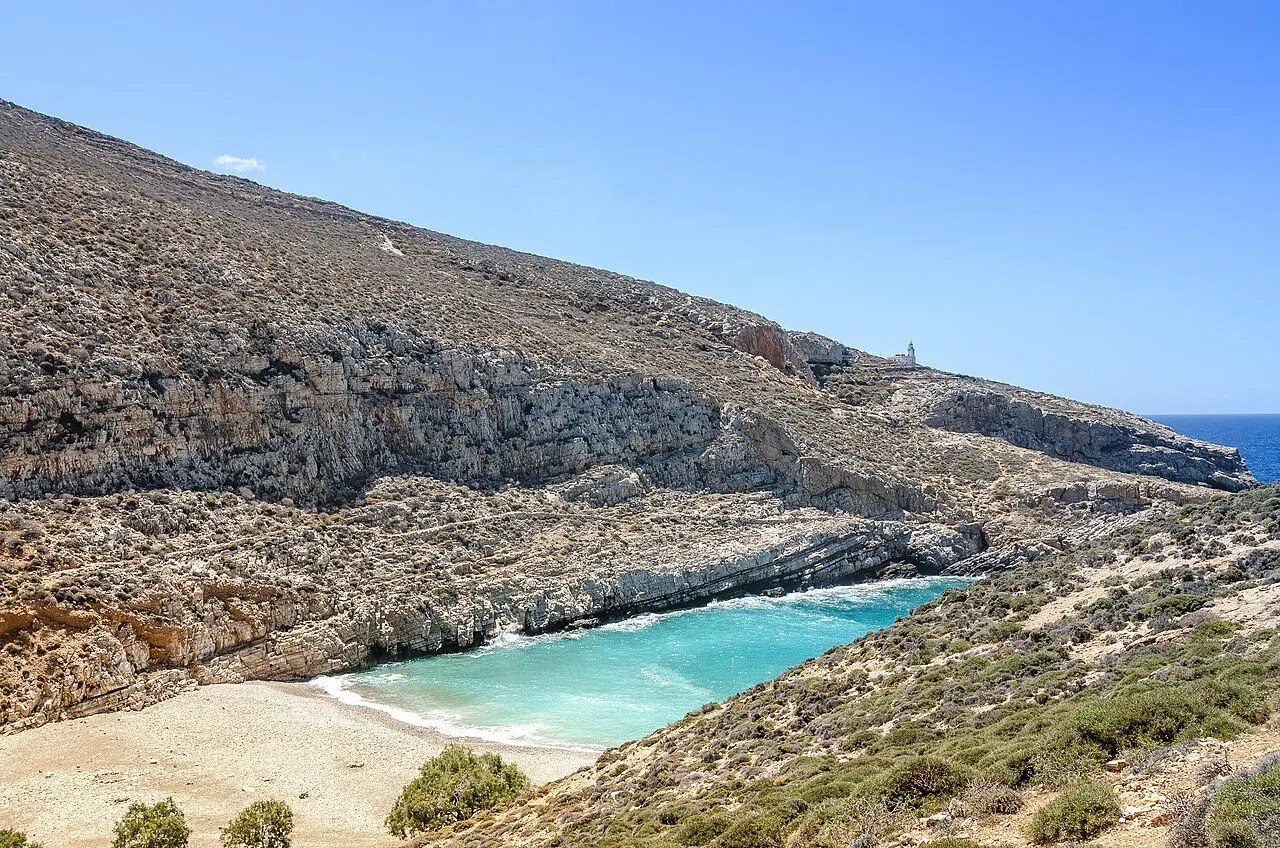
Livadaki and the Aspropounta lighthouse
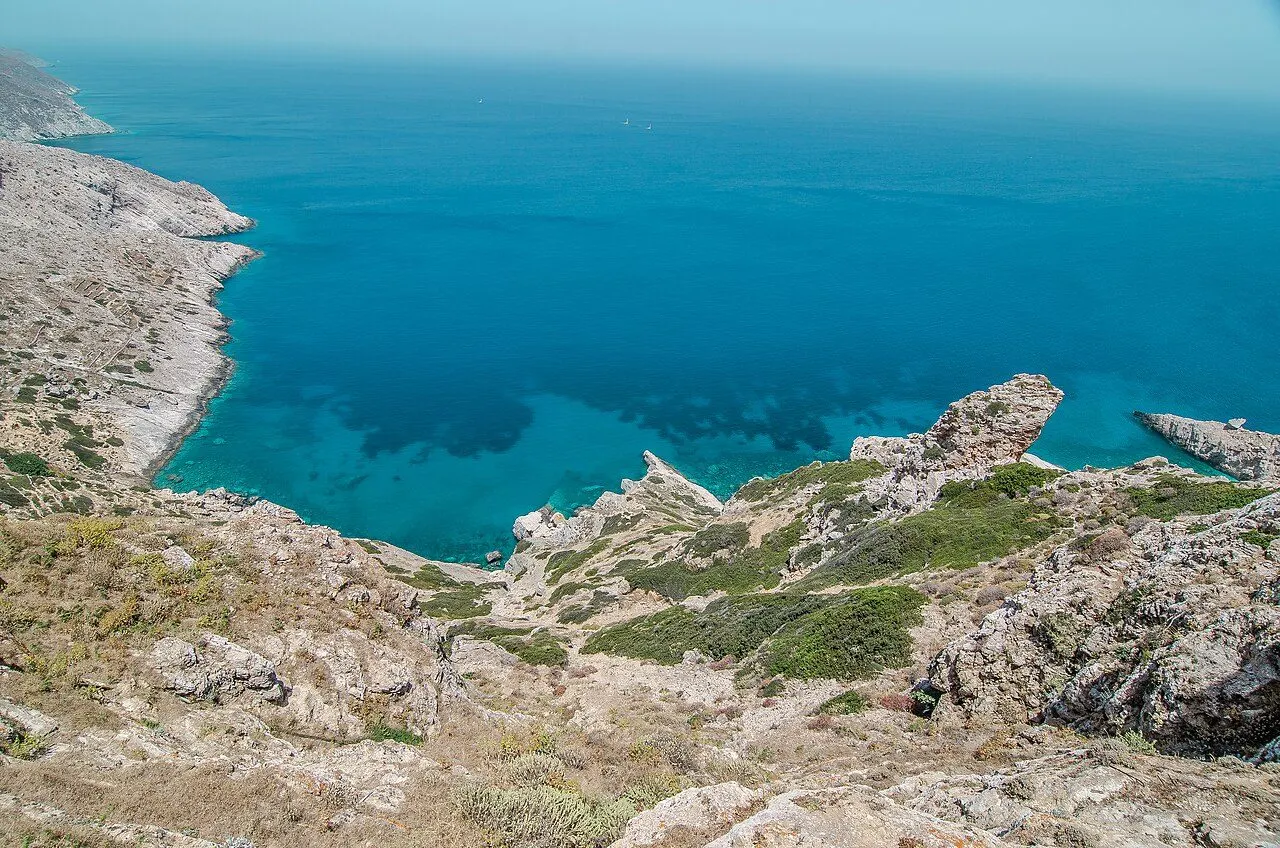
A wild beach of sand and rocks below the village, 45 minutes to an hour on foot, and the lighthouse of 1919 ten minutes beyond it.
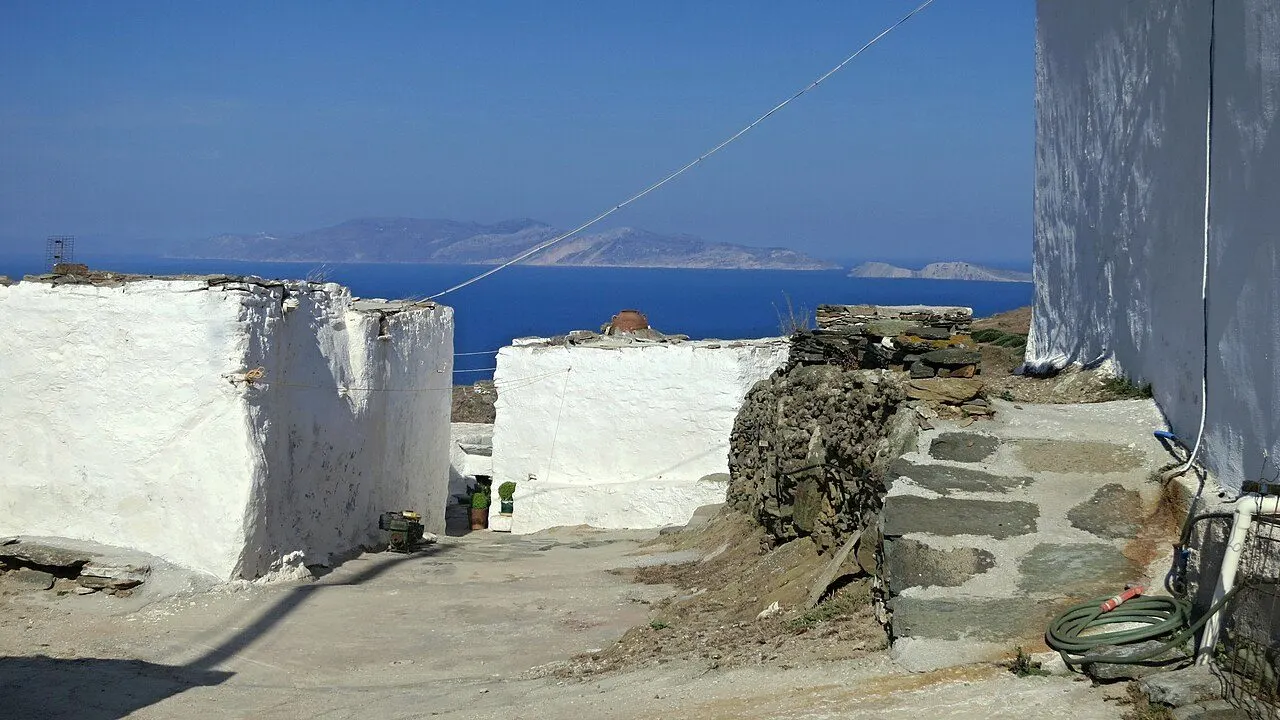
Folegandros · Ano Meria & the north · Άνω Μεριά
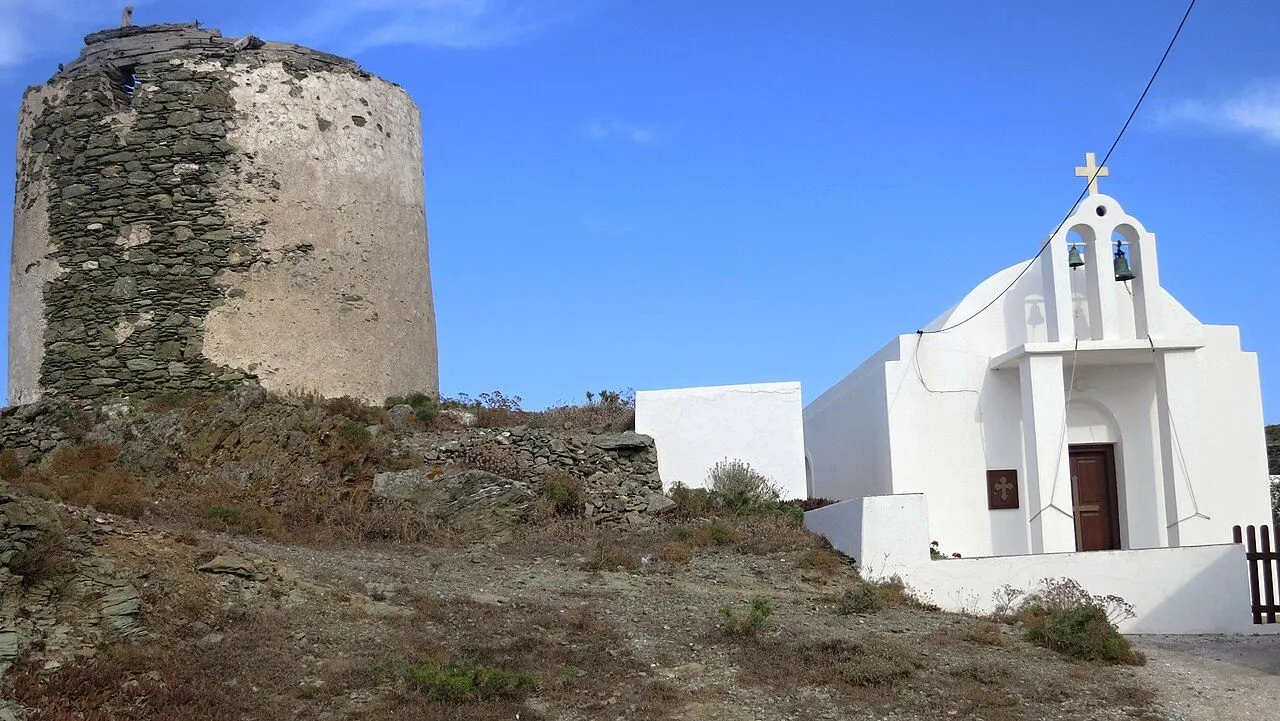
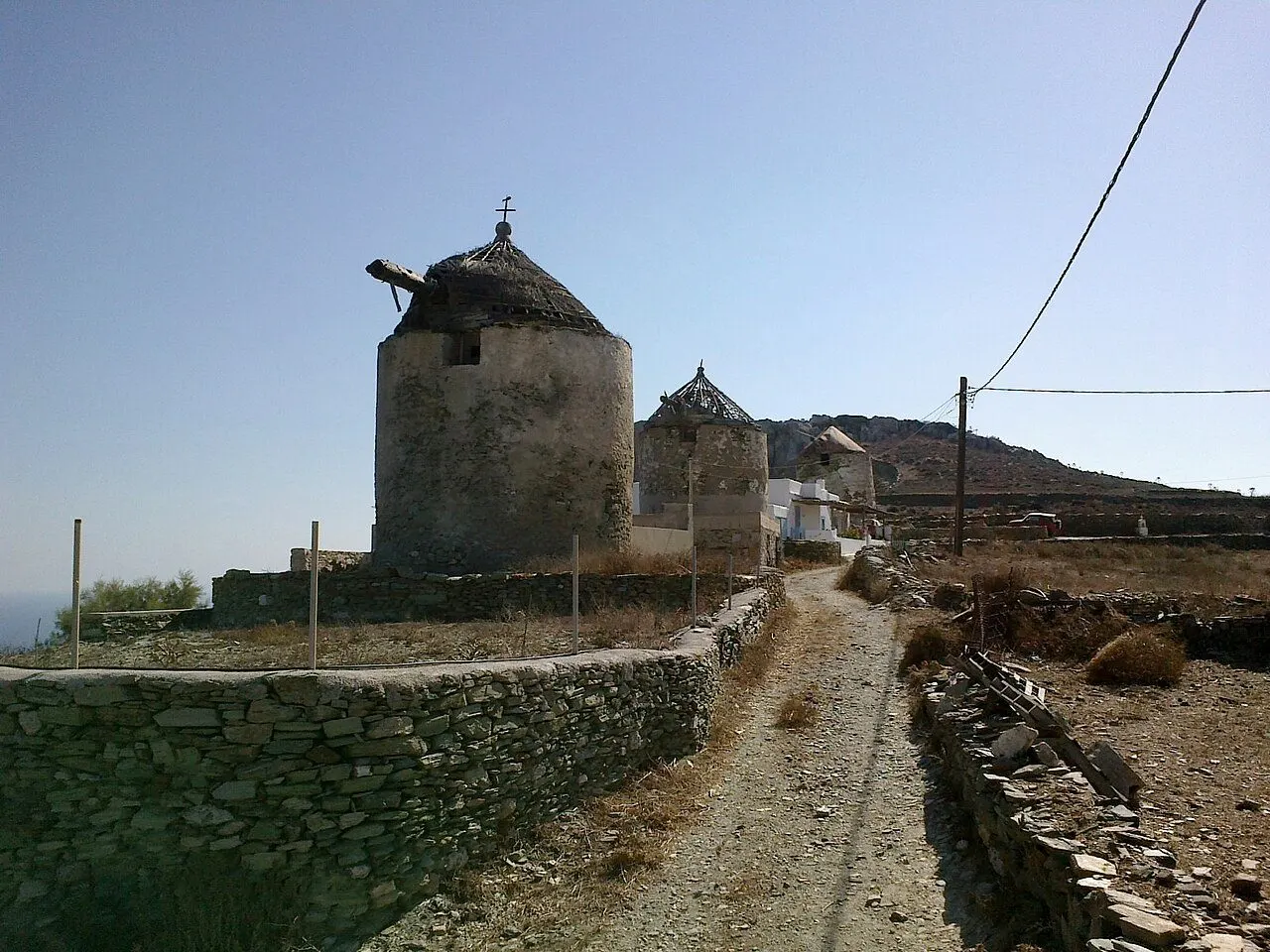
Ano Meria, 'the upper side', is the island's second village and its most traditional, strung for about 3 km along the windswept ridge of the north-west at around 265 m, 5–6 km from Chora. It is not a village of streets but of themonies: farmsteads standing apart among dry-stone walls, each a small self-sufficient farm with its house, oven, cistern, threshing floor and animal pen, where families still sow barley for their animals and grow vegetables on every scrap of soil. Mules still carry loads along the walls, and the old windmills stand on the ridge.
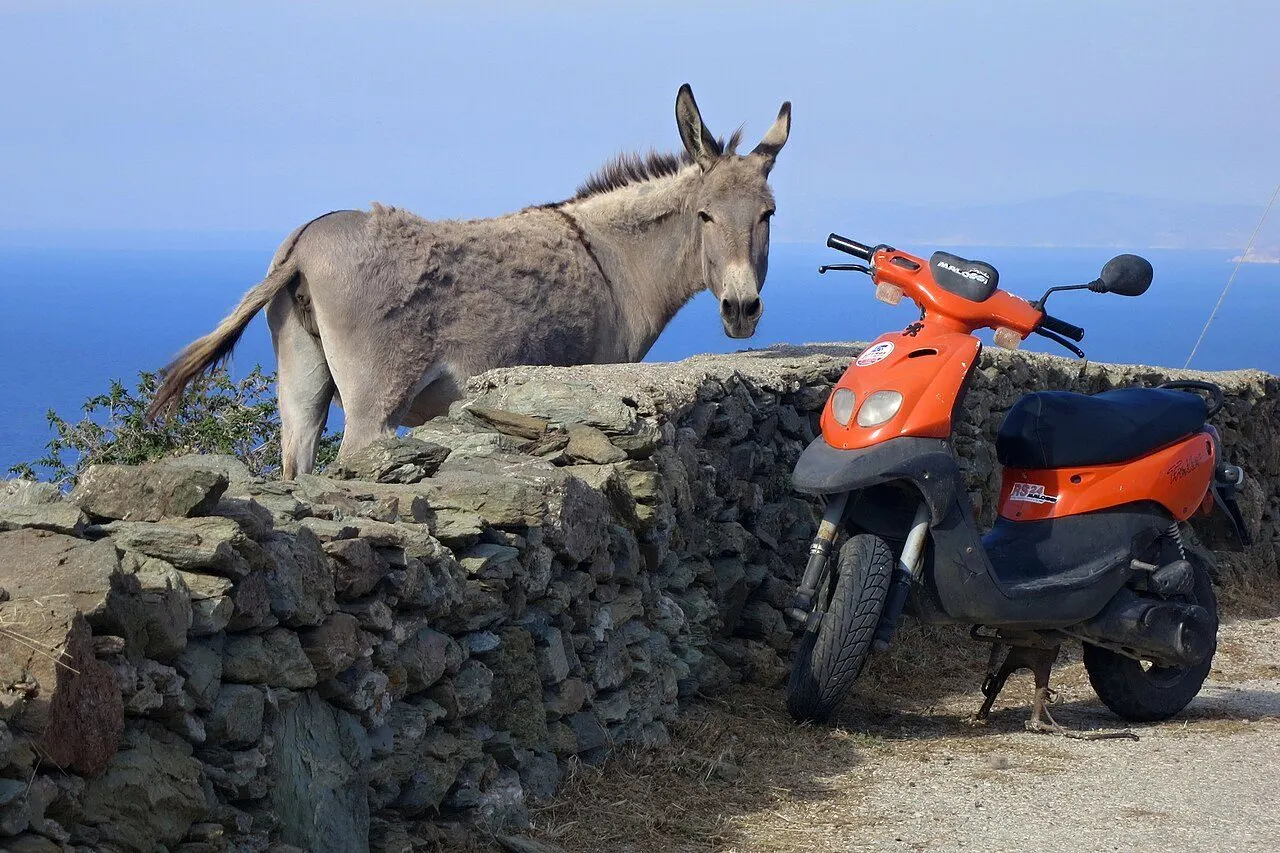
Greetings from Ano Meria
Ano Meria
We took the last bus to the end of the line and walked back along the ridge, between stone walls, white farmhouses and threshing floors, with a mule watching us over a wall and Sifnos floating on the horizon. At the Ecomuseum we saw a wine trough cut into the living rock and a lemon tree in its own round tower. We ate at a taverna where the pasta was made by hand, and walked down to Livadaki for a swim.
A farming village 3 km long, made of farmsteads, stone walls and lemon trees in round towers against the wind
The north wind beats on the central ridge of Folegandros for much of the year, so hard that the island's trees lean to the south. Here the farmers answered it in stone: terraces to hold the thin soil, and a round stone wall around each fruit tree, above all the lemons, called a dentrospito, a 'tree house'. The village has no springs: every drop of water was rain, run off the flat roofs into the cisterns.
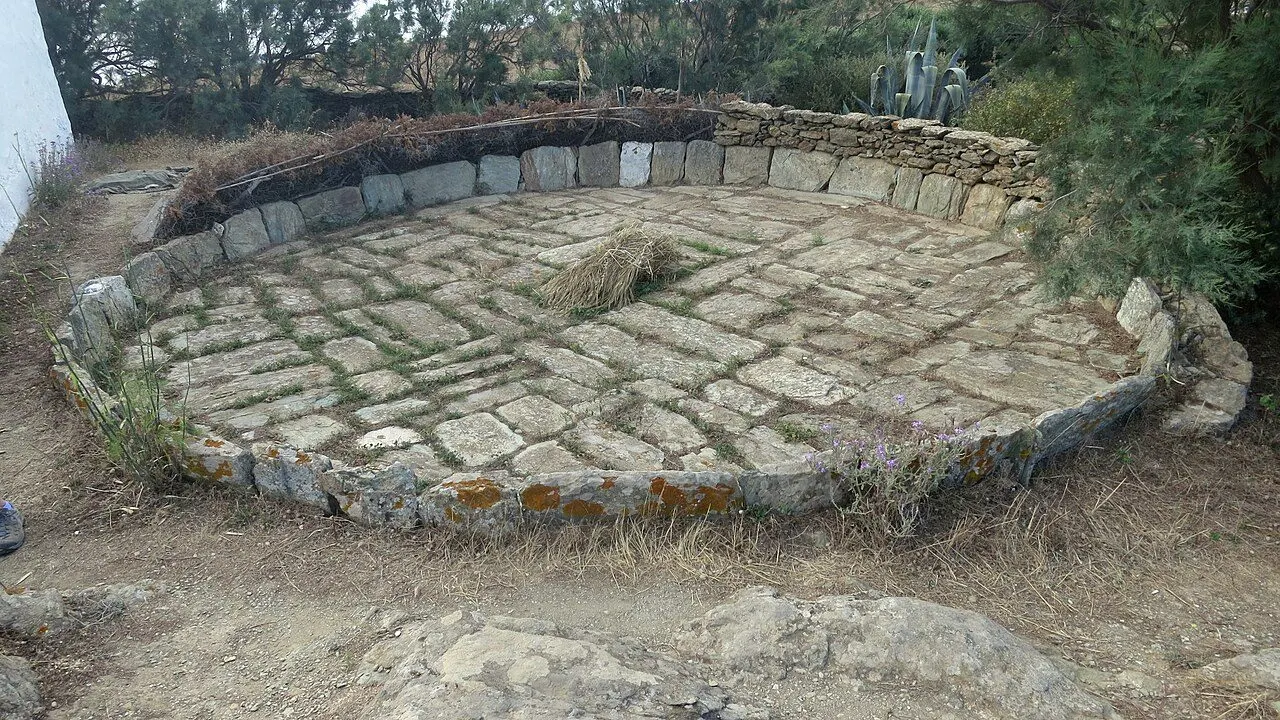
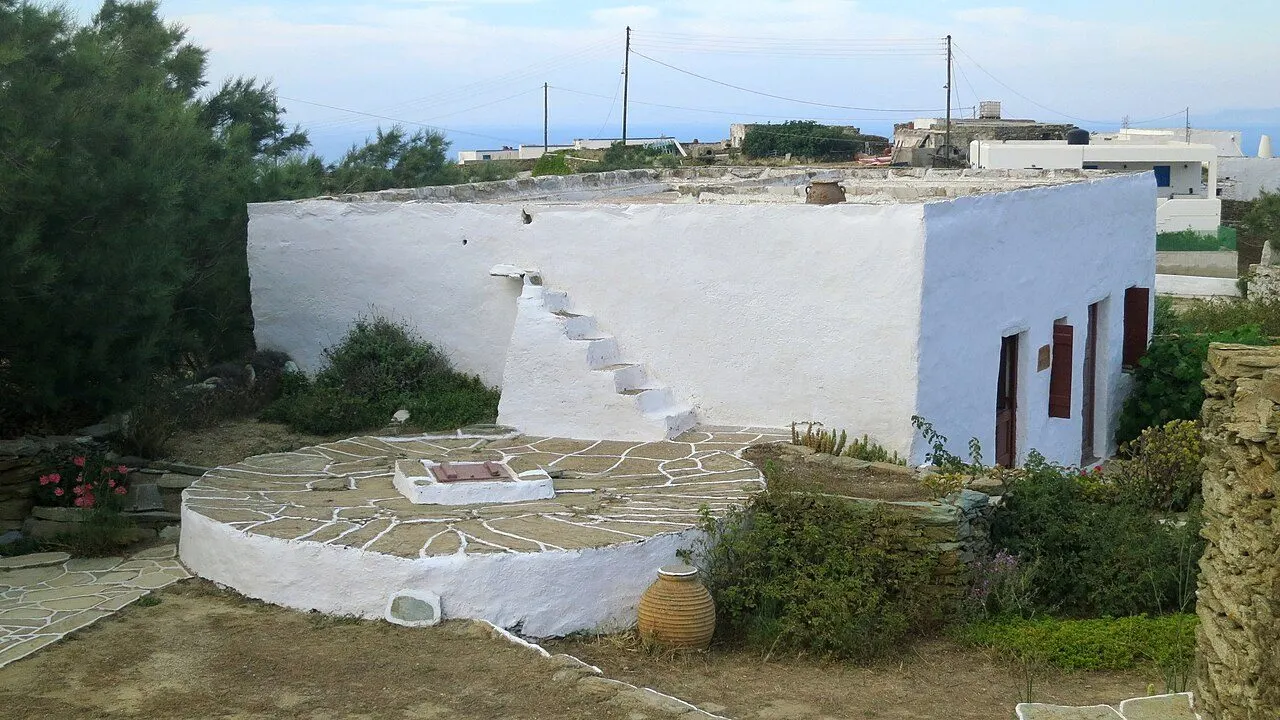
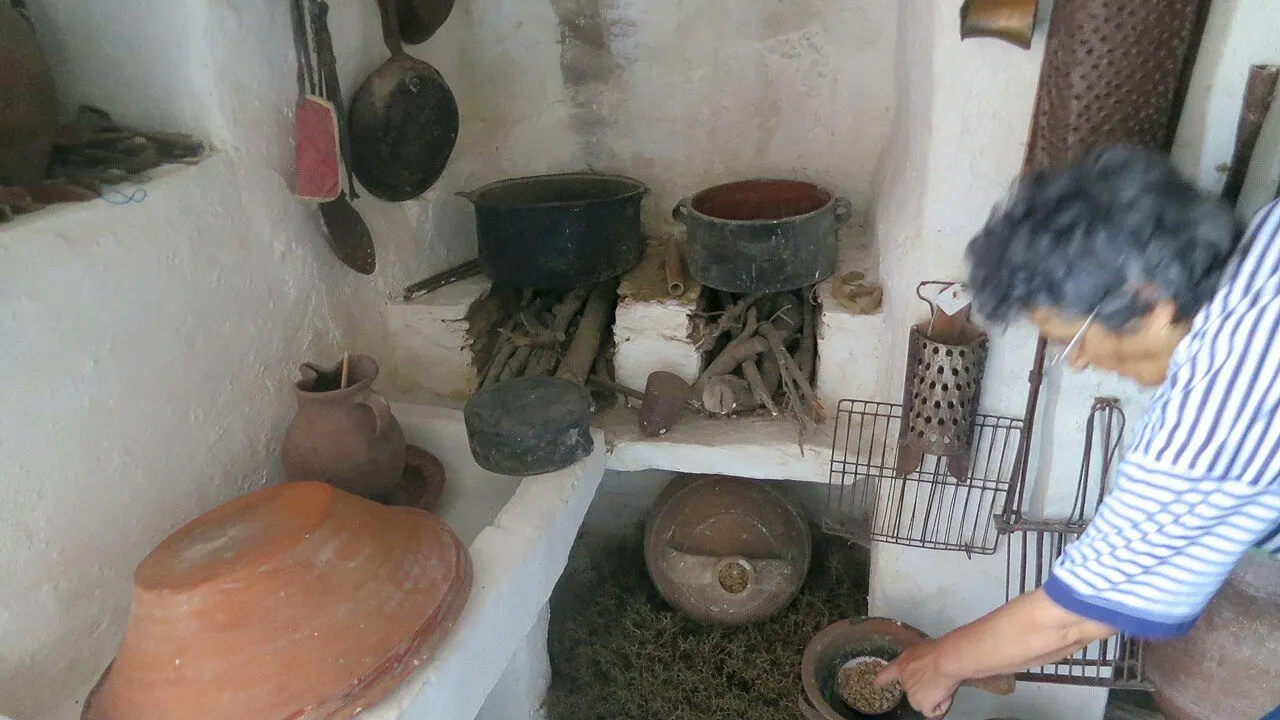
The Ecomuseum, opened in 1988 by the island's cultural association, 'I Folegandros', is one of these farmsteads, restored stone by stone: a house of the 18th century or earlier with its cellar and oven, the olive press, a wine trough cut into the rock that is still stained with wine, the threshing floor and a lemon tree in its round wall. Next door, in the house the last family built around 1900, are the fine weavings of the island's women.
Ano Meria keeps the island's feasts. On the eve of Agios Panteleimon in July the island holds a great feast with violin and lute, and on Easter Monday the icon of the Panagia goes from house to house all day on foot, with the people of the village behind it and celebratory gunshots and firecrackers. In summer the cultural association holds evenings of poetry, music and theatre, and the village school hosts the Agrosourotoxynotyri, a festival of the island's cheeses.
Hour by hour
A farmstead museum, a walk to the lighthouse and a wild beach, and dinner in the village.
Wake in the farming village, with the sea on both sides of the ridge and the mules already at work.
See how a farmstead lived: the olive press, the oven fired with thorn and thyme, the wine trough in the rock and the threshing floor.
Take one of the paths down to Livadaki, 45 minutes to an hour, for sand, wide rocks and cold turquoise water.
Walk ten minutes from the beach to the white lighthouse of 1919 on its cape, then take the boat back to Agali.
End at a taverna at the western end of the village, as the sun goes down over the sea.
Where to stay
Ano Meria
Lemon Tree Houses · Villas · €€€
Where to eat
Ano Meria · Ano Meria & the north
Ano Meria · Ano Meria & the north
Ano Meria · Ano Meria & the north
Within an easy drive
A wild beach of sand and rocks below the village, 45 minutes to an hour on foot, and the lighthouse of 1919 ten minutes beyond it.
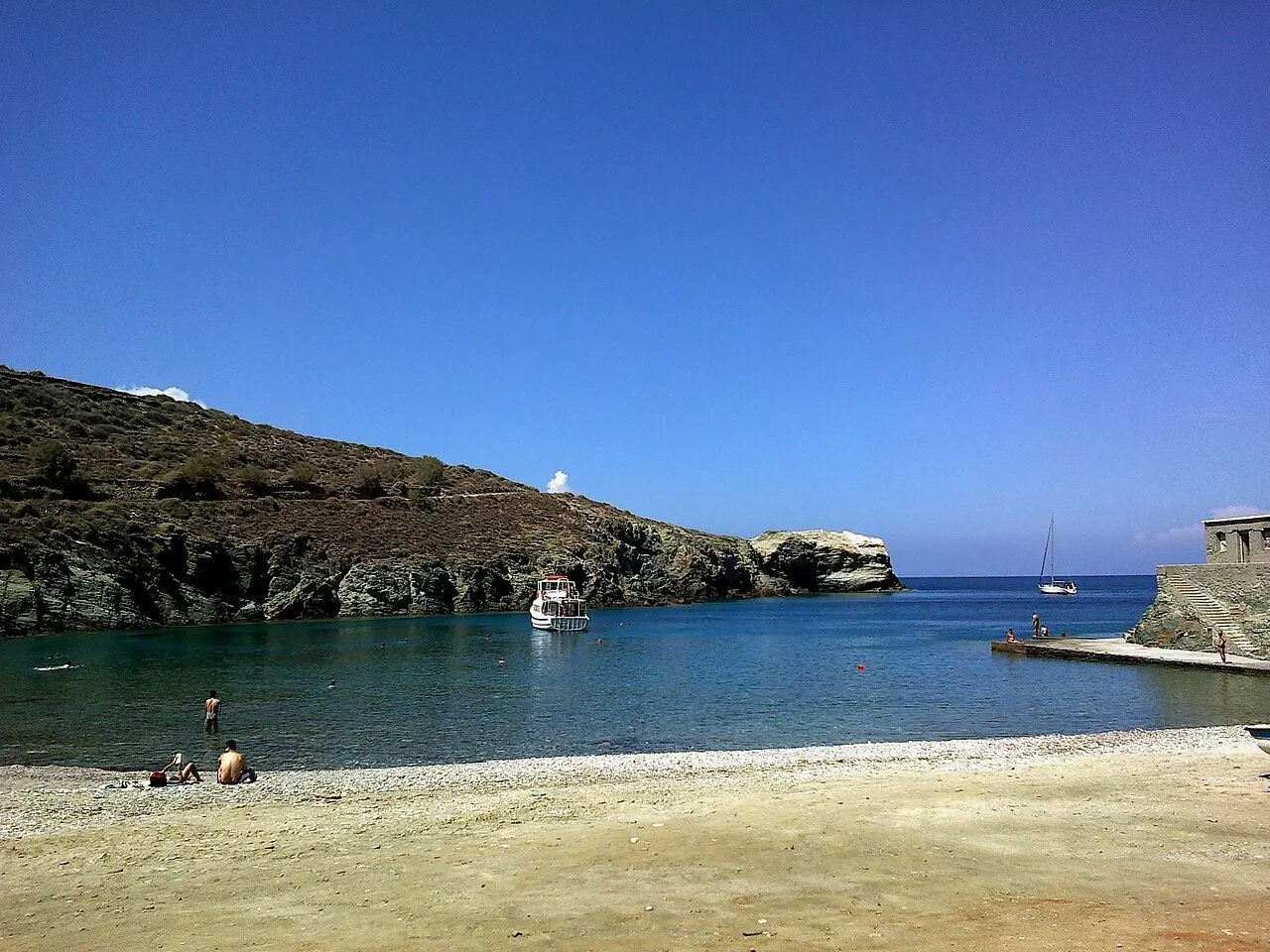
A small pebble beach sheltered from the north wind, with good snorkelling, 10 minutes by dirt road or 30 on foot.
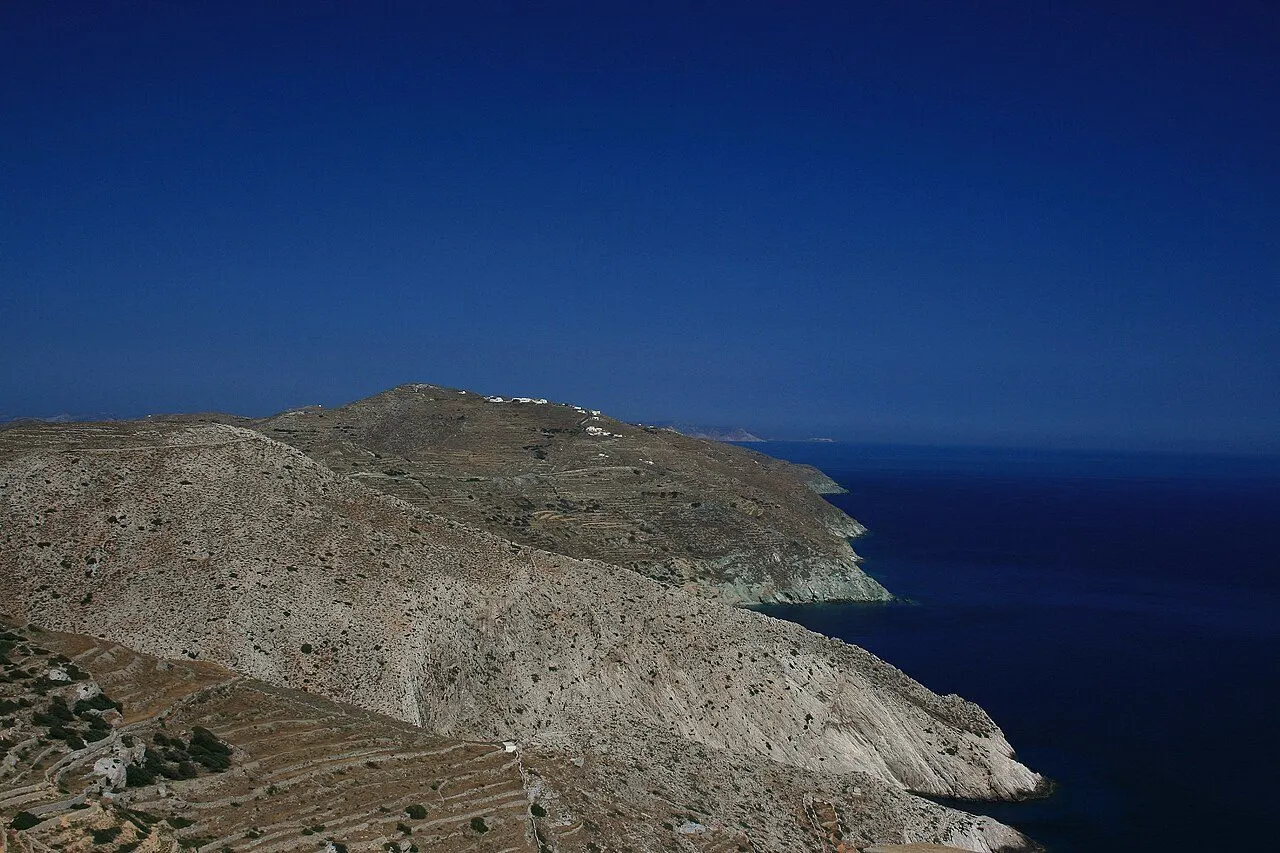
Sandy coves on the north coast at the end of the island, below the chapel of Agios Georgios.
Good to know
The bus runs often from Chora along the ridge to the far end of the village, and on the return you can get off at any stop. By car or scooter it is 5–6 km from Chora.
Easter Monday, when the icon visits every house, the eve of Agios Panteleimon in July, or any late afternoon, when the light runs along the walls.
More of Folegandros
Chora & the cliffs
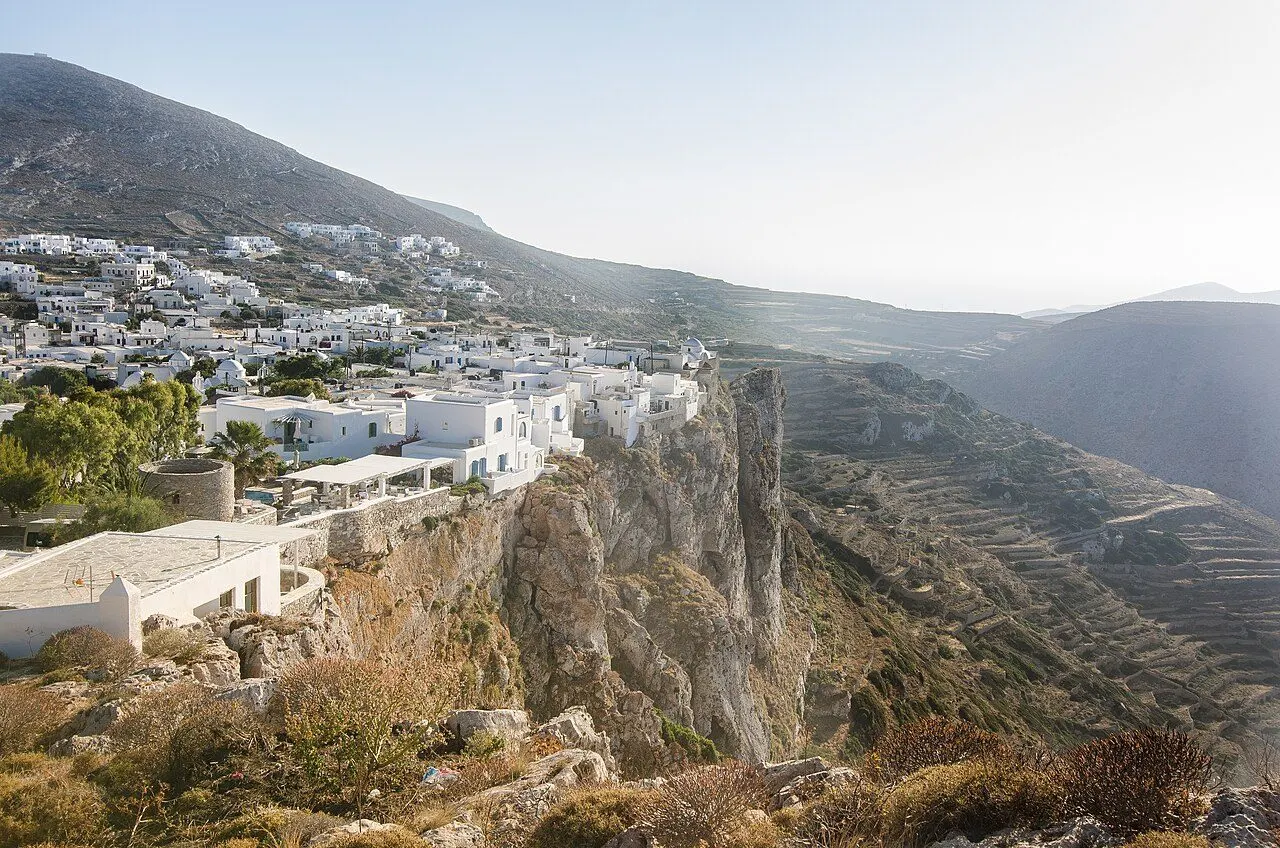
A village of squares on the lip of a 200 m cliff, around a medieval Kastro lived in without a break since it was built
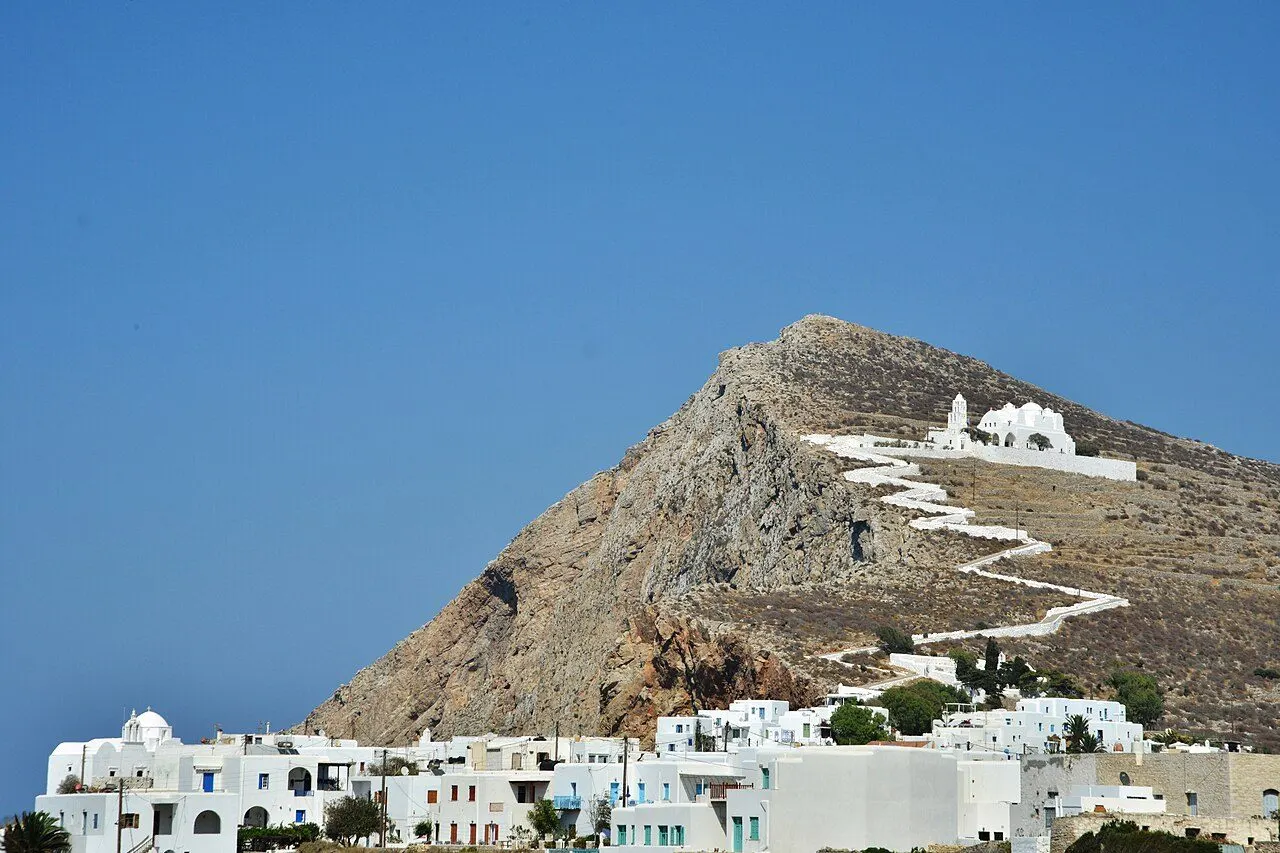
Chora & the cliffs
The white church on the rock above Chora, built from an ancient temple, at the top of a zig-zag path
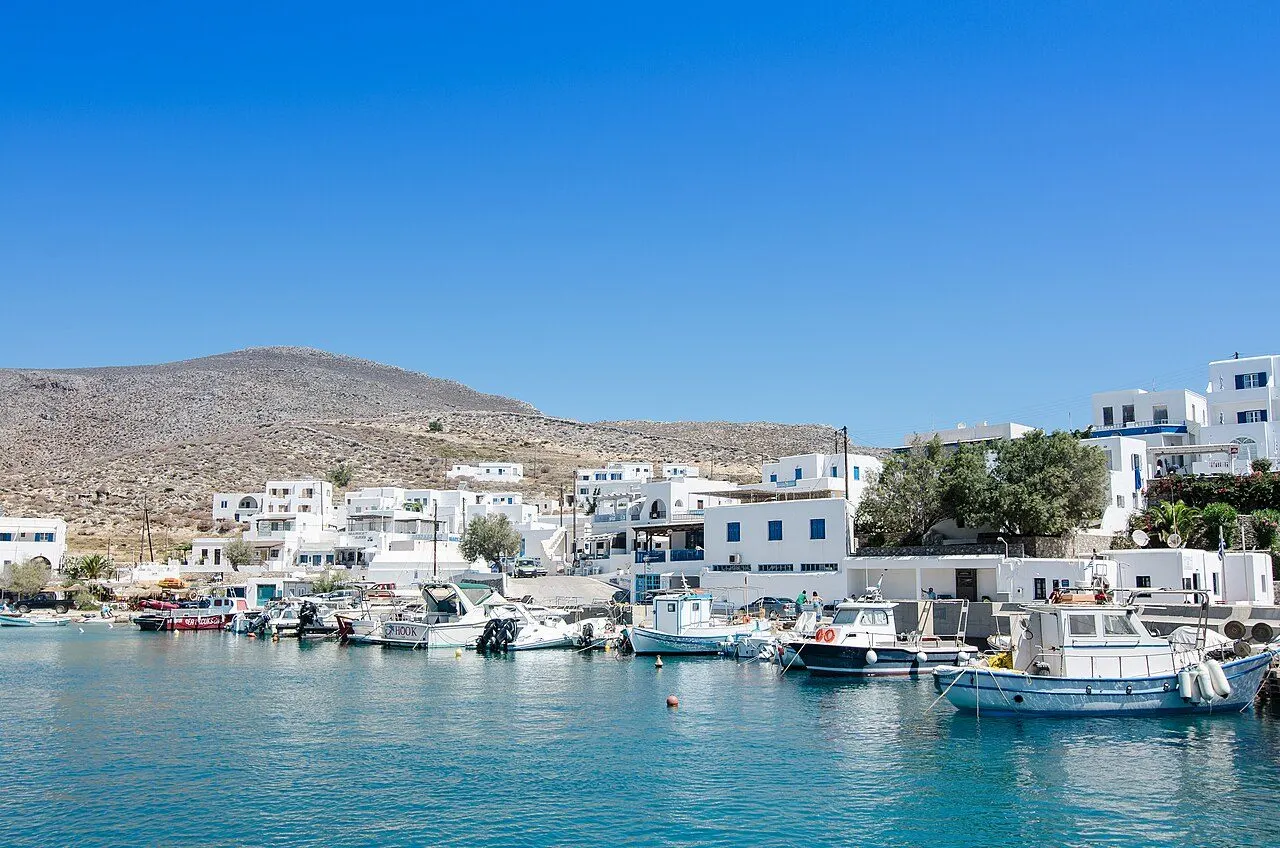
Karavostasis & the south-east
The 'ship stop', a harbour that had no ferry pier until 1984, with three family beaches round it
Every stay we recommend across Folegandros, from village guesthouses to rooms on the sea.
See all staysLast updated