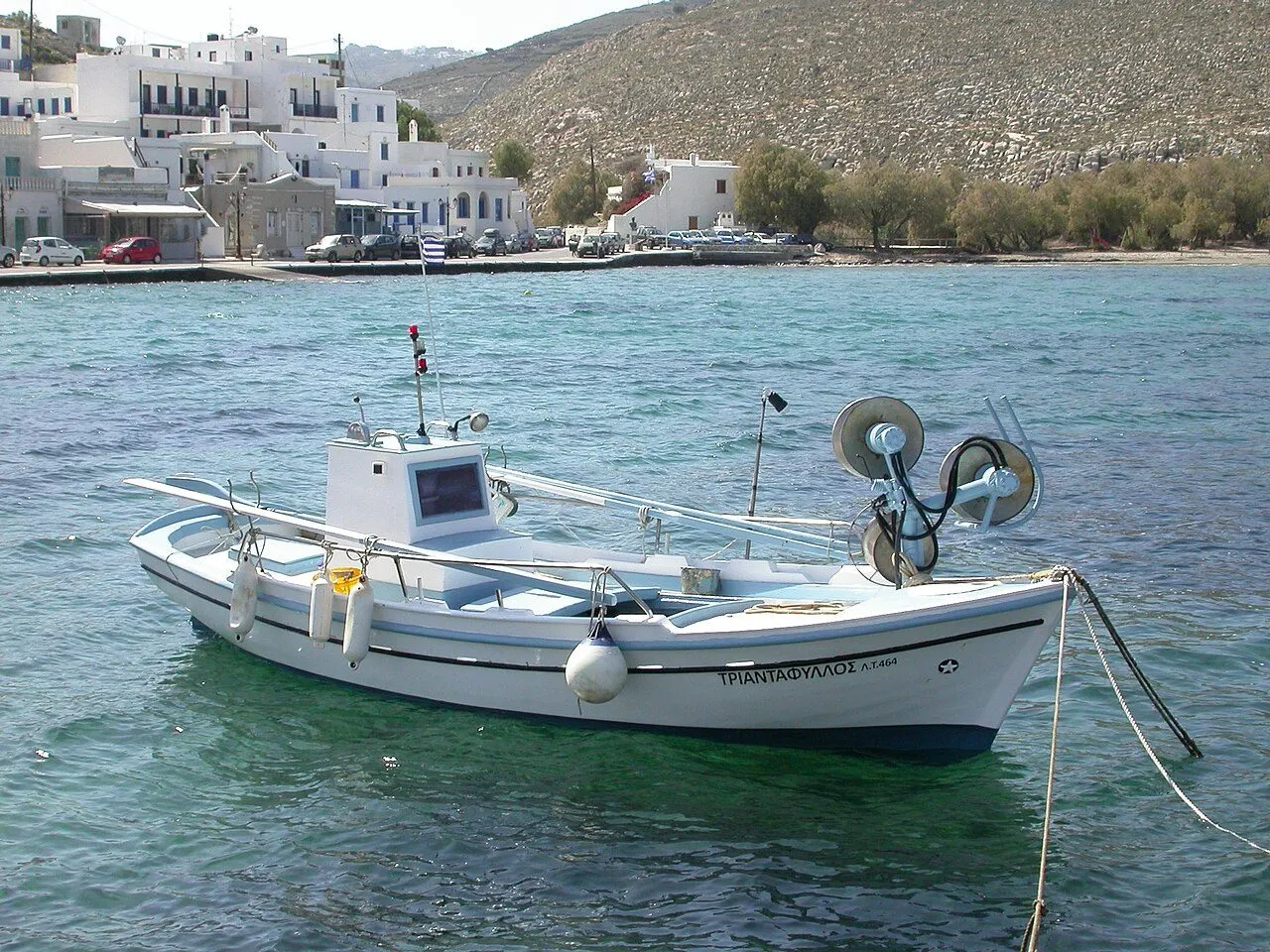
Panormos
The fishing harbour in the bay below the village, with tavernas by the water and small beaches.
Tinos · Exomeria & the marble villages · Πύργος
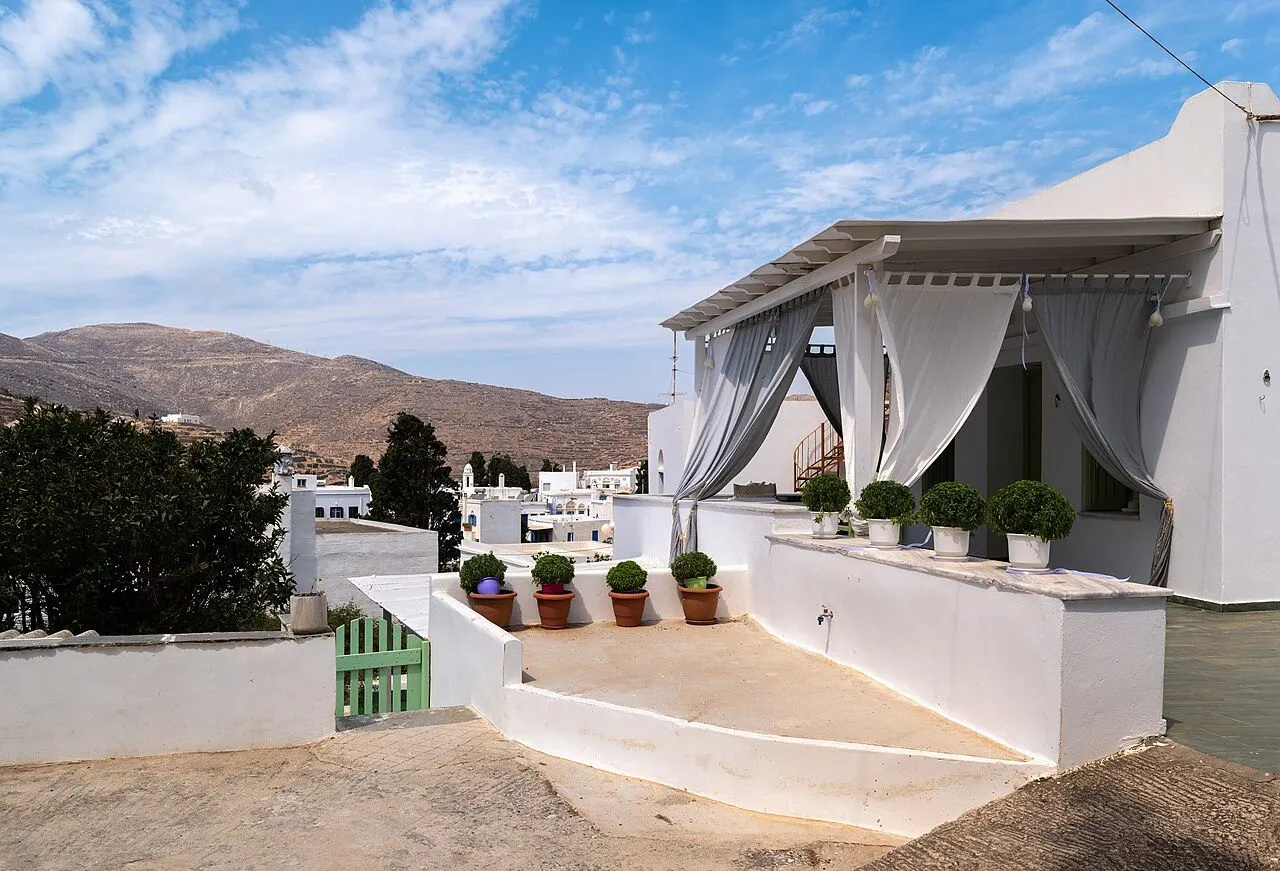
Pyrgos is the largest village of Tinos and the home of its marble carvers, in the north-west of the island above the bay of Panormos. Marble is everywhere: in the doorframes and the carved fanlights over the doors, the fountain and the benches in the square under the plane tree, the bell towers and the steps. It has a school of fine arts where young carvers still learn the craft, the Museum of Marble Crafts, the house of the sculptor Yannoulis Chalepas, and a cemetery of marble tombs that people come to visit as if it were a gallery.
Greetings from Pyrgos
Pyrgos
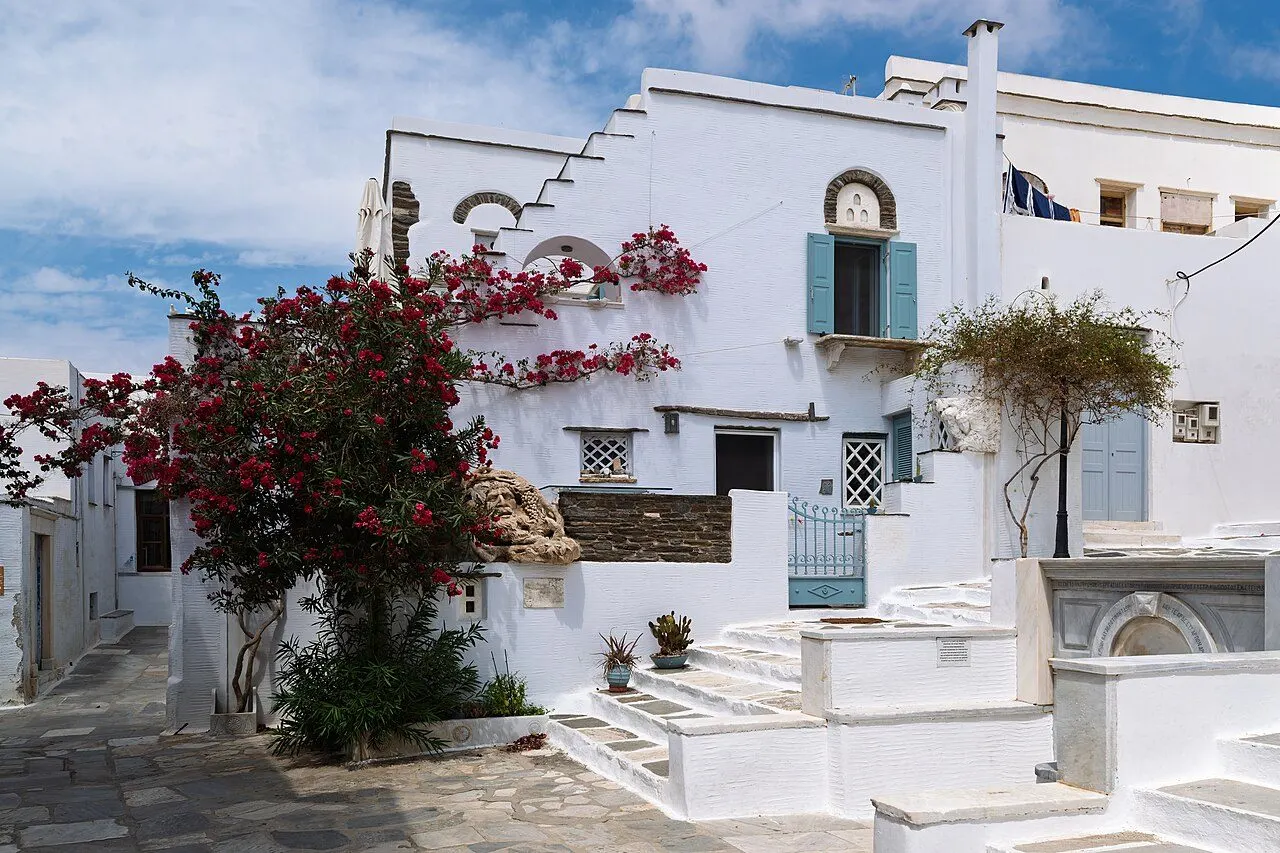
You come up the hill in the heat of the afternoon and the whole village seems to be made of white stone: the doorsteps, the fountain, the benches, the little carved birds over every door. In the museum a film shows men cutting a block of marble out of the mountain by hand. In a workshop off the lanes someone is tapping at a fanlight with a chisel and a wooden mallet, and the sound follows you down the street. Then you sit under the plane tree with a coffee and a galaktoboureko, and the swallows go round and round the bell tower.
The village of the marble carvers, where even the graves are works of art
There are quarries in the hills all around Pyrgos, of white marble and of the grey-green stone that Tinos is known for, and for centuries the men of the village have made their living from them. They became the most sought-after marble masons in Greece: carvers from Pyrgos and the villages around it made the iconostases, fountains, bell towers and gravestones of churches from Athens to Smyrna and Constantinople. In 2015 UNESCO added Tinian marble craftsmanship to its list of the intangible cultural heritage of humanity.
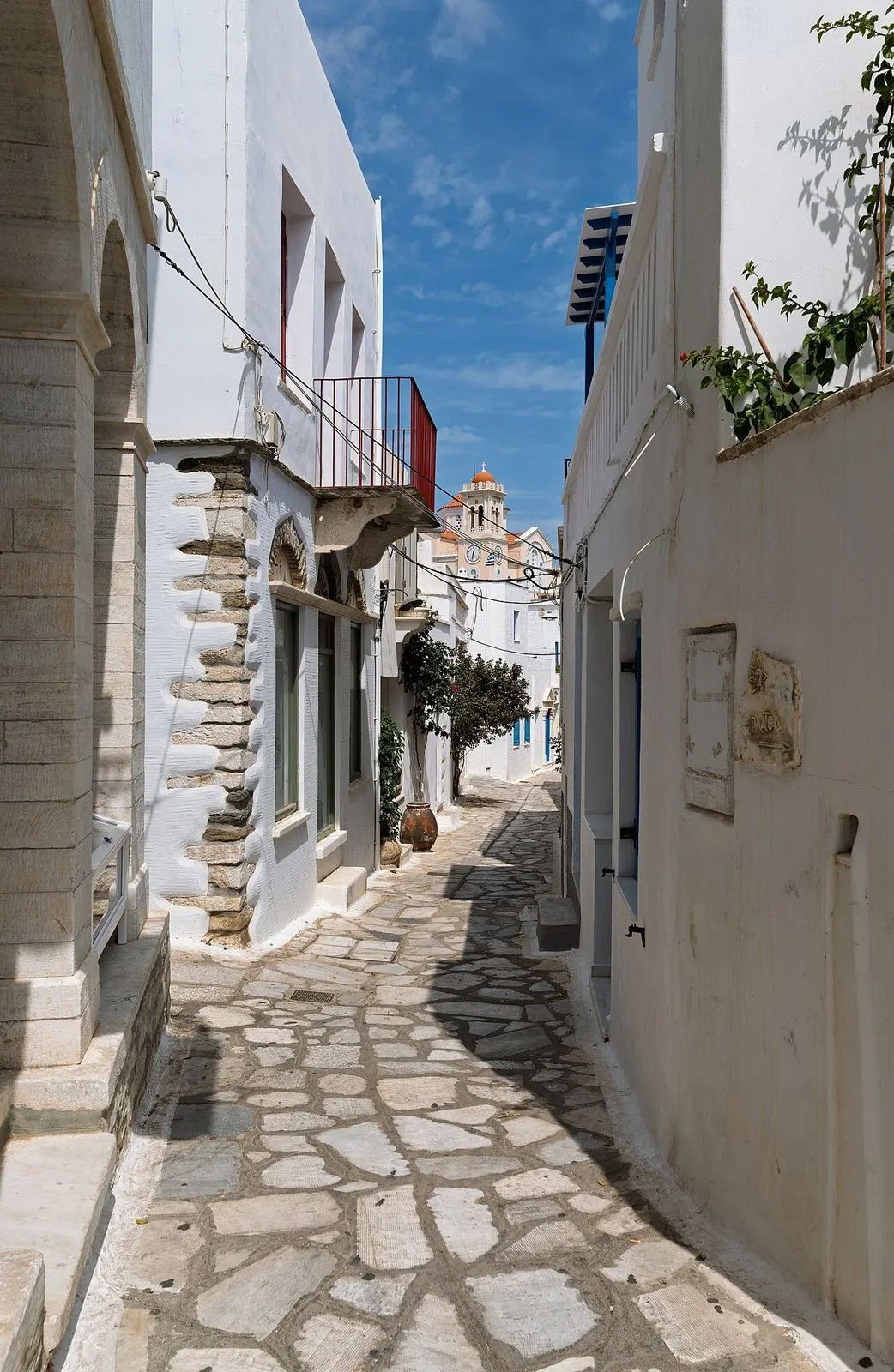
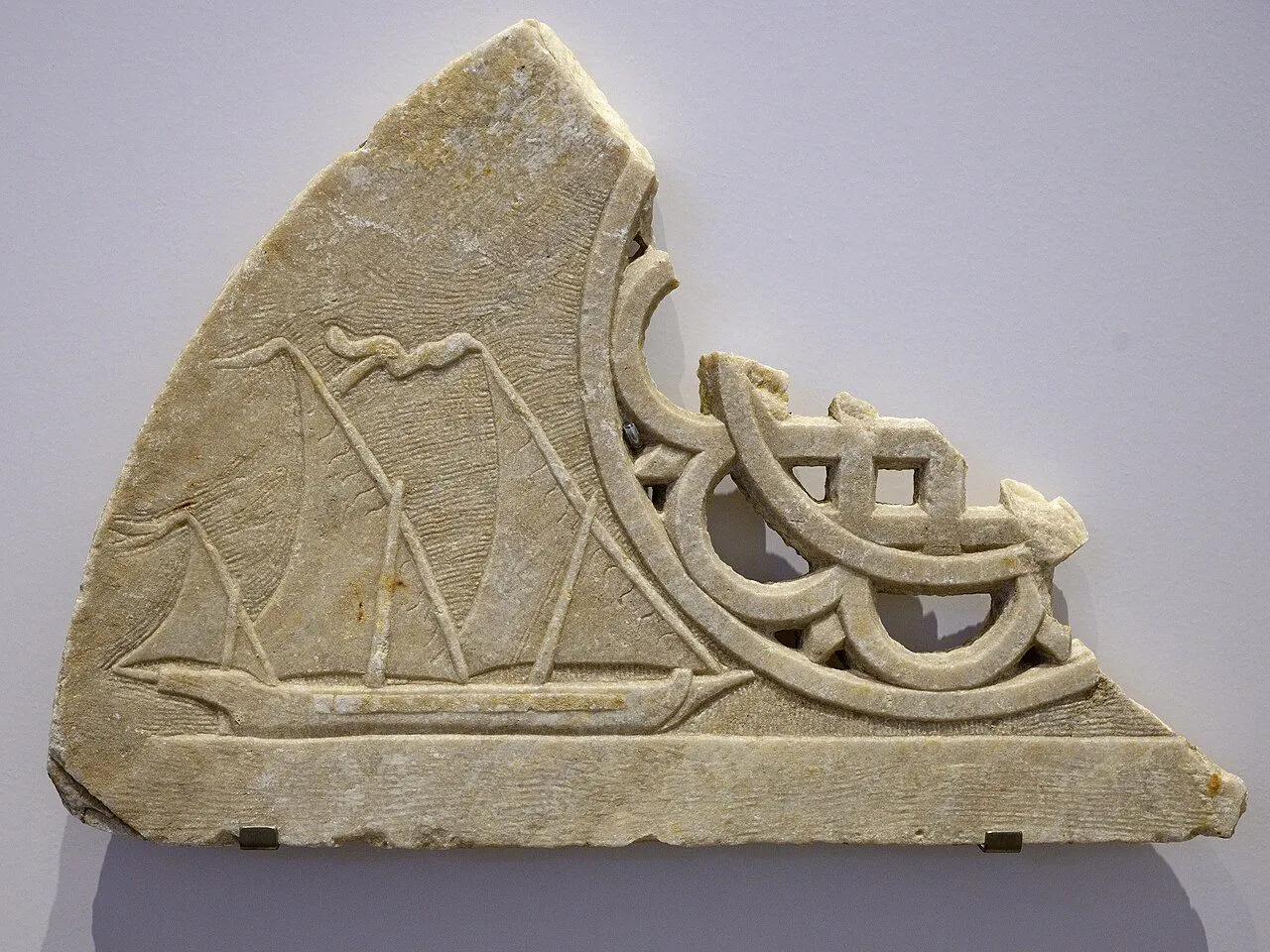
Officially the village is called Panormos, after the bay below, but everyone calls it Pyrgos, the tower. It climbs a slope in the empty, windy north-west of the island, Exomeria, with white houses, narrow lanes and blue doors under carved marble fanlights: half-moons of pierced stone over the doors, with birds, ships, cypresses and vases of flowers cut into them. The square has an old plane tree, a marble fountain and the cafés where the village sits in the evening.
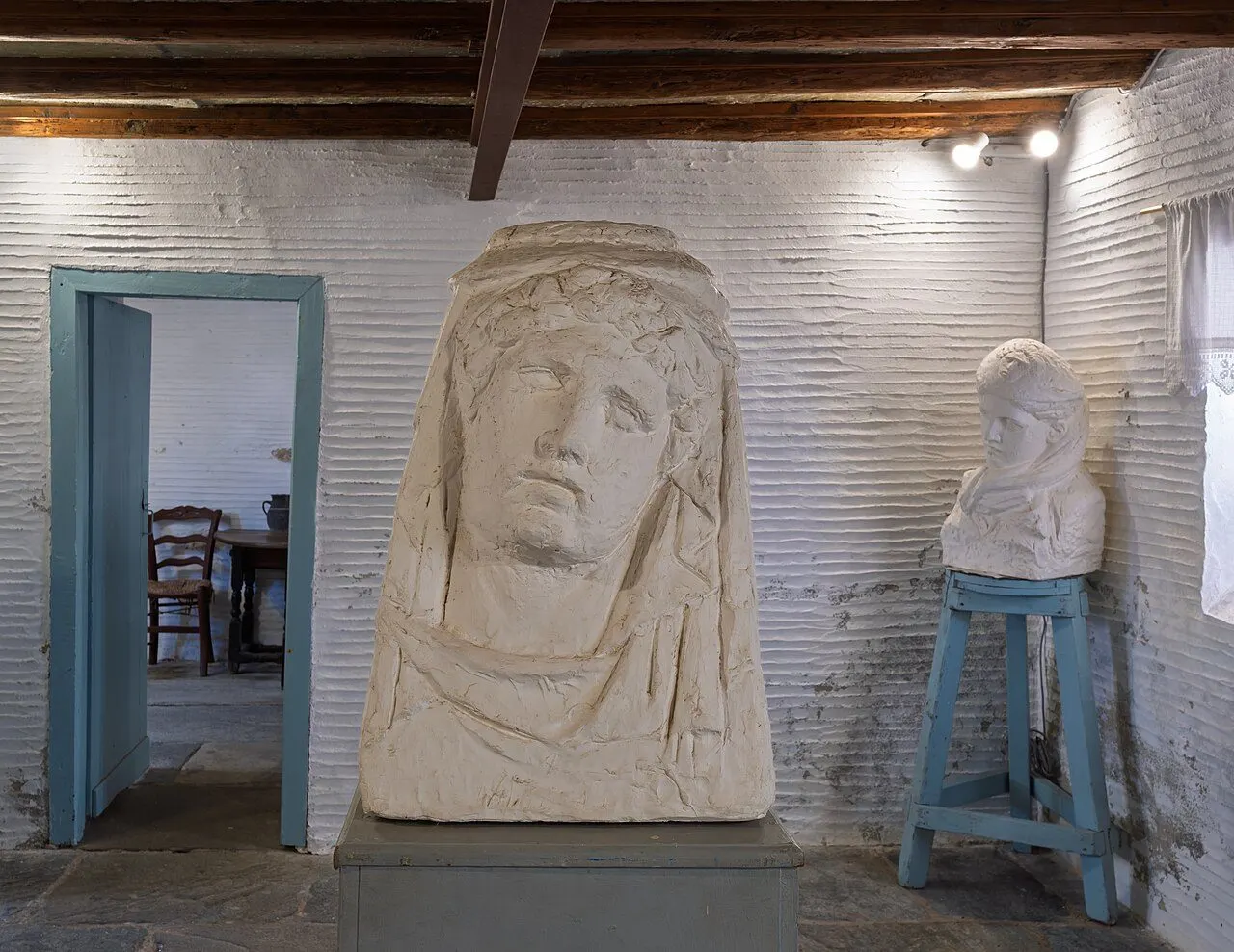
The village has given Greece an unusual number of artists. The painter Nikiforos Lytras was born here, and so was Yannoulis Chalepas, the greatest Greek sculptor of the 19th century. Chalepas made the Sleeping Girl, the marble figure on a young woman's tomb in the First Cemetery of Athens, then lost his reason and spent years in an asylum on Corfu. When he came home to Pyrgos his mother, believing sculpture had driven him mad, destroyed what he made. He went on working in secret, and in old age made some of his finest work. His house, with his workshop and plaster models, is a small museum.
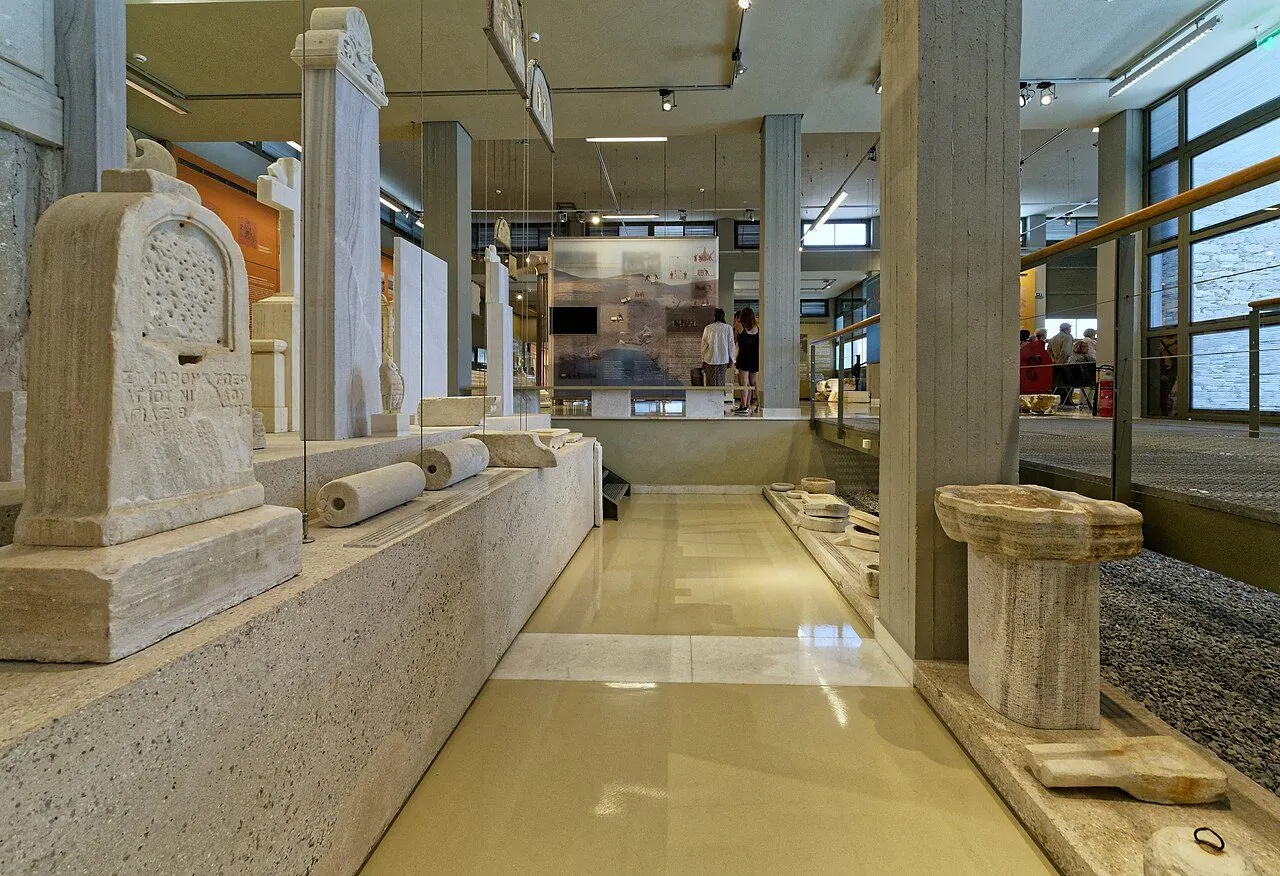
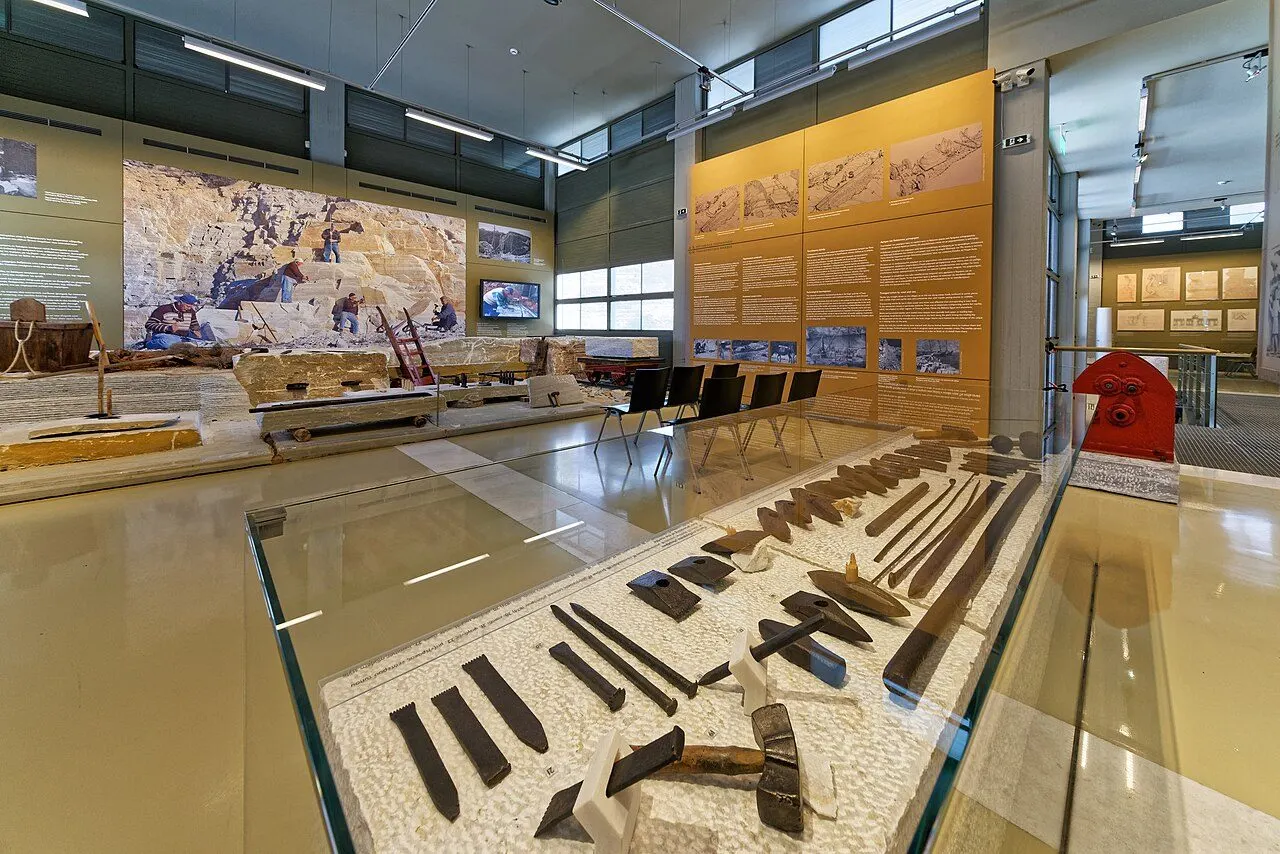
Below the village, the Museum of Marble Crafts, run by the Piraeus Bank Group Cultural Foundation, tells the whole story: the quarries, the tools, the way a block was cut out of the mountain and brought down, and the work of the craftsmen, with full-size models and carvings. The School of Fine Arts of Panormos still trains marble carvers, and on a walk through the lanes you hear chisels in the workshops.
Leave time for the cemetery at the edge of the village. Generations of carvers made the tombs of their own families here, and the result is a garden of white marble, carved with care for people they knew. Then walk or drive down to the harbour of Panormos for fish by the water, and come back up for the evening in the square.
Hour by hour
A museum of marble, a sculptor's house, a swim in the bay below and an evening under the plane tree.
Start in the square by the marble fountain, while the village is sweeping its steps and the light is soft on the white stone.
Walk down to the museum on the edge of the village and see how the marble was quarried, carved and carried, from the tools to the finished bell towers.
Climb back up the lanes to the sculptor's house, with his workshop and plaster models, and the cemetery of marble tombs nearby.
Drive down to the harbour of Panormos for grilled fish at a table by the boats, then swim at the little beach beside it.
Wander the lanes and look up at the fanlights over the doors, each one carved with a different bird, ship or vase of flowers.
End at a taverna in the village, with the square still full of families and the marble giving back the warmth of the day.
Where to stay
Pyrgos
Marble Art Villas · Villa with a private pool · €€€€
Where to eat
Pyrgos · Exomeria & the marble villages
Pyrgos · Exomeria & the marble villages
Within an easy drive
The fishing harbour in the bay below the village, with tavernas by the water and small beaches.
The hamlet further north, among the old marble quarries, where the stone for much of the island's carving came from.
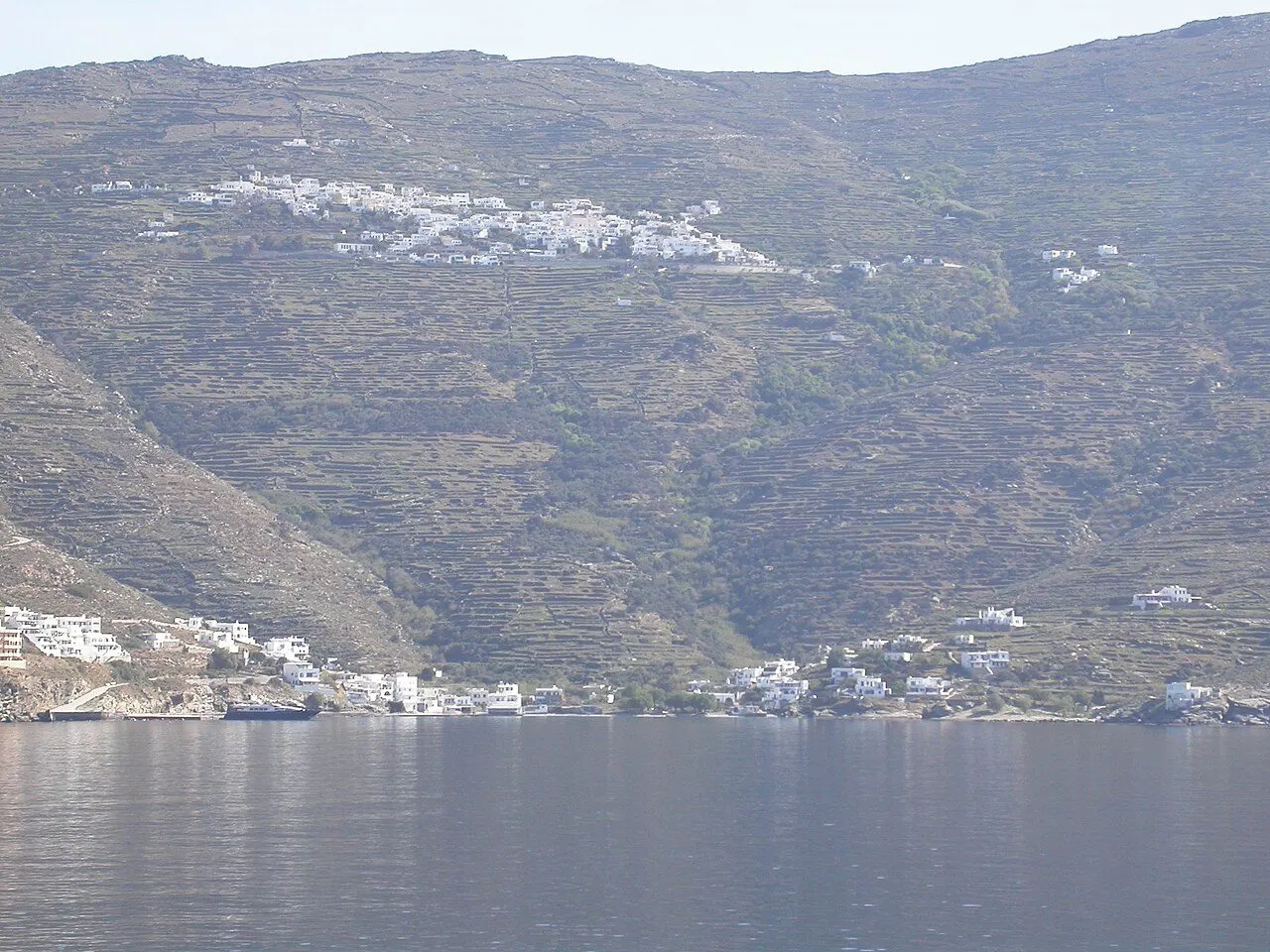
A village of marble and blue domes on the slope above the west coast, about a quarter of an hour's drive south.
Good to know
Pyrgos is about 30 km from Tinos Town on the road along the island's spine, past Kampos and Kardiani. KTEL buses run from the port several times a day in summer. Park at the entrance to the village: the lanes are for walking.
Pyrgos is lived in all year and has a winter life of its own. Come in the morning for the museum and the workshops, and stay for the evening in the square. The museum is closed one day a week, so check before you go.
More of Tinos
Tinos Town & the coast either side
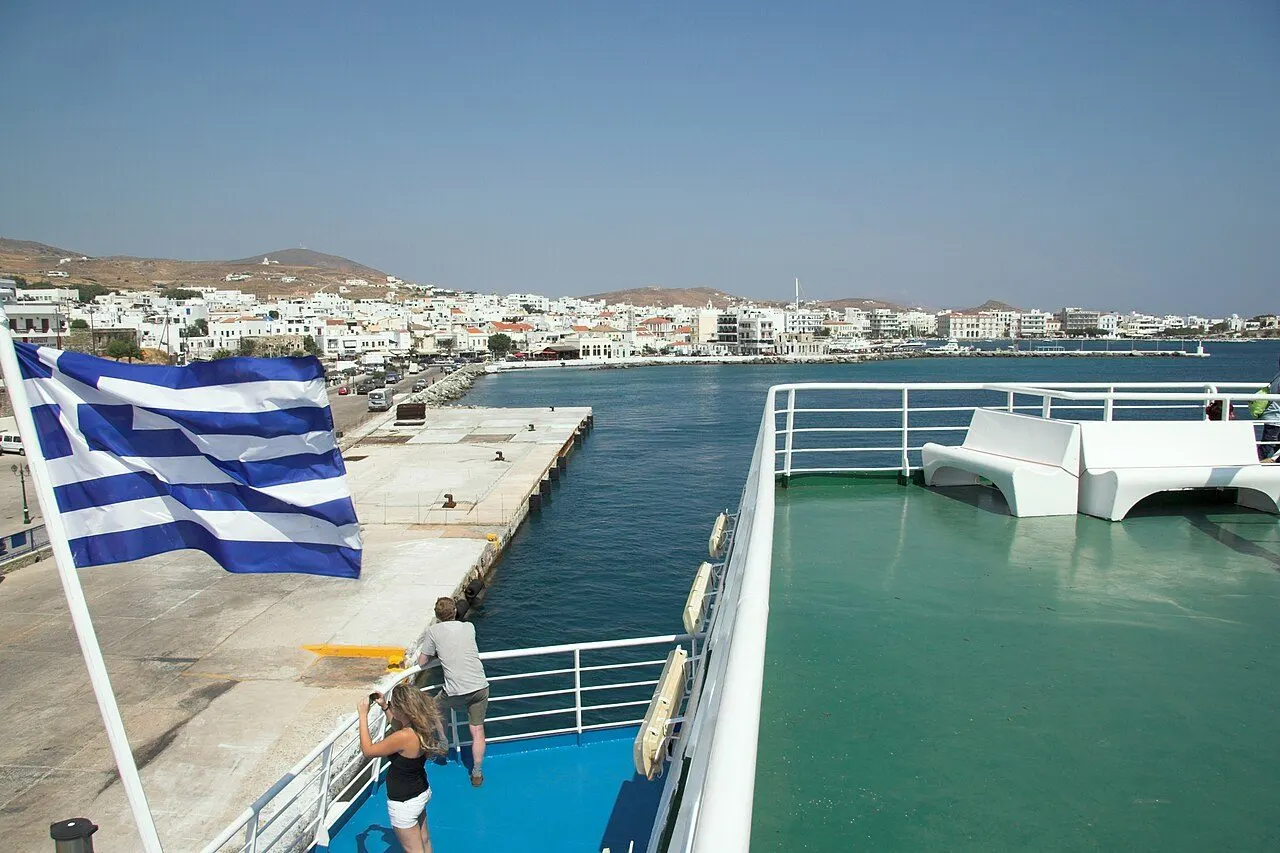
The port town of the pilgrims, climbing to the church of the Evangelistria
Exomvourgo & the inner villages
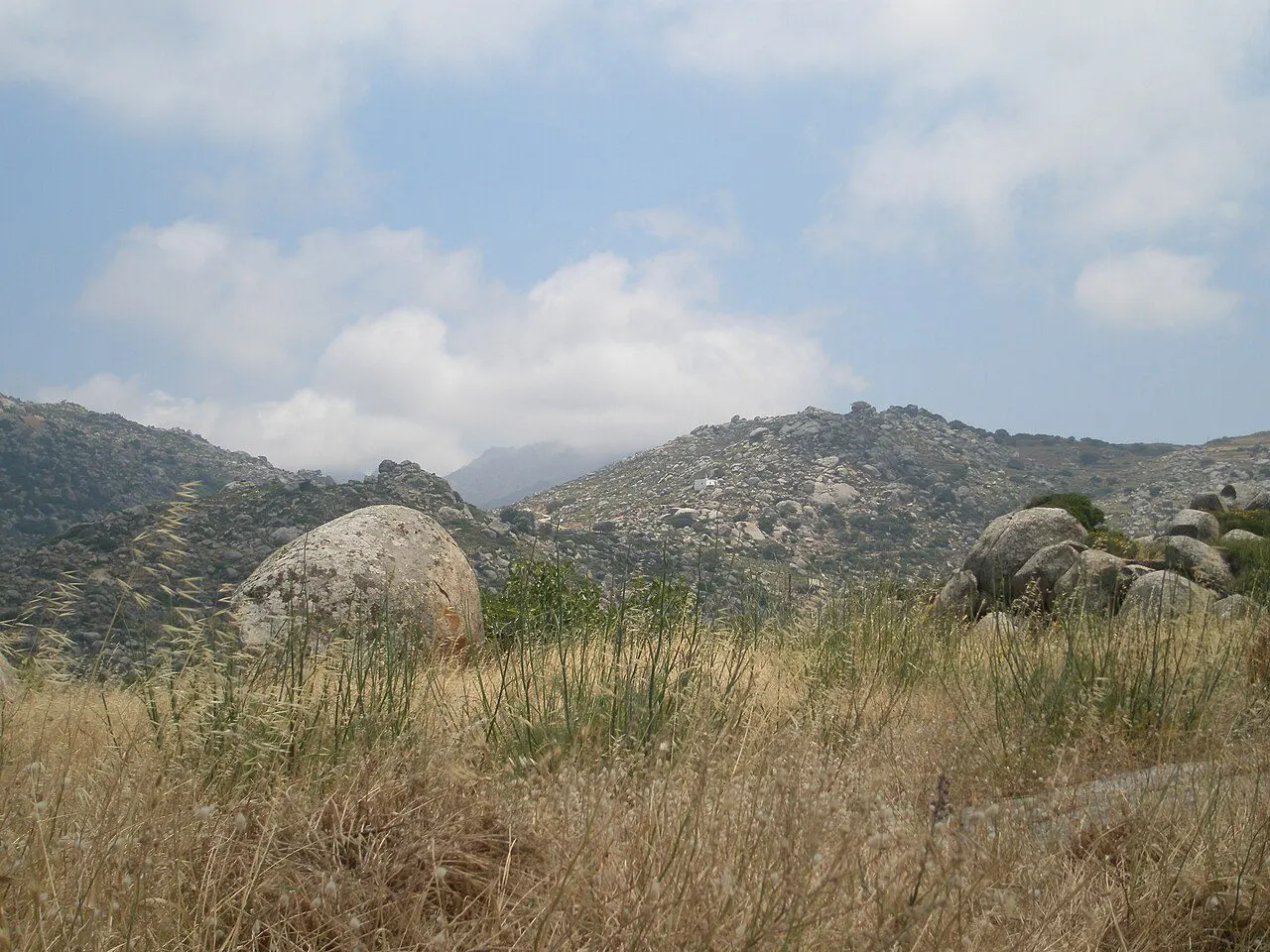
A tiny village in a field of giant granite boulders, where baskets are still woven by hand
Exomvourgo & the inner villages
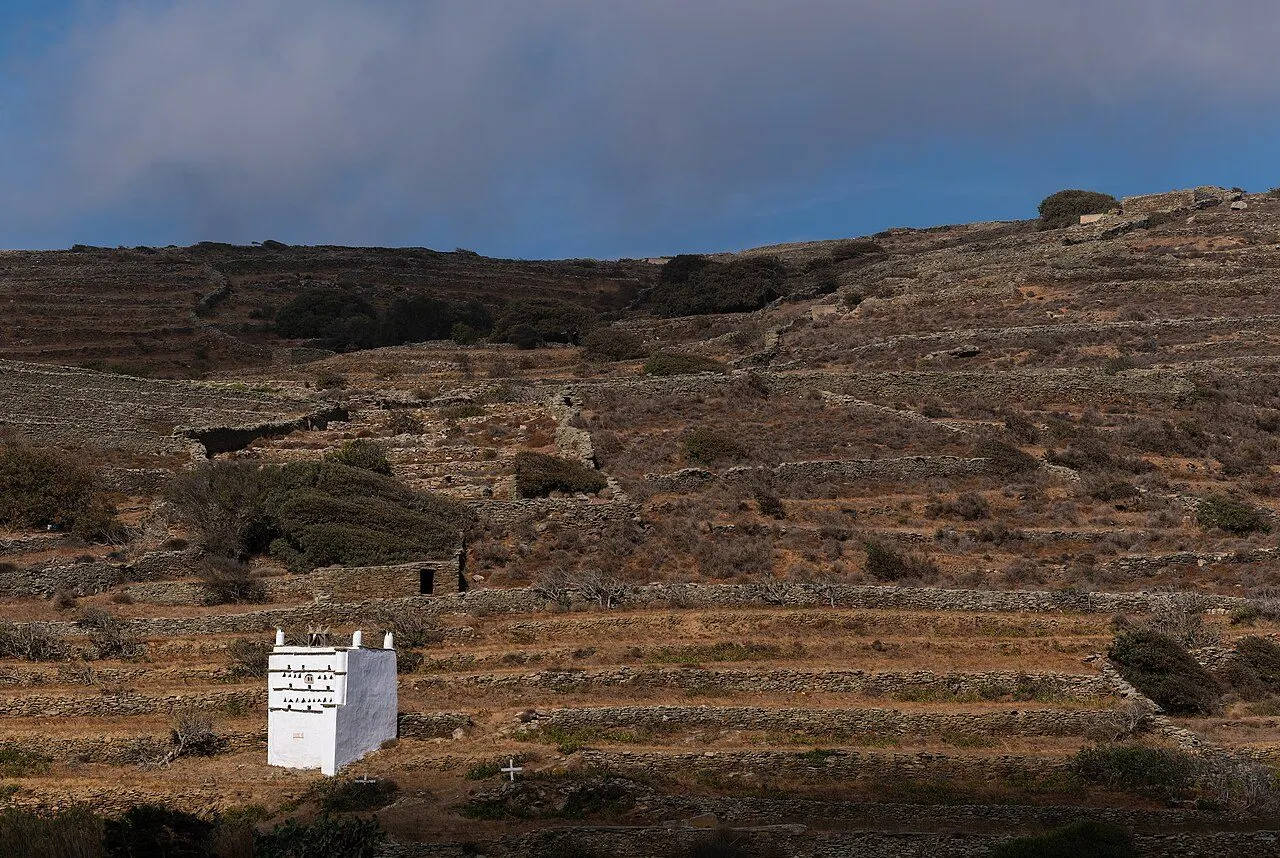
A hamlet above a valley full of the island's famous dovecotes
Every stay we recommend across Tinos, from village guesthouses to rooms on the sea.
See all staysLast updated