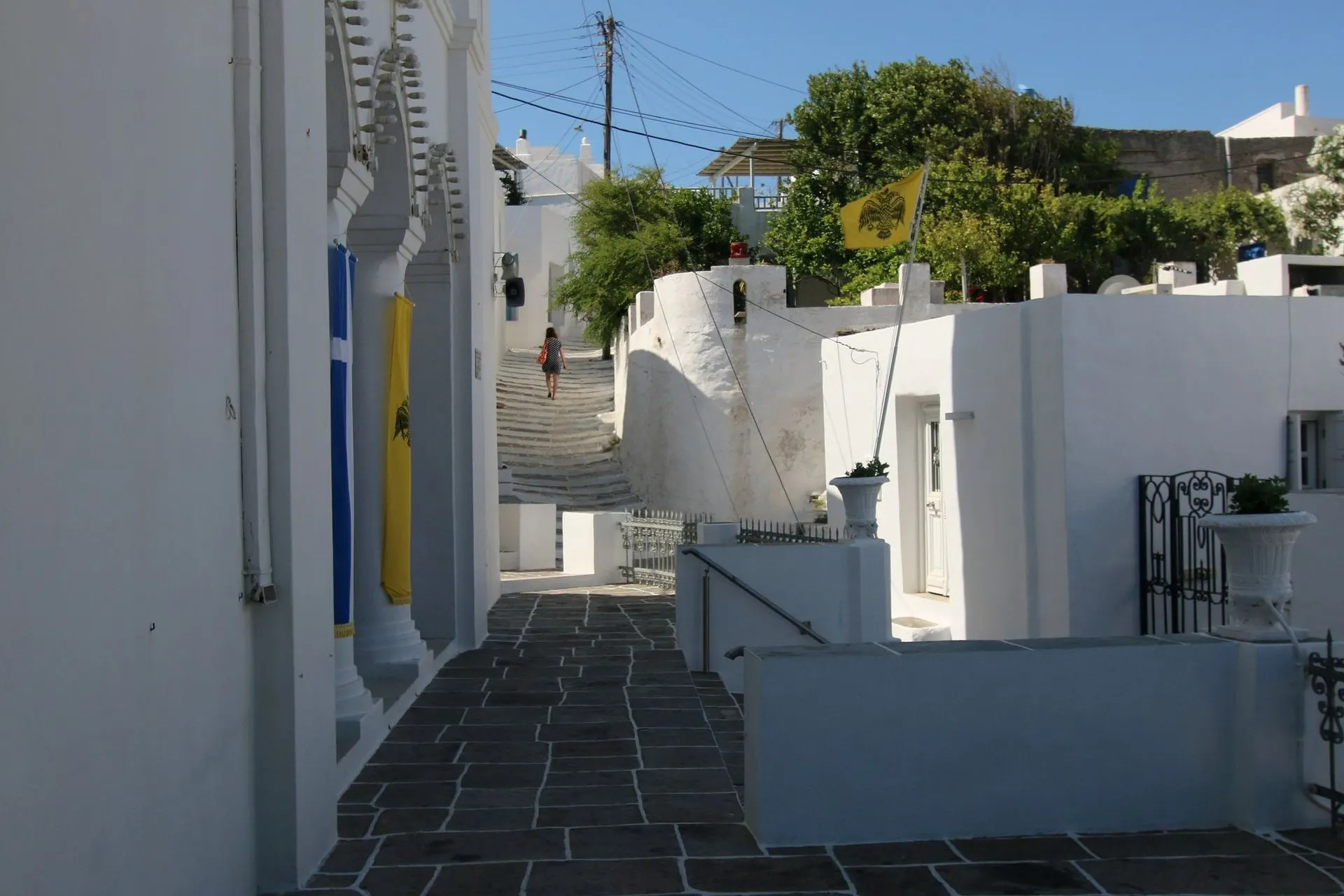
A whitewashed lane in Apollonia

Sifnos · Towns & villages

Towns & villages of Sifnos

Harbour towns, mountain hamlets and the places where island life still follows its own rhythm.

View of Apollonia, Apollonia & the hill villages, Sifnos
01
Apollonia & the hill villages

Apollonia

Three white hills that ran together into a capital, with the Steno for a main street

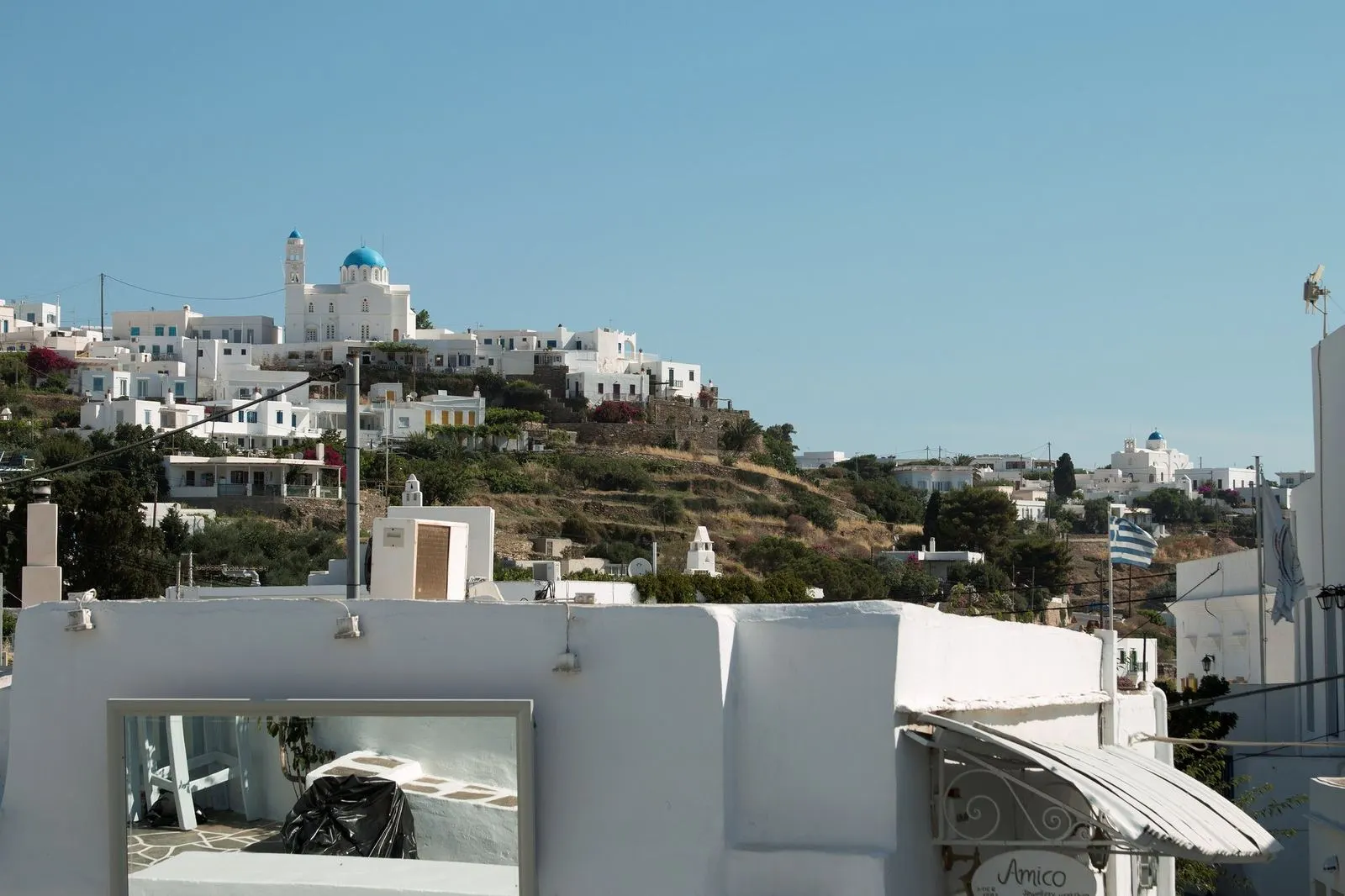
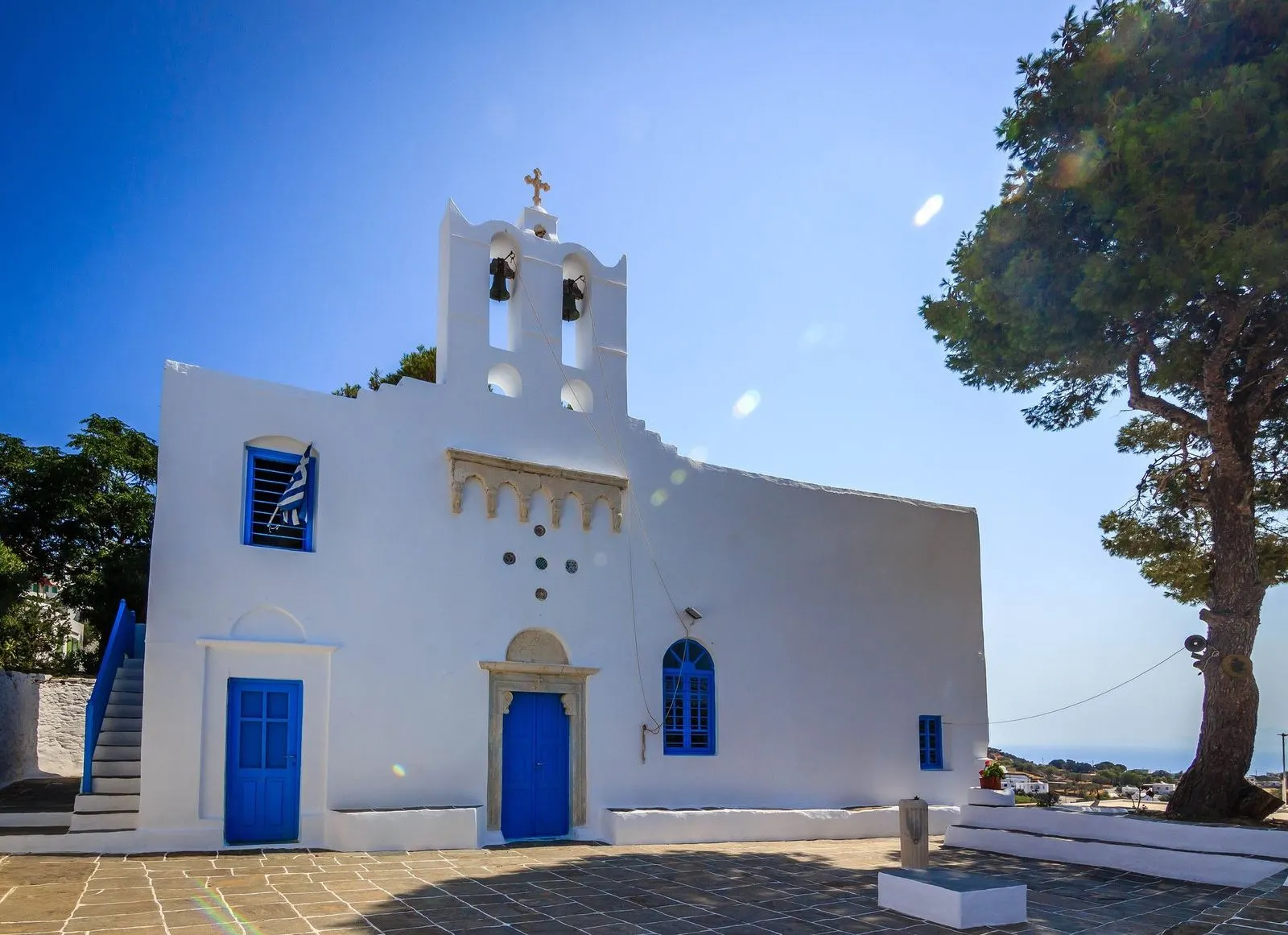
Apollonia is the capital of Sifnos, a white village spread over three low hills in the middle of the island, which older islanders also call Stavri. Its main lane, the Steno, is a narrow marble-paved street of shops, cafes and small bars that fills up after dark. Around it are quiet lanes of whitewashed houses with blue doors, a church at almost every turn, the Folklore Museum on Iroon Square and paths that lead out across the terraces to Artemonas, Kastro and Exambela. It is the best base for a first visit: everything on the island is a short drive or a walk away.

  • An evening walk along the Steno
  • The Folklore Museum on Iroon Square
  • The paths to Artemonas and Kastro
  • Almond sweets and coffee by the bus stop
  • Sunset from the hill of Agios Symeon nearby
Discover Apollonia
View of Artemonas, Apollonia & the hill villages, Sifnos
02
Apollonia & the hill villages

Artemonas

Mansions, windmills and old churches on the hill above the capital

Artemonas sits about 2 km north of Apollonia, a short walk along the lanes. It is the most elegant village on Sifnos: beside the white Cycladic houses stand neoclassical mansions with gardens and painted doorways, built by island families who made their money at sea and abroad, and the whole village has been protected as a traditional settlement since 1978. Above it are the old windmills, and from the top you look down over the white villages, the terraces and dovecotes to Kastro and the sea. It is quieter than Apollonia, with a small square, a much-loved bakery and a few good places to eat.

  • The windmills above the village
  • The mansions and their gardens
  • The churches of Agios Konstantinos and Panagia tis Kochis
  • Almond sweets from the village bakery
  • Small plates on the square in the evening
Discover Artemonas
View of Kastro, Kastro & the east coast, Sifnos
03
Kastro & the east coast

Kastro

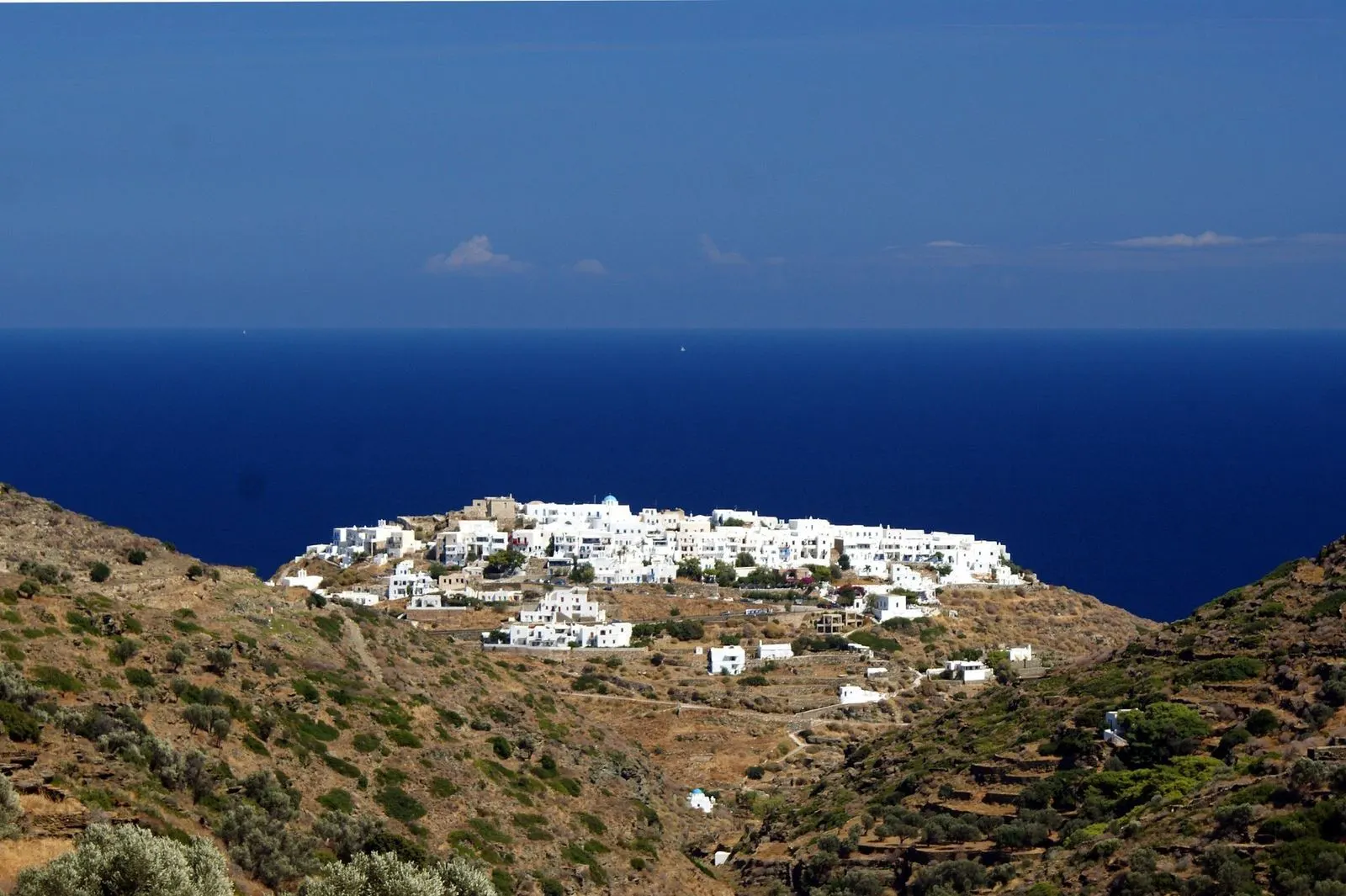
A medieval village whose houses are its walls, on a cliff lived on since antiquity

Kastro sits on a steep hill 80 m above the east coast, and it was the capital of Sifnos from ancient times until 1836. The city Herodotus wrote about stood here, and parts of its white-marble acropolis wall still run along the top. In the Middle Ages the islanders built the village as a fortress: the outer ring of tall houses turns almost blank walls to the sea, and the only ways in were covered passages through the houses themselves. Inside are narrow vaulted lanes, coats of arms over doors, Roman sarcophagi left in the street, ancient columns built into the walls and the small Archaeological Museum. Below, the chapel of the Seven Martyrs sits alone on a rock in the sea, and the view of it from the lanes is stunning at sunrise.

  • The lanes and covered gateways inside the walls
  • The chapel of the Seven Martyrs
  • The Archaeological Museum
  • A swim from the rocks below the village
  • Sunrise over the open sea
Discover Kastro
View of Kamares, Kamares & the west, Sifnos
04
Kamares & the west

Kamares

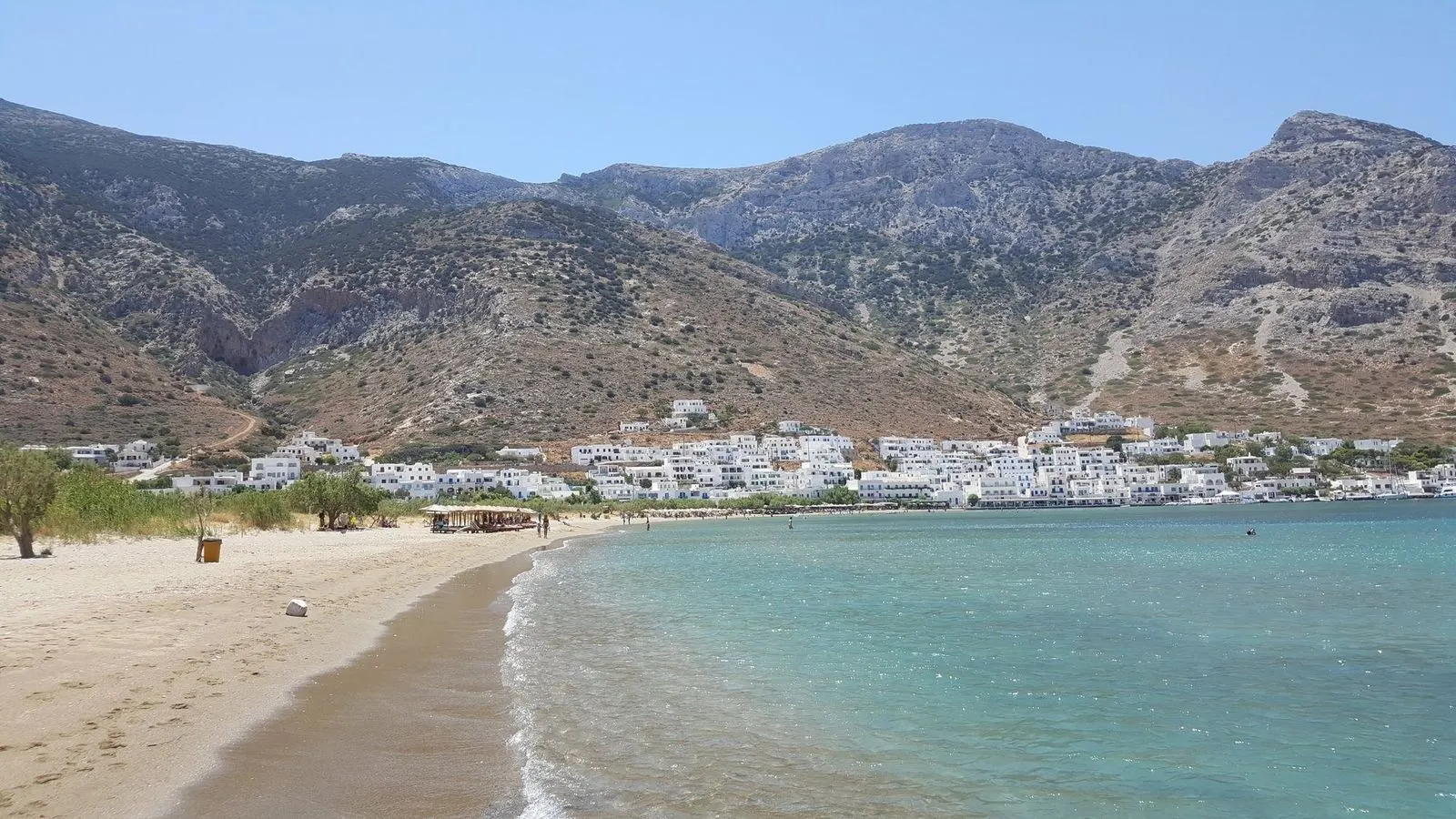
The port in a deep bay, with potters on the shore and the sunset straight ahead

Kamares is where the ferries come in, at the end of a long bay between two steep, bare hills on the west coast. It is more than a port. The waterfront is lined with cafes and tavernas, a sandy beach runs along the head of the bay, and the sun sets straight down the bay every evening. Kamares is one of the places the island's potters moved to once the seas were safe from pirates, and a few workshops still fire their kilns near the beach. Across the water, the small village of Agia Marina has a white chapel on the shore. Stay here if you want the beach and the boats on your doorstep.

  • Watching the ferry turn into the bay
  • The sandy beach at the head of the bay
  • Pottery workshops near the shore
  • Sunset at a waterfront table
Discover Kamares
View of Platis Gialos, The south coast, Sifnos
05
The south coast

Platis Gialos

The longest sand on the island, watched over by a white tower and a thousand-year-old chapel

Platis Gialos, the wide shore, is a long curve of soft sand on the south coast, about 8 km from Apollonia. The water is shallow and calm, which makes it the family beach of Sifnos, and the tavernas and small hotels along the back of the sand keep it lively from morning until late. Several potters have their workshops here, and you can watch them at the wheel. On the hill above stands the white monastery of Panagia tou Vounou, and inland rises Aspros Pyrgos, the White Tower, the best known of the island's ancient round towers.

  • A day on the soft sand
  • The pottery workshops
  • The view from Panagia tou Vounou
  • Aspros Pyrgos, the White Tower
  • Dinner at the water's edge
Discover Platis Gialos
View of Vathi, Kamares & the west, Sifnos
06
Kamares & the west

Vathi

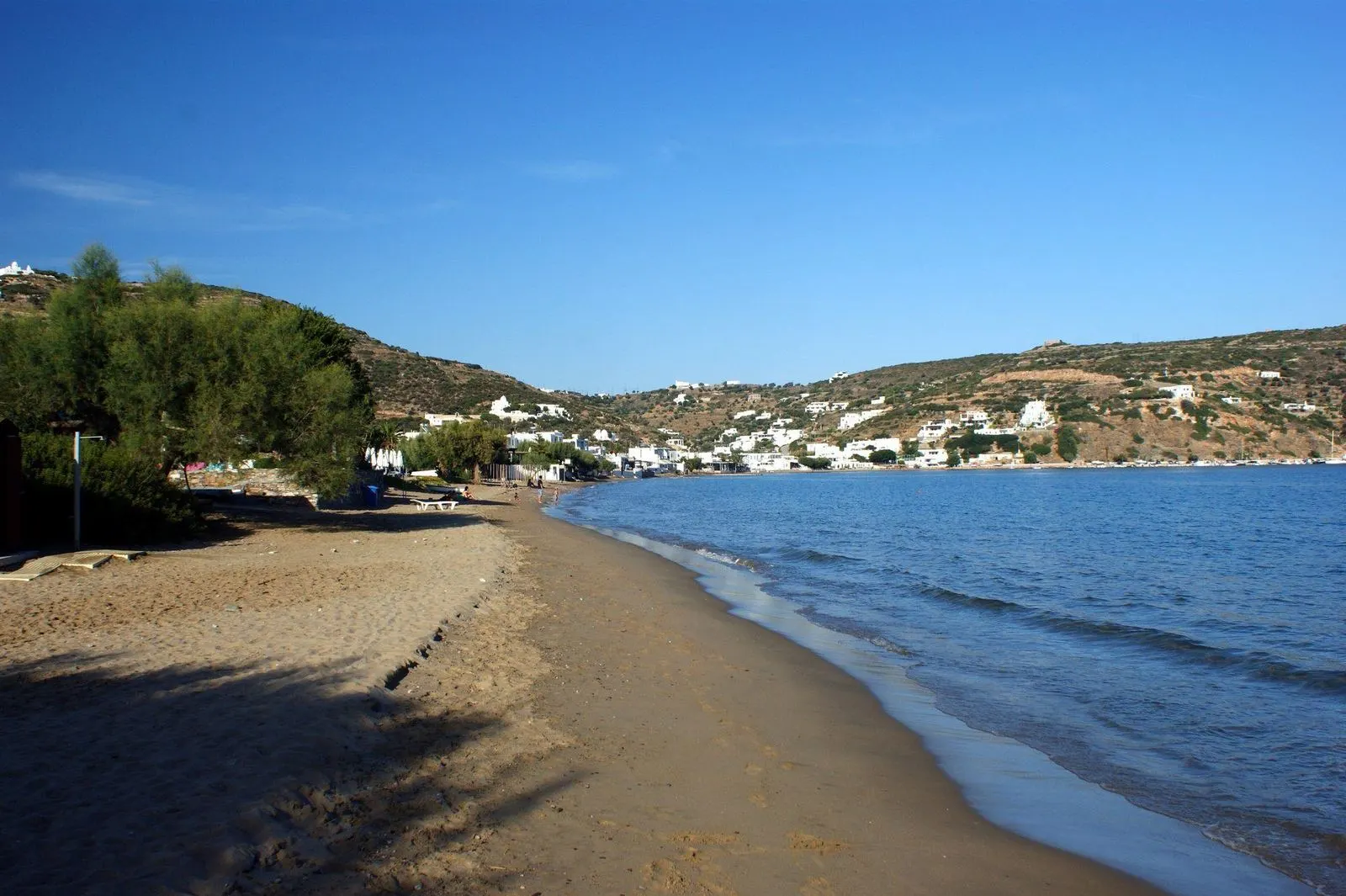
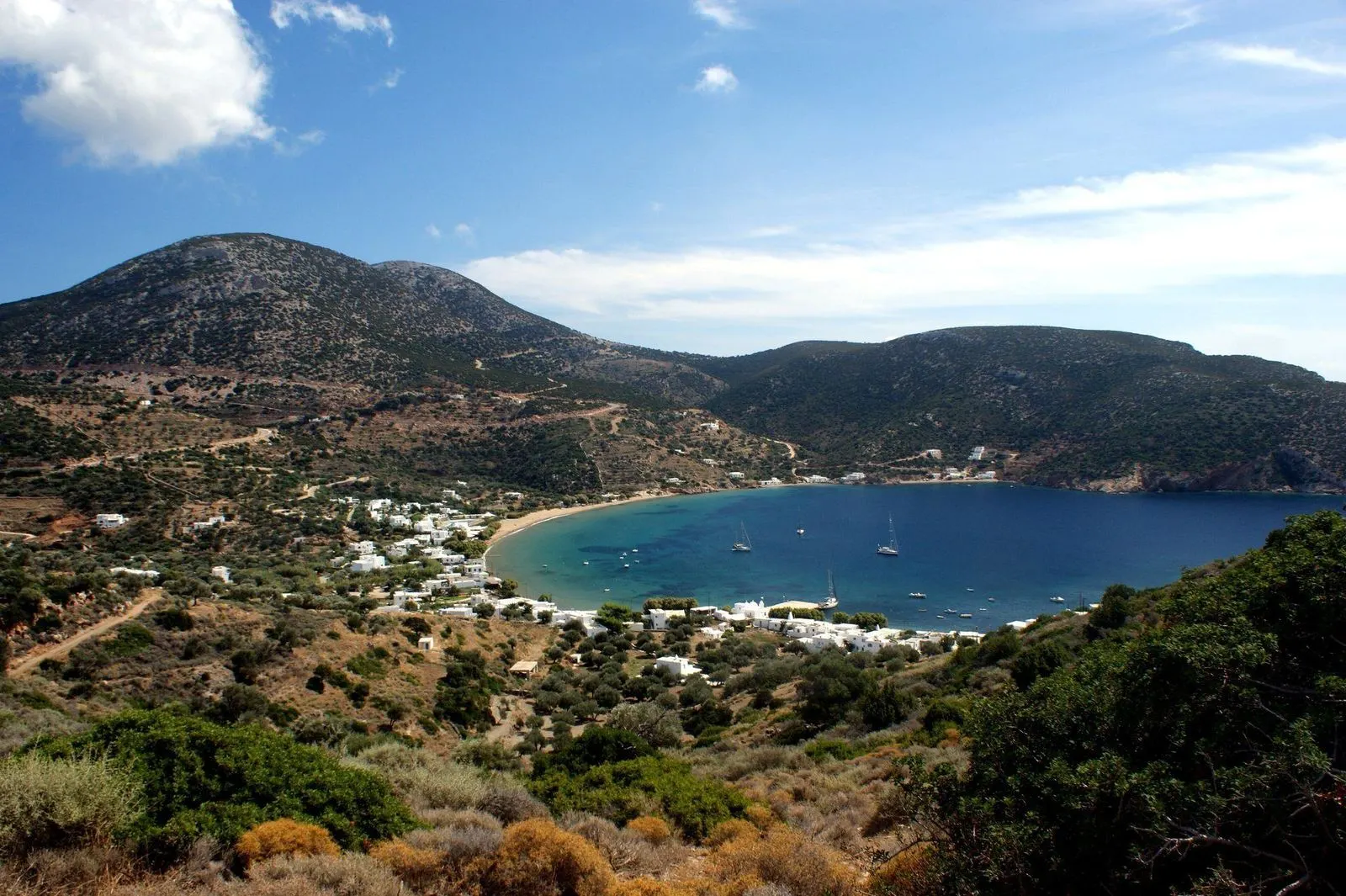
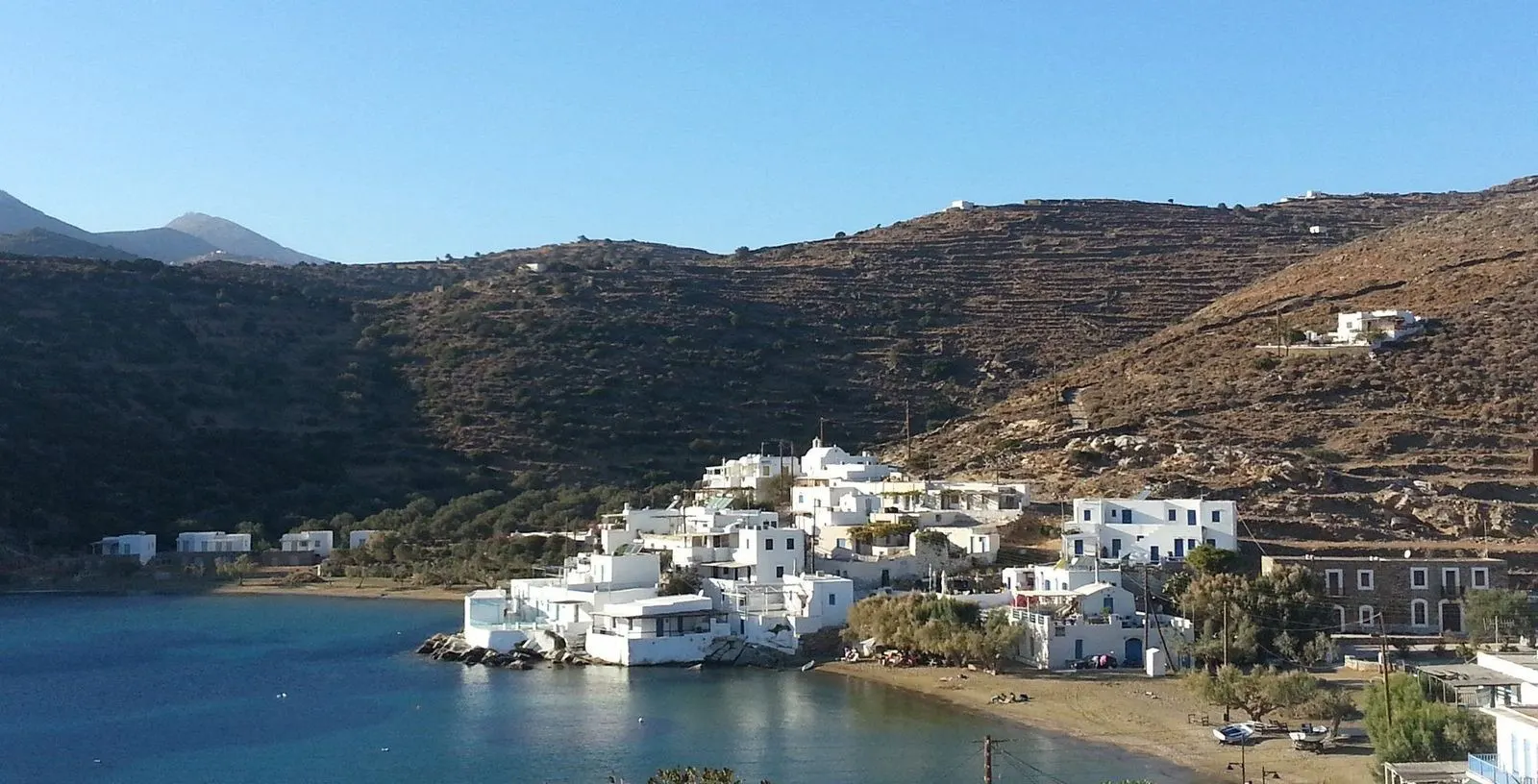
A fishing village on a round bay so closed in it looks like a lake

Vathi lies in a deep bay on the south-west coast, almost closed by two headlands, so the water stays calm on even the windiest days. For a long time the village was reached only by boat or on foot, and it still feels far away. There is a sandy beach, a handful of tavernas with tables near the water, a few potteries, and the white church of the Taxiarchis right at the water's edge, whose saint's day brings one of the island's summer feasts. In the evening, when the day visitors go, the bay turns silver and still, and the stillness is stunning after a day of wind elsewhere. You can drive down from Apollonia, or walk the old path through the hills.

  • Swimming in the calm round bay
  • The church of the Taxiarchis at the water's edge
  • Revithada and mastelo from a family taverna
  • The old footpath down from the hills, past Agios Andreas
Discover Vathi
View of Faros and Chrysopigi, The south coast, Sifnos
07
The south coast

Faros and Chrysopigi

The island's old port, and its patron monastery on a rock split by the sea

Faros is a small fishing village on the south-east coast, with boats in the bay, a few tavernas and three little sandy beaches: the one in the village, Glyfo, and Fasolou with the monastery of Stavros a little beyond. From Glyfo a path follows the shore to Chrysopigi, the monastery of the Virgin who is patron of Sifnos. It stands on a flat rock cut off from the land by a narrow channel of sea, crossed by a little bridge, and the sight of it from the path, white on gold rock above deep blue water, is stunning. On Ascension Day, forty days after Easter, the whole island comes for its great feast.

  • The coastal path from Glyfo to Chrysopigi
  • The monastery on its split rock
  • A swim at Apokofto beside the monastery
  • Fish at a harbour taverna
  • The Ascension Day feast
Discover Faros and Chrysopigi

Regions

Where to base yourself in Sifnos

01

Apollonia & the hill villages

Hamlets that grew towards each other on the island's spine until they became one long white village: Apollonia, which locals also call Stavri, Ano and Kato Petali, Katavati, Exambela where Tselementes was born, and Artemonas with its neoclassical mansions and windmills.

02

Kastro & the east coast

The walled old capital on its cliff, 80 m above the sea, with the Seven Martyrs on their rock below, the little harbour of Seralia where the patron's icon lands on Ascension Day, and the cape of Panagia Poulati.

03

Kamares & the west

The deep port bay of Kamares with its beach and potteries, the chapel hamlet of Agia Marina across the water, and the closed round bay of Vathi further south. Inland, the juniper hills below Profitis Ilias are a Natura 2000 reserve.

04

The south coast

The long sand of Platis Gialos with the islet of Kitriani off its mouth, the old port of Faros, the monastery of Chrysopigi on its split rock and the coves of Apokofto, Glyfo, Fasolou and Saoures.

05

The north

Dry, empty hills with the oldest mine shafts on the island at Agios Sostis, the deep coves of Vroulidia, and the fishing hamlet of Cherronisos at the end of the road, where a potter still works.

Find a place to stay

Browse hotels and guesthouses across Sifnos, filtered by region and price.

Browse hotels

Last updated