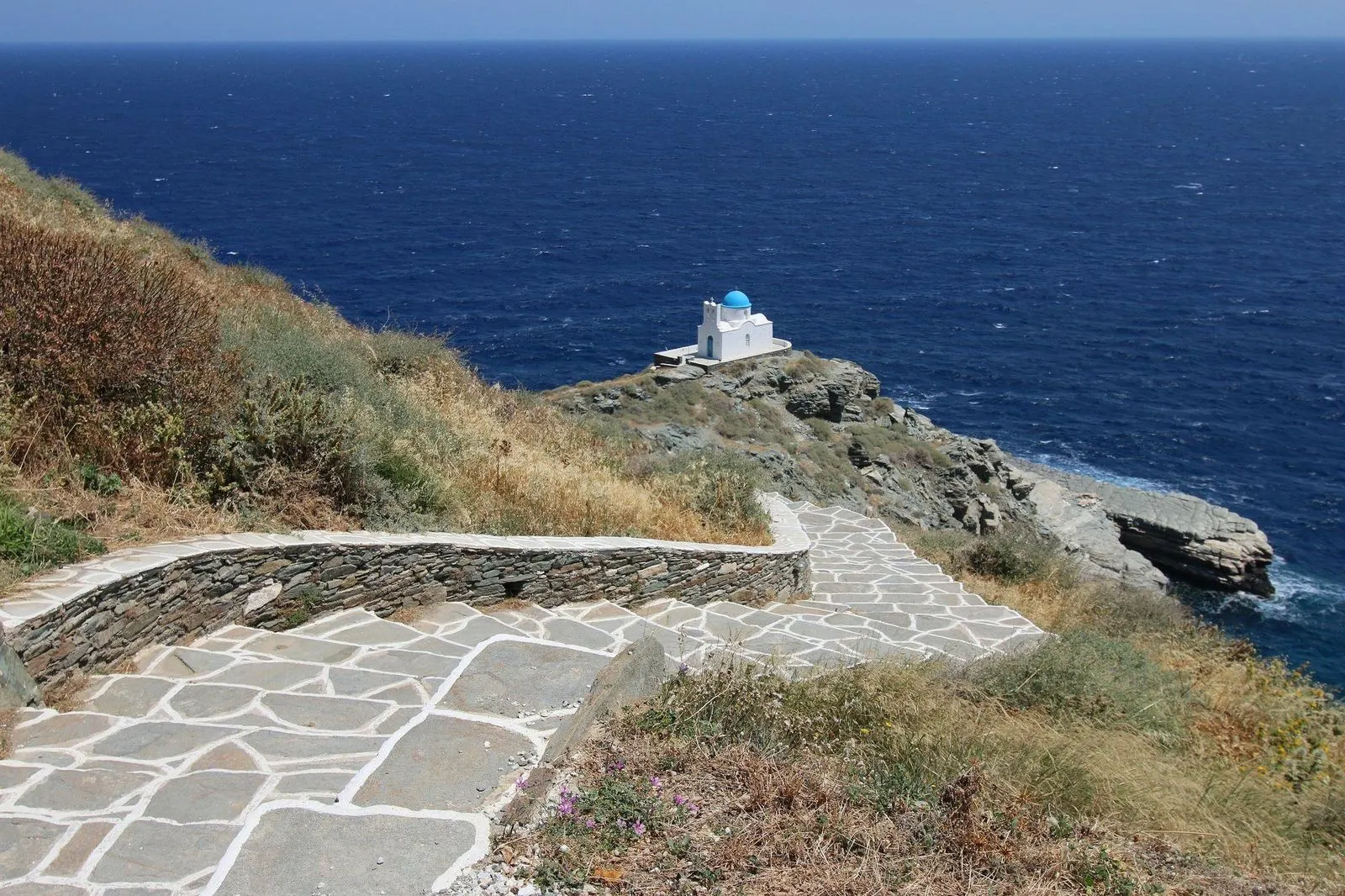
The Seven Martyrs
Steps lead down from the village to the white chapel on its rock in the sea, the island's favourite place to swim and to marry.
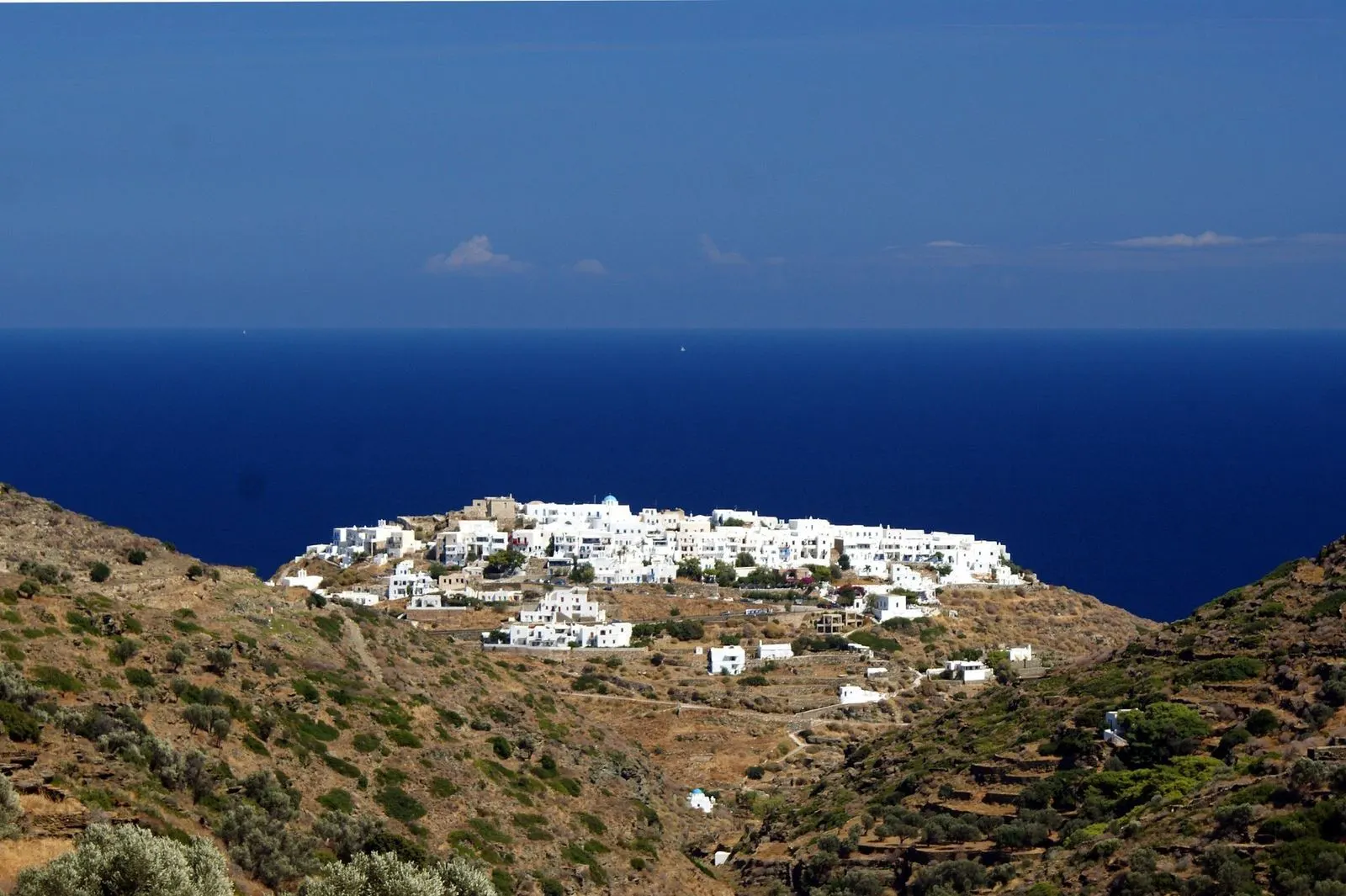
Sifnos · Kastro & the east coast · Κάστρο
Kastro sits on a steep hill 80 m above the east coast, and it was the capital of Sifnos from ancient times until 1836. The city Herodotus wrote about stood here, and parts of its white-marble acropolis wall still run along the top. In the Middle Ages the islanders built the village as a fortress: the outer ring of tall houses turns almost blank walls to the sea, and the only ways in were covered passages through the houses themselves. Inside are narrow vaulted lanes, coats of arms over doors, Roman sarcophagi left in the street, ancient columns built into the walls and the small Archaeological Museum. Below, the chapel of the Seven Martyrs sits alone on a rock in the sea, and the view of it from the lanes is stunning at sunrise.
A medieval village whose houses are its walls, on a cliff lived on since antiquity
People have lived on this rock without a break since antiquity. The ancient town had its acropolis on the north side of the hill, walled in local white marble for about 260 m, probably after the Samians sacked the island in 525 BC. A British excavation in 1937–39, under the ruined house of the medieval lords, found offerings from 700–550 BC thrown into a pit when a new temple was built.
The village you walk through began in the 14th century under Januli da Corogna, who seized Sifnos in 1307 and made himself its lord. An inscription of 1365 with his name survives in the ruins of his house, the Despotiko, on the old central square. At first the fortress measured only about 100 by 40 m. Row after row of houses was added outside it, each new ring becoming the new wall, and by the early 17th century around 5,000 people lived on the rock.
The outer houses are three storeys high with few windows, most only about 30 m² inside, often with one flat reached from the lane and another up a wooden stair. There were six gateways into the village, each a covered passage called a lotzia; the main one runs about 7 m through the houses. Walk through one and you can still feel how the place was meant to be defended.
Today about 120 people live here all year. In the evening the lanes are quiet, the wine bar fills, and the sea below goes from blue to black. The museum, open since 1986 in the medieval core, keeps sculpture, pottery and coins of the ancient city.
Where to stay
Kastro
Aegean Eye · Apartments · €€
Where to eat
Kastro · Kastro & the east coast
Kastro · Kastro & the east coast
Within an easy drive
Steps lead down from the village to the white chapel on its rock in the sea, the island's favourite place to swim and to marry.
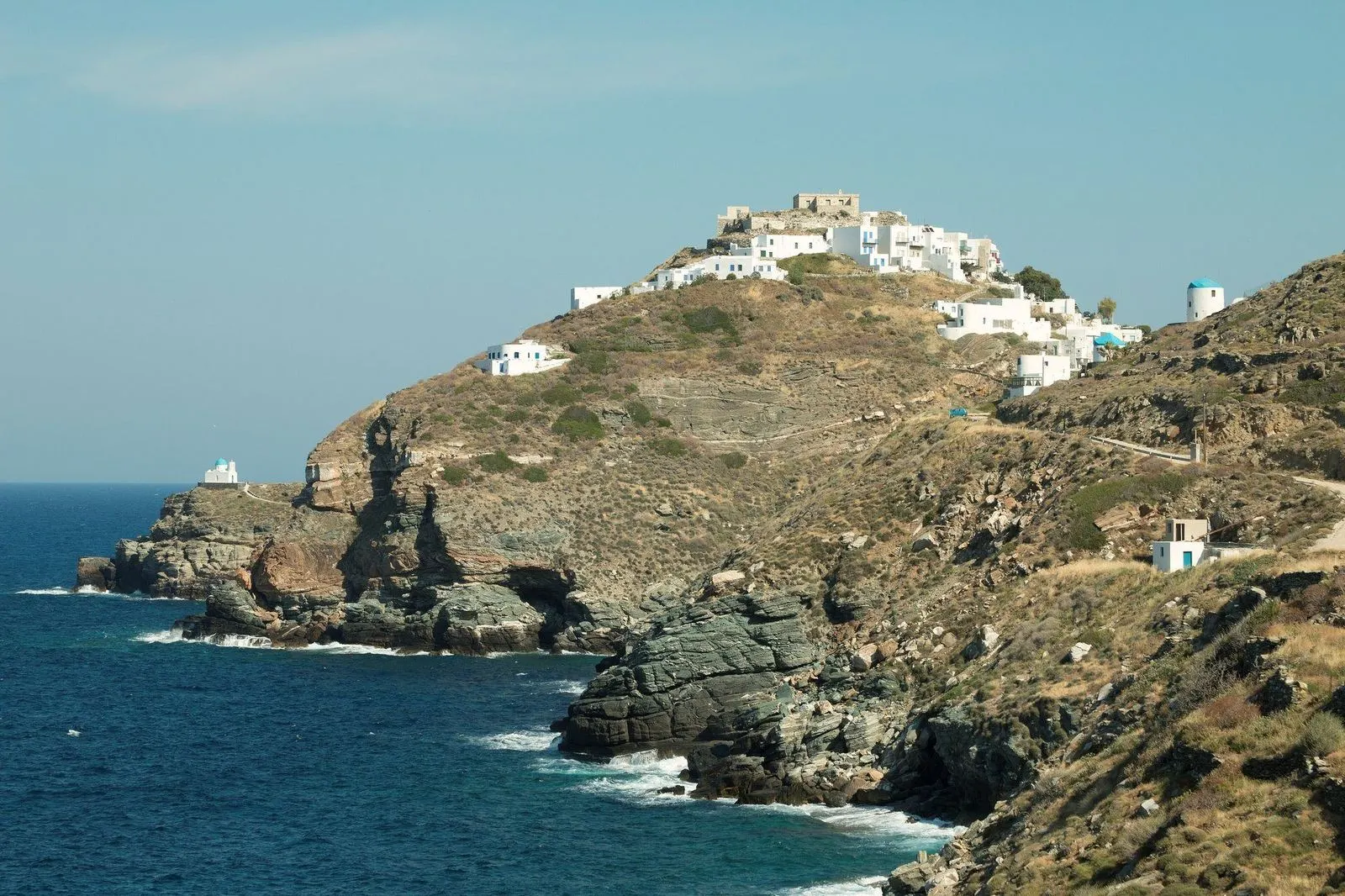
A chapel on a cape north of Kastro with flat rocks and some of the clearest deep water on the island, about half an hour on foot.
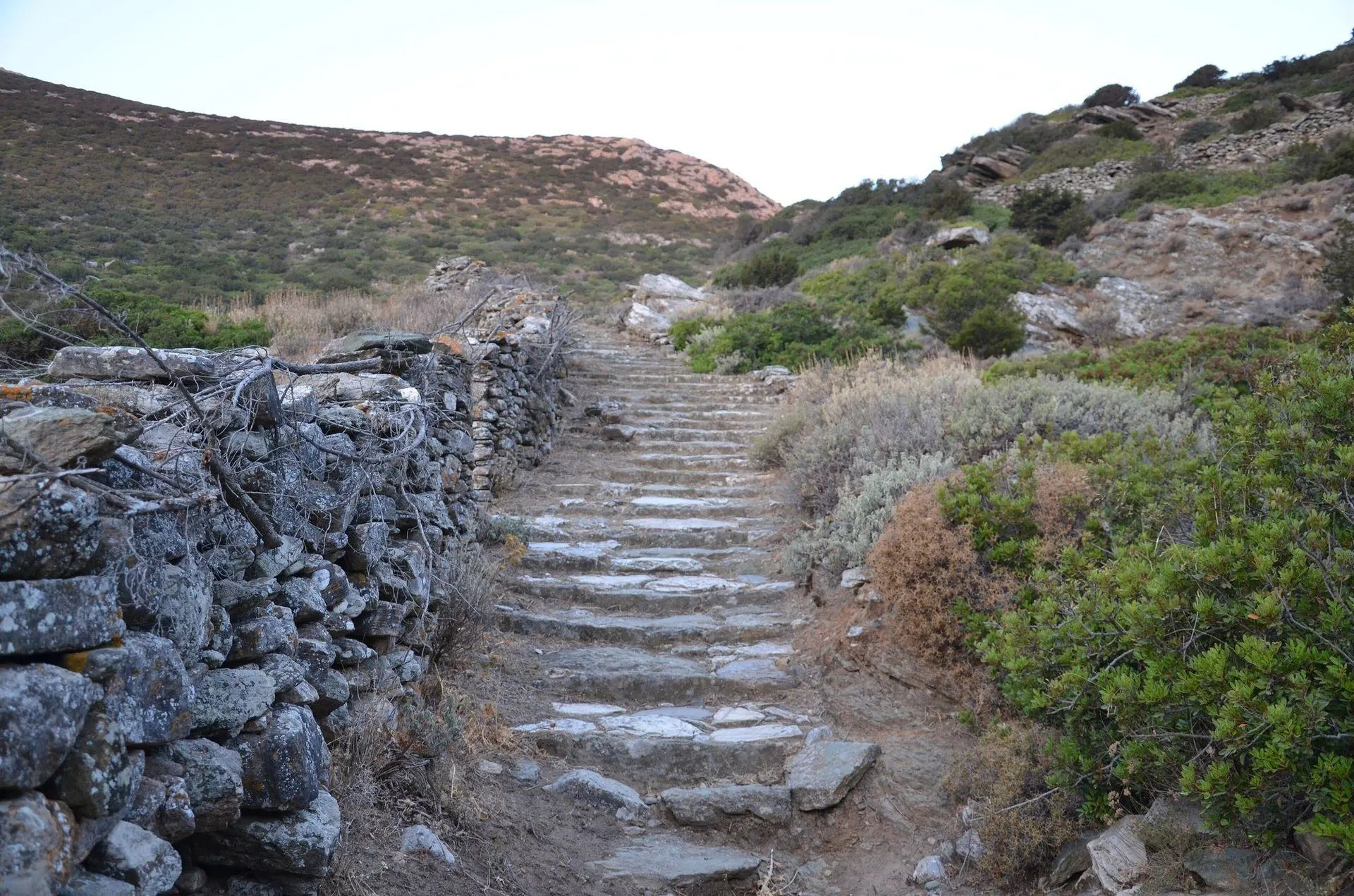
The old paved path climbs from Kastro to the capital in about an hour, past terraces, dovecotes and chapels.
Good to know
Kastro is about 3 km from Apollonia, by bus, car or the old footpath. Cars stay outside the village; the lanes are for walking.
Come at sunrise, when the sun comes up out of the open sea in front of the village, or on a summer evening when the day visitors have gone.
More of Sifnos
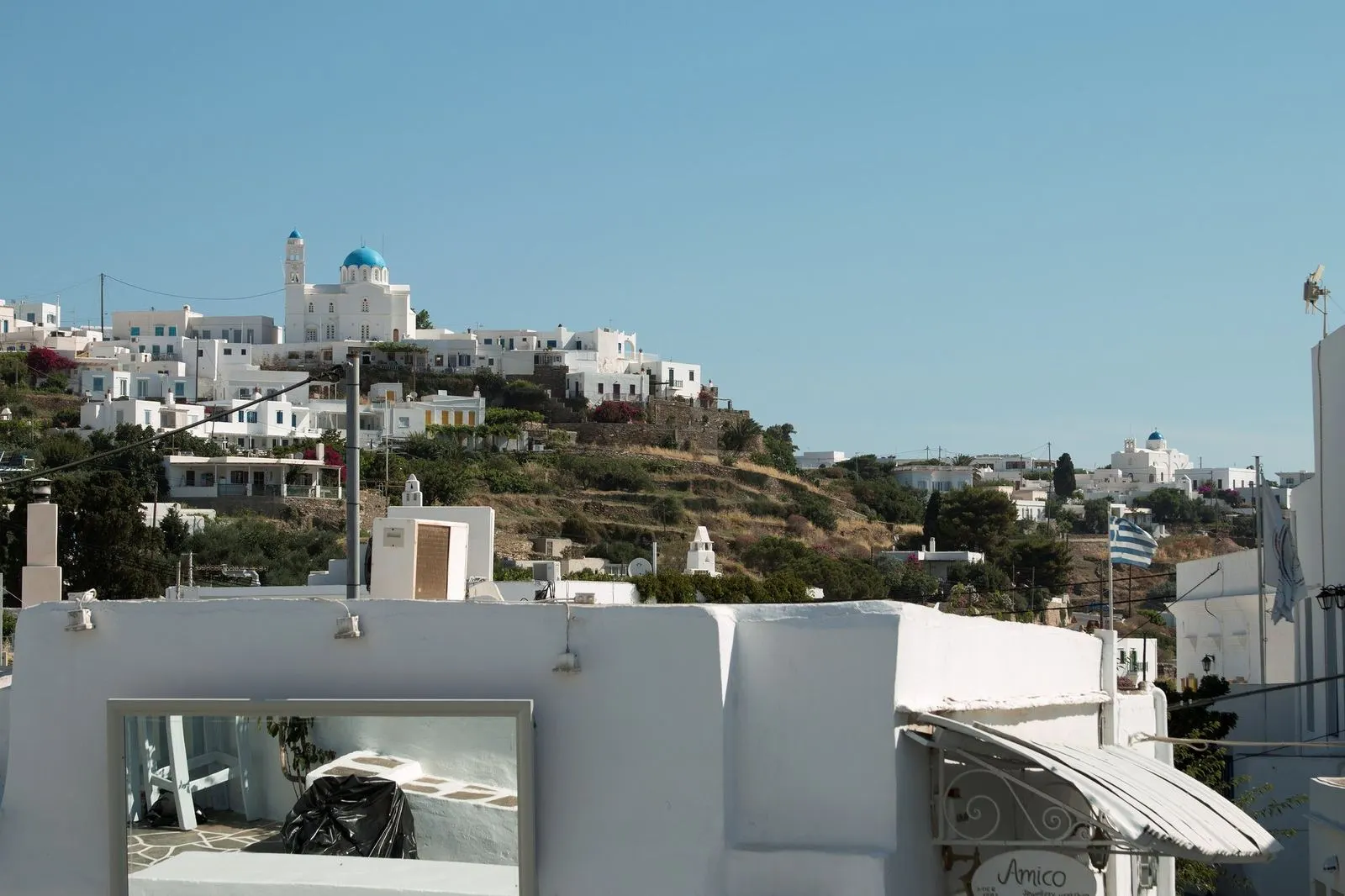
Apollonia & the hill villages
Three white hills that ran together into a capital, with the Steno for a main street
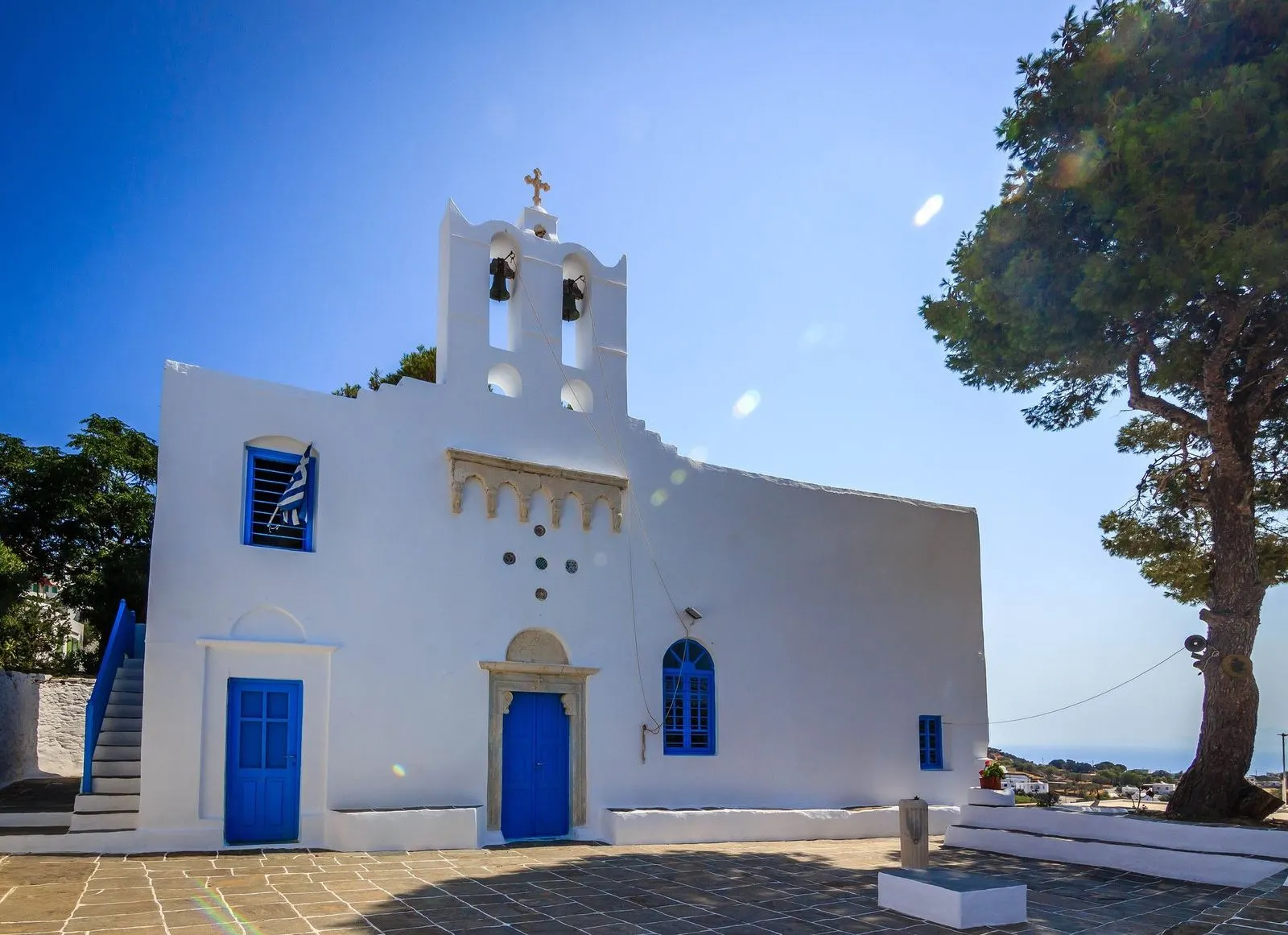
Apollonia & the hill villages
Mansions, windmills and old churches on the hill above the capital
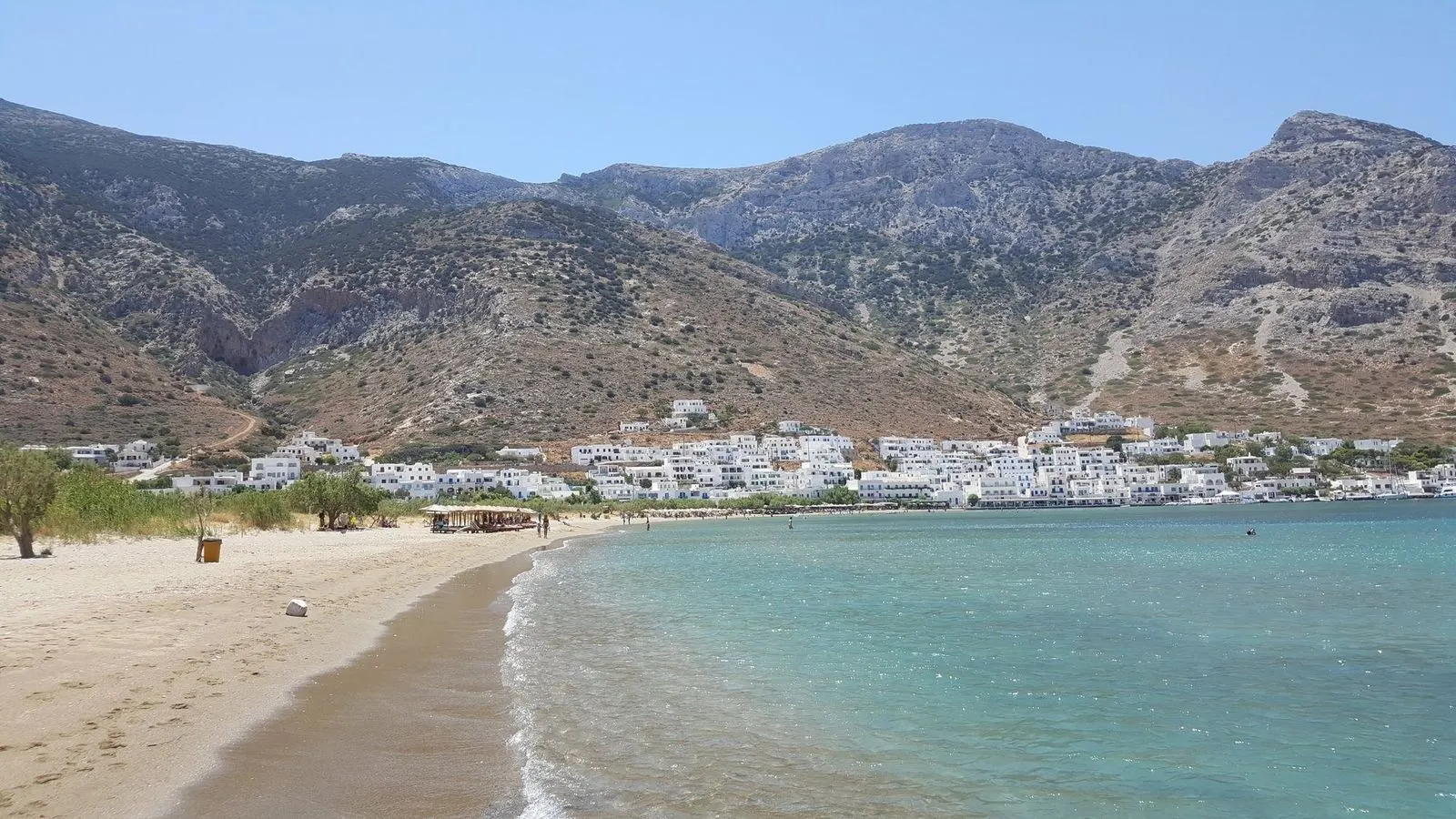
Kamares & the west
The port in a deep bay, with potters on the shore and the sunset straight ahead
Every stay we recommend across Sifnos, from village guesthouses to rooms on the sea.
See all staysLast updated