Ano Syros
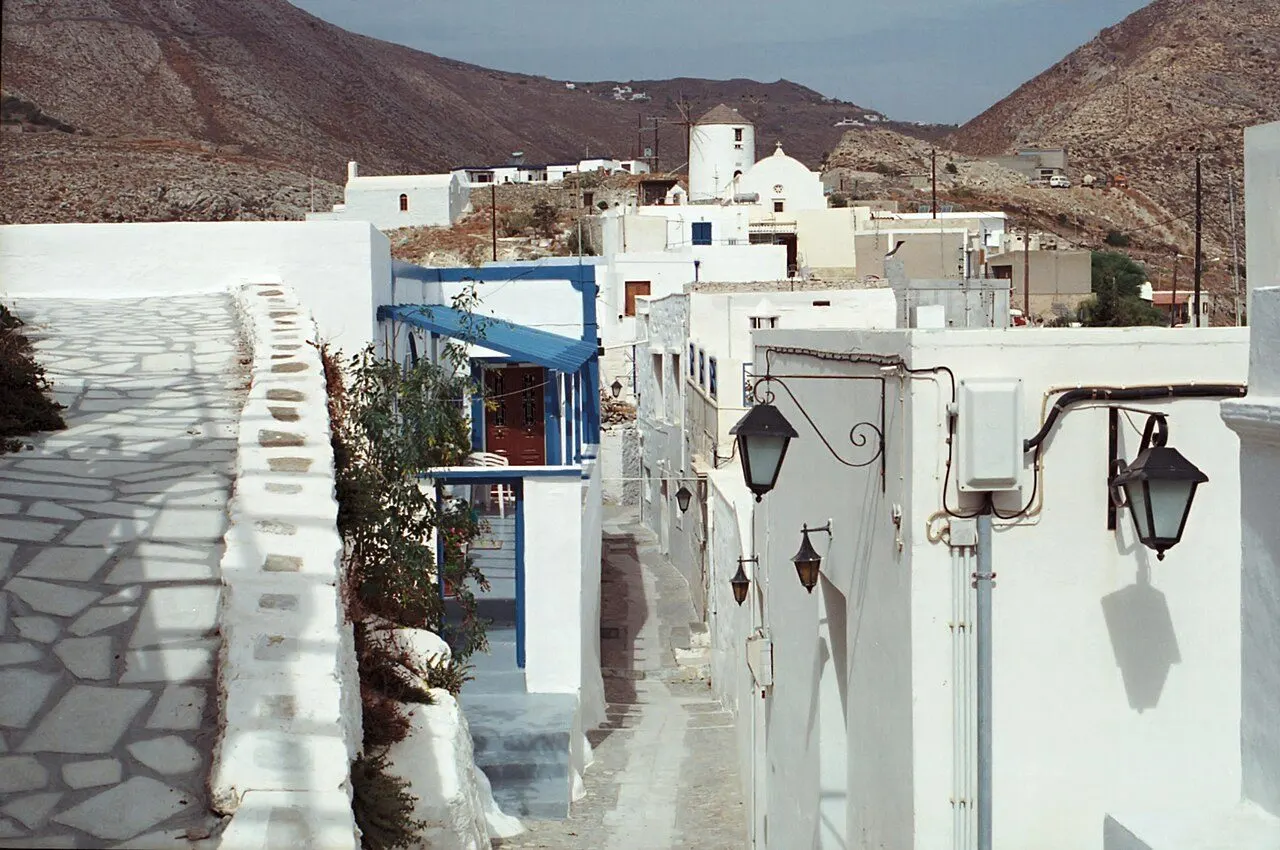
The medieval Catholic town on the hill above, a steep climb of steps or a short bus ride, with the cathedral of San Giorgio at the top.
Syros · Ermoupoli · Ερμούπολη
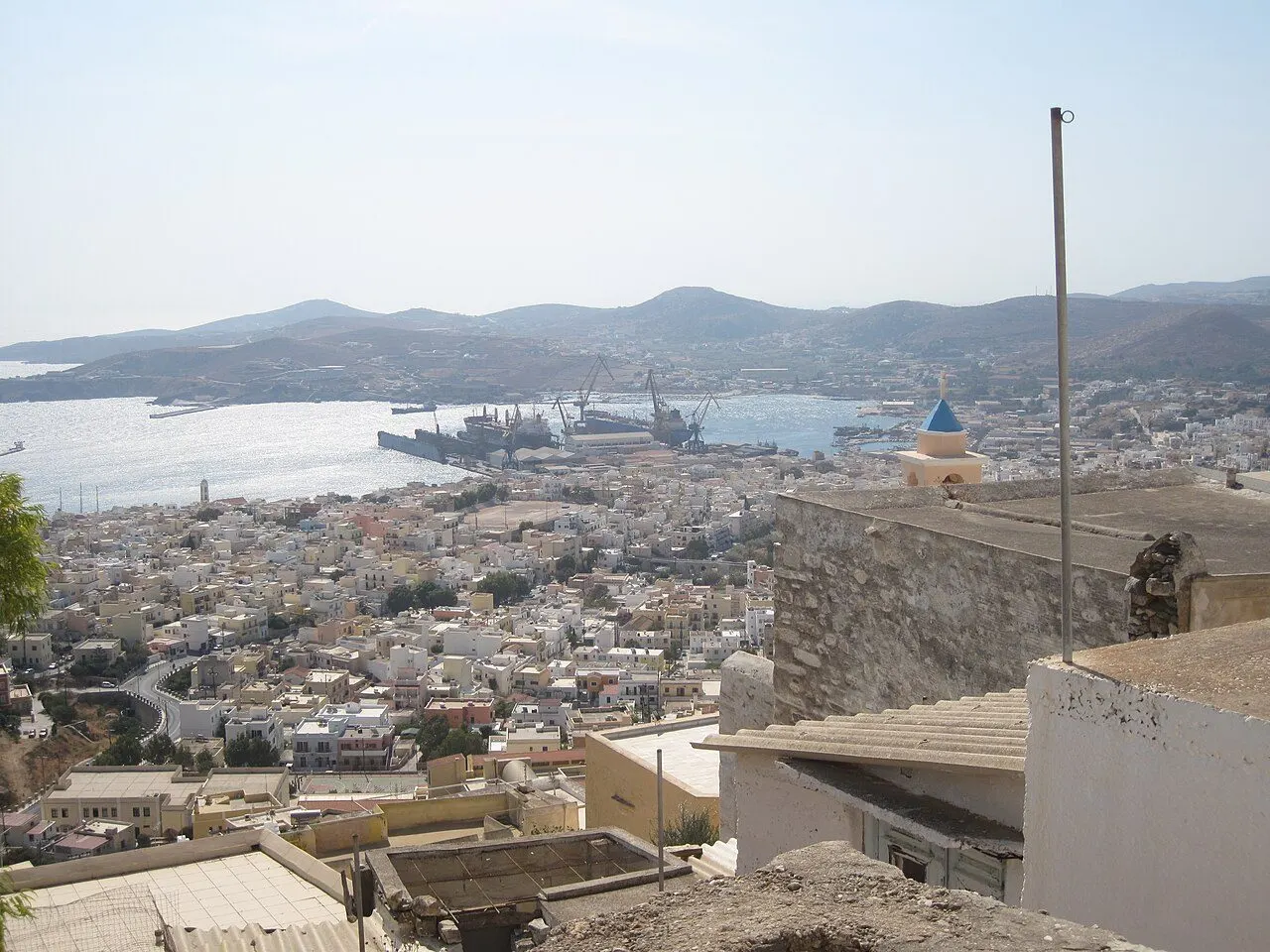
Ermoupoli, the city of Hermes, god of trade, is the capital of the Cyclades and the most unexpected town in the Aegean. Instead of white cubes it has marble-paved squares, neoclassical mansions in ochre and pale blue, a town hall like a palace, a small Italian opera house and a working shipyard. It was built almost from nothing in the 1820s by refugees from the war of independence, and within a generation it was the busiest port in Greece. It is a real town, with schools, courts and a university department, where people live all year, and you can swim off the rocks below the captains' houses ten minutes from the main square.
Greetings from Ermoupoli
Ermoupoli
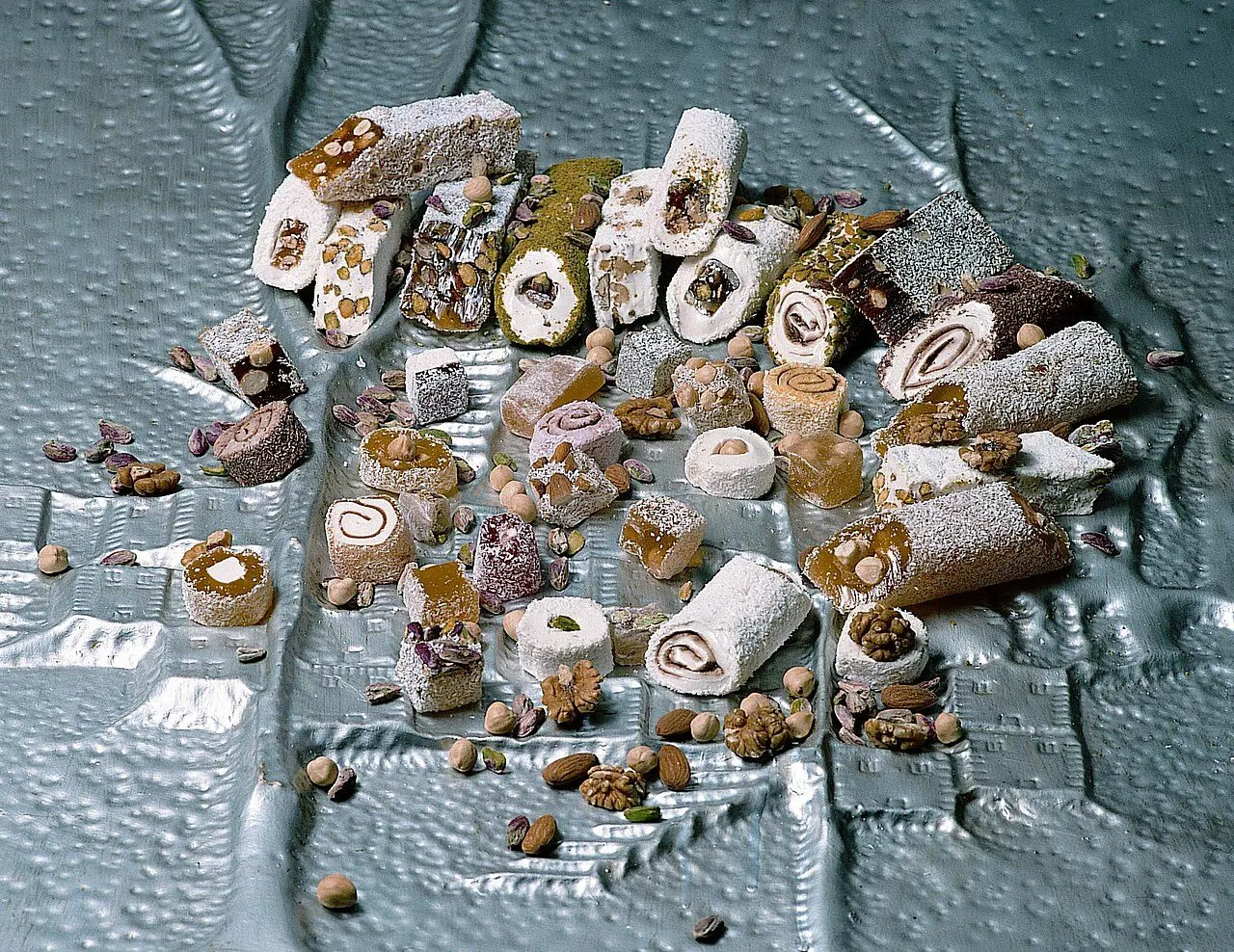
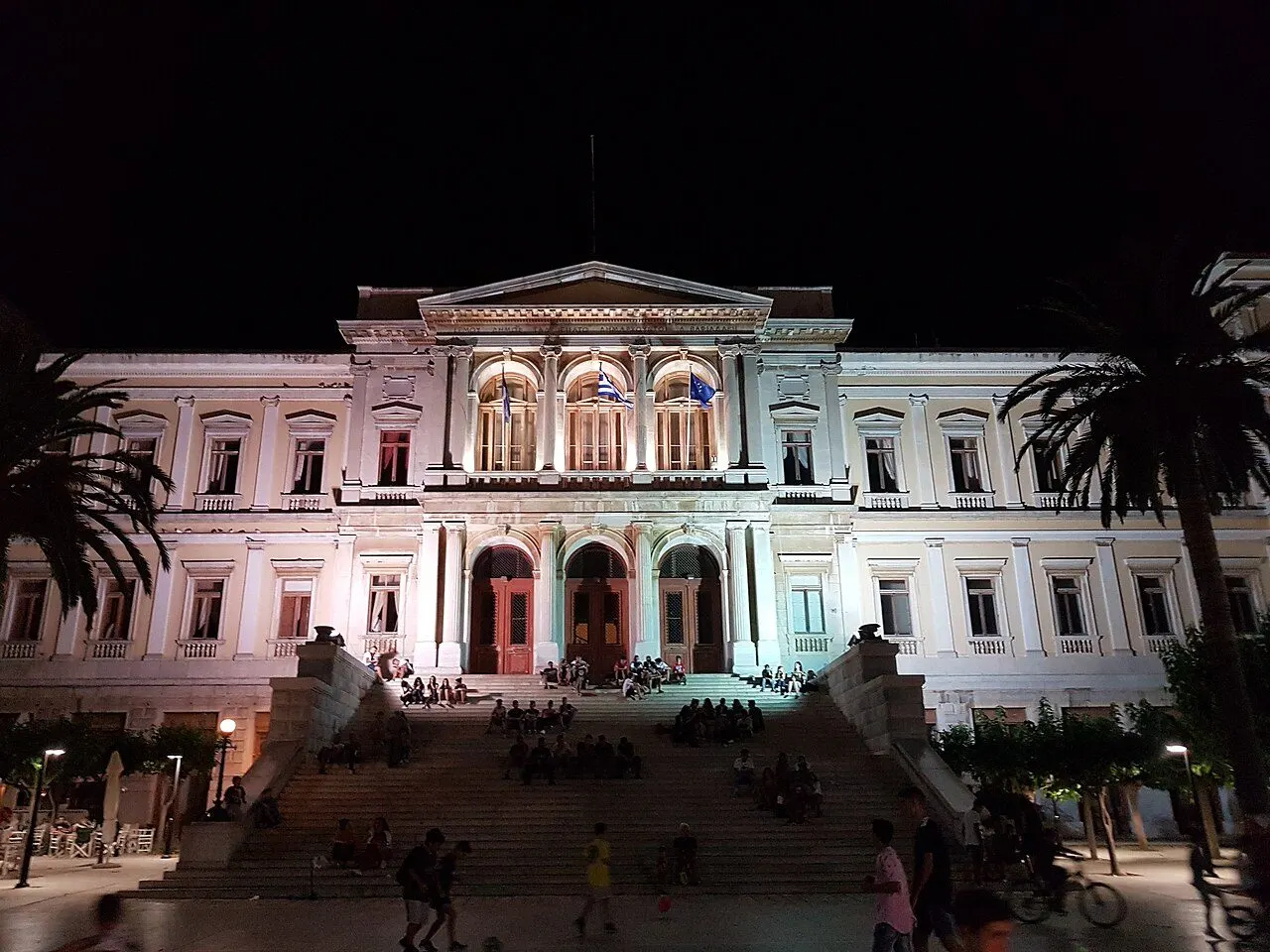
You come off the ferry into a town that looks nothing like the Cyclades: marble squares, palm trees and a town hall like something from Vienna. At noon, buy a box of rose loukoumi on the market street and eat half of it on the steps of the town hall. In the afternoon, swim off a ladder below the captains' mansions in Vaporia, with old ladies doing slow lengths beside you. At night there is opera in the little Apollo Theatre, and afterwards the whole town is out in Miaoulis Square, children on scooters and grandparents with ice cream, at midnight.
A 19th-century merchant city of marble squares, mansions and an opera house, built by refugees
In 1822 there was almost nothing on this shore. The islanders lived up on the hill of Ano Syros, and they were Catholics, under the protection of France, so when the Greek War of Independence broke out they kept out of it. That neutrality made Syros a refuge. Survivors of the massacre on Chios, and then families from Psara, Kasos, Smyrna and Crete, came ashore below the hill with what they could carry, and started building.
They were merchants, sailors and ship-owners, and they built fast. Within a few decades Ermoupoli was the main port of the new Greek state, the place where goods from east and west changed ships. It had the country's first steamship company, founded here in 1856, shipyards, tanneries and cotton mills, banks, insurance offices and newspapers, and a population of Orthodox newcomers who soon outnumbered the Catholics on the hill. The town took its name from Hermes, the god of trade.
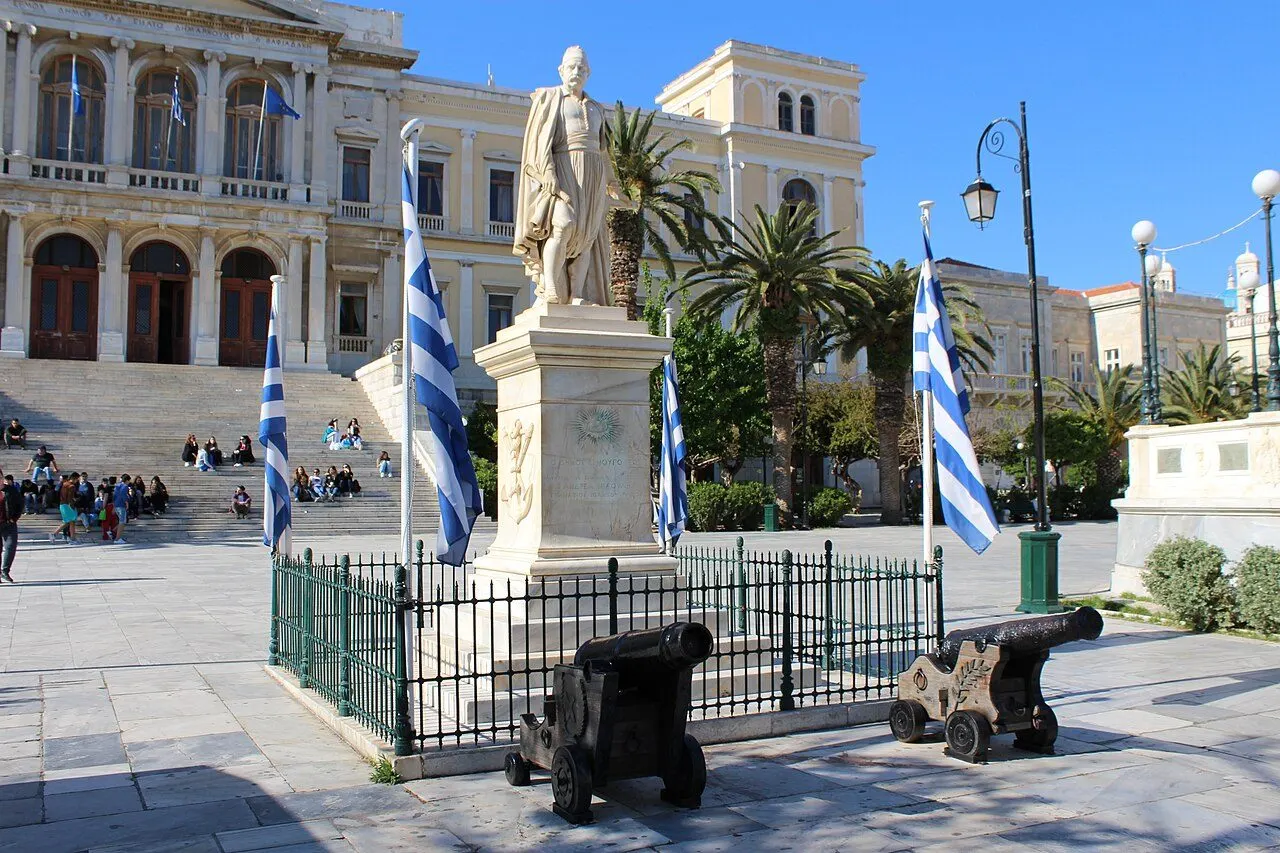
The money went into stone. The heart of the town is Miaoulis Square, paved in marble and lined with palms and cafes, and on one side of it stands the town hall designed by Ernst Ziller, the German architect who shaped much of 19th-century Athens, built between 1876 and 1891. A few steps away is the Apollo Theatre, opened in 1864 and modelled on the Italian opera houses of the day, with tiers of boxes and a painted ceiling of Dante, Verdi, Mozart and Bellini. In July it hosts the Festival of the Aegean, with opera, concerts and dance.
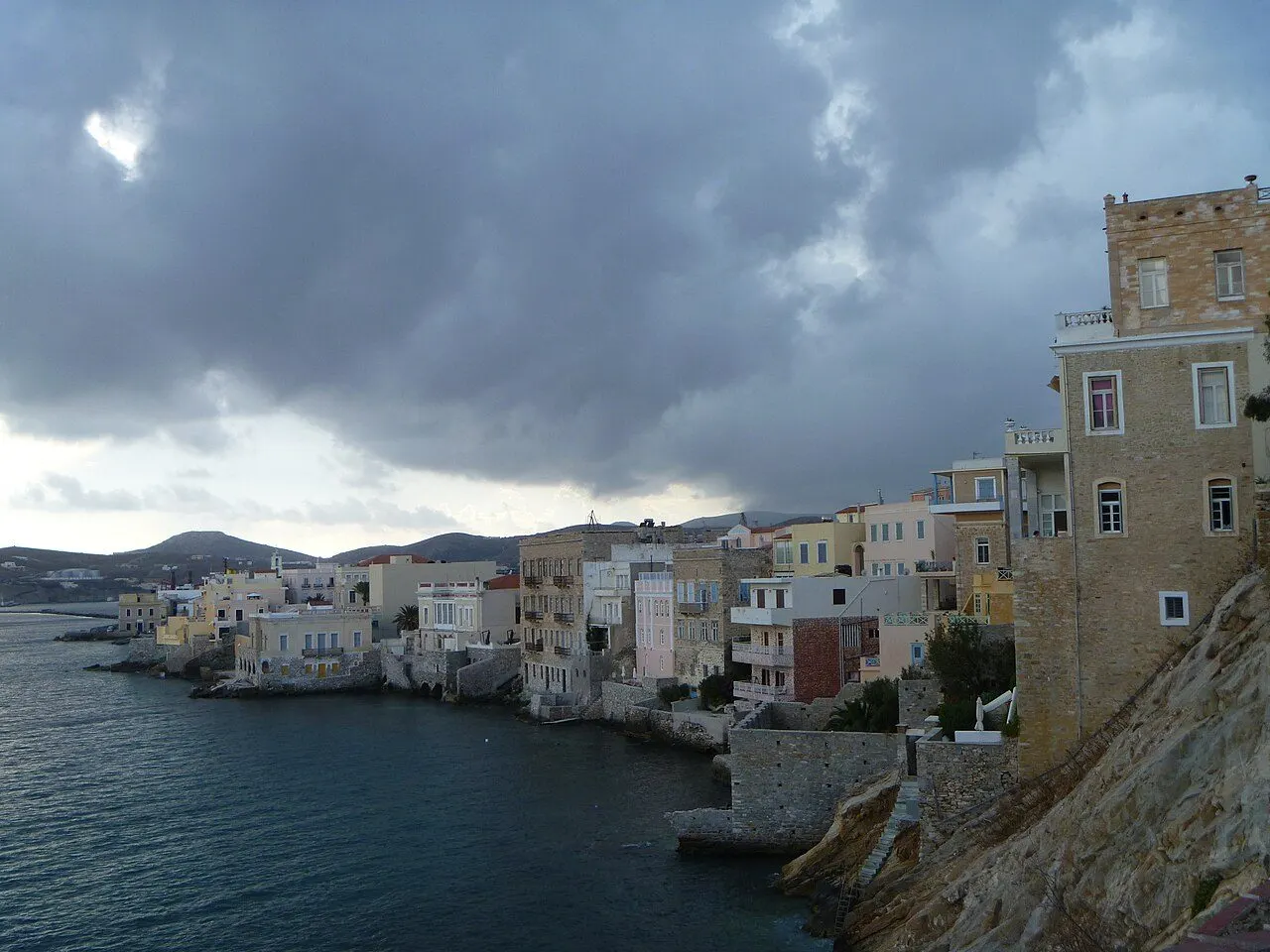
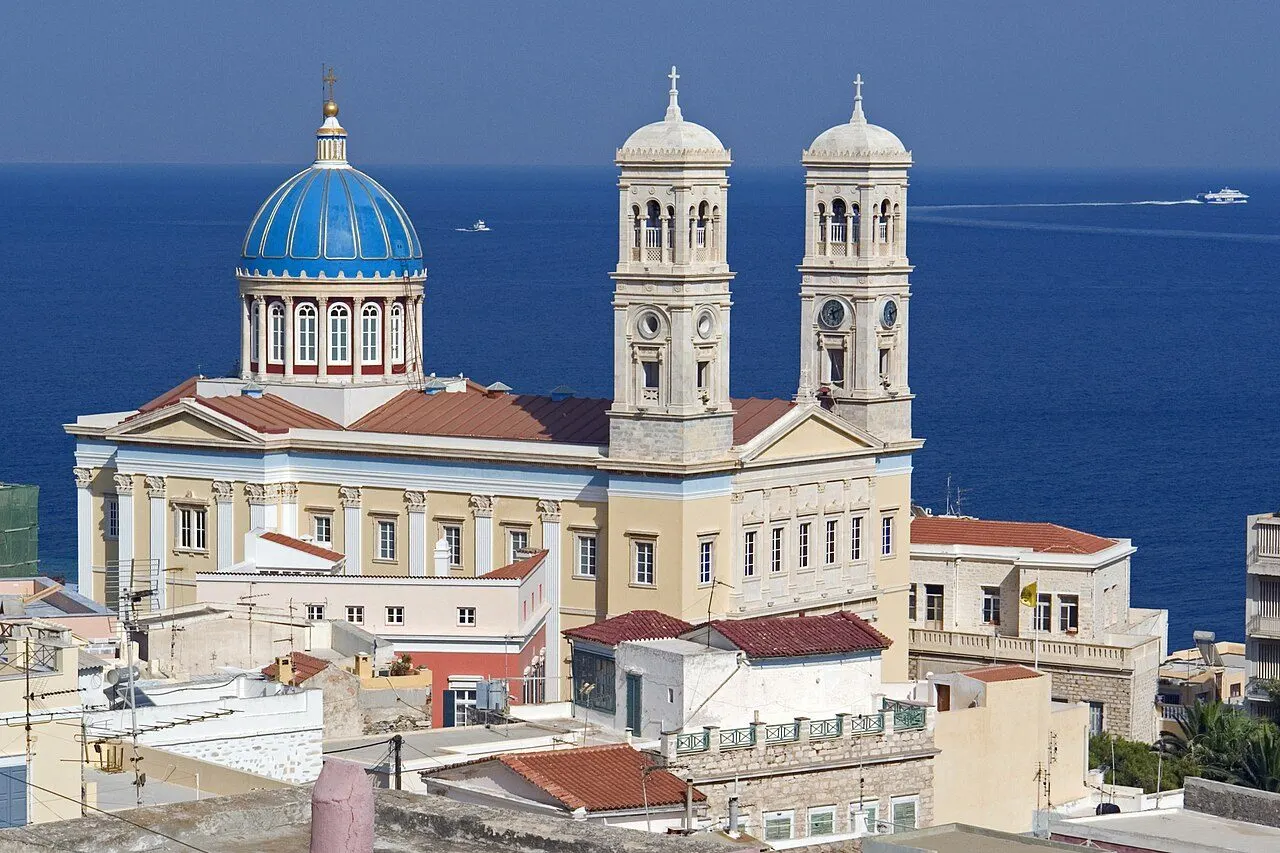
On the slope north of the square is Vaporia, the steamship quarter, where the captains and ship-owners built their mansions on the rocks above the sea, with painted ceilings and marble balconies. Below them, at Asteria and around the church of Agios Nikolaos with its blue dome, the people of Ermoupoli swim off concrete platforms and ladders in deep, clear water, from spring to autumn.
The boom ended when Piraeus took over the shipping, and the factories closed one by one in the 20th century. But the town never emptied. The Neorion shipyard still repairs ships at the southern end of the bay, old factory buildings nearby hold the Industrial Museum, and the shops on the market street still sell loukoumi made in the town's workshops since the refugees brought the recipe from the east.
Hour by hour
A marble square at breakfast, a church with an El Greco, a swim below the mansions, a climb to the medieval town and a night at the opera. Here is one way to spend it.
Start under the arcades of the square with a coffee and a halvadopita, the thin nougat pie of Syros, while the marble is still cool and the town hall glows in the morning sun.
Walk to the church of the Dormition to see the icon of the Dormition of the Virgin that El Greco painted on Crete before he left for Venice, then look inside the Apollo Theatre and up at its painted ceiling.
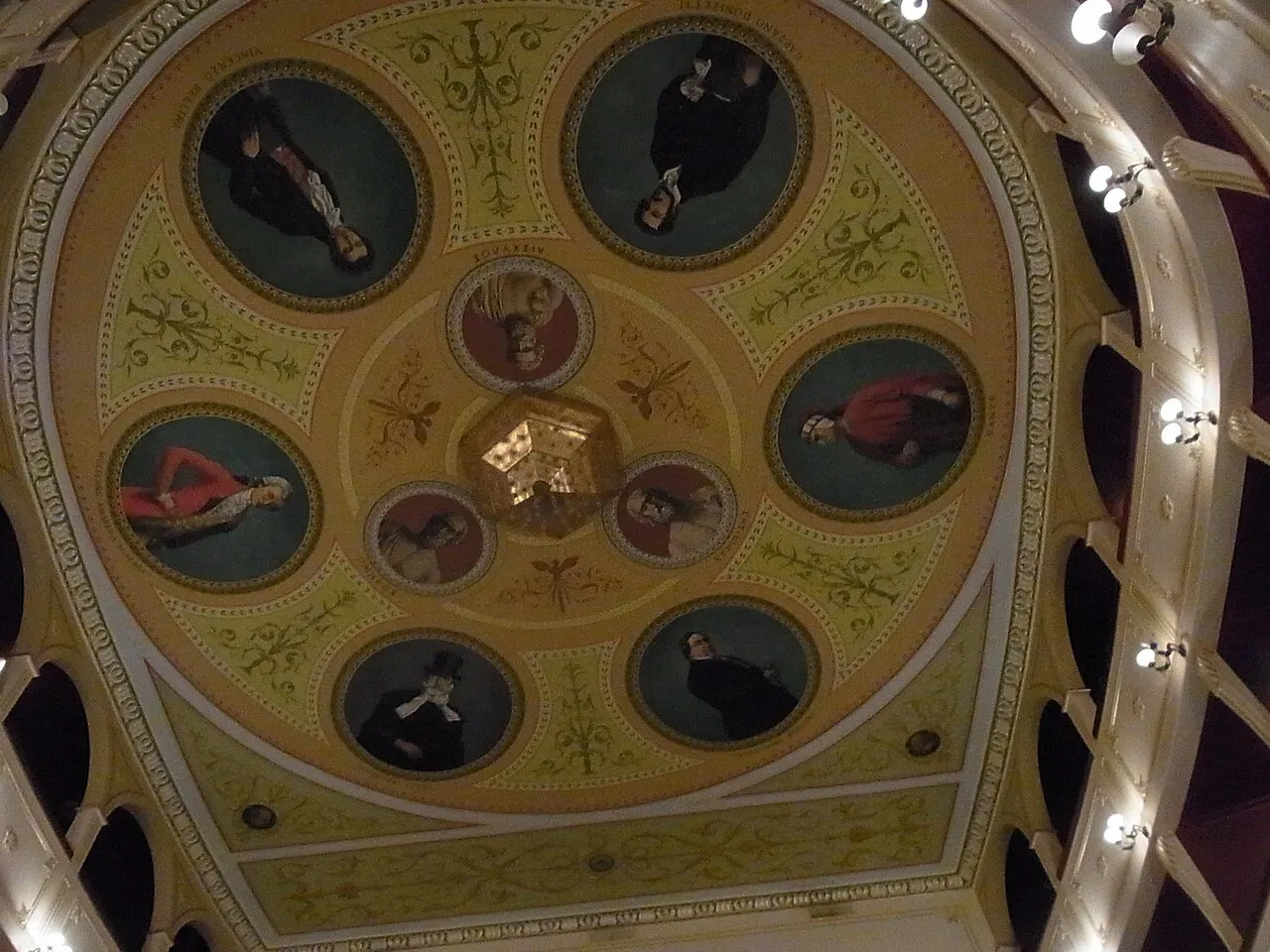
Wander up through the captains' quarter to the blue dome of Agios Nikolaos, then go down to the rocks of Asteria and swim off the ladders in the deep water below the mansions.
A carafe of tsipouro and plate after plate of small fish and seafood near the port, then loukoumi from the market street for later.
Climb the steps to the medieval Catholic town on the hill for the view over Ermoupoli and the harbour as the sun goes down behind you, and an ouzo in the lanes where Markos Vamvakaris was born.
If there is a performance at the Apollo, go. Afterwards, dinner in the lanes behind the square, and a last walk across the marble of Miaoulis Square with the rest of the town.
Where to stay
Ermoupoli
Boutique Hotel Ploes · Boutique hotel in a mansion · €€€€
Ermoupoli
Apollonion Palace · Suites in a listed mansion · €€€€
Ermoupoli
Ermoupoli
Ermoupoli
Where to eat
Ermoupoli
Ermoupoli
Ermoupoli
Ermoupoli
Ermoupoli
Ermoupoli
Ermoupoli
Within an easy drive
The medieval Catholic town on the hill above, a steep climb of steps or a short bus ride, with the cathedral of San Giorgio at the top.
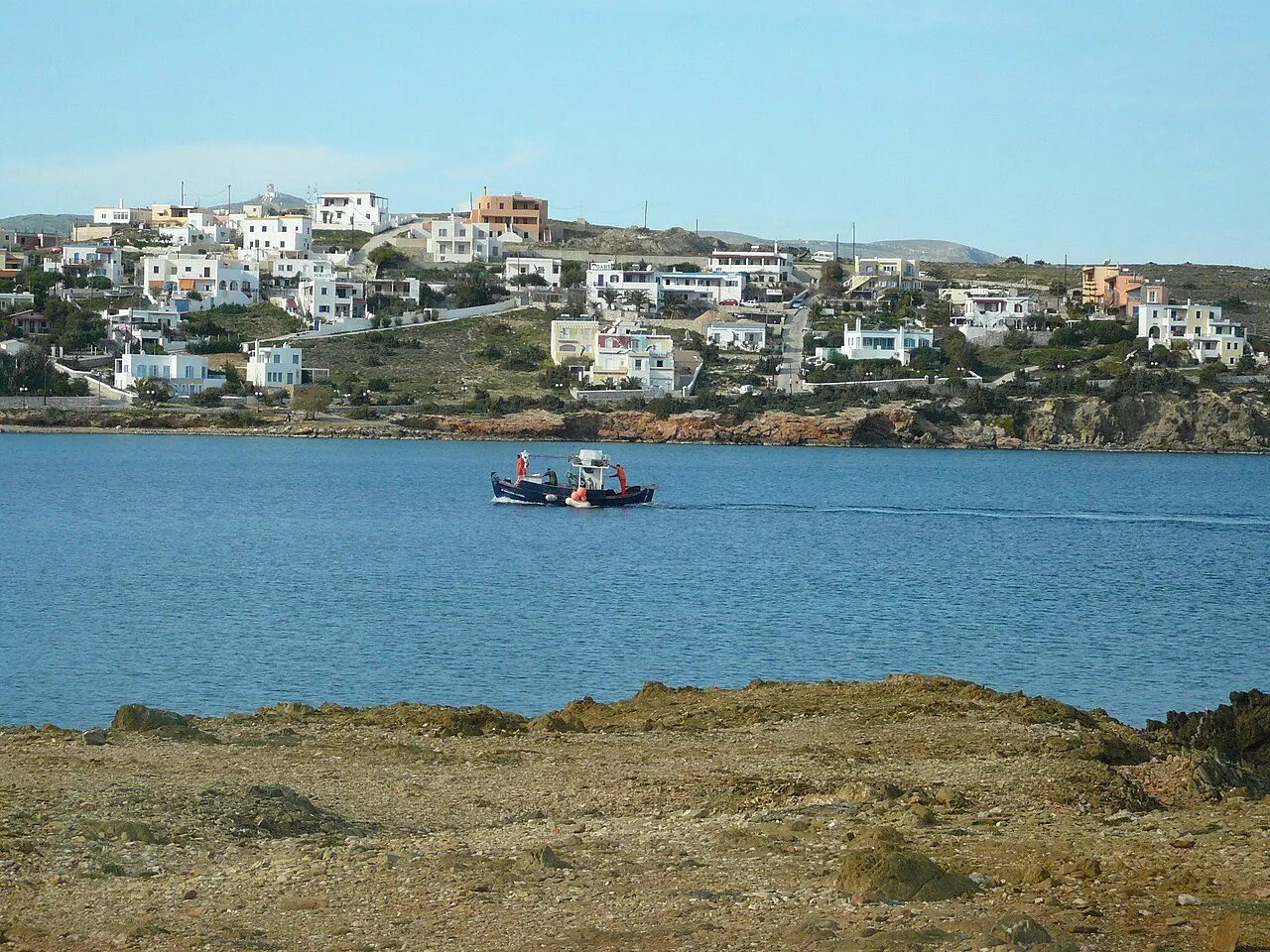
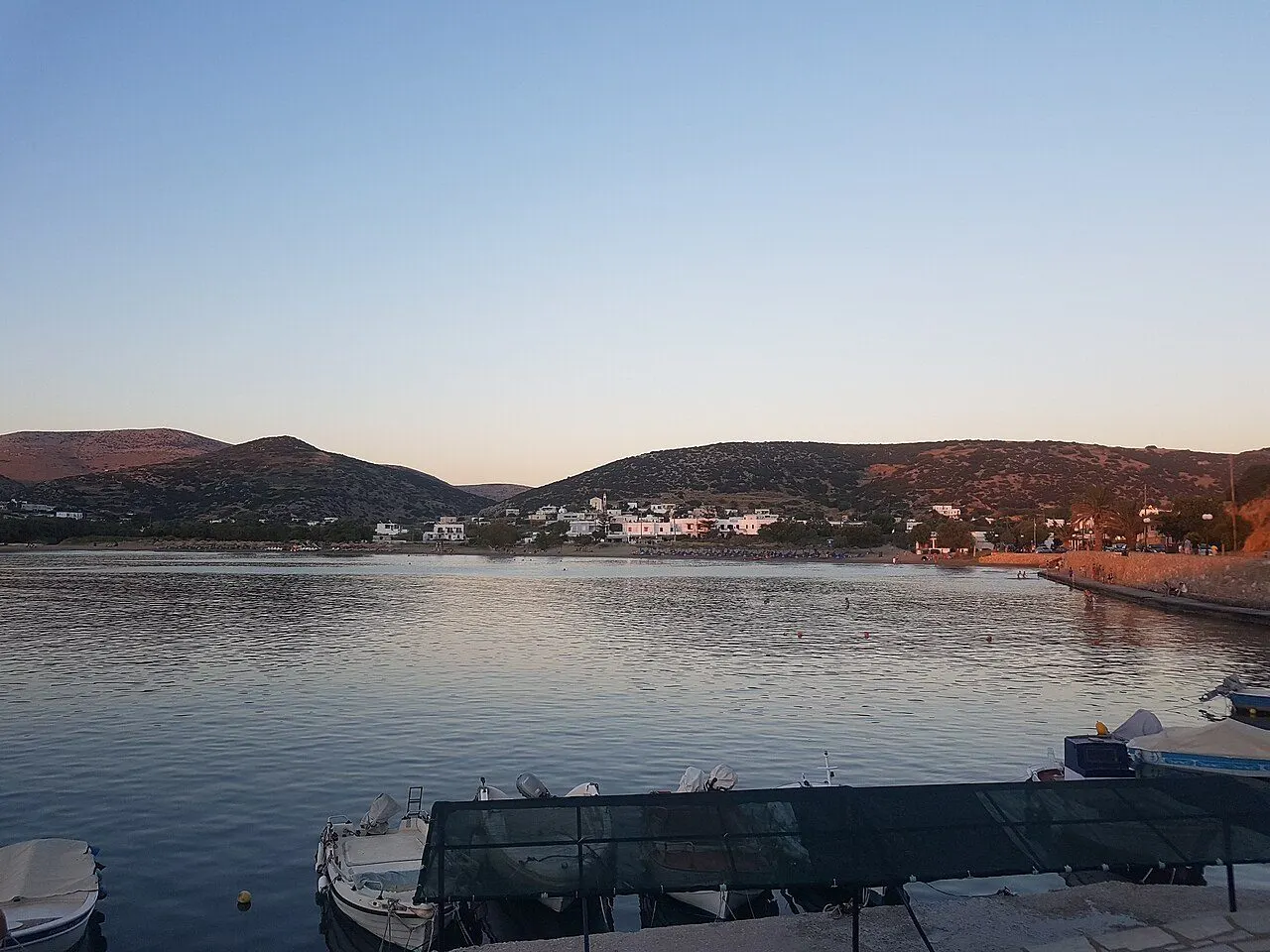
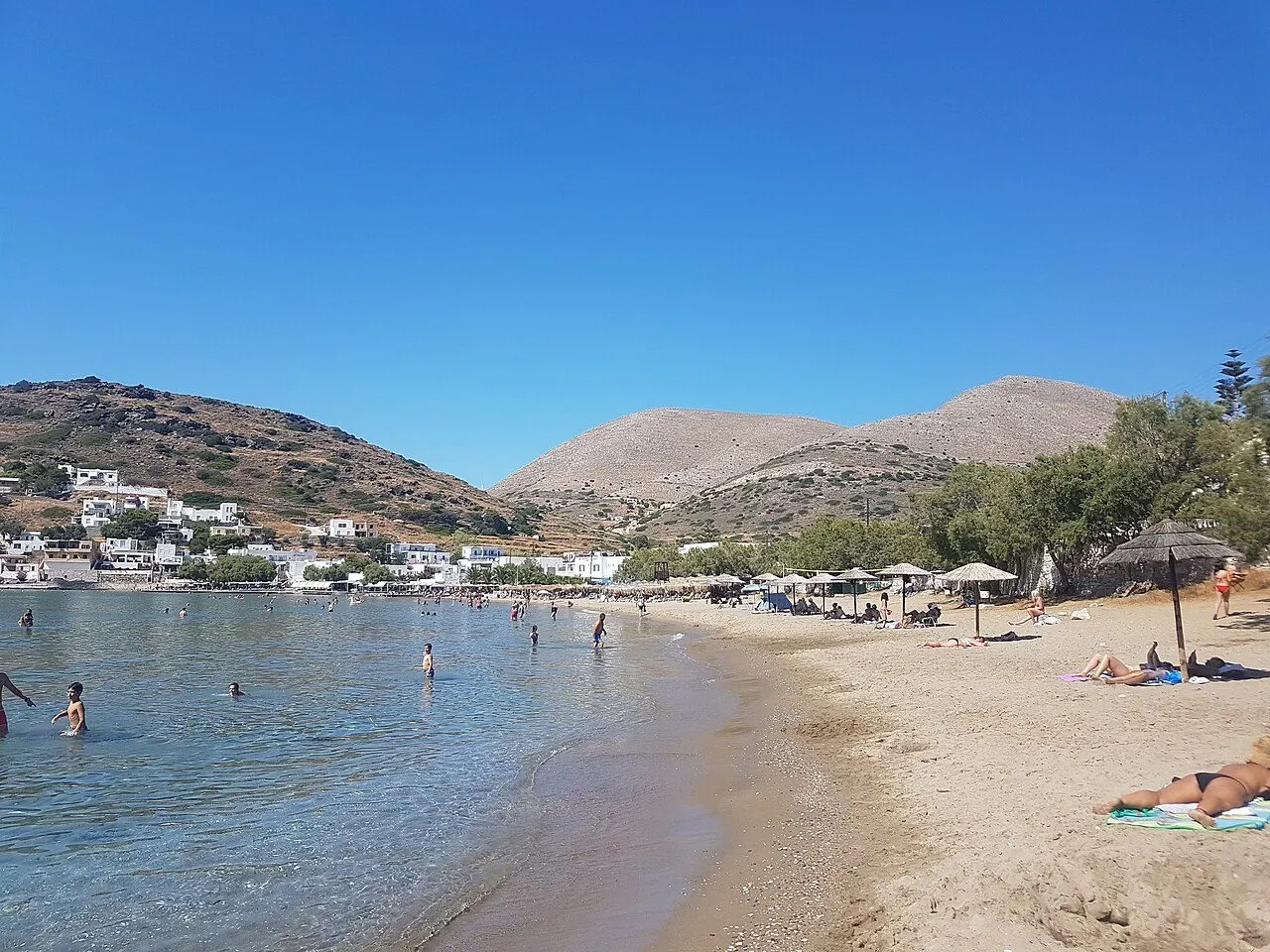
The nearest proper beach, a sandy bay on the east coast about ten minutes south by bus or car.
The fishing village on the west coast for the sunset, about twenty minutes across the island.
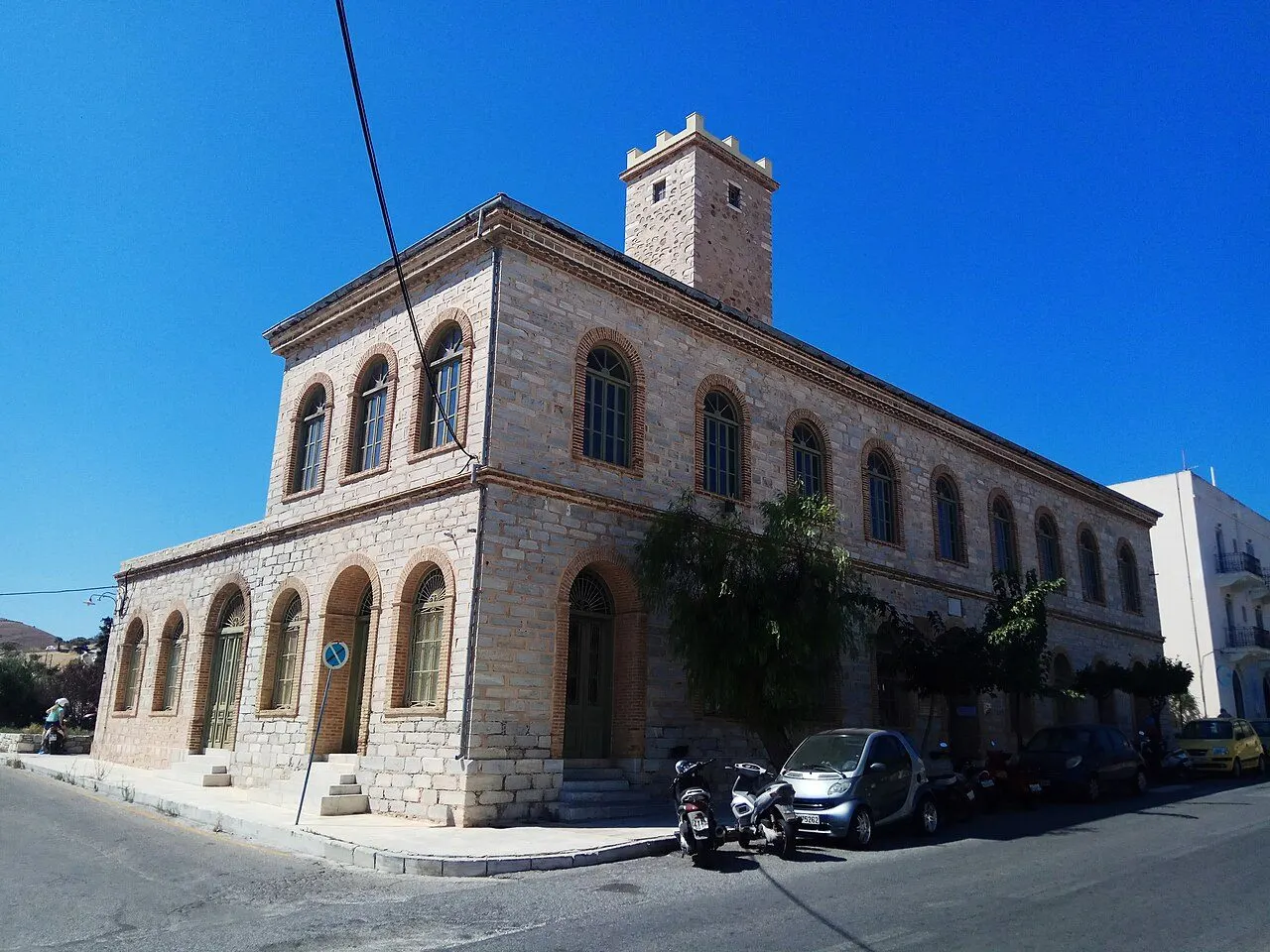
The story of Ermoupoli's shipyards, mills and tanneries, in an old factory at the southern end of town.
Good to know
Every ferry and the buses from the airport arrive in Ermoupoli. The town is best on foot: it is compact, but steep at the top, and the lanes of Vaporia and the upper town are steps. The island buses leave from the bus station on the waterfront.
Ermoupoli is a town for all seasons. July brings the Festival of the Aegean at the Apollo Theatre, and in Holy Week the Catholic and Orthodox churches celebrate Easter together. Spring and autumn are warm enough to swim off Vaporia, and the town keeps its tavernas and cafes open long after the beaches close.
More of Syros
Every stay we recommend across Syros, from village guesthouses to rooms on the sea.
See all staysLast updated