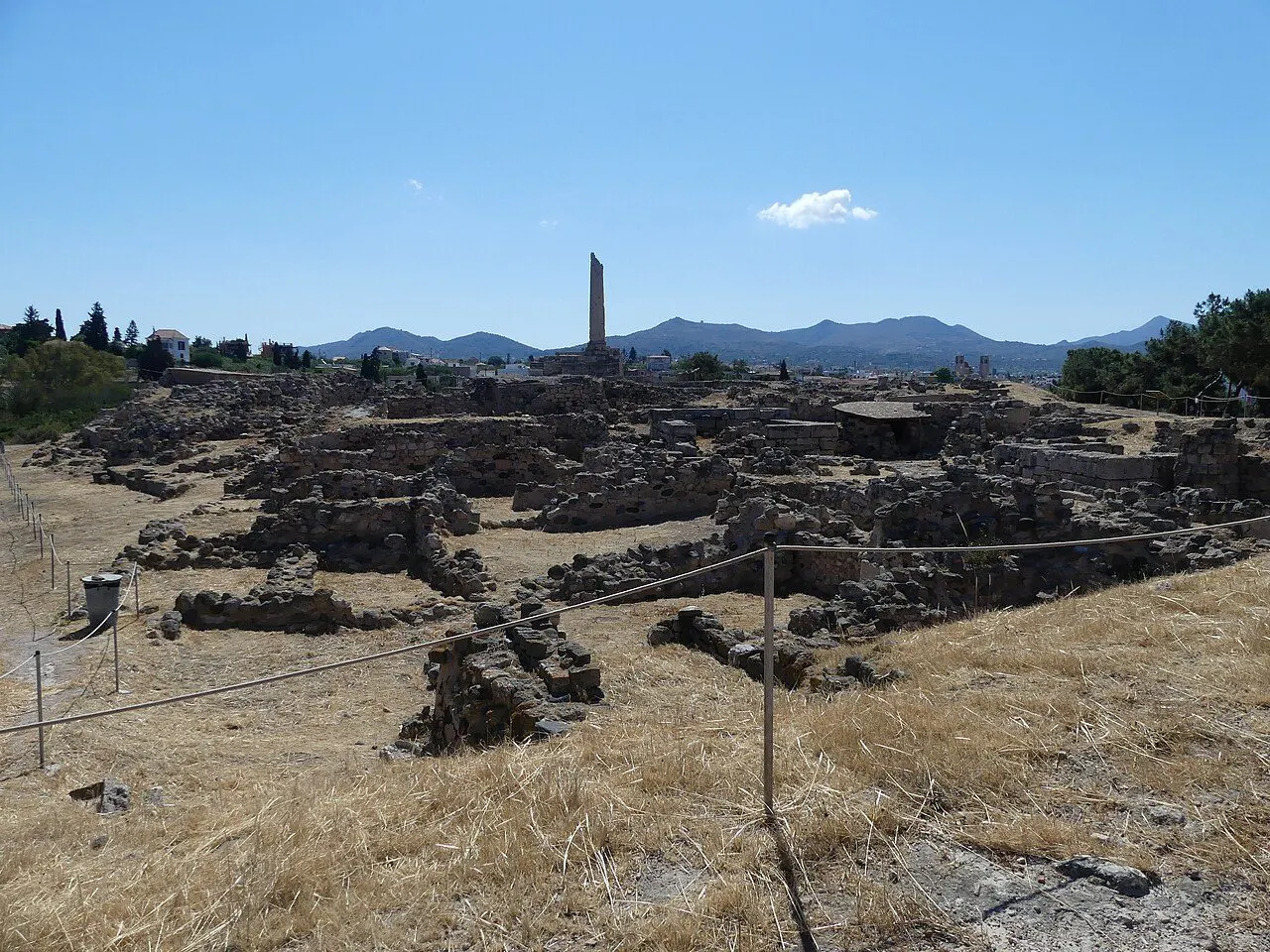
Kolona
The Temple of Apollo and the layers of a Bronze Age town on a low headland at the north end of the waterfront, with the archaeological museum on site.
Aegina · Aegina Town & Kolona · Αίγινα
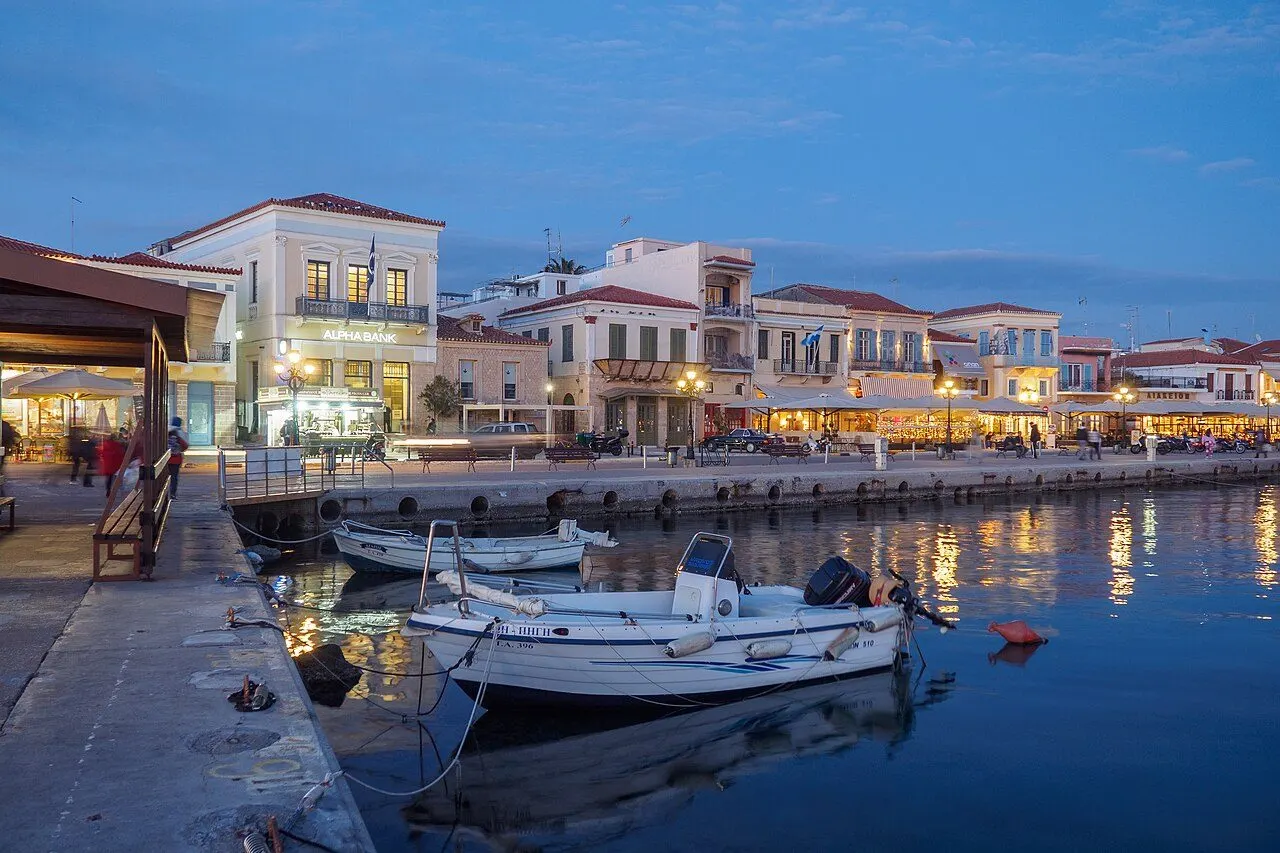
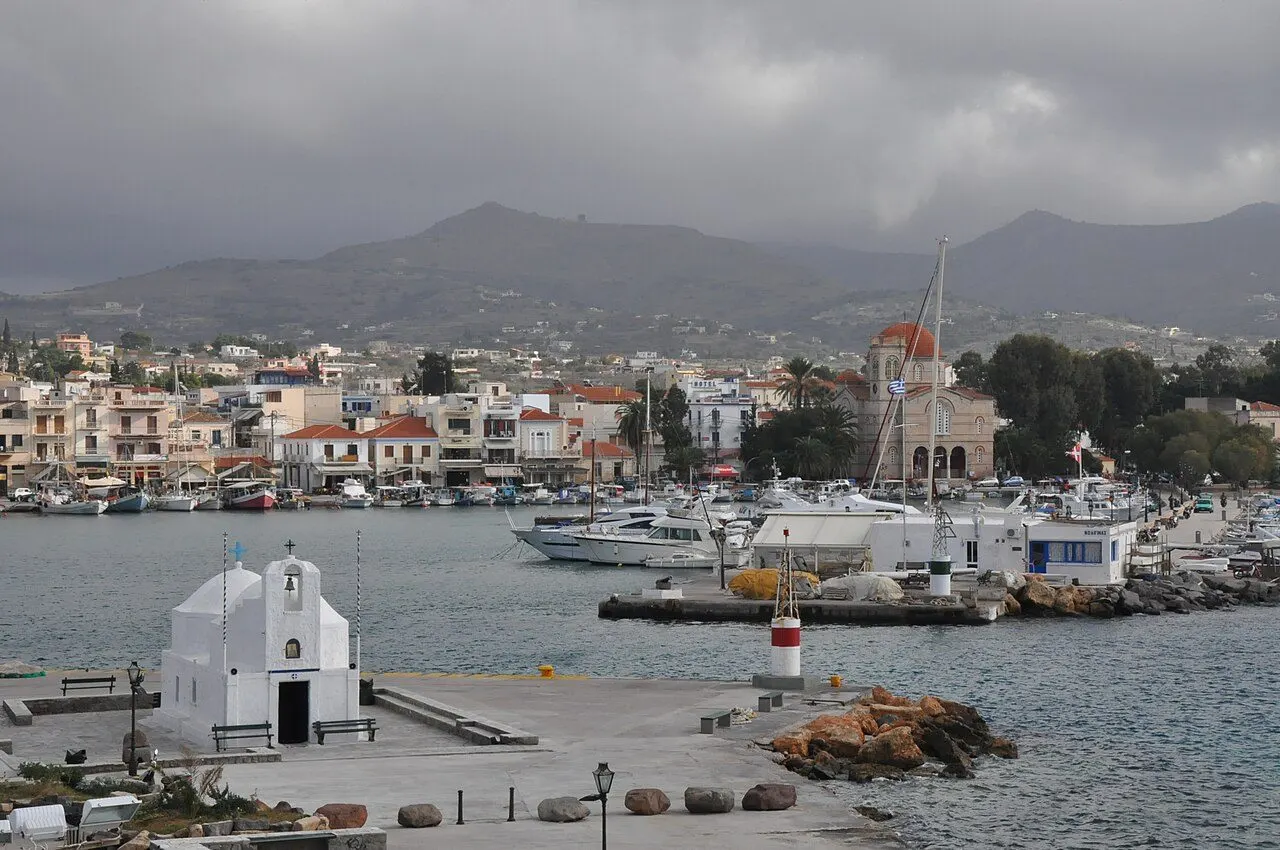
Aegina Town spreads along the west coast of the island, facing the Peloponnese. Its waterfront is a long curve of pastel neoclassical houses, cafés and moored caiques, with the tiny white chapel of Agios Nikolaos standing on the harbour mole. Behind the front, a grid of quiet lanes hides the buildings of 1828–1829, when the town was the first seat of government of the new Greek state. At its northern end, on a low headland by the sea, a single column marks the Temple of Apollo at Kolona, the oldest inhabited spot on the island.
Greetings from Aegina Town
Aegina Town
Forty minutes from Piraeus and the boat slides in past a tiny white chapel on the harbour wall. Drop the bags and walk straight to the end of the quay, where one grey column stands on its own above the sea, all that is left of a temple to Apollo. Lunch is sardines and an ouzo in a lane behind the fish market, with the fishmonger shouting prices next door. Tonight the whole town is out on the waterfront, and you eat pistachios from a paper bag while the sun drops behind the Peloponnese.
A harbour of neoclassical houses that was briefly the capital of Greece, with a lone Archaic column at the end of the quay
Arriving by boat, the first thing you see is the chapel of Agios Nikolaos, a white cube with a little dome perched at the tip of the harbour wall, and behind it a row of ochre, cream and pink facades with wrought-iron balconies. Most of them date from the decades after independence, when the town filled with officials, refugees and merchants, and the waterfront still has the air of a small nineteenth-century port rather than a resort.
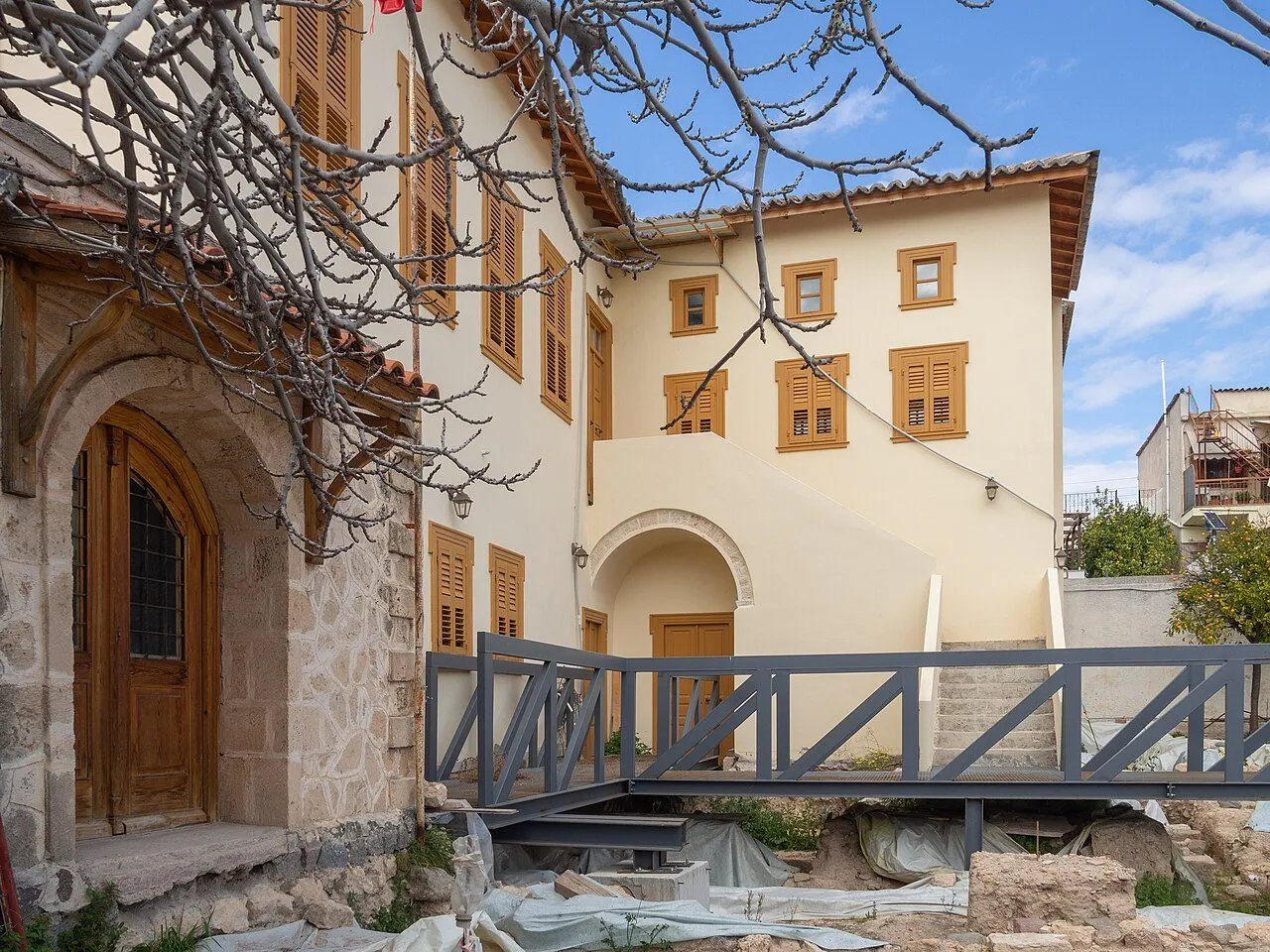
In January 1828 Ioannis Kapodistrias landed here to take charge of a country that had only just won its war against the Ottomans. For about a year and a half Aegina was where Greece was governed from. Kapodistrias worked in the Kyverneio, the Governor's House, a plain two-storey building a few streets back from the harbour. He built an orphanage for children left alone by the war, set up a national museum to gather the antiquities that were being dug up and carried off, and in 1829 had the new state's first coins, the phoenix, struck in a mint on the island. In 1829 the government moved on to Nafplio, but the buildings remain, scattered through the lanes.
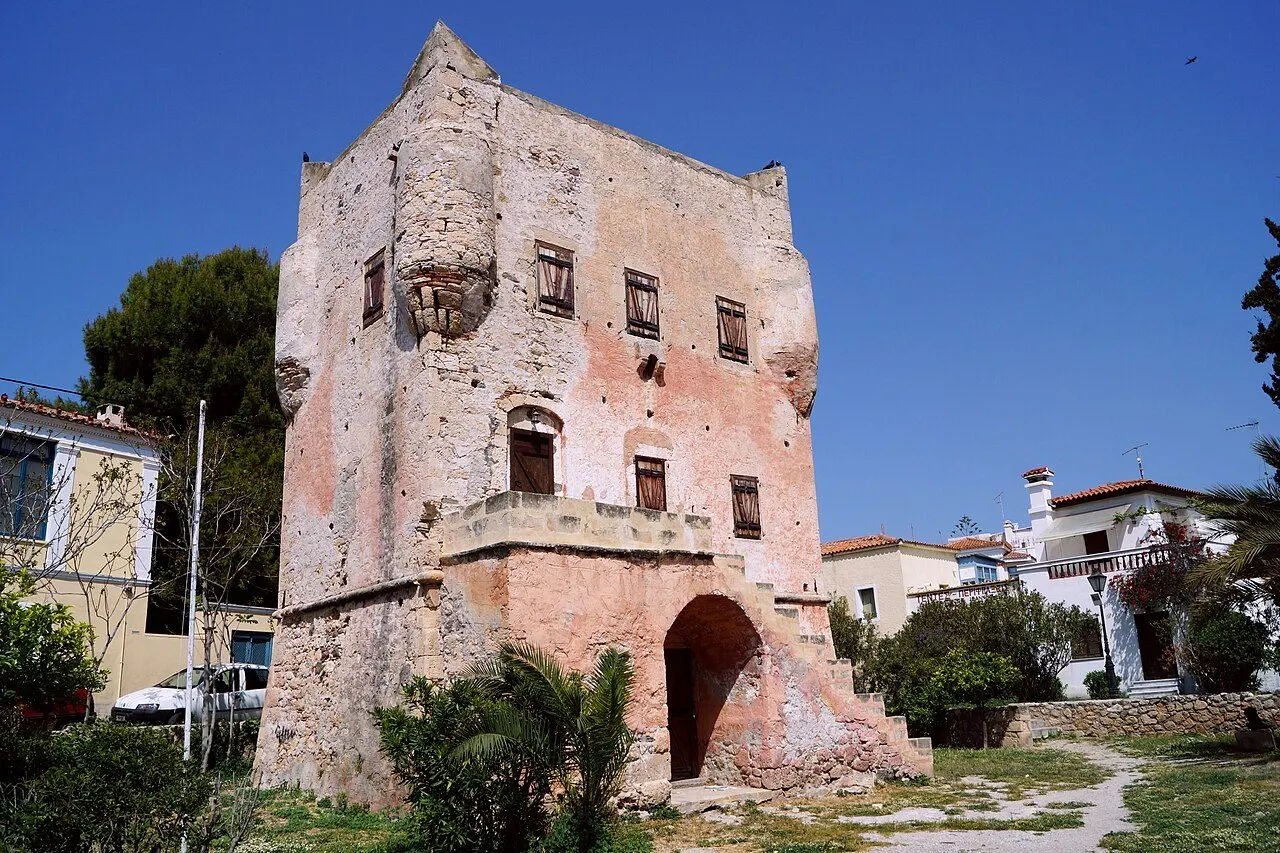
Older still is the Markellos Tower, a stone tower house from the Venetian period standing in a small garden in the centre, where the revolutionary governments of the 1820s held some of their meetings. Walk a few minutes north along the shore and you reach Kolona, a low hill by the sea where people have lived for more than five thousand years. Its name simply means 'column': of the Temple of Apollo that stood on top, one column of grey limestone is still upright, and it has been the landmark of every boat sailing into the harbour for centuries.
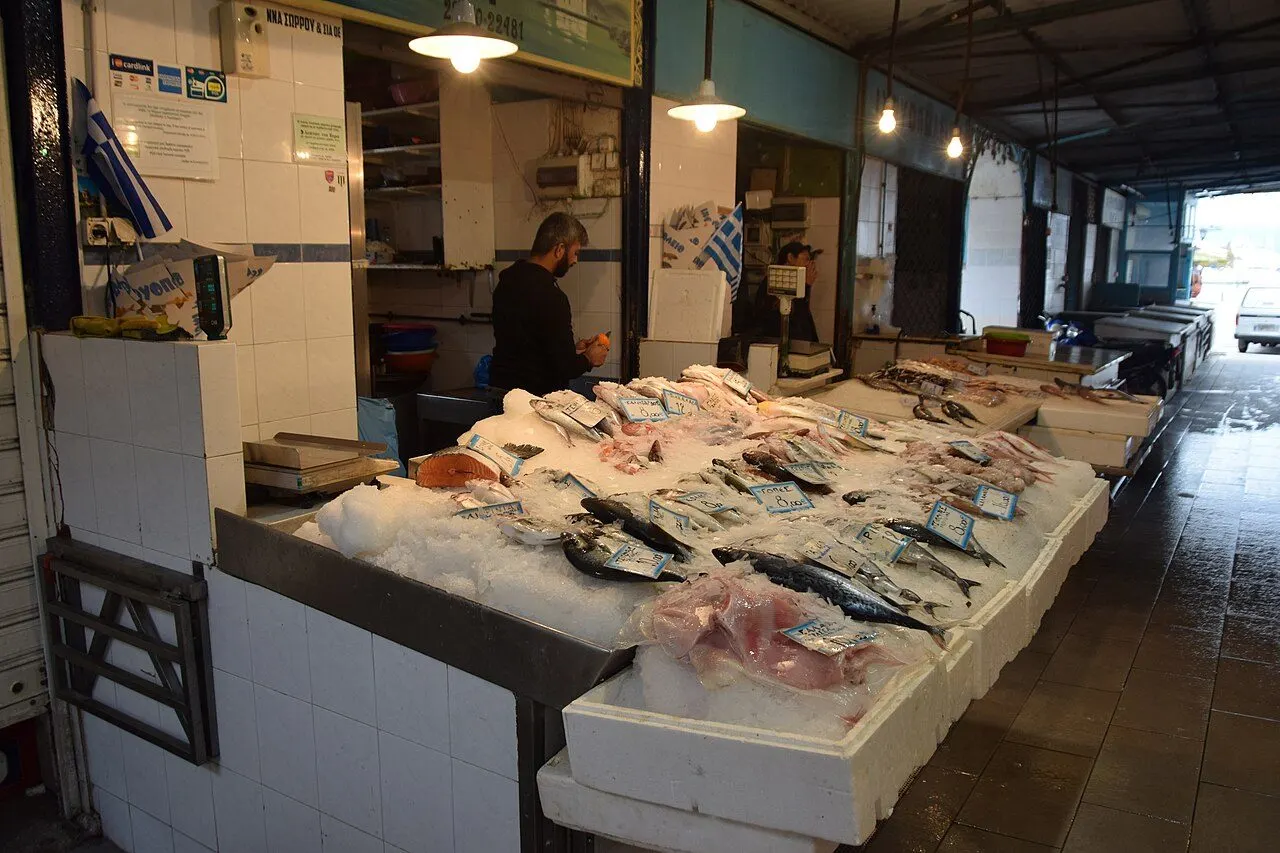
The busiest part of town is the market quarter behind the fish market, a covered hall on the waterfront where the morning's catch is laid out on ice. In the narrow streets around it, small ouzeris set out tables on the pavement and grill whatever the fishermen brought in: sardines, octopus, red mullet. Out on the quay, carts sell bags of the island's pistachios, still in their pale shells, and pastry shops turn them into sweets, spreads and ice cream.
Hour by hour
A temple column at breakfast time, the museum of the first capital, lunch by the fish market and a sunset over the gulf.
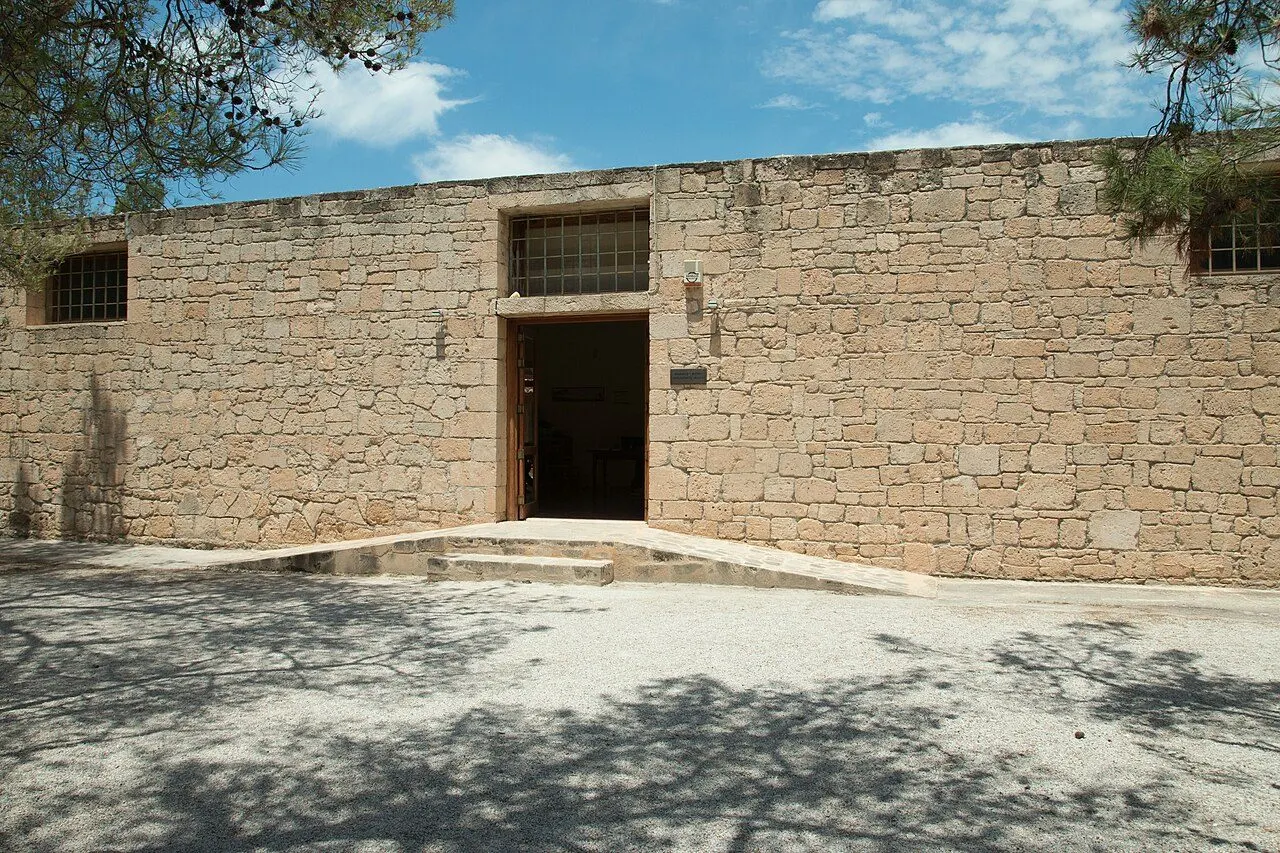
Walk north along the shore while it is still cool and climb the low hill of Kolona, where the single column of Apollo's temple stands above the excavated walls of a Bronze Age town.
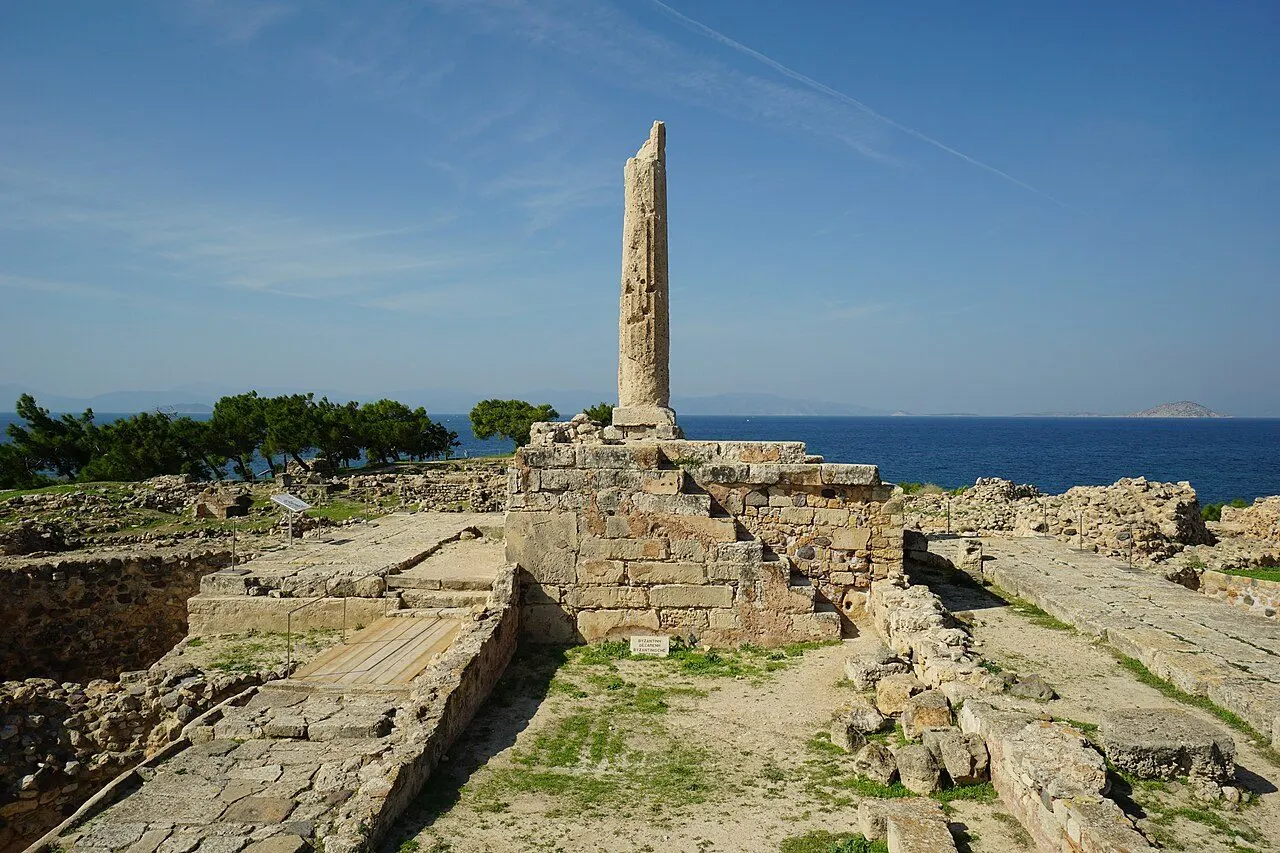
The archaeological museum is on the same site: an hour among painted pottery, a marble sphinx from the temple and the pieces that tell how old this harbour really is.
Wander back through the centre past the Markellos Tower and the Governor's House, where Kapodistrias ran the new Greek state in 1828.
Sit down at a pavement table in the lanes behind the fish hall and order whatever was landed this morning, grilled, with a carafe of house white.
After a siesta and a swim, try the island's pistachios as ice cream or a sweet from a pastry shop on the waterfront.
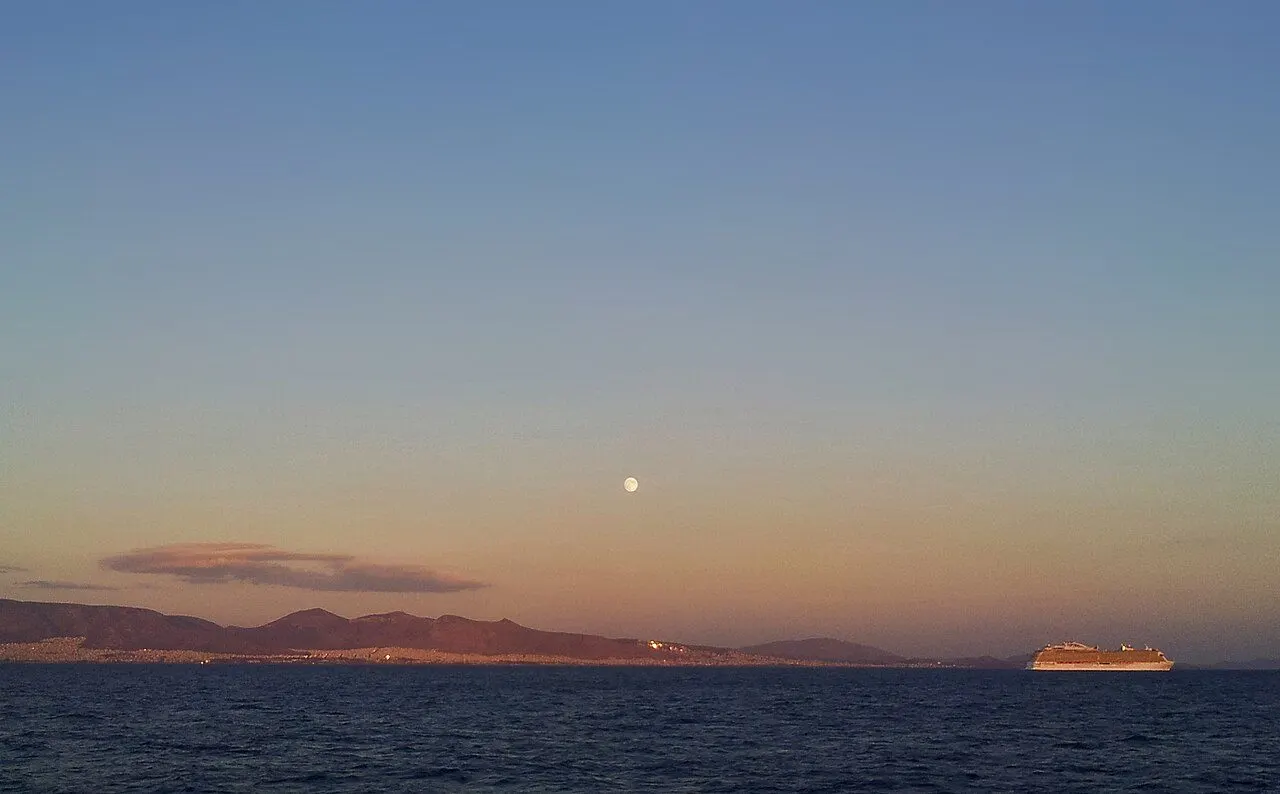
Walk out along the northern shore road towards Kolona for dinner facing west, as the sky turns orange over the mountains of the Peloponnese.
Where to stay
Aegina Town
Rastoni Hotel · Garden hotel · €€
Aegina Town
Rastoni 1928 Heritage Residence · Heritage apartments · €€€
Aegina Town · Aegina Town & Kolona
Where to eat
Aegina Town · Aegina Town & Kolona
Aegina Town · Aegina Town & Kolona
Aegina Town · Aegina Town & Kolona
Aegina Town · Aegina Town & Kolona
Aegina Town · Aegina Town & Kolona
Aegina Town · Aegina Town & Kolona
Aegina Town · Aegina Town & Kolona
Perivola · Aegina Town & Kolona
Within an easy drive
The Temple of Apollo and the layers of a Bronze Age town on a low headland at the north end of the waterfront, with the archaeological museum on site.
A Venetian-era stone tower house in a garden in the centre, used by the revolutionary governments of the 1820s.
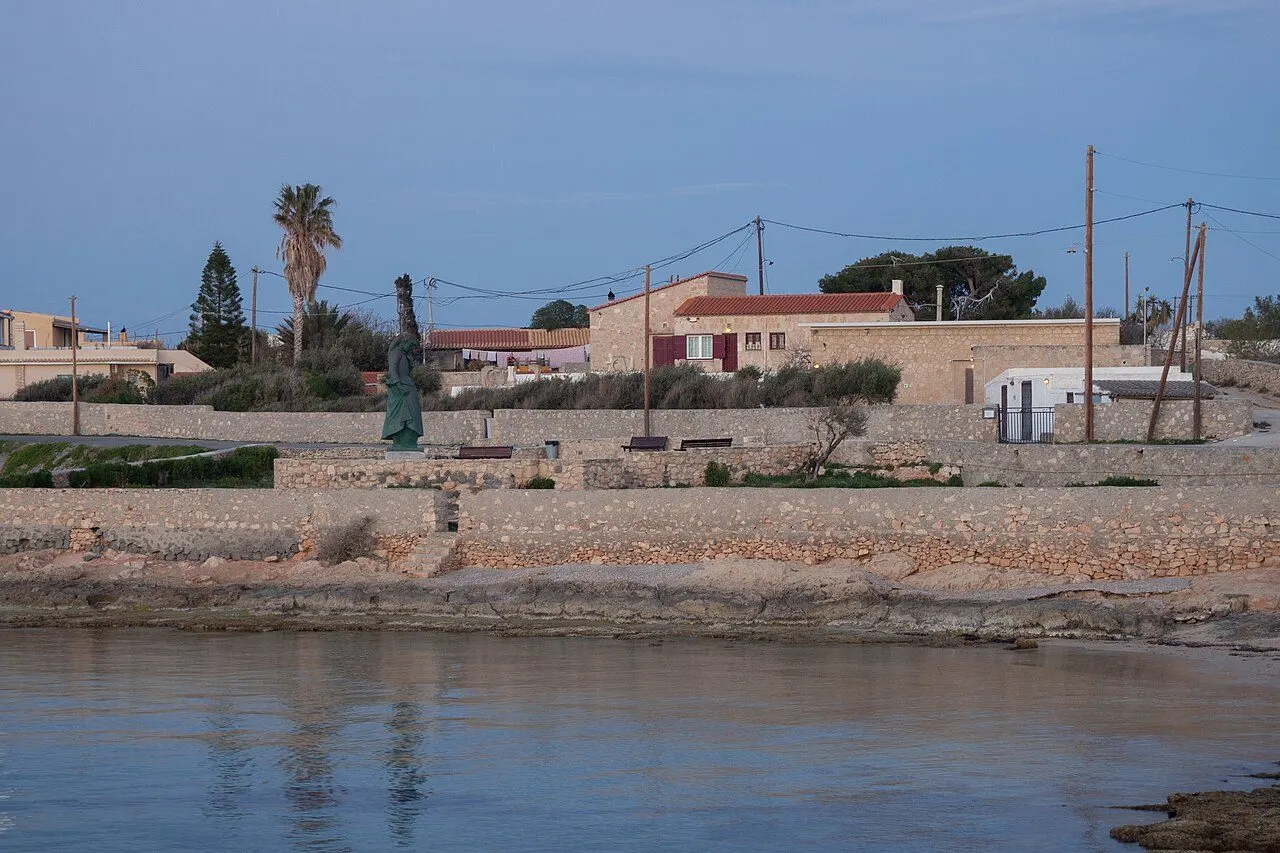
The summer studio of the sculptor Christos Kapralos on the coast north of town, now a museum of his work.
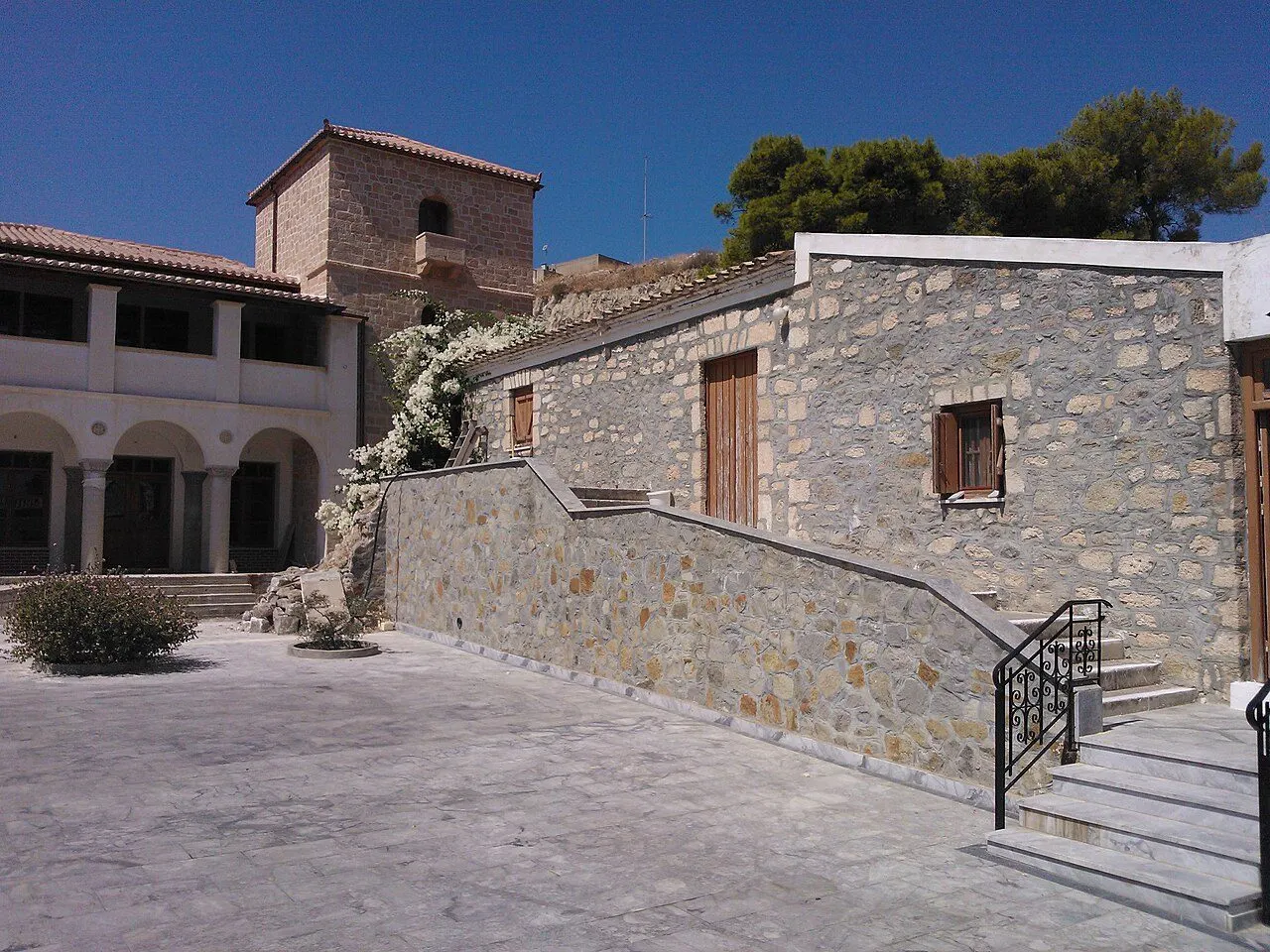
The island's great monastery and the hill of abandoned churches above it, about 7 km inland on the road to Agia Marina.
Good to know
Ferries and fast boats from Piraeus dock right on the waterfront, a few steps from the cafés, taxis, scooter rentals and the bus station for the rest of the island. The centre and Kolona are easy walking distance.
April to June and September to October, when the waterfront is lively but not packed. Aegina Town is a real town of year-round residents, so it stays open in winter, and weekends bring crowds of Athenians in every season.
More of Aegina
Agia Marina & Aphaia
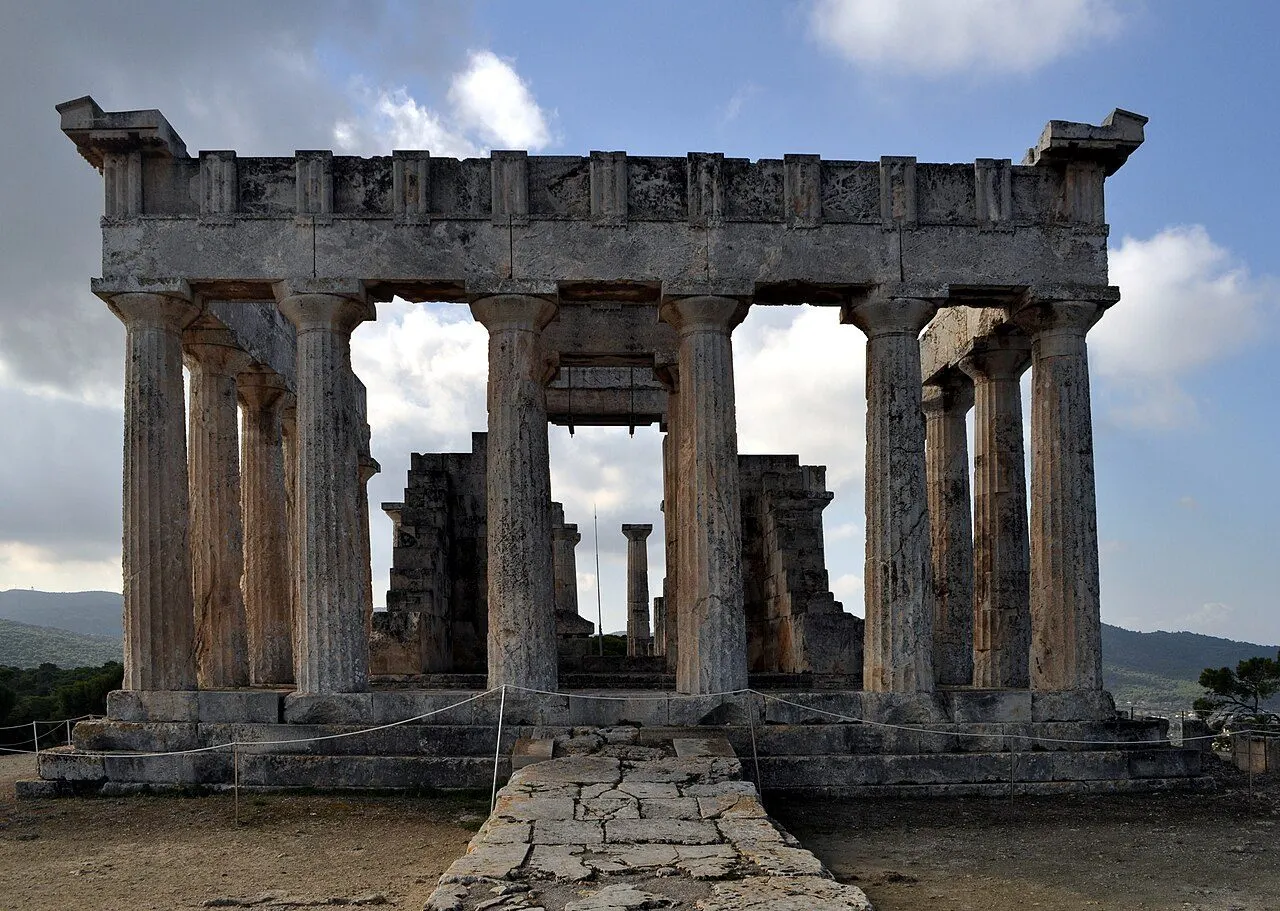
A limestone temple of about 500 BC on a pine-clad summit, with Athens on the far side of the water
Agia Marina & Aphaia
The island's beach resort, in a sandy bay at the foot of the temple hill
Paleochora & the interior
The convent of a saint of the twentieth century, one of the most visited places of pilgrimage in Greece
Every stay we recommend across Aegina, from village guesthouses to rooms on the sea.
See all staysLast updated