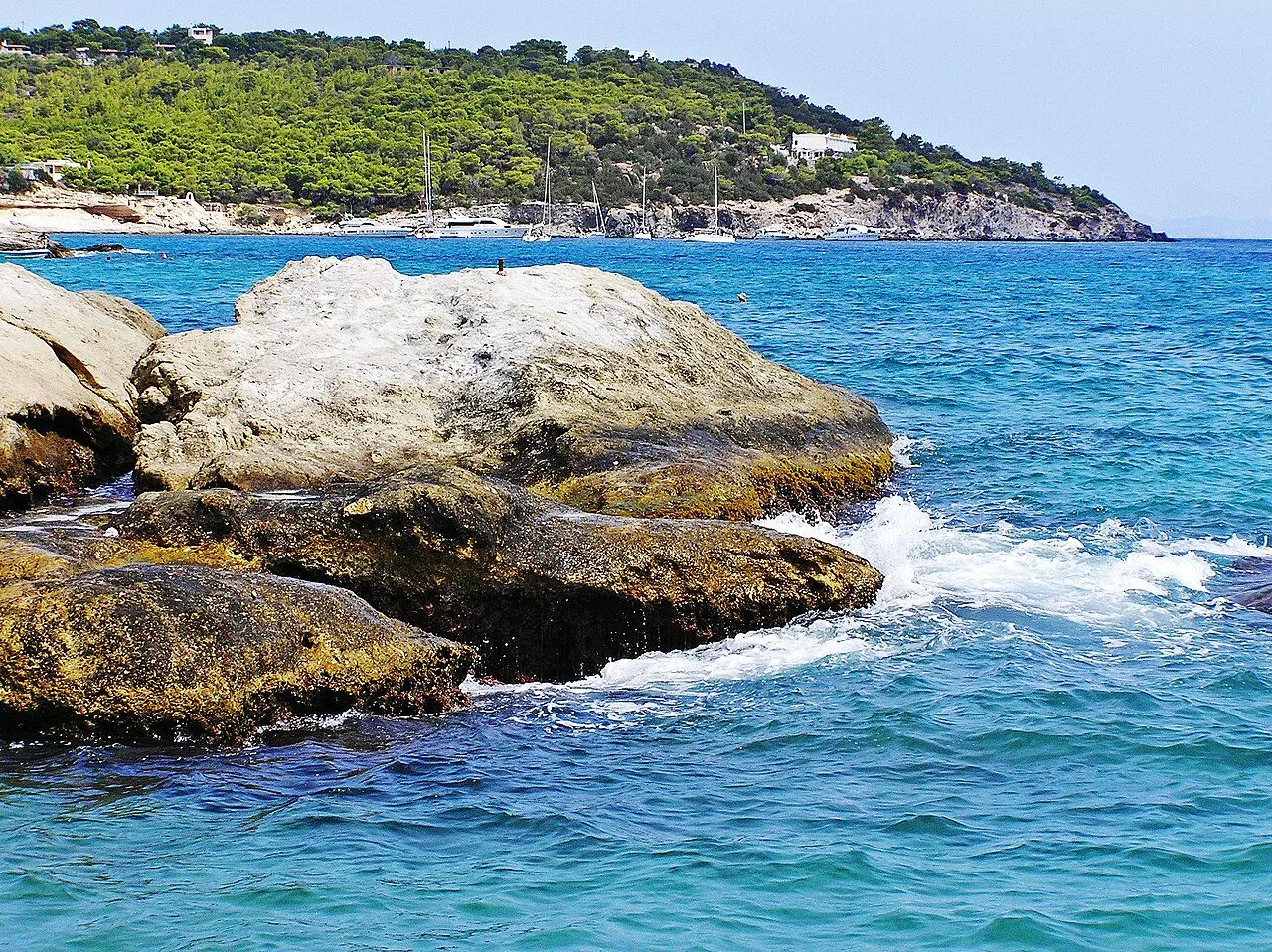
Agia Marina
The resort and sandy bay below the temple, about 3 km by road, or a walk of half an hour or so downhill through the pines.
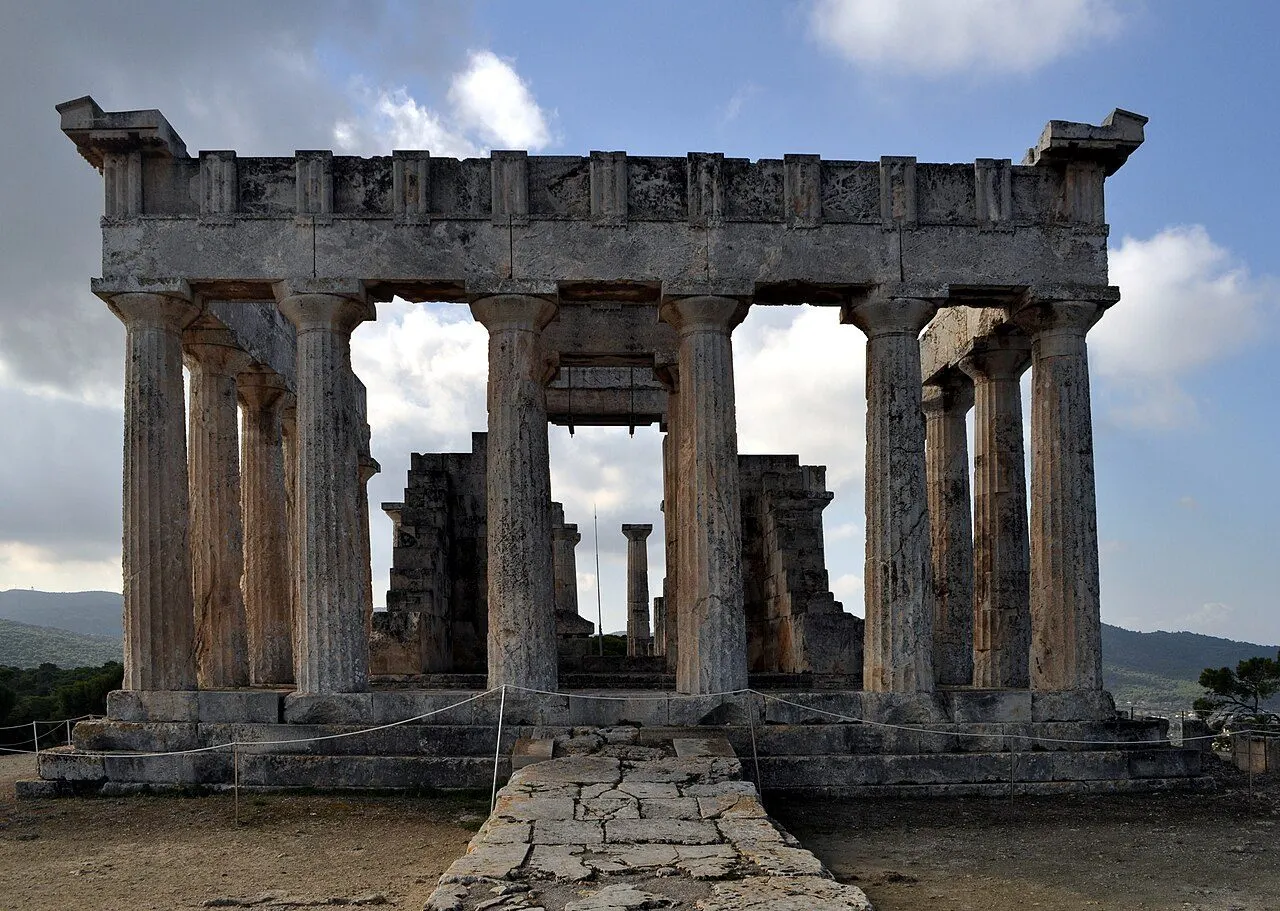
Aegina · Agia Marina & Aphaia · Ναός της Αφαίας
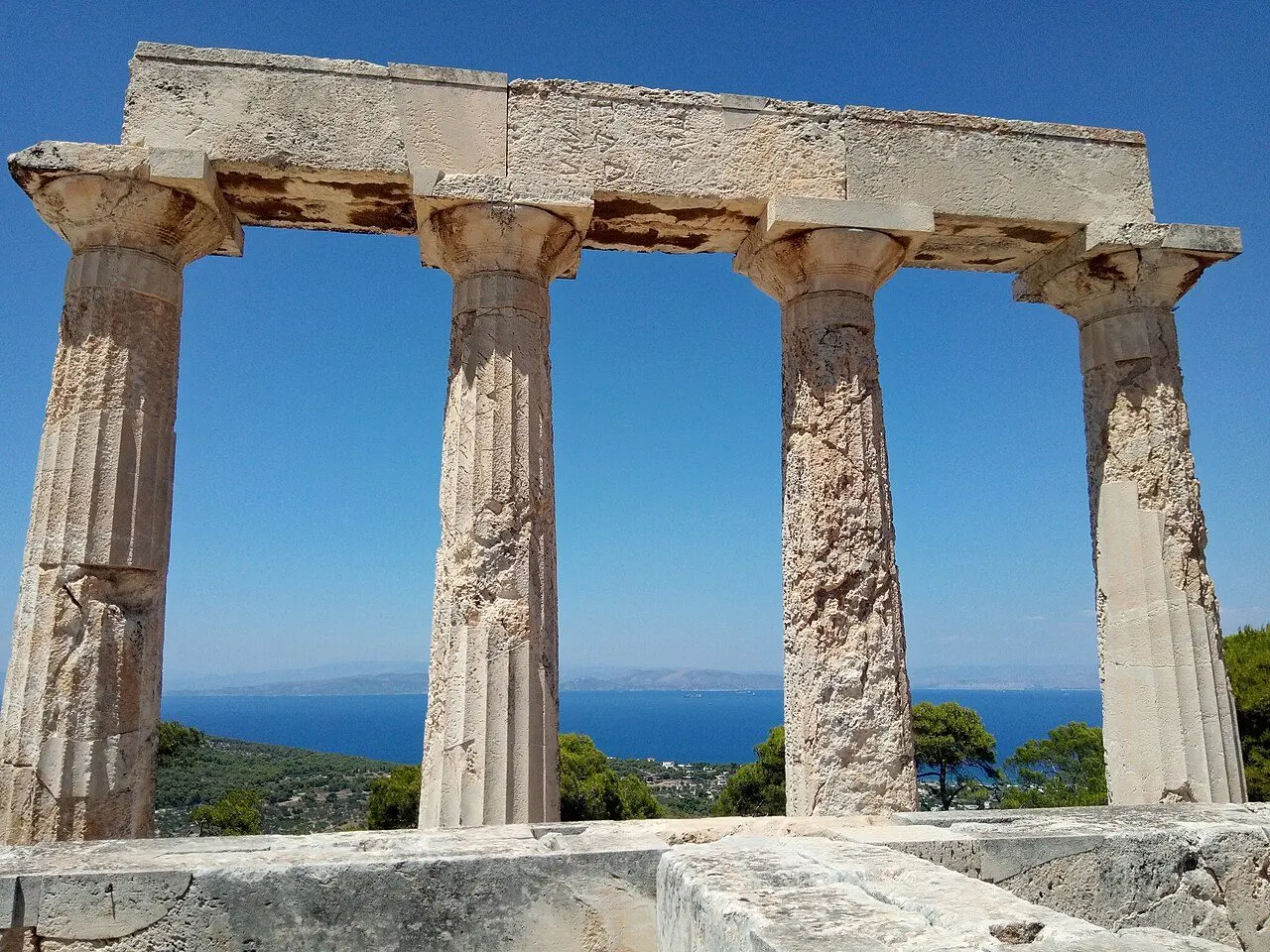
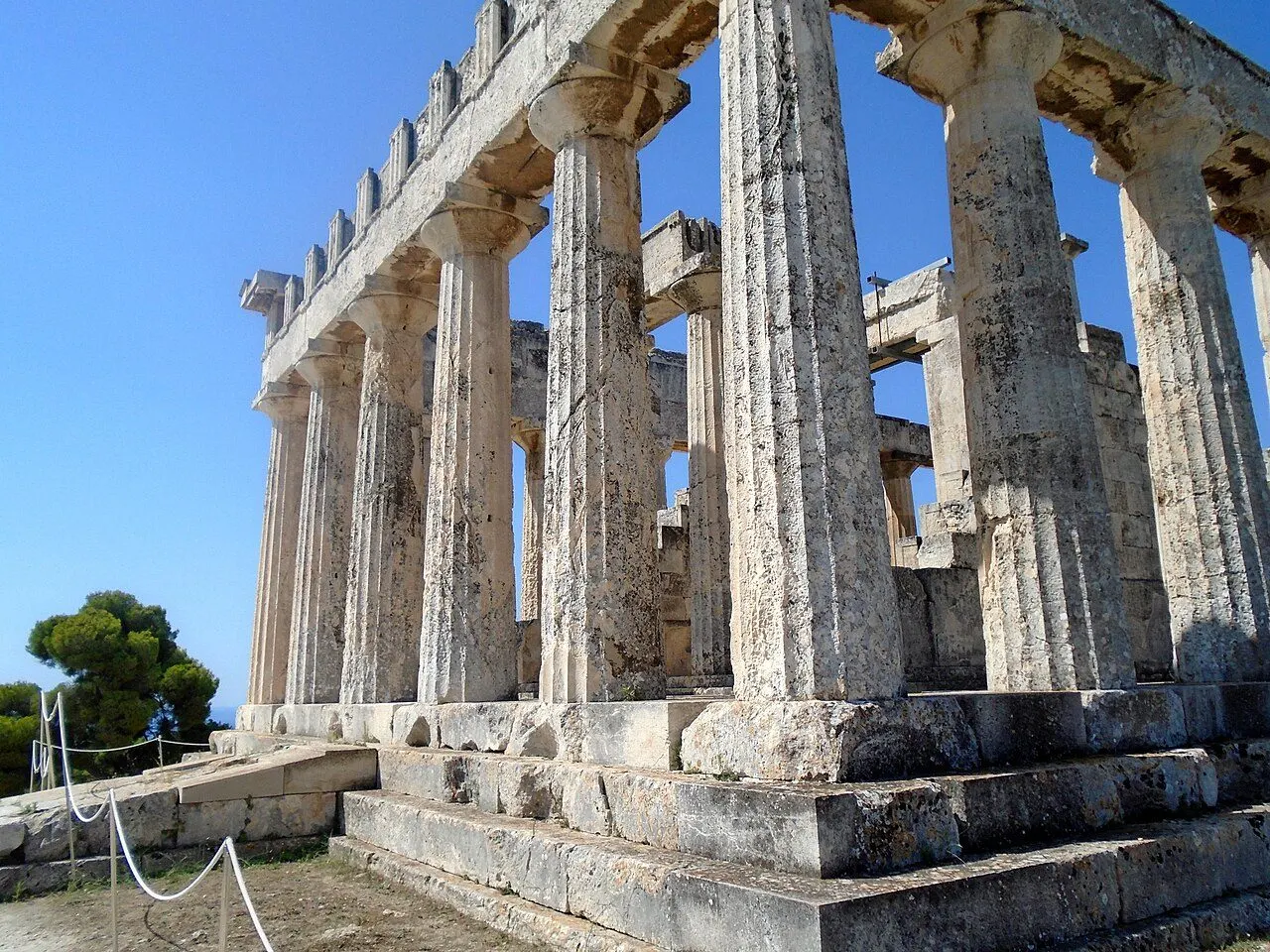
The Temple of Aphaia crowns a hilltop of roughly 160 metres in the north-east of the island, surrounded by Aleppo pines and looking out in almost every direction over the Saronic Gulf. Built around 500 BC in the Doric order, with six columns across its fronts and twelve down each side, it is one of the most complete temples of the late Archaic period anywhere in Greece: most of its outer colonnade still stands, and on the inner row a second storey of slender columns survives. On a clear day the Acropolis of Athens, about 30 km away, is visible from the terrace.
Greetings from Temple of Aphaia
The Temple of Aphaia
Drive up through the pines just as the gates open and you have the temple almost to yourself. Up close the columns are a warm, honey-coloured stone, pitted like sponge, and inside you can still see a second little row of columns stacked on top of the first, the way the roof was held up two and a half thousand years ago. From the edge of the terrace the whole gulf is laid out in blue, and far across it, faint but certain, the rock of the Acropolis. Walk down to Agia Marina for a swim afterwards, and you smell resin the whole way.
A limestone temple of about 500 BC on a pine-clad summit, with Athens on the far side of the water
Aphaia was a goddess known almost nowhere but here. Pausanias, writing in the second century AD, tells the Cretan version of her story: a young huntress called Britomartis fled from King Minos, threw herself into the sea, was caught in fishermen's nets and was made a goddess by Artemis, worshipped on Crete as Diktynna and on Aegina as Aphaia, a name often read as 'the one who vanished'. The finds from the hill suggest that some female deity was honoured here long before the temple, in the Bronze Age.
The temple you see is the second on the spot. An earlier one, from about 570 BC, burned around 510 BC, and its painted pieces were buried in the terrace of the new building, which is why they came out of the ground in 1969 with their colours still bright. The new temple was built of local limestone, once covered in fine stucco, with a marble roof and two pediments full of marble warriors: the Trojan War on the west front, an earlier war against Troy, led by Heracles, on the east, with Athena standing in the middle of each.
Those warriors are not here. In 1811 a group of young European travellers, among them the English architect Charles Robert Cockerell, dug out the fallen sculptures and shipped them off the island. They were sold to Crown Prince Ludwig of Bavaria, restored in Rome by the Danish sculptor Bertel Thorvaldsen, and have stood in the Glyptothek in Munich ever since. Copies, and some original fragments, are on the island.
People like to say that Aphaia, the Parthenon in Athens and the Temple of Poseidon at Sounion form a perfect 'sacred triangle' across the water. It is a lovely legend, but the three were built at different times for different gods, and the geometry is approximate at best. What is true is the view: stand on the east side of the terrace on a clear morning and the hill of the Acropolis appears across the gulf.
Where to stay
Vagia
Vagia Traditional Hotel · Small hotel · €€
Where to eat
Vagia · Souvala & the north coast
Within an easy drive
The resort and sandy bay below the temple, about 3 km by road, or a walk of half an hour or so downhill through the pines.
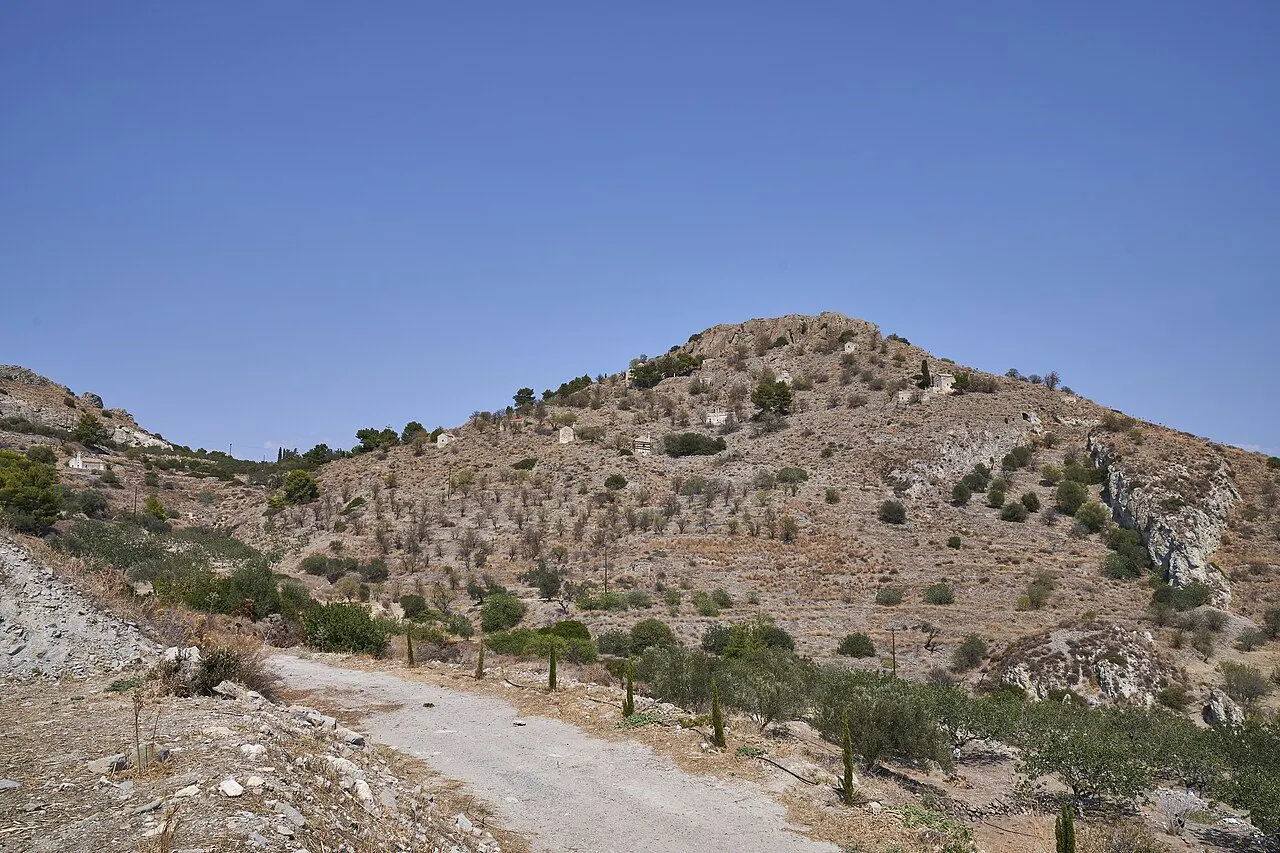
The abandoned medieval capital and the monastery of the island's saint, on the road back towards town.
Good to know
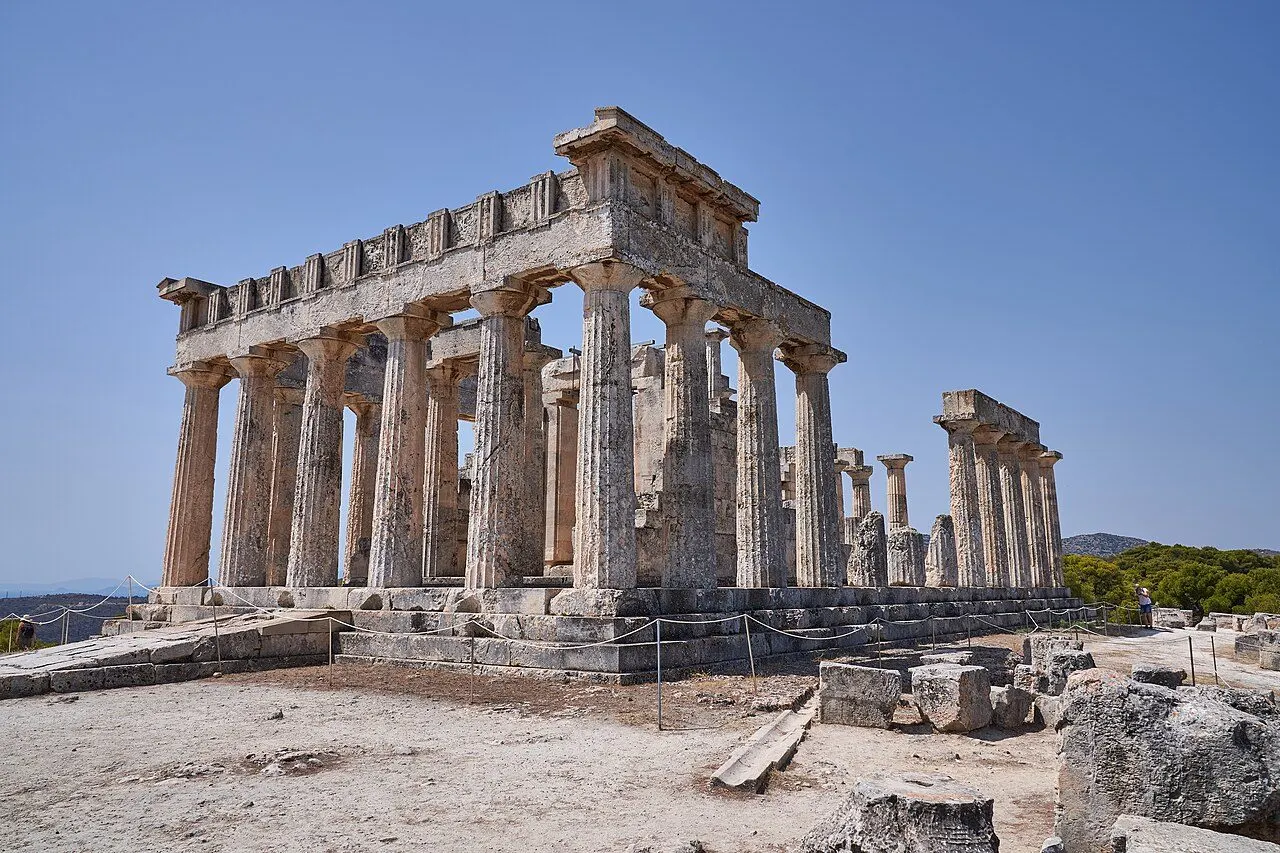
About 13 km from Aegina Town by car, scooter or the island bus to Agia Marina, which stops at the temple. Taxis wait at the harbour. From Agia Marina you can also walk up on a marked path through the pines.
First thing in the morning or the last hour before closing, when the stone turns golden and the tour groups have gone. Spring is best of all, with wild flowers among the pines. Check the opening hours, which change between summer and winter.
More of Aegina
Aegina Town & Kolona
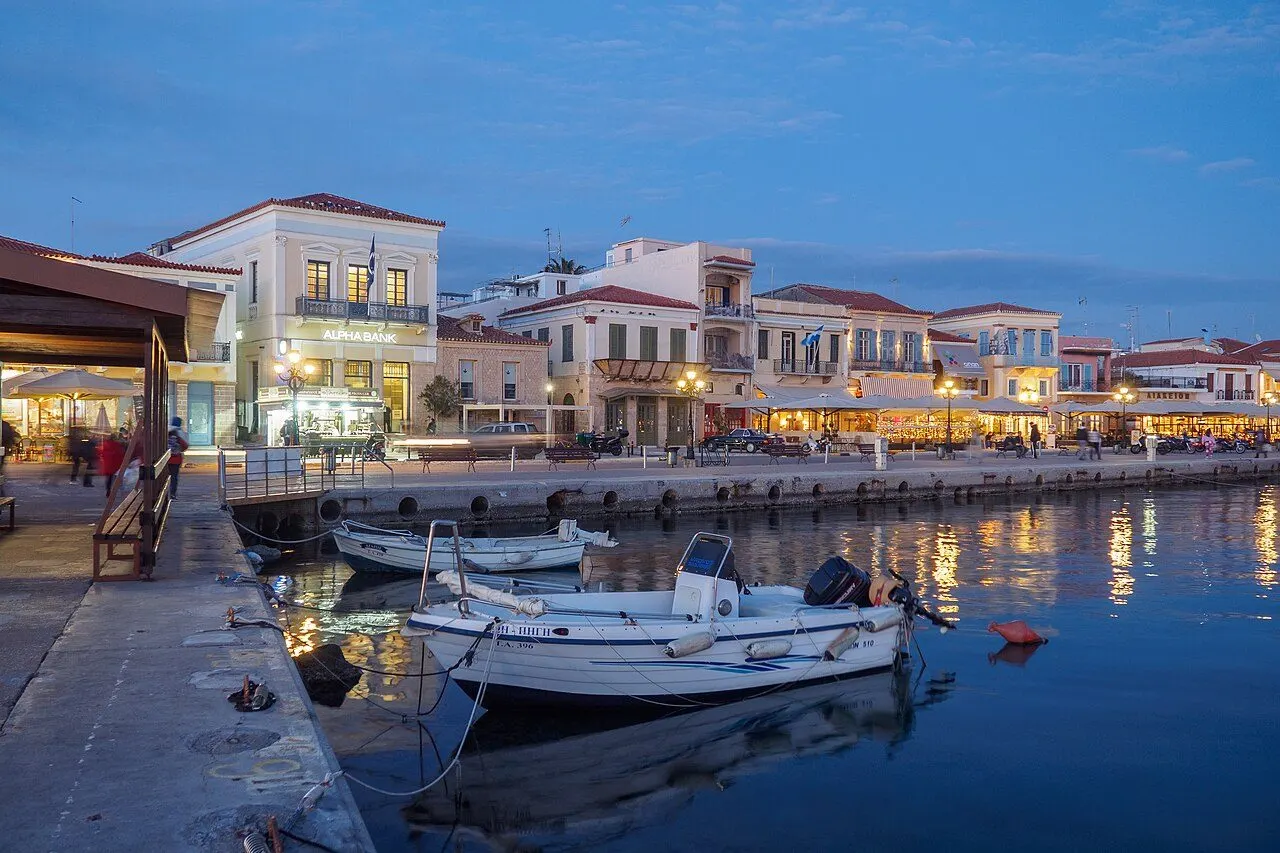
A harbour of neoclassical houses that was briefly the capital of Greece, with a lone Archaic column at the end of the quay
Agia Marina & Aphaia
The island's beach resort, in a sandy bay at the foot of the temple hill
Paleochora & the interior
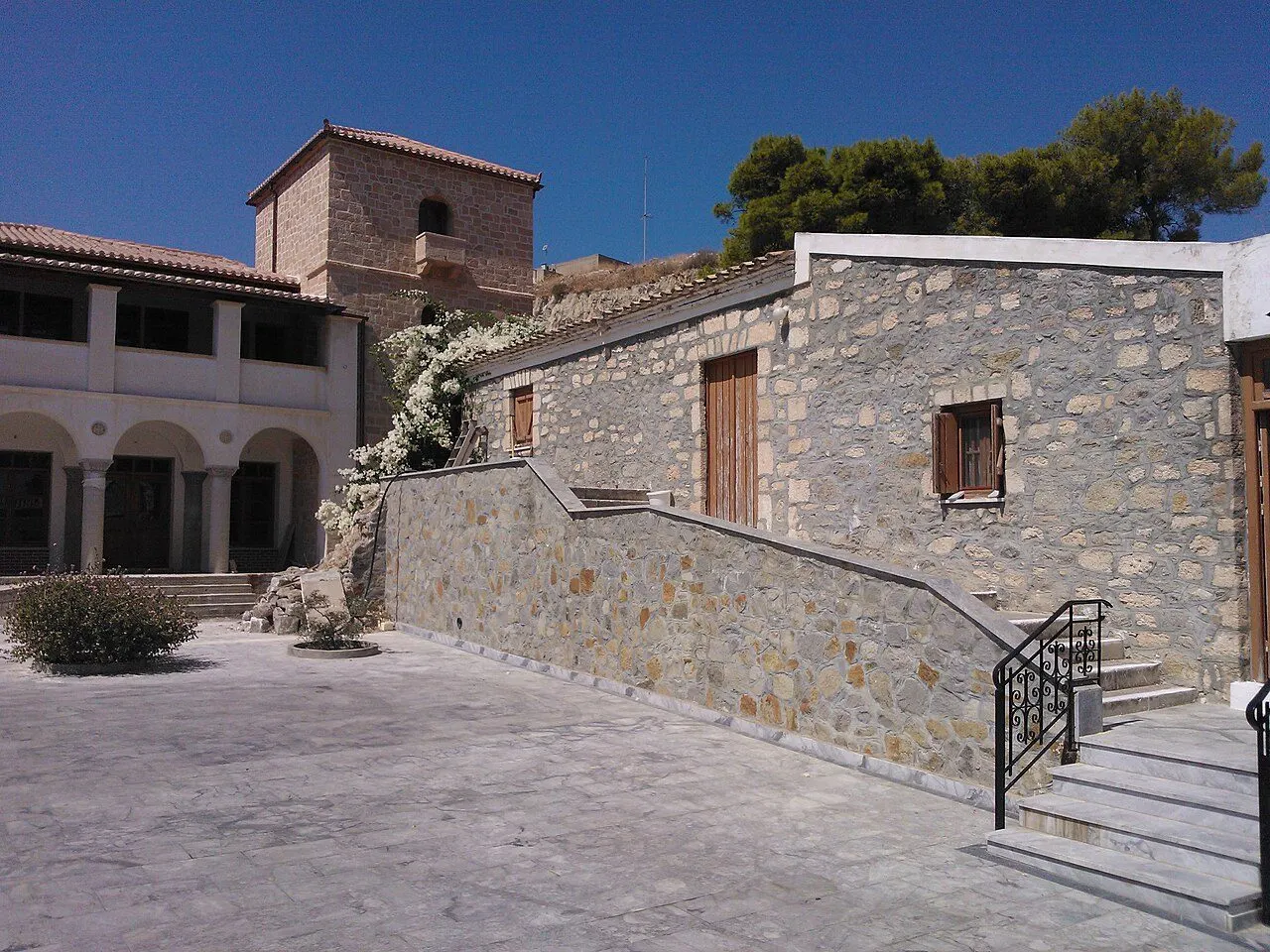
The convent of a saint of the twentieth century, one of the most visited places of pilgrimage in Greece
Every stay we recommend across Aegina, from village guesthouses to rooms on the sea.
See all staysLast updated